


Managing trail comfort begins with knowing how much gear you can safely carry across changing terrain. A properly balanced load prevents early fatigue, protects your joints, and keeps your hiking stride steady throughout the day. When planning your route and equipment list, understanding how heavy backpack hiking setups should be forms the foundation of every safe outdoor excursion. Learning to measure both your pack weight and your carried consumables helps you avoid common trail injuries.
General trail guidance suggests keeping your loaded pack between ten and twenty percent of your body weight depending on trip duration. Day hikers often carry much lighter setups, while multi-day adventurers require supportive internal frames and larger capacities to manage bulkier supplies. If you want to compare value-focused gear before hitting the trail, our guide to budget-friendly hiking backpacks highlights several capable entry options. Balancing pack features with total carried weight ensures you stay comfortable from the trailhead to camp.
Pros
- Expansive 40-liter storage volume with dedicated wet-dry separation inside the main compartment
- Comes with an integrated rain cover stowed in a dedicated underside pocket
- Dual zippered hip-belt pockets provide quick access to trail snacks and small gear
- Lightweight 210D ripstop nylon exterior resists brush scratches and light moisture
Cons
- Hydration reservoir is not included and must be purchased separately
- Fixed torso sizing does not offer custom vertical frame adjustment for very tall or short hikers
- A 40-liter profile may feel bulkier than needed for quick, minimalist day walks
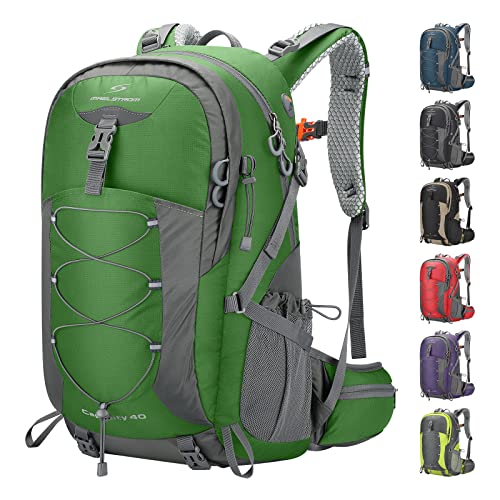
The Maelstrom 40L Hiking Backpack is a high-capacity daypack designed for hikers, weekend campers, and outdoor travelers who need generous gear volume without excessive pack weight. Positioned in the internal frame daypack category, it offers 40 liters of structured storage to bridge the gap between compact daypacks and larger multi-day packs. It best suits day hikers packing for unpredictable mountain weather, campers carrying shared family gear, and travelers seeking an airline-friendly bag that transitions easily to the trail.
On the trail, the backpack utilizes a breathable, padded back panel paired with sponge-cushioned mesh shoulder straps to support cargo weight comfortably. Measuring approximately 23.6 inches tall by 13 inches wide and 8.9 inches deep, the pack maintains a balanced vertical silhouette that helps keep weight centered. An adjustable chest buckle works to stabilize the shoulder straps across the chest and includes an integrated emergency whistle, while the padded hip belt features dual zippered pockets to keep smaller items accessible while walking.
Construction quality centers around water-resistant 210D ripstop nylon fabric designed to withstand scuffs, brush abrasions, and damp weather. To handle steady rain, the pack includes a fitted rain cover stored in a dedicated zippered compartment beneath the bag, featuring a silver reflective logo for enhanced visibility in overcast conditions. Inside the main zipper compartment, a built-in waterproof wet pocket isolates damp shells or wet apparel from the rest of your dry gear.
Packing and trail hydration are straightforward thanks to a practical layout. The main compartment features a hook-and-loop hanger to hold a hydration reservoir upright, accompanied by an upper hose exit port that directs drinking tubes to your shoulder. External storage is well appointed with three front zipper pockets, a top zippered pocket, two stretch mesh side pockets for water bottles, and dual trekking-pole fasteners that hold walking sticks securely against the side compression webbing.
While the pack delivers impressive organization, it has a few practical limitations. The hydration bladder is not included, requiring hikers to supply their own reservoir and bite valve. In addition, the fixed suspension lacks adjustable torso sizing, meaning hikers with particularly short or long torso lengths cannot modify the distance between the shoulder harness and hip belt. While the 210D nylon and included rain cover manage precipitation well, the primary zipper seams are water-resistant rather than fully submersible.
For hikers, campers, and travel enthusiasts looking for an organized, budget-friendly 40-liter pack, the Maelstrom daypack represents a very capable option. Its combination of an included rain cover, dedicated wet-gear separation, trekking-pole lashes, and multiple exterior access points delivers dependable everyday trail utility. As long as your intended load stays within typical day-hiking limits and you supply your own hydration reservoir, this pack offers great practical value.
The Maelstrom 40L backpack excels in pocket organization, featuring a spacious primary compartment complemented by three front zippered utility pockets and an upper top stash pocket. Inside the main section, a specialized waterproof wet pocket allows you to separate damp layers, rain jackets, or wet swim gear from clean clothes and food supplies.
For on-the-move trail access, the pack provides two zippered hip-belt pockets ideal for quick-grab items such as trail bars, pocket knives, or lip balm. Dual exterior mesh side pockets securely hold standard beverage bottles, while side compression straps help cinch down partial loads to keep internal contents steady.
Hydration compatibility is built directly into the interior, featuring a dedicated hook-and-loop strap to hold a hydration bladder vertically inside the main compartment alongside an upper hose exit port. Note that a hydration reservoir is not included with the backpack and must be purchased separately.
External attachment features include dual side elastic fasteners and loops designed to lash two trekking poles securely to the pack exterior when traversing smooth terrain. Safety enhancements include reflective exterior accents for improved low-light visibility and a functional survival whistle integrated directly into the sternum strap buckle.
Pros
- Impressive 50-liter packing volume paired with a low pack weight under 2.5 pounds
- Included waterproof rain cover provides immediate weather defense without extra gear purchases
- Shoe compartment and six exterior pockets keep footwear and trail essentials organized
- Multiple compression straps and tie-off loops easily secure trekking poles, pads, and exterior gear
Cons
- Frameless design lacks rigid stays, meaning heavy gear loads cannot transfer directly to a supportive hip frame
- Fixed torso sizing does not allow micro-adjustments for hikers with very short or long torso lengths
- Requires deliberate packing technique to prevent round bulges or uneven weight against the back
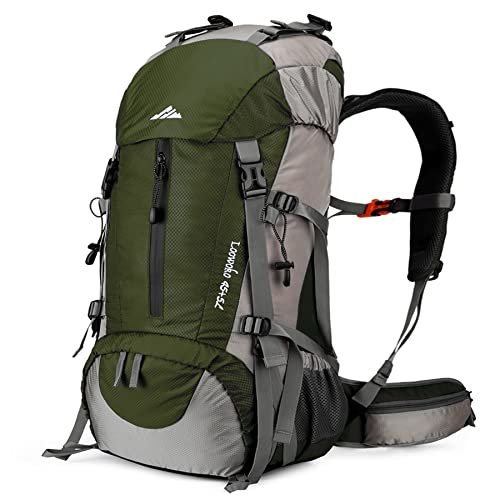
The Loowoko 50L Hiking Backpack is a high-volume, frameless trail rucksack built for weekend campers, casual backpackers, and travelers who want maximum storage without the heft of a structured frame. Sized at approximately 23.6 x 11.8 x 7.9 inches with a 50-liter capacity, this bag bridges the gap between a large daypack and an extended-trip hauler. It best serves hikers who pack relatively light gear, budget-conscious beginners, and outdoor enthusiasts traveling on airlines where empty pack weight matters.
Trail performance with a frameless pack depends heavily on mindful load management. Because the Loowoko 50L does not have internal metal stays or a composite frame sheet, the user creates structural stability through smart packing. Placing your sleeping pad or dense, soft layers against the back panel establishes a smooth contact surface. Breathable S-curve shoulder straps with dense sponge padding, an adjustable sternum strap, and an elastic padded back panel help cushion the upper body while encouraging air circulation on warmer trail days.
The build quality incorporates tear-resistant polyester and nylon fabrics designed to withstand routine trail friction and brush contact. Upgraded zippers and reinforced seam stitching secure daily closure points, while lateral and vertical compression straps allow you to cinch down empty volume. When carrying bulkier trail equipment, the integrated lash loops and exterior straps hold items such as trekking poles, ice axes, or rolled sleeping pads securely against the outside of the bag.
Organization is a definite strength of this pack, featuring a spacious top-loading main compartment complemented by an independent bottom shoe compartment. This bottom divider isolates dirty trail runners or camp shoes from your clean clothing and food supplies. Six external pockets give you dedicated spaces for water bottles, guidebooks, and trail snacks, keeping critical items accessible without opening the primary compartment.
Weather protection is straightforward thanks to the included waterproof rain cover, which stores directly in its own bottom pocket. While the polyester and nylon pack body resists light moisture and everyday trail grime, pulling the fitted rain cover over the exterior is essential for severe downpours. Note that because the pack has no internal frame, loading it with excessive weight may cause the shoulder straps to take on disproportionate pressure, making it less suitable for heavy, technical multi-day expeditions.
For day hikers needing bulk capacity, budget-conscious weekend campers packing modern lightweight gear, and travelers exploring destinations with varied climates, the Loowoko 50L offers solid utility. Its blend of low pack weight, diverse pocket layout, exterior tool loops, and an integrated rain cover makes it an economical and capable gear hauler for casual outdoor adventures.
With 50 liters of listed storage, this backpack easily handles warm-weather camping systems, clothing layers, and trail food. The primary compartment opens wide for rapid loading of bulky gear sacks and clothing bags.
The integrated lower shoe separator is a standout feature for outdoor travel, offering an isolated compartment for trail footwear, sandals, or wet apparel. Six external pockets let you categorize smaller items like navigation tools, sunscreen, snacks, and headlamps for quick trailside access.
Exterior webbing loops and compression straps provide functional tie-down spots for outdoor hardware. Hikers carrying trekking poles, compact tents, or sleeping pads can lash them directly to the pack exterior, preserving valuable interior space for weather-sensitive supplies.
The Loowoko 50L is engineered with a frameless construction, keeping the total tare weight around 2.1 to 2.36 pounds. Without rigid metal stays or internal perimeter frames, the backpack flexes naturally with your body as you hike.
Load support relies on widened, thickened S-type shoulder straps padded with dense sponge and covered in breathable mesh. These straps help spread contact pressure across the shoulders and collarbones, while the sternum strap stabilizes the harness against lateral movement.
Because there is no rigid internal frame transferring weight downward to a heavy-duty hip belt, this pack is best suited for light-to-moderate loads. Hikers should pack heavy items close to the spine to maintain balanced weight distribution and prevent the pack from sagging away from the torso.

Pros
- Massive expandable storage volume shifting easily between 70L and 100L for bulky gear
- Low empty weight of 3.31 pounds keeps the pack easy to maneuver and haul
- Tough 600D Oxford fabric with reinforced stitching and sturdy zippers
- MOLLE webbing provides convenient external attachment points for trail accessories
Cons
- Lacks an internal frame or aluminum stays, which limits structured load transfer under heavy loads
- Fabric is water-resistant rather than fully waterproof, requiring a separate rain cover in persistent downpours
- Does not offer specific torso-length adjustment tracks for micro-tuned backpacking fit
The Vaupan Expandable Hiking Backpack is a high-capacity, tactical-style outdoor rucksack designed for campers, travelers, and outdoor enthusiasts who need to transport bulky gear without taking on excessive empty pack weight. With an adaptable storage capacity shifting from 70 liters up to 100 liters, this pack caters to budget-focused users, family campers, and hunters carrying items like sleeping bags, mats, and spare clothing.
Regarding capacity and load handling, the backpack measures 40 by 30 by 75 centimeters in standard 70-liter mode, expanding to 40 by 30 by 90 centimeters (approximately 11.8 by 15.7 by 35.4 inches) when fully deployed to 100 liters. It weighs just 3.31 pounds (1.5 kg), which is remarkably low for a pack of this volume. Comfort features include widened, thickened S-type mesh shoulder straps padded with sponge and a high-elastic breathable back panel. However, because it lacks a rigid internal frame or structured load-lifter system, packing strategy plays a crucial role in maintaining stability on the move.
Build quality centers on durable 600D Oxford fabric combined with water-resistant backing, supported by reinforced stitching and robust zippers. For organization, the pack includes an expansive top-loading main compartment equipped with an elastic expansion drawstring, an interior laptop compartment, a front zippered organizer pocket, and two side pockets tailored for water bottles or compact umbrellas. The exterior is fitted with a MOLLE webbing system, allowing hikers to attach trekking poles, tents, and additional pouch accessories directly to the outside.
Using and fitting the Vaupan rucksack is straightforward, relying on standard strap adjustments rather than complicated harness sizing. When loading a frameless high-capacity pack like this, place softer bulk items at the bottom, dense gear against your back, and use the exterior MOLLE straps to balance long items. Maintenance requires minimal effort: wipe down the Oxford exterior with a damp cloth, spot clean trail grime, and allow the fabric to air dry completely before storage.
There are realistic limitations to keep in mind before heading out. While the product data references waterproof and water-resistant materials, the fabric is primarily water-resistant, meaning it can shed light moisture but will require a waterproof rain cover or dry bags during sustained rain. Furthermore, carrying maximum capacity without an internal frame or structured hip-belt load transfer means heavy, dense loads may pull away from the shoulders over long trail miles.
The Vaupan 70L-100L Backpack is a practical, value-driven choice for weekend campers, scout trips, road travel, and basecamp storage where maximum volume and modular external carry take priority. Hikers carrying lightweight, high-volume gear will appreciate the low pack weight and expandable layout, provided they pack intentionally to compensate for the frameless build.
The core advantage of the Vaupan tactical rucksack is its expandable storage design, which shifts from a standard 70-liter pack to a 100-liter hauler using an integrated drawstring expansion system. In standard mode, the pack stands 75 centimeters tall, expanding to 90 centimeters when maximum storage is required.
This flexible volume accommodates bulky camp items including sleeping bags, camp mats, hammocks, extra footwear, and outer layers. An internal laptop sleeve, front zipper compartment, and dual side bottle pockets round out the organization, giving users flexible options for packing gear of varying sizes.
The rucksack is crafted from 600D Oxford fabric designed to provide dependable resistance to abrasions, scuffs, and trail wear. The fabric features a water-resistant treatment that helps repel mist and light rain encounters.
Because the pack features standard zippers and stitched seams without complete submersible sealing, users should not treat it as fully waterproof in severe weather. For hiking in heavy rain, pairing the rucksack with an external pack rain cover or packing sensitive gear in waterproof dry bags is strongly advised.

Pros
- Lightweight construction at just 2.36 pounds for a 50-liter gear hauler.
- Dedicated bottom compartment provides separate storage for a sleeping bag or bulky gear.
- Comes standard with an external waterproof rain cover for extra storm protection.
- Multiple zipper pockets and mesh side holders simplify trail-side gear organization.
Cons
- Lacks a rigid internal metal frame, making it less suitable for exceptionally heavy gear loads.
- Does not feature a specific torso-length adjustment track for fine-tuned harness sizing.
- No manufacturer-specified internal hydration reservoir sleeve or routing port.
The WoneNice 50L (45+5) Hiking Backpack is an entry-level, high-volume outdoor pack designed for extended day hikes, weekend camping trips, and travel. Operating in the 50-liter volume class while maintaining an empty weight of only 2.36 pounds, this pack provides substantial cargo space without imposing the heavy base tare of traditional framed expedition rucksacks. It serves as a practical option for budget-minded day hikers carrying bulkier extra layers, scout campers, and travelers who need compartmentalized storage for gear-heavy itineraries.
Measuring 7.9 x 13.8 x 23.6 inches, the backpack utilizes a practical layout to keep equipment organized on the trail. The interior storage includes a large primary compartment, two zippered front pockets for smaller trail items, dual side mesh pockets for water bottles, and a specialized lower sleeping bag compartment. For load management, the pack uses an adjustable chest belt alongside an adjustable waist belt. While the high-elastic breathable back support and widened S-type shoulder straps cushion upper-body contact points, the pack relies on an unstayed suspension, making sensible weight distribution essential when packing dense items.
The exterior shell is manufactured from a blended polyester and nylon fabric engineered to resist moisture, abrasive brush contact, and accidental tears. An integrated hanging system provides external points to lash lightweight accessories or gear that does not fit into the main compartments. For wet trail conditions, the package includes an independent waterproof rain cover. While the backpack fabric itself is water-resistant, deploying the rain cover over the pack exterior is necessary during sustained rain to keep moisture away from the zippers and seams.
Adjusting the pack is straightforward thanks to sliding buckles on both the sternum strap and the waist belt. Hikers can pull the shoulder-strap tensioners and waist webbing to draw the pack closer to the spine, though the harness lacks micro-adjustable torso length settings. When packing, placing the sleeping bag or soft textiles in the bottom compartment helps create a stable base, while keeping denser camp gear positioned close to the back panel prevents outward sagging. Routine care involves clearing trail dirt with a damp cloth and mild detergent, followed by complete air drying before storing the pack flat.
Prospective buyers should take note of several functional boundaries before taking this pack into remote backcountry. Because the design uses an elastic back support rather than a rigid internal frame or perimeter wire, it is best kept within moderate gear weights to avoid placing excessive strain on the shoulder padding. Furthermore, the product specifications do not detail an internal hydration sleeve or drinking tube exit port, meaning users will primarily rely on standard bottles stowed in the exterior mesh pockets.
For day hikers, festival campers, and weekend adventurers looking for high storage capacity and organized compartments without an expensive price point, the WoneNice 50L Backpack offers practical utility. Its combination of a 2.36-pound starting weight, bundled waterproof rain cover, and separate gear compartments makes it a dependable choice for moderate trail excursions and casual outdoor recreation.
The WoneNice backpack provides a 50-liter total capacity configured as 45 liters in the main body with 5 liters of supplemental storage. This expansive volume accommodates bulky items such as blankets, camp stoves, and spare clothing layers that smaller daypacks cannot fit.
Organization is divided across several distinct sections: a spacious main hold, two zippered front pockets for maps and snacks, two mesh side pockets for water containers, and a dedicated lower compartment tailored for a sleeping bag. An external hanging system allows users to clip or lash supplemental items to the pack exterior when internal volume is full.
Carrying support on the WoneNice 50L pack is anchored by widened, thickened S-type padded shoulder straps paired with a high-elastic, breathable back panel designed to facilitate ventilation along the spine.
Stabilization is handled by an adjustable chest strap and an adjustable waist belt, allowing wearers to tension the harness to their frame. Because the pack does not feature an adjustable torso ladder or internal metal frame stays, proper loading and strap tensioning are key to keeping the pack balanced against the upper body.

Pros
- Spacious 40L storage capacity paired with a low empty weight under 2 pounds
- Integrated rain cover stows neatly in a dedicated bottom pocket for quick storm protection
- Dedicated external lash straps for carrying trekking poles, tripods, or a sleeping pad
- Dual zippered hip-belt pockets allow convenient access to snacks, keys, or small essentials
- Integrated safety features including a reflective logo and built-in sternum strap whistle
Cons
- Lacks a rigid internal frame or stays to support dense, heavy backpacking loads
- Hydration reservoir is not included and must be purchased separately
- Torso length is not adjustable for hikers requiring custom back-panel sizing
The Maelstrom 40L Hiking Backpack is a lightweight, high-volume daypack designed for day hikers, budget-minded outdoor enthusiasts, campers, and adventure travelers needing ample storage without excessive pack weight. Built with an exterior profile measuring 8.6 by 13.4 by 22 inches and offering a full 40-liter capacity, this pack provides sufficient space for bulky layers, trail rations, camera equipment, or weekend travel essentials.
Trail usability centers around thoughtful load management and convenient trail-side access. With an empty weight listed between 1.5 and 1.96 pounds, the pack adds minimal dead weight before packing your gear. The suspension system relies on ergonomic shoulder straps, a back support system, and dual side and bottom compression straps that help cinch the load tight to prevent shifting. Two zippered waist belt pockets provide on-the-move access to lip balm, trail snacks, or small navigation tools, while the sternum strap buckle integrates a survival whistle for emergencies.
The pack is constructed from a lightweight nylon fabric described as water-resistant, scratch-resistant, and tear-resistant. To defend gear against sudden mountain downpours, a dedicated bottom zippered pocket contains a fitted rain cover equipped with a reflective silver logo. External hardware includes side compression straps with quick-release buckles to secure trekking poles or tall water bottles, alongside dual bottom straps designed to hold a compact sleeping pad or camera tripod.
Hydration management is integrated directly into the primary compartment, which features an internal hook-and-loop strap to hold a hydration reservoir upright and a dedicated top port for hose routing. Gear organization is straightforward thanks to a main zippered compartment, two front zippered organizer pockets, two side water bottle sleeves, and exterior mesh pouches, allowing hikers to keep wet or quick-access items separated from clean interior gear.
Because this backpack uses a frameless structure, it is not built to carry heavy multi-day backpacking loads, which can cause the pack to pull against the shoulders without a rigid frame to transfer weight to the hips. Additionally, the back panel has a fixed torso length rather than an adjustable harness, meaning hikers with especially long or short spines cannot fine-tune the suspension. The water-resistant nylon handles light mist, but hikers should always deploy the included rain cover during steady rain to prevent moisture from entering through the seams or zippers.
For day hikers needing extra room for cold-weather layers, families packing trail gear for group outings, or travelers wanting an organized carry-on daypack, the Maelstrom 40L Backpack represents an affordable, highly functional choice. Those requiring structured load transfer for heavy backcountry expeditions should look toward internal-frame packs, but for general outdoor and travel use, this pack delivers strong everyday value.
The Maelstrom pack provides a verified 40 liters of volume distributed across several compartments to keep trail gear neatly sorted. The main compartment offers unobstructed packing space for bulkier layers, a rain jacket, or packed camp meals, while an internal sleeve holds your hydration reservoir securely against the back panel.
External organization includes two front zippered pockets for trail maps, headlamps, and hygiene kits, alongside dual mesh side pockets designed for standard water bottles. Two zippered hip-belt pockets provide quick access to trail snacks and compasses, and dual bottom lash straps allow you to secure a sleeping pad, rolled tarp, or compact tripod externally.
Constructed from water-resistant and tear-resistant nylon fabric, the pack body easily repels brief mist, dust, and light trail splashes. The exterior fabric resists scuffs from branches and rocky terrain during routine day hikes and travel.
For sustained downpours or heavy storm exposure, the pack features a dedicated bottom zippered pouch housing an integrated rain cover. Deploying this fitted cover over the entire pack shields exposed zippers and seams from rain intrusion while enhancing trail visibility via a reflective silver logo.

Pros
- High-capacity 65L layout features a dedicated sleeping bag compartment for organized packing
- Includes an integrated rain cover so you do not need to buy weather protection separately
- Adjustable multi-position harness caters effectively to medium and tall torso lengths
- Open-cell foam lumbar pad with molded channels aids ventilation along the spine
- Sturdy multi-directional compression webbing helps balance bulky loads
Cons
- Carries a 5-pound empty pack weight, which may feel heavy for ultralight hikers
- Hydration reservoir must be purchased separately to utilize the hydration pocket
- Harness sizing is tailored for medium to tall frames and may not fit petite hikers properly
The TETON Sports Explorer 65L is an internal frame hiking backpack engineered primarily for multi-day backcountry trips, extended weekend treks, and gear-intensive camping excursions. Built to accommodate both men and women, this model suits beginner backpackers stepping into overnight adventures as well as experienced hikers seeking a dependable, high-capacity hauler. Its 65-liter interior capacity ensures there is substantial room to organize shelter components, clothing layers, and food stores for days on the trail.
In terms of load management and support, the backpack combines an internal frame with a multi-position torso adjustment system tailored specifically for medium and tall adventurers. The back panel incorporates a durable open-cell foam lumbar pad alongside molded airflow channels designed to encourage air circulation during demanding climbs. Measuring 18 by 32 by 12 inches and weighing 5 pounds empty, the Explorer offers a stable, structured chassis that helps balance substantial loads across the hips and shoulders.
Organization is centered around practical compartment separation, anchored by a large sleeping bag compartment that allows quick setup at camp without disturbing the contents of the main pack body. Multi-directional compression straps wrap the exterior, helping you cinch down gear, minimize internal shifting, and maintain a centered balance point. The pack also features a dedicated internal hydration pocket for route-ready water storage, along with an included rain cover that deploys over the exterior during sudden downpours.
Setting up the backpack before heading out is straightforward thanks to the movable harness mechanism, allowing you to fine-tune the shoulder strap positioning to match your specific torso length. Packing bulky equipment is simplified by the spacious main cavern and external compression anchor points. For maintenance, spot-cleaning the fabric with mild soap and allowing the backpack to air-dry completely before storage will help protect the open-cell foam padding and hardware across repeated seasons.
Despite its versatile feature set, the Explorer 65L presents certain practical tradeoffs. At a base weight of 5 pounds, this backpack is considerably heavier than dedicated ultralight alternatives. Additionally, while the multi-position harness serves medium and taller frames well, shorter or petite hikers may find it challenging to achieve an ideal fit. Users should also note that while the pack includes a hydration pocket, the actual water reservoir is sold separately.
For campers, weekend backpackers, and introductory trail explorers seeking an internal frame pack that includes a rain cover and customizable torso settings right out of the box, the TETON Sports Explorer 65L stands out as a practical investment. Its combination of structured lumbar support, spacious gear compartments, and compression stability makes it a dependable companion for classic outdoor treks.
The TETON Sports Explorer 65L utilizes a multi-position torso adjustment system designed to fit adult hikers with medium and tall profiles. This adjustable harness setup allows the shoulder strap yoke to move vertically, helping you align the suspension with your spine length for proper weight transfer to the hips.
Lower back support relies on an open-cell foam lumbar pad that rests against the lower spine, complemented by molded air channels to assist with airflow. While the multi-position system offers solid flexibility across standard adult sizing, hikers with short or petite torsos should carefully evaluate their measurements, as the harness may not drop low enough for an optimal fit.
Boasting a 65-liter volume with dimensions of 18 by 32 by 12 inches, the Explorer 65L provides generous capacity for overnight and multi-day gear lists. A dedicated lower sleeping bag compartment keeps bulky sleep systems isolated from damp clothing or trail food, streamlining campsite setup when arriving after dusk.
To manage variable pack volumes, multi-directional compression straps pull the load inward toward the frame to prevent gear from swaying. The pack also features a dedicated pocket for a hydration bladder to facilitate trail drinking, alongside an integrated rain cover that packs away neatly when skies are clear.

Pros
- Generous 75-liter volume accommodates high-bulk equipment, cold-weather layers, and multi-day camping gear
- Multi-position torso adjustment fits medium and tall hikers for a more balanced center of gravity
- Dedicated sleeping bag compartment and multiple pockets streamline gear organization and campsite setup
- Comes equipped with an integrated rain cover to shield the pack exterior during wet trail conditions
Cons
- At approximately 5.45 pounds empty weight, it is noticeably heavier than ultralight pack alternatives
- Designed specifically for medium and tall adventurers, making it less suitable for shorter or petite torso lengths
- Includes an internal hydration pocket, but the compatible water bladder must be purchased separately
The TETON Sports Explorer 75L is a full-size internal frame backpack designed for campers, weekend backpackers, and extended-trip hikers who need significant packing volume without spending high-end specialty prices. Built as a balanced, unisex pack for both men and women, this model prioritizes straightforward gear organization and structural load support. Hikers moving beyond entry-level daypacks will find that its generous volume easily accommodates three-season sleep systems, extra clothing layers, and camping essentials.
On the trail, load management relies on an integrated internal frame paired with a multi-position torso adjustment mechanism. Rather than a fixed back length, the harness can be adjusted to fit medium and tall adventurers, helping position the pack properly against the shoulders and lumbar area. Comfort features include a durable open-cell foam lumbar pad and molded channels that promote continuous airflow between the pack and your back. While the pack has a listed empty weight of approximately 5.45 pounds and outer dimensions of 18 x 34 x 12 inches, the internal frame and multi-directional compression straps help pull carried weight inward to maintain balance across uneven terrain.
Organization is a standout feature on the Explorer 75L, starting with a large dedicated sleeping bag compartment at the base. This lower compartment allows quick access to your sleep setup without unpacking the entire main chamber. The pack body includes spacious secondary compartments and exterior pockets to keep trail necessities separated and accessible. Compression straps run in multiple directions, allowing you to cinch down excess volume when the pack is not fully loaded. Additionally, an internal pocket is tailored for a hydration reservoir, keeping water centered against the back, though the reservoir itself is not included.
Setting up the pack requires adjusting the multi-position torso harness before your hike to ensure the open-cell lumbar pad rests naturally against your lower back. Once fitted, packing is intuitive: heavy dense gear can be positioned near the frame, bulky sleeping gear fits in the bottom compartment, and high-frequency items slide into the outer pockets. Routine maintenance is simple, requiring spot cleaning with mild soap, air drying away from direct heat, and verifying that compression webbing and quick-release buckles remain free of grit after dusty trail outings.
Buyers should consider a few realistic limitations before purchasing. With an empty weight of roughly 5.45 pounds, this backpack is built for durability and volume rather than ultralight minimalism. Its multi-position torso system is specifically targeted toward medium and tall frames, which means hikers with shorter torsos may struggle to achieve an optimal fit. Furthermore, while an integrated rain cover is included to handle foul weather, it protects against exterior rainfall rather than total water immersion, meaning critical electronics and down gear still benefit from dedicated dry sacks.
Overall, the TETON Sports Explorer 75L represents a dependable, high-value choice for multi-day backpackers, scout campers, and wilderness hikers who prioritize substantial capacity and structured load support. It offers the storage space, torso adjustability, and pocket layout required for gear-heavy trips while remaining accessible to budget-conscious outdoor enthusiasts.
The TETON Sports Explorer 75L features a multi-position torso adjustment system designed to accommodate medium and tall adventurers. Backpackers can reposition the harness along the back panel to match their torso length, ensuring the shoulder straps and lumbar cushioning align properly with their anatomy.
Proper adjustment ensures that the open-cell foam lumbar pad sits securely against the lower back to support load transfer. Because the sizing targets medium and tall individuals, backpackers with shorter or petite torso lengths may find the frame and shoulder harness too long for balanced carrying.
With 75 liters of internal volume and dimensions measuring 18 x 34 x 12 inches, this pack is designed to carry substantial gear loads for extended camping and backpacking trips. The internal space easily swallows bulky sleeping pads, camp cookware, and extra clothing layers.
Gear organization is supported by a large separate sleeping bag compartment at the base, along with multiple spacious compartments and exterior pockets. Multi-directional compression straps allow users to compress the load, preventing items from shifting when the 75L interior is not packed to maximum capacity.
The Explorer 75L includes an internal pocket specifically designed for a hydration reservoir, allowing hikers to maintain hands-free fluid access while hiking. The reservoir and drinking hose are sold separately, so users will need to supply their own hydration bladder.
For wet-weather hiking, the backpack comes with an included rain cover that deploys quickly over the exterior. While the cover shields pack fabric and exterior zippers from driving rain, sensitive equipment such as sleeping bags, down jackets, and electronics should still be protected inside waterproof pack liners or dry sacks.

Pros
- Weighs under two pounds while delivering a generous 40-liter gear capacity.
- Comes equipped with a fitted rain cover featuring a reflective safety logo.
- Dual zippered hip-belt pockets keep trail snacks, lip balm, and small accessories easily accessible.
- Built-in exterior lashing points accommodate trekking poles, sleeping pads, or tripods.
- Internal hydration hanger and dedicated hose port simplify bladder integration.
Cons
- Lacks an adjustable torso ladder system, meaning fit is fixed along the back length.
- Frameless construction lacks rigid aluminum stays, making it unsuitable for extremely dense, heavy loads.
- Hydration reservoir is not included and must be sourced separately.
The Maelstrom 40L Hiking Backpack is a lightweight, high-capacity daypack designed for hikers, weekend campers, and adventure travelers who need substantial packing room without carrying a heavy pack structure. Weighing in at just 1.96 pounds empty, this pack provides a practical solution for full-day hikes requiring extra insulating layers, family outings where one hiker carries group gear, or travel trips where light luggage compliance is a priority.
With exterior dimensions of 8.6 by 13.4 by 22 inches, the pack delivers an advertised 40 liters of volume distributed across several functional storage zones. The carrying harness relies on ergonomic shoulder straps, a back support system, and dual side and bottom compression straps to cinch down shifting gear. While it features dual waist pockets on the hip belt and an integrated emergency whistle on the sternum buckle, the pack does not utilize a rigid internal frame or stay. Consequently, it performs best with light-to-moderate trail loads rather than dense, expedition-weight gear.
Construction centers on a nylon fabric specified as tear-resistant, scratch-resistant, and water-resistant. For direct foul-weather management, the pack features a dedicated zippered pocket on the bottom that houses an included rain cover. Deploying this external cover provides a dependable barrier against sudden trail downpours, while the reflective logo offers enhanced visibility in overcast or low-light conditions.
Gear management is organized around a multi-pocket architecture. The pack includes a large zippered main compartment, two front zippered organizer sections, two side bottle sleeves, dual exterior mesh slots, and two zippered pockets on the waist belt. For water management, the interior of the main compartment includes a Velcro strap to secure a reservoir liner, along with a top hose pass-through port. Exterior straps and buckles allow hikers to lash trekking poles, a compact sleeping pad, or a tripod directly to the exterior.
Hikers evaluating this backpack should keep a few practical design boundaries in mind. Because there is no internal metal frame or rigid frame sheet, carrying excessively heavy items can cause the pack to pull against the shoulders rather than transferring weight smoothly to the pelvis. Furthermore, the torso length is non-adjustable, so fit will depend strictly on individual body proportions. Bladder users must also note that a water reservoir is not included in the purchase.
For trail walkers and weekend adventurers seeking high volume at a modest weight, the Maelstrom 40L backpack represents a sensible, budget-friendly value. Its combination of an included rain cover, dedicated hydration routing, and multiple quick-access pockets makes it well suited for long day trips, casual camping weekends, and general outdoor travel.
The Maelstrom 40L pack utilizes a multi-compartment layout to keep clothing, food, and trail gear organized across its 40-liter interior. The primary zippered compartment handles bulkier supplies such as jackets, lunch containers, and camp accessories, while two front zippered pockets provide separate storage for maps, headlamps, and smaller items.
On-the-move access is supported by two zippered waist pockets positioned directly on the hip belt, allowing you to reach snacks, keys, or pocket tools without taking the pack off. Dual exterior side pockets and supplementary mesh slots accommodate water bottles and quick-stash gear, while lower and side compression straps hold trekking poles or bulky exterior pads firmly in place.
Hydration setup is integrated directly into the main compartment via an internal Velcro hanging strap and a dedicated upper hose routing hole. While the pack does not come with a reservoir, this configuration allows hikers to install standard hydration bladders and route the drinking tube over the shoulder strap for regular fluid access.
For wet-weather protection, the backpack relies on water-resistant nylon construction supported by an included rain cover stored in a base pocket. Unzipping the bottom compartment allows you to pull the fitted cover over the entire loaded pack during heavy rain, protecting seams and zippers from moisture exposure.
Pros
- Generous 40L-50L volume handles bulky trail essentials including clothing, food, and compact sleep systems
- Internal frame structure combined with a supportive hip belt aids overall pack balance and torso stability
- Multiple exterior attachment loops secure trekking poles, camp pads, and extra gear outside the main bag
- Water-resistant nylon fabric shields your trail gear from light mist and damp ground conditions
Cons
- Fabric is water-resistant rather than fully waterproof, requiring a separate rain cover or pack liner during heavy downpours
- Manufacturer does not provide specific torso-length adjustment measurements, making micro-fitting difficult for extreme torso heights
- The 34.25-inch total height can exceed strict airline carry-on limits when the pack is filled to maximum capacity
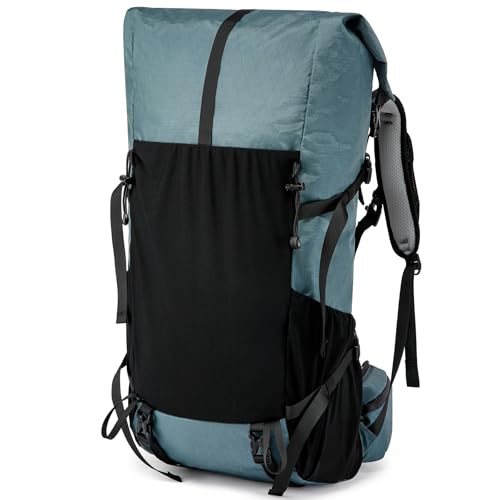
The ROYAL MOUNTAIN 40L to 50L Internal Frame Backpack is designed for budget-conscious weekend backpackers, day hikers carrying heavy loads, and outdoor travelers who require dependable gear volume. With an internal frame system and an expandable 40-to-50-liter capacity, this pack provides a practical solution for overnight camping trips, hut-to-hut trekking, or gear-intensive day hikes where extra layers and provisions are mandatory.
In practical trail use, the generous volume comfortably holds a sleeping bag, spare garments, camp cookware, and trail rations. Dual side stretch-style pockets accommodate standard water bottles for quick hydration stops, while the main compartment swallows core gear. The external suspension system is particularly useful for lashing down bulky items such as trekking poles, sleeping pads, or a compact tent, preserving internal volume for food and sensitive equipment.
The pack is constructed from a water-resistant nylon fabric that provides reliable protection against damp brush, morning mist, and brief rain sprinkles. Carrying support is delivered through thickened, S-shaped shoulder straps padded with rich sponge and covered in breathable mesh. An internal frame combined with high-elasticity back support and a padded waist belt stabilizes gear against the spine, helping to manage shifting loads across uneven, rocky terrain.
Adjusting the pack is straightforward thanks to sliding strap tensioners and an adjustable waist belt. The waistband incorporates a small storage pocket, allowing you to grab keys, multi-tools, or trail snacks without unbuckling or setting the bag on wet ground. Post-trip maintenance is equally low-effort; the nylon exterior wipes clean easily with water and a soft rag, and the bag should simply be air-dried completely before storing in a gear closet.
While this pack delivers versatile storage and structural stability, buyers should note a few operational limitations. The fabric resists moisture but is not seam-sealed or waterproof, so sensitive electronics and down gear should always be kept in dry sacks during continuous rain. Additionally, because the manufacturer does not list exact torso-length ranges, hikers with unusually short or tall backs may experience a less tailored fit compared to fully adjustable micro-sized harness systems.
For outdoor enthusiasts looking for a budget-friendly, high-capacity internal frame pack for camping, weekend getaways, or mountain exploration, the ROYAL MOUNTAIN 40L-50L pack is a strong contender. It delivers practical pocket organization, external attachment options, and load-stabilizing frame support that suit the needs of beginner backpackers and casual trail adventurers alike.
The main compartment offers a 40L to 50L volume designed to hold personal clothing, sleep systems, and travel gear for short multi-day outings.
Exterior organization includes dual side water bottle pockets and a dedicated waistband pocket for smaller items like keys, alongside external attachment points for trekking poles and sleeping pads.
An internal frame provides vertical rigidity to prevent the pack from sagging and to help position heavier gear properly along the spine.
Widened S-shaped padded shoulder straps work in tandem with a supportive waist belt and high-elasticity back support to maintain stability while moving across varying trail terrain.

Pros
- High 85-liter packing volume accommodates cold-weather gear, family camping setups, and extended trips
- Adjustable torso harness accommodates medium to tall hikers without requiring specialized tools
- Factory-included rain cover saves an extra accessory purchase and adds immediate weather defense
- Dedicated sleeping bag compartment and multi-directional compression straps streamline gear management
- Padded open-cell lumbar support and molded air channels help keep heavy loads centered comfortably
Cons
- Listed pack weight of 5.8 pounds is noticeably heavier than streamlined ultralight pack alternatives
- Large 85L capacity and 22 x 34 x 16-inch dimensions can encourage overpacking on shorter weekend trips
- Hydration reservoir is not included and must be purchased separately
The TETON Sports Explorer 85L is a heavy-duty internal frame backpacking pack tailored for weekend campers, multi-day backpackers, and gear-intensive hikers who need substantial carrying capacity. With an 85-liter internal volume and robust frame architecture, it provides an accessible solution for carrying shelter systems, spare layers, cooking setups, and food supplies without straining pack seams. It is especially suitable for hikers outfitting multi-day wilderness treks, scouting trips, or basecamp adventures on a reasonable gear budget.
Trail stability relies on an integrated internal frame paired with a multi-position torso adjustment mechanism designed to fit medium and tall adventurers. The suspension system incorporates an open-cell foam lumbar pad along with molded back channels that encourage airflow across your back during strenuous ascents. Measuring 22 by 34 by 16 inches and weighing 5.8 pounds empty, the pack offers substantial physical presence, giving backpackers the structural support needed to manage heavy equipment while keeping the center of gravity aligned with the body.
Organization is a defining asset of the Explorer series. It features a dedicated lower sleeping bag compartment, which keeps your sleep setup separated from wet outerwear or cooking stoves. Multiple exterior compartments and pockets provide fast access to trail maps, snacks, and small gear essentials, while multi-directional compression straps allow you to cinch down excess volume when the pack is not completely full. An internal hydration pocket allows for hands-free drinking on the move, though backpackers will need to supply their own hydration reservoir.
Handling variable mountain weather is straightforward thanks to an included rain cover that deploys over the exterior during sudden downpours. Adjusting the torso harness requires only simple repositioning along the adjustment ladder before heading out, allowing hikers to fine-tune upper-body fit at home. External compression webbing and gear loops also make it convenient to strap sleeping pads or camp chairs to the exterior, while standard spot cleaning with mild soap keeps the fabric fresh between seasonal trips.
Hikers considering this pack should keep its baseline specifications in mind. At 5.8 pounds, it does not cater to the ultralight hiking philosophy, and carrying an 85-liter pack on short day trips or minimalist overnights can feel excessively bulky. Furthermore, while the torso harness is adjustable across multiple positions, it is optimized specifically for medium to tall torso lengths, which may not provide an ideal fit for smaller or petite backpackers.
For outdoor enthusiasts who prioritize high gear capacity, dependable load management, and thoughtful pocket arrangements, the TETON Sports Explorer 85L delivers exceptional practical value. It serves as an excellent choice for beginner to intermediate backpackers heading out on multi-day itineraries where carrying bulky gear comfortably is the primary goal.
The TETON Sports Explorer 85L features a multi-position torso adjustment ladder designed specifically to accommodate medium and tall hikers. Adjusting the harness allows backpackers to align the shoulder straps with the natural curve of the shoulders, ensuring that the internal frame effectively transfers gear weight down to the lumbar pad and hips.
The back panel is constructed with a durable open-cell foam lumbar pad that rests against the lower back to buffer heavy loads. Integrated molded channels run vertically along the back panel to promote airflow, helping reduce heat buildup during warm-weather hikes while keeping the pack stable against your spine.
Offering an 85-liter overall volume and measuring 22 by 34 by 16 inches, the Explorer 85L is built to house complete multi-day camping setups. A dedicated bottom compartment isolates your sleeping bag from the main cargo hold, allowing camp setup without disturbing the rest of your packed gear.
Multi-directional compression straps line the exterior to compress bulky loads and prevent interior contents from shifting over uneven terrain. The pack also incorporates an internal pocket designed to hold a hydration reservoir, alongside spacious exterior storage pockets to keep essential items accessible during trail breaks.
How Heavy Should a Hiking Backpack Be for Safe Trail Comfort?
A fully loaded hiking backpack should generally weigh no more than ten to twenty percent of your total body weight. For day hiking excursions, your pack should stay close to ten percent of your body weight, typically landing between eight and fifteen pounds including water and trail snacks. Multi-day backpacking expeditions push that ceiling toward twenty percent of your body weight to accommodate sleeping gear, shelter, cooking equipment, and multiple days of food. Staying within these parameters protects your back and knees while maintaining physical endurance across steep trail miles.
The Core Body Weight Rule for Hiking and Backpacking
The body weight ratio represents the most reliable benchmark for calculating safe trail loads. A hiker weighing one hundred and fifty pounds should aim to carry no more than fifteen pounds on a day hike and thirty pounds on a multi-day trip. Heavier backpackers weighing two hundred pounds can comfortably handle up to forty pounds on extended journeys if their fitness level and pack suspension support that load. Exceeding twenty percent of your body weight places excessive stress on the spine, hip flexors, and knee joints.
Lighter hikers must pay particular attention to these proportional ratios because standard camping gear weighs the same regardless of who carries it. A one-hundred-pound hiker carrying a thirty-pound load is bearing thirty percent of their total body mass, which quickly leads to exhaustion. In these situations, investing in compact shelter systems and lightweight cooking kits becomes essential for trail longevity. Proportionate load distribution keeps your center of mass stable over uneven granite, loose gravel, and steep switchbacks.
Terrain difficulty also dictates how strictly you should observe these weight guidelines. Flat gravel trails allow you to manage slightly heavier loads without severe biomechanical strain. Scrambling through alpine boulder fields or ascending steep elevation gains requires you to trim every non-essential pound from your shoulders. Adjusting your target weight to match trail elevation and duration keeps your trek enjoyable and injury-free.
Base Weight Versus Total Pack Weight Explained
Understanding trail weight requires distinguishing between base weight and total carried weight. Base weight includes the empty backpack, shelter, sleep system, spare clothing, cook set, and navigation tools. This number remains completely constant throughout your entire journey because none of these items are consumed. Keeping your base weight low provides flexibility when you need to load extra consumables for remote stretches.
Consumable weight includes drinking water, dehydrated meals, fresh food, and stove fuel canisters. Water represents one of the heaviest individual components in any pack, weighing approximately 2.2 pounds per single liter. A hiker carrying a three-liter reservoir adds roughly 6.6 pounds to their back before adding snacks or emergency gear. Food supplies typically add another 1.5 to 2.5 pounds per person for each full day spent in the backcountry.
Total pack weight combines your fixed base weight with all active consumables at the start of your hike. Your pack will feel heaviest at the trailhead when water reservoirs and food sacks are completely full. As you consume meals and drink fluids throughout the trip, your total weight naturally decreases with each passing day. Planning your base weight carefully ensures that your peak trailhead weight never exceeds safe physical thresholds.
Empty Pack Weight Across Different Capacities
The structural weight of the backpack itself directly influences your starting baseline before you pack a single piece of gear. Lightweight daypacks and frameless bags often weigh around two pounds or less while offering substantial cargo room. For example, the Maelstrom 40L hiking daypack registers at only 1.96 pounds, while the Loowoko 50L model weighs approximately 2.1 pounds. Choosing a light pack body prevents you from wasting several pounds of your carrying allowance on heavy exterior fabrics alone.
Larger expedition rucksacks incorporate heavier materials to endure severe trail abrasion and carry expanded gear volumes. The Vaupan 100L tactical rucksack weighs 3.31 pounds due to its dense 600D oxford construction and expandable storage compartments. While rugged fabrics add structural heft, they prevent punctures when brushing against rough tree limbs or sharp rock outcroppings. Hikers must weigh the benefits of extreme fabric durability against the baseline burden added to their spine.
When planning your load, consulting our detailed internal-frame hiking backpack guide can help clarify how heavy-duty support structures differ from frameless utility packs. A slightly heavier empty pack often carries heavy gear much better than a flimsy ultralight sack. The extra pound spent on a structured frame pays dividends when carrying thirty pounds over rugged terrain. Evaluating your typical load helps you select the right balance between pack body weight and load stability.
Frameless Versus Internal-Frame Support and Load Capacity
The presence of an internal frame fundamentally changes how your body experiences carried weight on the trail. Frameless packs, such as the Loowoko 50L model, rely entirely on padded shoulder straps and flexible back panels to support the load. These designs function exceptionally well for loads under twenty pounds where heavy structural rigidity is unnecessary. When loaded beyond twenty-five pounds, frameless packs pull backward and concentrate painful pressure directly onto your trapezius muscles.
Internal-frame packs utilize aluminum stays, composite sheets, or contoured perimeter wires to direct carried weight downward. Models like the TETON Sports Explorer 65L, 75L, and 85L packs feature dedicated frame systems paired with thick open-cell foam lumbar pads. This engineering transfers up to eighty percent of the carried weight directly onto your hips and pelvic girdle. Bypassing the sensitive shoulders preserves upper-body energy and allows you to carry heavier gear comfortably over long distances.
Adjustable torso suspension systems further refine load transfer on structured backpacks. The TETON Explorer series provides multi-position torso adjustments so hikers can align the lumbar pad precisely with their iliac crest. When the torso length matches your spine, load lifter straps pull the pack weight close to your back at a forty-five-degree angle. This alignment stops the pack from sagging and prevents momentum from pulling you backward on steep ascents.
Pack Volume and How Liter Capacity Influences Carried Weight
Backpack volume is measured in liters and directly influences how much physical weight you end up carrying. Compact packs between 35 and 45 liters naturally encourage disciplined packing habits and keep total weights modest. The Maelstrom 40L and ROYAL MOUNTAIN 40L to 50L designs provide ample space for warm layers, hydration bladders, and compact camping gear. Restricting volume prevents you from tossing unnecessary luxury items into your pack that add cumulative strain.
Mid-sized backpacks offering 50 to 65 liters provide standard capacity for traditional weekend or three-to-five-day wilderness outings. The WoneNice 50L pack offers 45 liters in the main compartment plus an extra 5-liter expansion zone for bulkier sleeping kits. These capacities comfortably hold a lightweight tent, sleeping bag, stove, warm layers, and several days of food. As volume expands beyond 60 liters, total carried weight often climbs past thirty pounds unless you deliberately pack ultralight equipment.
High-capacity packs from 75 to 100 liters, including the TETON 85L Explorer and Vaupan 100L rucksack, accommodate extended multi-week expeditions and winter expeditions. While these voluminous bags accommodate cold-weather sleeping bags and extra rations, specialized setups like hiking backpack cooler designs show how targeted volume serves distinct trail purposes. Carrying eighty liters of gear can easily push total pack weight above forty-five pounds. Carrying such high weights requires significant physical conditioning and robust suspension hardware to avoid joint strain.
Proper Weight Distribution and Packing Architecture
How you arrange your equipment inside the pack alters your perceived carrying weight as much as the scale reading. Experienced backpackers divide their pack interior into bottom, middle, and top loading zones. The bottom zone should hold lightweight, bulky gear that you will not touch until establishing camp. Placing your sleeping bag inside the bottom compartment creates a stable foundation without pulling your center of gravity down.
The middle zone directly against your spine must hold your heaviest individual items. Place your bear canister, dense food bags, stove fuel, and water bladder right along your back panel between shoulder blades and hips. Keeping dense items tight against your spine prevents leverage forces from pulling you off balance. Surrounding these dense items with rolled garments stops them from shifting as you step over logs and boulders.
The upper compartment and external pockets should house medium-weight items and essential trail gear. Pack rain jackets, first aid supplies, water filters, and trail maps in top lids or zippered front pockets for instant access. Front pockets on packs like the Maelstrom 40L and WoneNice 50L allow you to retrieve layers without unbuckling the main compartment. Proper distribution ensures the backpack feels like a natural extension of your body rather than a dragging anchor.
Weather Protection, Water Weight, and Trail Readiness
Inclement weather can rapidly increase the weight of your backpack if moisture penetrates the pack body. Untreated nylon and polyester fabrics absorb moisture quickly when exposed to steady downpours, adding unnecessary pounds to your load. A soaked backpack combined with damp clothing can easily add three to five pounds of water weight during a single storm. Protecting your gear from precipitation preserves both warmth and your planned weight targets.
Many trail backpacks feature integrated waterproof rain covers stored in dedicated bottom zipper pockets. Models such as the Loowoko 50L, Maelstrom 40L, WoneNice 50L, and TETON Sports Explorer incorporate rain covers designed to shield the exterior shell. Deploying a rain cover at the first sign of rain stops water from saturating exterior storage fabrics. Reflective detailing on covers also improves visibility when hiking along foggy ridgelines or roadside trailheads.
Hydration storage design also affects how your body handles liquid weight across long trail miles. Modern daypacks and trekking rucksacks feature dedicated interior hydration sleeves and secure hose exit ports. Centering a water reservoir against the back panel distributes liquid weight much more evenly than carrying rigid bottles on exterior side pockets. Using compression straps to cinch the pack as you drink keeps the remaining gear stabilized and centered.
Practical Auditing Steps to Reduce Carried Trail Weight
Auditing your equipment after every trek represents the single most effective method for lowering your pack weight. Empty your backpack completely onto a clean floor and sort every piece of gear into categories. Identify items that remained unused throughout your journey, excluding essential safety gear like first aid and headlamps. Leaving non-essential luxury items at home quickly sheds multiple pounds from your base load on future adventures.
External compression straps offer an immediate mechanical method to make your existing load feel significantly lighter. Multi-directional straps found on the TETON Explorer series and Maelstrom packs pull the cargo closer to your body frame. Compressing empty dead space eliminates internal shifting, which reduces the muscular effort needed to stabilize your core. Tightening these straps before setting off on steep ascents produces an immediate improvement in balance.
Selecting multi-use equipment allows you to drop excess weight without sacrificing comfort or emergency readiness. A trekking pole that also pitches an ultralight shelter saves you from carrying dedicated tent poles. Cooking simple one-pot meals eliminates heavy cookware sets and minimizes needed stove fuel. Continually refining your gear choices keeps your pack weight well within healthy limits while maximizing your enjoyment on the trail.
Maintaining a safe and comfortable pack weight transforms challenging hikes into rewarding wilderness experiences. Keeping your total loaded gear within ten to twenty percent of your body weight protects your joints and maintains your physical stamina. Matching your pack capacity and frame structure to your specific trip length ensures balanced load distribution across every mile. Take time to weigh your gear before heading out, adjust your suspension straps properly, and enjoy a confident trek on the trail.


Write Your Review
No reviews yet. Be the first to share your experience!