


Navigating crowded airport terminals and tight bus aisles quickly reveals how much a traveler relies on dependable luggage. Determining %what is the best backpack for travelling% requires balancing overall packing volume against strict airline personal item limits and overhead compartment dimensions. While heavy outdoor expeditions often call for structured internal frame backpacks designed to carry heavy trail gear, urban transit and airline flights demand much more adaptable silhouettes. A well-designed travel pack distributes weight evenly across your shoulders, keeps essential electronics accessible, and withstands continuous transit wear.
Travelers often face a tough decision between high-capacity bags that hold several days of clothing and ultra-compact daypacks meant for day excursions. Choosing between an expandable 45L carry-on and a packable 11L secondary rucksack depends entirely on trip duration, airline baggage allowances, and transit style. Modern polyester and polyamide fabrics provide impressive water resistance and tear resistance without adding burdensome empty weight. By understanding dimensional compliance and ergonomic strap geometry, anyone can find an ideal carry setup that prevents neck strain and avoids costly gate-check fees.
Pros
- Weighs only 4.59 ounces and packs neatly into its own pocket for hassle-free travel storage.
- Durable SBS zippers and tear-resistant polyamide fabric provide good build quality for an ultralight bag.
- Four total storage zones include two zippered compartments and two side mesh pockets for simple organization.
- Compact 11L profile keeps trail loads small and eliminates unnecessary bulk on easy walks.
Cons
- Compact 11-liter capacity cannot accommodate bulky clothing layers, heavy trail gear, or cold-weather essentials.
- Frameless, ultralight construction has no back padding, hip belt, or sternum strap to support heavy loads.
- Water-resistant fabric handles light drizzles but will allow moisture in during heavy or prolonged rain.
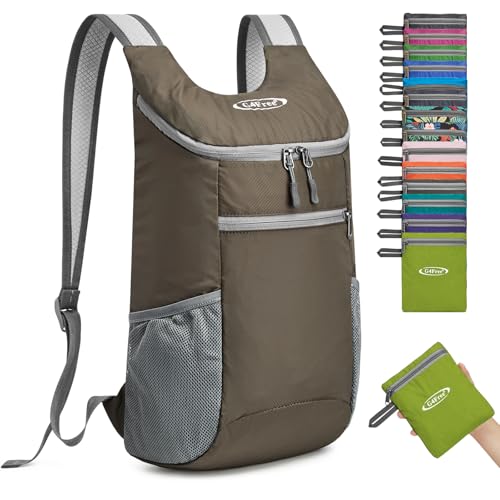
The G4Free 11L Ultra Lightweight Small Rucksack is a packable, frameless daypack engineered specifically for minimalist day hikers, vacationers, and commuters who prioritize portability over heavy suspension systems. Weighing just 4.59 ounces (approximately 0.29 pounds), the pack collapses completely into an integrated pouch, making it an excellent companion for travelers seeking a secondary summit pack inside their luggage or outdoor walkers who need a quick grab-and-go option for casual local trails.
With an 11-liter total volume and unfolded dimensions of 8.27 x 5.12 x 12.99 inches, this daypack is scaled for basic essentials rather than multi-hour wilderness trips. The main compartment offers enough room for an extra windbreaker, lightweight towel, trail snacks, and small personal gear, while the front zippered compartment secures items like keys, cards, or a passport. Because the pack lacks a rigid frame sheet, internal stays, or a supportive hip belt, carrying comfort relies entirely on packing soft items against the rear panel and keeping total carried weight modest.
The pack is constructed from a tear-resistant polyamide fabric paired with SBS zippers, providing a solid balance between low weight and reliable trail utility. The water-resistant surface treatment helps shed light rain, dust, and trail debris during short walks. Two exterior side mesh pockets give quick access to slim hydration bottles or snacks, keeping essential gear within easy reach without requiring you to reopen the main compartment.
Deploying and packing down the rucksack is straightforward and takes only seconds. To stow the backpack, you simply invert the built-in storage pouch and fold the polyamide fabric inward, resulting in a pocket-sized bundle that stores neatly in a carry-on suitcase, duffel bag, or vehicle console. For post-hike cleaning, the synthetic polyamide material can be spot cleaned with a damp cloth and mild soap, then air-dried before folding back into its pouch.
Hikers should keep in mind that an 11-liter frameless daypack comes with distinct trail limitations. It is not built for rough backcountry terrain, overnight backpacking, or carrying dense, heavy gear. In addition, while the fabric repels light drizzles, the lack of taped seams and a dedicated rain cover means it cannot protect sensitive electronics during extended downpours. The unpadded shoulder straps will also cause noticeable pressure if the bag is overloaded with heavy items.
For day hikers, campers, and travelers who want a dependable, featherweight daypack that takes up virtually zero luggage space, the G4Free 11L Packable Backpack delivers practical functionality at an accessible price. It serves as an efficient solution for short park trails, city sightseeing, and campground errands where carrying a full-sized hiking pack would be unnecessary bulk.
The G4Free 11L daypack provides four designated storage areas, including two zippered compartments and two flexible side mesh pockets. The main storage compartment holds small trail essentials such as a packable jacket, trail food, and small travel accessories, while the front zippered pocket keeps smaller items like wallets, phones, and trail passes secure.
Because the pack is 11 liters in volume with an 8.3 x 5.1 x 13-inch footprint, careful packing is recommended. Arranging flat, soft garments against the interior back section creates a natural cushion, ensuring comfortable carry on short walks and preventing hard-edged objects from poking through the lightweight fabric.
Built with lightweight polyamide fabric, the G4Free daypack is designed to resist light abrasion and trail dust while keeping total pack weight down to 4.59 ounces. SBS zippers secure both compartments, offering smooth pull action that holds up well under routine trail and travel usage.
When not on trail, the entire daypack folds into its own interior pouch, creating a compact bundle that fits inside travel duffels, large backpacking packs, or car glove boxes. The exterior material provides light water resistance for brief drizzles, though full dry bags or rain covers should be used for wet weather.

Pros
- Expands up to 45L for high packing volume while remaining airline carry-on compliant
- Very lightweight for its capacity at approximately 2.2 pounds (1 kg)
- Convertible harness stows away completely behind a zippered back panel for clean transit carry
- Four external compression straps help stabilize shifting gear and reduce pack bulk
- Vertically adjustable sternum strap helps dial in upper-body shoulder strap positioning
Cons
- Lacks a load-bearing hip belt, making it less suitable for heavy, technical multi-day backcountry trails
- Water-resistant polyester and standard lockable zippers are not fully waterproof against sustained downpours
- No dedicated hydration bladder port or internal reservoir sleeve is specified for on-trail drinking
The MATEIN Expandable Travel Backpack is a crossover carry-on daypack engineered for travelers who hike, weekend road trippers, and budget-conscious day hikers needing generous packing capacity without heavy bulk. Functioning primarily as an overhead-compatible travel bag that transitions smoothly to light outdoor outings, this pack fits users who want a versatile, suitcase-style opening paired with traditional backpack shoulder straps. Its modular expandability makes it a practical option for anyone combining flights or long drives with relaxed day hikes.
With an unexpanded footprint measuring 19 by 13 by 8 inches and expanding up to 45 liters of storage, this pack offers ample room for bulky layers, gear cubes, and trail accessories. At roughly 2.2 pounds (1 kilogram), its base weight remains remarkably low for a 45-liter volume bag. To assist with carrying stability, the padded shoulder straps incorporate an adjustable sternum strap that slides vertically up or down the chest to help distribute tension across the upper body. Four exterior compression straps allow you to cinch the load tight, preventing clothing and equipment from sloshing around while walking.
Construction centers on lightweight, water-resistant polyester built to resist light dampness and everyday travel abrasion. The back features an air-mesh ventilated panel designed to allow airflow against your back during transit or warm walks. For security and durability, MATEIN includes lockable zipper heads on the main openings and reinforced perimeter stitching. The shoulder straps are fully hideaway, allowing them to zip neatly into the back panel to convert the bag into a duffle or briefcase using the two padded side and top grab handles.
Packing and organization are straightforward thanks to a wide luggage-style layout. Inside, elastic compression straps secure apparel and bulky equipment in place, while a front compartment isolates smaller items like phones, keys, and charging cords. When transitioning between the airport and the trailhead, the integrated luggage sleeve slides over rolling suitcase handles, and the side grab handle allows quick retrieval from overhead bins or car trunks. Because the pack uses synthetic polyester, cleaning is simple with a damp cloth and mild soap, followed by hang drying.
Prospective buyers should evaluate realistic trail limitations before taking this pack into remote backcountry terrain. Because it is a frameless travel-oriented pack without a padded, load-bearing hip belt, carrying heavy gear solely on the shoulder straps over steep or extended mileage may cause upper-body fatigue. Additionally, while the polyester shell is water-resistant, it is not seam-sealed or waterproof, and the product data does not list a hydration reservoir sleeve or hose port for on-the-move trail drinking.
For weekend adventurers, casual day hikers, and frequent travelers seeking a spacious 45-liter crossover bag at an accessible price point, the MATEIN Expandable Backpack delivers functional utility. It excels as a transit-to-trail duffle-pack where lightweight versatility, carry-on compliance, and organized packing take priority over technical backcountry suspension.
The pack unzips along an expansion gusset to deliver up to 45 liters of usable interior volume, matching standard carry-on overhead bin requirements. The wide main compartment includes elastic retention straps to hold packing cubes, trail layers, or a camera insert firmly in position. An exterior front organizer pocket provides rapid access to phones, tickets, earphones, and small trail necessities without having to open the main gear compartment.
Carrying comfort relies on padded shoulder straps and an adjustable sternum strap that slides vertically up or down to align with your chest. An air-mesh back panel provides cushioned contact and promotes passive airflow. Four external compression straps let you reduce pack depth by an inch or two, drawing weight closer to your back and relieving stress on the zippers. The entire harness can be tucked into the rear panel for clean duffle-style carry.
Manufactured from water-resistant polyester with lockable zipper sliders, the exterior helps protect clothing from light moisture and dust during transit. While well-suited for travel, road trips, and gentle front-country day hikes, the lack of an internal frame, hip belt, or dedicated hydration bladder port means it is not intended for rigorous multi-day backpacking or heavy backcountry loads.
Evaluating Travel Backpacks: Capacity, Geometry, and Transit Utility
Identifying %what is the best backpack for travelling% starts with recognizing that no single bag accommodates every travel itinerary. A dedicated one-bag traveler flying across budget carriers has vastly different storage requirements than an urban explorer who leaves heavy luggage at the hotel. Success depends on aligning pack capacity, exterior geometry, and harness comfort with the realities of modern transit hubs. Focusing on durable textiles, practical organizational layouts, and reliable hardware ensures your gear survives aggressive airport handling without causing physical fatigue.
Defining Travel Styles: One-Bag Transit Versus Packable Excursion Packs
Travelers typically approach packing from two opposing perspectives depending on how they prefer to navigate transit terminals. One-bag travelers aim to consolidate clothing, toiletries, and mobile workstation essentials into a single carry-on that avoids baggage claims altogether. This strategy eliminates the risk of lost luggage while allowing swift transitions from airplane gates to commuter trains. Conversely, excursion-focused travelers prefer checking larger rolling bags while relying on ultra-light daypacks for day trips and neighborhood exploration.
Comparing these distinct carry styles highlights the functional divide between high-capacity travel luggage and minimalist daypacks. A large bag like the MATEIN Carry on Backpack for Airplane provides up to 45L of expanded volume designed to house multiple packing cubes, extra shoes, and work gear. On the other end of the spectrum, an ultra-compact option like the G4Free Ultra Lightweight Small Rucksack Foldable provides an 11L footprint that collapses into a palm-sized pouch. Carrying a secondary foldable pack inside a primary suitcase allows you to unpack at your lodging and roam cities without dragging a cumbersome carry-on through crowded streets.
Selecting between these formats depends on whether your itinerary requires independent transit mobility or localized flexibility. If your journey involves multiple layovers, tight train connections, and walking across cobblestone streets, a structured carry-on pack keeps everything secured on your back. If your travel involves staying in a single resort or central hotel, a primary rolling case paired with an ultra-light packable rucksack provides superior daily comfort. Understanding your travel rhythm helps you invest in the right gear geometry rather than carrying excess empty bulk.
Volume Sizing and Airline Dimensional Allowances
Airline dimensional guidelines remain one of the most critical factors when selecting travel luggage. Major carriers enforce strict maximum dimensions for overhead carry-on luggage, which generally hover around 22 inches tall, 14 inches wide, and 9 inches deep. Personal item allowances under the seat in front of you are considerably more restrictive, often capped around 18 inches by 14 inches by 8 inches. Budget airlines such as Spirit, EasyJet, and JetBlue frequently monitor gate compliance, making oversized bags an expensive liability.
The external dimensions of your pack directly determine whether you breeze through boarding gates or get forced into unexpected gate-check fees. The MATEIN Carry on Backpack measures 19 by 13 by 8 inches in its standard configuration, which aligns neatly with overhead bin expectations and standard carry-on rules. When expanded to its full 45L capacity, the pack adds valuable depth to accommodate extra layers, though over-packing may challenge tight sizer boxes. Utilizing four external compression straps allows travelers to pull excess volume inward, effectively slimming the pack profile before boarding inspections.
Smaller daypacks bypass airline dimensional scrutiny entirely by fitting effortlessly beneath aircraft seating. The 11L G4Free packable rucksack occupies negligible physical space, making it a reliable personal item that stows beneath standard cabin seats without cramping legroom. For travelers seeking alternative budget options that balance outdoor utility with affordable construction, examining budget hiking backpack options can offer useful perspectives on trail-ready capacity. Matching your chosen pack volume to realistic airline baggage constraints prevents pre-flight stress and unexpected luggage surcharges.
Harness Ergonomics and Weight Distribution on the Move
Carrying heavy travel gear across vast airport concourses places substantial mechanical strain on your neck, shoulders, and spine. Unpadded or narrow shoulder straps dig painfully into the trapezius muscles when supporting loads exceeding fifteen pounds. Ergonomic travel backpacks combat this fatigue by utilizing wide, contoured shoulder straps filled with resilient foam padding to disperse downward pressure. A well-fitted harness keeps the load close to your center of gravity, preventing backward torque that causes lower back aching.
Sternum straps play an essential stabilization role by pulling shoulder straps inward across your chest to balance outward pull. The MATEIN Carry on Backpack incorporates an adjustable sternum strap that slides vertically to align properly across individual chest profiles. Fastening this strap prevents the shoulder straps from shifting outward during rapid walking or jogging to catch connecting flights. Combined with a ventilated air-mesh back panel, this suspension setup encourages cooling airflow to reduce heat buildup during warm-weather travel.
Minimalist packable rucksacks take an entirely different approach to harness design by prioritizing portability over dense cushioning. Weighing just 4.59oz, the G4Free foldable rucksack relies on lightweight, breathable straps designed to support short day-hiking excursions and city walking. Because packable daypacks lack rigid internal frame sheets, loading them with heavy electronics or dense water bottles can create uncomfortable pressure points. Reserving ultra-light packs for light jackets, water bottles, and small personal essentials ensures comfortable carrying throughout afternoon sightseeing.
Fabric Engineering, Water Resistance, and Hardware Durability
Travel backpacks endure abrasive conveyor belts, dirty overhead bins, and sudden weather shifts, demanding durable exterior fabrics. Synthetic textiles like polyester and polyamide offer high tensile strength and natural resistance to tearing under heavy packing tension. The G4Free small rucksack utilizes tear-resistant polyamide fabric that resists snags from rough branches or transit scuffs despite its ultra-thin profile. Similarly, the MATEIN travel bag features a water-resistant polyester exterior engineered to survive diverse temperatures and daily transit friction.
Water-resistant exterior coatings provide vital protection against light rain, mist, and accidental beverage splashes during travel. While standard woven fabrics repel light moisture, prolonged exposure to heavy downpours can eventually saturate untreated seams and needle perforations. Zippers represent another primary vulnerability for water intrusion, requiring tight tolerances and durable slider construction. High-grade SBS zippers and reinforced stitching help keep moisture and grit out of delicate interior compartments while protecting packed apparel from trail dirt.
Zipper hardware durability is equally critical when a travel pack is packed to its volumetric capacity. Main compartment zippers experience intense lateral pulling forces, which can cause cheap coils to derail or teeth to separate unexpectedly. The MATEIN backpack addresses security and structural stress by incorporating lockable zipper sliders on primary compartments. These sturdy zipper heads accept small luggage padlocks, deterring opportunistic pickpockets in crowded transit hubs while resisting blowout forces during transit handling.
Internal Organization Architecture and Packing Efficiency
Packing efficiency relies heavily on how a backpack opens and presents its internal cavity to the traveler. Traditional top-loading backpacks force users to dig blindly through stacked items, disrupting neatly folded clothing to reach gear at the bottom. Travel-focused backpacks often employ a full clamshell opening that unzips flat like a traditional suitcase. This flat-lay configuration allows immediate visual access to all compartments, streamlining the morning packing process in cramped hostel dorms or hotel rooms.
Inside a large travel pack, dedicated restraint systems prevent clothes and accessories from shifting into disarray during transit. The MATEIN 45L expandable bag incorporates internal compression elastic straps to lock down bulky clothing cubes and toiletry kits. Front organizer compartments provide segmented slots for everyday items like smartphones, passport wallets, charging cables, and transit tickets. Separating high-frequency access items from main wardrobe storage eliminates frantic searching at airport security checkpoints.
Daypacks prioritize quick-access external storage to keep small trail or city essentials within arm reach. The G4Free 11L rucksack includes dual exterior mesh side pockets that securely retain water bottles and compact umbrellas. Travelers seeking specialized hydration or trail storage can also look into insulated cooler backpacks for outdoor adventures requiring chilled supplies. Balancing open packing volume with dedicated quick-access pockets ensures your vital travel documents remain secure without compromising clothing capacity.
Packing Strategies to Prevent Zipper Strain and Seam Fatigue
Strategic weight distribution inside your travel pack improves carrying balance while extending the operational lifespan of the seams. Dense, heavy objects like toiletry cases, portable power banks, and footwear should sit close to the back panel near your spine. Placing heavy mass against your back prevents the bag from pulling backward, which protects shoulder seams from excessive leverage strain. Lighter items such as t-shirts, jackets, and socks should fill the outer cavity and bottom corners to cushion internal gear.
Over-stuffing any backpack puts enormous pressure on zipper tracks and perimeter seam binding. When expanding a bag to its maximum liter capacity, travelers must avoid forcing zippers closed against resistance. Doing so can warp delicate zipper coils, resulting in split tracks that leave your belongings exposed during a flight. Utilizing external compression straps to squeeze bulk downward before pulling zipper sliders ensures smooth gliding and reduces mechanical fatigue on zipper teeth.
Packable daypacks also require careful loading methods to prevent localized tearing in lightweight fabrics. Because rucksacks like the G4Free 11L fold into compact pouches, their fabric lacks rigid foam back panels or base reinforcements. Placing sharp objects like keys, charging bricks, or hardcover guidebooks directly against the back panel will cause painful poking against your spine. Folding a light sweater or rain jacket flat against the rear interior wall creates an artificial cushion that enhances carrying comfort throughout the day.
Care and Long-Term Fabric Maintenance for Travel Packs
Proper fabric care preserves water-resistant exterior treatments and extends the life of travel backpack hardware. Commuter trains, dirty bus cargo bays, and airplane overhead bins collect dust, road salt, and grime that degrade synthetic coatings over time. Travelers should avoid throwing structured travel packs into domestic washing machines, as aggressive agitators can tear internal seam tape and crack foam padding. Hand washing with lukewarm water and mild non-detergent soap safely cleans dirt without stripping protective fabric finishes.
Maintaining zipper tracks is equally vital to ensure seamless operation across multiple travel seasons. Zipper coils frequently trap abrasive grit, sand, and pocket lint, which accelerates slider wear and causes catching. Inspecting zipper teeth and gently brushing them with a soft toothbrush removes trapped debris that could otherwise cause jamming. After cleaning, allowing backpacks to air dry thoroughly in shaded, well-ventilated spaces prevents moisture accumulation, synthetic odor development, and mold growth.
Ultimately, selecting your travel backpack requires honest assessment of your personal travel habits, gear volume, and destination requirements. A convertible 45L carry-on bag provides the expansive capacity and airline-friendly footprint needed for self-contained, multi-week journeys. Meanwhile, a packable 11L rucksack serves as the ideal secondary companion for effortless day trips once your primary luggage is safely stowed. By prioritizing ergonomic harness support, durable water-resistant textiles, and thoughtful packing habits, you can travel confidently anywhere in the world.






Write Your Review
No reviews yet. Be the first to share your experience!