


Unpredictable rain showers and wet trail conditions can quickly compromise electronic devices, trail gear, and spare clothing during an outdoor trek or transit commute. Determining whether a particular bag qualifies as the is it best lightweight waterproof backpack requires examining the practical balance between minimal pack weight, durable weather resistance, and ergonomic comfort. Ultralight daypacks shed ounces by utilizing modern synthetic textiles, but carrying lighter gear should never leave your critical essentials exposed to water damage. Hikers evaluating budget-friendly weather gear can consult an affordable hiking backpack guide to see how entry-level fabric treatments compare against heavy-duty construction styles.
Modern technical bags often employ high-density polyester, lightweight ripstop nylon, or supplementary rain covers to shield packed contents without overloading your shoulders. Evaluating gear volume, strap padding, and pocket architecture helps ensure that you do not sacrifice carrying convenience just to achieve a minimal base weight. Whether you need an ultralight packable daypack for quick summit pushes or a high-capacity rucksack with dedicated wet storage, selecting the right weather protection depends on your specific outdoor environment.
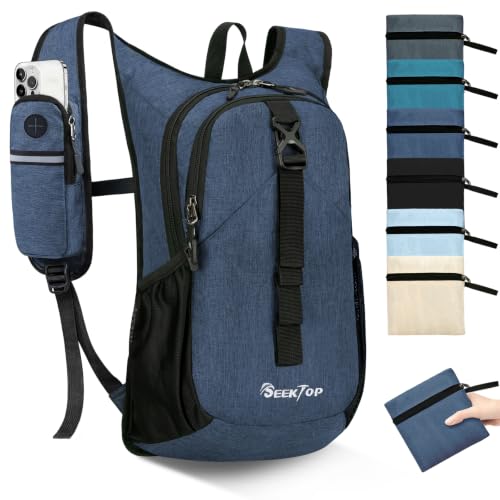
Pros
- Weighs only around 0.75 lbs and stows into its own compact pouch for easy travel storage.
- Shoulder-strap pockets keep a smartphone and quick trail snacks accessible without taking off the pack.
- Ten distinct storage pockets provide exceptional organization for a compact 15-liter daypack.
- Sternum strap adjusts vertically and horizontally, featuring a built-in safety whistle.
Cons
- Frameless packable design lacks an internal frame sheet or padded hip belt for heavier loads.
- 15-liter volume is strictly built for minimalist day essentials rather than bulky cold-weather gear.
- Polyester fabric resists moisture, but unsealed seams and standard zippers are not meant for heavy downpours.
The Seektop 15L Small Hiking Backpack is a frameless, packable daypack engineered for day hikers, travelers, and commuters seeking minimalist carry weight and fast pocket access. Weighing approximately 0.75 pounds with exterior dimensions of 5.11 by 11.02 by 17.32 inches, it delivers 15 liters of organized storage for warm-weather hikes, day tours, and everyday outings. Because it folds into an integrated 7.48 by 7.87 inch pouch, it serves exceptionally well as a storable summit pack or backup day bag tucked inside travel luggage.
On the trail, the pack relies on breathable mesh shoulder straps designed to keep air moving over the shoulders during warm ascents. To help keep the straps secure against the torso, Seektop incorporates an adjustable sternum strap with both circumference and vertical height adjustments. The sternum buckle also doubles as an emergency whistle, giving hikers a built-in signaling tool without having to clip extra hardware onto the exterior webbing.
Construction centers around high-density polyester waterproof fabric paired with SBS zippers and reinforced stitching at critical strap stress points. The fabric helps shed light splash and trail moisture, while the reinforced seams support everyday load handling. However, because packable bags feature standard needle stitching and exposed zipper tracks rather than welded seams and watertight closures, hikers carrying delicate electronics should still pack items in dry bags during prolonged rain.
Organization is a distinct highlight for a pack of this volume, featuring ten dedicated storage pockets. The left shoulder harness integrates a zippered pocket designed to hold smartphones with screen sizes up to 7 inches, while the right harness provides an anti-theft elastic-cord stash pocket for snacks or small essentials. Additional compartments include a main two-way zippered compartment with two interior slip pockets, a secondary zip compartment, a front snap pocket, two side mesh pockets, a hidden rear security pocket against the back panel, and four external webbing loops for attaching gear.
Prospective buyers should keep in mind the inherent limitations of an ultralight packable design. Without an internal frame, structured back panel, or load-bearing hip belt, all carried weight rests directly across the shoulders. Packing dense or heavy gear can cause the pack body to bulge uncomfortably against the back. Furthermore, with no designated hydration bladder sleeve or hose port listed, water storage relies primarily on the exterior mesh side pockets.
For day hikers, city commuters, and adventure travelers who want a dependable, pocket-rich daypack that packs flat into luggage, the Seektop 15L offers practical value. It excels on short loop hikes, roadside trails, and urban excursions where light base weight, organized storage, and quick-reach shoulder pockets make the journey simple and hassle-free.
The Seektop 15L provides ten distinct storage pockets designed to keep small essentials organized and easy to locate on the move. The main compartment opens wide with SBS zippers and houses two interior pockets for flatter items, while a secondary zippered compartment and a quick-access front snap pocket handle maps, keys, or sunscreen.
For on-trail accessibility, the harness features a left-strap zippered phone pocket compatible with screens up to 7 inches and a right-strap elastic-cord pocket for trail snacks or small wallets. An anti-theft zippered pocket on the back panel keeps travel documents secure, while two flexible side mesh pockets hold water bottles and four exterior webbing loops accommodate light gear clips.
Measuring 5.11 x 11.02 x 17.32 inches in standard form, the Seektop 15L folds smoothly into its built-in 7.48 x 7.87 inch zippered pocket. At roughly 0.75 pounds, it stows easily inside carry-on luggage, duffel bags, or vehicle glove boxes, ready to deploy whenever a spontaneous day hike arises.
The suspension system uses breathable mesh shoulder straps that adjust via standard lower pull tabs. A sliding sternum strap provides vertical and horizontal adjustments across the chest to steady the harness during activity, and the chest buckle incorporates an audible safety whistle for emergency communication on the trail.

Pros
- Generous 40L capacity at a low listed weight of just 2.18 pounds
- Included stowable rain cover offers immediate foul-weather defense
- Dedicated internal wet pocket keeps damp garments separated from dry trail gear
- Dual zippered hip-belt pockets provide convenient access to trail snacks and small items
- Built-in trekking pole loops and hydration hose routing support active day hiking
Cons
- Hydration reservoir is not included and must be purchased separately
- Manufacturer does not specify adjustable torso ranges, making custom spine fit limited
- Lacks heavy-duty load-transfer stays for carrying dense, expedition-weight loads
The Maelstrom 40L Hiking Backpack is a high-capacity, lightweight daypack designed for hikers, weekend campers, and adventure travelers who want ample gear space without carrying excess empty pack weight. At an accessible 2.18 pounds, this 40-liter pack bridges the gap between a standard single-day bag and an overnight pack, making it a viable option for full-day mountain excursions, gear-heavy family outings, or minimalist overnights.
For trail carrying comfort, the pack features an ergonomic, breathable padded back panel paired with contoured, ventilated shoulder straps. An adjustable chest buckle stabilizes the harness across the torso and integrates an emergency whistle for added trail readiness. Dual zippered waist pockets help stabilize the lower pack against your hips while keeping essential items within arm reach. Hikers should note that the pack does not provide adjustable torso-length sliding mechanisms, so overall suspension fit will depend on your individual torso proportions.
Exterior construction utilizes 210D rip-stop nylon fabric, offering water resistance and protection against light trail abrasions from overhanging branches or brush. When sustained rainfall rolls in, the pack includes a fitted rain cover stored inside a dedicated bottom pouch. This rain cover features a reflective logo to enhance low-light visibility while providing an extra barrier against moisture.
Organization is a distinct strength of the Maelstrom 40L, featuring a large main zippered compartment, three front zippered utility pockets, a top lid pocket, and two stretchy mesh side pockets for water bottles. An internal waterproof wet pocket lets you isolate damp rainwear, sweaty garments, or towels from the rest of your dry supplies. For hands-free drinking on the move, an internal fastener accommodates a hydration reservoir paired with a side hose port, though the bladder itself must be supplied separately.
In terms of limitations, the flexible lightweight build is engineered for moderate trail loads rather than dense, heavy backpacking gear. Carrying excessively dense gear without rigid aluminum stay support may cause the pack to sag against the lower lumbar area. Furthermore, the absence of specific torso sizing data means hikers with particularly tall or short torsos may need to experiment with strap tension to achieve balanced weight distribution.
Overall, the Maelstrom 40L Backpack is a practical, value-oriented solution for day hikers, campers, and travelers seeking dependable volume, structured pocket access, and foul-weather readiness. If you prioritize lightweight flexibility, included weather accessories, and versatile pocket dividers over rigid technical suspension systems, this pack serves as a capable companion across a wide range of outdoor adventures.
The Maelstrom 40L pack utilizes a multi-compartment structure to prevent trail gear from migrating to the bottom of the main chamber. It features a spacious main zipper compartment alongside three individual front zippered pockets that allow clear separation of trail maps, headlamps, first-aid kits, and electronics. The quick-access top pocket serves as a convenient stash location for items like sunglasses or keys.
Inside the primary chamber, a dedicated waterproof wet pocket separates damp swimsuits, rain jackets, or post-hike clothes from dry gear. Exterior storage is rounded out with dual side mesh pockets designed to hold standard water bottles, along with two zippered hip-belt pockets for snacks, multi-tools, or pocket knives. Side fastener cords and elastic loops securely anchor up to two trekking poles against the pack body when not in use.
Weather management relies on a two-part defense system starting with the 210D rip-stop water-resistant nylon shell. For steady rain and harsh conditions, an included rain cover deploys quickly from the dedicated bottom zipper pocket, providing supplemental coverage to shield pack zippers and seams from saturation.
Hydration integration includes a hook-and-loop hanging strap inside the main chamber to keep a reservoir upright, along with an upper pass-through hole for routing a drinking tube down the shoulder harness. Note that a hydration reservoir is not included with the pack, so hikers will need to pair it with their preferred compatible water bladder.

Pros
- Substantial 45L capacity provides plenty of room for bulky gear, layers, and camping equipment
- Modular MOLLE exterior allows easy attachment of extra pouches, carabiners, and trail tools
- Built with water-resistant 900 Oxford nylon and reinforced double-stitched seams
- Dedicated side bottle pocket accommodates standard 750ml hydration bottles
- Compression strap system secures partial loads to prevent gear shifting on the trail
Cons
- Lacks an internal rigid frame or structured load-lifter system, limiting heavy-load support on steep, long-distance treks
- Water-resistant fabric does not include a dedicated rain cover or waterproof seam sealing for sustained downpours
- Fixed torso sizing may not provide an optimal ergonomic fit for all body types
The LHI Military Tactical Backpack is a large-format 45-liter rucksack designed for day hikers, weekend campers, bushcrafters, and budget-conscious outdoor enthusiasts who favor rugged utility over minimalist designs. Measuring 12 by 20 by 12 inches and weighing approximately 2.76 pounds, this pack bridges the gap between an extended daypack and a gear-heavy weekend bag. With its tactical aesthetic and modular design, it serves users who need flexible storage for trails, basecamp setups, bug-out kits, and everyday travel.
On trail excursions, the 45-liter capacity offers generous space for bulkier layers, cook sets, food, and camp gear. Carrying stability is managed through side and front compression straps that help draw excess volume close to the spine when the pack is not completely full. Shoulder straps and the back panel feature ventilated mesh padding to encourage airflow and reduce heat buildup against the back during warmer hikes. For hydration, an exterior side bottle holder securely carries a standard 750ml water bottle, giving hikers quick access without opening the main compartment.
Construction is centered around 900 Oxford nylon fabric, providing a tough, water-resistant exterior designed to withstand abrasive contact with brush, rocks, and dirt. Critical stress points feature double stitching, while the heavy-duty zippers are fitted with utility-style cord pulls that remain easy to manipulate even with gloved hands. The exterior is extensively lined with a MOLLE webbing system, allowing hikers to attach modular pouches, multi-tools, trekking pole straps, or accessory carabiners to customize their external loadout.
Packing and organizing gear is straightforward thanks to a multi-compartment interior layout. Instead of a single top-loading cavity, the backpack utilizes multiple zippered compartments accompanied by internal zip pockets and mesh dividers. This configuration allows hikers to keep smaller gear, first-aid items, and electronics isolated from bulky clothing or food sacks. Adjusting the pack relies primarily on standard shoulder-strap sliders and tensioning the external compression system, making daily setup quick and hassle-free.
While the pack offers substantial volume and modular utility, prospective buyers should understand its structural limitations. Without a rigid internal frame or dedicated load-lifter straps, carrying exceptionally heavy backpacking loads over rugged multi-day routes may concentrate weight on the shoulders rather than transferring it efficiently to the hips. Additionally, although the 900 Oxford fabric is water-resistant against light mist and splashes, the pack does not include a dedicated waterproof rain cover or sealed seams to protect contents during sustained downpours.
For hikers, campers, and outdoor generalists seeking an affordable, high-capacity rucksack with customizable exterior attachment points, the LHI 45L Tactical Backpack represents a practical choice. It provides solid volume control, convenient bottle access, and multi-pocket organization at an accessible price point, making it well-suited for moderate trail outings, car camping, and vehicle gear storage.
The LHI Tactical Backpack provides a manufacturer-listed volume of 45 liters within dimensions of 12 by 20 by 12 inches. This spacious profile accommodates substantial gear arrays, including spare clothing, trail food, cook systems, and basic camp gear.
Organization is facilitated by multiple zippered compartments equipped with internal mesh and zippered divider pockets. This compartmentalized layout keeps small trail tools, navigation gear, and personal effects separated from bulkier main-chamber contents.
Exterior gear management is supported by a comprehensive MOLLE attachment system across the front and sides, alongside an integrated side pocket sized specifically to hold a 750ml water bottle for convenient trail hydration.
Built from 900 Oxford nylon fabric, the pack body offers exterior water resistance against light spray, damp ground, and brief drizzles. The tightly woven fabric structure helps resist abrasion from trailside vegetation and rough ground.
High-stress seams benefit from reinforced double-stitching to withstand everyday tension and gear packing. The heavy-duty zippers are paired with utility-style cord pulls to facilitate smooth opening and closing during outdoor use.
While the fabric resists light moisture, the pack does not feature taped seams or an included waterproof rain cover. Hikers heading into heavy or persistent rain should utilize internal dry bags or an external pack cover to protect moisture-sensitive gear.
Evaluating Lightweight Weatherproof Backpack Engineering and Performance
Deciding whether a lightweight waterproof backpack is the right choice depends on how you balance moisture protection against overall pack weight and structural durability. Ultralight packs shed ounces by utilizing thinner technical fabrics and streamlined harness systems, but true submersible waterproofing is rare without adding significant weight or stiff roll-top closures. Most models in this category deliver dependable water resistance or utilize integrated rain covers to keep your gear dry during sudden downpours. By analyzing fabric coatings, zipper construction, and load transfer ergonomics, you can determine if a featherweight weather-resistant pack satisfies your specific trail or travel requirements.
The Technical Distinction Between Water Resistance and Waterproofing
Outdoor gear manufacturers frequently describe daypacks as waterproof when the primary textile simply repels light surface moisture. Technical fabrics such as high-density polyester or 210D ripstop nylon typically receive a polyurethane backing or durable water-repellent surface finish that causes rain droplets to bead up and roll off. However, standard needle-stitched seams and traditional zipper coils create vulnerable entry points where water can penetrate under sustained exposure. True waterproof bags generally require radio-frequency welded seams and airtight pressure-rated zippers, which dramatically increase empty pack weight and manufacturing complexity.
Understanding this distinction helps manage expectations when encountering sustained wet weather on the trail or during an urban commute. A water-resistant pack reliably defends against brief showers, wet vegetation, and light splashes while preserving lightweight flexibility and breathability. For severe downpours, deploying an external rain cover or packing sensitive electronics into silicone-coated dry sacks offers dependable security without the stiffness of industrial dry bags. Recognizing these textile boundaries prevents accidental moisture damage to internal electronics and spare clothing.
Fabric Denier and Tear Resistance in Ultralight Packs
Fabric denier measures individual yarn thickness, directly influencing both the abrasion durability and unladen tare weight of a backpack. Lightweight daypacks frequently employ 210D ripstop nylon or high-density polyester, which weave reinforcing grid patterns into the textile to arrest small tears before they spread. These lighter materials allow packable designs to fold into compact pouches while maintaining sufficient tensile strength for day hiking and urban travel. In contrast, heavier tactical rucksacks may utilize 900D oxford nylon to resist rigorous abrasion from rocks, dense brush, and heavy utility gear.
Selecting the right fabric weight involves balancing abrasion resistance against the physical strain of carrying extra tare weight. Lighter fabrics flex easily, conform to irregular loads, and reduce shoulder fatigue over long distances on open paths. Heavier textiles withstand repeated scraping against rough surfaces and support dense cargo without stretching or seam distortion. Knowing your typical route conditions ensures you choose a denier rating that survives abrasive environments without carrying unnecessary ounces.
Seam Construction and Zipper Weatherproofing Mechanisms
Zipper tracks represent the most frequent point of moisture intrusion when carrying a water-resistant backpack through heavy rain. Standard interlocking zipper coils leave microscopic gaps where wind-driven precipitation can seep directly into main storage compartments. Quality designs counter this vulnerability by incorporating reverse-coil tracks, protective fabric storm flaps, or tightly woven zipper tapes. Hardware from established brands like SBS provides smooth slider action and structural resistance against tooth separation when packing main compartments to full capacity.
Needle holes created during factory stitching also present pathways for moisture ingress when outer fabrics become saturated. While heavy waterproof duffels use welded seams, lightweight hiking packs rely on double-stitched reinforcements along high-stress seams to preserve structural integrity under tension. Applying a seam sealant or utilizing an external rain cover prevents capillary action from drawing moisture through needle holes during prolonged storms. Inspecting seam stitching and zipper closures helps you identify potential leak points before heading out into inclement weather.
The Strategic Value of Integrated Rain Covers and Wet Pockets
Many lightweight backpack designs incorporate dedicated rain covers to bridge the gap between water-resistant fabrics and full storm protection. Stored neatly in an exterior bottom pocket, a deployable rain cover with elastic edges wraps completely around the pack exterior in seconds. This supplemental barrier blocks falling rain and trail splash from contacting exposed zippers and needle seams, keeping gear dry during torrential mountain weather. Reflective logos printed on rain covers also enhance visibility in low-light conditions and roadside walking sections.
Internal organization benefits greatly when packs include specialized waterproof wet pockets within their main compartments. These lined compartments allow hikers and commuters to separate damp rain jackets, sweaty athletic apparel, or wet towels from dry electronics and paperwork. Containing damp items inside an isolated barrier prevents internal moisture transfer and eliminates musty odors across clean layers. This dual approach of an external rain shield and internal wet separation provides versatile moisture management across diverse environments.
Capacity Sizing Across Common Carry Profiles
Choosing an ideal pack volume requires matching your gear checklist with the physical storage capacity measured in liters. Compact 15-liter daypacks serve minimalist hikers, urban commuters, and travelers who need immediate access to hydration, light rain shells, and small electronics. Their compact profiles keep weight tightly centered against your upper back to minimize sway during brisk walking or trail running. Larger 40-liter daypacks accommodate bulky insulation layers, camp stoves, and extended trail supplies necessary for full-day wilderness treks or weekend excursions.
Tactical rucksacks and high-capacity travel packs often expand to 45 liters, featuring multiple compartments and external attachment points for modular utility. If you are comparing heavy load haulers against lightweight frameless daypacks, exploring our internal frame hiking backpacks resource highlights how rigid suspension elements alter balance when carrying extensive gear. While expanded volumes allow for generous gear storage, over-packing an unstructured pack can pull the center of gravity backward and strain your shoulders. Evaluating your realistic packing list prevents buying excess volume that tempts you to carry unnecessary weight.
Harness Ergonomics and Torso Weight Distribution
Carrying comfort depends entirely on how effectively the harness system stabilizes the pack and distributes weight across your torso. Ultralight daypacks often utilize breathable mesh shoulder straps with targeted reinforcement at key stress points to prevent tearing. Incorporating an adjustable sternum strap allows you to fine-tune both vertical height and chest tension, pulling the shoulder straps inward to prevent slipping. Many chest buckles also integrate emergency survival whistles, providing added safety during solo outdoor excursions.
As pack volume increases into the 40-liter to 45-liter territory, ergonomic padding becomes essential to reduce trapezius fatigue. Thicker sponge padding paired with contoured back panels cushions contact points while encouraging airflow along the spine. Adjustable compression straps on the sides and front stabilize shifting cargo, pulling dense gear closer to your center of gravity. Balancing harness adjustability with minimal tare weight ensures sustained comfort during long ascents or transit commutes.
Organization Features and External Modularity
Thoughtful pocket layouts help you keep essential gear organized without adding unnecessary bulk to your pack. Exterior stretch mesh side pockets keep standard water bottles accessible while preventing interior condensation from touching dry clothing. Dedicated harness pockets on shoulder straps provide secure spots for large smartphones, trail snacks, and sunglasses without requiring you to unbuckle the pack. Interior zippered pockets and key leashes keep small items from settling to the bottom of the main compartment.
Outdoor versatility expands further when a pack integrates external mounting points alongside hydration bladder sleeves. Built-in trekking pole loops and elastic fasteners secure walking sticks when navigating flat terrain or scrambling over rocky sections. Tactical models often feature external modular webbing grids that allow you to attach auxiliary pouches or gear carabiners as needed. For day trips requiring specialized food and beverage storage, checking our overview of hiking packs with cooler compartments provides practical insights into maintaining temperature-controlled items on the trail.
Packable Daypacks Versus Rigid Tactical Rucksacks
Packable daypacks offer tremendous convenience for travelers who want a secondary daypack stowed inside their primary luggage. Weighing under a single pound and compressing into pocket-sized pouches, these minimalist bags deploy instantly for spontaneous summit bids or city walking tours. Their frameless design eliminates bulky hardware, letting you stow the empty pouch into carry-on rollers or vehicle glove compartments. However, the absence of rigid back support means careful packing is required to prevent hard items from poking through the fabric.
Structured rucksacks sacrifice packability in exchange for heavy-duty abrasion resistance, organizational compartments, and superior load stabilization. Dense oxford fabrics and multi-panel construction hold their shape even when partially loaded, protecting fragile interior items from external impacts. They also handle heavy density loads like tools, hydration reservoirs, and dense field gear without sagging or distorting the harness geometry. Deciding between a packable daypack and a structured rucksack depends on whether storage flexibility or load stability is your top priority.
Routine Maintenance and Restoring Fabric Water Repellency
Maintaining the water-shedding performance of technical backpack fabrics requires proper cleaning and gentle handling. Machine washing and high-speed spin cycles can delaminate internal polyurethane coatings and damage taped seams. Instead, spot clean exterior mud and sweat using a soft bristle brush, lukewarm water, and a mild non-detergent technical soap. Always allow the pack to air dry thoroughly in a shaded, well-ventilated area away from direct radiators or high-heat clothes dryers.
Over time, dirt accumulation and mechanical friction will gradually degrade the factory durable water-repellent finish applied to exterior fibers. When water droplets no longer bead on the fabric surface, applying a spray-on DWR reproofing treatment restores water repellency without compromising fabric breathability. Keeping zipper tracks free of sand and applying occasional silicone lubricant ensures smooth slider motion and prevents teeth misalignment. Following these simple maintenance routines extends the working life of your pack and keeps internal gear dry season after season.
Key Selection Criteria for Weather-Resistant Daily Carry
Determining whether a lightweight waterproof backpack suits your lifestyle comes down to your primary carry environment and weather risks. If you prioritize minimal weight and spontaneous day trips, a featherweight packable daypack offers outstanding portability without burdening your shoulders. For wilderness hikes and variable alpine climates, a mid-sized daypack equipped with an integrated rain cover and dedicated wet storage delivers superior weather readiness. Meanwhile, rugged tactical options provide resilient fabric protection and external modularity for heavy-duty outdoor recreation.
Take time to assess your typical gear volume, expected weather conditions, and personal comfort preferences before finalizing your choice. Ensuring the harness system fits your torso dimensions comfortably will prevent shoulder strain and fatigue during long days of active use. Choosing a pack built with durable hardware, thoughtful pocket layouts, and reliable water resistance guarantees you stay prepared for changing trail and urban environments.







Write Your Review
No reviews yet. Be the first to share your experience!