


Heavy rainfall, sudden road spray, and puddle kickback create severe challenges for daily bicycle commuters carrying fragile electronics and fresh changes of clothes. Riders frequently wonder, is it best waterproof backpack for cyclists when standard water-resistant daypacks fail to keep moisture from penetrating seams and zipper tracks during severe downpours. A true roll-top dry bag offers complete barrier defense against water intrusion, yet riding with a high-capacity pack requires balancing protection against aerodynamics, harness stability, and back ventilation. Understanding how heavy-duty materials interact with cycling ergonomics ensures you do not sacrifice riding comfort for dry gear.
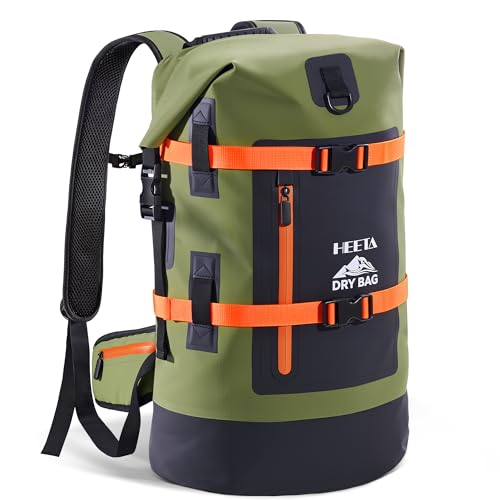
Evaluating equipment like the HEETA Dry Bags Waterproof Backpack 40L for Men highlights how heavy-duty 500D PVC construction and secure buckle closures shield gear from the elements. While traditional road cyclists often lean toward smaller aerodynamic bags, foul-weather commuters and touring cyclists require expansive capacity and integrated tie-down points for racks. Exploring these functional dynamics against alternatives like budget outdoor backpack considerations helps riders decide whether a dedicated submersible-style roll-top dry pack fits their specific daily riding routine.
Pros
- Durable 500D PVC fabric and roll-top seal provide reliable protection against heavy rain and water exposure
- Includes padded back cushioning and a waist belt, offering far better carrying comfort than basic tubular dry bags
- External zip pocket and dual hip belt pockets add practical organization rarely found on traditional roll-top packs
- Exterior D-rings give paddlers and travelers convenient tie-down options for boats and vehicles
Cons
- Frameless design lacks internal stays or load lifters for carrying dense, heavy loads over long distances
- Deep roll-top single-cavity layout requires digging to reach items packed at the very bottom
- No external mesh water bottle side pockets or dedicated hydration reservoir hose ports
The HEETA 40L Waterproof Backpack is a roll-top dry bag designed specifically for outdoor enthusiasts who face severe rain, river crossings, or open-water environments. Unlike conventional hiking daypacks that rely on thin nylon fabrics and separate rain covers, this pack uses impervious 500D PVC material to keep contents protected during wet day hikes, kayak runs, fishing trips, and rainy travel days. It best suits hikers, paddlers, and campers who prioritize dependable moisture barrier protection over complex internal organizational pockets.
Trail utility centers on its spacious 40-liter main storage cavity and rapid roll-top closure system. Securing your gear involves folding the top opening down three to four times and fastening the heavy-duty buckle, creating an effective seal against driving rain and heavy splashes. Inside, the single cavernous compartment easily holds extra clothing layers, dry camp clothes, food bags, or electronics. For quick trail access, HEETA adds a front zippered pocket for items like keys or a phone, alongside two small zippered pockets integrated onto the waist belt for quick-grab accessories.
Carrying comfort is supported by an ergonomic padded back panel paired with adjustable shoulder straps and an adjustable waist belt. Standard dry bags frequently use thin, unpadded webbing that digs into shoulders, but this harness setup holds the pack closer to your center of gravity to help limit sway and bouncing while walking, cycling, or paddling. However, because this is a frameless dry pack without internal frame stays or load lifters, carried weight relies entirely on the shoulder straps and waist belt, making balanced packing essential for heavier gear.
Durability reflects its rugged waterproof lineage, featuring thick 500D PVC fabric, reinforced stress points, and strong seams engineered to withstand abrasive outdoor use. External D-rings offer sturdy attachment points for clipping carabiners or securing the bag directly to a kayak deck, boat frame, or motorcycle rack. Maintenance is straightforward, as the smooth PVC material sheds mud, sand, and dirt with a quick rinse or wipe down with a damp cloth, needing only thorough air-drying before storage.
Hikers considering this bag should keep realistic limitations in mind. The roll-top waterproof format delivers exceptional weather protection, but it lacks hiking-specific features like side stretch bottle pockets, trekking pole attachments, and dedicated hydration bladder sleeves. Furthermore, while the roll-top main chamber protects against rain and splashing, exterior zippered pockets are typically splash-resistant rather than submersible, meaning delicate electronics should still be stored inside protective cases.
For hikers, boaters, and travelers needing a rugged, high-capacity dry pack that carries comfortably on the back, the HEETA 40L Waterproof Backpack offers a durable and weather-ready solution. While it will not replace an internal-frame multi-day trekking pack on dry alpine routes, it provides tremendous value and reliable peace of mind whenever trail conditions turn exceptionally wet.
The HEETA 40L backpack is constructed from heavy-duty 500D PVC material designed to resist water penetration, rough handling, and trail abrasions. Its seams and high-stress points are reinforced to maintain integrity under regular outdoor use in wet conditions.
The roll-top closure serves as the primary moisture barrier for the 40L interior compartment. Folding the stiffened top band three to four times before clicking the buckle creates a tight mechanical seal that keeps gear shielded from torrential downpours, river spray, and splashes on watercraft.
A 40-liter main compartment provides ample volume for bulky dry items such as fleece jackets, rain pants, sleeping layers, camp footwear, and food bags. The wide top opening simplifies loading large gear sacks and dry pouches directly into the main cavity.
Exterior organization includes a front vertical zip compartment for quick-grab items and two small zippered pockets on the waist belt. Integrated D-rings on the exterior provide extra clipping points for accessories, carabiners, or tie-down straps during travel.
Evaluating Roll-Top Dry Packs for Cycling Commutes
Riding through severe weather exposes gear to aggressive moisture forces that typical walking commuters rarely encounter. Road spray propelled from bicycle tires attacks the underside and seams of a pack, while horizontal rain strikes the outer shell at speed. Determining whether a roll-top dry bag answers your commuting needs requires looking closely at material impermeability, volume management, and body posture on the saddle. Riders need realistic expectations regarding how waterproof construction affects everyday functionality.
Material Defense: Why 500D PVC Outperforms Standard Nylon in Downpours
Technical backpack fabrics typically rely on woven nylon or polyester treated with a durable water repellent coating. While these surface treatments shed brief drizzles effectively, sustained rain eventually overwhelms the finish and soaks into the weave. Heavy-duty 500D polyvinyl chloride creates an entirely non-porous physical barrier that prevents water from passing through the textile face. Water cannot absorb into the dense plastic layer regardless of rain intensity or duration on the road.
Seam construction creates the most vulnerable failure point on traditional cycling backpacks. Sewing needles puncture thousands of tiny holes through woven fabric, creating paths where moisture seeps into internal gear compartments under pressure. Dry bags built with 500D PVC use high-frequency welded seams that fuse adjacent panels together with heat and pressure. This welding process eliminates needle punctures entirely, leaving a continuous bond that blocks moisture along every structural joint.
The outstanding barrier protection of heavy PVC comes with specific material tradeoffs that riders must evaluate. Dense 500D PVC carries a noticeably heavier tare weight than lightweight technical ripstop nylon. The material also exhibits increased stiffness during cold winter morning commutes, requiring firmer handling when rolling the collar. Cyclists who prioritize absolute water resistance over ultralight agility generally accept these tactile characteristics for guaranteed wet-weather protection.
The Roll-Top Closure Mechanism and Water Ingress Prevention
Standard zipper tracks remain prone to leakage when hit with direct rain and tire spray. Even specialized reverse-coil or polyurethane-coated zippers can allow water droplets past the teeth if water pools across the slider track during long rides. A roll-top closure eliminates mechanical zipper teeth in favor of an overlapping physical seal. Folding the stiffened top collar three to four times creates a tortuous path that blocks moisture from entering the main cavity.
Securing the rolled collar with durable side buckles locks the seal under tension. This mechanical closure prevents wind-driven rain from peeling back the opening while cruising at high commuting speeds. The folding action also forces trapped air against the folds, creating internal resistance that keeps the seal firm and structured. Riders can easily adjust the height of the roll depending on how full the main compartment is packed.
Exterior pockets require careful packing discrimination when riding through heavy downpours. The front zippered pocket on roll-top packs offers quick access for small items like keys, loose tools, or transit cards. However, front zipper tracks rarely achieve the same submersible seal provided by the main rolled compartment. Commuters should store sensitive electronics and paper documents exclusively inside the rolled primary cavity rather than in exposed outer pouches.
Analyzing 40-Liter Capacity for Daily Riding and Bike Touring
A 40-liter pack represents an unusually large capacity bracket compared to typical urban cycling bags. Most standard commuter backpacks feature volumes between 18 and 28 liters to maintain a slim, low-profile aerodynamic profile. An expansive 40L volume allows riders to pack bulky items like winter jackets, full work outfits, athletic shoes, and groceries without cramming. This capacity serves multi-modal commuters who carry substantial gear across changing weather conditions.
Underfilled large backpacks can present stability challenges if loose items shift during pedaling. When cargo rattles loosely inside an oversized compartment, sudden movements can alter a cyclist’s balance during sharp turns. The roll-top closure solves this issue by functioning as an integrated vertical compression system. Riders can fold the collar down extra times to compress excess interior volume and stabilize partial gear loads against the back.
Longer rides and multi-day bike packing trips benefit from expansive volume when pannier racks are unavailable. Carrying 40 liters on your back requires attention to overall weight limits to prevent spinal fatigue. Cyclists looking at hauling substantial gear over long distances often compare pack stability with framed backpack support systems that help anchor heavy structures against the torso. Balancing packed mass against riding duration protects neck and shoulder muscles from premature strain.
Riding Posture, Harness Geometry, and Dynamic Stability
Bicycle riding places the human body in a forward-leaning stance that differs sharply from upright walking. This angled posture shifts the backpack’s center of gravity forward and places extra downward pressure on the trapezius muscles. Shoulder straps must feature broad contouring and dense foam padding to distribute this force evenly across the shoulders. Without supportive strap geometry, an overloaded dry pack can pinch nerves and restrict blood circulation during extended rides.
Harness adjustability plays a major role in stabilizing cargo while you pedal out of the saddle. An adjustable sternum strap pulls the shoulder harness inward, preventing straps from sliding off the shoulders when you lean into drops. The integrated waist belt anchors the bottom of the bag tightly against the lumbar region. This lower stabilization prevents the pack from swaying side to side as your torso rotates with each pedal stroke.
Integrated pockets on the waist belt provide convenient storage within arm’s reach. Cyclists can retrieve small necessities like lip balm, compact multitools, or earbud cases without unclipping the harness or dismounting. Keeping these small items on the hip reduces the need to stop and rummage through the main compartment on the side of a busy road. Snug buckle tension ensures the waist wings stay positioned comfortably over the pelvic bones.
Back Panel Airflow and Perspiration Realities on the Road
Impermeable synthetic materials like 500D PVC completely prevent air and water vapor transfer. As a cyclist works hard on climbs, the body naturally generates significant heat and perspiration along the spine. Because sweat cannot escape through the waterproof shell, thermal management depends entirely on back panel spacing. A flat, unpadded PVC sheet resting against a jersey would quickly cause intense sweating and clamminess.
Ergonomic padded back panels mitigate this heat retention by creating physical standoff distance from the rider’s body. Molded foam ridges covered in breathable mesh allow warm air to rise and escape through vertical ventilation channels. This cushioned barrier also prevents hard, angular objects inside the pack from poking uncomfortably into the rider’s vertebrae. The padding absorbs road chatter and dampens vibrations transmitted through the bicycle frame.
Warm-weather riders should still anticipate noticeable perspiration buildup during high-effort efforts. Even well-engineered air channels cannot fully match the cooling efficiency of an empty back or a suspended tensioned mesh frame. This thermal dynamic resembles the insulation trade-offs seen in insulated specialty daypacks where thick protective materials restrict heat escape. Commuters riding in humid summer weather often pack a fresh undershirt inside the dry compartment to change into after arriving.
Internal Organization Strategy for Electronics and Fragile Tech
Traditional office commuter packs incorporate numerous interior dividers, pen slots, and padded tech sleeves. Roll-top dry bags prioritize cavernous, seamless waterproof volume over elaborate interior organization grids. The primary 40-liter compartment functions as an open barrel designed to hold bulky gear safely away from moisture. Riders who transport laptops or tablets must plan their packing arrangement carefully to safeguard delicate electronics.
Fragile devices require an external padded sleeve before going inside an unstructured dry bag compartment. Because basic dry bags lack suspended false-bottom sleeves, setting the bag down on a concrete floor could transfer shock directly to laptop edges. Sliding your laptop into a neoprene or molded case provides the necessary impact protection inside the waterproof shell. This modular packing approach keeps tech protected from both moisture ingress and mechanical shocks.
Strategic load distribution enhances riding safety and interior gear protection. Place heavy items, including tool rolls, bike locks, and device sleeves, flat against the rear panel closest to your back. Soft gear like rain jackets, commuter trousers, or extra layers should sit at the bottom of the pack to serve as a shock-absorbing base. This packing sequence keeps the center of mass close to your spine, preventing the bag from pulling backward on steep ascents.
External Utility: D-Rings, Rack Strapping, and Road Safety
Integrated exterior D-rings provide practical versatility that extends beyond typical shoulder carry. Cyclists facing long commutes or carrying dense cargo can lash the dry bag directly to a rear bicycle pannier rack or cargo basket. Hooking bungee cords or cam straps through the reinforced D-rings holds the pack securely over the rear wheel. Taking the load off your shoulders lowers your physical center of gravity and significantly reduces upper body fatigue.
Securing the pack to a bike frame requires checking strap tails to ensure nothing dangles near moving wheels. Loose adjustment webbing can become entangled in spokes or drivetrain components, creating severe riding hazards. Tuck loose strap ends into keepers or tie them down securely before pushing off into traffic. The robust PVC material easily withstands the friction and vibration of metal cargo racks without wearing through.
Foul-weather riding demands heightened awareness of visibility on wet, low-light roadways. Rainstorms and road spray dramatically diminish motorist sightlines, making prominent gear profiles important. While dry bags shield contents from wet roads, riders should attach clip-on LED blinkers to exterior attachment points. Pairing a brightly illuminated pack with rear fender lights ensures drivers can spot your silhouette through rain-streaked windshields.
Maintenance, Longevity, and Chemical Considerations
Commuting by bicycle coats gear in an abrasive mixture of road grit, puddle silt, and oily residue. Porous woven fabrics trap this particulate matter deep within the yarns, which can degrade water-repellent treatments over time. A smooth 500D PVC exterior provides the distinct benefit of being simple to clean after filthy commutes. Riders can wipe away road grime quickly using a damp cloth, lukewarm water, and mild dish soap.
Never wash heavy PVC dry bags in a standard washing machine or expose them to high heat cycles in a clothes dryer. Mechanical agitators can crease thick PVC, stress welded seams, and crack plastic buckles. Allow the bag to air dry completely in a well-ventilated indoor space away from direct heat sources before rolling it up for storage. Keeping the interior dry prevents mildew from developing inside sealed synthetic cavities.
Understanding material properties also includes recognizing manufacturing additives common in flexible PVC goods. Heavy-duty waterproof bags made from PVC often contain plasticizers to keep the material supple, which can prompt California Proposition 65 notifications regarding chemicals like DEHP. These regulatory disclosures are common across flexible vinyl outdoor equipment. Wiping the exterior clean and practicing regular hand hygiene after muddy commutes keeps gear in sanitary operating condition.
Deciding if a 40L Roll-Top Pack Matches Your Commuting Style
Determining whether this heavy-duty pack represents the ideal choice depends on your specific riding climate and cargo demands. If your daily route faces torrential downpours, muddy paths, or you need to haul full changes of clothing and groceries, a 500D PVC roll-top bag offers unrivaled weather security. The welded construction guarantees that gear arrives completely dry, regardless of how severe the rainfall becomes during your trip.
Conversely, riders who prioritize featherweight construction, rapid zipper access, and internal corporate tech organization may find a 40-liter dry pack somewhat cumbersome. A high-volume dry bag excels as a rugged workhorse rather than a tailored executive briefcase. Evaluating your tolerance for pack weight, back warmth, and modular tech sleeves clarifies whether roll-top protection aligns with your personal commuting priorities.
A heavy-duty roll-top dry bag solves the most stressful challenge of bad-weather cycling by keeping water out completely. When paired with independent laptop sleeves, balanced packing habits, and proper harness tensioning, it delivers dependable performance on unforgiving roads. Choosing gear built for extreme wet conditions gives cyclists the confidence to commute through storms knowing their essential equipment remains safe and dry.





Write Your Review
No reviews yet. Be the first to share your experience!