


Navigating crowded airport concourses and bustling city streets quickly reveals the drawbacks of rigid, poorly balanced travel gear. Selecting an appropriate pack requires evaluating your personal itinerary, overall luggage volume, and physical carrying comfort before stepping out the front door. Understanding how to choose a backpack for travel allows you to move freely without worrying about sudden baggage fees or nagging shoulder fatigue.
Modern transit demands gear that balances durability with flexible packing capability. Many travelers find that pairing a primary suitcase with a collapsible daypack creates the ideal setup for day tours, city walks, and spontaneous market shopping. Exploring a reliable budget hiking backpack guide provides helpful perspective on how lightweight materials and streamlined compartments can deliver immense utility without excessive bulk or expense.

Pros
- Folds quickly into its own built-in 17 x 17 cm pouch for travel and storage
- Weighs only about 0.42 pounds, making it virtually unnoticeable when packed inside larger luggage
- Flap-free SBS metal zipper tracks reduce frustrating fabric catches
- Dual exterior mesh pockets provide accessible hydration bottle storage
- Versatile layout works well for short day hikes, travel excursions, and everyday errands
Cons
- Frameless design offers no rigid internal back support for heavy or uneven gear
- Lacks a sternum strap and padded hip belt to stabilize shifting loads on steep terrain
- Water-resistant coated nylon resists light moisture but is not fully waterproof in prolonged downpours
The G4Free 20L Lightweight Packable Backpack is an ultralight, frameless daypack designed for day hikers, campers, and travelers who need compact, grab-and-go gear storage. Folding down into its own integrated 17 x 17 cm storage pouch, this pack slips easily into a suitcase, duffel, or larger multi-day backpack. It functions as a convenient secondary daypack for side excursions from basecamp, easy national park trails, and casual travel adventures where hauling a heavy, rigid pack is unnecessary.
With an unfolded footprint measuring 16.5 x 11.8 x 6.3 inches, the daypack offers 20 liters of volume while weighing just under 0.42 pounds. The main compartment holds everyday trail necessities such as a lightweight fleece, a packable rain shell, maps, and trail snacks. Gear organization is distributed across three zippered compartments, including an inner zippered valuables pocket for safeguarding keys, identification, or small electronics. Outside, two elasticized mesh side pockets provide easy spots to carry water bottles without opening the main pack body.
The pack is constructed from a water-resistant coated nylon fabric designed to handle routine trail abrasion and light scrapes. G4Free equips the pack with SBS metal zippers that feature an updated track layout without an overlapping fabric flap, reducing the likelihood of zippers snagging on the pack material during quick gear grabs. Carrying comfort is managed by wide, S-shape breathable mesh shoulder straps that promote airflow across your shoulders and adjust smoothly with standard ladder-lock buckles.
Handling and maintaining the pack between outings requires minimal effort. When packing gear into a frameless pack, placing soft clothing against the back panel creates a smooth, comfortable surface against your body, while heavier objects remain centered. Routine cleaning requires only a damp cloth with mild soap followed by line drying away from extreme heat to preserve the fabric coating. When dry, the bag folds into its self-contained pouch for easy storage in a vehicle console, gear bin, or travel carry-on.
Because this daypack prioritizes minimal weight and packability, it carries realistic trail limitations. The pack has no internal frame, stay, foam back panel, or load-bearing hip belt, meaning all carried weight rests directly on your shoulders. Overloading the pack with heavy or hard-edged objects can cause pressure points against your back. Additionally, while the coated nylon fabric sheds light drizzle and morning mist, it does not feature sealed seams, so prolonged or heavy rain requires supplemental protection.
For day hikers, campers, and travelers seeking a low-cost, remarkably portable backup pack, the G4Free 20L packable daypack delivers practical everyday value. It is best suited for light trail payloads, summit dashes, and vacation excursions where packing space and weight are at a premium. Hikers carrying heavy camera gear or expecting torrential weather should opt for a structured, weather-sealed daypack, but for simple, lightweight portability, this foldable pack is a dependable choice.
The standout characteristic of the G4Free 20L daypack is its ability to compress into an integrated 17 x 17 cm pouch. Because the storage pouch is built directly into the pack design, you never have to worry about misplacing a separate stuff sack when packing up at the trailhead or in a hotel room.
Weighing only about 0.42 pounds, it adds almost no noticeable weight to your travel luggage or backpacking base kit. This makes it an ideal accessory to keep stashed in a trunk or inside a multi-day expedition pack, giving you an agile 20-liter setup whenever you want to leave your primary camp gear behind for an afternoon summit push.
The pack is built with a water-resistant coated nylon fabric paired with SBS metal zippers. The nylon fabric provides surface abrasion resistance against brush, branches, and everyday packing wear while remaining pliable enough to compress tightly into its pouch.
In terms of weather protection, the exterior coating repels light splashes, mist, and brief drizzles. However, the bag does not include taped seams or waterproof zippers. For severe weather or when carrying sensitive electronics, pairing the pack with an internal dry bag or pack liner is recommended to keep critical gear dry.
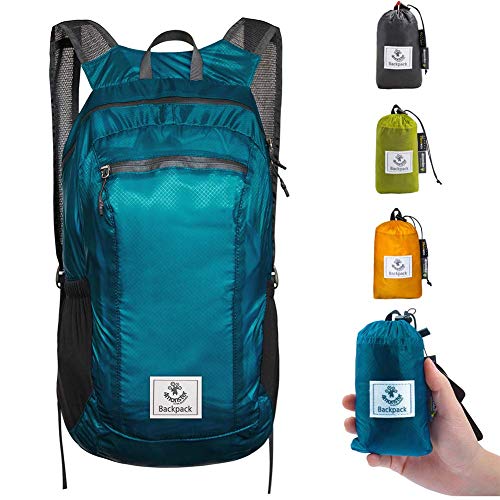
Pros
- Weighs only 4 oz (113 g), offering substantial weight savings for ultralight hikers and luggage packers
- Packs down quickly into an integrated wallet-sized pouch for effortless portability
- Durable 30D tear-resistant nylon construction with reinforced stitching handles daily lightweight gear carry
- Dual mesh side pockets provide external storage for standard water bottles or small trail items
- Water-resistant fabric protection keeps gear safe from brief light drizzle and surface splashes
Cons
- Frameless, unpadded design lacks back-panel ventilation and load-lifter support for heavy gear
- Shoulder straps do not feature thick foam padding, a sternum strap, or a supportive hip belt
- Water-resistant build will not keep contents dry during sustained heavy downpours without separate dry bags
The 4Monster 16L Hiking Daypack is an ultralight, frameless daypack engineered specifically for hikers, travelers, and campers who need functional carrying capacity without adding base weight. Measuring 7.1 x 11.8 x 18.5 inches when unfolded, this pack serves as a dedicated secondary bag that can be deployed at a campsite, used on short summit scrambles, or slipped on for casual trailhead day hikes. It caters directly to minimalist walkers, day trippers, and budget-conscious outdoor enthusiasts who prefer simple, streamlined gear over heavy, rigid suspension systems.
With a listed capacity of 16 liters, the pack provides enough volume to carry a light rain shell, an extra fleece or midlayer, trail snacks, and small personal essentials. The exterior layout includes two side mesh pockets suitable for holding water bottles or compact accessories, while a zippered front pocket keeps items like sunglasses, keys, or a map separated from the primary cavity. Because the pack operates without an internal frame sheet, foam back panel, or load-bearing hip belt, the total carried weight is carried directly through the minimalist shoulder straps, making it best suited for moderate, lightweight loads.
Construction quality centers around a 30D tear-resistant nylon fabric paired with reinforced stitching at key stress points. The material features water-resistant qualities designed to defend daily essentials from light precipitation, dew, and unexpected splashes while traversing damp forest paths. Durable zippers seal the main and front compartments, providing dependable daily closure for low-bulk gear. However, the water-resistant treatment is built for moderate exposure rather than prolonged rainstorms, so sensitive electronics and spare dry clothes should remain stored in sealed bags during adverse weather.
Packing and managing the daypack requires minimal effort thanks to its pliable construction. When not in use, the entire bag rolls and folds inward to fit into a compact, wallet-sized carry pouch that easily slides into a jacket pocket, a carry-on suitcase, or the lid of an expedition backpack. On the trail, the shoulder straps adjust via simple sliding buckles to adapt across different body frames and seasonal layering setups. Post-hike maintenance is equally low maintenance, as the non-absorbent nylon surface wipes clean with a damp cloth and dries rapidly when hung in an airy spot.
Prospective buyers should take note of the structural tradeoffs inherent to an ultralight packable daypack. Because the pack weighs just 4 ounces (113 grams), it completely omits back ventilation channels, padded waist belts, sternum clips, and hydration reservoir routing. Packing sharp, heavy, or irregularly shaped gear directly against the unpadded rear panel can lead to contact points against the back. Users carrying heavy equipment, camera bodies, or multi-liter water loads will find better support in a fully structured daypack with an internal frame and padded suspension.
For outdoor enthusiasts who prioritize extreme packability, featherlight carry, and straightforward utility, the 4Monster 16L Daypack is a practical and versatile trail accessory. It performs reliably as a summit pack for basecamp outings, a compact backup daypack for luggage travel, or an emergency daypack stashed in a vehicle glove box. If your hiking style focuses on short excursions, light trail loads, and absolute convenience, this pack delivers capable performance at an accessible value.
The standout characteristic of the 4Monster 16L Daypack is its ultra-compact packable design. Weighing just 4 ounces (113 grams), the daypack folds down smoothly into an integrated pouch about the size of a standard wallet, making it practically unnoticeable when packed inside luggage or a multi-day backpacking pack.
This collapsible profile makes it an exceptional secondary pack for backpackers who want to leave their heavy multi-day gear at a basecamp or shelter and embark on short side trails or water runs. For general travelers, it serves as a lightweight day bag for city exploration or airport use without taking up valuable luggage space.
The pack is fabricated from 30D tear-resistant nylon, chosen to balance minimal fabric weight with practical trail durability. Reinforced stitching across the seams helps prevent strain failures when the 16-liter compartment is loaded with everyday trail items.
The water-resistant treatment on the nylon shell effectively sheds surface moisture, morning mist, and passing light rain. Because this fabric is water-resistant rather than fully waterproof, hikers venturing into heavy or continuous downpours should pair the daypack with an internal dry bag or pack liner to ensure moisture-sensitive gear remains completely protected.
Essential Strategies for Selecting the Right Travel Backpack
Selecting the ideal travel pack involves analyzing volume requirements, airline carry-on regulations, textile endurance, and ergonomic harness support. Travel styles vary widely, ranging from self-contained one-bag globetrotting to urban vacations supported by rolling luggage. By clarifying your specific transit habits, you can pinpoint the exact features necessary to keep your supplies accessible, secure, and comfortable throughout your travels.
Capacity Breakdown: Matching Liters to Your Itinerary
Backpack capacity is measured in liters, reflecting the total interior volume available for your clothing, electronics, and daily essentials. Compact packs ranging from 15 to 20 liters function primarily as agile daypacks, personal items, or auxiliary bags for short excursions. These smaller volumes excel at carrying a light jacket, water bottle, phone, wallet, and a few snacks without creating unnecessary physical drag. They allow travelers to move through crowded markets and historic alleys without bumping into displays or fellow pedestrians.
Mid-sized backpacks spanning 25 to 30 liters offer greater versatility for weekend getaways and short overnight transit. This volume bracket accommodates an extra pair of shoes, two to three days of rolled garments, and a dedicated tech kit. Commuters and digital nomads often favor this range because it bridges the gap between everyday office utility and short business trips. It provides adequate depth for daily gear without becoming unwieldy on public transit systems.
Full-sized travel bags falling between 35 and 45 liters maximize the space allowed by major airline overhead compartments. These packs can hold enough attire for extended one-bag journeys when paired with structured packing cubes. However, carrying a full 40-liter load on your shoulders requires significant harness support to prevent fatigue during lengthy walking transfers. Bulky bags in this class also demand careful packing to avoid exceeding airline dimensional thresholds.
Airline Dimensional Constraints and Under-Seat Clearance
Airline luggage restrictions dictate the physical boundaries of your travel pack far more strictly than simple volume numbers suggest. Most domestic and international carriers enforce overhead carry-on dimensions close to 22 by 14 by 9 inches. Choosing a bag that exceeds these linear dimensions risks mandatory gate checking, which introduces unwanted handling delays and potential baggage fees. Verifying uncompressed pack depth is critical because an overstuffed bag can easily bulge past allowable sizer box limits.
Personal item rules require bags to fit beneath the seat in front of you, typically measuring around 18 by 14 by 8 inches or smaller on budget carriers. Soft-sided, unstructured daypacks present a distinct advantage in this scenario because their flexible exterior easily compresses into metal sizing frames. A bag like the G4Free 20L model measures approximately 16.5 by 11.8 by 6.3 inches, allowing it to comply naturally with strict under-seat limits. This compact footprint ensures your vital travel documents and electronics remain within arm’s reach during flight.
Under-seat floor spaces can vary significantly depending on the aircraft model and assigned seat configuration. Aisle seats often feature electronic equipment boxes beneath passenger seating rows, which noticeably restricts lateral footwell clearance. Choosing a compressible pack ensures that your gear adapts to these spatial irregularities without requiring forceful jamming that could damage sensitive contents. A flexible exterior fabric makes maneuvering your bag in tight footwells far simpler.
Harness Architecture and Carrying Ergonomics
Carrying comfort depends directly on the geometry of the shoulder straps and the balance of weight across your upper torso. Wide, S-shaped shoulder straps contour naturally around the neck and chest, preventing painful pressure points along the collarbone. Breathable mesh linings on the underside of the straps help dissipate body heat during warm afternoon walks through city centers. Proper strap curvature also keeps the pack centered on your back rather than sliding off your shoulders.
Unstructured daypacks rely heavily on careful strap adjustment to keep the load close to your center of gravity. While heavy long-haul trekking bags utilize rigid internal stays, as explained in our internal frame backpack guide, lightweight travel packs prioritize breathability and low unladen weight over rigid frame sheets. Maintaining snug strap tension prevents the pack from sagging backward and straining your lower lumbar spine. Keeping the weight positioned high against your shoulder blades minimizes unnecessary spinal torque.
When selecting a packable daypack, verify that the strap adjustment buckles lock webbing securely under tension. Smooth plastic sliders that slip during transit cause uneven strap lengths, which tilts the pack off-center and accelerates muscle fatigue. Reliable hardware keeps your harness balanced so you can walk through airports and sightseeing destinations without constant readjustment. Consistent strap stability is essential when navigating busy train platforms with heavy foot traffic.
Fabric Density, Denier Ratings, and Weather Resistance
Fabric durability is determined by yarn thickness, weave structure, and protective surface treatments. Denier ratings indicate the linear mass density of the yarn, with lower numbers like 30D signaling lightweight packability and higher numbers like 500D or 1000D indicating heavy-duty abrasion resistance. Ultralight options like the 4Monster 16L daypack utilize tear-resistant 30D nylon to achieve a minimal weight of only 4 ounces without sacrificing everyday utility. This lightweight fabric profile allows travelers to slip an extra pack into their luggage without adding noticeable bulk.
Ripstop weaving incorporates thicker reinforcement threads in a crosshatch pattern to prevent small punctures from expanding into catastrophic tears. This construction allows thin nylon fabrics to endure contact with rough brick walls, airport luggage bins, and outdoor foliage. Water-resistant polyurethane coatings applied to the interior face of the fabric help deflect light rainfall and accidental splashes. This exterior water repellency keeps personal items dry during quick dashes between transit terminals.
Water-resistant fabrics should not be confused with fully submersible waterproof dry bags. Standard sewing needles create tiny penetrations along seam lines where moisture can seep during prolonged downpours. Using lightweight dry sacks or zip-top pouches inside your pack provides dependable backup protection for passports, power banks, and essential electronics during inclement weather. Adding a dedicated internal waterproof barrier gives you complete peace of mind when sudden storms strike.
The Strategic Value of Packable Auxiliary Daypacks
Experienced travelers frequently separate their luggage strategy into a primary gear hauler and an agile auxiliary daypack. Checking a large suitcase or stowing a 40-liter bag in an overhead bin leaves you needing a compact bag for daily explorations once you arrive at your destination. A collapsible daypack folds neatly into its own pocket or a sandwich-sized pouch, taking up minimal room inside your main luggage. It eliminates the hassle of hauling a heavy travel bag to cafes, museums, or local walking tours.
Unfolding an auxiliary bag upon arrival allows you to leave your heavy wardrobe at the hotel while carrying daily necessities on walking tours. Foldable packs like the G4Free 20L model provide three zippered compartments and two side mesh pockets, functioning just like a standard daypack once opened. This flexibility enables spontaneous shopping trips or beach excursions without carrying an oversized travel pack. You retain full daily mobility while keeping your primary travel load neatly organized at your accommodations.
Packable bags also serve as dependable emergency overflow luggage for return flights. If you accumulate souvenirs, regional gifts, or travel books, unfolding a lightweight secondary pack gives you an extra airline-compliant personal item. This simple contingency plan prevents costly overweight baggage penalties at the check-in counter. It offers an easy way to distribute weight across your carry-on allowances before stepping into the terminal.
Compartment Layout and Accessibility on the Move
Internal organization plays a vital role in keeping your travel gear orderly and accessible during transit. A wide main compartment accommodates bulky layers, travel towels, and packing pouches with minimal fuss. Secondary front zippered pockets create dedicated zones for items you need to grab quickly, such as boarding passes, charging cables, and sunglasses. Dividing gear between dedicated pockets eliminates time spent rummaging through a cavernous central cavity.
Concealed interior security pockets provide essential protection against opportunistic pickpockets in crowded transit hubs. Stashing your passport, transit cards, and emergency currency inside an internal zippered sleeve keeps them safely isolated from casual exterior access. The G4Free 20L incorporates an inner zippered pocket that simultaneously acts as the pack’s self-contained storage pouch when folded. This dual-purpose design maximizes packing efficiency while adding a secure layer of pocket protection.
External side pockets expand your carrying utility by holding water bottles, compact umbrellas, or small tripods. Elasticized mesh pockets grip bottles securely, allowing quick hydration without opening the main compartment. Checking that side pockets have sufficient depth prevents taller bottles from tilting outward and falling onto subway platforms when you bend over. A snug elastic rim keeps hydration essentials anchored securely during brisk walking transfers.
Hardware Reliability and Zipper Track Mechanics
Hardware failures like split zipper tracks or broken buckle prongs can ruin an otherwise seamless trip. High-grade metal sliders, such as SBS hardware, resist bending and tooth separation under moderate packing tension. Reverse-coil or clean zipper tracks without excessive fabric flaps reduce the likelihood of fabric snagging during rapid opening and closing. Snag-free hardware protects thin nylon materials from being pinched or abraded during daily operation.
Zippers on travel packs experience lateral stress when bags are packed to maximum capacity. Metal pull tabs offer greater longevity than thin plastic cords, maintaining structural integrity over repeated use cycles. Smooth slider movement prevents sudden teeth misalignment, ensuring your compartments remain securely fastened while moving through busy train terminals. Choosing well-machined zippers minimizes the danger of sudden blowouts during transit.
Stress points throughout the pack require reinforced stitching to withstand the kinetic forces of walking. Shoulder strap attachment seams and top haul loops endure the greatest tension when picking up a loaded pack. Checking for double stitching or reinforced bar-tack patterns at these critical junctions ensures that the fabric will not tear away from the seams over time. Robust construction at these key anchor areas gives the pack long-term durability under varying loads.
Packing Geometry and Load Distribution Principles
How you arrange items inside your backpack directly influences your center of gravity and overall posture. Heavy items such as water bottles, electronics, and books should sit close to the back panel, centered between your shoulder blades. Placing dense mass against your spine prevents the pack from pulling backward away from your body, reducing muscle strain. It helps maintain natural upright alignment while walking across extensive airport concourses.
Lighter items like jackets, spare shirts, and rain shells belong at the bottom and outer perimeter of the compartment. Distributing softer goods around the perimeter cushions denser objects and creates a smooth, balanced pack shape. Travelers carrying chilled beverages or perishables on day hikes might explore specialized backpack cooler options, but standard travel daypacks prioritize compact gear organization. Soft layers also act as internal baffles to stop loose hardware from rattling inside.
Utilizing small packing organizers or modular pouches prevents loose items from shifting during transit. Unstructured packs can develop uncomfortable pressure points if hard rectangular objects rest directly against your back. Layering a folded fleece or scarf against the interior rear panel creates an effective makeshift cushion for all-day carrying comfort. This simple packing habit transforms an ultralight fabric shell into a comfortable travel companion.
Maintenance, Cleaning, and Fabric Longevity
Proper cleaning practices protect the water-resistant coatings and seam integrity of your travel backpack. Coated nylon fabrics should never be tossed into a washing machine, where vigorous agitator cycles can peel or crack internal polyurethane layers. High heat from tumble dryers can also warp synthetic webbing, damage zipper teeth, and melt thin nylon fibers. Hand care remains the safest approach for preserving technical fabrics over years of travel.
Routine spot cleaning with a soft damp cloth and mild non-detergent soap removes transit grime and sweat residue effectively. For deeper cleaning after extensive dusty adventures, submerge the bag in lukewarm water in a basin and gently agitate it by hand. Rinse thoroughly with cool water to eliminate soap residue that could attract future dirt buildup. Gentle washing keeps the nylon fabric pliable and prevents premature coating failure.
Always hang your pack to air dry in a well-ventilated, shaded area away from direct sunlight and heat sources. Prolonged exposure to intense ultraviolet light can degrade synthetic nylon fibers and fade exterior colors over time. Ensuring that all pockets and zipper tracks are completely dry before folding the pack into its storage pouch prevents moisture buildup and odor accumulation. Storing the bag completely dry ensures it remains fresh and ready for your next departure.
Practical Decision Framework for Travel Styles
Selecting the best backpack ultimately comes down to matching pack specifications with your destination environment and transit routine. Urban travelers who rely on regional trains and budget airlines prioritize compact dimensions, low tare weight, and discreet exterior styling. Outdoor-oriented adventurers may lean toward tear-resistant ripstop fabrics and robust mesh water bottle pockets that transition easily to scenic trail walks. Balancing weight against structure ensures you choose a pack tailored to your physical itinerary.
Assessing whether you need an all-in-one carry-on or a packable auxiliary daypack clarifies your volume and hardware priorities. Focusing on balanced strap ergonomics, durable nylon textiles, and reliable zipper construction ensures that your chosen pack remains a dependable travel companion across countless journeys. Careful evaluation before departure delivers lasting comfort, streamlined transit, and stress-free packing wherever your travels lead.







Write Your Review
No reviews yet. Be the first to share your experience!