


Heading up a mountain trail with thirty pounds of camping gear quickly reveals whether your pack actually supports your body. Sore collarbones, aching lumbar muscles, and shifting gear usually happen when a pack lacks the right structure or torso alignment. Understanding what to look for in a backpacking backpack helps you select a dependable rig that balances heavy loads against your hips rather than dragging across your shoulders. Backpackers who prioritize proper load lifters and sturdy internal framing, much like those explored in our guide to internal frame trail backpacks, consistently enjoy better posture and less physical fatigue on technical terrain.
Every trail scenario demands a thoughtful combination of volume capacity, suspension architecture, rugged fabric, and weather resistance. Selecting the right volume depends heavily on trip duration, whether you need a compact 35-liter pack for weekend overnights or a high-volume 70-liter rucksack for extended expeditions. Paying attention to durable fabrics, such as ripstop nylon with reinforced stress points and integrated rain covers, prevents unexpected gear failures miles away from the trailhead. By prioritizing realistic carrying needs over unnecessary bulk, you can secure a comfortable pack that keeps your backcountry gear organized, accessible, and dry through shifting alpine weather.
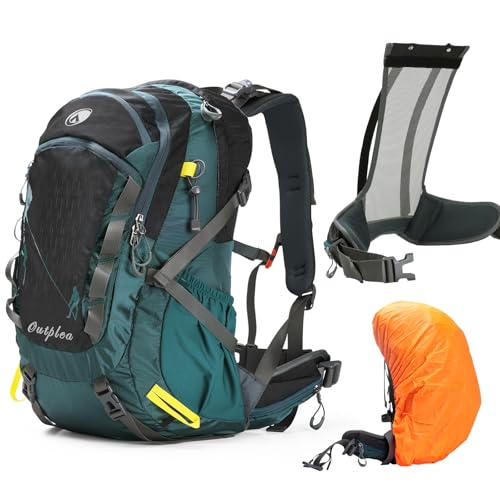
Pros
- Independent mesh back panel creates a physical air gap to reduce heat buildup against your back.
- Comes with a dedicated high-coverage rain cover tucked into a bottom zippered storage pouch.
- Generous pocket layout includes dual hip-belt pockets for quick access to small trail essentials.
- Multiple external lash points allow easy attachment of trekking poles, sleeping pads, and carabiner gear.
Cons
- Pack sizing is designated as a standard Medium without an adjustable torso-length ladder system.
- Weighs approximately 3.35 pounds (1.24 kg), which is heavier than minimalist or frameless daypacks.
- Hydration reservoir is not included and must be purchased separately.
The Outplea 40L Internal Frame Hiking Backpack is a mid-volume outdoor pack designed for day hikers carrying bulky gear, scout outings, and weekend backpackers heading out on short 1-to-3-day backcountry trips. Sized as a general Medium, this pack offers structured internal support combined with a suspended mesh back panel, bridging the gap between lightweight daypacks and heavy expedition haulers for trail enthusiasts who prioritize gear organization and ventilation.
On the trail, the pack relies on an ergonomic wave-pattern internal frame system that helps distribute carried weight to the hips and lower body. The back panel features an independent mesh suspension design, which creates a physical gap between the pack body and the wearer to allow cooling airflow during steep ascents or warm-weather outings. With dimensions of 9.45 x 12.60 x 19.69 inches and an empty weight of roughly 3.35 pounds (1.24 kg), the pack provides solid structural rigidity without adding excessive dead weight to your base load.
Durability and weather protection are addressed through tear-resistant, splash-resistant ripstop nylon fabric and reliable SBS zippers. While the ripstop fabric resists light moisture and trail abrasion, the pack also includes a dedicated rain cover stored in an integrated bottom pocket. This allows hikers to quickly deploy full external waterproof coverage during sudden cloudbursts without taking up valuable space inside the main gear compartments.
Organization is a significant strength of the Outplea 40L design. The interior features a two-layer main compartment that includes space for a 3-liter hydration bladder, though the bladder itself must be acquired separately. On the exterior, the pack provides three front utility pockets, internal slip organizers for small gear, dual stretch side pockets for water bottles, and two zippered hip-belt pockets for quick-access items like keys, snacks, or trail tools. External daisy chains, bottom lash straps, trekking-pole holders, and shoulder-strap D-rings allow users to secure bulky items like sleeping pads or trekking poles directly to the outside.
Despite its functional layout, prospective buyers should keep realistic fit and load limitations in mind. The pack is listed in a single Medium size, meaning it lacks an adjustable torso harness for fine-tuning upper-body length across diverse body heights. Additionally, while the 40-liter volume works well for warm-weather overnight trips or gear-intensive winter day hikes, multi-day self-supported journeys requiring extensive food and bulky cold-weather sleeping systems may require a larger internal volume.
For hikers, campers, and casual backpackers seeking a feature-rich, budget-friendly pack with an internal frame and built-in ventilation, the Outplea 40L represents a practical trail investment. Its combination of included weather protection, diverse attachment points, and dedicated hydration storage makes it well suited for structured day trips and lightweight weekend adventures.
The Outplea 40L utilizes an internal frame paired with an ergonomic wave-pattern back support system designed to direct pack weight toward the hips. Unlike conventional flat back panels, this independent suspension structure incorporates a breathable mesh panel that holds the pack body away from your spine, creating a dedicated air channel to help vent body heat during strenuous uphill sections.
Stability is maintained through an adjustable waist belt and chest sternum strap, working alongside dual side compression straps that pull the load closer to your center of gravity. While the Medium frame provides consistent structure, the harness does not feature micro-adjustable shoulder strap height ladders, so hikers should verify their general torso compatibility before heading out on multi-day itineraries.
Storage versatility on the Outplea 40L is distributed across multiple distinct compartments to simplify gear management. Inside, a two-layer main compartment keeps bulky sleep systems or spare clothing separated while providing a dedicated sleeve capable of holding up to a 3-liter hydration bladder.
External storage options include three separate front pockets, interior slip sleeves for small survival items, two side mesh pockets suitable for standard water bottles, and twin zippered waist-belt pockets for on-the-move access to small accessories. Bottom attachment straps and front daisy chains further expand carrying capacity by securing external gear such as sleeping pads, camp sandals, or trekking poles.
Weather resistance on this backpack begins with a splash-resistant and tear-resistant ripstop nylon shell, designed to shed light drizzles and resist abrasive brush along tight trails. The main openings are secured with smooth SBS zippers designed for dependable outdoor operation.
For sustained downpours or severe mountain storms, the pack features a dedicated rain cover housed in a separate bottom storage pouch. Deploying this custom-fit cover shields the pack body, seams, and zipper lines from moisture, offering dependable weather protection without sacrificing internal storage space.

Pros
- Built-in elastic steel frame delivers structured load stability uncommon in lightweight budget daypacks.
- Suspended trampoline-style mesh back panel keeps pack fabric off your spine for cooler warm-weather hiking.
- Comes standard with a dedicated rain cover stored in its own quick-access bottom pocket.
- Separate bottom compartment prevents soiled trail footwear from contacting clean clothing and gear.
Cons
- Specific torso length and waist belt ranges are not stated numerically, requiring buyers to verify measurements against the product sizing chart.
- Total 35-liter volume requires disciplined packing and compact gear for overnight trips.
- Exterior 210D nylon fabric relies on the included rain cover to keep gear dry during sustained heavy rain.
The MIVENTO 30+5L Hiking Backpack is an internal-frame daypack and overnight trail pack designed for day hikers, outdoor travelers, and minimalist campers. By combining a rigid perimeter frame with an overall empty weight of just 2.43 pounds, this pack bridges the gap between unstructured daypacks and heavier multi-day expedition packs. Its 35-liter total volume suits hikers carrying extra layers, food, emergency essentials, and compact camping equipment.
Load management relies on a built-in elastic steel frame combined with a suspended mesh back panel. The steel frame maintains the pack's shape under load, helping transfer pack weight downward toward the hips rather than letting it sag against the shoulders. The suspended mesh panel holds the main compartment away from the wearer's back, creating a continuous air gap that reduces heat and sweat buildup during strenuous climbs and warm-weather hikes.
Construction features 210D ripstop nylon fabric reinforced with high-density threading and fortified stitching across high-stress zones, including the shoulder-strap anchors, carry handles, and pack base. For trail organization, the pack includes a main gear hold, a protective top flap cover to shield openings from dust and wind, and a segregated lower shoe compartment. Side elastic attachments and fasteners provide stable exterior mounting for trekking poles without consuming interior volume.
Adjustable shoulder straps and an integrated back support system allow hikers to tailor the harness position to their body type. Because torso length ranges are not explicitly listed in inches, consulting the manufacturer's sizing diagram before purchase is recommended to ensure proper alignment. Top-loading access paired with independent bottom-compartment entry makes packing and unpacking straightforward, whether retrieving muddy trail shoes at the trailhead or unpacking layers at camp.
While versatile for day use and short weekend outings, the 35L capacity requires disciplined packing and ultralight gear choices if used for self-supported overnight camping. The pack exterior is made of water-resistant 210D ripstop nylon, meaning hikers must utilize the included bottom-pouch rain cover to protect sensitive electronics and clothing during prolonged downpours.
The MIVENTO 35L backpack is a practical, value-focused recommendation for day hikers, weekend trail walkers, and budget-minded campers who want a ventilated, steel-framed pack with built-in footwear storage and included weather protection.
A built-in elastic steel frame gives the MIVENTO 35L backpack a supportive internal structure uncommon in packs weighing under 2.5 pounds. The frame prevents the pack from barreling when stuffed full, distributing the load evenly and helping shift over 30 percent of the weight off the shoulders and onto the hips.
Paired with the steel frame is a suspended breathable mesh back panel. By suspending tensioned mesh between the frame stays, the pack remains separated from the hiker's spine. This tensioned gap promotes steady airflow across your back, helping manage sweat and heat during warm ascents.
The 30+5L volume provides dedicated organizational zones for hiking gear, clothing, and food. A standout feature is the separate bottom shoe compartment, which isolates muddy trail runners, wet sandals, or soiled clothes from the main storage compartment to keep food and spare layers clean.
External gear management includes side elastic fasteners designed to secure trekking poles securely to the exterior pack body. A protective top flap cover adds another layer of defense against trail dust, wind-driven moisture, and accidental zipper openings on rough terrain, while reflective markings enhance visibility in low light.
The exterior of the MIVENTO backpack is constructed from 210D ripstop nylon, which provides baseline resistance against light mist and trail splatter. Because ripstop fabrics and standard seams are not fully submersible, the pack includes an extra waterproof rain cover stored in an integrated bottom pouch.
During sudden storms, the rain cover can be pulled out and stretched over the entire loaded pack in seconds. This prevents driving rain and trail dust from penetrating the zippers or soaking into the main compartment, offering dependable weather protection without taking up internal pack space.

Pros
- Generous 60-liter capacity with convenient front U-zip access to the main compartment
- Relatively lightweight empty weight of 3.08 pounds for a large-volume gear pack
- Includes an integrated rain cover and an emergency whistle on the sternum buckle
- Diverse pocket organization featuring a dedicated shoe compartment, wet pocket, and hip-belt storage
Cons
- Lacks a full internal frame or aluminum stays, which limits heavy load-transfer efficiency
- Hydration reservoir is not included and must be purchased separately
- The large 60L capacity makes it easy to overload beyond what the PE plate suspension comfortably supports
The IGOLUMON 60L Hiking Backpack is a high-volume, budget-conscious outdoor pack designed for camping trips, travel, and gear-intensive day hiking. Built with an expansive 60-liter storage volume, this pack is geared toward beginner hikers, casual campers, and travelers who need plenty of room for bulky layers, sleeping gear, or trail accessories without committing to premium technical pack prices. Although frequently cataloged under internal frame backpacks, the manufacturer explicitly notes that this pack does not use a traditional full metal frame, making it best matched with moderate pack weights.
Weighing 3.08 pounds and measuring 22.5 by 13 by 9.8 inches, the pack delivers substantial storage without excessive empty bulk. Instead of rigid aluminum frame stays, the load structure relies on a built-in lightweight PE plate placed across the top to give the pack shape and distribute tension across the shoulders. Multi-position torso adjustment allows users to customize harness height to fit their torso length, while wide, padded S-shaped shoulder straps and an ergonomic breathable back panel provide contact cushioning. Hikers should recognize that without full-length frame stays transferring weight to the hip belt, keeping carried gear weight reasonable is critical for trail comfort.
In terms of materials, the pack is constructed from water-resistant, tear-resistant nylon fabric paired with SBS zippers and high-strength buckles. Reinforced stitching at key stress points helps keep loaded gear secure. For wet weather, a matching rain cover is included in a dedicated bottom zippered pocket, allowing quick deployment during sudden rainstorms. While the nylon fabric repels light mist, the rain cover provides necessary protection in sustained rain, as the exterior zippers and structural seams are not sealed or waterproof.
Organization is a significant strength of this 60L model. In addition to traditional top loading, a front U-shaped zipper opens directly into the main compartment so users can retrieve buried gear without completely unpacking. The storage layout also includes two internal zipper pockets, a separate bottom shoe compartment, a front wet pocket for damp garments, two side bottle holders, and a zippered pocket on the waist belt for trail snacks. Multiple external compression straps and loop attachment points provide lash positions for trekking poles, ice axes, tents, or sleeping pads.
Hydration needs are supported by an internal sleeve and hanging loops capable of holding up to a 3-liter hydration bladder, though the bladder itself is not included. Maintenance is straightforward, requiring gentle spot cleaning with mild soap and warm water rather than machine washing, which can damage the water-resistant coating and PE plate. Users should always hang the pack and rain cover to dry fully before storage to preserve zipper function and fabric durability.
Overall, the IGOLUMON 60L pack is a practical option for campers and weekend adventurers who prioritize volume, diverse pocket arrangements, and accessible value. Its main limitation is the absence of rigid metal internal stays, meaning very dense, heavy loads may pull on the shoulders more than they would in a dedicated expedition-style frame pack. For outdoor enthusiasts carrying sensible gear loads who want front-panel access and an included rain cover, this pack offers functional utility.
The IGOLUMON 60L backpack uses an upper PE structural plate rather than a full internal metal stay frame. The manufacturer specifically highlights that this pack is not built with a traditional full-length internal metal frame, relying instead on the lightweight plate to help maintain upper pack shape and assist with shoulder-weight distribution.
Multi-position torso adjustment lets hikers position the harness to accommodate their back length. Ergonomic S-shaped shoulder straps, an adjustable sternum strap with an integrated whistle buckle, and a padded waist belt provide trail stability. However, hikers carrying heavy base weights should note that plate-supported packs transfer load differently than rigid metal-framed systems.
With 60 liters of carrying volume and exterior dimensions of 22.5 x 13 x 9.8 inches, this pack easily accommodates bulky gear for camping weekends, group day trips, or extended travel. Access to the main cargo area is simplified by a wide front U-zip opening, enabling quick access to deeply packed items without unpacking from the top collar.
Dedicated storage compartments include a bottom shoe pocket to separate dirty footwear, a front wet pocket for damp clothing, two side bottle pockets, two internal zip security pockets, and a hip-belt pocket for phones or snacks. Exterior compression straps hold loose gear tightly against the pack body and secure items like tents, sleeping pads, and trekking poles.
This backpack is hydration-compatible, featuring an internal reservoir sleeve and suspension hooks capable of securing up to a 3-liter hydration bladder. A reservoir is not included in the purchase and must be supplied separately for hands-free drinking on the trail.
For weather management, the exterior is crafted from water-resistant nylon and includes a dedicated rain cover stored inside a zippered bottom compartment. While the nylon fabric repels light moisture, deploying the included rain cover is recommended during steady or heavy rainfall to prevent water seepage through zippers and stitching.

Pros
- Spacious 70-liter volume easily accommodates oversized camp bedding, apparel, and group supplies
- Very low empty pack weight of 2.86 pounds compared to typical high-capacity expedition packs
- Rugged 900D oxford fabric provides solid defense against scrapes, ground abrasion, and light moisture
- MOLLE exterior attachment grid offers flexible customization for modular gear and clip-on pouches
Cons
- No internal frame or rigid stays, meaning heavy contents can cause pack sag and direct shoulder strain
- Water-resistant fabric repels splashes but lacks taped seams or an included rain cover for heavy downpours
- Drawstring closure lacks the compression and load stabilization of traditional dual-buckle top lids
The W WINTMING 70L Hiking Backpack is a high-capacity tactical rucksack aimed at campers, gear haulers, and budget-conscious outdoor enthusiasts who need plenty of storage volume without the structural bulk of a metal frame. Operating at the boundary between a traditional camp duffle and an assault rucksack, this pack is suited for car campers, weekend cabin travelers, scout outings, and emergency preppers who want to carry sleeping pads, soft gear, and extra clothing in one straightforward container.
On the trail, the most critical factor to consider is the suspension layout. The manufacturer explicitly notes that this pack contains no internal frame. With a substantial 70-liter listed capacity and dimensions measuring 27.5 by 15.75 by 8 inches, the pack relies entirely on its widened, mesh-covered sponge shoulder straps and a thickened sponge back pad for support. Because there are no aluminum stays or rigid frame sheets to direct weight down into a structured lumbar system, keeping the overall load light is vital. The 2.86-pound dry weight is remarkably light for a 70-liter carrier, making it effortless to handle when empty, but users should pack soft items against the back panel to prevent hard objects from poking through.
Material quality centers on a durable 900D oxford fabric. This heavy-gauge textile delivers noticeable scratch resistance and repels light moisture from wet grass or sudden mist. Exterior MOLLE webbing runs along the pack body, letting hikers customize their setup by attaching compatible gear pouches, carabiners, or accessory tools. The seams, hardware, and drawstring enclosure provide practical day-to-day durability for casual outings, though care should be taken not to stress attachment points with excessively heavy hanging items.
Packing the W WINTMING 70L rucksack is straightforward thanks to its top-loading, drawstring-closed main hold. Inside, a dedicated laptop compartment helps separate flat electronics, maps, or notebooks from bulky equipment. Externally, one zippered front pocket secures small essentials like headlamps or trail snacks, while two side pockets accommodate quick-access items. Because the main compartment lacks an internal divider, organizing loose gear with packing cubes or dry sacks will dramatically improve trail efficiency and prevent smaller essentials from migrating to the bottom.
The primary limitation of this pack is its lack of internal load-bearing structure. An unassisted 70-liter volume can easily tempt hikers into packing 40 pounds or more, but without rigid stays or an advanced load-transferring harness, that mass will bear almost entirely on the shoulders. Additionally, while the 900D fabric provides water resistance, it is not waterproof, and the top drawstring closure does not seal against prolonged downpours. Carrying a separate waterproof pack liner is recommended if you expect rain.
For hikers, campers, and travelers seeking maximum storage volume at an accessible price point, the W WINTMING 70L Military Rucksack offers great utility. As long as you respect its frameless design by carrying lightweight, high-bulk camping gear rather than dense, heavy expedition loads, this versatile tactical pack delivers solid organization and dependable trail convenience.
The W WINTMING 70L backpack uses a strictly frameless construction, featuring no internal aluminum stays, external bars, or plastic frame sheets. This design choice keeps the pack weight down to an agile 2.86 pounds, making it exceptionally easy to fold, roll, and store when not in use.
Carrying support is handled exclusively by widened shoulder straps padded with breathable sponge and lined with ventilation mesh, paired with thickened sponge cushioning along the back panel. Because there is no internal frame to channel load mass to your hips, users should carefully balance gear inside the pack, placing soft apparel against the back wall to maintain carrying comfort and prevent uneven pressure points on the shoulders.
With a volume rating of 70 liters, the W WINTMING pack provides ample room for sleeping gear, bulky outerwear, footwear, and camp accessories. Access to the cavernous primary chamber is managed by an adjustable drawstring closure, allowing rapid top-loading of bulky equipment.
Interior organization includes a designated laptop compartment to shield flat items, while exterior storage is divided into one front zippered pocket and two side pockets for keeping frequently used accessories within arm reach. For modular gear setups, the integrated external MOLLE webbing provides anchor points for securing external pouches, multi-tools, or trail accessories.

Pros
- Dedicated storage pockets for wet clothes, a sleeping bag, hydration bladder, and water bottles
- Included waterproof rain cover adds immediate weather protection without extra purchases
- Dual-adjustment hip-belt pad system allows targeted tightening across upper and lower hip contours
- Lightweight internal-frame construction keeps empty pack weight under 3 pounds
- Backed by a 1-year replacement service for quality problems and lifetime customer support
Cons
- Specific torso-length range is not listed by the manufacturer, which may make sizing uncertain for very tall or short hikers
- Hydration reservoir is not included and must be purchased separately
- Capacity is listed variably as 45+5L and 50L across specifications, so pack volume should be planned carefully
The N NEVO RHINO internal frame backpack is designed as an entry-level to intermediate trail pack featuring a 45+5L capacity profile suited for hikers, weekend campers, and travelers carrying standard gear loads. Built for both men and women, this model appeals to budget-conscious backpackers who want the load structure of an internal frame system without the heavy tare weight of traditional expedition packs.
Weighing between 2.42 and 2.65 pounds depending on configuration, this pack maintains a manageable base weight while delivering an extensive array of storage compartments. The layout includes a primary main compartment, an inner security pocket, two top lid pockets, a separate sleeping bag compartment, two side water bottle pockets, dual zippered hip-belt pockets for a phone or trail snacks, and a front mesh pocket suited for damp layers. A dedicated hydration pack pocket allows routing for a personal water reservoir, helping hikers manage fluid intake on trail approaches without stopping to unpack.
Constructed with scratch-resistant ripstop nylon, the pack incorporates high-density reinforced stitching across high-stress points including the shoulder straps, bottom panel, and top grab handle. While the ripstop fabric resists minor abrasion from trail brush, the pack includes a dedicated waterproof rain cover stowed inside its own bottom pocket to protect gear when rain rolls through. Zippers and hardware include practical pull cords, D-shape accessory carabiners, and an integrated emergency whistle built directly into the sternum strap buckle.
The suspension design pairs an internal frame with a breathable mesh-padded back panel, padded shoulder straps, and a cushioned hip belt to support air circulation and assist heat dissipation. To stabilize varied gear loads, the hip belt uses a high-load buckle alongside a split dual wishbone waist pad that allows independent top and bottom adjustments around the hips. An ergonomically shaped semi-circle hollow at the upper back panel is tailored to leave clearance for head movement even when the main compartment is packed to capacity.
Because the manufacturer does not specify an exact torso-length adjustment range, hikers with unusually short or tall torso measurements should verify fit before committing to long treks. The pack includes an internal hydration pocket, but a water bladder is not supplied and must be sourced separately. Additionally, while the rain cover protects against sudden showers, relying solely on exterior pockets in driving weather requires standard trail precautions like dry sacks for sensitive electronics and down sleeping gear.
For hikers, campers, and section travelers seeking a feature-rich internal frame pack with extensive pocket organization and an included rain cover, the N NEVO RHINO 45+5L pack provides dependable everyday trail utility at an accessible entry point. Backed by a 1-year replacement service for quality issues and lifetime customer support, it serves as a functional, low-tare-weight gear hauler for weekend trips and outdoor adventures.
Organization is a central feature of the N NEVO RHINO 45+5L backpack, which includes distinct compartments to separate clean gear, dirty items, and quick-access essentials. The exterior layout features two top lid pockets for headlamps and small essentials, two side pockets for standard water bottles, and an expandable front mesh sleeve designed to store wet clothes away from dry gear.
A dedicated sleeping bag compartment at the base isolates sleep systems from the primary gear load, while dual zippered waist pockets keep smartphones, snacks, and small tools accessible while moving. Internally, the pack houses an inner pocket and a specialized hydration pack sleeve, ensuring steady access to water reservoirs without requiring hikers to open the main body on the move.
The pack relies on an internal frame matched with a streamlined suspension system and breathable mesh padding along the back panel, shoulder harnesses, and hip belt. This open-cell mesh structure promotes airflow and accelerates heat dissipation during warm-weather ascents and demanding climbs.
To handle shifting loads, the hip belt integrates a high-load waist buckle paired with a split dual-wishbone waist pad. This allows independent upper and lower tension adjustments, letting hikers customize how tightly the belt hugs the iliac crest. A built-in semi-circle hollow at the head region prevents the top of the pack from pushing against your head or neck when stuffed full.
Built from scratch-resistant ripstop nylon, the exterior shell is engineered to handle scraping against brush, rocks, and dirt without tearing. High-density stitching reinforces the primary carrying handle, base seams, and shoulder strap connection points to maintain integrity under sustained trail use.
For wet weather, the pack includes a fitted waterproof rain cover that stores neatly in a dedicated bottom pocket. Hikers can deploy the cover rapidly during drizzle or heavy downpours, shielding the main compartments and external pockets from moisture penetration while keeping exterior attachment points covered.
Essential Considerations for Selecting a Backcountry Pack
Selecting the right backcountry pack requires balancing physical comfort, load capacity, and trail durability against the realities of alpine terrain. Hikers often get caught up in external aesthetics or pocket counts without first verifying how the frame geometry interacts with their spine. Taking time to evaluate suspension mechanics, pack volume, and fabric performance ensures that your gear supports your journey rather than complicating it.
Matching Volume Capacity to Wilderness Trip Duration
Backpack capacity is measured in liters and directly determines how much gear, food, and clothing you can carry into the wilderness. For quick one-night to two-night weekend trips during warm weather, a compact pack offering 30 to 40 liters of volume usually provides adequate space for a lightweight tent, sleeping bag, and compact cook kit. Options such as a 35-liter daypack or a streamlined 40-liter internal frame pack keep unladen weight low while discouraging you from packing unnecessary camp luxuries. Overpacking a small pack can stress external seams, while underpacking an oversized pack can lead to unstable gear shifting as you hike.
Extended multiday outings lasting three to five days typically require a mid-sized capacity between 50 and 65 liters to accommodate additional food rations, a larger water filter, and extra clothing layers. For week-long excursions, mountaineering routes, or cold-weather trips requiring bulky winter sleeping bags, high-capacity rucksacks ranging from 70 to 100 liters become essential. High-volume packs must feature robust compression straps to cinch down unused space so gear remains firmly stabilized against your center of gravity. Choosing the smallest pack that reliably holds your mandatory equipment prevents unnecessary fatigue over steep elevation gains.
Measuring Torso Length and Dialing in Harness Sizing
A backpack must fit your spine length rather than your overall body height. To find your torso measurement, locate your C7 vertebra at the base of your neck and measure down along the curvature of your spine to the top of your iliac crest. If you carry a pack with a torso size that is too short, the shoulder harness will pull down painfully across your trapezius muscles. Conversely, a pack torso that is too long will leave a gap above your shoulders, causing the pack to sway backward and pull you off balance.
Many modern backcountry packs incorporate multi-position torso adjustment systems that let hikers slide the shoulder harness up or down along a ladder track. This adjustability allows for customized fitting across different body types, making it easier to share a pack between family members or fine-tune sizing after adding winter clothing layers. When testing fit, verify that the padded shoulder straps wrap smoothly over the curvature of your shoulders without pinching the sides of your neck. Ensuring your torso measurement aligns with the pack frame is the single most critical step toward preventing backcountry shoulder pain.
Evaluating Internal Frames, PE Sheets, and Frameless Builds
Backpacking packs rely on internal support structures to transfer heavy gear weight from your upper spine directly down to your hips. Traditional internal frame packs utilize lightweight aluminum stays or perimeter spring-steel wires that maintain the pack bag shape under heavy compression. This rigid perimeter structure prevents the pack from bowing outward like a barrel when fully stuffed with sleeping gear and food bags. In contrast, frameless packs rely solely on careful gear packing to maintain structure, which quickly becomes uncomfortable when carrying loads exceeding twenty pounds.
Some lightweight hiking packs incorporate a built-in polyethylene sheet combined with top structural stays to provide rigid load distribution while trimming overall tare weight. This semi-rigid hybrid design shields your back from sharp gear edges inside the main compartment while maintaining enough stiffness to direct downward pressure into the lumbar pad. For hikers tackling rough mountain terrain with substantial trail gear, an internal frame provides the structural predictability needed for surefooted scrambling. Frameless packs have their place among ultralight thru-hikers, but structured frames remain the benchmark for general backcountry reliability.
Hip Belt Architecture and Effective Weight Transfer
A properly engineered backpacking hip belt is designed to bear roughly seventy to eighty percent of the pack total loaded weight. The padded belt wings should wrap securely around your pelvic bones rather than resting above your soft stomach or sagging low over your buttocks. High-load waist buckles and dual-wishbone adjustment straps allow hikers to tighten the upper and lower edges of the hip belt independently. This split adjustment creates a snug conical fit that conforms to natural hip contours and eliminates slipping during steep climbs.
Cushioning on the hip belt must be dense enough to resist compressing completely flat under thirty or forty pounds of trail gear. Open-cell foam that feels excessively plush in the store often collapses after two miles on the trail, creating painful pressure points over your hip bones. Integrated zippered waist pockets on the exterior belt wings provide convenient storage for lip balm, trail snacks, and navigation tools. Being able to access these small necessities without unbuckling your hip belt saves valuable time and energy during long trail days.
Shoulder Straps, Sternum Sliders, and Load Lifter Mechanics
Shoulder straps on a backcountry pack should stabilize the load against your back rather than carrying the bulk of the downward weight. Ergonomically contoured S-curve straps naturally clear the chest and armpits, reducing friction and chafing during repetitive arm swings. Thick, dual-density foam covered in breathable air mesh cushions the collarbones while distributing lateral pressure evenly across the upper torso. If shoulder straps dig sharply into your neck, the harness is either adjusted too narrow or the pack torso length is incorrectly set.
Load lifter straps connect the top of the shoulder harness to the upper internal frame at a forty-five-degree angle. Gently tensioning the load lifters pulls the upper pack weight inward toward your shoulders, preventing the bag from pulling backward away from your spine. The adjustable sternum strap sits across your mid-chest, pulling the shoulder straps inward just enough to keep them from sliding off your shoulders. Adjusting these straps in proper sequence ensures that your pack remains completely stable when stepping across boulders or slippery river crossings.
Back Panel Ventilation and Thermal Comfort on the Trail
Carrying a heavy pack up steep switchbacks generates substantial body heat, making back panel ventilation a major comfort consideration. Suspended mesh tension systems create an open airspace between your back and the pack body, allowing cooling breezes to circulate freely. While this trampoline-style mesh design significantly reduces sweaty back buildup, it pushes the pack center of gravity slightly farther away from your spine. Molded foam panels with die-cut air channels offer a great middle ground by keeping the weight close while facilitating passive heat dissipation.
Look for back panels engineered with ergonomic wave patterns or central chimney channels that let rising hot air escape vertically. Packs that incorporate a semi-circle hollow near the top of the back panel provide critical head clearance so your helmet or trail hat does not collide with the pack when looking up steep pitches. High-density spacer mesh along the lumbar pad helps wick moisture away from your lower back, preventing painful chafing along your waistband. Good ventilation architecture keeps you drier, cooler, and less susceptible to wind chills during rest breaks at windy alpine summits.
Compartment Layout, Hydration Routing, and Pocket Access
Efficient gear organization keeps you from having to dump out your entire pack in the dirt just to retrieve a rain shell or lunch snack. Traditional top-loading packs feature a wide drawstring opening protected by a floating top lid that houses zippered pockets for quick-access tools. A dedicated bottom compartment with an external zipper allows you to stow your sleeping bag and camp clothes separately from wet rain gear. When packing camp on a budget, exploring budget hiking backpack options can reveal practical multi-compartment designs that keep critical gear neatly partitioned without costing a fortune.
Hydration management requires equal attention, whether through dedicated internal hydration bladder sleeves or external bottle pockets. Most technical packs include bladder hooks and hydration hose exit ports alongside deep stretch side pockets for one-liter bottles. While shorter trail ventures might rely on insulated trail daypacks to keep refreshments chilled, multiday backpacking necessitates high-capacity water carriage that balances evenly across both sides of the hip harness. Front stretch mesh pockets also provide rapid access for drying damp rain flys without exposing dry gear inside.
External Attachment Systems, Daisy Chains, and Compression Webbing
External lash points allow backpackers to secure bulky, dirty, or sharp equipment to the outside of the pack bag safely. Dedicated trekking pole loops and shock-cord keepers let you stow your walking poles hands-free when scrambling across rocky ledges. Bottom webbing straps provide an ideal platform for cinching down a bulky foam sleeping pad or tent poles that exceed the internal compartment width. External daisy chains and tactical webbing loops give you modular anchor points for clipping carabiners, solar chargers, or camp shoes.
Lateral compression straps on both sides of the pack are crucial for managing gear volume and stabilizing your load. When carrying smaller loads on short overnights, pulling these straps tight pulls the pack fabric inward, preventing items from jostling inside the main cavity. Compression straps also help secure tall tent poles or camera tripods nestled in the side water bottle pockets. Keeping external gear tightly cinched reduces snag hazards when navigating dense brush or overgrown backcountry routes.
Fabric Denier, Tear Resistance, and Trail Weatherproofing
The materials used in a pack body dictate its resistance to abrasions, puncture tears, and harsh mountain weather over seasons of heavy use. Lightweight packs frequently utilize 210D ripstop nylon, which incorporates a crosshatch grid of reinforcing threads to stop small punctures from turning into catastrophic tears. Heavy-duty expedition packs and tactical rucksacks often employ rugged 900D oxford fabrics or heavy Cordura nylon to withstand scraping against coarse granite and sharp tree branches. Higher denier numbers indicate thicker, more abrasion-resistant fibers, though they naturally add tare weight to your empty pack.
Exterior fabrics usually receive a durable water repellent coating on the outside and a polyurethane backing on the inside to shed light drizzle. However, exposed seams and standard zipper coils will eventually leak moisture during prolonged alpine rainstorms. Heavy-duty SBS zippers and smooth-gliding pull cords ensure that access points operate reliably even in freezing mountain temperatures. An integrated waterproof rain cover stored in a dedicated bottom pouch provides necessary weather security when sudden mountain downpours strike.
Packing Geometry and Center of Gravity Dynamics
Understanding the physics of pack loading is just as important as choosing the right backpack features. Pack your lightweight sleeping bag, sleeping pad, and camp clothing in the bottom compartment to build a stable base. Place your heaviest gear, including your camp stove, bear canister, food bag, and dense water reservoirs, directly in the center of the pack close against your spine. Wrapping medium-weight gear, such as extra clothing and tent fabric, around these dense items keeps the heavy mass from shifting during transit.
Packing heavy items too high or too far away from your back causes the pack to act as a backward lever, forcing you to lean unnaturally forward to maintain balance. This improper packing posture leads to severe lumbar fatigue, neck stiffness, and increased risk of tripping on steep descents. Top lid pockets should remain reserved for lightweight, frequently accessed tools like your first aid kit, headlamp, and map. Maintaining a tight, balanced center of gravity ensures that your pack moves harmoniously with your natural walking cadence.
Long-Term Pack Maintenance, Cleaning, and Hardware Care
Proper pack maintenance preserves the integrity of technical fabrics and prevents premature hardware failures on the trail. After a dusty or muddy backcountry trek, spot clean your pack using a soft bristle brush, lukewarm water, and mild non-detergent soap. Never wash your backpacking pack in a household washing machine, as the aggressive agitator can snap internal frame stays, fray webbing straps, and peel internal waterproof polyurethane coatings. Allow the pack to air dry completely in a shaded, well-ventilated area away from direct sunlight and high heat sources.
Inspect critical stress points periodically, focusing on bar-tack stitching where the shoulder straps and hip belt join the main frame. Clean dirt and trail grit from zipper teeth using an old toothbrush to ensure the sliders move smoothly without catching or separating under load. Check all acetal buckles, ladder locks, and cord cinches for hairline cracks caused by accidental impacts or winter freezing. Storing your clean, dry pack loosely in a climate-controlled room prevents mold growth and keeps foam padding resilient for upcoming wilderness adventures.
Investing the time to assess torso sizing, frame architecture, and volume requirements ensures that your wilderness pack remains a dependable partner rather than an agonizing burden. Focus on finding a comfortable hip belt that carries the primary load, paired with breathable back panel channels that keep you cool on strenuous ascents. Prioritizing durable ripstop fabrics, reliable hardware, and smart compartment access will keep your gear secure across diverse backcountry environments. With the right pack dialed to your body and trail ambitions, you can step onto the trailhead with confidence, comfort, and complete peace of mind.







Write Your Review
No reviews yet. Be the first to share your experience!