


Maintaining proper balance on uneven trails starts with strategic gear placement inside your load hauler. When bulky sleep systems sit incorrectly against your spine or sag at the base of your pack, excessive leverage pulls on your shoulders and strains your lower back during long ascents. Understanding how to pack a backpack with a sleeping bag prevents awkward shifting, protects fragile synthetic or down loft from unexpected moisture, and preserves critical internal volume for dense supplies. Heavy loads feel considerably lighter when you secure the fluffiest items in their designated zones rather than jamming them in as an afterthought.
Hikers often debate whether to stow insulation inside a dedicated bottom compartment or compress it directly within the main cavity alongside food canisters and spare clothing. While rigid suspension systems like iron frame hiking backpack options provide exceptional structural support for heavier kits, improper loading can still compromise stability on steep switchbacks. Stashing your sleeping gear properly creates an impact-absorbing foundation that cushions the pack base, stabilizes dense center-of-gravity items, and ensures a warm, dry shelter system when you finally reach camp.

Pros
- Packs down compactly with the included strapped compression sack, fitting smoothly into hiking packs or lashed externally
- Weighs under 3 pounds (listed at roughly 2.87 lbs), keeping carried weight manageable on warm-weather backpacking trips
- Hex-tech outer shell wipes clean easily and offers water protection against damp campsite conditions
- Convenient dual-sided snag-free zipper, headrest drawstring, and anti-slip velcro closure strap improve nighttime adjustability
Cons
- Limited to mild weather with a 50°F to 77°F rating, making it unsuitable for true cold-weather or alpine winter trips without auxiliary insulation
- Synthetic fill does not compress as small or as light as premium high-fill-power down bags
- At 29.5 to 31.5 inches wide, broader sleepers may find the interior cut restrictive compared to rectangular home bedding
The MalloMe 3-Season Sleeping Bag serves as a budget-friendly sleep system designed for warm-weather campers, summer backpackers, and scouts building an entry-level trail setup. Rated for temperatures between 50°F and 77°F, this single-person sleeping bag focuses on mild-weather use where heavy, freezing-rated insulation would add unnecessary bulk and weight to a hiking loadout. For hikers seeking an affordable sleeping accessory that packs into a backpack without consuming excessive budget, this model provides practical functionality for state park overnights, backyard campouts, and casual trail trips.
In terms of pack carry and dimensions, the sleeping bag weighs approximately 2.87 pounds (listed by the manufacturer as around 3 pounds) and measures 86.6 inches in length by roughly 29.5 to 31.5 inches in width. The generous length easily accommodates a 6-foot adult while also serving kids and teens comfortably. For transport, it includes a compression sack fitted with adjustable cinch straps, allowing backpackers to compress the packed volume and slip it into a lower sleeping-bag compartment or lash it externally beneath a hiking backpack.
The construction highlights sensible trail-ready materials for damp outdoor environments. It features a waterproof hex-tech protective outer shell, reinforced with double-layered S-shape stitching to prevent the interior fill from shifting or clumping during use. Inside, 3D synthetic fiber fill provides reliable thermal loft and insulation. Hardware includes snag-free double-sided zippers for smooth venting from either end, an integrated headrest with adjustable drawstrings for draft control, and an upper velcro securing strap that prevents the zipper from migrating open overnight.
Daily trail operation and packing are straightforward. At camp, unrolling the bag allows the 3D synthetic fiber to loft quickly, while the headrest drawstrings can be pulled tight to retain warmth around the neck and head in cool weather. When breaking camp, the sleeping bag rolls up and slides into the compression sack, where tightening the exterior compression straps reduces overall pack volume. Maintenance between trips is equally simple: surface dirt and mud wipe off the hex-tech shell with a damp cloth, and the bag is fully machine washable for deeper end-of-season laundering.
Buyers should keep realistic expectations regarding thermal limits and pack volume. With a temperature rating of 50°F to 77°F, this bag is strictly built for mild spring, summer, and early fall nights, meaning it should not be relied on for late-season alpine treks or sub-freezing conditions without auxiliary thermal liners. Furthermore, while the synthetic fill retains insulating properties in damp air, it does not compress down as tiny as high-fill-power down alternatives, requiring realistic space allocation in mid-sized hiking daypacks or overnight packs.
Based on product specifications and listed design features, the MalloMe Sleeping Bag represents a solid, cost-effective sleep gear solution for warm-weather backpackers, family campers, and casual weekend hikers. It delivers the right blend of protective shell fabric, dependable hardware, and included compression storage for anyone assembling a reliable warm-weather camp kit.
The MalloMe sleeping bag measures 86.6 inches in length by roughly 29.5 inches to 31.5 inches wide, offering adequate room for adults up to 6 feet tall, as well as youth and teens. At an official weight of roughly 2.87 pounds (around 3 pounds), it provides a manageable carry weight for weekend trail overnights.
The included compression sack features integrated compression straps designed to reduce packed bulk. This makes it easier to pack inside the base compartment of a multi-day backpacking pack or attach securely to external gear loops without requiring separate aftermarket dry bags or straps.
Built with a protective hex-tech waterproof outer shell and double-layered S-shape stitching, this sleeping bag resists light ground moisture and tent condensation. The interior uses 3D synthetic fiber fill to provide soft, distributed insulation across mild temperature ranges from 50°F to 77°F.
Routine care is hassle-free because surface grime can be wiped away with a damp cloth. For thorough cleaning after dusty or muddy trail use, the sleeping bag is fully machine washable, preserving long-term cleanliness and performance without specialized laundering requirements.
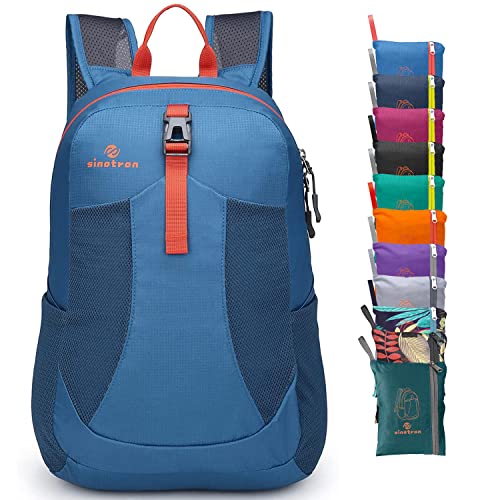
Pros
- Folds down to a 7.5 x 5.5-inch footprint and weighs only 0.7 pounds for seamless travel packability.
- Generous 22-liter volume holds extra clothing, food, and daily gear without taking up excess luggage room.
- Dual side bottle sleeves and an exterior net pouch deliver practical, quick-access trail organization.
- Water-resistant nylon fabric offers reliable protection against light splashes and mist.
Cons
- Frameless ultralight build lacks an internal frame, load lifters, and a padded hip belt for carrying heavy loads.
- Thin mesh shoulder straps have minimal cushioning, which may feel unsupportive under dense, weighty contents.
- Manufacturer specifications designate that this pack is not suitable for children under 12 years of age.
The Sinotron Lightweight Packable Backpack is a collapsible, frameless 22-liter daypack tailored for casual day hikers, vacation travelers, and weekend campers seeking minimalist carry. Weighing roughly 0.7 pounds, it collapses down to a compact 7.5 by 5.5 inches, making it a viable secondary bag to toss inside a primary travel duffel or multi-day backpacking pack. For hikers who prefer not to haul a heavy, structured daypack on casual trail loops or excursion days, this design emphasizes low bulk and straightforward portability.
With a manufacturer-listed volume of 22 liters, the main compartment provides sufficient capacity for day-trail necessities such as a windbreaker, trail snacks, a small first-aid kit, and everyday tech up to a 14-inch laptop. Adjustable mesh shoulder straps manage upper-body placement, though the pack does not feature an adjustable torso suspension, sternum strap, or load-bearing hip belt. Consequently, the pack relies entirely on its shoulder harness, making it best suited for light cargo rather than dense, cumbersome trail loads.
The exterior uses water-resistant nylon fabric paired with solid metal zippers intended to glide smoothly and resist catching. While the fabric resists damp trail environments and light mist, it is not sealed against prolonged downpours or full submersion, so sensitive electronics require dedicated waterproof dry sacks. The shoulder straps use an unpadded, breathable mesh material designed to maximize ventilation and minimize pack weight, while the exterior features two side bottle slots and an outer net pouch for immediate trail-side access.
Deploying the backpack is straightforward, unfolding directly from its self-contained storage pouch into a full 22-liter silhouette measuring approximately 16.5 by 10.6 by 6.7 inches (42 by 27 by 17 cm). Loading heavier items close to the back panel prevents shifting, as the frameless back offers no rigid structure. Routine cleaning involves wiping down the nylon exterior with a damp cloth and mild soap, followed by air-drying completely before folding it back into its storage configuration to avoid mold or mildew buildup.
Because the Sinotron daypack prioritizes minimal weight and packability, it carries inherent design tradeoffs that trail users should evaluate. The lack of back-panel foam, load-lifter adjustments, and a hip belt means all carried weight rests directly on the shoulder straps, which may cause pressure points if loaded with heavy hydration bladders or bulky gear. Additionally, the manufacturer notes that this pack is not suitable for children under 12 years of age, and it lacks an integrated rain cover for heavy storm protection.
For budget-conscious hikers, vacationers, and weekend campers needing a lightweight, fold-away summit pack or casual walking bag, this Sinotron model provides dependable everyday utility at negligible pack weight. It serves exceptionally well as a supplemental daypack kept in a vehicle or primary luggage for spontaneous outings. Users planning strenuous multi-hour treks with heavy gear or seeking structured ergonomic support should look toward dedicated framed daypacks with padded hip belts.
The 22-liter main compartment accommodates daily excursion gear, clothing layers, and items up to the size of a 14-inch laptop. Internal pockets hold keys, identification, and smaller loose accessories securely in place.
Exterior storage includes two dedicated side pockets suitable for standard water bottles or compact umbrellas, along with a wide front mesh pouch. This outer mesh netting allows hikers to stow items that need rapid access on trail without opening the main compartment zipper.
Weighing only 0.7 pounds, this daypack is engineered for minimal weight and effortless transport. When not in use, the entire backpack folds down into an integrated pocket measuring 7.5 by 5.5 inches, comparable in size to a standard paperback book.
This compact folded footprint makes it convenient to tuck into carry-on luggage, vehicle glove compartments, or larger multi-day backpacking packs for use as a lightweight summit or side-trail pack.
The Mechanics of Packing a Sleeping Bag in a Backpack
Packing a sleep system efficiently requires treating your pack as an engineered load distribution system rather than a hollow sack. Because a sleeping bag represents one of the largest volume items in your kit, its placement dictates how comfortably the pack rides against your hips and shoulders throughout a trek. Stowing insulation properly establishes a stable base, cushions your lower back, and leaves vital space for dense consumables. Following a methodical loading sequence ensures you stay balanced on technical trails while keeping vital bedding completely dry until nightfall.
Understanding Pack Anatomy and Center of Gravity
Backpack load geometry relies on three distinct vertical zones to maintain your natural center of gravity. The bottom zone supports light, bulky equipment that remains untouched until establishing camp in the evening. The middle zone, positioned tight against your thoracic spine, accommodates the heaviest gear like food canisters and camp stoves. Finally, the top zone and exterior pockets hold moderate-weight layers, trail snacks, and rapid-access rain gear.
Placing your sleeping bag directly into the bottom zone serves a dual mechanical purpose on the trail. Its low weight-to-volume ratio creates a broad, stable footprint without pulling your torso backward or dragging down your shoulder harness. The compressed batting also acts as a protective shock absorber that shields delicate equipment stacked above from sharp ground impacts. Misplacing heavy gear below the sleeping bag forces your body to lean forward excessively, creating severe neck strain and lower back fatigue within miles of the trailhead.
Compression Sacks Versus Loose Stuffing Techniques
Hikers typically choose between two primary methods for packing their sleep insulation: utilizing a dedicated compression sack or stuffing the bag loose into an internal waterproof liner. A compression sack with integrated cinch straps, like the storage sack accompanying the MalloMe Sleeping Bags for Adults Cold Weather, reduces lofty insulation into a dense cylinder. Cinching the side straps evenly condenses synthetic fill or down plumage, allowing you to maximize interior volume inside narrow pack cavities. However, over-tightening compression straps can turn the bundle into an unyielding sphere that creates awkward gaps along the corners of your pack.
Loose stuffing offers an adaptable alternative that eliminates dead air pockets inside your pack base. Pushing the sleeping bag directly into the bottom of a pack liner allows the insulation to conform organically to the contours of your pack frame. Dense items placed above compress the loose bag downward naturally, filling every corner and creating a seamless foundation. Synthetic fibers with durable double-layered S-shape stitching handle this repeated packing easily without shifting insulation or creating thin spots.
Bottom Compartment Loading Versus Continuous Main Cavity Packing
Many traditional trekking backpacks feature a separate lower sleeping bag compartment separated from the main chamber by a fabric shelf or zippered divider. This layout allows hikers to extract or insert sleep gear through a dedicated bottom zipper without disturbing the gear stacked above. When evaluating budget hiking backpack selections, you will often notice variations between simple single-cavity designs and compartmentalized dual-chamber frames. A dedicated lower compartment excels at keeping dirty camp footwear or damp shelters separated from clean bedding.
Divided compartments present structural limitations if your sleeping bag is particularly bulky or difficult to compress. Unbuckling the interior partition transforms your backpack into one continuous cylindrical tube, which often accommodates larger cold-weather bags with greater efficiency. A continuous cavity also eliminates lateral tension on the lower exterior zipper, which can fail if forced shut against expanding fabric. Always compress the sleeping bag with your hands before drawing the zipper pull along its track to protect coil teeth from damage.
Critical Moisture Defense and Liner Systems
Wet insulation presents an immediate safety hazard in wilderness environments because damp sleeping bags lose their thermal efficiency rapidly. Even though shells like the hex-tech waterproof exterior on the MalloMe Sleeping Bags for Adults Cold Weather shed incidental moisture, driving rain can penetrate pack seams and unsealed zippers. Relying solely on exterior pack fabrics or lightweight rain covers often leads to damp bedding after hours of steady downpours. Experienced backpackers construct redundant moisture barriers inside the pack to protect their sleep system under all weather conditions.
Installing an internal waterproof barrier creates the most reliable defense against rain and creek crossings. Lining the bottom of your pack with a heavy-duty contractor bag or a tailored dry sack guarantees that water cannot reach the insulation through saturated back panels. Insert your sleeping bag, roll the liner opening tightly, and compress out excess air before loading damp gear above it. Placing a leaking water bladder or wet rain jacket directly against unlined sleeping gear can soak synthetic fibers from within, making interior containment essential.
Stacking Dense Gear Above the Sleep System
Once your sleeping bag forms a level, compressed foundation at the base of the pack, you can arrange the heaviest gear directly above it. Position dense items, such as hard-sided bear canisters, cooking stoves, and heavy food rations, squarely against the back panel along your spine. Packing dense weight between your shoulder blades and lumbar region keeps the total center of gravity close to your body. This configuration minimizes rotational leverage, preventing the pack from pulling backward and fatiguing your core muscles on steep inclines.
Surrounding heavy metal cookware and rigid food containers with soft mid-layers prevents hard edges from poking through the back panel. Wrap spare clothing, fleece layers, or an insulated camp jacket around hard items to buffer the pack frame. Hikers carrying insulated thermal containers or hiking backpack cooler options must balance those bulky items carefully above the lower sleep system. Dense ice packs and chilled food exert substantial downward pressure, so positioning them directly over a sturdy, compressed sleeping bag prevents awkward pack sag.
Managing Capacity in Ultralight and Compact Daypacks
Packing a sleeping bag into a lightweight or minimalist pack introduces unique volume and load constraints. A compact pack like the sinotron Lightweight Packable Backpack,Small offers roughly 22 liters of interior volume while weighing just 0.7 pounds unladen. When tackling warm-weather overnight trips or hut hikes with a compact daypack, a standard three-pound synthetic sleeping bag can consume over half of the available storage space. Careful gear selection and aggressive compression become necessary to make small-capacity systems functional on the trail.
Cinching the compression sack to its minimum diameter allows the sleeping bag to slide into a 22-liter main cavity without overstressing seams. Slide thin garments like extra socks and a baselayer around the perimeter to eliminate dead volume, and use exterior mesh side pockets for water bottles. Lightweight packable daypacks lack rigid frames, so smooth, flat packing against the back panel prevents items from poking your torso during movement. Breathable mesh shoulder straps carry weight differently than padded expedition harnesses, making disciplined weight management crucial for comfort.
External Lashing Hazards and Strap Dynamics
Strapping a sleeping bag to the outside of a backpack is a common temptation when internal volume runs low. Many packs feature bottom lash straps or daisy chains that appear tailored for securing bulky cylinders. However, carrying insulation on the exterior of your pack introduces substantial durability and balance risks that experienced hikers actively avoid. Exterior sleeping bags remain vulnerable to snagging branches, sharp rock abrasion, and sudden downpours that can penetrate standard compression sacks in minutes.
Weight physics also discourages strapping bulky gear underneath the pack base. A heavy bundle hanging below the bottom seam acts like a pendulum, swaying with every stride and pulling the harness away from your lumbar spine. This oscillating movement forces your abdominal and lower back muscles to work continuously to stabilize your stride, accelerating fatigue on long trail days. If external lashing is unavoidable, encase the sleeping bag in a fully waterproof dry bag and cinch the straps tightly against the frame to eliminate sway.
Harness Calibration and Trail Balance Verification
Proper harness adjustment begins only after all gear, including the sleeping bag, is packed and cinched securely. Loosen all harness webbing before lifting the fully loaded pack onto your shoulders. Fasten the padded hip belt directly over the crest of your hip bones, tightening the buckle until the pelvic girdle supports the majority of the pack weight. This foundational step ensures that heavy gear stacked above the sleeping bag transfers directly to your skeletal structure rather than straining your shoulders.
Cinch the shoulder strap adjusters next, pulling downward until the padded harness hugs your chest contours comfortably without pinching your collarbones. Tighten the upper load-lifter straps at approximately a forty-five-degree angle to bring the top of the pack closer to your upper back. Finally, connect the sternum strap across your mid-chest to stabilize the shoulder straps without restricting your breathing. A properly adjusted harness stabilizes the packed foundation and prevents the sleeping bag base from bouncing against your tailbone during movement.
Camp Arrival Routine and Loft Decompression
Reaching camp calls for a disciplined unpacking sequence that protects your sleeping insulation from evening dampness and dirt. Pitch your tent or shelter completely before removing your sleeping bag from the backpack. Once your living quarters are sheltered from wind and precipitation, retrieve the compressed sleeping bag and bring it directly inside the tent. This orderly habit prevents unexpected showers or muddy ground from soiling your bedding after a grueling day of trekking.
Decompressing synthetic fill or down plumage promptly allows the insulation to regain its full loft before you crawl inside for the night. Vigorously shake the sleeping bag from the head and foot ends to separate compressed fibers and restore trapped air spaces. Unzip the double-sided zippers halfway and lay the bag flat across your sleeping pad to let the 3D synthetic fiber fill expand naturally. Allowing the insulation to loft for at least thirty minutes restores optimal thermal efficiency before nighttime temperatures fall.
Packing a backpack with a sleeping bag effectively is a skill that balances volume, weather protection, and human biomechanics. Establishing a dense, well-protected base at the bottom of your pack stabilizes your entire load hauler, preserves joint comfort, and guards your vital sleep sanctuary against harsh wilderness elements. Mastering this fundamental loading technique transforms your backpack into a balanced, dependable asset on every mountain journey.






Write Your Review
No reviews yet. Be the first to share your experience!