


Pack volume dictates how comfortably you carry your wilderness camp over steep ascents and rugged switchbacks. When planning an overnight or multi-day trek, figuring out what size backpack for backpacking is the critical first decision that determines your trail mobility. Carrying a pack that is too small forces bulky gear to dangle awkwardly from exterior daisy chains, shifting your center of gravity and causing muscle fatigue. Conversely, hauling excessive volume often encourages overpacking heavy camp luxuries that slow your hiking pace and overload your hips.
Modern internal frame packs range from compact 50-liter haulers suited for streamlined weekenders to cavernous 75-liter load carriers designed for extended off-grid journeys. Backpackers testing their trail endurance on shorter overnight trips often evaluate budget hiking backpack options to balance entry-level costs before investing in complex suspension rigs. Selecting the right volume requires auditing your sleep system, calculating necessary food capacity, and understanding how your frame transfers trail weight. Balancing these gear dimensions ensures your pack supports your mileage without creating painful pressure points.

Pros
- Integrated rain cover provides fast weather protection without needing to purchase an aftermarket cover.
- Adjustable torso harness accommodates medium and tall adult hikers across different body types.
- Dedicated lower sleeping bag compartment simplifies overnight gear organization and packing.
- Internal frame system and multi-directional compression straps help stabilize shifting trail loads.
- Feature-rich internal frame design offered at an accessible price point for budget-minded campers.
Cons
- At roughly 4.1 pounds empty, it is noticeably heavier than dedicated ultralight frameless packs.
- Hydration reservoir is not included and must be purchased separately.
- Torso adjustability is geared toward medium and tall adventurers, which may not fit shorter hikers.
The TETON Sports Scout 55L Internal Frame Backpack is a high-capacity, budget-friendly trail pack engineered for weekend backpackers, car campers transitioning to trail camping, and outdoor travelers. Designed to balance gear organization and load management, this pack offers a 55-liter storage volume that suits overnight to multi-day hiking itineraries. It is especially suited for first-time backpackers or cost-conscious hikers who want essential trail features without the steep investment typical of premium outdoor gear.
Equipped with an internal frame and measuring 16 x 30 x 10 inches, the pack weighs approximately 4.1 pounds empty. This internal frame structure works in tandem with a multi-position torso adjustment system designed to accommodate medium and tall adventurers. The suspension design centers around a durable open-cell foam lumbar pad and molded back-panel channels that encourage airflow across your back, helping reduce heat buildup during warm-weather ascents and extended trail miles.
Storage and gear management are central to the Scout 55L layout. The pack includes a dedicated lower sleeping bag compartment, which keeps your sleep setup separated from heavy mid-pack items like food bags and camp stoves. Multi-directional compression straps run along the body to pull the load closer to your spine, preventing gear from shifting over uneven terrain. External attachment points and spacious compartments provide distinct places for essentials, while an internal hydration pocket supports hands-free water storage.
Fitting and packing the pack is straightforward for beginner and experienced hikers alike. Users can adjust the shoulder harness position to align with their torso length before tensioning the hip belt and load-bearing straps. Packing is simplified by the dual-compartment layout, allowing direct access to the sleeping bag compartment without emptying the upper ruck. An integrated rain cover is included in the package, deploying quickly during unexpected storms to shield the pack fabric from wet conditions.
While the Scout 55L offers dependable utility, hikers should recognize its specific trade-offs. Weighing just over four pounds, it is heavier than specialized ultralight packs, making base weight management a key consideration. The torso harness is tailored specifically for medium to tall body frames, so shorter or petite hikers may struggle to achieve an ideal load-transfer alignment. Additionally, while the pack features a pocket for a hydration reservoir, the bladder and drinking tube itself must be acquired separately.
Overall, the TETON Sports Scout 55L stands as a practical, reliable option for weekend trekkers seeking a structured internal-frame pack with included weather protection. The combination of multi-position torso adjustability, an integrated rain cover, dedicated sleeping bag storage, and airflow-oriented lumbar padding delivers exceptional functional value for trail adventures across the United States.
The TETON Sports Scout 55L features an adjustable suspension harness with a multi-position torso adjustment mechanism. This adjustment range is designed to fit medium and tall adult hikers, offering balanced shoulder strap and hip-belt positioning across different back lengths.
Hikers with shorter torso lengths should confirm fit before packing, as the adjustment range is optimized for medium and taller adventurers. Properly aligning the harness ensures that the open-cell foam lumbar pad sits securely against the lower back to assist with load distribution.
With a 55-liter capacity and dimensions of 16 x 30 x 10 inches, this pack accommodates standard weekend gear, including shelter, sleep systems, clothing layers, and trail nutrition. The dedicated bottom sleeping bag compartment helps segregate bulkier gear from the main top compartment.
For wet weather management, the backpack includes a fitted rain cover that stores compactly when not in use. While the rain cover shields pack fabric from external showers, sensitive gear such as electronics, dry clothing, and down sleeping bags should still be packed in waterproof dry sacks or pack liners for comprehensive protection.

Pros
- High-capacity 65L layout features a dedicated sleeping bag compartment for organized packing
- Includes an integrated rain cover so you do not need to buy weather protection separately
- Adjustable multi-position harness caters effectively to medium and tall torso lengths
- Open-cell foam lumbar pad with molded channels aids ventilation along the spine
- Sturdy multi-directional compression webbing helps balance bulky loads
Cons
- Carries a 5-pound empty pack weight, which may feel heavy for ultralight hikers
- Hydration reservoir must be purchased separately to utilize the hydration pocket
- Harness sizing is tailored for medium to tall frames and may not fit petite hikers properly
The TETON Sports Explorer 65L is an internal frame hiking backpack engineered primarily for multi-day backcountry trips, extended weekend treks, and gear-intensive camping excursions. Built to accommodate both men and women, this model suits beginner backpackers stepping into overnight adventures as well as experienced hikers seeking a dependable, high-capacity hauler. Its 65-liter interior capacity ensures there is substantial room to organize shelter components, clothing layers, and food stores for days on the trail.
In terms of load management and support, the backpack combines an internal frame with a multi-position torso adjustment system tailored specifically for medium and tall adventurers. The back panel incorporates a durable open-cell foam lumbar pad alongside molded airflow channels designed to encourage air circulation during demanding climbs. Measuring 18 by 32 by 12 inches and weighing 5 pounds empty, the Explorer offers a stable, structured chassis that helps balance substantial loads across the hips and shoulders.
Organization is centered around practical compartment separation, anchored by a large sleeping bag compartment that allows quick setup at camp without disturbing the contents of the main pack body. Multi-directional compression straps wrap the exterior, helping you cinch down gear, minimize internal shifting, and maintain a centered balance point. The pack also features a dedicated internal hydration pocket for route-ready water storage, along with an included rain cover that deploys over the exterior during sudden downpours.
Setting up the backpack before heading out is straightforward thanks to the movable harness mechanism, allowing you to fine-tune the shoulder strap positioning to match your specific torso length. Packing bulky equipment is simplified by the spacious main cavern and external compression anchor points. For maintenance, spot-cleaning the fabric with mild soap and allowing the backpack to air-dry completely before storage will help protect the open-cell foam padding and hardware across repeated seasons.
Despite its versatile feature set, the Explorer 65L presents certain practical tradeoffs. At a base weight of 5 pounds, this backpack is considerably heavier than dedicated ultralight alternatives. Additionally, while the multi-position harness serves medium and taller frames well, shorter or petite hikers may find it challenging to achieve an ideal fit. Users should also note that while the pack includes a hydration pocket, the actual water reservoir is sold separately.
For campers, weekend backpackers, and introductory trail explorers seeking an internal frame pack that includes a rain cover and customizable torso settings right out of the box, the TETON Sports Explorer 65L stands out as a practical investment. Its combination of structured lumbar support, spacious gear compartments, and compression stability makes it a dependable companion for classic outdoor treks.
The TETON Sports Explorer 65L utilizes a multi-position torso adjustment system designed to fit adult hikers with medium and tall profiles. This adjustable harness setup allows the shoulder strap yoke to move vertically, helping you align the suspension with your spine length for proper weight transfer to the hips.
Lower back support relies on an open-cell foam lumbar pad that rests against the lower spine, complemented by molded air channels to assist with airflow. While the multi-position system offers solid flexibility across standard adult sizing, hikers with short or petite torsos should carefully evaluate their measurements, as the harness may not drop low enough for an optimal fit.
Boasting a 65-liter volume with dimensions of 18 by 32 by 12 inches, the Explorer 65L provides generous capacity for overnight and multi-day gear lists. A dedicated lower sleeping bag compartment keeps bulky sleep systems isolated from damp clothing or trail food, streamlining campsite setup when arriving after dusk.
To manage variable pack volumes, multi-directional compression straps pull the load inward toward the frame to prevent gear from swaying. The pack also features a dedicated pocket for a hydration bladder to facilitate trail drinking, alongside an integrated rain cover that packs away neatly when skies are clear.

Pros
- Generous 75-liter volume accommodates high-bulk equipment, cold-weather layers, and multi-day camping gear
- Multi-position torso adjustment fits medium and tall hikers for a more balanced center of gravity
- Dedicated sleeping bag compartment and multiple pockets streamline gear organization and campsite setup
- Comes equipped with an integrated rain cover to shield the pack exterior during wet trail conditions
Cons
- At approximately 5.45 pounds empty weight, it is noticeably heavier than ultralight pack alternatives
- Designed specifically for medium and tall adventurers, making it less suitable for shorter or petite torso lengths
- Includes an internal hydration pocket, but the compatible water bladder must be purchased separately
The TETON Sports Explorer 75L is a full-size internal frame backpack designed for campers, weekend backpackers, and extended-trip hikers who need significant packing volume without spending high-end specialty prices. Built as a balanced, unisex pack for both men and women, this model prioritizes straightforward gear organization and structural load support. Hikers moving beyond entry-level daypacks will find that its generous volume easily accommodates three-season sleep systems, extra clothing layers, and camping essentials.
On the trail, load management relies on an integrated internal frame paired with a multi-position torso adjustment mechanism. Rather than a fixed back length, the harness can be adjusted to fit medium and tall adventurers, helping position the pack properly against the shoulders and lumbar area. Comfort features include a durable open-cell foam lumbar pad and molded channels that promote continuous airflow between the pack and your back. While the pack has a listed empty weight of approximately 5.45 pounds and outer dimensions of 18 x 34 x 12 inches, the internal frame and multi-directional compression straps help pull carried weight inward to maintain balance across uneven terrain.
Organization is a standout feature on the Explorer 75L, starting with a large dedicated sleeping bag compartment at the base. This lower compartment allows quick access to your sleep setup without unpacking the entire main chamber. The pack body includes spacious secondary compartments and exterior pockets to keep trail necessities separated and accessible. Compression straps run in multiple directions, allowing you to cinch down excess volume when the pack is not fully loaded. Additionally, an internal pocket is tailored for a hydration reservoir, keeping water centered against the back, though the reservoir itself is not included.
Setting up the pack requires adjusting the multi-position torso harness before your hike to ensure the open-cell lumbar pad rests naturally against your lower back. Once fitted, packing is intuitive: heavy dense gear can be positioned near the frame, bulky sleeping gear fits in the bottom compartment, and high-frequency items slide into the outer pockets. Routine maintenance is simple, requiring spot cleaning with mild soap, air drying away from direct heat, and verifying that compression webbing and quick-release buckles remain free of grit after dusty trail outings.
Buyers should consider a few realistic limitations before purchasing. With an empty weight of roughly 5.45 pounds, this backpack is built for durability and volume rather than ultralight minimalism. Its multi-position torso system is specifically targeted toward medium and tall frames, which means hikers with shorter torsos may struggle to achieve an optimal fit. Furthermore, while an integrated rain cover is included to handle foul weather, it protects against exterior rainfall rather than total water immersion, meaning critical electronics and down gear still benefit from dedicated dry sacks.
Overall, the TETON Sports Explorer 75L represents a dependable, high-value choice for multi-day backpackers, scout campers, and wilderness hikers who prioritize substantial capacity and structured load support. It offers the storage space, torso adjustability, and pocket layout required for gear-heavy trips while remaining accessible to budget-conscious outdoor enthusiasts.
The TETON Sports Explorer 75L features a multi-position torso adjustment system designed to accommodate medium and tall adventurers. Backpackers can reposition the harness along the back panel to match their torso length, ensuring the shoulder straps and lumbar cushioning align properly with their anatomy.
Proper adjustment ensures that the open-cell foam lumbar pad sits securely against the lower back to support load transfer. Because the sizing targets medium and tall individuals, backpackers with shorter or petite torso lengths may find the frame and shoulder harness too long for balanced carrying.
With 75 liters of internal volume and dimensions measuring 18 x 34 x 12 inches, this pack is designed to carry substantial gear loads for extended camping and backpacking trips. The internal space easily swallows bulky sleeping pads, camp cookware, and extra clothing layers.
Gear organization is supported by a large separate sleeping bag compartment at the base, along with multiple spacious compartments and exterior pockets. Multi-directional compression straps allow users to compress the load, preventing items from shifting when the 75L interior is not packed to maximum capacity.
The Explorer 75L includes an internal pocket specifically designed for a hydration reservoir, allowing hikers to maintain hands-free fluid access while hiking. The reservoir and drinking hose are sold separately, so users will need to supply their own hydration bladder.
For wet-weather hiking, the backpack comes with an included rain cover that deploys quickly over the exterior. While the cover shields pack fabric and exterior zippers from driving rain, sensitive equipment such as sleeping bags, down jackets, and electronics should still be protected inside waterproof pack liners or dry sacks.
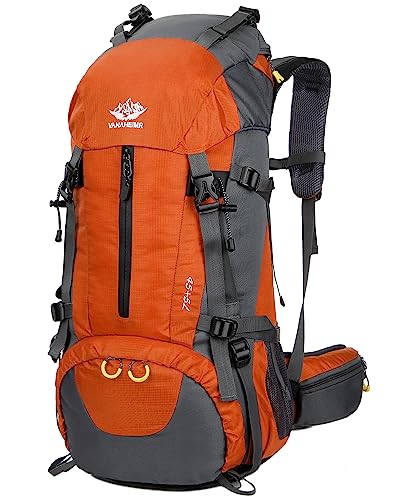
Pros
- Generous 50L capacity (45L + 5L) with dedicated sleeping bag storage and multiple exterior organization pockets
- Low empty pack weight of approximately 2.4 pounds helps hikers avoid unnecessary base weight
- Includes a dedicated waterproof rain cover to shield gear during wet trail conditions
- Multiple external tie-down straps easily secure bulky camp items like sleeping pads and hammocks
Cons
- Lacks an internal rigid metal frame, which may limit stability when hauling exceptionally heavy loads
- Comes in a standard fixed size without an adjustable torso-length suspension system
- No dedicated hydration reservoir sleeve or hose routing mentioned in the manufacturer specifications
The Esup 50L Camping Hiking Backpack is a lightweight, high-capacity pack designed for budget-conscious weekend backpackers, car campers, travelers, and outdoor enthusiasts. Offering a primary 45-liter volume with an additional 5-liter expansion potential, this pack targets hikers looking for multi-day gear storage without investing in premium technical mountaineering rigs. With its manageable empty weight of approximately 2.4 pounds, it suits those who need sufficient room for overnight essentials, spare layers, and camp equipment on moderate trails.
On the trail, the pack measures roughly 25.6 by 9.8 by 13.8 inches, giving it a tall, vertical profile capable of swallowing bulky camping sleep systems. The manufacturer incorporates widened, thickened S-type shoulder straps padded with sponge and covered in breathable mesh to distribute weight across the shoulders. While the back panel utilizes a high-elastic breathable back support designed to promote ventilation, hikers should note that there is no advertised rigid internal metal stay system. As a result, careful packing is essential to balance the load and maintain back comfort across varied terrain.
Build quality centers around a tear-resistant and anti-scratch polyester and nylon blended fabric, engineered to withstand routine trail brush, campsite friction, and travel handling. The pack features multiple storage zones, including a dedicated lower sleeping bag compartment, two zippered front organizer pockets, and mesh side pockets suited for water bottles or quick-access accessories. It also comes packaged with a dedicated waterproof rain cover, providing an exterior barrier to keep gear dry during sudden downpours on open trails.
Setting up and packing the Esup 50L involves utilizing its exterior compression and attachment straps to secure extra gear. Hikers can tie up a sleeping pad, rolled mat, or hammock using the adjustable external tie-downs, preserving interior space for food, cooking kits, and shelter components. The shoulder harness includes standard tension adjusters to snug the pack against the upper back, while the front pockets allow rapid retrieval of trail maps, headlamps, or snacks without unpacking the central cavity.
Buyers should keep realistic expectations regarding technical features and fit customization. The pack comes in a standard size without an adjustable torso suspension system, meaning it may not provide an optimal anatomical fit for particularly short or tall hikers. Additionally, the specifications do not indicate an internal hydration bladder sleeve or hose routing, so users will likely rely on the mesh side pockets for water bottles. Without a rigid internal frame sheet or stays, packing extremely heavy loads could lead to strap strain or awkward pack sagging.
For beginner backpackers, scouts, weekend campers, and budget travelers seeking a feature-rich, high-volume bag under 2.5 pounds, the Esup 50L offers solid utility and straightforward organization. Those undertaking rigorous alpine routes or requiring custom torso-fitted suspensions with heavy-load framing will want to step up to specialized technical packs, but for casual overnights and dry-to-moderate trail outings, this pack delivers great practical value.
The Esup hiking pack provides a structured 50-liter total volume (45L main storage plus a 5L reserve capacity) designed to accommodate multi-day gear loads. The interior layout features a dedicated sleeping bag compartment at the base, allowing hikers to isolate bulkier sleep gear from food, cooking utensils, and clean clothing stored in the main chamber.
External storage options include two zippered front pockets for organizing trail tools, hygiene kits, or electronics, alongside dual stretch-mesh side pockets designed to carry standard water bottles. Adjustable external webbing straps extend attachment capability, allowing hikers to lash sleeping pads, camp chairs, or hammocks directly onto the exterior.
Crafted from a blended polyester and nylon composite, the pack body is engineered for scratch and tear resistance against branches, brush, and rough ground contact. The tough woven material provides everyday abrasion resistance for trail approaches and campsite storage.
For wet-weather scenarios, the pack includes a fitted waterproof rain cover that deploys over the exterior shell. While the base pack fabric resists light wear and moisture, relying on the included rain cover during extended rainfall ensures gear inside remains protected from moisture seepage through seams and zippers.

Pros
- Tensioned AirSpeed backpanel allows cooling airflow across the back and adjusts easily across torso sizes.
- LightWire frame effectively routes heavy trail gear weight down into the hipbelt.
- Includes a removable raincover, saving money and hassle on aftermarket weather gear.
- Dedicated bottom sleeping bag compartment keeps bulky camp bedding accessible.
- Straightforward design achieves a low 3.7-pound empty weight for a high-capacity 65L pack.
Cons
- Streamlined pocket layout offers fewer exterior zippered organization pouches than heavier multi-pocket packs.
- The 65-liter volume may be larger than necessary for minimalist summer weekend overnighters.
- Exact numerical torso and hipbelt circumference ranges are not listed in the standard specs, requiring careful fitting.
The Osprey Rook 65 is an internal-frame backpacking pack built for multi-day trekkers, weekend backpackers, and campers who need substantial volume without complicated bells and whistles. Designed around a lightweight frame and a ventilated backpanel, this pack suits hikers who prioritize reliable load transfer, straightforward organization, and built-in weather protection. Its 65-liter capacity provides ample room for carrying standard tents, sleeping bags, and multiple days of food on backcountry routes.
Trail comfort depends heavily on proper weight distribution, and the Rook 65 manages gear weight through its LightWire frame and adjustable AirSpeed suspension. The tensioned mesh backpanel creates a ventilated gap between the user and the main pack body to help reduce sweat buildup on warm trail days. Because the backpanel can be adjusted to accommodate a variety of torso lengths, users can position the shoulder harness and hipbelt properly so the frame can transfer heavy cargo loads off the shoulders and directly onto the hips.
The build emphasizes practical durability with a focused feature set that keeps the empty pack weight down to 3.7 pounds. The pack structure is supported by the perimeter LightWire alloy frame, while the exterior incorporates an integrated, removable raincover stored in a dedicated pocket for unexpected storms. A lower zippered sleeping bag compartment with a floating divider allows hikers to isolate their sleep system from damp trail items, and Daylite accessory integration gives users the option to attach a compatible smaller daypack to the exterior.
Adjusting the Rook 65 is intuitive thanks to its sliding backpanel harness mechanism, allowing quick fine-tuning before setting out on the trail. Packing the 29.5 x 15 x 16.1-inch chassis is simple due to the spacious main cavity, while the lower zip entrance provides quick access to a sleeping bag when pitching camp in the dark. For regular upkeep, the pack is best cleaned by wiping down the fabric with mild soap and lukewarm water, followed by air drying away from direct sunlight before long-term storage.
Hikers considering this pack should keep a few design trade-offs in mind. While the 65-liter volume handles bulky gear effortlessly, minimalists heading out for fast-and-light overnight trips may find the pack body too cavernous. Additionally, the Rook lineup opts for a simplified exterior pocket layout, meaning hikers who prefer numerous external zippered organizer sleeves may need to utilize accessory packing cubes or pouches to sort small essentials.
For backpackers who want a reputable, well-ventilated, 65-liter trail pack that balances load support with a reasonable 3.7-pound weight, the Osprey Rook 65 represents a dependable, high-value investment. Its combination of adjustable suspension, LightWire load transfer, and an included raincover delivers the essentials needed for reliable multi-day backcountry travel.
The Osprey Rook 65 utilizes an AirSpeed suspension system designed around a perimeter LightWire frame. This internal frame effectively routes the carried weight from the shoulders down to the padded hipbelt, which helps stabilize heavy trail loads during long ascents.
The tensioned backpanel provides a suspended mesh surface that keeps the pack body separated from the hiker's back. This design encourages open airflow to reduce perspiration during warm-weather hikes, while the adjustable torso setup allows hikers to modify the harness height to match their spine length.
With 65 liters of total capacity and overall dimensions of 29.5 x 15 x 16.1 inches, the Rook 65 provides a generous interior volume suitable for multi-day backcountry trips. It easily holds a multi-piece shelter, warm insulation layers, cooking gear, and a bear canister or food bag.
Organization is streamlined via a dedicated lower sleeping bag compartment equipped with a floating divider. This divider can be adjusted or loosened depending on how gear is arranged inside the main compartment, while external attachment points offer Daylite pack compatibility for modular day-trip expansion.
The Osprey Rook 65 comes equipped with an integrated, removable raincover that stows away inside its own dedicated zippered pocket. This feature ensures immediate weather protection without requiring the separate purchase of an aftermarket pack cover.
When rain sets in on the trail, the cover deploys quickly around the pack perimeter to shield the main fabric and contents from sudden downpours. While raincovers help shed direct precipitation, sensitive electronics and sleeping gear should still be sealed in dry bags during prolonged torrential rain.

Pros
- Generous 65-liter capacity provides ample room for multi-day wilderness outings and bulkier gear
- Comes standard with a dedicated raincover featuring PFAS-free DWR and bluesign approved materials
- Multiple gear access points include a curved side panel zipper and a partitioned sleeping bag compartment
- Modular external storage options with removable sleeping pad straps and top-lid lash points
Cons
- Listed 4-pound empty weight may be heavier than desired for ultralight-focused backpackers
- Side panel zipper access is positioned on only one side rather than providing dual-side entry
- Large-X-Large sizing is built specifically for larger torso lengths and is unsuitable for smaller body frames
The Osprey Atmos AG 65L Men's Backpacking Backpack in size Large-X-Large is a full-featured gear carrier designed for multi-day wilderness backpacking, extended trekking trips, and gear-intensive backcountry camping. With a stated 65-liter capacity and an empty weight listed at 4 pounds, this pack is tailored for hikers who require substantial pack volume for shelters, clothing systems, food supplies, and camp essentials. The Large-X-Large sizing specifically caters to men with longer torso profiles who need proper pack proportions for effective load transfer on the trail.
Trail organization centers on versatile access and compartment separation. The Atmos AG 65L features a dedicated lower sleeping bag compartment complete with a removable divider, allowing backpackers to isolate their sleep system from heavier mid-pack gear. External equipment carry is supported by removable sleeping pad straps, freeing up valuable internal pack volume by securing a sleeping pad directly to the exterior. For quick gear retrieval during trail breaks, a curved zipper running along one side of the pack panel provides direct access to internal contents without requiring you to open the floating top lid.
Pack build quality and weather management are highlighted by the inclusion of a factory-fitted raincover. Constructed with bluesign-approved materials and treated with a PFAS-free durable water repellent (DWR) finish, this raincover provides quick-deploy external protection against sudden rainfall. The pack body measures 34.65 x 15.35 x 14.17 inches, featuring a floating top lid that can be extended upward to accommodate overstuffed loads or cinched down when carrying less gear. Integrated lash points on the top lid offer additional anchor spots for securing light essentials externally.
Loading and handling the Atmos AG 65L is straightforward due to its multi-point entry system. Hikers can pack heavy items through the main top collar, slide layers or cookware in and out through the curved side panel zipper, and keep tents or pads tied to the lower base straps. Between backpacking trips, maintaining the pack involves simple surface spot cleaning using a damp sponge and mild soap, followed by air drying away from high heat to preserve the fabric finish and raincover coating.
Realistic limitations should be evaluated before purchasing. At 4 pounds empty, this pack is not designed for hikers pursuing minimalist ultralight base weights where sub-two-pound frameless packs are preferred. Furthermore, the panel zipper provides single-side access rather than a full front U-zip or dual-sided entry, meaning gear packed far to the opposite side must still be reached from above. Torso fit is also critical, as this Large-X-Large model is intended for longer torso lengths and will not properly fit hikers with small or medium torsos.
For weekend backpackers, section hikers, and multi-day trail enthusiasts who need a dependable 65-liter capacity, versatile sleeping compartment organization, and an included raincover, the Osprey Atmos AG 65L L-XL is a well-rounded and capable choice. It is especially recommended for hikers whose gear lists demand generous volume and whose torso measurements require a true Large-X-Large frame.
The Osprey Atmos AG 65L is organized around distinct storage zones that simplify gear separation on extended backpacking routes. A dedicated lower sleeping bag compartment features a zippered closure and a removable internal divider, making it simple to keep your sleeping bag separate from damp gear or heavier cookware in the main compartment.
Trail-side access is enhanced by a curved zipper running down one side of the main body panel, giving hikers quick access to items packed deep in the pack without having to undo the top lid. The floating top lid can be raised to accommodate bulky gear loads beneath it and includes built-in lash points for securing extra trail accessories, while removable external straps at the base anchor sleeping pads firmly in place.
This backpacking pack comes standard with an included raincover, eliminating the need to purchase external weather protection separately. The raincover is manufactured using bluesign-approved materials and is finished with a PFAS-free durable water repellent (DWR) coating to shed precipitation during sudden storms on the trail.
While an included raincover provides critical exterior defense against falling rain and trail splash, it does not make the backpack entirely submersible or waterproof. For complete protection in prolonged downpours, hikers should still pair the raincover with dry bags or internal waterproof pack liners for sensitive electronics, down insulation, and spare dry clothing.

Pros
- Tensioned AirSpeed backpanel promotes open ventilation to manage sweat on warm-weather ascents
- LightWire internal frame effectively directs heavy trail weight onto the hipbelt instead of the shoulders
- Includes an integrated, removable raincover in a dedicated pocket without requiring an aftermarket add-on
- Zippered sleeping bag compartment with a floating divider simplifies bottom-pack gear organization
- Keeps empty pack weight to a modest 3.6 pounds despite a large 65-liter carrying volume
Cons
- Streamlined pocket layout offers fewer exterior gear organization options compared to feature-heavy packs
- Large 65-liter volume may provide excess bulk for minimalist overnights or ultralight gear setups
- Specific torso measurement increments are not stated on the baseline spec sheet, requiring trial fitting
The Osprey Renn 65 is a dedicated women's internal-frame backpacking pack built for multi-day trips, extended weekends, and gear-intensive wilderness routes. Designed for hikers who value clean organization and straightforward utility over fussy gimmicks, this 65-liter pack offers generous gear volume while maintaining an empty weight of just 3.6 pounds. It is well suited for women hikers, beginner-to-intermediate backpackers, and campers seeking dependable load distribution paired with factory-integrated weather protection.
On the trail, managing a full multi-day load requires effective structural support, which the Renn delivers through its LightWire perimeter frame. The frame structure channels carried weight down to the hipbelt, which helps relieve localized pressure across the shoulders during long miles. Behind the harness, the adjustable AirSpeed suspension incorporates a tensioned mesh backpanel engineered to promote continuous airflow between the pack body and the hiker's back, helping manage sweat buildup during warm-weather hikes or steep climbs.
Pack construction emphasizes durability and focused organization across its 27.6 x 15 x 16.1-inch dimensions. At the base, a dedicated zippered sleeping bag compartment features a floating divider, allowing users to isolate their sleeping bag from main-body cargo or collapse the divider to create one continuous storage cavity. A key functional asset is the integrated, removable raincover, which stows neatly in its own exterior pocket to shield gear against sudden squalls. Additionally, the exterior includes built-in attachment compatibility for Osprey Daylite daypacks, enabling modular expansion for side trips from basecamp.
Fitting the Renn 65 is straightforward thanks to the adjustable torso ladder on the AirSpeed suspension system, allowing hikers to modify the torso length to align with their back measurements before securing the hipbelt and shoulder harness. Daily trail routine is simplified by the top-loading main compartment and lower zippered access, letting you pitch camp or grab shelter components without unpacking every layer. Maintenance involves standard pack care, such as shaking out trail debris, spot cleaning with mild soap, and air-drying both the pack and raincover completely before long-term storage.
Despite its generous 65-liter volume and supportive suspension, the Renn 65 leans toward a streamlined design philosophy that carries specific tradeoffs. Hikers who prefer an abundance of exterior organization, front stretch pockets, or multiple entry points might find the simple layout somewhat basic compared to premium technical packs. Furthermore, while the integrated raincover provides immediate exterior moisture management, it is not a fully submersible dry bag, meaning sensitive electronics and sleeping gear should still be protected inside waterproof stuff sacks during severe downpours.
For backpackers seeking a reliable, high-capacity internal-frame pack with active ventilation, the Osprey Renn 65 delivers an outstanding balance of load support and practical functionality. Its combination of a light 3.6-pound frame weight, built-in rain protection, and adjustable suspension makes it a dependable choice for women taking on multi-day backcountry adventures.
The Osprey Renn 65 utilizes a LightWire internal perimeter frame designed to optimize load transfer during extended trail days. By redirecting the weight of your gear directly down toward the hipbelt, the frame reduces direct downward pull across the shoulders and collarbones.
Working alongside the structural frame is the adjustable AirSpeed suspension system. This design features a tensioned, breathable backpanel that holds the main pack body slightly away from the user's spine, facilitating continuous air circulation to help keep your back cooler on strenuous uphill sections.
The torso adjustment mechanism built into the backpanel lets hikers fine-tune the harness position to match their specific torso length. This customization ensures the shoulder straps and hipbelt sit in their proper ergonomic positions for optimal balance and stability.
With a total capacity of 65 liters and dimensions measuring 27.6 x 15 x 16.1 inches, the Renn 65 accommodates substantial gear kits including tents, sleeping mats, cooksets, and multi-day food supplies.
Organization centers around a top-loading main compartment paired with a dedicated lower sleeping bag compartment. The integrated floating divider between the two sections can be cinched tight to isolate sleep systems or unhooked to create a cavernous single interior chamber.
For extended itineraries requiring side excursions or summit hikes, the pack features built-in Daylite attachment points. This allows users to lash a compatible Daylite pack directly to the front exterior without packing a separate daypack inside the main compartment.
The Renn 65 comes standard with an integrated, removable raincover, eliminating the need to purchase separate weatherproofing accessories for your pack. It stores in an easily accessible dedicated pocket located near the bottom of the bag.
When trail conditions shift, the raincover deploys rapidly over the entire exterior of the pack to shed rain, mist, and trail splashes. When clear skies return, it stows back into its exterior pocket without dampening gear packed inside the main compartment.
While the raincover provides substantial defense against driving precipitation, hikers carrying moisture-sensitive electronics, dry layers, or down sleeping bags should still consider internal dry sacks for redundant protection in continuous heavy storms.
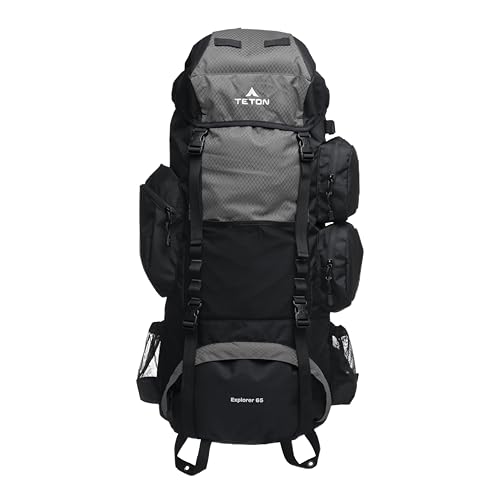
Pros
- Generous 65-liter capacity easily swallows bulky sleep systems, camp kitchen essentials, and multi-day trail gear
- Integrated rain cover is included in the package, eliminating the need to purchase separate pack protection
- Multi-position torso suspension provides customizable shoulder and lumbar positioning for medium and tall adventurers
- Dedicated sleeping bag compartment and multi-pocket configuration make camp organization straightforward
Cons
- Listed pack weight of 5 pounds is heavier than lightweight and ultralight backpacking alternatives
- Torso adjustment is tailored specifically for medium to tall builds and may not fit shorter or petite hikers
- Includes a hydration sleeve but does not come with a hydration reservoir or bladder
The TETON Sports Explorer 65L is a full-capacity internal frame backpack designed for overnight campers, weekend backpackers, and gear-intensive hikers. Featuring an internal support structure, multi-pocket architecture, and a 65-liter volume, this pack provides substantial room for standard trail shelters, sleeping systems, clothing layers, and cookware. It is particularly well-suited for beginner-to-intermediate backpackers, scouts, and recreational campers who prioritize comprehensive gear organization and structural load support over ultralight minimalism.
Measuring 18 by 32 by 12 inches with a listed empty weight of 5 pounds, the Explorer 65L handles medium-to-large trail loads with stability. The internal frame works in tandem with multi-directional compression straps that cinch down gear to keep weight centered close to the spine. To support trail hydration, the main body features a dedicated hydration pocket, allowing hikers to route a water reservoir hose directly to the shoulder harness for on-the-go drinking without stopping to unpack.
Construction quality focuses on utility and trail durability, utilizing robust exterior materials and dependable hardware across all critical stress points. The back panel integrates a durable open-cell foam lumbar pad alongside molded airflow channels designed to encourage ventilation between the user's back and the pack. In addition, TETON Sports includes an integrated rain cover that deploys directly over the pack body, providing practical external defense when mountain storms roll in unexpectedly.
Adjusting the pack to your body is managed through a multi-position torso adjustment mechanism, which allows the harness to slide and lock into positions appropriate for medium and tall adventurers. Packing is made intuitive thanks to the dedicated lower sleeping bag compartment, which prevents your sleep kit from mingling with trail snacks and cooking gear. Multiple exterior pockets, spacious side compartments, and accessible attachment points allow hikers to secure trekking gear and quick-access accessories externally without opening the main cavity.
Potential buyers should note a few realistic design constraints before heading out. At 5 pounds empty, this backpack carries noticeable base weight, which may deter ounce-counting ultralight hikers on high-mileage trips. Additionally, the multi-position torso adjustment is explicitly engineered for medium and tall adult frames, meaning petite hikers or those with shorter back lengths may struggle to achieve an ideal load transfer to the hips. The internal hydration compartment is also purely a sleeve, requiring users to supply their own water bladder.
For outdoor enthusiasts, weekend backpackers, and camp-bound families seeking a durable, feature-loaded internal frame pack, the TETON Sports Explorer 65L is a practical and capable choice. Its balanced blend of torso adjustability, separate gear zones, built-in weather cover, and internal frame stability delivers everything required to organize and haul standard backcountry loads reliably.
The TETON Sports Explorer 65L features a multi-position torso adjustment system engineered to fit medium and tall adult adventurers. This adjustable harness setup allows the user to reposition the shoulder straps along the internal frame to align properly with individual torso lengths, ensuring the lumbar pad sits securely against the lower back.
Because the adjustment system focuses on medium to tall builds, shorter hikers or petite individuals should verify their torso measurements before purchasing, as an overly long frame can inhibit proper load transfer to the hips. The open-cell foam lumbar pad works in tandem with the back channels to maintain cushioning and airflow during trail ascents.
With 65 liters of total internal volume and overall dimensions of 18 by 32 by 12 inches, this pack provides ample room for bulky multi-day camping gear. The internal space is segmented to keep trail essentials organized, anchored by a dedicated bottom compartment designed specifically for sleeping bags.
Beyond the main gear reservoir, the Explorer 65L includes multiple spacious compartments and exterior pockets for quick-access items such as maps, headlamps, and trail tools. Multi-directional compression straps line the exterior, enabling hikers to compress uneven loads and maintain balance regardless of how full the pack is packed.
The TETON Sports Explorer 65L includes a built-in rain cover designed to protect the pack body and gear from rain, mist, and trail mud. Having a dedicated cover integrated into the pack design saves buyers the expense of purchasing an aftermarket cover while ensuring proper dimensional coverage over the 65L profile.
While the included cover provides essential protection during sudden weather shifts, hikers carrying moisture-sensitive electronics, sleeping bags, or down garments should always use internal dry bags or waterproof stuff sacks as an additional line of defense in prolonged heavy rain.
Determining the Right Pack Volume for Wilderness Backpacking
Choosing the correct internal volume for a backcountry trip is a balance between personal gear bulk, route duration, and physical comfort. Carrying the appropriate capacity prevents gear compression issues while keeping total weight manageable across strenuous elevation changes. Experienced backpackers treat pack volume as a direct reflection of their self-sufficiency requirements rather than an arbitrary storage bin. Understanding how liters translate to real trail necessities allows you to select a pack that carries cleanly without dead space or overloaded seams.
Trip Duration and Liter Capacity Benchmarks
Backcountry trip length serves as the primary baseline for calculating needed storage volume. For short weekend outings spanning one to three nights, a pack capacity between 50 and 55 liters generally provides ample room for essential gear, food rations, and spare clothing. Packs like the Esup 50L Camping Hiking Backpack and the Teton 55L Scout Internal Frame Backpack represent this category, offering compact silhouettes that minimize trail drag. These smaller capacities keep your pack weight centered close to your back while discouraging the temptation to carry unnecessary camp luxuries.
Multi-day outings spanning three to five nights require stepped-up volume, typically falling within the 60 to 65-liter range. This size tier represents the versatile sweet spot for most backpackers tackling variable terrain and changing weather conditions. Models such as the Osprey Rook 65L Men’s Backpacking Backpack, the Osprey Renn 65L Women’s Backpacking Backpack, and the Teton 65L Explorer Internal Frame Backpack provide the expanded depth needed for additional food rations and layered apparel. The extra ten liters of space accommodate unexpected route delays without forcing you to compress your warm insulation into rock-hard bricks.
Extended expeditions lasting five nights or longer demand packs providing 70 to 75 liters or more. Haulers in this class, such as the Teton 75L Explorer Internal Frame Backpack, are engineered to carry substantial food supplies, extra fuel canisters, and specialized gear like mountaineering tools or cold-weather sleeping bags. Winter backpacking also pushes gear into this larger volume bracket due to the increased loft of sub-zero insulation and heavy four-season tents. However, carrying higher volume requires disciplined packing habits, because empty space can tempt hikers into carrying excess weight that strains knees and ankles.
Auditing Base Gear Volume and Sleep Systems
The overall packed size of your base gear determines whether a given liter rating will fit your needs. Your sleep system, comprising your sleeping bag, pad, and shelter, accounts for more than half of your total pack volume inside the main compartment. Many modern packs, including the Osprey Atmos AG 65L Men’s Backpacking Backpack and the Teton Scout series, incorporate dedicated sleeping bag compartments with zippered lower access. These compartments often feature floating or removable dividers that segregate compressed insulation from sharper cooking stoves and tent stakes.
Synthetic sleeping bags require significantly more volume than comparable down-filled options, often demanding an additional five to ten liters of pack capacity. A budget-friendly synthetic bag might fill an entire lower compartment, leaving little room for a bulky inflatable sleeping pad. Hikers using ultralight down quilts and compact air mattresses can easily drop down to a 50-liter pack for multi-day trips. Evaluating the actual stuffed dimensions of your sleeping bag before choosing pack volume prevents unexpected crowding in the main gear cavity.
Shelter design also heavily influences internal space requirements. Freestanding double-wall tents pack down with rigid pole sets that must either ride vertically inside the pack body or slip into exterior side sleeves. If your tent fabric is bulky or damp from morning condensation, having exterior lash straps or compression webbing helps secure the load without soaking your dry layers inside. Many internal frame packs provide dedicated bottom straps or daisy chain tie-offs specifically for lashing closed-cell foam pads or bulky tent bodies beneath the pack base.
Food Storage, Water Carrying, and Trail Consumables
Consumables represent variable weight and volume that fluctuate over the course of every wilderness itinerary. Food rations typically consume roughly two to two-and-a-half pounds and approximately three to four liters of space per person per day. On routes requiring mandatory hard-sided bear canisters, packing geometry becomes far more rigid. Standard bear canisters occupy roughly ten to twelve liters of fixed, non-compressible space that must sit horizontally or vertically near the center of the main pack compartment.
Packs in the 65-liter class readily absorb full-sized bear canisters alongside standard three-season camp equipment. If you attempt to squeeze a rigid food canister into a 50-liter pack, you will likely struggle to close the top lid without leaving warm garments behind. For weekend trails without bear canister regulations, soft food bags compress easily as meals are consumed, allowing the pack profile to slim down via exterior compression straps. This volume reduction stabilizes the bag against your back as miles accumulate and weight decreases.
Water storage needs also impact overall pack volume and harness balance. Internal hydration reservoirs slide into dedicated internal pockets, utilizing tall, flat spaces along the backpanel without bulging exterior compartments outward. Conversely, carrying wide-mouth water bottles in external mesh side pockets frees up internal liters for camp equipment. When venturing into dry stretches requiring specialized gear or deep water carries, examining specialized trail pack options can provide insight into how added liquid weight affects balance and strap tensioning on rough terrain.
Torso Length Measurement and Harness Ergonomics
A pack with generous liter capacity will quickly cause physical misery if the harness does not align with your anatomical torso length. Torso measurement is determined by the distance between the prominent C7 vertebra at the base of your neck and the top of your iliac crest along your hip bones. Total body height has surprisingly little correlation with torso length, as a tall hiker can have a short torso and long legs. Choosing a pack with an incorrect torso range causes shoulder straps to gap or collarbones to bear excessive downward weight.
Adjustable suspension systems solve this fitting puzzle by allowing customized ladder adjustments along the backpanel. The Teton Sports Explorer and Scout lines utilize multi-position torso adjustments that accommodate medium and tall adventurers using velcro or ladder sliders. Similarly, the Osprey Rook 65L and Renn 65L feature intuitive torso adjustment ladders that slide vertically along perimeter wire frames. Dialing in this adjustment ensures that roughly eighty percent of the carried load rests squarely upon your pelvic girdle rather than your cervical spine.
Contoured hip belts with dense lumbar padding form the foundation of proper weight distribution. Open-cell and dual-density foam lumbar pads, such as those found on Teton internal frame designs, cushion the sacrum and prevent the pack from slipping downward during steep descents. Women-specific models like the Osprey Renn feature ergonomically curved hip belts and narrower shoulder harnesses shaped specifically to prevent chafing along the chest and hip bones. Securing the hip belt directly over the iliac crest allows the legs to carry trail weight efficiently through hours of sustained hiking.
Suspension Frames and Load Distribution Mechanics
The internal architecture of a backpacking pack dictates how effectively it handles heavy gear loads without buckling. Robust load-bearing suspensions rely on perimeter wire stays or molded framesheets to bridge the gap between upper load-lifters and the hip belt. Comparing modern designs against classic rigid internal frame backpack designs highlights how tensioned wire architecture transfers mass directly into the lower lumbar region. This structural rigidity prevents the pack body from bowing outward into a barrel shape that pulls your shoulders backward.
Ventilation represents another critical component of modern suspension mechanics. Traditional foam backpanels often trap sweat against the spine, causing dampness and skin chafing in warm weather. Systems like Osprey’s tensioned AirSpeed backpanel suspend the main cargo hold several inches away from the hiker’s back, promoting constant cooling airflow through open mesh. The Osprey Atmos AG takes this further with its seamless Anti-Gravity suspension, wrapping tensioned mesh from the shoulder blades down through the lumbar pad for continuous, balanced contact.
Proper weight distribution inside the frame is just as important as the frame structure itself. Heavy items such as stoves, fuel, water reserves, and food containers should sit close to the spine at mid-back height. Lighter gear like sleeping bags should cushion the bottom compartment, while medium-weight clothing fills the outer perimeter. Stacking heavy gear too high makes the pack sway precariously on rocky switchbacks, while placing dense mass at the very bottom pulls uncomfortably on the shoulder straps.
Weather Protection, Fabric Durability, and Hardware
Trail durability depends heavily on textile construction and reinforced stitching at critical harness anchor points. Backpack shells commonly utilize high-tensile polyester or ripstop nylon fabrics engineered to resist scrapes from granite boulders and thorny trail brush. The Esup 50L uses tear-resistant polyester and nylon weaves designed to prevent punctures from branching out into catastrophic fabric failures. Heavy-duty bar-tack stitching along shoulder strap attachments and load-lifter anchors guarantees that seams hold firm under dynamic trail shocks.
While technical pack fabrics frequently feature water-repellent surface finishes, heavy continuous downpours will eventually penetrate unsealed needle seams and standard zipper coils. Most reliable internal frame packs solve this problem by incorporating integrated waterproof rain covers stowed in dedicated base pockets. Packs like the Teton Explorer line and Osprey Rook provide fitted covers that deploy instantly over the entire pack body during sudden mountain squalls. Advanced models like the Osprey Atmos AG utilize rain covers treated with PFAS-free durable water repellent coatings that satisfy environmental bluesign standards.
Hardware selection directly influences trail longevity and trailside ease of use. Heavy-gauge zipper sliders, multi-directional compression buckles, and molded acetal hardware allow hikers to cinch down unstable loads with gloved hands. Compression straps running across side panels stabilize half-empty compartments, preventing loose gear from shifting and disrupting your gait. Checking buckle tension and inspecting zipper coils for trapped grit after sandy desert traverses ensures hardware operates smoothly without derailment.
Packing Architecture and Compartment Accessibility
How a pack organizes its internal volume affects trail efficiency almost as much as total liter capacity. Traditional top-loading designs utilize a large main cavity cinched with a drawcord beneath an adjustable floating lid. Floating lids, featured on the Osprey Atmos AG 65L and Teton series, expand upward to accommodate oversized sleeping pads or extra rations on the first day of a trip. Zippered pockets within the lid provide quick access to headlamps, navigation tools, first-aid kits, and trail snacks without requiring you to unroll the main compartment.
Access ports along the sides or front panel eliminate the frustration of digging through deep gear stacks during brief trail breaks. The Osprey Atmos AG includes a curved side zipper opening that lets hikers grab rain gear or warm midlayers directly from the center of the pack body. Separate sleeping bag compartments with dedicated lower zippers keep evening camp gear isolated from daytime necessities. This compartment division speeds up camp setup when arriving at a shelter in fading daylight or drizzling rain.
Exterior storage features add functional versatility without eating into protected internal volume. Stretch mesh front shove-it pockets provide the perfect staging area for wet rain jackets, damp tent groundsheets, or water filtration bladders. Side mesh pockets secure insulated bottles or trekking pole tips while keeping them within easy arm’s reach while walking. External lash loops and trekking pole attachments hold tools securely against the pack exterior, preserving valuable interior liters for weather-sensitive insulation.
Avoiding Common Sizing Errors and Trail Strain
A frequent sizing miscalculation among beginner backpackers is purchasing an oversized pack and filling every spare liter with non-essential gear. Extra volume creates empty space that naturally invites extra clothing, excessive cooking gear, and heavy camp gadgets that needlessly tax your stamina. Conversely, attempting to squeeze a five-day supply of gear into an undersized 40-liter daypack causes bulging seams and forces heavy items onto exterior straps. An overloaded, bulging pack pulls backward on your torso, forcing you to lean unnaturally forward to maintain balance.
Proper strap sequencing on the trail can instantly relieve localized neck, shoulder, or lower back strain. Always loosen all harness straps before hoisting a fully loaded pack onto your knee and slipping into the shoulder harness. Fasten and tighten the hip belt first directly over your pelvic bones, followed by cinching the shoulder straps until they wrap comfortably around your collarbones. Finally, tension the load-lifters at approximately a forty-five-degree angle to pull the pack mass forward, and fasten the sternum strap across your mid-chest to stabilize the shoulder harness.
Matching your pack volume to your specific itinerary length, climate demands, and gear compressibility guarantees a safer, more enjoyable wilderness experience. A 50 to 55-liter pack serves agile weekend explorers perfectly, while a 65-liter hauler delivers the broad adaptability required for multi-day mountain routes. Larger 75-liter models offer the necessary reserve capacity for extended off-grid journeys and cold-weather treks where bulky insulation is mandatory. Taking the time to measure your torso, assess your base gear bulk, and adjust your internal frame ensures miles of comfortable carrying across every backcountry trail.







Write Your Review
No reviews yet. Be the first to share your experience!