


Packing for a long day on the trail or navigating transit with modern gear requires a careful balance between storage capacity and body ergonomics. Evaluating how big is 32l backpack dimensions helps determine whether a pack provides enough room for daily tools without pulling uncomfortably on your neck and shoulders. A pack in this volume tier sits squarely between compact daypacks and extended overnight bags, offering substantial room while demanding attention to external measurements and weight balance. For outdoor adventures that require extra support for dense gear, considering framed hiking backpack options can make carrying heavier loads much more manageable across uneven terrain.
In practical terms, understanding how big is 32l backpack storage involves examining linear dimensions, compartment layouts, and weight distributions. Backpack models like the Osprey Hikelite 32L Hiking Backpack, Blue OS provide roughly 1,950 cubic inches of internal volume, translating to dimensions around 22.8 by 12.6 by 12.6 inches. This volume comfortably accommodates extra layers, hydration equipment, and tech gear, yet external depth can expand rapidly if pockets are overfilled. Matching pack volume to your daily transit routines or hiking itineraries prevents unnecessary bulk while ensuring your essential gear remains well protected.
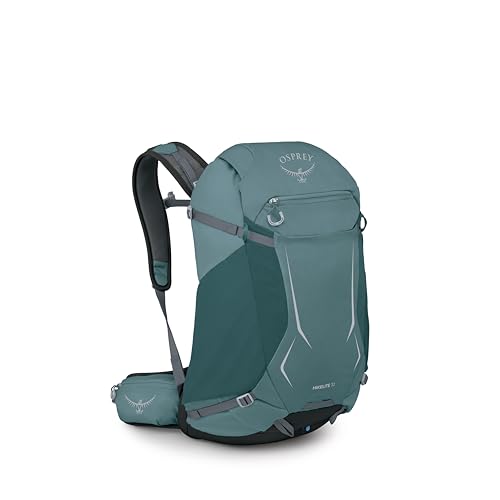
Pros
- Ventilated mesh trampoline backpanel paired with a supportive LightWire peripheral frame
- Includes an integrated waterproof raincover stowed in a dedicated bottom pocket
- Adjustable torso system and load lifters allow customized unisex fit and balance
- Plentiful storage options with zippered hipbelt pockets, stretch side pockets, and a front shove-it pouch
Cons
- Hydration reservoir is not included and must be purchased separately
- At 32 liters, the dimensions (22.8 x 12.6 x 12.6 in) may feel oversized for quick, minimalist outings
- Lacks specialized multi-day backpacking features like a separate sleeping bag compartment
The Osprey Hikelite 32L is a feature-rich hiking daypack designed for hikers who need substantial gear volume, reliable frame support, and open ventilation. With a 32-liter capacity and a listed weight of 2.28 pounds (1.03 kg), it caters well to day hikers carrying extra clothing layers, family trail supplies, photographic accessories, or cooler-weather necessities. The unisex design and adjustable torso provide flexibility for different body frames without needing gender-specific variants.
Load transfer and carrying comfort center around Osprey's AirSpeed suspension system. A tensioned mesh trampoline backpanel keeps the pack body off your back to promote ventilation on warm afternoons, while the LightWire peripheral frame anchors the structure. By directing weight toward the padded ErgoPull hipbelt, the suspension helps take pressure off your shoulders. Upper and lower side compression straps combine with harness load lifters to keep gear close to your center of gravity during steep climbs.
Gear organization across the Hikelite 32 is straightforward and practical for day-long outings. Inside, the spacious main compartment includes a dedicated hydration sleeve, though the reservoir itself is sold separately. Externally, a front shove-it pocket offers quick staging for an extra layer, while large stretch side pockets hold water bottles or taller essentials. The front zippered pocket secures smaller valuables, and dual zippered hipbelt pockets provide on-the-go access to trail food or small navigation tools.
Weather management is reinforced by an included waterproof raincover fabricated from 100% recycled polyester. Stashed away in its own zippered bottom compartment, the raincover deploys quickly when unexpected mountain storms roll in. Adjusting the pack for personal comfort is made simpler through the adjustable torso harness and sliding sternum strap, allowing users to fine-tune the shoulder strap anchor height to match their spine length before hitting the trail.
While the Hikelite 32 offers generous capacity and supportive suspension, it is strictly intended as a large daypack rather than an overnight backpacking rig. It lacks a separate lower sleeping bag compartment and external sleeping pad lashes, and minimalists may find its 32-liter shell bulkier than necessary for fast-and-light summer hikes. For day hikers, winter day trekkers, and gear-heavy trail explorers seeking dependable load balance, built-in weather protection, and breezy back ventilation, the Osprey Hikelite 32 stands out as a well-rounded investment.
The Osprey Hikelite 32 utilizes an AirSpeed suspension system built around a LightWire peripheral frame. This design suspends a tensioned mesh trampoline backpanel away from the main pack body, creating an open air space designed to encourage airflow between your back and the load.
The peripheral frame stabilizes the pack's perimeter and helps transfer carried weight directly down to the padded ErgoPull hipbelt. To prevent gear from sagging backward, harness load lifters and dual side compression straps pull the load forward toward your center of gravity.
Storage on the Hikelite 32 is divided between a roomy main compartment and several quick-access external pockets. An internal hydration reservoir sleeve provides dedicated space for an aftermarket bladder, though a hydration reservoir is not included with the pack and must be purchased separately.
For exterior storage, the pack features large stretch side pockets for water bottles, a front shove-it stash pocket for jackets or maps, a zippered top pocket for small items, and dual zippered hipbelt pockets for small essentials while walking.
The Osprey Hikelite 32 comes equipped with a dedicated waterproof raincover made from 100% recycled polyester. It stores conveniently inside an integrated zippered pocket at the base of the pack.
This included cover deploys rapidly over the pack exterior during rain showers, safeguarding your gear without occupying space inside the main compartment. Hikers packing sensitive electronics or paper maps should still consider internal dry bags during persistent downpours.
Understanding 32-Liter Backpack Capacity, Dimensions, and Practical Real-World Use
Determining pack volume helps travelers, students, and hikers select the correct gear without taking on unnecessary physical bulk. A 32-liter bag occupies a unique middle ground across modern backpacks, bridging the gap between compact daypacks and dedicated multiday travel haulers. This sizing offers enough capacity for full-day outdoor excursions or minimalist weekend trips, but it requires thoughtful packing to keep external bulk manageable. Understanding how volume translates into measurable inches and real-world gear capacity ensures you choose the proper pack for your daily routines.
Direct Capacity Breakdown: What 32 Liters Means in Measurable Volume
Backpack capacity measurements rely on liquid volume displacement, where one liter equals approximately 61 cubic inches of physical storage space. A 32-liter pack therefore provides roughly 1,950 cubic inches of total internal room across all enclosed compartments and exterior pockets. This measurement encompasses the entire storage system, meaning secondary stash sleeves, lid pockets, and side water bottle sleeves often count toward the published capacity rating. Knowing this total volume allows you to visualize how much gear you can pack before the seams experience lateral stress.
Manufacturers often distribute this volume differently depending on the intended activity and overall bag silhouette. Some bags concentrate the majority of their space within a single open cavity, while other designs split the capacity across specialized organizational slots and tech compartments. For outdoor designs such as the Osprey Hikelite 32L, the primary bucket holds the vast majority of bulky gear while stretch mesh pockets expand outward for extra quick-access gear. Comparing total cubic inches against your specific storage habits helps clarify whether an open cavity or an organized multi-compartment design suits your lifestyle better.
Physical Exterior Dimensions and Linear Measurement Benchmarks
External dimensions for a standard 32-liter pack generally measure between 20 to 23 inches in height, 12 to 14 inches in width, and 10 to 13 inches in depth. For instance, the Osprey Hikelite 32L lists physical dimensions of 22.8 inches tall by 12.6 inches wide by 12.6 inches deep. These measurements produce a total linear measurement of roughly 48 inches when summing height, width, and depth together. A pack with these dimensions presents a structured profile that stands taller along the spine than smaller 20-liter everyday carry bags.
Depth remains the most variable dimension on a bag of this volume because flexible fabrics expand as you fill external compartments. An unladen pack might measure only 7 or 8 inches deep when flat, but packing dense jackets, tech pouches, and food containers quickly pushes the profile out to its full depth. Compression straps positioned along the sides help stabilize this outward growth, pulling the mass inward toward your center of gravity. Keeping an eye on physical measurements ensures the pack stays balanced on your shoulders without pulling you backward.
Airline Compliance: Carry-On Overhead Bins Versus Personal Item Limits
Air travelers frequently ask whether a 32-liter bag complies with standard commercial aviation baggage limits. For major domestic and international airlines, standard overhead carry-on allowances typically cap dimensions at 22 by 14 by 9 inches. A 32-liter backpack generally fits inside standard overhead bins without difficulty, provided the depth dimension is controlled through side compression straps. Rigid internal frame stays or curved tensioned back panels must also be measured carefully to ensure they do not exceed strict 22-inch height boxes.
Personal item limits present a much tougher obstacle for a backpack of this substantial volume. Most airlines limit under-seat personal items to dimensions around 18 by 14 by 8 inches, which a 22-inch tall pack will exceed under normal circumstances. While an underpacked soft-sided bag might squeeze beneath an airplane seat at an angle, fully packed bags risk blocking passenger legroom or infringing on emergency egress zones. Travelers seeking a compliant under-seat experience generally look toward smaller 20- to 24-liter bags rather than full-capacity 32-liter models.
Regional aircraft and budget international airlines enforce dimensional checks with metal sizer boxes at boarding gates. If your 32-liter pack features an internal metal wire frame or structured perimeter wire, you cannot crush the pack down to fit smaller dimensions. Utilizing the side compression straps to flatten the profile remains the best method for avoiding forced gate-check fees on crowded flights. Knowing the strict dimensional guidelines of your specific airline prevents unexpected transit stress before boarding.
Real-World Packing Scenarios: What Actually Fits Inside a 32L Bag
Visualizing what fits inside a 32-liter pack requires looking at realistic packing configurations for day trips and travel. In a travel scenario, this volume easily holds three to four days of rolled lightweight clothing, an extra pair of compact shoes, and a toiletry kit. It also provides ample room for an insulated jacket, charging cables, portable battery banks, and a compact travel towel. Travelers utilizing ultralight compression packing cubes can maximize this cavity without straining internal seams or zipper tracks.
Day hiking demands a different distribution of internal gear focused on changing weather conditions and sustenance. A 32-liter pack accommodates a three-liter hydration reservoir, rain shells, fleece mid-layers, a comprehensive first aid kit, and an entire day of trail food. You can also slip in emergency gear, headlamps, trekking pole attachments, and bulky navigation tools without jamming the main compartment. For outdoor outings where you want to keep food and drinks cold on warm afternoons, exploring insulated backpack cooler options offers dedicated thermal storage that functions alongside traditional gear hauling.
Cold-weather outings showcase the true utility of this capacity threshold compared to smaller bags. Winter hiking or cold-weather urban travel requires bulky insulated layers, heavy gloves, wool beanies, and vacuum-insulated thermoses that would instantly overwhelm an 18-liter pack. The 32-liter space handles these lofty garments comfortably, allowing you to shed or add layers as outdoor temperatures fluctuate. This versatility makes the volume an exceptional choice for all-season recreation.
Daily Commuting and Academic Campus Demands
Commuters and university students carrying large amounts of heavy equipment often gravitate toward a 32-liter pack for its generous capacity. This volume easily accommodates a 15- to 16-inch laptop in a padded sleeve, alongside multiple textbooks, spiral notebooks, tech organizers, and a packed lunch container. Students who participate in after-class sports or gym workouts can pack athletic shoes and a change of clothes without needing a secondary duffel bag. Having a single pack handle both academic tools and personal fitness gear streamlines long days away from home.
Urban transit environments, however, require situational awareness when navigating crowded subways and commuter buses with a larger bag. A 32-liter pack extends significantly off the back, which can inadvertently bump seated passengers or get caught in narrow train aisles. Removing the pack and holding it by the top grab handle while boarding crowded transit keeps your silhouette compact and courteous. For those on a strict budget who need a reliable gear hauler for lighter routines, comparing affordable daypack selections can help determine whether a smaller, simpler pack meets your daily transport requirements.
Suspension and Harness Geometry for Carrying 32 Liters Comfortably
Carrying a fully loaded 32-liter backpack requires a supportive suspension system to keep heavy loads from causing neck and shoulder discomfort. When loaded with water, electronics, and clothing, a bag of this capacity frequently weighs between 15 and 25 pounds. At this weight threshold, simple unpadded webbing straps fail to provide adequate relief, creating pressure points along the collarbones and trapezius muscles. High-quality harness systems utilize dual-density EVA foam and contoured shoulder straps to spread the pack weight evenly across your upper torso.
Technical outdoor packs feature specialized ventilation backpanels that improve physical comfort during warm-weather outings. The Osprey Hikelite 32L incorporates an AirSpeed tensioned mesh backpanel suspended over a LightWire peripheral frame, creating an open air gap between your back and the pack body. This suspended mesh architecture allows circulating air to dissipate heat and reduce sweat accumulation during steep climbs or fast-paced transit walks. The perimeter frame also stabilizes the pack structure, preventing bulky gear inside from jabbing directly into your spine.
A supportive hipbelt becomes essential when hauling dense loads over extended distances or rough hiking trails. Packs in the 32-liter class often include padded hipbelts equipped with forward-pull adjustment straps to anchor the load securely over the iliac crest of your pelvis. Transferring weight off your shoulders and directly onto your lower skeletal framework eliminates muscle fatigue during long days on your feet. Sternum straps and upper load-lifter straps further stabilize the load, keeping the top of the pack tucked close against your upper back.
Weight Distribution Principles and Center-of-Gravity Balance
Packing a 32-liter pack correctly ensures optimal balance and prevents the bag from dragging your torso backward. Dense items such as hydration reservoirs, heavy laptop computers, and dense food containers should always rest close to the backpanel, centered between your shoulder blades. Placing heavy gear at the bottom or outward edges forces your core muscles to compensate, leading to lower back strain over several hours of walking. Lighter gear like fleece jackets, rain gear, and sleeping layers should cushion the heavier items and fill the bottom and exterior pockets.
Stabilizing the packed load with side compression straps prevents internal items from shifting unexpectedly while you navigate uneven terrain or climb subway stairs. When gear slides around inside an underfilled bag, your center of gravity constantly changes, compromising your stability and wasting physical energy. Cinching down side webbing flattens the pack cavity and locks gear securely against the internal frame. Taking two minutes to balance and compress your load transforms a bulky carry into a stable, comfortable experience.
Pocket Architecture and Usable Internal Volume Trade-Offs
Backpack architecture influences how much functional volume you can extract from a published 32-liter rating. Designs with complex internal organizer panels, multiple zippered sleeves, and rigid dividers often steal space from the primary packing compartment. While these dedicated slots keep pens, charging cables, and sunglasses organized, they make it harder to slide bulky objects like bike helmets or thick winter boots inside. In contrast, top-loading bucket bags or open panel-loaders maximize usable volume by consolidating space into a cavernous central cavity.
External storage features such as front shove-it pockets and stretchy side sleeves add practical capacity without encroaching on internal dimensions. The Osprey Hikelite 32L utilizes deep stretch mesh side pockets designed to cradle wide water bottles, alongside a front fabric pocket for stashing wet rain jackets. These exterior storage solutions keep wet or muddy items completely separated from dry interior clothes and sensitive electronics. Evaluating whether your daily routine requires complex admin organization or wide-open storage helps you choose the most efficient pack layout.
Fabric Longevity, Weather Protection, and Structural Care
Maintaining the structural integrity of a 32-liter backpack requires proper fabric care and sensible weather protection. Technical nylon and polyester fabrics rely on durable water repellent coatings and internal polyurethane backings to shed light rain and resist trail abrasion. To preserve these protective treatments over years of regular use, never clean your pack in a residential washing machine or dry it under high heat. Hand washing with a soft bristle brush, mild soap, and lukewarm water removes trail grit without causing internal waterproof coatings to peel or degrade.
While water-resistant textiles repel brief moisture, sustained downpours can seep through exposed zipper coils and needle stitching. Many high-performance bags include integrated raincovers stored inside dedicated bottom compartments, providing instant waterproofing during torrential storms. Deploying a raincover protects expensive electronics, paper documents, and dry insulation layers from accidental water damage. Following manufacturer care recommendations and utilizing weather covers ensures your investment lasts through years of reliable outdoor and travel adventures.
Practical Sizing Takeaways for Selecting Your Next Pack
Assessing the true size of a 32-liter backpack comes down to understanding your specific gear volume and daily transport requirements. This volume tier offers remarkable versatility for day hikers needing full-season gear capacity, students carrying heavy academic tech, and weekend travelers seeking a streamlined carry-on bag. Its exterior dimensions fit comfortably into airline overhead bins while offering ample room for multiple changes of clothes and essential electronics. Balancing your packing habits against the pack suspension ensures you enjoy substantial storage capacity without sacrificing long-term carrying comfort.
Taking accurate torso measurements and inspecting harness adjustability will help you get the most out of a pack in this size class. High-quality frame components, breathable mesh backpanels, and ergonomic hipbelts make carrying dense gear effortless across urban streets and backcountry trails alike. When packed with attention to weight distribution and compressed down with side webbing, a 32-liter backpack delivers a dependable carry platform for virtually any adventure. Investing in a properly sized pack transforms how you move, keeping your gear protected and your body supported wherever you travel.





Write Your Review
No reviews yet. Be the first to share your experience!