


A bag’s volumetric rating often creates confusion when shopping for travel or outdoor gear. Determining how big is a 36 liter backpack requires looking past numbers and evaluating real exterior dimensions alongside usable interior depth. Most backpacks in this capacity tier provide around 2,200 cubic inches of packing volume, which bridges the gap between everyday commuter bags and dedicated multi-day trekking rucksacks. Exploring options like affordable trail daypacks shows how versatile medium-capacity bags can be for varied itineraries.
Load distribution and external pocket design play crucial roles in how a pack actually fits against the spine. A structured 36-liter backpack can swallow several days of clothing, a dedicated laptop sleeve, and spare footwear without ballooning past standard airline carry-on allowances. But unstructured silhouettes can easily bulge into unwieldy shapes if items are packed haphazardly. Understanding how physical measurements translate into real cargo capacity helps buyers choose the right setup for urban transit, weekend travel, or day hiking.
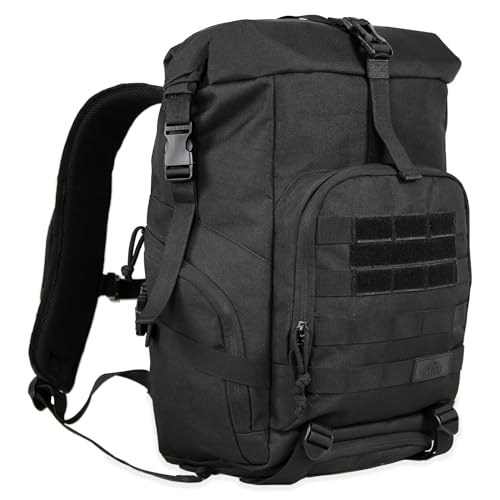
Pros
- Flexible 30L to 36L roll-top capacity adjusts easily to changing gear volumes.
- Isolated bottom compartment prevents dirty shoes or damp clothes from touching dry gear.
- Durable 900D Oxford fabric with a PVC backing resists trail abrasion and light rain.
- Includes practical internal organization with a dedicated power bank pocket and a 15-inch laptop sleeve.
Cons
- Listed pack weight of roughly 2.84 pounds is heavier than standard ultralight frameless daypacks.
- Water-resistant fabric handles light showers, but the pack lacks fully taped seams or an included rain cover for severe storms.
- Lacks a padded, load-bearing hip belt for transferring heavier pack weights to the hips.
The APRILBAY Roll-Top Backpack is an expandable 30L to 36L daypack designed for hikers, commuters, and travelers who require flexible volume and rugged materials. By utilizing an adjustable roll-top closure, the pack lets you compress your load down to 30 liters for minimalist day trips or unroll it up to 36 liters when you need room for extra trail layers, food, or overnight apparel. This versatile crossover design serves outdoor trekking, gym visits, and urban commutes equally well without forcing you to carry separate bags.
For everyday trail outings, the pack relies on a reinforced back panel and padded, breathable shoulder straps to keep gear stabilized against your spine. While it does not feature an internal metal frame or a padded load-bearing hip belt, the ergonomic shoulder harness handles typical day-hiking gear weights efficiently. Measuring 8 x 12 x 21 inches and weighing approximately 2.84 pounds, the pack provides sufficient vertical clearance for bulky items while keeping the footprint manageable on tight brushy paths or crowded commuter trains.
Construction quality centers around a heavy-duty 900D Oxford exterior fabric backed by a protective PVC lining. This combination resists trail scrapes, scuffs, and dirt, while defending internal contents against light rainfall, road spray, and damp forest mist. The pack is assembled with self-repairing zippers and reinforced stitching at critical stress points, which helps prevent failure when the main body is packed to its full 36-liter capacity.
Organization is a clear strength of this pack, highlighted by a segregated bottom compartment designed specifically for trail shoes, sandals, or damp rain gear. This barrier ensures that muddy hiking footwear never comes into direct contact with clean dry layers in the primary compartment. Inside the main cavity, you will find dedicated sleeves for your electronics, including a padded pocket that houses laptops up to 15 inches, along with a purpose-built pocket for a portable power bank to keep electronics powered during long outings.
Hikers should recognize a few practical limitations before planning technical backcountry trips with this pack. While the 900D Oxford fabric and PVC coating effectively repel light moisture, the bag is water-resistant rather than completely waterproof, meaning heavy downpours can eventually find entry through seams or closures without an aftermarket rain cover. Additionally, without a supportive hip belt or load lifters, packing dense, heavy equipment for extended miles can put noticeable pressure on your shoulders over time.
For day hikers, weekend travelers, and daily commuters looking for an affordable, hard-wearing gear carrier with built-in shoe separation, the APRILBAY Roll-Top Backpack offers solid multi-use capability. Its adaptable capacity, rugged exterior, and smart internal layout make it a practical, budget-friendly companion for casual trails and everyday transit.
The main compartment utilizes an adjustable roll-top closure system that expands smoothly between 30 liters and 36 liters depending on your daily load. On shorter warm-weather day hikes, rolling the top down tightly stabilizes smaller loads and prevents items from shifting around. When cooler weather demands bulkier fleece jackets, extra rain layers, or food containers, unrolling the closure unlocks the full 36-liter capacity with zero wasted space.
The dedicated shoe compartment at the base functions independently from the upper cavity, giving you a safe place to tuck trail runners, flip-flops, or dirty socks without taking up standard interior packing space. Overall exterior dimensions of 8 x 12 x 21 inches ensure you have generous vertical storage for hydration bottles, dry sacks, and personal essentials.
The exterior shell is manufactured from durable 900D Oxford fabric, delivering sturdy resistance against rough rock surfaces, branch snags, and routine ground friction. An internal PVC lining reinforces the exterior shell, helping to shield dry gear from passing drizzles, damp ground contact, and sudden water splashes.
While this construction provides solid everyday weather protection, it should not be confused with a fully submersible dry bag or a seam-sealed technical alpine pack. For prolonged hiking in heavy downpours, sensitive items such as spare clothing and electronics should be kept inside internal waterproof dry bags or protected by an external pack rain cover.
Understanding 36-Liter Backpack Dimensions, Usable Space, and Real-World Scale
Visualizing bag volume helps prevent travel delays and packing headaches before heading out the door. Determining how big is a 36 liter backpack allows travelers and commuters to plan gear loads effectively. This size bracket occupies an ideal sweet spot, providing ample cargo room for multi-day excursions while maintaining a manageable profile on transit. Examining physical dimensions, packing limits, and structural designs reveals exactly what this capacity can hold.
Physical Measurements and Cubic Inch Conversion
Backpack capacity is measured globally in liters, but calculating physical dimensions gives a clearer picture of actual footprint. A volume of 36 liters converts to roughly 2,197 cubic inches of interior space. In physical dimensions, a standard pack of this size typically measures approximately 20 to 22 inches in height, 12 to 14 inches in width, and 8 to 10 inches in depth. These measurements can fluctuate slightly depending on whether the bag uses a rigid internal structure or an unstructured soft-shell exterior.
Soft-sided fabrics stretch and flex based on how tightly items are arranged inside the main compartment. A heavily stuffed pack often expands two to three inches deeper than its unladen profile suggests. Measuring your pack when fully loaded ensures that side pockets and exterior compartments do not push the depth past desired storage boundaries. Linear inches for these dimensions hover around 40 to 46 inches total, which serves as a vital benchmark for travel compliance.
Airline Travel Compliance: Carry-On Overhead Bins Versus Personal Item Limits
Air travelers frequently rely on mid-sized packs to avoid checked luggage fees on domestic and international flights. A 36-liter bag generally aligns with standard domestic carry-on limits, which usually cap dimensions around 22 x 14 x 9 inches. Fitting into the overhead compartment is rarely an issue when the bag retains its intended rectangular profile. But regional jet overhead bins or smaller turboprop storage spaces may require placing the bag sideways or compressing soft gear.
Under-seat storage presents a completely different set of physical challenges for bags of this volume. Most airline personal item sizers enforce strict limits around 18 x 14 x 8 inches. Because a fully packed 36-liter bag usually reaches 20 to 22 inches in length, it will typically protrude past the seat footprint into your footwell. Travelers planning to slide their bag beneath the forward seat should avoid filling a 36-liter pack to capacity or consider a dedicated compact personal item instead.
Weight Expectations and Unladen Pack Tare Ratios
Empty pack weight significantly affects how comfortable a bag feels once fully packed for travel. A standard unstructured or semi-structured 36-liter daypack typically weighs between 2 and 3.5 pounds when completely empty. Heavy-duty tactical packs or frame-supported hiking bags can weigh more due to thick materials and suspension hardware. Keeping unladen tare weight low ensures that your physical energy goes toward carrying personal cargo rather than bag construction.
When filled with standard travel gear, a 36-liter pack usually weighs between 15 and 22 pounds. Pack weight increases quickly if you carry heavy electronics, charging bricks, extra footwear, or full water bottles. Budget airlines in Europe and Asia frequently enforce strict carry-on weight limits of 15.4 pounds (7 kilograms). Travelers facing strict airline scales must weigh their packed 36-liter bag beforehand to avoid unexpected gate-check fees.
Daily Commute, Campus, and Weekend Travel Packing Capacities
Packing efficiency shifts dramatically depending on the specific activity and trip duration. For weekend travelers, a 36-liter bag comfortably accommodates three to four changes of casual clothing, a warm mid-layer, an extra pair of shoes, and a toiletry kit. Packing cubes help compress garments, maximizing the central cavity without bulging external seams. This makes the bag an exceptional tool for three-day weekend getaways or minimalist business travel.
Campus life and professional transit demand a different allocation of interior volume. Heavy textbooks, ring binders, a padded laptop sleeve, charging cables, and packed lunch containers quickly fill a compact everyday pack. In a 36-liter setup, these academic and office supplies fit alongside gym apparel or emergency rain shells with room to spare. While larger than standard 20-liter commuter daypacks, this capacity eliminates the need to carry secondary tote bags during long days on campus.
Managing Roll-Top Expansion and Flexible Volume Systems
Adjustable closure mechanisms offer valuable flexibility when daily cargo demands change on short notice. Designs like the APRILBAY Roll-Top Backpack – Expandable 30L-36L allow users to shift between a compact 30-liter commuter profile and an expanded 36-liter travel setup. Rolling down the collar compresses unused vertical height, keeping gear secure and preventing interior movement during quick walking commutes. Expanding the top collar creates immediate overhead space for bulky winter jackets, trail provisions, or market groceries.
Roll-top closures also provide natural weather defense by eliminating exposed top zipper seams that can leak during rain. Cinching the upper buckle creates a tight fold that channels rainwater away from the central gear cavity. Users should remember that extending the roll-top to its maximum 36-liter threshold increases the overall vertical height of the pack. When fully extended, measuring vertical clearance prevents unexpected snags on low overhead bins or crowded subway handrails.
Dedicated Compartments and Volume Displacement: Shoes and Tech Sleeves
Compartmentalized organization alters how much bulk the main cavity can realistically hold. Built-in bottom shoe compartments keep soiled trail runners or athletic sneakers isolated from clean garments. However, placing footwear into an integrated bottom pocket consumes upward space from the main storage area. Understanding this volume displacement prevents surprises when packing rigid boxes or thick winter garments alongside spare shoes.
Dedicated electronic storage requires similar spatial awareness during loading. A padded laptop sleeve built to house 15-inch devices holds electronics securely against the rigid back panel. Heavy chargers, external battery banks, and peripheral cords stored in dedicated pockets occupy perimeter depth. Integrated power bank pockets keep portable chargers accessible for charging mobile phones on the move without requiring you to dig through packed clothing.
Harness Ergonomics and Carrying Comfort for Heavy Loads
Carrying a filled 36-liter pack can easily mean managing 15 to 22 pounds of total gear weight. Without adequate suspension architecture, that downward load pulls directly on the trapezius muscles and cervical spine. Padded, breathable shoulder straps help distribute pressure across the shoulder girdle rather than pinching into collarbones. Reinforced back panels with ventilation channels facilitate airflow while preventing hard object corners from jabbing directly into your spine.
Hikers carrying dense equipment over rugged trails often compare soft-sided daypacks to structured alternatives. Examining internal frame hiking packs highlights how rigid internal stays transfer weight down toward the pelvic girdle. While frameless 36-liter daypacks offer superior urban compressibility, proper strap tensioning remains critical. Keeping shoulder straps snugly cinched prevents the pack base from sagging below your natural lumbar curve.
Fabric Density, PVC Coatings, and Weather Protection
Exterior fabric construction dictates how well a mid-sized pack withstands daily friction and unpredictable weather. High-density textiles such as 900D Oxford fabric provide dependable resistance against trail branches, pavement abrasion, and transit baggage handling. The denier rating indicates yarn thickness, with 900D offering a rugged balance between tear resistance and unladen pack weight. Reinforced stitching at high-stress anchors prevents strap detachment when lifting heavily loaded bags by their grab loops.
Water resistance in technical packs generally relies on a dual-defense system of exterior weaves and internal barrier films. Backing 900D Oxford fabric with a protective PVC coating shields interior contents against light rain, mist, and splash contact. Robust self-repairing zippers help preserve closure integrity when opening and closing under load. While coated textiles shed moderate rainfall effectively, prolonged downpours can eventually penetrate non-laminated seams unless an external rain cover is deployed.
Specialized Storage and Trail Daypack Comparisons
Outdoor day excursions present unique packing requirements compared to urban commuting. Carrying bulky layers, hydration reservoirs, and trail food can quickly fill standard packs to capacity. Outdoor enthusiasts often look at insulated backpack coolers when planning day trips that require temperature-sensitive food storage alongside general hiking equipment. In a multi-purpose 36-liter daypack, cold storage cubes or hydration bladders must share room with emergency layers and trail accessories.
Balancing specialized items against general cargo requires disciplined packing geometry. Placing dense insulated containers or water bladders directly against the back panel stabilizes your center of gravity during steep climbs. Light, compressible apparel should fill outer pockets and upper roll-top sections. This deliberate arrangement prevents awkward outward momentum, ensuring the pack moves naturally with your torso across varied trail terrain.
Practical Packing Strategies to Prevent Bulging and Strain
Proper packing technique transforms how a 36-liter pack behaves during long transit days. Heavy items like shoes, tech pouches, and dense toiletry cases should sit close to the spine rather than outward toward the exterior face. Pushing heavy mass away from your body creates rotational torque that strains lower back muscles over time. Rolling clothes tightly or using structured compression cubes keeps garments compact while preventing unwanted fabric shifts inside the bag.
Overstuffing should be actively avoided to preserve zipper hardware and seam longevity. Forcing extra items into perimeter pockets exerts intense lateral tension on zipper teeth and track coils. Distribute items evenly to preserve the flat profile of the bottom base, which helps the pack stand upright on flat floors. Leaving a small amount of breathing room inside the main cavity ensures the bag remains comfortable to carry and easy to access throughout your journey.
Routine Cleaning and Coated Fabric Care
Maintaining the water resistance and structural integrity of synthetic pack fabrics requires gentle cleaning techniques. Coated textiles like 900D Oxford cloth with internal PVC laminates should never be cleaned in automatic washing machines. Vigorous machine agitation and harsh laundry detergents can strip internal water-resistant barriers, causing flaking and loss of splash protection. High-heat dryer cycles can also melt synthetic coatings and distort padded foam within shoulder straps.
Spot-cleaning with lukewarm water, a mild non-detergent soap, and a soft nylon brush easily removes transit grime and trail dust. Pay close attention to zipper teeth by gently wiping away embedded dirt and debris to keep sliders operating smoothly. After cleaning, hang the backpack upside down in a shaded, well-ventilated space to dry completely before storage. Proper drying prevents mildew growth within bottom compartments and keeps internal seams fresh for upcoming trips.
Sizing Summary and Final Gear Selection Takeaways
Evaluating how big is a 36 liter backpack ultimately comes down to your primary use cases and transit habits. With roughly 2,200 cubic inches of capacity, this size comfortably handles multi-day weekend trips, heavy college class loads, and gear-intensive day hikes. Its physical footprint complies with most airline overhead bin regulations while remaining agile enough for crowded commuter transit. Selecting a durable model with smart expansion and ergonomic strap support ensures reliable utility wherever your daily carry demands take you.
Matching bag volume to your personal carrying routine prevents purchasing either cramped daypacks or oversized luggage. If you regularly travel for three to five days with a laptop, spare shoes, and extra clothing layers, a 36-liter capacity delivers exceptional balance. Paying close attention to external dimensions, harness padding, and fabric construction guarantees a reliable carry experience on every excursion.







Write Your Review
No reviews yet. Be the first to share your experience!