


Heading directly into alpine terrain demands a fine balance between carrying necessary safety equipment and keeping total pack weight manageable. Selecting what size backpack for mountaineering shapes your comfort, movement efficiency, and safety on steep snowfields and rocky ridges. Carrying an undersized pack forces bulky gear onto exterior webbing where it can snag, while an oversized pack adds unnecessary base weight and causes the load to shift during technical moves. Understanding your gear volume helps prevent severe fatigue and ensures all critical insulation, ropes, and hardware fit cleanly inside.
Rucksack volume directly influences how effectively your suspension transfers heavy weight onto your hips rather than pulling down on your collarbones. Reviewing an internal frame hiking backpack overview can show how structural stays help stabilize dense alpine loads across difficult grades. Packs for high-elevation objectives typically range from streamlined 30-liter day packs to large 80-liter expedition haulers like the Lizbin Hiking Backpack, 80L Molle Military or the King’sGuard 100L Camping Hiking Backpack Molle. Matching your capacity to trip duration and seasonal conditions ensures you stay agile on technical terrain without leaving crucial survival gear behind.

Pros
- Expansive 80L storage volume with a dedicated footwear compartment keeps gear organized
- Extremely lightweight 1.13-pound pack weight helps keep baseline load minimal
- Multiple external zippered pockets and Molle webbing offer convenient accessory organization
- 900D Oxford fabric provides durable exterior abrasion resistance and water repellency
Cons
- Lacks an internal frame or rigid stay system for stabilizing dense, heavy backpacking loads
- Does not include or specify an internal hydration bladder sleeve or hose port
- Water-resistant fabric is not fully waterproof and requires an additional rain cover during heavy downpours
The Lizbin 80L Tactical Hiking Backpack is a high-capacity, lightweight rucksack designed for budget-conscious campers, weekend travelers, and outdoor gear haulers. Measuring 7.87 by 14.96 by 28.35 inches, it offers 80 liters of volume for storing large, lightweight essentials. Weighing in at an exceptionally light 1.13 pounds, this pack is geared toward hikers and campers who want to avoid the heavy base weight typical of traditional military-style bags.
For trail use, the pack relies on an open drawstring main compartment paired with targeted external storage. In addition to the main chamber, the layout includes a top zippered lid pocket, a front zipper pocket, two zippered side compartments, and two elastic mesh pockets for water bottles or quick-access gear. A standout feature is the dedicated bottom shoe compartment, which keeps dusty trail shoes or wet sandals separated from clothing and sleeping gear. The exterior Molle webbing system expands carrying capability by offering modular lash points for trekking poles, tools, or light accessory pouches.
The exterior is made from 900D Oxford cloth fabric, offering solid resistance against trail scratches, scuffs, and daily wear. The material features water-resistant properties to shed light moisture and trail spray. The top drawstring closure provides straightforward packing, while standard compression-style straps and buckle closures keep the top lid secured over the opening. Because the total pack weight is only 1.13 pounds, the fabric and strap assembly prioritize packability and low carry weight over rigid structural components.
Packing and managing this rucksack requires thoughtful distribution of your gear. Because the product data lists no rigid internal frame, aluminum stays, or heavy suspension structure, placing soft items against the back panel is essential to maintain carrying comfort. Heavy, dense equipment should be kept close to the center and supported carefully. Cleaning the rucksack is straightforward: wipe down the 900D Oxford fabric with a damp cloth and mild soap, then allow it to air-dry completely before storing it flat.
Realistic limitations must be kept in mind before heading out. An 80-liter pack weighing just over one pound indicates an unstructured design, meaning it is not intended for carrying excessively heavy loads over long, strenuous wilderness routes. Furthermore, the product description mentions water-resistant fabric rather than seam-sealed waterproofing, so critical electronics and clothing should be protected with dry sacks in sustained rain. The pack also lists no integrated hydration bladder compartment or dedicated hose pass-through.
For outdoor enthusiasts seeking maximum volume at an accessible price point, the Lizbin 80L Tactical Backpack is a practical option. It is well suited for car camping, cabin weekends, casual gear hauling, and light outdoor travel where bulky supplies need organized storage without the weight or expense of an expedition internal-frame pack.
The Lizbin rucksack provides 80 liters of total volume, making it suitable for transporting high-bulk gear such as lightweight sleeping bags, bulky layers, and campsite supplies. The main compartment utilizes a classic top-loading drawstring opening that allows fast access and easy stuffing of larger items.
Organization is divided across several distinct sections, including a top zippered lid pocket for quick-reach items, a front zippered compartment, two zippered side compartments, and two elastic side pockets. The dedicated lower shoe compartment provides a separate, breathable space to store trail runners, work boots, or dirty camp clothing away from your clean gear.
Constructed from 900D Oxford cloth fabric, the pack provides dependable resistance against scratches, snags, and trail abrasion. The dense weave helps prevent surface tearing when brushing past light brush or packing tightly in vehicle trunks.
While the fabric is water-resistant to defend against light mist and surface dampness, it is not fully waterproof. For wet-weather trips, pairing the rucksack with internal waterproof dry bags or an external rain cover is recommended to ensure sensitive gear stays dry.

Pros
- Generous 80-liter volume provides ample room for bulky camping and travel gear.
- Constructed from abrasion-resistant 600D oxford fabric with reinforced high-stress joints.
- External MOLLE webbing and D-rings offer flexible lash points for modular accessories.
- Back panel and shoulder straps feature thick 2 cm foam padding paired with breathable mesh.
- Low overall pack weight of just 3.1 pounds makes handling easier between trips.
Cons
- Lacks an internal frame structure or rigid stays for transferring heavy loads to the hips.
- No adjustable torso harness system listed for customized ergonomic fitting.
- Water-resistant 600D fabric does not include a separate waterproof rain cover for prolonged downpours.
The Ogetok 80L Hiking Backpack is an extra-large, soft-structure rucksack designed for outdoor enthusiasts, group campers, and travelers requiring substantial gear volume. Packing up to 80 liters of capacity, this knapsack offers a simple, utilitarian approach to hauling bulky outdoor equipment like sleeping bags, warm layers, and camp essentials. Its exterior tactical styling, characterized by integrated MOLLE loops and multiple utility pockets, makes it a viable option for budget-conscious users prioritizing pack volume and basic external gear customization over technical alpine features.
With listed dimensions of 25.6 by 13.4 by 6.7 inches and an overall empty weight of roughly 3.1 pounds (1.4 kg), this pack remains lightweight considering its large storage volume. The core layout utilizes a top-loading, drawstring-closed main compartment that accommodates large, irregular items without the restriction of rigid internal dividers. On the exterior, three distinct zippered pockets provide dedicated organization for smaller travel items, headlamps, and trail snacks, while two side elastic pockets offer storage for water bottles or compact umbrellas.
Construction centers on a 600D oxford fabric paired with waterproof backing material, offering general resistance against scuffs, tears, and abrasive surfaces around camp. Stress points throughout the chassis feature double stitching to manage tension during full-capacity packing. The closures use metal zippers for standard pocket access, while exterior D-rings and horizontal MOLLE webbing allow users to lash auxiliary pouches, keys, or carabiners directly to the exterior of the pack.
Carrying comfort relies on 2 cm foam padding layered with breathable soft mesh across the shoulder straps and back panel. The adjustable harness allows users to tailor the shoulder drop, but buyers should note that this pack does not feature an internal frame, aluminum stays, or an integrated load-lifter system. Because the pack relies primarily on soft padding rather than a rigid suspension, carefully distributing weight by placing heavier items close to the spine is essential when loading the pack near full capacity.
Realistic limitations must be kept in mind before hitting demanding wilderness routes. Without an internal frame or a rigid, load-bearing hip belt, carrying dense, heavy backcountry loads over long trail days may result in shoulder fatigue. Additionally, while the 600D oxford fabric is listed with waterproof properties, the zippered seams and drawstring opening are not seam-sealed, meaning an aftermarket rain cover or internal dry bags are advisable during heavy rain. The pack also does not come with a dedicated hydration reservoir.
For casual camping trips, equipment storage, hunting camp staging, and extended vehicle travel, the Ogetok 80L Rucksack represents an accessible, high-volume hauling solution. If you need maximum interior space, handy exterior lash points, and a lightweight empty pack at an accessible price point, this pack provides dependable utility for moderate outdoor demands.
The standout feature of this rucksack is its 80-liter total capacity, arranged to swallow substantial gear volumes that standard daypacks cannot fit. The central compartment utilizes a wide drawstring opening, enabling quick loading and unloading of bulky items like blankets, sleeping bags, extra boots, or outerwear.
Organization is supplemented by three exterior zippered utility compartments designed for items that require fast retrieval without digging into the bottom of the main bag. Two dedicated side sleeves accommodate standard water bottles or small gear items, while front-facing MOLLE webbing and built-in D-rings provide modular mounting points for clip-on gear, accessory pouches, and carabiners.
This backpack is manufactured from 600D oxford fabric, a standard outdoor textile known for resisting abrasions, scuffs, and everyday tear hazards encountered on trails and campsites. The manufacturer states that the material includes a waterproof backing to resist moisture penetration through the main fabric panels.
To support gear loads, critical stress junctions feature double reinforcement stitching. Hardware includes metal zipper pulls for smooth pocket access, alongside durable composite tension locks and rings on the shoulder straps and MOLLE web lash points.

Pros
- Huge 100L volume easily accommodates bulky camp setups, sleeping bags, and multi-person supplies
- Includes a versatile removable waist pack (15.74 x 3.93 x 6.69 inches) for trail essentials and valuables
- Durable 903D Oxford fabric resists trail abrasions and tough camp conditions
- Generous external attachment points allow secure lashing of sleeping mats, tents, and poles
- Thick 5 cm honeycomb sponge padding on the shoulder harness helps cushion heavy loads
Cons
- Lacks a rigid internal frame or structured stays to transfer heavy pack weight directly to the hips
- Manufacturer does not provide specific torso length or hip-belt waist adjustment ranges
- High storage volume can easily tempt hikers to overpack, leading to an unwieldy load center on steep trails
The King'sGuard 100L Tactical Backpack is an oversized, multi-compartment gear hauler designed for outdoor enthusiasts who need maximum storage volume at an accessible price point. Built in a tactical rucksack style with prominent Molle attachment webbing, this pack is primarily suited for car campers, hunters, group gear coordinators, and adventure travelers who must transport large, bulky equipment without investing in high-end technical mountaineering gear.
With a stated 100-liter capacity and dimensions measuring roughly 15.35 by 8.66 by 31.49 inches, this pack prioritizes sheer cargo space over ultralight minimalism. The main compartment holds substantial gear including sleeping bags, camp quilts, and spare apparel, while four external lashing systems provide secure points for strapping down tents, sleeping mats, and trekking poles. An additional standalone waist bag measuring 15.74 by 3.93 by 6.69 inches and weighing just 0.99 pounds attaches directly to the pack, giving you quick access to water, sunglasses, sunscreen, and navigation tools without digging into the primary bag.
Construction centers around high-density 903D Oxford fabric treated with water-resistant backing. This heavy-duty cloth offers solid tear resistance and abrasion defense against branches, rough campsite ground, and transit friction. King'sGuard integrates a three-dimensional ventilated back structure featuring 5 cm thick honeycomb foam padding across the shoulder straps, designed with built-in airflow channels to facilitate breathability during warm-weather outings.
Using and fitting this pack requires a practical understanding of load placement. Because the pack does not feature an internal aluminum frame or an adjustable rigid harness, proper packing technique is critical to maintain balance. Heavy supplies should be placed close to the spine rather than outward or high up. The removable waist bag adds welcome flexibility, letting you drop the 3.63-pound main pack at your campsite and carry essentials on a short side hike using the waist bag as a standalone lumbar or shoulder sling.
Potential buyers should keep realistic performance boundaries in mind before taking this rucksack into the backcountry. The absence of listed torso adjustment ranges means the pack may not fit very short or very tall frames optimally. Furthermore, carrying 100 liters of gear without rigid internal frame stays places significant weight directly onto the shoulders, making it less suitable for technical, multi-day mountain backpacking where structural load transfer to the pelvic girdle is essential.
Overall, the King'sGuard 100L Backpack offers practical utility for budget-conscious outdoor travelers needing immense gear capacity. If you need a durable, modular gear transporter for base camping, cabin trips, road travel, or hunting gear storage, this high-volume tactical rucksack delivers strong functional value.
With an expansive 100-liter primary storage envelope, this rucksack is built to manage large, space-consuming items that standard daypacks and weekend packs cannot fit. The main bag comfortably swallows bulky multi-person camping gear, including tents, sleeping bags, and cold-weather clothing layers.
In addition to interior volume, the pack features four dedicated external hanging systems designed to lash down foam mats, trekking poles, camp blankets, and tent poles. The integrated Molle grid allows you to mount compatible pouches or clip carabiners to expand customized gear organization.
The included 0.99-pound waist pack functions as a modular component that detaches completely from the main pack body. Measuring over 15 inches wide, it works independently as a waist pack or shoulder sling to keep essential items like sunscreen, phones, flashlights, and small water bottles within easy reach.
The King'sGuard 100L pack utilizes a soft-structure suspension system with 5 cm thick honeycomb foam shoulder straps designed to cushion the upper body. Air channels along the back panel and straps encourage sweat dissipation during physical activity.
Because this backpack does not list an internal frame sheet or metal stays, it relies on tensioned straps and strategic gear distribution for stability. Load lifters and sternum straps help stabilize the upper pack against your shoulders, but weight remains largely suspended from the harness system.
Hikers should note that the manufacturer does not specify precise torso-length increments or hip-belt waist dimensions. To ensure a stable carry, users should pack heavier items low and tight against the back panel to prevent the pack from pulling backward during long walks.
The exterior of the backpack is built from 903D Oxford cloth fabric, a dense weave that provides dependable resistance against scuffs, tears, and general trail wear. The tough fabric texture holds up well to rough campsite handling, brush, and vehicle loading.
The Oxford fabric is backed with water-resistant material designed to shed light moisture, mist, and brief drizzles. Belts, webbing, and primary zipper closures are reinforced to handle the strain of heavy gear loads.
While the fabric itself provides weather resistance, this pack is not seam-sealed or submersible. For prolonged exposure to heavy rainfall, hikers should line the interior with a waterproof dry bag or use an external waterproof pack cover to ensure critical items remain completely dry.

Pros
- Massive 90-liter packing volume paired with a lightweight 1.3 kg empty weight.
- Built-in sternum strap includes a practical safety whistle for emergency trail signaling.
- Multiple compression straps secure uneven loads and cinch down extra pack volume.
- External lash points easily accommodate sleeping pads, tents, and trekking poles.
Cons
- Frameless design with a backer board does not transfer ultra-heavy loads to the hips as effectively as metal stays.
- No integrated or included rain cover, requiring separate weather protection for sustained downpours.
- Tall 33.5-inch profile requires careful packing technique to prevent awkward weight distribution.
The Night Cat 90L Hiking Backpack is a high-capacity, lightweight gear hauler designed without a traditional metal frame, setting it apart from standard heavy-duty expedition rucksacks. Instead of rigid aluminum stays, it features an integrated shape-forming backer board that provides upright structure while holding the unladen pack weight down to roughly 1.3 kg. This layout makes it a solid option for budget-focused campers, mountaineering enthusiasts, and travelers who need to transport high-volume, low-to-medium density gear without being weighed down by a heavy empty pack.
With dimensions measuring 12.2 x 13.4 x 33.5 inches, this pack offers substantial storage space anchored by a cavernous main compartment and an interior zippered pocket for organizing critical items. Load management relies on a padded waist belt, thickened shoulder straps, and an adjustable sternum strap fitted with a built-in safety whistle. The multi-position torso adjustment helps users customize the shoulder harness placement to their back length. Because the pack lacks a metal internal frame, careful packing is essential: placing heavier items close to the lumbar backer board and cinching down the multiple compression straps ensures the tall pack remains stable on the trail.
Construction consists of tear-resistant polyester and water-resistant nylon fabric assembled with dense stitching at critical stress areas. The ergonomic back panel incorporates open-cell foam padding overlaid with breathable mesh, strategically placed along the spine and lumbar zone to encourage air circulation during warm approaches. External hanging straps located on the exterior body give hikers quick-access lash points to mount tents, sleeping bags, or trekking poles without encroaching on internal volume.
Setting up the pack is straightforward thanks to the wide adjustment range across the shoulder harness, waist belt, and chest strap. When packing for an outing, utilizing the external compression system helps reduce dead space, pulling the weight closer to your center of gravity. Routine maintenance involves wiping down the water-resistant nylon shell with a damp cloth and mild soap, followed by thorough line drying away from direct sunlight to maintain the integrity of the foam cushioning and fabric coatings.
A notable limitation of this model is its frameless construction relative to its expansive 90-liter capacity. While the backer board prevents the pack from collapsing entirely, carrying very heavy or dense loads without rigid frame stays can lead to increased weight bearing directly on the shoulders. Furthermore, while the exterior fabric is water-resistant against mist and light splashes, the lack of a dedicated rain cover means hikers facing extended rainfall or creek crossings should use internal dry bags or an aftermarket pack cover.
Overall, the Night Cat 90L Backpack offers strong utility for hikers and campers who prioritize massive storage volume and low pack weight over rigid structural framing. If your outdoor trips involve hauling high-bulk gear such as synthetic sleeping bags, bulky outerwear, or family camp essentials, its padded harness, customizable torso setup, and functional lash points provide practical value when packed within sensible weight boundaries.
The Night Cat 90L backpack utilizes an internal shape-forming backer board rather than rigid metal stays or an internal aluminum frame. This design keeps the unladen weight down to approximately 1.3 kg while offering just enough vertical support to keep the back panel flat against the body.
Because the pack relies on a flexible backer board, load distribution functions differently than on an internal-frame pack. The padded waist belt and thickened shoulder harness work together with multiple compression straps to stabilize shifting gear, but hikers carrying heavy loads will need to pack strategically to avoid putting excessive downward force on the shoulders.
Offering 90 liters of internal storage inside a 12.2 x 13.4 x 33.5-inch profile, this backpack accommodates high-volume packing lists for camping, mountaineering, and gear-heavy travel. The spacious main compartment handles oversized items, complemented by an interior zippered security pocket designed to keep essentials from disappearing into the bottom of the bag.
Exterior gear management is supported by heavy-duty hanging straps capable of securing bulky essentials like sleeping bags, tents, and trekking poles to the exterior. Multiple side and front compression straps allow hikers to compress excess fabric when the pack is only partially full, maintaining stability on rough terrain.

Pros
- Lightweight 2.36-pound build minimizes overall trail load
- Dedicated sleeping bag compartment keeps bulky sleep systems isolated
- Includes a fitted waterproof rain cover for wet weather protection
- External hanging loops allow lashing of additional camping equipment
Cons
- Does not provide specific torso length adjustments for fine-tuned sizing
- Lacks a rigid internal frame for stabilizing heavy, dense backpacking loads
- Fabric requires the included rain cover for complete protection in steady rain
The WoneNice 50L (45+5) Hiking Backpack is a lightweight, high-capacity pack designed for day hikers, weekend campers, and adventure travelers who want organized storage without carrying heavy empty gear. Weighing approximately 2.36 pounds and measuring 13.8 x 7.9 x 23.6 inches, this pack offers substantial interior volume while remaining easy to handle. Its practical layout and army green design make it well suited for state park hikes, casual overnight trips, and gear-heavy trail days.
With 50 liters of total volume arranged in a 45-liter primary space and 5-liter expansion, the pack accommodates bulkier gear like compact tents, clothing layers, and trail cooking setups. The suspension relies on widened, thickened S-type padded shoulder straps coupled with an adjustable chest belt and waist strap. For back comfort, the high-elastic back panel provides breathable support intended to maintain airflow between your body and the pack on warm ascents.
Construction features a blend of polyester and nylon fabrics designed to offer resistance against surface scuffs, light trail moisture, and tearing. The organization is exceptionally practical, offering a main storage area, two zippered front pockets for quick-access gear, and mesh side pockets for water bottles. A separate bottom sleeping bag compartment keeps bedding easily accessible, while an integrated external hanging system allows users to secure extra trail items to the outside of the pack.
Packing and adjusting the WoneNice pack is intuitive thanks to its clear layout and adjustable webbing. Users can place bulkier camping items in the lower compartment to keep the center of gravity stable, while storing navigation tools, snacks, and headlamps in the front zippered sleeves. Routine maintenance is minimal, requiring only a gentle wipe-down with a damp cloth after dusty outings and air-drying before storage in a cool, dry area.
There are practical limitations to keep in mind before taking this pack on demanding routes. The manufacturer does not list specific torso length ranges or hip-belt circumference specs, which means hikers needing precise micro-adjustments may find fit options basic. In addition, because the backpack uses high-elastic back support rather than a rigid internal frame stay, carrying excessively heavy loads over long distances may lead to shifting or increased shoulder pressure.
For outdoor enthusiasts seeking an affordable, lightweight 50-liter hauler for weekend getaways, cold-weather day treks, or relaxed camping outings, the WoneNice 50L pack delivers solid utility. Its balance of dedicated compartments, included rain cover, and lightweight materials makes it a smart option for hikers prioritizing simple organization and manageable base weight over technical mountaineering hardware.
The WoneNice pack delivers a 50L (45+5) volume profile that accommodates bulky camping equipment, clothing sets, and trail nutrition. The designated lower sleeping bag compartment allows fast access to your sleep system at camp without unpacking the entire contents of the main bag.
Exterior organization includes two front zipper pockets for flat items, maps, or hygiene kits, alongside dual mesh side pockets for water bottles or trekking accessories. Built-in external hanging straps offer convenient attachment points for securing sleeping mats, trekking poles, or damp gear to the outside of the pack.
Constructed from a composite blend of polyester and nylon, the pack fabric is built to resist wear, surface abrasion, and light trail moisture. These materials help protect gear against brush scrapes and dry trail debris encountered on outdoor routes.
For wet weather conditions, the pack includes a dedicated waterproof rain cover that fits snugly over the entire exterior. While the base fabric handles light mist and damp ground, using the rain cover is recommended during steady rainfall to keep interior clothing and sleep gear properly protected.
Pros
- Substantial 50-liter packing volume paired with a low baseline pack weight of around 2.1 to 2.4 pounds.
- Separate shoe compartment keeps dirty trail shoes or wet apparel isolated from main gear.
- Comes equipped with a fitted waterproof rain cover housed in a dedicated bottom pocket.
- Six external pockets and compression straps provide functional organization and exterior gear hauling.
- Cushioned S-shaped mesh shoulder straps and breathable back support promote airflow during warm hikes.
Cons
- Lacks an internal frame or rigid stays, meaning heavy cargo weight will rest primarily on the shoulders rather than transferring to the hips.
- Torso length is not adjustable, which may limit optimal fit for very tall or short torsos.
- Requires careful packing to prevent hard, angled gear from pressing through the soft back panel.
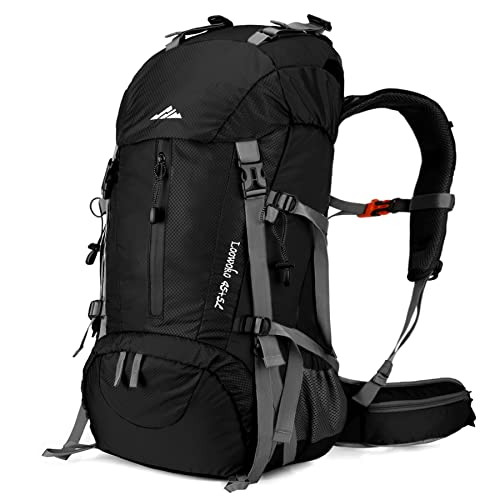
The Loowoko 50L Hiking Backpack is designed for day hikers, casual campers, weekend road trippers, and budget-minded adventurers who need high storage volume without the heavy bulk of a traditional framed pack. Built as a frameless rucksack, it strikes a balance between expansive capacity and lightweight portability. While Amazon classifies it broadly under internal frame backpacks, the manufacturer specifications confirm this pack contains no internal frame, making it a flexible, unstructured option ideal for light to moderate gear weights.
With a 50-liter volume and an empty weight between 2.1 and 2.4 pounds, this pack provides ample room for bulky items like lightweight sleeping bags, insulated jackets, and food supplies. The exterior dimensions measure approximately 23.62 by 11.81 by 2.8 inches, giving it a tall, streamlined profile. Gear management is straightforward thanks to a separate bottom shoe compartment that keeps muddy trail footwear away from clean gear, along with six external pockets that allow quick access to trail essentials. Exterior compression straps and dedicated lash points make it easy to secure bulky equipment such as trekking poles, ice axes, or compact tents.
The pack is constructed from tear-resistant, anti-scratch polyester and nylon fabrics designed to withstand regular trail abrasion. For carrying support, Loowoko uses thickened, S-shaped shoulder straps filled with sponge padding and lined with breathable mesh to help distribute upper-body pressure. The back panel features high-elastic breathable padding designed to cushion your spine while allowing air circulation. While the exterior fabric provides everyday dust and scratch resistance, weather protection is substantially elevated by the included waterproof rain cover, neatly stored in a dedicated zippered pouch at the bottom of the bag.
Packing the Loowoko 50L requires mindful distribution because it lacks rigid internal stays. Hikers will benefit from placing soft items against the back panel to maintain a smooth carrying surface, heavier items close to the spine, and footwear in the bottom compartment. The external compression straps can then be cinched down tightly to pull the load closer to the body and eliminate gear sway. Routine maintenance is simple: empty the pockets, spot clean the nylon and polyester shell with mild soap, air dry thoroughly, and store the pack flat or hung in a dry space.
A realistic limitation of this backpack is its lack of an internal frame sheet or metal stays. As load weight increases, the pack cannot transfer substantial cargo weight to the hips, meaning heavier loads will bear down directly on the shoulder harness. Additionally, the torso fit is fixed rather than micro-adjustable, meaning hikers with particularly short or long torso lengths may not achieve a tailored fit. For heavy multi-day expeditions carrying more than 30 pounds of gear, a rigid internal-frame pack remains the more supportive choice.
For day hikers, scouts, festival campers, and budget-conscious backpackers carrying moderate base loads, the Loowoko 50L offers practical value. It provides generous organizational pockets, dedicated shoe storage, an included rain cover, and low baseline weight at an accessible entry point. If you pack sensibly and keep your carried weight within moderate limits, this versatile pack serves as a reliable trail companion.
The Loowoko backpack provides a 50-liter main storage capacity, offering enough room for clothing layers, camp kitchen essentials, and lightweight sleeping gear. A distinct separate shoe separator at the base allows you to isolate dirty hiking boots, water shoes, or damp socks from your clean interior clothing.
Organization is further enhanced by six exterior pockets, giving you dedicated spaces to sort small items like headlamps, trail snacks, navigation tools, and sunscreen. Multiple compression straps and exterior tie-down loops make it easy to carry longer gear like trekking poles or sleeping pads without taking up precious internal volume.
Unlike traditional internal frame packs that use aluminum stays or composite sheets, the Loowoko 50L features a frameless build. This design choice dramatically lowers the empty pack weight to approximately 2.1 to 2.4 pounds, making the pack easy to maneuver, stow, or pack away when traveling.
Suspension relies on widened, thickened S-shaped shoulder straps lined with sponge padding and breathable mesh to soften pressure over the collarbones. A high-elastic breathable back panel provides cushioning against gear edges, though hikers should load softer gear along the back wall to maximize trail comfort.
The main shell of the Loowoko backpack is built from tear-resistant nylon and polyester fabric that resists everyday trail scratches, dust, and light moisture. However, standard fabric seams are not fully waterproof on their own during prolonged downpours.
To solve this, the pack includes a dedicated waterproof rain cover stored in a bottom zippered compartment. When skies turn dark, the rain cover quickly deploys over the exterior of the loaded pack, creating an effective barrier that protects your internal belongings from heavy rain and trail splash.
How to Choose the Right Backpack Capacity for Mountaineering
Determining the ideal pack volume for mountaineering begins with evaluating trip duration, seasonal conditions, and route complexity. A single-day push on a non-technical peak requires far less capacity than a multi-week expedition carrying heavy winter insulation and glacier equipment. Choosing the right volume ensures that all critical tools fit securely inside the main compartment while keeping the load centered over your hips. Balancing capacity carefully prevents the rucksack from pulling backward on steep ascents or swaying during balance-intensive ridge traverses.
Volume Tiers by Trip Duration and Objective
Day-long alpine climbs and fast-and-light summit pushes generally require packs ranging between 30 and 45 liters. This compact capacity provides enough room for technical layers, harness, helmet, crampons, food, water, and emergency shelter without adding excessive bulk. Carrying a streamlined pack keeps your profile narrow, preventing the sides of the rucksack from catching in high winds or scraping against rock chimneys. Climbers who pack efficiently and secure their ropes externally find that this volume maintains excellent balance across steep grades.
Weekend ascents typically demand 50 to 65 liters, while extended expeditions require 70 to 100 liters. Mid-sized models like the WoneNice 50L(45+5) Waterproof Hiking Backpack and the Loowoko 50L Hiking Backpack with Rain Cover accommodate weekend camping gear, cold-weather layers, and cooking sets. Longer glacier expeditions call for high-capacity haulers such as the Lizbin Hiking Backpack, 80L Molle Military, Ogetok 80L Hiking Backpack Camping Rucksack, or King’sGuard 100L Camping Hiking Backpack Molle. These massive volumes swallow bulky down parkas, heavy four-season sleeping bags, and extra food rations necessary for prolonged mountain survival.
Technical Hardware and Internal Volume Demands
Alpine gear creates unique spatial demands that standard hiking equipment does not require. Steel crampons, ice axes, snow pickets, ice screws, and climbing ropes occupy significant space and add substantial density to your load. Sharp points on crampons and ice tools require dedicated external attachment points or heavy-duty internal storage pouches to prevent puncture damage to delicate waterproof fabrics. A pack designed for mountaineering must accommodate both the physical volume of these tools and provide safe methods to transport them securely.
Rope management and rescue gear also directly affect the usable volume inside your main compartment. A standard 60-meter dynamic climbing rope consumes roughly 10 to 15 liters of internal volume if stowed inside the pack bag. Draping the rope under the top lid with an integrated retention strap frees up valuable internal space for warm clothing. Avalanche shovels and snow probes require rapid accessibility, so ensure your chosen rucksack has a dedicated outer tool pocket or space near the top drawstring opening for instant emergency deployment.
Internal Frame Structure Versus Frameless Packs
The internal suspension system is the defining structural component that dictates how comfortably a rucksack carries alpine weight. Internal frames utilize aluminum stays, spring-steel perimeters, or molded composite backer boards to transfer heavy vertical loads directly onto the pelvic girdle. High-load rucksacks designed for hauling expedition weights depend entirely on this rigidity to prevent shoulder fatigue and spinal compression. Without a solid frame, loads exceeding thirty pounds begin to collapse downward, pulling backward on the shoulders and straining the neck muscles.
Some lightweight models, such as the Night Cat Hiking Backpacks 90L Camping Backpacking rucksack, utilize a shape-forming backer board rather than a rigid internal metal frame. Frameless or soft-frame designs offer exceptionally low tare weights, allowing mountaineers to reduce their unladen pack burden on long approaches. Reviewing a detailed budget hiking backpack breakdown helps clarify how different frame designs and price points influence carrying comfort on rough trails. Rucksacks with rigid internal stays excel on rugged, uneven terrain where sudden shifts in load can throw you off balance.
Fabric Durability and Alpine Weather Protection
Mountaineering environments expose pack textiles to sharp granite edges, abrasive ice, and sub-zero temperatures. Rucksacks constructed from 600D to 900D Oxford cloth, heavy-duty polyester, or high-tenacity nylon provide essential resistance against punctures and surface abrasion. The Lizbin Hiking Backpack, 80L Molle Military utilizes 900D Oxford fabric, offering dependable resistance to tears when scraped against coarse rock. Choosing durable fabrics helps prevent sudden seam failures while maneuvering through narrow couloirs or rugged scree slopes.
Weather resistance is equally critical because wet gear at freezing temperatures presents severe hypothermia risks. Many outdoor rucksacks feature polyurethane interior coatings and exterior water-resistant treatments to repel light snow and drizzle. However, stitched seams and zipper coils can allow moisture ingress during persistent rainfall or heavy wet snow. Carrying an integrated waterproof rain cover, like those included with the WoneNice 50L(45+5) Waterproof Hiking Backpack and Loowoko 50L Hiking Backpack with Rain Cover, provides essential defense against severe precipitation.
External Attachment Systems and Modular Capacity
Exterior webbing systems, including tactical Molle panels and traditional alpine daisy chains, expand a pack’s practical versatility. The Ogetok 80L Hiking Backpack Camping Rucksack incorporates an external Molle expansion system with reinforced D-rings that allow users to lash additional pouches, carabiners, and tools. External webbing allows climbers to carry bulky, non-compressible items like closed-cell foam sleeping pads or crampon bags outside the main compartment. This modular setup preserves precious internal space for moisture-sensitive clothing and down sleeping bags.
While external lash points provide convenience, overloading the exterior of a mountaineering pack introduces significant hazards. Items strapped to the outside of a rucksack can catch on rock horns, branch thickets, or fixed lines during steep scrambles. Loose items also create dynamic swing weight, pulling the climber off balance when making precise foot placements. Running side compression straps tight pulls the load inward, flattening the pack profile against your back and stabilizing the bag during technical movement.
Center of Gravity and Alpine Packing Strategy
Packing a mountaineering rucksack correctly is just as important as selecting the appropriate liter capacity. The heaviest items, such as climbing hardware, cook sets, liquid fuel, and heavy food rations, should be placed close to your spine and centered between your shoulder blades. Positioning dense weight near your personal center of gravity prevents the rucksack from pulling you backward or swaying laterally on narrow ledges. Placing heavy items too high makes the pack top-heavy, while placing them too low pulls downward on the shoulders.
Lightweight, bulky gear belongs at the bottom of the pack to provide a stable foundation. A dedicated sleeping bag compartment, featured in designs like the WoneNice 50L(45+5) Waterproof Hiking Backpack, isolates your sleep insulation from damp climbing equipment. Placing your sleeping bag and bivy gear at the base cushions the bottom of the rucksack and lifts heavier hardware into the ideal mid-back carrying zone. Keep essential navigation tools, headlamps, snacks, and windproof outer layers in the top lid or exterior zipper pockets for rapid access.
Harness Geometry, Torso Length, and Fit Calibration
A high-capacity backpack can only perform properly if its harness system matches your individual torso length. Torso length is measured from the prominent C7 vertebra at the base of the neck down to the top of the iliac crest along the hips. If a pack is too short for your torso, the shoulder straps will wrap tightly over your shoulders and pull downward, causing severe neck and trapezius strain. Conversely, if the torso length is too long, the pack will sag backward and fail to transfer weight onto the hip belt.
The hip belt serves as the primary weight-bearing component in any expedition or multi-day mountaineering rucksack. The padded belt should sit centered over the iliac crest bones, allowing the pelvis to carry roughly seventy to eighty percent of the total pack weight. Ergonomic, wide hip belts with dual-density foam cushioning, such as the contoured padding on the King’sGuard 100L Camping Hiking Backpack Molle, prevent painful pressure points on the hips during prolonged marches. Tightening the hip belt securely before tensioning the shoulder straps and 45-degree load lifters ensures optimal load stability.
Balancing Unladen Tare Weight Against Carrying Support
Every pound of rucksack material represents weight that you must carry up thousands of vertical feet. Modern large-capacity packs exhibit substantial variations in their unladen tare weight based on fabric density and internal suspension framing. For instance, the Loowoko 50L Hiking Backpack with Rain Cover weighs approximately 2.1 pounds, while the King’sGuard 100L Camping Hiking Backpack Molle weighs around 3.63 pounds. Opting for a lightweight pack reduces baseline fatigue, but climbers must verify that the lighter suspension can still support their target payload.
Stripping away padding, frames, and heavy fabrics creates an ultralight pack that excels on smooth trails but may falter under heavy alpine loads. When carrying forty pounds of mountaineering gear, an ultra-minimalist harness with thin foam can crush flat against your collarbones and hips. A slightly heavier pack with thick honeycomb foam padding and reinforced lumbar support often provides far greater net comfort by dispersing heavy weight evenly. Evaluating your total expected trail weight helps you find the sweet spot between low tare weight and supportive suspension.
Practical Sizing Verification for Alpine Routes
Selecting the appropriate backpack size for mountaineering ultimately comes down to an honest assessment of your route, seasonal demands, and personal gear volume. For single-day ascents with minimal technical gear, a compact 30-liter to 45-liter pack keeps you fast, agile, and well-balanced. Weekend climbs and technical multi-day ascents demand a versatile 50-liter to 65-liter model that comfortably holds shelter, sleep systems, and climbing hardware. Extended winter expeditions and multi-week high-altitude climbs require the expansive 70-liter to 100-liter capacity found in large tactical and expedition rucksacks.
Before committing to a specific volume, gather all your planned alpine gear, clothing layers, and food to test how everything fits together inside your pack. Ensure that heavy items rest against your spine and that technical tools have secure storage without threatening delicate fabrics. Choosing a pack that fits your torso, supports your expected weight, and handles harsh mountain weather ensures a safe, efficient climb from the trailhead to the summit. Taking the time to dial in your capacity and fit transforms a grueling approach into a steady, controlled ascent.
Finding the right mountaineering rucksack means matching your physical build and trip requirements to an appropriate capacity bracket. Keep your objective at the center of your decision, whether you need a streamlined pack for rapid ascents or a heavy-duty expedition bag for multi-day snow travel. Prioritize reliable load distribution, durable weather-resistant materials, and proper harness geometry above all else. With your gear securely stowed and balanced against your back, you can focus on the climb ahead with confidence and stability.







Write Your Review
No reviews yet. Be the first to share your experience!