


Planning a weekend outdoor excursion frequently introduces a tough gear choice between carrying excessive weight and running short on trail storage. Selecting what size backpack for weekend hike adventures depends primarily on whether your itinerary involves an overnight backcountry campout or consecutive day hikes from a fixed basecamp. Packing an oversized bag often allows gear to shift loosely, which can place unnecessary stress on your shoulders, neck, and lower back during steep climbs. In contrast, squeezing gear into an undersized daypack forces you to lash equipment to the outside, leaving vulnerable clothing and shelter exposed to shifting mountain weather.
For most short overnight trips and full-day mountain excursions, packs ranging between 20 and 35 liters provide an optimal balance of carrying capacity, balanced weight distribution, and trail mobility. Designs built with high-density polyester or ripstop nylon, integrated hydration routing, and padded hip belts help transfer heavy gear toward your hips rather than pulling directly on your spine. Whether you are comparing budget hiking backpacks or evaluating technical multi-compartment packs, matching your pack volume to your shelter, clothing, and nutrition needs ensures a comfortable hike from start to finish.
Pros
- Generous 35-liter capacity paired with a low empty pack weight of roughly 2.01 pounds
- Equipped with load lifters, a padded hip belt, and a detachable sternum strap with a safety distress whistle
- Includes a fitted reflective rain cover that secures in its own bottom zippered compartment
- Integrated hip-belt pocket holds up to a 7-inch phone and includes MOLLE expansion points
Cons
- Hydration bladder is not included and must be purchased separately
- Manufacturer does not specify an exact torso-length measurement range
- Fabric is water-repellent rather than fully waterproof, requiring the rain cover during continuous precipitation
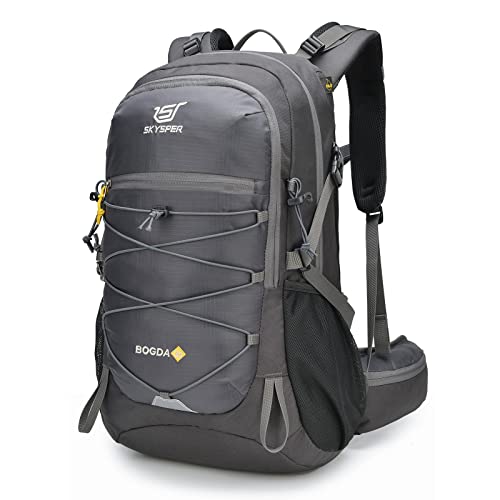
The SKYSPER 35L Hiking Backpack is an internal-frame-style daypack built for hikers, campers, and travelers who require more capacity than a standard commuter bag without carrying the bulk of an expedition pack. With its 35-liter volume, this model fits well into full-day hikes requiring extra insulation layers, scout outings, and light weekend getaways. The unisex design provides functional trail features for men, women, and older teens seeking an organized pack that balances trail utility with everyday travel capability.
Load management is anchored by a thickly padded back panel, padded shoulder straps, and a wide hip-belt system. The inclusion of upper load lifters allows you to adjust how close the pack sits against your upper back, which helps stabilize gear on uneven trails. Weighing in at approximately 2.01 pounds, the backpack keeps base weight low. While the manufacturer lists the size as Large with dimensions of 7.87 by 11.81 by 13.78 inches, specific torso-range measurements are not provided, meaning hikers with particularly short or long torsos will want to test the harness fit before committing to long trail days.
Material durability centers on high-density 600D polyester blended with 210D nylon plaid fabric. This combination provides dependable tear resistance and water repellency against light trail mist and brush scrapes. To support longevity under load, key stress points and shoulder strap attachment seams are reinforced with lap-knot stitching. For heavier downpours, a reflective rain cover is integrated into a dedicated zippered bottom pocket, complete with a fastening buckle to keep the cover secured against gusts of wind.
Organization is a noticeable strength for this 35-liter platform. Inside the main compartment, you will find an interior sleeve dedicated to holding a hydration bladder, along with an exclusive printed outdoor guide. Up front, an anti-theft organizational compartment contains multiple divider layers and a key clip for securing smaller essentials like wallets, knives, or permits. Dual mesh side pockets hold standard water bottles, while the hip belt features a pocket large enough to house a 7-inch smartphone alongside MOLLE loops for modular attachments. A front elastic cord system gives you an accessible spot to lash a wet jacket or towel.
While this pack delivers solid versatility, potential buyers should recognize its practical boundaries. A hydration reservoir is not included in the purchase, so you will need to supply your own bladder and verify hose routing. Furthermore, while the pack fabric is water repellent, it is not seam-sealed or waterproof, making deployment of the included rain cover essential during continuous wet weather. Users should also note that a 35-liter internal volume requires compact, lightweight sleep systems if attempting overnight backpacking trips.
Overall, the SKYSPER 35L Hiking Backpack offers strong value for hikers, day-trippers, and weekend travelers who want dedicated load-lifter adjustment, ample pocket division, and included wet-weather protection at an approachable price point. If your trail outings demand more gear capacity than a compact hydration pack can provide, this model offers a capable, feature-dense carrying solution.
The suspension system on the SKYSPER 35L backpack utilizes a thickly padded back panel paired with contoured, padded shoulder straps to distribute pack weight evenly across your upper body. The adjustable sternum strap helps stabilize the shoulder straps across your chest and features a built-in safety distress whistle for emergency signaling.
Unlike many standard daypacks in this category, this model incorporates functional load lifters atop the shoulder harness. Adjusting these straps brings the top of the pack closer to your center of gravity, reducing backward pull on uphill climbs. The broad hip belt helps transfer load to your hips and features an integrated storage pocket sized to fit smartphones up to 7 inches.
Gear organization is divided across several dedicated compartments, beginning with a roomy main storage cavity that houses an internal hydration bladder sleeve. This sleeve allows hands-free drinking on trail, though the water bladder itself must be acquired separately.
For smaller items, the pack provides a multi-layer organizational pocket with integrated dividers and an attached key clip to keep personal essentials sorted. Two elastic mesh exterior pockets handle standard water bottles, while a front bungee cord system provides a quick external lash point for drying rain gear, pack towels, or light jackets while on the move.
The exterior of the pack is crafted from 600D polyester and 210D nylon plaid fabric that provides initial water repellency against damp vegetation and brief trail mist. However, the seams are not fully taped, meaning prolonged exposure to rain will require supplemental coverage.
To solve this, SKYSPER includes a high-visibility reflective rain cover housed in a dedicated bottom pocket. The cover includes an integrated fastening buckle that anchors it to the pack body, preventing sudden gusts of mountain wind from stripping the cover away while you hike.
Pros
- Lightweight 2.59-pound empty weight paired with an expandable 2-inch depth adjustment
- Comes standard with two dedicated packing cubes and a separate water-resistant toiletry pouch
- Ventilated shoe pocket keeps muddy trail shoes or camp footwear isolated from clean clothing
- Adjustable chest sternum strap enhances stability during active walking and light hiking
- Dedicated padded compartment fits larger laptops up to 17.3 inches
Cons
- Lacks an internal frame and load-bearing hip belt for heavy backcountry hiking loads
- Side water bottle pocket is sized for compact 18 oz bottles rather than large 32 oz trail containers
- Polyester fabric provides water resistance but is not fully waterproof and excludes a rain cover
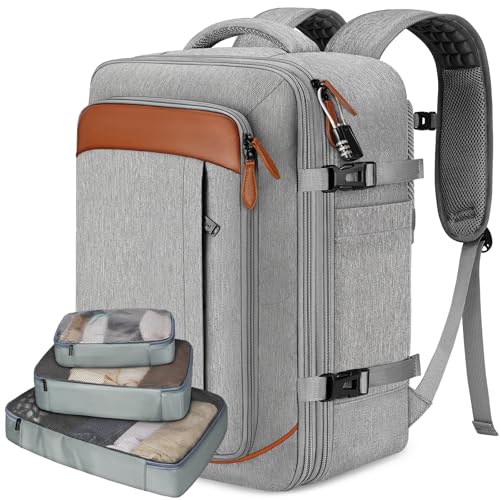
The Vancropak Carry On Backpack is an expandable hybrid travel and hiking pack designed for weekend road trips, airport flights, and casual trail outings. Measuring 19 x 13 x 7 inches and expanding two inches deeper when extra gear volume is required, it suits travelers who want one organized bag that easily handles transit days and day hikes. It is particularly well matched for budget-conscious adventurers, cabin campers, and commuters who need to transport apparel, trail shoes, and digital devices simultaneously.
Weighing 2.59 pounds, this backpack maintains a manageable empty weight that helps reduce upper-body fatigue. The suspension system relies on wide padded mesh shoulder straps with air-cushioning and an adjustable sternum strap that prevents the harness from sliding outward during movement. A dedicated ventilated shoe compartment at the base isolates trail footwear up to men's or women's size 10 to 12, ensuring dirt and moisture stay clear of your clean apparel in the primary storage area.
The exterior is built from water-resistant and scratch-resistant polyester that withstands tight luggage compartments and casual contact with trailside brush. For airflow, the pack features a U-shaped breathable back panel engineered to promote air movement between the pack and your shirt. The main compartment zippers incorporate lock holes that interface directly with the included combination lock, adding extra peace of mind when staging gear at hostels, trailheads, or airport terminals.
Packing and gear access are straightforward thanks to a lay-flat clamshell zipper that opens between 90 and 180 degrees. The internal space includes dry and wet separation pockets for damp clothing or toiletries, complemented by two included clothing packing cubes and a separate water-resistant wash bag. A padded center compartment accommodates laptops up to 17.3 inches, while the exterior side pocket holds an 18 oz water bottle or small folding umbrella for quick hydration stops.
Prospective buyers should note the realistic boundaries of this pack on technical trails. Because it lacks an internal frame, load-lifter straps, and a padded waist belt, the entire load is carried directly on the shoulders, making it ill-suited for multi-day backcountry trekking with heavy camp kits. Furthermore, the side pocket will not hold standard 32 oz wide-mouth trail bottles, and the water-resistant exterior requires additional protection during sustained mountain downpours.
For weekend adventurers, travelers who like to explore nearby nature trails, and light-packing weekenders, the Vancropak Carry On Backpack offers exceptional organizational versatility. It bridges the gap between structured luggage and a trail-ready daypack at an accessible price point, making it a reliable pick for multi-purpose travel.
The Vancropak backpack features a full clamshell opening that lays flat from 90 to 180 degrees, allowing you to pack and unpack gear just like a standard suitcase. The main compartment is equipped with interior elastic retention straps and specialized wet-dry separation pockets to keep damp towels or muddy clothing away from dry trail layers.
Organization is further enhanced by two included fabric packing cubes for folded garments and a standalone water-resistant toiletry pouch. The bottom of the pack houses an independent, ventilated shoe compartment that fits footwear up to size 12, while a padded mid-section secures laptops up to 17.3 inches alongside designated slots for cords, keys, and transit essentials.
Load management on the Vancropak pack is supported by wide, padded shoulder straps built with breathable mesh and interior cushioning to spread weight across the shoulders. An integrated adjustable sternum strap connects the harness across the chest, stabilizing the pack during brisk walking and light trail scrambles.
The back panel features a U-shaped ventilation channel designed to facilitate airflow and reduce heat buildup along the spine during warm-weather outings. Because the design does not include a rigid frame or a load-transferring hip belt, heavy gear should be placed centrally and close to the back panel to maintain balance.

Pros
- Weighs only 1.93 pounds while delivering a versatile 35-liter internal capacity
- Includes an integrated, tethered rain cover stored in its own bottom pocket
- Padded hip belt features MOLLE webbing and comfortably fits phones up to 7 inches
- Harness includes load lifters and a whistle-equipped sternum buckle for adjustable stability
Cons
- Hydration reservoir is not included and must be purchased separately
- Fixed back length lacks micro-adjustments for very short or tall torsos
- Fabric is water-repellent rather than fully seam-sealed, requiring the rain cover in downpours
The SKYSPER 35L Hiking Backpack is a lightweight daypack and travel pack tailored for day hikers, casual campers, and weekend adventurers who require ample gear volume without excessive base weight. Tipping the scales at an easy-carrying 1.93 pounds with exterior dimensions of 8.66 by 12.20 by 20.47 inches, this pack fits neatly between compact trail daypacks and larger multi-day packs. It works well for hikers packing extra warm layers, hydration, trail meals, and emergency essentials on full-day routes.
In terms of trail load support, the backpack utilizes a thickly padded back panel and matching contoured shoulder straps to cushion the upper body against heavier gear loads. Unlike many lightweight daypacks in this category, SKYSPER incorporates functional load lifters at the top of the harness, allowing users to pull the pack closer to the spine to maintain balance on uneven terrain. A wide, padded hip belt helps stabilize cargo over the hips, while an adjustable and detachable sternum strap keeps the harness aligned across the chest.
The pack is constructed from a hybrid blend of high-density 600D polyester and 210D nylon plaid fabric. This combination offers water repellency and resistance to snags and scuffs commonly encountered on brushy trails. High-stress anchor points and shoulder strap attachments are reinforced with lap-knot stitching to handle repeated packing cycles. For foul weather, a built-in reflective rain cover is housed in a dedicated bottom pocket and features an integrated fastening buckle to prevent it from blowing away in high winds.
Organization is a significant strength of the pack layout. The roomy main compartment houses an internal hydration sleeve for your reservoir, while a front drop pocket and an anti-theft organizational section with multiple divider layers and a key clip secure small valuables. Dual exterior side mesh pockets handle standard water bottles, and an external front elastic bungee cord offers a quick lash point for drying rain gear or stashing a damp towel. On the hip belt, a spacious zippered pocket accommodates smartphones up to 7 inches alongside MOLLE webbing for attaching accessory pouches.
Potential buyers should consider a few realistic limitations before purchasing. While the shoulder straps, load lifters, and sternum buckle provide adjustability, the back panel itself has a fixed torso length, meaning it cannot be extended or shortened for hikers with particularly long or short backs. Additionally, while the 35-liter volume accommodates plenty of gear, packing for overnight trips requires compact, ultralight sleep systems, as bulky traditional sleeping bags will quickly consume the available capacity.
For trail enthusiasts, budget-minded backpackers, and travelers seeking an organized, lightweight pack equipped with a rain cover and load-stabilizing straps, the SKYSPER 35L represents a practical and capable choice. Its combination of accessible hip-belt storage, low empty weight, and smart compartment layout makes it well suited for full days on American trails.
The carrying harness on the SKYSPER 35L is designed around thick padding across the shoulder straps and rear back panel to cushion pressure points under load. The inclusion of adjustable upper load lifters allows hikers to fine-tune the angle of the pack against the shoulders, helping to keep weight centered over the torso during ascents.
Stability is further supported by an adjustable sternum strap that can be detached or moved vertically to prevent shoulder straps from slipping outward. The broad, padded hip belt wraps around the waist to anchor the pack against lateral sway, making trail movement more controlled when carrying dense gear loads.
Gear management is handled by several dedicated compartments that keep trail essentials separated and accessible. Inside the primary compartment, a dedicated sleeve holds a hydration bladder, complemented by an internal emergency SOS guide stamped onto the lining for outdoor reference.
Secondary storage includes a specialized multi-layer organizer compartment with a key clip for wallets, knives, and permits, as well as a front stash pocket and dual stretch side pockets for water bottles. A zippered hip-belt pocket offers direct access to phones up to 7 inches, while front elastic cordage provides external storage for damp outerwear.
The pack body utilizes 600D high-density polyester paired with 210D nylon plaid fabric to resist abrasion and shed light trail spray. Crucial connection points, including shoulder straps and load-bearing seams, feature reinforced lap-knot stitching to preserve durability over extended outings.
When encountering heavier rainfall, the backpack relies on a dedicated reflective rain cover stored in a zippered base pocket. The cover connects to the bag with a fastening buckle, ensuring it stays firmly attached to the pack exterior even in gusty, exposed mountain conditions.
Pros
- Extremely lightweight at approximately 1.1 pounds for easy carrying on quick excursions
- External trekking pole attachments and front webbing plugins add practical gear versatility
- Grooved mesh back panel promotes airflow compared to standard flat travel packs
- Integrated safety whistle and reflective accents enhance low-light trail awareness
Cons
- 20-liter capacity is strictly designed for day use and cannot fit overnight camping gear
- Frameless design and lack of a padded load-bearing hip belt limit support for heavier cargo
- Water-resistant fabric sheds light moisture but is not fully waterproof in steady rain
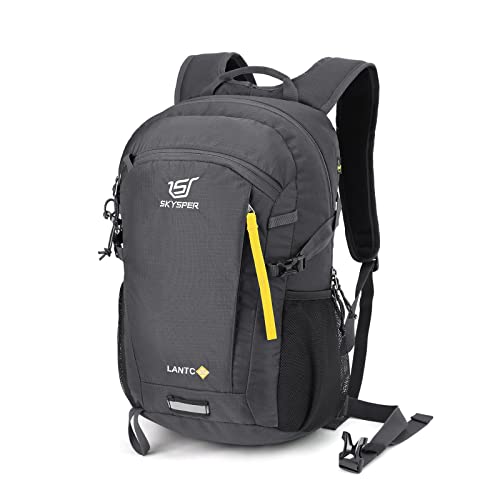
The SKYSPER 20L Hiking Daypack (Lantc20) is a compact, frameless backpack engineered for short-distance trail outings, travel excursions, and everyday commutes. Weighing approximately 1.1 pounds, this pack is tailored for hikers, students, and travelers who need to carry daily essentials without the cumbersome weight or rigid structure of a technical multi-day pack. With dimensions of 10.3 x 7.4 x 16.9 inches, it fits comfortably within the profile of a small daypack, offering a streamlined silhouette for fast-and-light movements.
On the trail, the pack relies on a grooved carrying system combined with breathable mesh back fabric. This channeled design helps separate the pack slightly from the wearer's back, allowing ambient airflow to manage sweat buildup during warm-weather hikes. An adjustable chest strap helps secure the shoulder harness across the torso to prevent strap slippage during ascents. Because it is a 20-liter pack without an internal frame, total carrying comfort depends on keeping pack weight modest and packing heavier items close to the center of gravity.
The build quality incorporates high-density 600D polyester combined with 210D nylon plaid fabric. This combination provides abrasion resistance and tear resistance against rough brush, while the surface finish delivers water-resistant protection against light precipitation and splashes. SKYSPER reinforces the shoulder straps and primary stress points with lap-knot stitching to prevent premature seam failure. For low-light situations, the pack includes reflective details to improve visibility around dawn or dusk, along with an anti-theft zipper configuration on select pockets for urban and travel security.
Organization is functional and straightforward for day-use items. The main compartment accommodates extra layers, snacks, and personal gear, while external trekking pole fixtures make it easy to secure poles when navigating flat terrain or scrambling. The front panel features yellow webbing plugins for adapting additional modular trail gear. The sternum strap buckle integrates a loud safety whistle, and the interior includes a printed emergency rescue guide, making it a thoughtful companion for beginner hikers navigating established regional park trails.
Prospective buyers should keep realistic performance boundaries in mind before purchasing. A 20-liter frameless bag cannot support cold-weather mountaineering kits, bulky sleeping systems, or heavy loads. Without a load-transferring hip belt, the shoulder harness bears the entire load, meaning overpacking can lead to upper-body strain. Additionally, while the fabrics are water-resistant, the backpack is not waterproof and will absorb water through seams and zippers during prolonged rainstorms without an aftermarket rain cover.
For day hikers, vacationers, and weekend explorers seeking an affordable, lightweight pack with practical trail-ready features like pole attachments and a ventilated back, the SKYSPER 20L represents a solid value. It delivers the right blend of basic utility, light weather resistance, and everyday versatility for trips where simplicity and low pack weight are top priorities.
The exterior of the SKYSPER 20L daypack is fabricated from a blend of high-density 600D polyester and 210D nylon plaid fabric. This combination balances lightweight handling with practical wear resistance, preventing premature fraying from trail brush, gravel, or urban transit floors.
Critical stress points, particularly the upper and lower shoulder strap junctions, feature reinforced lap-knot stitching. This additional seam reinforcement helps withstand the dynamic pull of walking with gear inside the pack over multiple seasons of casual use.
While the fabrics provide water-resistant performance against mist, light morning dew, or brief showers, they are not seam-sealed or submersible. Hikers carrying moisture-sensitive electronics or spare insulation should pack items inside waterproof dry sacks during wet weather.
External gear management on the SKYSPER 20L is anchored by dedicated trekking pole fixtures. These attachment points allow hikers to stow collapsible or telescoping trekking poles securely when transitioning between rocky trails and paved trailhead paths.
The front panel integrates yellow webbing loops designed as open-ended plugins. These modular attachment points allow users to clip carabiners, lightweight camp accessories, or external pouches without encroaching on the pack's 20-liter internal volume.
The sternum strap features an integrated emergency whistle built directly into the buckle hardware. This ensures an audible signaling device is readily accessible at chest height during unexpected trail emergencies without requiring extra gear.
Determining the Right Backpack Capacity for Weekend Hiking
Choosing the correct pack volume requires a clear understanding of your trip structure, gear bulk, and personal trail goals. A weekend outing can mean entirely different things to different outdoor enthusiasts. For some, it involves an overnight wilderness trek where a sleeping bag, shelter, and camp stove must fit inside one bag. For others, a weekend hike means tackling challenging day trails from a cabin, campground, or vehicle basecamp, requiring only daily essentials and weather protection.
Defining Your Weekend Hike: Overnight Campout Versus Day-Hike Basecamp
Your shelter and sleeping arrangements dictate your primary capacity needs more than any other factor. If you plan to spend Saturday night under the stars, your backpack must house a compact sleeping system, insulation layers, water filtration, and sufficient food for two full days. Carrying those overnight essentials generally requires a pack with at least 30 to 40 liters of usable internal volume. A smaller pack simply lacks the cubic space needed to stow a sleeping pad, quilt, and change of clothes without severe bulging.
When your weekend consists of day-hiking from a lodge, cabin, or vehicle, your volume requirements drop substantially. In this basecamp scenario, you leave heavy sleeping gear and cooking stoves behind. A 20 to 25-liter daypack provides ample room for two to three liters of water, packed meals, safety supplies, and emergency foul-weather layers. Selecting a streamlined daypack prevents you from hauling unnecessary empty fabric and keeps your center of gravity tight against your spine on rocky ascents.
The 30 to 40 Liter Sweet Spot for Minimalist Overnight Trips
A 35-liter backpack serves as a highly functional capacity benchmark for warm-weather overnight adventures. Pack models like the 35L SKYSPER hiking backpack demonstrate how this volume bracket accommodates a streamlined overnight setup. The main compartment offers enough room for an ultralight bivouac sack or compact tent, a compressible down quilt, a warm mid-layer, and a miniature canister stove. Having multi-compartment organization ensures that your camp gear remains separated from quick-grab items like lunch and trail snacks.
This mid-sized volume demands thoughtful gear selection and compact packing techniques. If you use traditional, bulky synthetic sleeping bags or rigid cooking sets, a 35-liter cavity can fill up very rapidly. Colder weather trips that demand heavy fleece garments, insulated jackets, and extra food will also push a 35-liter pack past its practical limits. For mild spring, summer, and early autumn outings with modern compressible gear, however, 35 liters delivers unmatched agility on narrow trails without the cumbersome bulk of a full-sized expedition pack.
When a 20 to 25 Liter Daypack Is the Better Choice
For hikers who prioritize speed, reduced fatigue, and minimal trail weight, a compact daypack in the 20-liter category is often the ideal tool. Models like the 20L SKYSPER small hiking daypack weigh only around 1.1 pounds unladen while offering generous space for full-day wilderness treks. This capacity easily secures a rain shell, fleece pullover, personal first-aid kit, map, headlamp, and trail rations. It also features dedicated trekking pole fixtures and front attachments for securing hiking poles when traversing flat ground or scrambling over boulders.
Carrying a pack that matches your true gear volume directly improves trail comfort and balance. When you pack a partially empty 40-liter bag with only 15 liters of gear, the contents inevitably settle at the very bottom. This creates an awkward, sagging load that pulls backward on your shoulders and destabilizes your stride. A dedicated 20-liter pack holds your gear snugly against your back, preventing shifting and helping you conserve valuable energy over long mileage days.
Internal Weight Distribution and Packing Geometry
Pack volume is only half the equation when preparing for a weekend on the trail. Organizing your equipment according to proper weight distribution principles ensures that heavy items do not exert leverage against your spine. The dense, heavy items in your kit, such as a hydration bladder, concentrated food rations, and cook pot, should sit directly against the back panel at mid-torso height. Placing dense mass close to your spine keeps the load aligned with your natural center of gravity, which reduces muscular strain.
Lighter, bulky items belong in different sectors of the pack to stabilize the load. Your sleeping quilt or dry camp clothing should sit at the bottom of the main cavity, creating a firm structural cushion for heavier items above. Mid-weight items like extra clothing layers can fill the outer front perimeter, while delicate or urgent gear belongs in the top pocket. When a pack features an exterior elastic bungee cord, you can lash wet towels or damp rain jackets on the outside, keeping wet fabrics from transferring moisture to dry internal gear.
Harness Ergonomics: Shoulder Straps, Load Lifters, and Hip Belts
Carrying comfort over miles of rolling terrain depends heavily on how the suspension system interfaces with your body. Backpacks in the 35-liter range often feature structured hip belts with wide padding designed to wrap securely around your iliac crest. When you cinch a supportive hip belt, the majority of the pack weight transfers off your neck and collarbones onto your stronger leg and hip bones. Hip belt zippered pockets also provide convenient storage for small essentials like a phone, compass, or energy bars without requiring you to remove the bag.
Advanced harness adjustments like sternum straps and upper load-lifter straps further refine your posture on challenging trails. Load lifters angle back from the top of the pack frame to the shoulder straps, pulling the upper portion of the pack forward to prevent backward sag. Meanwhile, an adjustable sternum strap keeps the contoured shoulder padding centered across your chest, preventing strap slippage. For hikers carrying substantially heavier baseline loads over rough terrain, exploring internal frame hiking backpacks can provide even greater rigid load transfer than lightweight frameless daypacks.
Fabric Durability and Weather Protection on the Trail
Trail environments expose outdoor fabrics to sharp rock faces, dense overhanging brush, and sudden weather shifts. High-density fabrics like 600D polyester combined with 210D nylon plaid provide an exceptional defense against abrasive friction and tearing. Manufacturers reinforce critical stress points, such as shoulder strap anchors and haul handles, using lap-knot bar tack stitching to resist blowout under heavy tension. These synthetic weaves offer inherent water repellency, shedding brief morning drizzles and light mist effortlessly.
Standard water-repellent coatings and reverse-coil zippers cannot withstand heavy, sustained mountain downpours on their own. Water will eventually seep through needle puncture holes, exposed seams, and zipper coils if rain continues for hours. To prevent soaking your insulation layers, packs equipped with integrated rain covers offer vital protection. Designs like the SKYSPER 35L incorporate a stowable, reflective rain cover tucked inside a dedicated bottom zipper pocket with an anchor buckle, preventing high winds from blowing the cover off your pack on exposed ridges.
Hydration Routing and Exterior Storage Versatility
Staying hydrated throughout a strenuous weekend hike requires quick, continuous access to clean drinking water. Most technical hiking packs include an internal sleeve designed to secure a two-to-three-liter hydration bladder along the back panel. A hose routing port allows the drink tube to extend over your shoulder strap, enabling hands-free drinking while trekking. Maintaining the water reservoir against your spine also contributes to optimal center-of-gravity placement compared to carrying multiple heavy bottles on the pack exterior.
Elastic mesh side pockets provide essential secondary storage for water filtration squeeze bottles, insulated flasks, or compact umbrellas. Deep side pockets with reinforced elastic bands help prevent wide bottles from sliding out when you bend over to adjust your boots or clear trail obstacles. In contrast to technical daypacks designed for trail agility, social day outings or picnic hikes might benefit from specialized hiking cooler bags that incorporate insulated leakproof compartments specifically built for food and cold beverages.
Hybrid Weekend Travel: Bridging Flight Logistics and Trail Demands
Many weekend hiking trips involve boarding a commercial flight to reach distant national parks or mountain ranges. In these situations, your backpack must function effectively as airline carry-on luggage before transitioning to the trail. Crossover bags like the Vancropak carry-on backpack combine luggage organization with comfortable carry features. With dimensions measuring 19 by 13 by 7 inches, an expandable depth gusset, packing cubes, and a ventilated shoe compartment, it satisfies overhead bin requirements while keeping travel apparel and trail gear neatly segregated.
Using a travel-focused crossover pack works exceptionally well when you plan to stay in town and hike established, accessible day trails. The integrated padded tech compartment shields a laptop during transit, while the sternum strap stabilizes the load across airport terminals. If your primary goal is rugged backcountry hiking, however, packing a collapsible 20-liter daypack inside your carry-on luggage gives you the best of both worlds. You can navigate the airport with organized travel luggage and deploy a lightweight trail pack once you arrive at the mountains.
Avoiding Common Sizing and Gear Loading Mistakes
One of the most frequent mistakes beginner hikers make is choosing an excessively large pack out of fear of leaving gear behind. Carrying a 50 or 60-liter backpack for a warm-weather weekend overnight trek often tempts you to pack non-essential luxury items. That extra weight accumulates rapidly, turning an enjoyable weekend in nature into an exhausting, knee-straining ordeal. Starting with a conservative 35-liter capacity enforces disciplined gear choices and keeps your total trail weight manageable.
The opposite mistake involves using an undersized 15-liter pack and strapping bulky sleeping pads, cooking pots, and tents to external daisy chains. Hanging heavy gear externally dramatically alters your balance, creating swinging weight that causes unexpected fatigue. External items are also vulnerable to snagging on branches or getting soaked in sudden storms. If your essential gear cannot fit inside the main compartment with only small damp items lashed externally, stepping up to a 30 to 35-liter pack is the safest course of action.
Practical Takeaways for Your Next Weekend Adventure
Selecting the ideal backpack capacity ultimately hinges on your specific sleeping arrangements, trail duration, and personal packing discipline. A 20-liter daypack provides unbeatable agility and lightness for hikers based at a campground or lodge who tackle day trails. A 35-liter multi-compartment pack stands as the premier versatile choice for minimalist overnight wilderness treks and gear-heavy day hikes across changing weather conditions. Taking the time to evaluate your actual gear volume ensures balanced carrying comfort and memorable days on the trail.







Write Your Review
No reviews yet. Be the first to share your experience!