


Carrying the wrong bag volume quickly creates daily friction during morning train commutes, campus walks, or mountain day hikes. When a pack is too bulky, gear shifts around uncomfortably, but an undersized bag forces zippers to strain against packed lunches and tech gear. Asking whether is 22l a good size backpack represents the sweet spot for most commuters and hikers looking for streamlined carry without sacrificing daily essentials. This volume tier offers enough depth for daily work devices and trail hydration while maintaining a compact exterior profile that navigates crowded spaces easily.
Unlike larger multi-day bags or heavy rigid internal frame packs engineered for massive trail loads, a 22-liter shell prioritizes maneuverability and balanced weight distribution. It handles mobile workstations, rain layers, and hydration systems without requiring the bulk of specialized trail cooler backpacks or expedition haulers. Modern materials such as tear-resistant polyester and lightweight packable nylon make this middle-weight volume versatile across different environments. Understanding how internal compartment layouts influence real storage allows buyers to match this everyday carry capacity to their specific routines.

Pros
- Includes a large-capacity 3L leakproof TPU water bladder with an extra-wide mouth opening
- Built-in rain cover and rainproof zipper liners provide quick defense against sudden trail showers
- Detachable shoulder strap pouch fits large smartphones up to 7 inches without taking off the pack
- Generous pocket layout with 5 separate zipper compartments keeps trail gear sorted and easily accessible
Cons
- Lacks an internal frame or load-bearing hip belt for supporting heavier trail cargo
- No adjustable torso sizing system, relying strictly on standard strap adjustments
- 22-liter capacity is built for single-day outings and will not accommodate multi-day backpacking gear
The NOOLA 22L Hydration Hiking Backpack is a dedicated daypack system equipped with an included 3-liter TPU water bladder, engineered for day hikers, recreational trail walkers, and outdoor commuters. Measuring 7 x 11.5 x 17.3 inches, the pack delivers a 22-liter cargo volume that easily stores daily trail gear, lightweight extra layers, trail meals, and emergency essentials without adding excessive bulk.
On the trail, weight distribution relies on widened, thickened shoulder straps accompanied by ventilated mesh cushioning across the back panel. While the pack does not incorporate an internal frame or an adjustable torso harness, its compact profile keeps weight close to the body. Hikers carrying typical day-hiking gear will find the padded contact points comfortable for moderate mileage, though the absence of a rigid frame or padded hip belt means overall pack weight rests primarily on the upper body.
Pack construction centers on high-density ripstop polyester fabric designed to resist scuffs and trail wear from brush or rocks. For foul weather, the pack features fabric described by the manufacturer as waterproof, supported by rainproof zipper liners on external compartments and a built-in stowable rain cover. Additional practical exterior details include high-visibility reflective strips for dawn or dusk travel and an emergency whistle integrated directly into the sternum hardware.
Hydration and gear organization represent the standout attributes of this pack. The included 3-liter TPU bladder sits inside an independent compartment, isolating fluids from your dry gear. Its 3.5-inch mouth facilitates fast refills, ice addition, and thorough drying. The main body houses 9 divider pockets and 5 zipper compartments, allowing meticulous separation of keys, snacks, wallets, and electronics. On the exterior, two side pockets hold extra bottles or umbrellas, side elastic cords secure trekking poles, and a removable shoulder-strap pouch fits phones up to 7 inches for immediate access.
Realistic limitations must be kept in mind regarding overall load and trip scope. A 22-liter volume is explicitly meant for day outings and will not accommodate overnight camping sleep systems or bulky cold-weather insulation. Furthermore, while the water-resistant materials and included rain cover handle wet conditions effectively, sensitive electronics or critical medical items should still be stored inside secondary dry bags during sustained downpours.
For hikers searching for a complete, budget-accessible hydration daypack that eliminates the need to purchase a bladder separately, the NOOLA 22L model is a highly capable choice. Its combination of an expansive 3L reservoir, protective rain cover, organized pocket layout, and quick-draw phone holder makes it a practical package for recreational day adventures.
The NOOLA 22L comes equipped with a dedicated 3-liter TPU hydration bladder, ensuring an ample fluid supply for warm day hikes and long trail outings. The bladder material is completely BPA-free and odor-free, preserving clean-tasting water on the move.
Refilling and maintenance are streamlined thanks to a wide 3.5-inch mouth opening. This generous aperture allows hikers to drop in standard ice cubes on hot summer days and makes interior cleaning and drying straightforward between trips. The reservoir is housed in an independent compartment to prevent condensation or unexpected leaks from contacting packed clothing or trail electronics.
With 22 liters of interior volume and 9 functional divider pockets, this daypack provides designated storage spaces for small gear items. Five distinct zippered compartments let you isolate fragile electronics, trail snacks, keys, and base layers instead of burying everything in a single cavity.
Exterior trail accessibility is enhanced by a detachable phone pocket mounted on the shoulder harness, sized to accommodate smartphones up to 7 inches. Two side stretch pockets hold auxiliary water bottles or compact umbrellas, while side-mounted elastic loops keep trekking poles locked down and ready to deploy.
Built for unpredictable mountain and trail weather, the NOOLA 22L utilizes high-density ripstop polyester fabric backed by rainproof zipper liners along primary entry points. These construction choices help shield gear from light drizzle, mist, and splashback.
When severe weather strikes, an integrated deployable rain cover provides full external coverage against heavier rainfall. While this multi-tier weather design keeps trail gear well-shielded during sudden storms, users should still protect sensitive paper maps and electronics in dedicated dry bags during prolonged rain events.
Pros
- Folds down to a 7.5 x 5.5-inch footprint and weighs only 0.7 pounds for seamless travel packability.
- Generous 22-liter volume holds extra clothing, food, and daily gear without taking up excess luggage room.
- Dual side bottle sleeves and an exterior net pouch deliver practical, quick-access trail organization.
- Water-resistant nylon fabric offers reliable protection against light splashes and mist.
Cons
- Frameless ultralight build lacks an internal frame, load lifters, and a padded hip belt for carrying heavy loads.
- Thin mesh shoulder straps have minimal cushioning, which may feel unsupportive under dense, weighty contents.
- Manufacturer specifications designate that this pack is not suitable for children under 12 years of age.
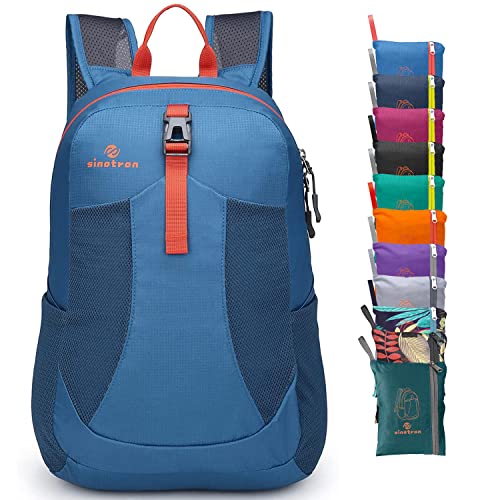
The Sinotron Lightweight Packable Backpack is a collapsible, frameless 22-liter daypack tailored for casual day hikers, vacation travelers, and weekend campers seeking minimalist carry. Weighing roughly 0.7 pounds, it collapses down to a compact 7.5 by 5.5 inches, making it a viable secondary bag to toss inside a primary travel duffel or multi-day backpacking pack. For hikers who prefer not to haul a heavy, structured daypack on casual trail loops or excursion days, this design emphasizes low bulk and straightforward portability.
With a manufacturer-listed volume of 22 liters, the main compartment provides sufficient capacity for day-trail necessities such as a windbreaker, trail snacks, a small first-aid kit, and everyday tech up to a 14-inch laptop. Adjustable mesh shoulder straps manage upper-body placement, though the pack does not feature an adjustable torso suspension, sternum strap, or load-bearing hip belt. Consequently, the pack relies entirely on its shoulder harness, making it best suited for light cargo rather than dense, cumbersome trail loads.
The exterior uses water-resistant nylon fabric paired with solid metal zippers intended to glide smoothly and resist catching. While the fabric resists damp trail environments and light mist, it is not sealed against prolonged downpours or full submersion, so sensitive electronics require dedicated waterproof dry sacks. The shoulder straps use an unpadded, breathable mesh material designed to maximize ventilation and minimize pack weight, while the exterior features two side bottle slots and an outer net pouch for immediate trail-side access.
Deploying the backpack is straightforward, unfolding directly from its self-contained storage pouch into a full 22-liter silhouette measuring approximately 16.5 by 10.6 by 6.7 inches (42 by 27 by 17 cm). Loading heavier items close to the back panel prevents shifting, as the frameless back offers no rigid structure. Routine cleaning involves wiping down the nylon exterior with a damp cloth and mild soap, followed by air-drying completely before folding it back into its storage configuration to avoid mold or mildew buildup.
Because the Sinotron daypack prioritizes minimal weight and packability, it carries inherent design tradeoffs that trail users should evaluate. The lack of back-panel foam, load-lifter adjustments, and a hip belt means all carried weight rests directly on the shoulder straps, which may cause pressure points if loaded with heavy hydration bladders or bulky gear. Additionally, the manufacturer notes that this pack is not suitable for children under 12 years of age, and it lacks an integrated rain cover for heavy storm protection.
For budget-conscious hikers, vacationers, and weekend campers needing a lightweight, fold-away summit pack or casual walking bag, this Sinotron model provides dependable everyday utility at negligible pack weight. It serves exceptionally well as a supplemental daypack kept in a vehicle or primary luggage for spontaneous outings. Users planning strenuous multi-hour treks with heavy gear or seeking structured ergonomic support should look toward dedicated framed daypacks with padded hip belts.
The 22-liter main compartment accommodates daily excursion gear, clothing layers, and items up to the size of a 14-inch laptop. Internal pockets hold keys, identification, and smaller loose accessories securely in place.
Exterior storage includes two dedicated side pockets suitable for standard water bottles or compact umbrellas, along with a wide front mesh pouch. This outer mesh netting allows hikers to stow items that need rapid access on trail without opening the main compartment zipper.
Weighing only 0.7 pounds, this daypack is engineered for minimal weight and effortless transport. When not in use, the entire backpack folds down into an integrated pocket measuring 7.5 by 5.5 inches, comparable in size to a standard paperback book.
This compact folded footprint makes it convenient to tuck into carry-on luggage, vehicle glove compartments, or larger multi-day backpacking packs for use as a lightweight summit or side-trail pack.

Pros
- Collapsible design packs into a pocket-sized 7.5 x 5.5 inch profile weighing only 0.7 pounds.
- Generous 22-liter volume accommodates daily trail essentials, snacks, and up to a 14-inch laptop.
- Dual side water bottle sleeves and a front mesh stash pocket provide quick external gear access.
- Water-resistant nylon construction paired with smooth metal zippers offers solid everyday utility.
Cons
- Frameless design lacks a rigid back panel, padded hip belt, or load lifters for supporting heavy trail gear.
- Water-resistant nylon fabric is not fully waterproof and will not safeguard electronics during persistent downpours.
- Manufacturer specifies that this pack is not suitable for children under 12 years old.
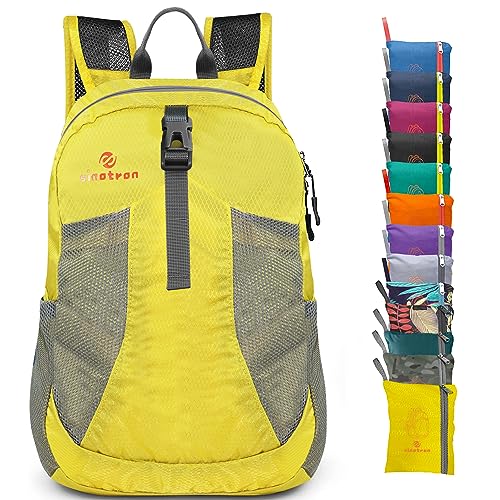
The Sinotron 22L Packable Hiking Daypack is a frameless, ultra-compressible day pack built primarily for day hikers, travelers, campers, and casual outdoor enthusiasts who require minimal carried weight. Tipping the scales at roughly 0.7 pounds, this foldable pack serves as a lightweight companion for short nature walks, summit scrambles from a basecamp, or travel excursions where stashing a full-sized hiking pack into luggage is impractical. Note that the manufacturer specifies this product is not intended for users under 12 years old.
With a stated 22-liter capacity and physical dimensions measuring approximately 6.3 x 8.3 x 13 inches, the pack offers enough room to store basic trail necessities such as light jackets, snacks, compact binoculars, or up to a 14-inch laptop. It lacks an internal or external frame, padded hip belt, or load lifters, meaning that the pack relies entirely on its adjustable mesh shoulder straps for carrying comfort. As a result, it performs best with lighter payloads, as heavy or dense items will press directly against the wearer's back without structural suspension to distribute the weight.
Construction centers on a water-resistant nylon fabric paired with solid metal zippers engineered for smooth opening and closure. On the exterior, the daypack features two dedicated side pockets suitable for standard water bottles or compact umbrellas, alongside an expansive front net compartment intended for quick-grab items like rain jackets or trail maps. Internally, smaller built-in organizational pockets help prevent small loose gear, such as car keys and multitools, from sinking to the bottom of the main compartment.
Packing and deployment are straightforward thanks to the pack's ability to compress down to a compact 7.5 x 5.5 inch folded profile, which occupies roughly the footprint of a paperback book. Hikers can readily slip the folded pouch into a primary multi-day backpacking pack or travel duffel until arriving at camp. Cleaning simply involves spot-cleaning the nylon shell with cool water, mild soap, and allowing it to air dry thoroughly before compressing it back into its storage configuration.
While practical for lightweight jaunts, buyers should keep realistic expectations regarding weather resistance and load capacity. The fabric is described as water-resistant nylon rather than fully seam-sealed or waterproof, meaning water may penetrate through zippers or seams during heavy rainstorms, requiring a dry bag or separate liner for sensitive electronics. Additionally, the absence of sternum straps, back-panel air channels, or waist support limits stability during vigorous scrambles or heavy gear hauls.
For budget-minded hikers, vacationers, and weekend campers seeking a straightforward, featherweight daypack that stows away virtually unnoticed, the Sinotron 22L offers dependable utility. Those intending to carry substantial water weight, camera setups, or multi-day backpacking gear will want a structured internal-frame pack, but for casual trail strolls and day outings, this foldable option provides functional convenience at minimal weight.
The Sinotron daypack provides a 22-liter storage volume, presenting a well-rounded configuration for everyday trail gear and quick day trips. The main compartment offers ample room for daily clothing layers, packed lunches, and personal electronics up to a 14-inch screen size.
For external organization, two side sleeves accommodate standard water bottles or travel umbrellas, while a large outer net pouch provides rapid access to light jackets or trail maps. Inside, dedicated smaller pockets keep keys, wallets, and pocket tools organized and prevent them from shifting around during movement.
Weighing just 0.7 pounds, this frameless daypack collapses into a self-contained footprint measuring 7.5 x 5.5 inches. This compact size allows travelers and backpackers to tuck the pack into luggage, glove boxes, or multi-day hiking packs without sacrificing substantial packing space.
When reaching a trailhead or basecamp, the pack quickly unfolds into a fully usable 22-liter daypack, making it an effective choice for side hikes and summit outings where a heavy expedition pack is unnecessary.
Evaluating Capacity, Fit, and Practical Utility for a 22-Liter Pack
A 22-liter backpack represents an optimal middle ground for commuters, students, and day hikers who need more space than a compact 15-liter sling without the cumbersome footprint of a 30-liter bag. For most daily routines, 22 liters provides roughly 1,340 cubic inches of packing volume, which easily accommodates a compact computer, lunch container, light jacket, and daily accessories. It bridges the gap between everyday office transit and weekend trail exploration by keeping the center of gravity close to your back. While it may feel tight for multi-day journeys or heavy academic semester loads, it remains one of the most practical capacities for active single-day use.
What a 22-Liter Volume Can Actually Hold
Understanding actual pack volume requires looking at the physical footprint rather than just nominal liter ratings. A standard 22-liter daypack comfortably swallows a tech setup consisting of a 14-inch laptop, a charging brick, power cords, and an external mouse. Alongside your electronics, the main cavity leaves enough depth for a structured meal container, a light windbreaker or fleece pullover, and a compact notebook. Small personal items like sunglasses, keys, pens, and travel documents slide easily into secondary organization sleeves without crowding out the primary chamber.
The usable internal volume shifts depending on how the manufacturer distributes internal pockets versus wide open volume. A single open compartment allows you to pack bulkier, irregular objects such as climbing shoes, bike helmets, or packed lunches with minimal fuss. Conversely, packs featuring multiple dedicated divider sleeves segment that storage into specialized slots, which protects fragile gear but slightly reduces open cavity depth. For general daily use, this volume handles typical work and fitness transitions provided you do not need to pack bulky winter boots or large sports gear.
Office Commutes and Laptop Protection Limits
Transit commuters often prefer 22-liter packs because their streamlined profile avoids bumping into passengers on crowded buses and subway cars. In commercial options like the sinotron lightweight daypack, the main storage sleeve easily accepts standard 14-inch laptops along with digital tablets and notebooks. The moderate depth keeps your electronics pressed close to your spine, preventing the backwards pull common with oversized commuter bags. This ergonomic profile helps you navigate revolving doors, train turnstiles, and narrow office hallways without constantly adjusting your stance.
Buyers carrying larger mobile workstations need to inspect laptop compartment dimensions carefully before committing to a 22-liter shell. While 13-inch and 14-inch notebooks slip into standard interior sleeves effortlessly, 15.6-inch and 16-inch gaming laptops or workstation chassis often push sleeve zipper tolerances to their limit. If you use a rigid protective bumper case around your device, that extra exterior thickness can eat up valuable vertical clearance in a 22-liter frame. Checking your exact laptop dimensions against the bag manufacturer specifications ensures smooth zipping without straining corner seams.
Airline Travel and Under-Seat Personal Item Compliance
One of the greatest advantages of a 22-liter pack is its natural dimensional fit within airline travel guidelines. Most domestic and international airlines maintain airline personal item dimensions around 18 by 14 by 8 inches for bags stowed under the forward seat. A typical 22-liter backpack generally measures between 17 and 18.5 inches in height, 11 to 12 inches in width, and 6 to 8 inches in depth when fully packed. This geometry allows travelers to slide the bag under standard passenger seats without encroaching on footroom or drawing scrutiny from boarding gate agents.
Frequent flyers can use a 22-liter pack as an ideal personal item to complement an overhead rolling suitcase. It keeps essential travel items like noise-canceling headphones, medication, travel documents, e-readers, and emergency change of clothing right at your feet. On regional aircraft or seats equipped with under-seat entertainment power boxes, the flexible silhouette of a 22-liter bag compresses easily compared to rigid hardshell briefcases. Keeping the outer pockets streamlined ensures you avoid snags when retrieving snacks or boarding passes mid-flight.
Day Hiking Performance and Trail Hydration Support
On outdoor trails, a 22-liter capacity provides the ideal balance between load capacity and physical endurance during 4- to 8-hour day hikes. Specialized designs such as the NOOLA 22L hydration backpack incorporate a dedicated hydration bladder compartment holding a 3-liter TPU water reservoir to sustain hikers through long mileage. This dedicated bladder setup separates heavy fluid weight from dry layers, first aid kits, trail snacks, and navigation tools. External elastic holders and side loops secure trekking poles when traversing rocky sections, freeing your hands for scrambles.
Balancing hydration, extra clothing, and emergency equipment within a 22-liter footprint prevents the excessive fatigue caused by bulky overnight packs. Even with a full 3-liter bladder occupying internal depth, there is ample room for rain shells, packed lunches, sun protection, and a headlamp. Exterior stretch mesh side pockets hold supplementary water bottles or compact umbrellas for quick access without unzipping the main chamber. For outdoor enthusiasts seeking trail-ready value, checking our budget day hiking pack guide highlights how economical designs deliver rugged utility without inflated gear costs.
Structured Daypacks Versus Packable Ultralight Designs
The internal volume of 22 liters can take radically different forms depending on whether you choose a structured chassis or a packable bag. Structured packs incorporate dense polyester fabric, padded back panels, contoured shoulder straps, and dedicated organization dividers that maintain their shape even when empty. Models like the NOOLA daypack feature ventilated mesh cushioning and internal framesheet support to distribute weight evenly across your shoulders. This architecture excels when carrying dense, rigid items like laptops, hydration bladders, or hardback books that would otherwise poke into your spine.
In contrast, ultralight packable daypacks such as the sinotron foldable daypack strip away heavy internal padding to achieve a featherlight 0.7-pound unladen weight. These versatile bags collapse down to a remarkably compact 7.5 by 5.5 inches, fitting neatly inside luggage or glove compartments for spontaneous use. They offer the exact same 22-liter internal volume for groceries, beach gear, or day trip souvenirs without taking up luggage space when packed away. The main tradeoff comes down to padding, as unstructured nylon packs require thoughtful gear placement to prevent sharp corners from pressing against your back.
Harness Ergonomics and Carrying Comfort Under Daily Loads
A backpack is only as effective as its suspension system, especially when loaded with 10 to 15 pounds of daily tools. Good harness ergonomics require thickened and widened shoulder straps lined with breathable air mesh to prevent narrow webbing from digging into your trapezius muscles during extended walking. An adjustable sternum strap stabilizes the harness across your upper chest, stopping the shoulder straps from slipping outward when walking briskly or cycling. Proper strap contouring pulls the pack snug against your thoracic spine, keeping the center of gravity aligned over your pelvis.
Effective ventilated back panels play an equally critical role in commuter and hiker comfort during warm summer weather. Flat, unpadded fabric rests directly against your clothing, which rapidly traps body heat and leads to excessive back perspiration. Structured packs combat this issue by utilizing molded air channels and raised mesh padding that promote continuous airflow between your body and the pack shell. Taking time to adjust shoulder straps so the base of the bag sits just above your lumbar curve reduces unnecessary strain on your lower back.
Pocket Architecture and Real-World Storage Efficiency
Smart compartment engineering determines whether a 22-liter backpack feels spacious or cramped in practical use. For example, the NOOLA 22L pack organizes gear across 9 functional divider pockets and 5 separate zippered compartments, keeping small gear distinctly segmented. A detachable strap pocket provides immediate access to modern smartphones measuring up to 7 inches without requiring you to swing the pack off your shoulder. Dedicated internal slots keep pens, charging cables, power banks, and house keys organized so they do not settle into an unreachable pile at the bottom.
Exterior pocket geometry also impacts how much cargo you can load into the main interior cavity. Deep side pockets with elastic retention collars hold 20- to 24-ounce bottles securely, preventing them from falling out when you bend down to tie a shoe. External front mesh compartments, like those found on the sinotron packable models, offer rapid stash space for damp rain jackets or transit maps. When exterior pockets are well proportioned, you do not have to sacrifice internal volume just to keep water and quick-grab essentials close at hand.
Fabric Durability and Weather Protection Standards
Daily commuting and outdoor trail use expose daypacks to constant abrasion, dirty floors, and sudden precipitation. Durable materials such as tear-resistant ripstop polyester and water-resistant nylon weave resist tearing when scraped against rough surfaces or tree branches. Smooth metal zipper hardware resists derailment under heavy loads, ensuring dependable track alignment across months of daily opening and closing. Water-resistant outer coatings cause light rain to bead and roll off, protecting paper documents and electronic accessories inside the main cavity.
For intense downpours, secondary weatherproofing features provide essential backup protection that basic fabric treatments cannot match alone. The inclusion of rainproof zipper liners and dedicated integrated rain covers, such as those included on the NOOLA hydration pack, seals out moisture at vulnerable seams. When cleaning technical nylon or polyester fabrics, avoid harsh machine washing or high-heat dryers that can crack internal water-resistant polyurethane laminates. Spot-cleaning with a damp cloth and mild soap followed by thorough air drying preserves fabric integrity and hardware longevity for years of reliable service.
Scenarios Where a 22-Liter Pack Proves Too Small
While a 22-liter volume serves single-day routines exceptionally well, certain packing demands will quickly exceed its physical capacity. College students carrying multiple massive hardback textbooks alongside heavy three-ring binders and gym apparel will find the main compartment overflowing. Similarly, weekend travelers attempting multi-day one-bag trips will struggle to fit spare shoes, bulky sweaters, and comprehensive toiletry kits into 22 liters. Cold-weather winter hikes requiring insulated parkas, heavy gloves, and emergency snow gear also necessitate stepping up to a 28- or 35-liter chassis.
Understanding these volume boundaries prevents frustration and stops you from stressing zipper seams past their structural limits. If your regular routine requires transporting extensive photography equipment with multiple lenses, dedicated drone cases, or bulky sports gear, an everyday 22-liter silhouette is not the right tool. Choosing a pack with sufficient volume prevents fabric bulging that can distort the back panel and degrade carrying ergonomics. When your daily cargo routinely demands more than a jacket, tech setup, and lunch, moving into the 28- to 32-liter category delivers much better utility.
How to Determine If 22 Liters Matches Your Needs
Deciding whether a 22-liter backpack suits your lifestyle comes down to taking an honest inventory of the items you carry every single day. If your loadout consists of a 13- to 14-inch computer, a water bottle, an umbrella, lunch, and a light extra layer, 22 liters provides an ideal balance of agility and space. It forces mindful packing habits that keep unnecessary clutter out of your daily carry while sparing your shoulders from excess tare weight. Commuters, short-distance cyclists, day hikers, and minimalist travelers consistently find that this capacity handles 90 percent of realistic daily scenarios.
Before buying, compare your device dimensions and structure preferences against the specific features offered across available models. If you prioritize maximum trail hydration, cushioned strap support, and rain protection, a dedicated outdoor daypack with a built-in reservoir delivers outstanding performance. If you need an ultra-compact spare bag for grocery stops or vacation side trips, a featherweight packable nylon model offers unmatched convenience. Matching your unique gear requirements to the right 22-liter platform ensures comfortable carrying and reliable organization throughout your daily travels.







Write Your Review
No reviews yet. Be the first to share your experience!