


Carrying bulky sleep systems on rugged trails often creates awkward weight distribution and annoying gear sway if gear is improperly secured. Knowing how to attach sleeping pad to backpack ensures that your shelter kit stays firmly anchored without pulling against your lumbar spine or throwing off your natural walking gait. When heading out with technical gear like an accordion foam mat or a compact inflatable mattress, hikers must balance exterior lash points against the pack center of gravity. Balancing external bulk helps keep fragile gear safe while preserving essential storage inside your main compartment for hydration, food, and protective layers.
Selecting the correct mounting technique depends heavily on your pack design, whether you carry hiking backpacks with rigid support frames or frameless ultralight rucksacks. Closed cell foam mats handle trail abrasion easily when strapped to external bottom webbing loops, whereas ultralight inflatable air pads usually belong protected inside your pack body. Securing bulky pads with dedicated compression straps prevents pack roll and keeps the load centered directly over your hips. By evaluating your trail loadout and pad materials, you can establish a secure attachment method that withstands dense brush and windy ascents.
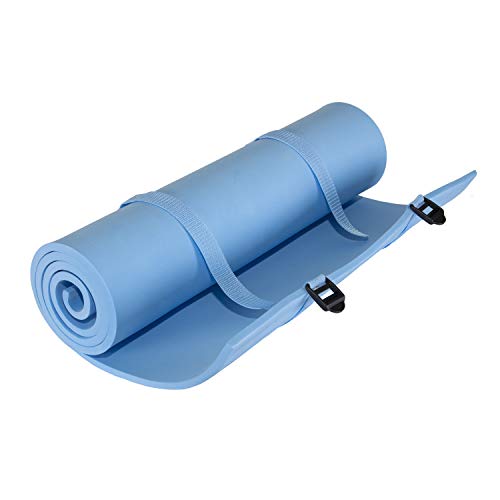
Pros
- Ultralight 0.6-pound weight adds minimal bulk to a backpacking kit
- Puncture-proof closed-cell foam eliminates the risk of leaks or deflation on rough terrain
- Waterproof material keeps ground moisture from soaking through to sleeping gear
- Included straps keep the pad rolled tightly for exterior pack attachment
- Backed by a one-year manufacturer warranty against defects
Cons
- Thin 3/8-inch to 0.5-inch profile provides minimal cushioning on hard or rocky surfaces
- Narrow 19-inch width leaves little room for active or broad-shouldered sleepers
- Rolled foam design is bulkier on pack exteriors compared to compact inflatable pads
The Stansport Pack Lite Camping and Backpacking Sleeping Pad is a minimalist closed-cell foam ground mat designed for backpackers, campers, and day hikers who require an ultralight, fail-safe barrier against the elements. Weighing just 0.6 pounds, this pad is built for outdoor users who prioritize simplicity and dependability over the plush thickness of heavy inflatable mattresses.
For trail use, the primary advantage of closed-cell foam is reliable thermal protection without the risk of punctures or air leaks. The manufacturer highlights waterproof and puncture-proof construction, which helps keep cold and dampness away from the body when sleeping on bare earth, tent floors, or shelter platforms. Unlike inflatable sleeping pads that can fail if punctured by sharp rocks, pine needles, or thorns, this foam mat maintains its protective structure regardless of trail debris.
The build consists of closed-cell foam insulation measuring 72 inches long by 19 inches wide, with thickness listed between 3/8 inches and 0.5 inches in the product specifications. Because closed-cell foam does not absorb water, moisture management is effortless on wet terrain. Condensation, rain, or dew can be wiped or shaken off in seconds before you pack up and hit the trail.
Handling and packability are geared toward straightforward exterior pack carry. At 0.6 pounds, the mat adds minimal weight to your load, and the included straps keep it rolled tightly during transit. Because a roll-up foam mat does not compress down to pocket dimensions, backpackers will typically lash it to the exterior loops or compression straps of a backpack rather than storing it inside a main compartment.
The most significant limitation of this sleeping pad is its lean cushioning and narrow profile. With a thickness under half an inch, side sleepers or hikers on hard, uneven ground will experience firm contact with the terrain. Additionally, the 19-inch width provides limited surface area, meaning restless sleepers may slide off onto the tent floor during the night.
The Stansport Pack Lite is best suited for budget backpackers, thru-hikers seeking an indestructible secondary thermal layer beneath an air pad, and campers needing a lightweight ground shield. Backed by a one-year manufacturer warranty, it offers practical, worry-free ground protection for anyone willing to trade plush cushioning for trail-ready durability.
Closed-cell foam serves as an effective physical barrier against cold earth and damp ground during outdoor sleep. The Stansport Pack Lite uses solid foam cells that resist moisture absorption and prevent cold conduction from reaching your sleeping bag.
This waterproof build makes the mat versatile beyond nighttime sleeping, serving as a clean, dry sit pad during trail breaks, meal prep, or glassing sessions in wet grass or snowy conditions.
At 0.6 pounds, the Stansport Pack Lite is one of the lightest full-length sleep pads available for trail use. The included tie straps secure the pad into a tight roll for transit.
Because rolled foam retains its physical volume, hikers should plan to strap the pad to the top, side, or bottom lash points of a backpack using external straps.

Pros
- Solid IXPE closed-cell foam is completely puncture-proof with zero risk of deflation on rugged trails.
- Ultralight 1.08-pound construction deploys in seconds without pumps, valves, or lung power.
- Long 74.8-inch footprint provides ample space for taller backpackers to stretch out fully.
- Reflective silver aluminum coating helps reflect radiant body heat and boosts wear resistance.
- Waterproof, easy-to-clean exterior keeps dampness from soaking through from wet trail soil.
Cons
- Accordion-folded pack size (22.8 x 5.9 x 5.1 inches) is bulkier than ultralight inflatable air mattresses and generally straps to pack exteriors.
- Firm 0.79-inch foam cushion may provide limited relief for dedicated side sleepers on rocky ground.
- Manufacturer specifications do not list a standardized ASTM R-value rating for extreme winter conditions.
The Night Cat Foam Sleeping Pad is a closed-cell foam camping mat designed specifically for backpackers, thru-hikers, and campers who need dependable, puncture-free sleep insulation. Unlike inflatable air pads that risk catastrophic failure from sharp gravel, pine needles, or thorns, this folding mat relies on solid foam to maintain its shape and cushioning through every night on the trail. Its straightforward design makes it particularly suitable for three-season backpackers, weekend campers, and minimalist hikers who want instant setup without blowing up valves at the end of a strenuous hike.
Trail usability stands out as the primary advantage of this closed-cell mat, offering immediate deployment during daytime trail breaks and evening camp setups. Because the pad does not hold air, hikers can throw it directly onto rocky granite slabs, damp earth, or rough shelter floors without babying the material. The waterproof exterior prevents moisture absorption from wet vegetation or dewy soil, making it equally functional as a quick trailside sit pad during lunch stops. At camp, it forms a reliable barrier against rough terrain, ensuring you never wake up flat on the ground due to a slow puncture.
The mat is constructed from molded IXPE foam laminated with a silver aluminum foil film to balance durability, cushion, and moisture resistance. The manufacturer highlights a dimpled peanut shell pattern across the surface, which provides 0.79 inches of cushioning to relieve pressure points along your hips, back, and shoulders. The aluminum foil surface is designed to reflect radiant body heat back toward the sleeper while adding a wear-resistant skin that prevents the underlying foam from tearing against abrasive dirt. Additionally, the closed-cell nature of the foam ensures it will not absorb water, allowing for effortless wipe-down cleaning after muddy campouts.
Handling and packing are defined by the pad's classic accordion-fold configuration, which compresses the 74.8-inch mat down to 22.8 by 5.9 by 5.1 inches. Weighing only 1.08 pounds (approximately 17.3 ounces), it adds minimal burden to a base pack weight, though its folded dimensions make it better suited for external pack lashing rather than internal pack storage. Night Cat includes elastic retaining straps to keep the folded sections tightly compressed while strapped beneath or along the side of a backpack. The 74.8-inch length and 22.8-inch width provide generous coverage that accommodates taller hikers without leaving feet hanging off the edge.
The most prominent practical limitation of the Night Cat mat is its firm sleeping profile and bulky external carry profile. With 0.79 inches of total cushion, it provides firm support that may feel unforgiving to dedicated side sleepers who require the deep contouring of a thick air pad. Furthermore, like all accordion-style foam mats, it occupies considerable physical volume on the outside of your pack, where it can snag on dense brush or low-hanging branches. The available product data also lacks a certified ASTM R-value, meaning cold-weather hikers should not rely on it alone for sub-freezing winter ground temperatures without supplemental insulation.
The Night Cat Foam Sleeping Pad is an excellent purchase for hikers seeking an affordable, indestructible, and ultralight ground mat that completely removes puncture anxiety from the backcountry. It excels on desert trails with prickly cacti, rocky alpine campsites, and quick thru-hike setups where speed and reliability matter most. Hikers who prefer plush cushioning or ultra-compact internal pack storage will likely prefer an inflatable mattress, but for long-mile backpackers who demand absolute reliability, this closed-cell mat delivers dependable performance.
The Night Cat Foam Sleeping Pad compacts into an accordion fold measuring 22.8 by 5.9 by 5.1 inches, securing tightly with the included pair of elastic straps. Weighing approximately 1.08 pounds, it avoids adding heavy burden to your backpack, making it an appealing option for weight-conscious hikers.
Because closed-cell foam does not compress down as small as inflatable air mattresses, backpackers typically lash this pad to the exterior straps, bottom loops, or brain of their packs. This external carry position allows for instantaneous deployment during trailside lunches or quick trail pauses without unzipping your primary pack compartment.
Built with closed-cell IXPE foam and a silver aluminum foil film layer, this sleeping mat is engineered to withstand rough outdoor contact without puncturing or tearing easily. Unlike air mattresses with delicate TPU films and welded seams, solid foam retains its structure even if scratched by sharp rocks, sticks, or dog claws.
The waterproof foam construction repels water, mud, and morning condensation, allowing campers to clean the surface with a simple cloth or towel before repacking. This low-maintenance build makes it a practical multi-use mat for tent camping, hammock insulation, or rugged backcountry shelters.

Pros
- Closed-cell foam build will never puncture, pop, or lose air during rugged backcountry trips.
- Aluminum-film surface acts as a heat reflector to boost warmth retention without adding extra weight.
- Accordion folding design deploys and repacks in seconds with no inflation effort required.
- Waterproof IXPE material blocks damp ground moisture and wipes dry immediately.
Cons
- At 0.2 inches thick, it provides firm and minimal cushioning compared to thick inflatable mattresses.
- The 20.3-inch width may feel narrow for broad-shouldered campers or active side sleepers.
- Accordion foam pads have a larger packed bulk than deflated air pads and generally must ride strapped to the outside of a backpack.
The FOCHIER F Folding Closed Cell Foam Camping Pad is an ultralight sleeping mat engineered for backpackers, thru-hikers, and tent campers who prioritize field reliability and simplicity over plush cushioning. Made from molded IXPE foam measuring 74.8 inches long by 20.3 inches wide, this pad targets outdoor sleepers who want instant deployment and complete peace of mind against punctures, valve failures, or midnight deflation. It functions effectively as a standalone mat for minimalist summer trekkers, an insulating sit pad for rest stops, or a protective underlayer beneath an inflatable air mattress during cold shoulder-season outings.
Thermal efficiency and moisture resistance represent key functional strengths of this closed-cell mat on damp terrain. The manufacturer incorporates an aluminum film coating across the surface, designed to function as a radiant heat reflector that bounces escaping body warmth back toward the sleeper while reducing heat loss into cold ground. Because the IXPE foam is inherently non-absorbent and moisture-proof, hikers can set this pad down on wet forest duff, morning dew, or snow without moisture soaking into the interior material. It can also be laid out during mid-hike trail breaks as a dry seat without the hassle of unrolling or inflating fragile air gear.
The physical structure uses an accordion folding design with molded peaks and valleys arranged in a nesting peanut pattern. This dimpled geometry helps trap pockets of insulating air beneath the sleeper while allowing the adjacent sections to fold tightly into one another to save external packing space. The resilient IXPE foam provides uniform support across common pressure points such as the hips and shoulders, resisting permanent flattening better than basic flat foam rolls. Because the mat has no air chambers or fabric seams to compromise, brush, sharp gravel, and pine needles present zero threat of disabling your sleep system.
Sizing and pack management are straightforward, though buyers should plan for external backpack attachment. With a length of 74.8 inches, the pad comfortably supports taller adults, but the 20.3-inch width requires mindful positioning to prevent arms or elbows from resting directly on cold ground. The listed thickness of 0.2 inches creates a compact fold for a foam mat, but closed-cell pads do not pack down small enough to fit inside most standard backpack interiors. Hikers typically lash the folded pad to exterior compression straps or under top pack lids, where the weather-resistant exterior handles trail brush and light rain without issue.
Comfort limitations are inherent to ultra-thin closed-cell foam pads and should be carefully considered before purchase. At 0.2 inches of thickness, this mat provides firm ground isolation rather than soft, contouring cushion, which may feel harsh for side sleepers or individuals with sensitive hips and joints. Additionally, the folded accordion package is bulkier than ultralight air pads and can snag on dense branches along narrow, overgrown trails if strapped horizontally to a wide pack.
For budget-minded backpackers, thru-hikers, and campers seeking an indestructible, low-maintenance ground pad, the FOCHIER F Closed Cell Foam Camping Pad offers great practical value. It is particularly well suited for rugged trips where gear failure is not an option, as well as for winter and shoulder-season campers looking to upgrade their current setup by adding a durable insulating barrier under an inflatable pad. Campers who demand thick, cloud-soft cushioning or tiny packed volume will likely prefer an inflatable air mattress instead.
The FOCHIER F Foam Camping Pad utilizes an accordion folding system that packs down quickly without rolling or air expulsion. Because closed-cell foam relies on trapped air inside dense IXPE cells rather than an airtight bladder, hikers can unpack the mat in seconds upon arriving at camp and repack it just as rapidly at dawn.
Strapping this pad to pack exterior lash points is the most practical carrying method for wilderness travel. While the nesting dimple design minimizes packed thickness, the folded bundle remains roughly 20 inches wide, making external lash straps, bottom loops, or top lid bungees essential for comfortable transport on long trail days.

Pros
- SGS-certified 9.0 R-value provides dependable thermal performance for sub-freezing winter backpacking and four-season camping
- Substantial 3.9-inch thickness prevents bottoming out for both side and back sleepers
- Pump sack system avoids moisture buildup from breath inflation and doubles as a camp pillow
- Tear-resistant 40D nylon with multi-layer TPU coating delivers solid outdoor durability
Cons
- At 2.8 pounds, it is heavier than dedicated ultralight three-season backpacking sleeping mats
- Wide rectangular footprint occupies more floor space inside compact one-person backpacking tents
The Flycoop Camping Sleeping Pad is an insulated, four-season inflatable air mattress built for cold-weather backpackers, winter campers, and outdoor adventurers seeking high thermal protection from frozen ground. Featuring an SGS-certified 9.0 R-value, this pad specifically targets hikers who prioritize dependable warmth and cushioning over minimalist trail weight. Its rectangular form factor and integrated reflective barrier make it well-suited for sub-freezing backpacking trips, alpine overnights, and late-season hunting expeditions where ground chill poses a serious comfort challenge.
For trail sleep systems, dimensions and insulation structure dictate nighttime comfort. This mattress inflates to 74.8 by 25.6 inches with a generous 3.9-inch thickness, giving both side and back sleepers sufficient clearance to keep pressure points off rocky surfaces. Inside the air chamber, a multi-layer reflective aluminum insulation system works to redirect radiant body warmth back upward while preventing cold ground temperatures from penetrating the mattress. Carrying the pad requires accommodating a 2.8-pound listed weight, which makes it a purposeful addition to winter packs rather than a minimalist warm-weather option.
Exterior construction relies on tear-resistant 40D nylon backed by a multi-layer thermoplastic polyurethane (TPU) coating. This fabric combination, paired with heat-sealed construction, helps ensure dependable air retention and prevents rapid air leakage throughout cold nights. The surface is engineered to be waterproof and dirt-resistant, shielding the internal chambers from damp tent floors, frozen ground condensation, or wet gear stowed inside a shelter.
Inflation and packing are straightforward thanks to the included pump sack system. Connecting the sack to the valve allows users to fill the 3.9-inch chamber in approximately 4 to 6 compressions without blowing humid breath into the pad, which protects the reflective internal layers from moisture buildup and freezing. Once the mattress is filled, the pump sack can be closed to serve as a camp pillow, saving pack volume. After the trip, the dirt-resistant nylon cleans easily with a damp cloth, and the pad rolls down into a compact roll that fits inside multi-day backpacks or lashes beneath bottom compression straps.
Despite its high thermal rating and plush thickness, the pad presents clear tradeoffs for weight-conscious hikers. At 2.8 pounds, it adds significant base weight compared to standard 16-to-20-ounce three-season backpacking pads. Furthermore, its broad 25.6-inch rectangular cut demands more floor space inside compact one-person tents and occupies more interior volume in lower-capacity daypacks or streamlined weekend rucksacks.
For backpackers and winter campers who regularly face freezing ground temperatures, the Flycoop sleeping pad represents a practical, warm foundation. While gram-counting ultralight hikers will likely find the 2.8-pound weight too substantial for fast-and-light summer journeys, cold-weather trekkers and comfort-focused backpackers will appreciate the 9.0 R-value, thick 3.9-inch loft, and convenient dual-purpose pump sack.
An SGS-certified 9.0 R-value places this sleeping pad in the dedicated four-season and winter category. The internal multi-layer reflective aluminum insulation system minimizes conductive heat loss to frozen soil, snow, or icy bedrock. By bouncing radiant heat back to the user, the pad maintains warmth in sub-zero alpine and winter conditions where uninsulated or low R-value pads would pull critical heat away from a sleeping bag.
With a packaged weight of 2.8 pounds, this sleeping pad is tailored for cold-weather backpacking, car camping, and hunting trips rather than ultralight distance trekking. When deflated, the pad rolls into a compact cylinder that can be packed vertically inside a multi-day internal-frame pack or secured externally to pack daisy chains and bottom lash points. Its rectangular 74.8 by 25.6-inch footprint requires sufficient floor clearance in narrow one-person backpacking tents.
Using the included pump sack preserves the longevity of the pad by preventing warm, moist lung breath from entering the air chamber. Humid air can freeze inside winter pads or degrade internal coatings over time. The pump sack requires only 4 to 6 full compressions to reach full 3.9-inch firmness. Additionally, the pump sack can be sealed and used as a camp pillow, reducing duplicate gear in your backpack.
Practical Techniques for Securing Sleeping Pads to Your Backpack
Fastening a sleeping pad securely to your pack requires understanding the structural differences between closed-cell foam mats and inflatable air mattresses. An improperly secured sleeping pad can bounce with every stride, snag on overgrown branches, or pull your upper body backward. Learning how to attach sleeping pad to backpack setups correctly preserves internal storage while maintaining proper load balance across your hips and shoulders.
Identifying Your Sleeping Pad Type and Placement Priorities
Closed-cell foam pads represent the primary gear category designed for external pack mounting. Foam options like the Night Cat Foam Sleeping Pad and the Foam Camping Pads for Hiking utilize durable IXPE foam covered with reflective aluminum film that resists punctures, moisture, and trail friction. Because solid foam pads cannot pop or leak air when brushed against granite boulders or thorny underbrush, mounting them on the outside of your pack saves substantial internal volume. These pads remain fully functional even if their outer surface suffers minor scrapes along overgrown trail corridors.
In contrast, insulated air pads require an entirely different packing strategy to avoid disastrous punctures. The FLYCOOP Camping Sleeping Pad features an advanced multi-layer reflective aluminum insulation system and tear-resistant 40D nylon with a multi-layer TPU coating. Even with heavy-duty fabric and an impressive 3.9-inch thickness, inflatable pads belong inside your pack compartment whenever possible. Deflation from a sharp thorn leaves you sleeping directly on cold, unprotected ground, making internal packing the safest standard for any air-based sleep system.
Using Bottom Lash Straps and Dedicated Bedroll Loops
Bottom lash straps remain the most traditional attachment point for external foam sleep pads. Most multi-day backpacks feature two horizontal webbing straps secured with ladder-lock buckles directly underneath the bottom compartment. To secure a roll-up pad such as the Stansport Pack Lite Camping & Backpacking Sleeping, slide the rolled foam through both loosened loops before pulling the webbing firmly against the pack base. Ensuring both buckles clamp down with equal tension prevents the cylinder from listing sideways or dragging on the dirt during rocky step-downs.
Hikers testing their setup with budget hiking backpacks often notice that lower strap hardware can vary significantly compared to technical expedition packs. If your pack includes open lash tabs rather than stitched compression webbing, you can easily thread third-party nylon utility straps through the base anchors. Always roll or fold your pad as tightly as possible before cinching down the straps to minimize external leverage. A loose pad hanging beneath your pack acts like a pendulum, sapping your energy and causing unnecessary lower back fatigue over long distances.
Securing Pads Under the Top Lid and Floating Brain
Positioning your sleeping pad beneath the pack lid offers an excellent alternative when the bottom loops are occupied by a tent body. Many expedition packs feature a floating top pocket, often called a pack brain, that adjusts upward via vertical webbing straps. Placing an accordion-style folding pad across the top collar of your main compartment allows the lid to clamp down firmly over the foam. This configuration keeps the pad elevated above muddy ground and wet trail brush during brief rest breaks.
When utilizing top lid compression, you must balance the tension between the front closure buckles and the rear adjustment sliders. Folding models like the Night Cat mat compress down to 22.8 by 5.9 by 5.1 inches, creating a stable rectangular platform across your pack opening. Cinch the front lid buckles until the pad is pinned securely against the pack collar without obstructing your neck mobility. If the pad sits too high behind your head, it can restrict your upward gaze or snag on low tree branches along heavily wooded paths.
Mounting Foam Mats Vertically with Side Compression Straps
Side mounting provides a streamlined vertical profile that prevents your gear from extending past your shoulders. To mount your pad vertically, slide the lower end of the rolled or folded pad into an exterior side water bottle pocket. Then, wrap the upper and lower side compression straps around the body of the pad and buckle them tightly against the side panel. This vertical orientation prevents your pack from catching on narrow rock chimneys, dense rhododendron tunnels, and tight backcountry gates.
While vertical mounting enhances maneuverability on overgrown trails, it requires deliberate counterbalancing across your pack harness. Placing a 1.08-pound foam mat on one side means you must place dense items like a full water reservoir or cook kit on the opposite side to keep your hips level. Never attach a bulky foam pad to one side while leaving the other side completely empty. Uneven lateral weight distribution forces your core muscles to compensate constantly, leading to hip tightness and shoulder strap chafing over several hours of hiking.
Utilizing Front Shock Cords, Daisy Chains, and Panel Straps
Many modern ultralight packs eliminate dedicated bedroll straps in favor of front elastic shock cords and daisy-chain webbing grids. You can slide an accordion folding pad horizontally or vertically beneath the front bungee system on the back face of your pack. Threading extra webbing straps through bar-tacked daisy-chain loops provides a rock-solid mechanical anchor for closed-cell foam gear. This placement keeps the sleeping pad flat against the pack exterior while leaving your side water bottle pockets completely accessible.
While specialized packs like trail cooler backpacks prioritize insulated compartments over extensive exterior lash points, standard multi-day packs offer multiple webbing attachment points. When using front bungees, always check that the elastic maintains firm tension against the pad body. Elastic shock cords can stretch under sustained bounce on steep descents, allowing a lightweight pad to slip loose. Supplementing elastic cords with static accessory cords or hook-and-loop security straps prevents your pad from sliding free when traversing rough terrain.
Packing Inflatable and Compact Sleeping Pads Internally
Inflatable air mattresses should almost always be packed inside the main compartment of your pack to guarantee structural protection. The FLYCOOP air mattress packs down into a compact cylinder weighing only 2.8 pounds despite offering a generous 74.8 by 25.6 by 3.9 inch inflated sleeping surface. Placing an insulated air mattress inside your dry bag or pack liner shields the 40D nylon shell from abrasive dirt, sharp tent stakes, and torrential rain. A clean, dry sleeping pad ensures a comfortable camp setup and prevents unwanted moisture from transferring onto your sleeping bag.
You can also use an uninflated or partially folded pad as an internal frame sheet inside a frameless ultralight backpack. Rolling a closed-cell foam pad into an open cylinder inside your empty pack cavity creates a rigid internal barrel that gives your pack structure. Once the foam cylinder is seated against the interior walls, you can pack your sleeping bag, clothing, and cook kit directly into the hollow center. This method protects the foam entirely from external trail hazards while dramatically increasing the stability of an unstructured pack bag.
Balancing Center of Gravity and Harness Ergonomics
Weight distribution directly dictates how comfortably your backpack carries over long distances and rugged trail elevation changes. Dense, heavy gear belongs close to your spine and centered between your shoulder blades to transfer weight efficiently onto your hips. Because closed-cell foam mats are remarkably light, placing them on the bottom or top of your pack has minimal negative impact on your balance. However, mounting a pad too far outward on the pack face creates backward torque that pulls hard on your shoulder straps.
Keeping your external attachments snug against the pack frame prevents dynamic sway that can throw off your footing on slick river crossings. If a bottom-mounted pad sags below your lumbar pad, it will bump against your thighs or buttocks with every uphill step. Adjust the mounting straps so the pad sits flush against the lower seam of the pack body. Proper strap tensioning stabilizes your stride, allowing the contoured hip belt and sternum strap to support your load without pinching your collarbones or lower back.
Securing Roll-Up Foam Mats Versus Accordion Folding Pads
The structural geometry of your sleeping pad influences which attachment method delivers the most secure hold. Roll-up foam mats like the Stansport Pack Lite form a continuous cylindrical shape measuring roughly 72 by 19 inches when rolled. These cylindrical mats seat smoothly into curved bottom compression loops or side pockets because they distribute pressure evenly across the roll. Using the included elastic or buckle straps keeps the roll tight, preventing the foam from unwinding and catching wind like a sail.
Folding accordion pads like the FOCHIER F model utilize a rectangular peanut-shell design with nested peaks and valleys that fold flat into a neat brick. Accordion pads sit exceptionally flat beneath a top lid or strapped across the front face of a pack because their flat panels resist rolling. The rectangular shape creates more stable contact against flat pack panels compared to rounded rolls. When securing folding pads, place the straps across the middle panels to prevent the folded ends from fanning open during rapid hiking movements.
Managing Weather Protection, Trail Brush, and Puncture Hazards
Carrying any gear on the outside of your pack exposes it directly to passing precipitation, muddy trail splash, and abrasive vegetation. Closed-cell IXPE foam is naturally waterproof and cannot absorb standing water, making it easy to wipe dry with a camp towel. However, the textured dimples and peanut shell valleys on folding pads can collect dirt, pine needles, and rain during wet trail days. Shaking out your foam pad thoroughly before setting up your tent prevents trail debris from damaging delicate tent floor fabrics.
Deploying a pack rain cover requires special consideration when you have a sleeping pad mounted externally. Standard backpack rain covers are sized to fit the base pack profile and may not stretch over a wide bottom-mounted or side-mounted foam pad. If your rain cover cannot fully envelop your external sleep pad, water will channel down between the pad and your pack, soaking your lower compartment seams. In heavy downpours, either slide the foam pad under the cover elastic or store the pad inside a waterproof contractor bag before lashing it down.
Common Sleeping Pad Attachment Mistakes That Ruin Trail Comfort
The most frequent error backpackers make is relying on loose bungee cords or weak elastic loops to support heavy or bulky sleep gear. Elastic shock cords stretch continuously under dynamic trail movement, causing the pad to oscillate and eventually slide free on steep descents. Always rely on static nylon webbing with positive-locking ladder buckles or heavy-duty cam straps for your primary load-bearing anchors. Elastic straps should only serve as secondary retainers to keep folded panels from opening up in the wind.
Another common mistake involves allowing the sleeping pad to extend beyond the natural width of your shoulders and pack body. A wide sleeping pad strapped horizontally across the bottom can catch on tree trunks, brush, and narrow rock gaps, potentially pulling you off balance. If your foam pad measures wider than your torso, mount it vertically on the pack side or fold it into a narrower rectangular profile. Keeping your pack silhouette streamlined protects your gear and helps you maintain safe footing along exposed ridgelines and rocky scrambles.
Verifying Balance and Strap Security Before Hitting the Trail
Taking two minutes to test your loaded backpack before leaving the trailhead eliminates annoying adjustments five miles into your hike. Put on your fully loaded pack, fasten the hip belt firmly over your iliac crest, and tighten your shoulder straps until the pack rests snugly against your back. Jump gently in place and tilt your torso from side to side to check for shifting gear or swinging attachments. If your sleeping pad shifts position or squeaks against the pack fabric, tighten the compression buckles until the pad becomes a completely motionless extension of your bag.
Mastering these simple attachment methods ensures that your sleep system stays clean, dry, and firmly anchored regardless of trail conditions. Whether you strap an ultralight closed-cell foam pad beneath your bottom loops or pack a plush insulated air mattress securely inside your main dry bag, thoughtful gear placement directly enhances your hiking endurance. Keeping your load stable and balanced allows you to focus on the trail ahead while looking forward to a restorative night of sleep at camp.







Write Your Review
No reviews yet. Be the first to share your experience!