


Lugging an oversized bag through crowded sidewalks or along short forest paths often creates unnecessary physical drag and cluttered gear retrieval. A streamlined carry setup allows you to haul essential layers, water, and small personal electronics without the dead weight of rigid internal stays. Understanding what is a daypack backpack helps you pinpoint the right balance between unladen pack weight and functional carrying capacity. Many daypack designs cater to day hikers, urban commuters, and air travelers who want fast mobility rather than multi-day gear capacity. If you want sensible gear without overspending, exploring affordable hiking backpacks can give you practical perspective on baseline durability and simple pocket layouts.
Modern daypacks range from ultralight, packable nylon shells weighing only a few ounces to structured multi-compartment travel bags equipped with padded device sleeves. Choosing the right style depends on whether your daily routine involves carrying an extra jacket and hydration on a trail or transporting mobile workstations across town. Evaluating materials, strap ergonomics, and volume efficiency ensures your daily pack stays comfortable during long hours on your feet.

Pros
- Featherlight 2.3-ounce weight makes it effortless to pack as a backup daypack for travel or multi-day backpacking trips.
- Collapses into a tiny 8.6 x 3.1 x 1.06-inch profile for easy stowing in pockets, dry bags, or luggage compartments.
- Water-repellent polyester fabric helps resist minor outdoor moisture, scratches, and everyday trail abrasion.
- Adjustable breathable mesh shoulder straps help reduce heat buildup across the shoulders during warm-weather outings.
Cons
- Frameless, unpadded design lacks a structured back panel, hip belt, or sternum strap for carrying heavy trail loads.
- Water-repellent fabric coating resists light drizzle but is not waterproof during sustained, heavy downpours.
- Minimalist compartment design offers limited internal organization for separating complex trail gear.
The SUIKIHUM Ultra Lightweight Packable Daypack is a 20-liter foldable backpack engineered for travelers, casual day hikers, and cyclists who need a secondary carry option that occupies virtually zero luggage space. Weighing just 2.3 ounces, this frameless bag appeals to minimalist packers, budget-minded explorers, and day trippers looking to leave their heavy multi-day packs at camp or in hotel rooms while setting out on quick excursions.
In terms of trail functionality, the pack unfolds to 11.79 inches long, 4.32 inches wide, and 16.11 inches high, supplying a listed 20L volume suited for lightweight daytime gear. This internal capacity readily accommodates a change of clothes, a compact umbrella, a water cup, and smaller scattered trail essentials. The shoulder straps are built with breathable mesh and include adjustable buckles to let you dial in upper-body positioning, though the minimalist layout relies entirely on your shoulders without a sternum strap or load-transferring hip belt.
Constructed from scratch-resistant and wear-resistant polyester fabric, the pack body is engineered to withstand routine abrasion encountered on casual trails and commuting routes. The exterior fabric features a water-repellent surface coating that helps shed light moisture, drizzle, and surface splashes. Breathable mesh on the shoulder straps helps mitigate heat buildup against the shoulders, while a zippered opening provides secure closure for the main compartment.
Stowing and deploying the backpack is straightforward, as it compresses down into an integrated pocket or small inner pouch measuring 8.6 by 3.1 by 1.06 inches. Its pliable polyester shell allows it to be tucked into larger luggage pockets, glove compartments, or backpacking lids without fuss. Keeping the bag clean requires simple spot wiping and air drying, making post-trip maintenance hassle-free before refolding it for your next adventure.
Because this pack is built around extreme packability and minimal weight, it naturally foregoes the structure of dedicated technical hiking packs. The frameless build lacks rigid back support, dense shoulder strap padding, load lifters, and a waist belt, meaning it is not suited for dense, heavy loads or sharp, angular gear that might press against your back. Furthermore, while the fabric has a water-repellent coating, it is not waterproof, so critical electronics and sensitive items should be protected inside independent dry bags during steady rainfall.
For hikers and travelers who want an ultra-packable, featherlight 20-liter bag for short trail walks, city tours, or campsite errands, the SUIKIHUM Foldable Daypack provides solid utility at a microscopic pack weight. As long as your expectations match its ultralight, non-load-bearing design, it delivers dependable convenience whenever you need an extra bag on short notice.
The SUIKIHUM daypack provides a 20-liter internal capacity that gives day hikers and travelers room for light layers, snacks, a water cup, and an umbrella. Unfolded, the backpack measures 11.79 inches long, 4.32 inches wide, and 16.11 inches high, offering ample space for daily essentials without excess bulk.
When compressed for travel, the bag collapses down to 8.6 by 3.1 by 1.06 inches. This slim profile allows it to slide into luggage pockets, glove boxes, or larger multi-day packs until you reach your destination.
Built from wear-resistant and scratch-resistant polyester fabric, the exterior of the SUIKIHUM daypack is designed to handle common trail contact and casual travel wear. The breathable mesh shoulder straps allow air circulation across the shoulders to help reduce dampness in warm or humid climates.
The outer surface is treated with a water-repellent coating to help manage light rain and surface splashes. However, this water-repellent finish is not fully waterproof and does not feature sealed seams, so valuable items should be stored inside protective liners during prolonged or heavy wet-weather exposure.

Pros
- Weighs only 10.2 ounces and packs down to 8.7 by 6.3 inches for exceptional travel portability
- 20-liter capacity fits daily essentials, light layers, and personal gear easily
- Features durable SBS zippers and recycled nylon exterior construction
- Thoughtful organization includes two front pockets and a zipper-removable compartment
Cons
- Frameless packable build lacks rigid back-panel support or load-transfer hip belts for heavy cargo
- No dedicated hydration reservoir sleeve or hose port is specified in the manufacturer data
- Does not include an integrated rain cover for heavy downpours
The WATERFLY 20L Packable Backpack is an ultralight, frameless daypack engineered specifically for casual day hikers, commuters, and travelers who need a compact secondary bag. Weighing just 10.2 ounces (approximately 0.62 pounds) and folding down into an 8.7 by 6.3-inch pouch, this pack is designed to slip into a suitcase, duffel, or larger multi-day backpack until needed at the trailhead or destination.
With an unfolded footprint measuring 16.9 by 11.4 by 5.5 inches, this daypack provides 20 liters of storage capacity. That volume is well suited for carrying light trail supplies such as a packable windbreaker, trail food, basic first aid, and small personal gear. Because it is a collapsible daypack, it does not feature an internal frame, rigid stays, or a load-transferring hip belt. As a result, it functions best with lighter loads where suspension hardware is unnecessary.
Constructed from recycled nylon fabric, the exterior is paired with polyester linings intended to reduce friction and stress across the shoulders. Gear access is handled by smooth-gliding SBS zippers, known for reliable track alignment during frequent opening and closing. For gear organization, WATERFLY equips the pack with a primary main compartment, two quick-access front pockets, and an internal zipper-removable pocket, allowing users to separate smaller valuables from bulkier apparel.
Deploying and packing away the bag requires minimal effort. When heading out on a hike or walking excursion, users simply unfold the pack from its self-contained size and load their items into the main and exterior pockets. The shoulder straps offer basic adjustment to position the pack comfortably against your upper back. Maintenance is similarly straightforward; wiping the recycled nylon surface with a damp cloth and hanging it to air dry will keep the fabric clean between outings.
Prospective buyers should keep realistic performance boundaries in mind. As a lightweight packable daypack, it lacks structured lumbar padding, ventilated mesh suspension, dedicated trekking-pole loops, and integrated hydration bladder sleeves. The manufacturer does not list waterproof seam sealing or an included rain cover, so hikers venturing into inclement weather should use separate water-resistant pouches for sensitive electronics. Additionally, carrying dense, heavy gear may cause strap discomfort due to the minimal padding inherent to foldable packs.
For hikers, travelers, and outdoor enthusiasts seeking an affordable, ultralight secondary pack that stows virtually anywhere, the WATERFLY 20L Packable Backpack delivers solid utility. It offers a practical balance of 20-liter capacity, reliable SBS hardware, and minimal carry weight, making it a great pick for spontaneous day hikes, summit dashes from basecamp, and travel outings.
The WATERFLY daypack provides a 20-liter interior volume, measuring 16.9 inches high, 11.4 inches wide, and 5.5 inches deep when fully deployed. This footprint accommodates light clothing layers, trail snacks, a guidebook, and small accessories.
Organization is divided across multiple dedicated storage areas, including a spacious main compartment, two front zipper pockets for quick-reach items, and a unique zipper-removable pocket that helps keep smaller trail essentials organized and secure.
Weighing only 10.2 ounces (0.617 pounds), this daypack is designed for minimal weight penalty whether carried on the trail or packed inside luggage.
When not in use, the entire bag folds down to 8.7 by 6.3 inches. This space-saving profile makes it easy to stash inside carry-on luggage, glove compartments, or multi-day backpacking packs for side excursions away from camp.
The exterior shell is manufactured from recycled nylon, offering a lightweight profile with reduced environmental impact compared to virgin synthetics. Polyester interior linings provide smooth gear contact and help relieve friction across shoulder contact points.
Closure hardware consists of durable SBS zippers, ensuring reliable track movement and smooth pulls across all exterior and interior pockets during daily use.


Pros
- Weighs less than half a pound and packs into a compact sandwich-sized pocket for effortless transport
- Dual exterior side pockets accommodate standard water bottles, travel umbrellas, or quick-grab gear
- Smooth-gliding SBS zippers and reinforced stress seams offer solid dependability for a packable daypack
- Water-resistant nylon construction protects against light morning mist, trail dust, and mild splashes
Cons
- Frameless ultralight design lacks back-panel padding, load lifters, and a hip belt for supporting heavier trail gear
- Water-resistant fabric is not fully waterproof and requires internal dry bags or an external cover in steady rain
- Unpadded shoulder straps can cause pressure points if loaded with dense or heavy cargo
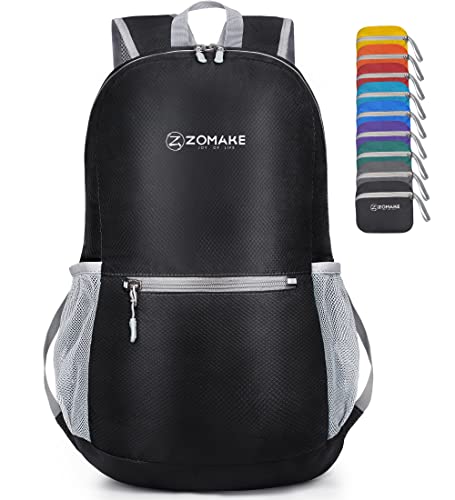
The ZOMAKE 20L Ultra Lightweight Hiking Backpack is a frameless, packable daypack engineered for day hikers, travelers, and campers who need functional gear storage without carrying excess base weight. Weighing roughly 0.49 pounds, this small pack fills the role of an auxiliary bag that stows out of the way until called into action. It works well for casual walks, day trips from a base camp, or as a secondary pack stashed in travel luggage for local outings.
With 20 liters of supported storage space, the pack accommodates basic day hiking gear including lightweight wind shells, trail maps, sun protection, and lunch supplies. Organization is divided between a main compartment with an internal partition, an exterior front zippered pouch for small electronics, and two open side sleeves tailored for water bottles or compact umbrellas. The layout keeps smaller items accessible on trail without requiring users to dig through the entire main bag.
Constructed from lightweight nylon, the pack shell offers both water-resistant and tear-resistant qualities for casual outdoor use. To reinforce high-wear areas, the manufacturer incorporates double-layered stitching along critical seams to help resist strain when the bag is filled. Hardware includes dual-direction SBS metal and resin zippers designed to slide smoothly without catching, as well as reflective safety strips on the front and sides to improve visibility during low-light trail conditions.
Packing and deploying the ZOMAKE 20L is straightforward, folding into a self-contained 6.7 by 6.7 by 1.97-inch pocket when not in use. When opened to its 17.71 by 5.5 by 10.6-inch profile, the shoulder straps adjust to fit various body shapes. Because it is completely unstructured, cleaning is simple, requiring just a quick wipe with a damp cloth before air drying and repacking into its compact travel square.
Hikers should keep in mind that this backpack is intentionally designed for ultralight convenience rather than heavy load hauling. Without an internal frame, rigid back panel, chest strap, or padded hip belt, carrying dense or sharp items can lead to discomfort against the back and strain on the shoulders. Additionally, while the nylon shell repels light drizzle and trail mist, it is not completely waterproof and will let moisture through during sustained or heavy rainfall.
For hikers, commuters, and travelers seeking an inexpensive, compact auxiliary pack, the ZOMAKE 20L provides solid utility and portability. It serves best as a lightweight companion for short trail routes, vacation day trips, and summit pushes where heavy suspension systems are unnecessary.
The ZOMAKE daypack provides a listed 20-liter volume while folding down into an ultra-compact 6.7 x 6.7 x 1.97-inch pouch. When expanded, its dimensions reach approximately 17.71 x 5.5 x 10.6 inches, giving day hikers adequate space for an extra fleece, snacks, trail guides, and hydration bottles.
Because the pack weighs just 0.485 pounds and compresses down to sandwich size, it fits inside larger multi-day backpacking packs, duffels, or glove compartments. Hikers can leave it packed away until reaching basecamp, then deploy it for quick side hikes and day exploration without carrying unnecessary base weight.
Built using tear-resistant and water-resistant nylon, the ZOMAKE 20L daypack is designed to handle common trail brush, light abrasions, and casual daily handling. Double-layered seam reinforcement at key connection points helps maintain structural integrity under standard packing stress.
The backpack relies on two-way SBS metal and resin zippers engineered for smooth pull operation. While the exterior nylon repels light spray and brief drizzles, it does not provide sealed seams, so valuable electronics or clothing should be protected inside waterproof pouches during wet weather.
Pros
- Compresses down to 4.5 x 3.9 x 7.8 inches inside its own pocket for easy storage
- Extremely lightweight at 0.8 pounds, making it an easy addition to luggage or larger packs
- Features a dedicated wet compartment to keep damp and dry items separated
- Built-in safety whistle on the strap adds trail-readiness for emergencies
Cons
- Frameless, ultralight design lacks a rigid back panel or padded hip belt for heavy loads
- IPX4 rating protects against light rain and splashes but is not fully waterproof in prolonged downpours
- Thin packable fabric provides minimal structure or protection against sharp, bulky gear
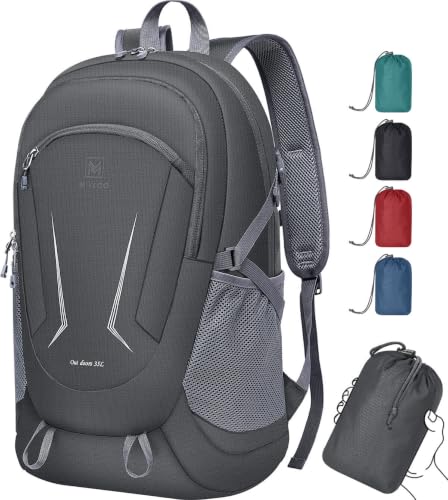
The MIYCOO 35L Ultralight Packable Backpack is a collapsible daypack designed primarily for day hikers, travelers, and campers who need functional gear storage without carrying extra base bulk. Weighing just 0.8 pounds, it serves effectively as a secondary daypack that can stow inside a larger multi-day pack or travel suitcase until needed at the trailhead or destination. It suits budget-minded day hikers, vacationers, and lightweight enthusiasts who prioritize high packability over heavy load-bearing support.
With an unfolded profile measuring 12.5 x 8.5 x 20.9 inches and a listed capacity of 35 liters, this daypack provides generous volume for lightweight layers, trail food, and daily essentials. Because it is an ultralight, frameless packable bag, it does not feature an internal frame, rigid back-panel suspension, or a padded weight-distributing hip belt. Carried weight rests on the shoulder straps, which means packing soft items along the back panel is essential for maintaining trail comfort during moderate outings.
The pack construction utilizes water-resistant fabric with an IPX4 rating, which is designed to withstand light rain and water splashes encountered on the trail. The manufacturer incorporates reinforced major stress points and upgraded zippers with interlocking anti-theft clips to secure compartments against accidental opening. For organization, the bag provides three primary compartments, highlighted by a dedicated wet pocket that isolates damp towels, wet shells, or sweaty clothing from the rest of your dry gear. An integrated survival whistle is molded directly into the strap buckle for emergency signaling.
Packing and storing the daypack is straightforward, as the entire bag folds into its own internal pocket to a compact size of 4.5 x 3.9 x 7.8 inches. When deployed, hikers can organize trail items across the three compartments, keeping quick-grab gear accessible and heavier items centered. To clean the pack, spot cleaning with a damp cloth and mild soap followed by thorough air drying is recommended to maintain fabric integrity and zipper functionality before refolding it for long-term storage.
Buyers should be aware of clear physical limitations inherent to collapsible daypacks. The IPX4 rating offers splash protection and light-weather resistance, but it is not completely waterproof and will not safeguard electronics during sustained heavy downpours or immersion. Furthermore, the absence of structural frame stays or ergonomic suspension means carrying dense, heavy gear like climbing hardware or large amounts of water can cause strap strain and discomfort over long trail miles.
For casual day hikes, side trips from a base camp, or carry-on travel where packing space is at a premium, the MIYCOO 35L Packable Daypack offers practical, lightweight utility. Hikers looking for an inexpensive, secondary summit pack or an everyday excursion bag will appreciate its low weight and wet-gear separation, provided their gear list stays within reasonable lightweight limits.
The MIYCOO daypack delivers a stated 35-liter capacity distributed across three separate zippered compartments. This layout allows hikers to segregate trail snacks, emergency supplies, and spare layers rather than dumping everything into a single main cavity.
A standout organizational feature is the built-in wet compartment, which creates a physical barrier to separate damp jackets, sweaty clothing, or wet swimwear from sensitive dry items. The anti-theft zipper clips allow pulls to be fastened together, reducing the likelihood of zippers sliding open under motion.
At an unloaded weight of 0.8 pounds, this pack is designed to fold away into an integrated inner pocket measuring 4.5 x 3.9 x 7.8 inches. This compact folded profile makes it easy to slip into travel luggage, a car glove box, or the bottom of an expedition pack for summit bids.
The exterior material holds an IPX4 splash-resistance rating, helping shield contents from light drizzle, road spray, or damp ground. Upgraded zippers and reinforced stitching at major stress points help support everyday light-duty trail and travel demands.

Pros
- Folds quickly into an integrated 4.5 x 3.9 x 7.8 inch pocket for effortless transport
- Integrated wet-and-dry compartment helps isolate damp gear from clean supplies
- Built-in shoulder-strap survival whistle and anti-theft zipper clips offer practical safety features
- Generous 35L storage volume across three distinct zipper compartments
Cons
- Frameless construction lacks rigid stays, load lifters, and a padded load-transferring hip belt
- IPX4 splash-resistant rating is not designed for prolonged torrential rain or submersion
- Best reserved for lighter loads since minimalist shoulder straps do not distribute heavy equipment weight
The MIYCOO Ultralight Packable Backpack is a 35L collapsible daypack designed for day hikes, travel excursions, and secondary gear hauling. Unfolding to 12.5 x 8.5 x 20.9 inches, this pack directly serves travelers who need a trail-ready bag inside their luggage, day hikers who prefer minimal base weight, and campers who need a lightweight summit pack once their primary camp is established.
On the trail, the 35-liter volume offers ample room for extra clothing layers, lunch, trail navigation, and light outdoor essentials spread across three separate compartments. Because this is a frameless, packable daypack, load management relies entirely on how you pack your gear and the fit of the shoulder straps. Without an internal frame or load-lifter adjustment, it performs best when carrying moderate, low-bulk loads on well-maintained paths, walking trails, and day outings rather than heavy backpacking payloads.
Construction centers around an IPX4-rated fabric designed to resist water splashes and light rain during sudden weather shifts or outdoor workouts. To support routine trail handling, the daypack features upgraded heavy-duty zippers and reinforcement across primary stress points. Practical safety elements are integrated into the exterior hardware, including a survival whistle molded directly into the shoulder strap buckle and anti-theft clips that link zipper pulls together to avoid accidental opening on busy transit routes.
Packing and everyday maintenance are straightforward thanks to the dedicated wet compartment, which isolates damp swimsuits, rain jackets, or muddy gear from dry interior layers. When the outing is complete, the entire backpack packs into its own internal pocket, shrinking to a compact 4.5 x 3.9 x 7.8 inches. This minimal footprint makes it easy to keep stowed in a carry-on suitcase, glove compartment, or larger expedition pack until needed.
Realistic limitations must be kept in mind regarding weight carry and severe weather. The frameless design means that packing dense, heavy equipment will place pressure directly on the unpadded or lightly padded shoulder straps, as there is no rigid frame sheet or structured hip belt to transfer weight to the hips. Furthermore, while the IPX4 fabric provides splash protection against light drizzle, it is not seam-sealed or submersible, meaning sensitive electronics and spare dry layers should still be protected inside dry bags during steady downpours.
For day hikers, budget-conscious travelers, and campers wanting an ultra-portable daypack that takes up almost no space when packed away, the MIYCOO 35L Daypack offers practical organization and dependable utility. Matching its use to moderate loads and mild-to-moderate trail conditions ensures you get the most value out of its packable design.
The MIYCOO daypack is engineered primarily for rapid deployment and compact storage. When fully collapsed, the backpack folds directly into its integrated inner pocket, resulting in a packed dimension of 4.5 x 3.9 x 7.8 inches that easily stows in luggage, duffel bags, or vehicle compartments.
Once unfolded, the pack expands to 12.5 x 8.5 x 20.9 inches, providing an instant 35-liter cargo volume. This makes it an effective auxiliary daypack for travelers who want to leave their main luggage at a hotel or basecamp while heading out for day hikes, sightseeing, or trail exploration.
Fabric durability and moisture management on the MIYCOO daypack are anchored by an IPX4 splash-resistance rating. This rating indicates protection against splashing water from any direction, making the pack suitable for light rain showers, damp trails, or sweaty workout sessions.
To support repeated trail use, the backpack features reinforced stitching at key stress points and heavy-duty upgraded zippers. However, because it is rated IPX4 rather than fully waterproof, hikers should use internal waterproof stuff sacks or pack liners to protect critical gear during severe rainstorms.
Pros
- Weighs only 0.6 pounds to keep bulk minimal on casual day hikes and walks
- Strap adjusts smoothly from 31 to 39.5 inches and clips to either side for versatile carry
- Dedicated shoulder pouch offers instant trail access to phones with screens under 7 inches
- Multiple organized compartments fit an iPad mini, power bank, keys, and small necessities
- Breathable strap and back-panel materials help prevent excessive heat buildup
Cons
- Side mesh pocket only fits slim bottles up to 2.4 inches in diameter, excluding standard 32-ounce trail bottles
- Compact capacity is strictly suited for essentials and cannot carry bulky layers or overnight gear
- Water-resistant fabric sheds light moisture but is not rated as fully waterproof in sustained downpours
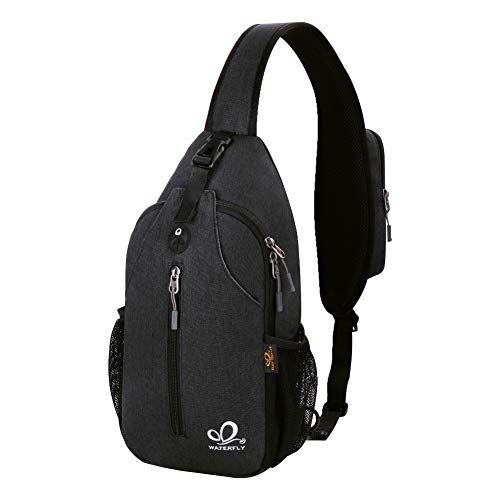
The WATERFLY Crossbody Sling Backpack is a compact, single-strap chest daypack designed for quick trail walks, minimalist day hiking, active travel, and everyday carry. Weighing just 0.6 pounds with dimensions of 7 x 3.5 x 15 inches, this lightweight pack provides an accessible, low-profile alternative to traditional two-strap daypacks. It best suits casual walkers, travelers, and day hikers who want hands-free storage for personal items, small electronics, and light hydration without carrying excess pack weight.
For trail use, this sling pack focuses on streamlined convenience rather than heavy load hauling. The main and secondary storage compartments are proportioned to fit compact gear such as an iPad mini, trail snacks, keys, personal tissues, and a portable power bank. Its exterior 6-inch side mesh pocket holds a slim water bottle up to 2.4 inches in diameter, making it functional for short walks where a basic drink is needed. Because it is built for quick outings, it keeps everyday essentials organized without adding bulk to your stride.
The build quality incorporates water-resistant exterior fabric intended to shed light mist, incidental splashes, and brief drizzles encountered on the trail. Both the single shoulder strap and the back panel utilize breathable materials to help manage warmth during sunny excursions. Practical exterior features include a sturdy front buckle for the quick-drop pocket, smooth-gliding zippers, durable D-ring attachment hardware, and a discreet hidden earphone hole on the front face for easy audio cable routing.
Adjusting the sling pack to your preferred carrying style is straightforward thanks to its three-point lower hardware design. Hikers can clip the reversible shoulder strap into either the left or right D-ring, facilitating comfortable cross-body wear across either shoulder or over the chest. The strap itself adjusts from 31 inches to 39.5 inches in length to fit various torso sizes, and it features an integrated 3.5 x 1.5 x 7.5 inch phone pocket that keeps smartphones with screens up to 7 inches readily accessible while on the move.
Users should be aware of realistic limitations inherent to a compact sling design. The side bottle pocket is restricted to 2.4 inches in diameter, meaning standard wide-mouth hiking bottles or insulated flasks will not fit. Furthermore, the 15-inch height cannot accommodate standard laptops, bulky cold-weather jackets, or extensive safety gear, and the water-resistant fabric does not replace a fully sealed dry bag or heavy-duty rain cover during serious trail downpours.
For hikers, commuters, and travelers seeking an affordable, ultralight cross-body daypack to carry everyday essentials, a smartphone, and a compact water bottle, the WATERFLY Sling Bag represents strong practical value. Those planning full-day backcountry excursions or multi-day backpacking trips will still need a larger, dedicated internal-frame pack to handle extra gear and full-sized hydration reservoirs.
The WATERFLY Crossbody Sling Backpack provides an adjustable fit range with a shoulder strap that extends from 31 inches to 39.5 inches. This adjustment range allows users to customize how closely the bag rides against the chest or back across varying body sizes.
Versatility is enhanced by three separate D-rings positioned on the lower corners of the bag. Users can quickly unclip and switch the strap between the left and right sides to avoid shoulder fatigue on extended strolls. Additionally, the strap-mounted phone pocket measures 3.5 x 1.5 x 7.5 inches, comfortably holding phones with screens up to 7 inches right on the chest.
Internal and external organization on the WATERFLY Sling Bag is structured within its 7 x 3.5 x 15 inch frame. The front storage configuration includes a zippered pocket and a buckle-fastened drop pocket suitable for an iPad mini, power bank, tissues, makeup, or trail passes.
Inside the main compartment, several divided sleeves keep small items such as keys and cords from shifting. A discreet hidden earphone port on the front exterior allows corded headphones to connect directly to devices stored securely inside, keeping gear neatly contained while you walk.
Hydration on the WATERFLY Sling Daypack is managed via an exterior side mesh pocket measuring 6 inches in height. This pocket is engineered to hold bottles with a diameter of up to 2.4 inches, accommodating standard disposable water bottles or narrow reusable flasks.
The bag does not feature an internal hydration bladder sleeve or hose port, as it is intentionally built for minimalist outings. Hikers who prefer larger insulated flasks or hydration bladders will need to carry them separately, as the side mesh is optimized exclusively for slim beverage containers.

Pros
- Remarkably low pack weight of 1.15 ounces makes it effortless to stash in a pocket or primary pack.
- Diamond ripstop nylon construction with bartack stitching supports substantial carrying loads up to 66 pounds.
- Integrated pouch design means the storage bag cannot be misplaced while on the trail or traveling.
- Durable YKK zipper provides smooth, dependable closure for main compartment contents.
Cons
- Lacks internal framing, foam back panel padding, and ventilation channels for hot-weather back cooling.
- No sternum strap, hip belt, or external water bottle pockets for dedicated trail load-management.
- Ultra-thin 0.05mm fabric offers minimal interior cushioning against bulky or sharp-cornered objects.
The Nanobag Daypack 16L is a frameless, ultralight packable backpack engineered for minimalist day trips, travel side adventures, and emergency gear hauling. Weighing just 1.15 ounces (0.066 pounds), it targets backpackers who need a summit bag stashed inside a multi-day pack, travelers requiring a secondary day bag, and casual day hikers who want a practically weightless carry option for essentials.
Offering 16 liters of internal storage within a 6 x 14 x 18-inch footprint, this daypack accommodates compact layers, snacks, and small personal gear. The shoulder straps measure 27 inches in length and feature a wide design that spreads contact area over your shoulders. Because this is a minimalist packable sack, it does not include an adjustable torso frame, sternum strap, load lifters, or padded hip belt, meaning all gear weight rests entirely on the shoulder straps.
Constructed from ultra-thin 0.05mm diamond ripstop nylon, the pack relies on reinforced bartack stitching at critical stress points to handle loads rated up to 66 pounds. A durable YKK zipper secures the main compartment against accidental spills. For weather protection, the exterior fabric features a PFC-free water-repellent finish that manages light rain and morning mist, though it is not a fully sealed waterproof dry bag.
Stashing the Nanobag requires no structured folding routine; the soft fabric easily stuffs directly into its attached internal pouch within seconds. When compressed, it fits into a jacket pocket, glove compartment, or carry-on corner without taking up measurable space. Cleaning involves gentle hand washing with mild soap and air drying to maintain the integrity of the ripstop fabric and water-repellent surface.
Potential buyers should recognize that this ultralight pack provides zero structural padding or back ventilation. Carrying hard, sharp, or heavy items can poke through the thin 0.05mm fabric against your back, requiring deliberate interior packing with soft clothing near the back panel. Additionally, the bag omits exterior water bottle sleeves and hydration bladder ports, requiring all water containers and gear to sit inside the single main zippered compartment.
For hikers and travelers seeking maximum portability without base weight penalties, the Nanobag 16L provides an exceptionally compact solution. If you need a secondary daypack for quick excursions away from basecamp or an everyday travel tote that slips into your pocket, this featherweight pack delivers practical convenience at a manageable size.
The Nanobag Daypack is constructed from 0.05mm diamond ripstop nylon fabric designed to balance minimal weight with high tensile performance. The diamond weave structure helps prevent small punctures from spreading across the surface.
Reinforced bartack stitching is placed at key structural stress points where the 27-inch shoulder straps meet the pack body. According to manufacturer specifications, this build enables the pack to support loads up to 66 pounds, while an authentic YKK zipper provides consistent track closure without snagging.
The standout feature of this 16-liter daypack is its ability to pack away in seconds directly into its attached interior pouch. Users do not need to follow complicated folding patterns; simply stuffing the soft nylon body into the pouch compresses it to palm size.
At 1.15 ounces, the stowed pouch takes up virtually zero pack space inside a multi-day trekking pack, luggage pocket, or glove compartment. This makes it an ideal supplementary bag when you want to leave your primary backpack at camp and carry only lunch and rain gear on short trail spurs.
Understanding Daypack Backpacks: Design, Capacity, and Carry Mechanics
A daypack functions as a lightweight, compact personal carrier designed specifically for outings that last a single day or less. Unlike expedition rucksacks engineered to haul tents and sleeping systems for multi-day treks, a daypack emphasizes mobility, simple access, and moderate volume. Grasping the engineering behind these bags enables travelers, commuters, and hikers to select the proper profile for their daily gear requirements.
The Fundamental Definition: What Makes a Pack a Daypack?
At its core, a daypack backpack is defined by its intentional scale and lightweight architecture. The bag provides just enough storage space for a single day of supplies, including hydration, a lunch or energy snacks, weather-protective layers, and essential small personal gear. Because users do not need to transport heavy overnight camp equipment, daypacks intentionally eliminate massive aluminum support stays and dense hip suspension systems. This design choice keeps the overall bag light, compact, and nimble across changing environments.
Most daypacks utilize a direct panel-loading or zippered clamshell opening rather than complex top-loading cinch collars with floating lids. This zip-around configuration grants rapid visual access to your contents without forcing you to dig through vertical equipment stacks. The exterior profile remains narrow enough to match the width of your torso, preventing the bag from snagging on tight tree branches, subway turnstiles, or aircraft aisle seats. By focusing on rapid daily access, these bags bridge the gap between small waist pouches and heavy outdoor expedition gear.
Capacity Spectrum: Decoding Liter Volumes from 15L to 45L
Internal volume represents the most critical metric when evaluating daypack utility. Compact models ranging from 15 to 20 liters cater to minimalist day outings, trail runs, and brief city strolls. Options such as the Nanobag 16L or the ZOMAKE 20L hold a compact windbreaker, a water bottle, sunglasses, and personal electronics without adding bulk. Because these compact shells feature modest depths, they remain close to your back and maintain an agile center of gravity during active movement.
Mid-range capacities between 22 and 30 liters offer greater versatility for variable weather hikes and full campus days. This volume bracket accommodates an insulated mid-layer jacket, trail food, an umbrella, a paperback or tablet, and standard tech chargers. Hikers visiting unpredictable mountain environments often favor this tier because it provides reserve space for rain shells and basic emergency supplies. For daily transit, this capacity easily swallows gym apparel alongside everyday stationery without bursting along the seams.
High-capacity daypacks extending from 35 to 45 liters, such as the Bymontin 45L or the expandable MATEIN Weekender, border on travel duffle utility. These larger packs accommodate multi-layer clothing changes, toiletries, and multiple electronic devices for full weekend getaways or long-haul travel. While they hold substantial volume, users must pack them conscientiously to prevent excessive depth from pulling backward against the shoulders. Understanding your typical gear list prevents buying excess volume that simply encourages overpacking.
Ultralight Packable Bags Versus Structured Daily Carriers
The daypack category contains a distinct functional division between ultra-collapsible packable bags and rigid structured daypacks. Ultralight packable daypacks, including models from WATERFLY, SUIKIHUM, and DOVO, are manufactured from thin, flexible synthetics that fold down into internal pouches roughly the size of a sandwich. These packable carriers weigh only a few ounces, allowing travelers to stow them inside a primary suitcase or trunk until arriving at their destination. Once unpacked, they serve as convenient secondary day bags for city excursions, grocery errands, or short summit walks.
However, packable bags feature clear structural compromises that buyers must understand. Because they must compress into miniature storage pouches, they lack internal plastic frame sheets, stiff foam back padding, and rigid base panels. If you load loose, hard items like water bottle caps, cameras, or bulky chargers against the unpadded rear panel, those objects can press uncomfortably against your spine. Users must pack soft garments against the back panel to create artificial cushioning when carrying irregular objects.
In contrast, traditional structured daypacks feature dense EVA back panels, molded airflow channels, and reinforced base seams. These structured designs maintain their shape even when empty, providing consistent load transfer and superior device protection. Unlike massive framed hiking backpacks built strictly for heavy multi-day trail weight, structured daypacks rely on lightweight internal foam panels rather than rigid metallic perimeter stays. This design philosophy delivers adequate everyday spinal protection while maintaining a low tare weight.
Textile Construction: Ripstop Nylon, Polyester, and Weather Coatings
Fabric durability determines how well a daypack survives outdoor abrasion, transit friction, and sudden storms. Most packable and lightweight daypacks rely on high-tensile ripstop nylon or densely woven polyester fabrics. Ripstop fabrics incorporate reinforcing grid patterns woven directly into the synthetic matrix, preventing small puncture holes from turning into running tears. High-density nylon offers exceptional strength-to-weight performance, making it the premier choice for featherweight packs that endure sharp rock contact.
Weather protection on daypacks typically relies on durable water repellent (DWR) surface treatments combined with internal polyurethane (PU) backings. This multi-layer barrier causes light rain and road spray to bead up on the exterior fabric rather than soaking through into stored clothing. Certain outdoor models, such as the MIYCOO packable series, reference IPX4 water resistance, indicating dependable protection against splashes and moderate downpours. However, standard daypack fabrics are water-resistant rather than entirely submersible, as water can eventually seep through needle holes in unsealed seams during torrential downpours.
Hardware quality is equally critical when evaluating overall pack longevity. High-grade SBS or YKK reverse-coil zippers prevent dirt from jamming the internal slider mechanisms during trail use. Stress points, including the upper strap junction and side bottle pocket seams, require reinforced bartack stitching to resist pulling apart under tension. Choosing durable textiles and smooth hardware ensures the bag survives repetitive daily cycles without blown seams or seized sliders.
Harness Geometry, Shoulder Straps, and Load Stability
Carrying comfort in a daypack depends primarily on shoulder harness geometry and weight distribution. Because daypacks generally omit heavy padded hip belts, the shoulder straps bear almost the entirety of the suspended load. Quality daypacks incorporate wide, ergonomically contoured straps featuring breathable open-cell mesh linings. The open mesh allows trapped body heat and moisture to vent away from your collarbones, reducing skin friction during warm summer walks.
Sternum straps play an essential stabilizing role on mid-size and active daypacks. By fastening the chest buckle across your mid-torso, you pull the shoulder straps slightly inward, preventing them from slipping outward off your shoulders during brisk walking or cycling. Many outdoor models integrate a small safety whistle directly into the sternum strap buckle, providing a reliable signaling tool for outdoor excursions. Proper strap adjustment keeps the pack snug against your upper back, eliminating distracting side-to-side sway.
Pack stability also relies on intentional weight positioning inside the main cavity. Placing dense, heavy items close to your spine and high between your shoulder blades prevents backward leverage that strains the trapezius muscles. When heavy items sit loose at the bottom outer edge of a pack, they create torque that pulls on your neck and shoulders. Cinching external side compression straps, when available, stabilizes internal gear and maintains a balanced center of gravity.
Storage Architecture: Internal Dividers, Wet Pockets, and Bottle Sleeves
Pocket organization in a daypack requires a careful balance between specialized compartments and open volume. Overly partitioned daypacks often suffer from pocket blowout, where stiff internal dividers eat into the main compartment depth. A well-designed daypack typically features a spacious central bucket complemented by a quick-access top or front slash pocket for keys, wallets, and transit cards. This balance ensures you can pack bulky outer jackets without fighting rigid fabric walls.
Dedicated wet and dry compartments provide immense utility for active trail users and commuters. Bags like the MIYCOO daypack incorporate an internal waterproof barrier pocket designed to segregate damp gym apparel, swimsuits, or wet rain jackets from dry paperwork and electronics. This compartmentalization prevents moisture migration throughout the bag after sudden rain showers or intense workout sessions. Keeping damp gear isolated maintains interior hygiene and protects sensitive contents.
External hydration storage remains a staple feature across virtually all daypack configurations. Elastic mesh side pockets allow immediate access to water bottles without requiring you to unzip the primary storage compartment. When you need prolonged thermal retention for trail beverages, specialized hiking backpack cooler options offer dedicated insulated cavities that keep refreshments chilled on hot paths. Standard daypack side pockets work best when deep enough to retain bottles securely when you lean forward to tie your shoes.
Travel Integration and Airline Under-Seat Compatibility
Daypacks serve as exceptional travel companions because their compact footprints easily satisfy airline personal item guidelines. Most commercial airlines maintain personal item limits around 18 x 14 x 8 inches, designed to fit beneath the seat in front of you. Unstructured and mid-sized daypacks between 16 and 25 liters fit comfortably within these spatial boundaries when not excessively overstuffed. Keeping your pack beneath the seat ensures immediate access to headphones, medication, and reading material throughout flights.
Travelers must nevertheless watch out for dimensional bulging when packing flexible, soft-sided daypacks. Because lightweight nylon expands readily, cramming extra sweaters and souvenirs into a 35-liter or 45-liter pack can cause its depth to swell past airline sizer frames. When using expandable travel daypacks like the MATEIN Weekender, utilizing built-in exterior compression straps helps compress the pack down to compliant dimensions. Additionally, rear luggage trolley pass-through sleeves allow you to dock the daypack securely over rolling suitcase handles, saving shoulder effort through long airport concourses.
Technical Maintenance: Cleaning Coated Fabrics and Protecting Zippers
Proper cleaning and routine maintenance preserve the weather resistance and structural seams of your daypack for years of reliable service. Technical synthetic fabrics should never be washed in residential washing machines with mechanical agitators. Aggressive agitation and hot water can degrade internal polyurethane waterproofing laminates, causing them to peel or become sticky over time. Instead, hand-clean dirty fabric panels using lukewarm water, a non-detergent mild soap, and a soft nylon bristle brush.
Drying your daypack correctly is equally crucial for long-term textile integrity. Never place synthetic daypacks inside high-heat tumble dryers, as hot air can warp foam strap cores and melt thin synthetic coatings. Hang the pack upside down by its bottom grab loop in a shaded, well-ventilated space until all internal seams are completely dry. Storing a daypack while damp can induce mildew growth and weaken internal stitching, while regular zipper clearing ensures smooth coil operation across countless adventures.
Choosing the Right Daypack for Your Daily Routine
Selecting the optimal daypack ultimately comes down to matching pack capacity, structure, and weight to your primary carrying environment. Outdoor enthusiasts who prioritize trail agility generally favor lightweight packable designs with breathable harness straps and quick bottle access. Urban commuters and mobile professionals frequently benefit from structured daypacks featuring padded electronics compartments, self-standing flat bottoms, and subdued exterior styling. Evaluating your daily carry items before buying ensures your pack delivers lasting comfort without unnecessary bulk.
By understanding how volume, fabric construction, and harness ergonomics interact, you can invest in a pack that effortlessly supports your active lifestyle. A dependable daypack keeps your gear organized, shields your belongings from unpredictable weather, and sits comfortably across your shoulders through every mile. Focus on high-quality materials and practical pocket architecture to enjoy a reliable carry experience on every journey.







Write Your Review
No reviews yet. Be the first to share your experience!