


Long days on rugged footpaths demand apparel that manages sweat, resists sudden weather shifts, and prevents friction under heavy pack harnesses. Knowing what to wear for backpacking ensures hikers stay comfortable whether navigating steep mountain switchbacks or setting up camp in damp conditions. Bulky cotton garments quickly trap perspiration against the skin, while lightweight synthetic weaves promote rapid evaporation and unrestricted mobility. Balancing thermal regulation with skin protection keeps backpackers moving steadily without unnecessary mid-trail wardrobe adjustments.
A reliable trail kit relies on moisture-wicking synthetic fabrics, functional lower-body apparel, and low-profile waistbands that avoid painful pinching beneath structured hip belts. Hikers seeking dependable gear often pair lightweight apparel like TBMPOY Women’s Hiking Cargo Pants Lightweight with breathable base layers to maintain trail comfort across varying elevations. Choosing the right fabrics also complements your load-carrying system, whether you haul an integrated external frame or a specialized framed trail pack built for heavy multi-day expeditions. Careful garment selection minimizes trail chafing, manages internal body heat, and provides dependable barrier protection against trailside brush and sudden showers.
Pros
- Four-way stretch material moves naturally during steep ascents, climbing, and trail scrambling
- Six dedicated pockets, including secure zippered thigh pockets, keep trail essentials organized
- Water-resistant and quick-drying fabric handles light splashes, sweat, and trail dust cleanly
- Elastic waistband with built-in buckle adjustment allows simple on-trail fit adjustments
Cons
- Water-resistant fabric is not designed to replace full waterproof rain pants in heavy downpours
- Hook-and-loop rear pocket closures require careful washing to avoid snagging delicate synthetic layers
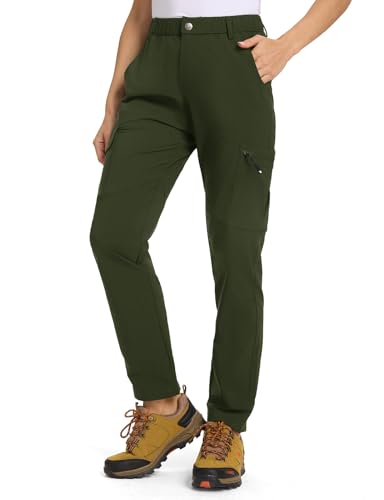
The TBMPOY Women's Hiking Cargo Pants are lightweight, quick-drying outdoor trousers designed for women who need functional storage and unhindered movement on the trail. Suited for day hikers, backpackers, campers, and outdoor travelers, these pants provide an adaptable lower-body layer that bridges everyday utility with outdoor trail requirements. The medium size in Army Green offers a practical aesthetic that transitions smoothly from rugged trailheads to travel itineraries.
On the trail, mobility and moisture management play critical roles in overall comfort. The product description highlights a four-way stretch fabric engineered to flex during active movements such as climbing, rock scrambling, and steep trail ascents without tearing or feeling restrictive. Because the material is lightweight and quick-drying, it helps wick moisture away from the skin, while water-resistant properties allow light trail dust or surface splashes to be wiped off easily during day hikes or backpacking trips.
Construction details focus on practical trail organization and secure wear. The pants incorporate a six-pocket layout, including two standard slant hand pockets, two zippered cargo pockets positioned on the thighs, and two rear pockets with hook-and-loop closures. This arrangement provides dedicated space for trail essentials like maps, pocket knives, or small accessories. An elastic waistband with an integrated buckle closure assists in dialing in a secure fit, helping the pants stay in place when carrying gear in your pockets or wearing a backpack with a hip belt.
Versatility extends to changing weather and layering needs. The cut offers sufficient room to layer comfortably over thermal leggings or base layers in cooler temperatures, making them suitable across multiple seasons. Routine care is straightforward because the synthetic fabric is designed to wash well and dry rapidly, an advantageous characteristic for overnight backpacking trips or extended travel where access to laundry facilities is limited.
While these pants offer useful weather defense, there are realistic limitations to keep in mind. The fabric is water-resistant rather than completely waterproof, meaning it will shed light splashes and mist but is not intended to replace dedicated hardshell rain gear during heavy, persistent downpours. Additionally, hook-and-loop fasteners on the back pockets require care during laundering to prevent snagging against delicate synthetic technical layers.
For hikers, travelers, and outdoor enthusiasts seeking an affordable, multi-pocket trail pant with flexible mobility and quick-dry performance, the TBMPOY Women's Hiking Cargo Pants represent a solid, functional addition to a hiking kit. They deliver reliable everyday performance for weekend day hikes, camping chores, and travel without unnecessary complexity.
The TBMPOY Women's Hiking Cargo Pants feature a dedicated six-pocket layout designed for practical trail organization. Two standard slant pockets offer quick access for everyday items at the hips.
Two zippered cargo pockets on the thighs provide secure containment for high-value items like keys, compact trail guides, or pocket tools while hiking. Two additional rear pockets feature hook-and-loop flaps to keep flat gear tucked away securely.
Constructed with four-way stretch fabric, these pants adapt to varied body positions during active hiking, rock scrambling, and campsite movement. The elastic waistband pairs with an integrated buckle to allow quick adjustments to the waistline.
The cut provides enough room to wear the pants over thermal baselayers or lightweight tights, making them adaptable for early morning alpine starts or cooler seasonal transitions.
The lightweight synthetic material is treated for water and stain resistance, allowing light mud, dust, and damp brush to be brushed or wiped off easily. Moisture-wicking properties help disperse sweat to keep skin comfortable during extended outings.
The fabric is designed to be opaque and tear-resistant under normal hiking and camping conditions, while laundering cleanly and drying quickly between trail days.
Essential Clothing Strategies and Gear Principles for Backpacking
Selecting the proper trail wardrobe requires understanding how body heat, physical exertion, and fluctuating weather interact across backcountry terrain. Carrying a loaded pack introduces continuous pressure across the shoulders, back, and hips, turning heavy or ill-fitting clothing into painful hot spots. A systematic wardrobe strategy prevents sweat accumulation, shields delicate skin from environmental hazards, and keeps energy focused on navigating the path ahead.
The Fundamental Three-Layer System for Wilderness Trails
The three-layer system forms the operational backbone of backcountry comfort, allowing hikers to adapt dynamically to shifting exertion levels and weather fronts. The base layer rests directly against the skin, engineered specifically to pull sweat away from pores before moisture causes chilling evaporation. Above the base, a mid-layer traps escaping body heat within dead air pockets to insulate the core during resting pauses or chilly morning departures. Finally, an outer shell serves as an armor against biting winds, heavy downpours, and abrasive brush, sealing the internal microclimate against outside moisture.
Backpackers frequently make the mistake of wearing their entire insulation system while climbing steep inclines, resulting in severe overheating and sweat saturation. Starting a morning hike slightly cool prevents excessive moisture buildup within the base layer, preserving insulation value for later stops. As soon as hikers stop to rest or filter water, putting on a fleece or synthetic puffy prevents rapid temperature loss. This modular approach allows immediate adjustments without stopping to reorganize an entire loaded pack.
Fabric Science: Selecting Synthetics, Merino Wool, and Avoiding Cotton
Fabric construction dictates how clothing handles moisture, body heat, and extended trail friction. The classic outdoor rule avoiding cotton stems from the hydrophilic nature of natural cellulose fibers, which hold substantial amounts of water. Saturated cotton clings to skin, sapping vital body heat up to twenty-five times faster than dry air and creating severe hypothermia risks even in mild temperatures. In contrast, synthetic polymers such as polyester and nylon possess hydrophobic properties that repel liquid water and speed up evaporation rates.
Merino wool provides a natural alternative to synthetics, offering exceptional thermal regulation across a wide temperature spectrum. The complex keratin fibers of merino absorb moisture vapor into their inner cores while keeping the exterior surface dry to the touch, retaining warming capabilities even when damp. Merino also naturally resists microbial growth, significantly reducing odors during multi-day expeditions where laundry facilities do not exist. Synthetics remain superior for mechanical abrasion resistance and rapid drying times, making a blended system of synthetic pants and wool tops an effective trail combination.
Lower-Body Apparel: Trail Pants, Shorts, and Waistband Interface
Choosing between full-length trail trousers and hiking shorts depends heavily on route terrain, trailside brush, and bug density. Shorts offer air ventilation during humid, sweltering climbs, but leave calves vulnerable to thorny brambles, stinging nettles, and tick bites. Full-length pants constructed from lightweight, woven nylon or polyester provide continuous mechanical protection and essential barrier defense against intense alpine sun exposure. Modern trail designs like the TBMPOY Women’s Hiking Cargo Pants Lightweight combine water-resistant coatings with 4-way stretch fabric, allowing complete freedom of movement during steep scrambles.
The interface between trouser waistbands and backpack hip belts represents one of the most critical comfort points on any backcountry trip. Rigid belts, metal buckles, or bulky rear denim seams press directly into the lumbar spine and iliac crest under the clamping force of a loaded pack harness. Choosing pants with low-profile, integrated elastic waistbands or flat closures eliminates painful pressure points and prevents chafing during long trekking days. Hikers seeking durable options can explore lightweight hiking trousers that prioritize articulated knees and flat-seam construction.
Fabric durability in the seat and knees ensures garments withstand abrasive granite rest stops and brush-heavy trail corridors without tearing. For individuals requiring targeted joint mobility or reinforced flex zones, integrating specialized trail pants can improve step clearance and downhill knee tracking. A water-resistant surface treatment sheds light mist and dew from overgrown trail plants, keeping leg layers dry without demanding a premature switch to rigid waterproof rain pants.
Pocket Placement and On-Trail Utility Under a Backpack Harness
Traditional hand pockets on casual pants quickly become inaccessible once a backpack hip belt is buckled and tensioned securely across the pelvic bones. When a heavy pack belt covers front pockets, reaching for pocket knives, lip balm, or snacks requires awkwardly loosening the suspension system. Purpose-built hiking cargo pants solve this issue by placing low-profile zippered pockets along the mid-to-lower thighs, positioning gear well below the bottom edge of the pack belt.
Zippered security pockets prevent small navigation tools, compasses, or smartphones from slipping out during steep scrambles or river crossings. The TBMPOY cargo pants feature a multi-pocket arrangement, including zippered leg compartments and velcro-secured back pockets, providing versatile gear storage while hiking. Keeping small essential items organized in accessible pockets reduces the need to drop a heavy pack repeatedly just to access quick-grab trail necessities. Distributing pocket weight evenly along the thighs also avoids awkward swinging motions that disrupt natural hiking cadence.
Upper-Body Tops and Harness Friction Management
Upper-body trail tops must endure continuous rubbing from padded shoulder harnesses, sternum straps, and back panels. Lightweight synthetic or merino wool shirts with off-shoulder or flatlock seams prevent painful chafing where pack straps concentrate direct downward pressure. Sleeveless tanks leave bare skin exposed to coarse shoulder strap foam, which quickly abrades shoulders and collarbones over repeated miles. Short-sleeve crew shirts or long-sleeve sun hoodies provide a critical protective fabric barrier between sweaty skin and pack suspension components.
Long-sleeve sun hoodies constructed from ultralight polyester have become a preferred choice for hikers navigating exposed ridges and high-altitude passes. The integrated hood shields the neck and ears from intense ultraviolet radiation without trapping excessive heat around the head. A quarter-zip neckline allows quick manual ventilation when grinding up demanding switchbacks under full sun. Choosing shirts with antimicrobial yarn treatments or natural wool blends keeps fabric smelling fresh when worn continuously across consecutive days on the trail.
Inclement Weather Protection: Wind, Rain, and Temperature Drops
Storms can roll into mountain environments with little warning, rapidly turning pleasant hikes into hypothermia hazards. A dedicated waterproof rain jacket featuring a breathable membrane and fully taped seams forms a non-negotiable component of every backpacking kit. While water-resistant windbreakers work well against light breezes, they quickly wet out during prolonged downpours, allowing moisture to reach insulating mid-layers. Rain jackets equipped with underarm pit zips provide essential mechanical airflow, releasing humid body vapor during active climbing without letting rain inside.
Waterproof rain pants provide crucial warmth and rain defense when wind-driven downpours drop ambient temperatures into the low forties. Hikers often delay putting on rain pants until their primary hiking pants are already soaked, compromising their insulation strategy. Deploying rain gear early shields clothing from wind chill and keeps lower-body layers dry before moisture reaches the skin. Pairing durable water-resistant hiking pants with packable rain shells provides a complete defensive barrier against severe backcountry weather swings.
Footwear, Socks, and Friction Reduction for Extended Mileage
Footwear and sock selection directly impacts trail endurance, as blisters and damp feet can sideline a backpacker faster than steep terrain. High-density merino wool or synthetic socks cushion the soles, absorb repetitive heel impacts, and wick sweat away from skin folds. Avoiding cotton socks is imperative, as moist cotton fibers bunch up, lose cushioning, and generate intense friction against the heel and toes. Many experienced backpackers carry two to three pairs of dedicated hiking socks, rotating a clean, dry pair each morning while airing out the previous pair on the exterior of the pack.
Pairing trail socks with breathable trail running shoes or supportive mid-cut hiking boots depends on pack weight and terrain roughness. Modern lightweight trail runners allow water to drain rapidly after creek crossings, drying much faster than heavy waterproof leather boots. In muddy or rocky alpine environments, mid-cut boots provide extra ankle shielding and stability against stone bruises. Regardless of shoe choice, ensuring adequate toe box room accommodates natural foot swelling that occurs after hauling heavy loads across ten or more miles.
Headwear, Gloves, and Extremity Temperature Regulation
Extremities act as primary heat regulators, making compact accessories essential for on-trail thermal management. A wide-brim hat or lightweight ball cap shields eyes and facial skin from glare, reducing squinting fatigue and preventing sun exhaustion. A versatile tubular neck gaiter protects the throat and back of the neck from sunburn while offering quick dust protection during windy trail stretches. When navigating chilly morning departures or alpine passes, deploying these small accessories allows rapid temperature calibration without shedding core layers.
As dusk settles over camp, body heat dissipates quickly once vigorous hiking movements cease. Packing a lightweight fleece beanie ensures vital cranial warmth during evening meal preparation and chilly stargazing sessions. A pair of wind-resistant fleece liner gloves shields fingers from biting winds when handling trekking poles or pitching tent stakes in frosty conditions. These compact accessories weigh very little inside a pack pocket, yet they deliver substantial comfort gains when mountain conditions shift rapidly.
Camp Clothing Transitions and Sleep Wear Protocols
Maintaining strict separation between hiking apparel and dedicated sleepwear protects backcountry health and sleeping bag performance. Garments worn during the hiking day accumulate sweat salts, body oils, and trail grime that reduce the loft and warming ability of sleeping bag insulation. As soon as camp is established, changing out of damp trail clothes into a completely dry base layer halts shivering and signals the body to relax. Storing dedicated sleep clothing inside a silicone-coated dry sack guarantees that sleeping layers remain dry even if rain breaches pack seams during transit.
Camp footwear provides welcome relief for tired feet after hours of confinement within structured trail shoes. Lightweight sandals or breathable foam clogs allow trail socks and shoes to air dry while shielding bare feet from sharp camp stones and pine needles. If nighttime temperatures plunge near freezing, slipping into dry thermal leggings, wool sleeping socks, and a lightweight insulated jacket ensures a warm, uninterrupted night of recovery sleep. Resisting the temptation to hike in sleep layers preserves their freshness and insulating integrity throughout multi-day expeditions.
Apparel Care, Washing Protocols, and Field Durability
Proper maintenance of technical trail garments preserves their breathability, elasticity, and water-shedding properties for years of reliable use. Machine washing technical apparel in standard household detergents with heavy fragrances or fabric softeners clogs synthetic fibers and strips durable water repellent treatments. Instead, hand washing or gentle machine cycles using specialized non-detergent technical cleansers removes embedded dirt without degrading protective water-resistant coatings. Air drying garments out of direct harsh sunlight prevents synthetic elastane and nylon fibers from warping or losing structural stretch.
Carrying a compact repair kit containing adhesive nylon patches and durable thread allows quick field fixes for minor fabric snags and torn seams. If brush tears a small hole in a cargo pocket or rain shell, applying an adhesive fabric patch immediately prevents the rip from expanding under trail tension. Periodically inspecting zipper tracks for trapped dirt and clearing grit with a soft brush ensures sliders move smoothly without derailing. Treating technical clothing with care guarantees that your trail wardrobe continues performing reliably across countless mountain adventures.
Seasonal Weather Adaptations and Trail Environment Adjustments
Backpacking through desert canyons requires vastly different clothing strategies than navigating high alpine passes or dense temperate rainforests. In arid environments, loose-fitting, light-colored long sleeves maximize airflow while reflecting solar radiation away from the body. High alpine routes demand windproof outer layers and dense fleece mid-layers to counteract rapid temperature drops when afternoon storm clouds obscure the sun. Understanding the specific microclimate of your destination allows you to tailor your clothing list without carrying redundant, heavy garments.
Humid forest corridors present distinct challenges where sweat cannot easily evaporate from skin surfaces, making hyper-breathable mesh synthetics essential. In these moisture-heavy environments, quick-drying capability takes priority over water resistance, as sweat inevitably dampens interior clothing surfaces. Backpackers traveling through buggy wetlands benefit from tightly woven synthetic fabrics that prevent mosquito and fly bites without relying heavily on chemical insect repellents. Selecting garments built for specific environmental hurdles ensures you stay comfortable regardless of regional trail conditions.
Building an effective trail wardrobe comes down to understanding the functional balance between moisture management, skin protection, and harness compatibility. Rather than bringing excess cotton clothing, investing in versatile, quick-drying synthetics and low-profile trousers keeps overall pack weight light while maximizing trail comfort. Paying close attention to how waistband seams and shoulder straps interface with your pack eliminates painful trail friction before it begins. With a reliable layering system and functional apparel tailored to the terrain, backpackers can tackle challenging wilderness routes with confidence in any weather.






Write Your Review
No reviews yet. Be the first to share your experience!