


Staring down the narrow luggage sizer at an airport departure gate or attempting to slide a packed commuter bag beneath a crowded train seat often turns into an exercise in spatial frustration. Determining how many inches is a backpack before loading your electronics and daily essentials makes all the difference between seamless transit and unexpected gate-check fees. Standard everyday carry bags, student rucksacks, and multi-day travel packs vary dramatically in their external geometry, even when their listed storage volumes seem nearly identical. Understanding the relationship between exterior height, width, and depth helps ensure your personal gear fits safely beneath airline seats and remains comfortable across long walking commutes.
While capacity is frequently advertised in liters, physical inches dictate whether a pack slides cleanly into an office locker, satisfies regional commuter constraints, or protects a widescreen laptop without crushing its corners. Evaluating exterior dimensions alongside internal organization helps commuters find balanced, affordable daypack options that carry daily tech securely without unnecessary bulk. Exploring how manufacturers calculate exterior height, width, and depth empowers you to select a pack engineered specifically for your torso length and daily cargo requirements.


Everyday Carry and Travel Backpack Sizing in Inches
Determining the physical footprint of a backpack requires looking past marketing labels and examining real exterior dimensions across height, width, and packed depth. Most standard adult backpacks range between 15 inches and 22 inches in total height, with widths spanning 10 to 14 inches and depths varying from 5 to 10 inches depending on pocket design. Understanding these dimensional boundaries helps travelers and commuters match their storage needs with airline regulations, physical storage lockers, and individual ergonomic torso measurements.
Standard Exterior Backpack Dimensions Across Common Categories
Everyday carry daypacks built for light office commutes or short campus visits generally measure between 16 and 18 inches in height, 11 to 12 inches in width, and 5 to 7 inches in depth. These compact dimensions typically yield between 15 and 22 liters of internal packing volume, making them agile enough for crowded buses and tight subway seats. A bag in this dimensional tier hugs the upper back closely, preventing awkward rearward momentum during brisk walking.
Student backpacks and general-purpose work bags often step up to external dimensions of 18 to 20 inches in height, 12 to 13 inches in width, and 7 to 9 inches in depth. This bracket generally delivers 24 to 32 liters of storage, accommodating thick textbooks, lunch containers, and dedicated tech sleeves. Packs of this size balance elevated cargo volume with a manageable silhouette that stays within typical municipal transit footwells.
Travel backpacks engineered for one-bag journeys push closer to maximum allowable airline limits, commonly reaching 20 to 22 inches in height, 13 to 14 inches in width, and 8 to 10 inches in depth. Delivering between 35 and 45 liters of packing room, these larger bags maximize every linear inch to fit multiple packing cubes and footwear. When loaded fully, their expanded depth demands deliberate weight management to avoid pulling uncomfortably on the shoulders.
Translating Exterior Inches into Internal Volume Liters
Backpack capacity is traditionally advertised in liters, yet volume alone does not communicate whether an object with fixed physical dimensions will slide inside. One liter equals approximately 61.02 cubic inches of geometric space, which tempts many buyers to simply multiply exterior height, width, and depth to calculate pack capacity. However, simple external multiplication consistently overestimates usable storage because it fails to account for structural fabric bulk, seam allowances, and internal divider walls.
Padded laptop sleeves, reinforced base panels, and contoured back systems can easily displace three to five liters of interior packing room. A structured bag measuring 18 inches high, 12 inches wide, and 8 inches deep yields a raw exterior volume of 1,728 cubic inches, which mathematically translates to roughly 28 liters. Once internal foam padding, zipper margins, and lining materials are factored into the equation, the genuine packing capacity often measures closer to 24 or 25 usable liters.
Unstructured packs made from ultralight fabrics sacrifice protective foam padding to reclaim that lost internal space, allowing their walls to flex outward around bulky cargo. Structured commute bags prioritize equipment safety by retaining dense foam walls, trading raw liter capacity for corner impact protection. Deciding between a flexible exterior and a rigid padded frame depends on whether you carry fragile electronics or soft apparel.
Laptop Screen Diagonal Versus Exterior Backpack Height
A frequent point of confusion among tech commuters is the difference between a backpack advertised for a 15.6-inch or 17-inch laptop and the physical height of the bag itself. Laptop screen sizes are measured diagonally across the display glass from corner to corner, rather than vertically along the outer edge. A modern 15.6-inch laptop generally measures around 14 inches wide and 9.5 inches deep, whereas a 17.3-inch workstation computer measures roughly 15.5 inches wide and 10.5 inches deep.
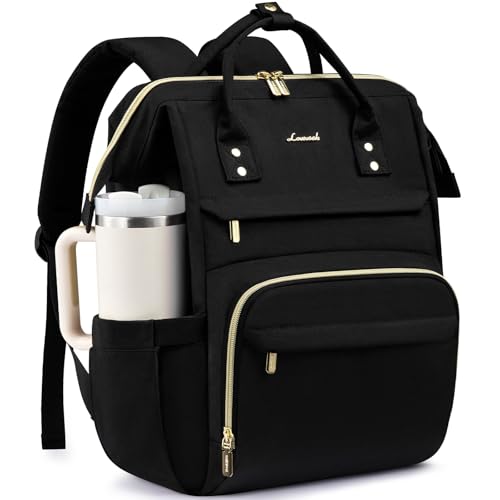
Consequently, a pack designed to house a 17-inch device must feature an internal compartment that is significantly larger than seventeen linear inches to provide adequate clearance. The LOVEVOOK Laptop Backpack for Women,17.3 Inch Work bag, for example, requires an external frame measuring at least 18 inches in height and 12 inches in width to swallow a widescreen chassis. If a manufacturer builds a bag with an exterior height of only 16 inches, inserting a 17-inch mobile workstation becomes physically impossible regardless of overall liter volume.
Device thickness also consumes valuable depth within the dedicated sleeve, especially when users encase their computers in hard plastic shells or neoprene sleeves. A laptop pocket with a suspended false bottom holds the device one to two inches above the floor of the pack, protecting delicate corners from vertical drop shocks. That elevated suspension reduces the vertical clearance within the sleeve, meaning buyers should always verify internal sleeve dimensions against their exact device chassis measurements rather than relying solely on screen diagonal labels.
Airline Personal Item and Overhead Carry-On Limits in Inches
Airlines enforce strict dimensional boundaries measured in inches rather than assessing luggage by weight or liter volume alone. For domestic and international carriers, standard overhead carry-on allowances typically cap baggage dimensions at 22 inches high, 14 inches wide, and 9 inches deep, which equates to 45 linear inches. Backpacks exceeding 22 inches in exterior height will struggle to clear overhead bin doors, particularly on smaller regional jets where storage compartments taper toward the ceiling.
Personal item limits, designed for under-seat stowage, are considerably tighter and vary by individual airline carrier. Most major domestic airlines enforce maximum personal item dimensions between 18 x 14 x 8 inches and 17 x 13 x 9 inches to guarantee clearance beneath passenger seats. Choosing a pack that stands 17 to 18 inches tall ensures that your bag slides smoothly into the under-seat space without projecting backward into your personal footwell.
Budget carriers frequently utilize rigid metal sizing boxes at boarding gates, where even a protruding top handle or packed front pocket can trigger unexpected baggage penalty fees. Soft-sided backpacks offer a minor advantage because flexible nylon can compress slightly to conform to metal sizer frames if the contents are malleable. When paired with internal frame backpack systems, however, rigid stays cannot compress, making exact exterior inch measurements essential before arriving at the gate.
How to Accurately Measure a Backpack in Inches
Obtaining the true physical dimensions of a backpack requires measuring the bag while packed with typical daily cargo rather than laying it flat on an empty table. An empty backpack collapses, artificially reducing its depth measurement while exaggerating its width as fabric gathers along the seams. Fill the main compartment with towels, clothing, or your regular commute setup until the bag assumes its natural, unladen operational silhouette.
Measure the exterior height from the reinforced bottom base panel straight up to the apex of the pack body, excluding the flexible top grab handle unless an airline specifically counts external hardware. Measure width across the widest horizontal point of the back panel, taking care not to pull the measuring tape tightly across outward-bulging side seams. Finally, measure depth from the padded lumbar panel directly forward to the furthest protruding front pocket face.
Linear inches are calculated by adding exterior height, width, and depth together into a single cumulative figure. For example, a bag measuring 18 inches tall, 12 inches wide, and 8 inches deep totals 38 linear inches, safely clearing typical personal item criteria. Be mindful that over-stuffing outer organizer compartments can quickly inflate depth from an allowable 8 inches up to an unruly 11 inches, altering your bag’s transit compliance.
Torso Length Versus Backpack Height for Ergonomic Weight Distribution
Selecting backpack height purely based on storage capacity often leads to ergonomic discomfort if the pack does not correspond to your anatomical torso length. Human torso length is measured along the spine from the prominent C7 vertebra at the base of the neck down to the horizontal plane of the iliac crest along the top of the hip bones. A petite adult may have a torso measurement of 15 to 17 inches, while a tall individual may measure 19 to 21 inches along the spine.
When an 18-inch or 20-inch backpack is worn on a shorter torso, the bottom edge can ride uncomfortably low against the glutes, causing excessive leverage that pulls the shoulder harness backward. This backward levering forces the trapezius muscles to contract continuously, resulting in upper back soreness and neck stiffness during daily walking commutes. Conversely, an undersized 15-inch daypack on a tall torso places the entire load high between the shoulder blades, eliminating any chance of stabilizing the base against the lumbar region.
Aligning backpack height with your torso ensures that padded shoulder straps wrap cleanly over the clavicles without leaving large air gaps or digging sharply into the armpits. If a daypack features an integrated sternum strap or a lightweight waist webbing belt, correct vertical sizing allows those components to sit directly across the mid-chest and hips. Sizing your pack to your back ensures stable posture, whether you carry a tech commuter bag or explore specialized cooler daypacks on weekend excursions.
Accommodating Daily Essentials Within Fixed Dimensional Compartments
Standard everyday gear requires thoughtful compartment architecture so that interior pockets do not cannibalize volume from the main packing chamber. Items like spiral notebooks, planners, and tech organizers occupy rigid rectangular footprints that must slide flat against internal dividers. A compact item like the FGFK Christian Bible Prayer Spiral Notebook, measuring 5.5 x 8.3 inches, fits effortlessly into administrative organizer slots that are at least 6 inches wide and 9 inches deep.
When internal organizer sleeves lack sufficient depth, rigid notebooks and tech folios protrude upward, obstructing the closure path of the main perimeter zipper. This interference creates focal stress points along zipper coils, increasing the likelihood of seam separation or split teeth under heavy daily loads. Checking the dimensional depth of secondary organizational pockets ensures that daily stationery, tablet sleeves, and power banks seat flush against interior backing panels.
Similarly, water bottle pockets represent a critical dimensional factor that directly impacts total exterior width. Exterior pockets engineered for wide-mouth insulated tumblers must feature dedicated fabric gussets or elastic bellows so they do not push inward against the main cavity. Models like the LOVEVOOK Laptop Backpack with Giant Tumbler Holder Pocket allocate dedicated circumference for large vessels, preventing wide bottles from stealing valuable packing inches from interior compartments.
Managing Depth Bulge and Preventing Sizer Failures
The depth dimension of a backpack is the most volatile measurement because external organizer pockets expand outward when fully loaded. While a manufacturer may list a base depth of 7 or 8 inches, filling front slash pockets with chargers, sunglasses cases, and jackets can easily push the profile past 10 inches. This outward bulge shifts the pack’s center of gravity backward, increasing rotational torque on the shoulders and leading to rapid muscle fatigue.
Depth expansion also creates unexpected conflicts at airport gates, where baggage sizers evaluate maximum external thickness with zero flexibility. Compression straps positioned along the side panels of a backpack help control this dimensional creep by pulling the front panel tightly toward the back harness. Cinching these straps stabilizes internal cargo and keeps the total exterior depth within rigid 8-inch or 9-inch airline requirements.
Packing dense, heavy gear directly against the back panel and placing lighter, compressible layers toward the front exterior maintains a slim, balanced profile. This packing technique prevents the bottom of the bag from sagging outward and preserves the structured base geometry needed for self-standing stability. By actively managing depth through disciplined packing, commuters can maintain optimal transit agility while protecting zipper tracks from lateral tensile stress.
Selecting the Ideal Backpack Dimensions for Your Routine
Choosing the correct backpack dimensions ultimately hinges on balancing your essential daily cargo against your most frequent physical transit environments. Urban transit commuters and office professionals usually benefit most from a streamlined profile measuring 16 to 18 inches tall and under 8 inches deep, preserving personal space on crowded trains. Frequent flyers and hybrid remote workers often lean toward versatile 18- to 19-inch heights that maximize under-seat personal item space while securely accommodating larger widescreen laptops.
Before purchasing any pack, measure your primary tech devices and check your daily gear volume against internal divider layouts. Also, measure your personal torso length to verify that the pack frame will rest comfortably between your shoulders and hips. Confirming that exterior inches align with both your body mechanics and transit requirements prevents packing frustrations and ensures comfortable daily utility.







Write Your Review
No reviews yet. Be the first to share your experience!