


Navigating airline gate checks with a high-capacity bag often creates unnecessary pre-flight stress. Travelers frequently ask whether can you take a 50l backpack as carry on luggage without facing forced gate checks or unexpected baggage fees. Standard domestic overhead bins are built around strict dimensions, typically capping out at 22 by 14 by 9 inches. A fully packed 50-liter bag often pushes past those dimensional limits unless it features compression straps or a soft-sided exterior that allows it to conform to rigid metal baggage sizers.
While outdoor hiking packs with rigid aluminum stays almost always exceed overhead cabin requirements, dedicated travel backpacks handle internal volume differently. Many modern travel designs feature expandable side gussets, allowing travelers to maintain a compliant 35-liter profile during airport boarding and expand storage once reaching their destination. Choosing the right bag requires balancing linear dimensions, harness ergonomics, and packable depth. If you are comparing versatile gear options across various price tiers, exploring an affordable hiking backpack guide can help you understand how different frame styles and materials influence pack dimensions. Understanding airline policies before heading to the terminal helps ensure your gear stays safely in the cabin above your seat.


Understanding Airline Carry-On Limits and 50-Liter Backpack Sizing
Taking a 50-liter backpack into an airplane cabin depends entirely on how the bag is engineered, packed, and measured. Standard domestic airlines set their overhead luggage limits around 22 by 14 by 9 inches, which roughly equals 40 to 45 liters of total interior volume. When travelers ask whether can you take a 50l backpack as carry on luggage, the realistic answer is yes, but only under specific physical conditions. A soft-sided bag that is not overstuffed can often squeeze into airline baggage sizers, whereas a rigid or bulging pack will likely face a forced gate check.
Standard Airline Dimensional Thresholds Versus 50-Liter Volume
Airline gate agents evaluate carry-on baggage by exterior linear dimensions rather than manufacturer volume ratings. Most major carriers enforce a combined linear limit of 45 inches, calculated by adding height, width, and depth together. A true 50-liter volume mathematically pushes the outer limits of these dimensional formulas. If a pack measures 22 inches tall, 14 inches wide, and expands beyond 9 inches in depth, it officially exceeds cabin allowances on major domestic carriers.
The primary challenge with 50-liter capacity lies in depth expansion. When travelers load clothing and gear into large interior cavities, flexible fabric naturally rounds outward into a barrel shape. A pack measuring nine inches deep when empty can easily balloon to eleven or twelve inches when filled completely. That extra outward bulge prevents the bag from sliding smoothly into rigid metal sizer boxes at the boarding gate.
Soft-Sided Travel Packs Versus Rigid Internal Frame Backpacks
Pack structure plays a decisive role in whether a 50-liter bag passes cabin inspections. Outdoor wilderness packs often feature tall aluminum stays or rigid perimeter wire frames that maintain vertical rigidity on hiking trails. In contrast to flexible travel luggage, rigid internal frame hiking packs cannot compress vertically to fit into standard overhead bins. If a hiking pack measures 26 inches tall, no amount of force will compress that metal stay into a 22-inch sizer box.
Travel-focused backpacks avoid internal metal stays to provide essential packing flexibility. Models such as the Velaybor 50L Travel Backpack use high-density polyester panels that maintain a structured shape without rigid metal components. This soft-sided construction allows travelers to manipulate the pack profile when sliding it into crowded overhead compartments. Without an unyielding frame, the fabric can yield slightly against bin contours or neighboring roller suitcases.
Expandable Compartments and Controlled Packing Strategies
Expandable zipper systems offer a practical compromise for travelers needing high storage volume alongside airline compliance. The TANGCORLE Travel Carry on Backpack 50L Expandable demonstrates how dual-capacity engineering operates during airport transit. In its unexpanded state, the pack provides approximately 36 liters of storage with exterior dimensions of 19.6 by 8.7 by 12.2 inches. Those unexpanded dimensions fit comfortably within standard domestic carry-on limits and overhead bins.
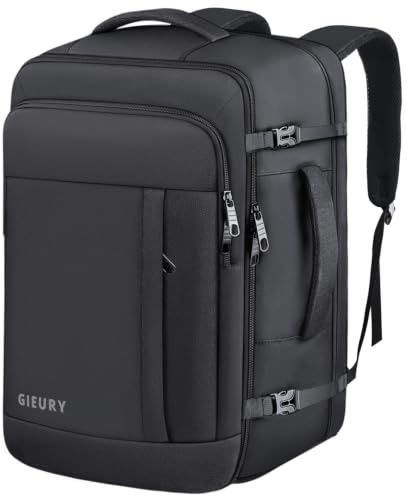
Unzipping the expansion gusset increases pack depth to 11.4 inches, unlocking the full 50-liter carrying capacity. Smart travelers board the aircraft with the expansion zipper closed, keeping the bag compact and compliant through boarding gates. Once you reach your travel destination, expanding the gusset provides extra room for souvenirs, laundry, or bulkier clothing layers. The Gieury Carry On Backpack TSA Flight Approved utilizes an expandable main compartment to solve similar packing dilemmas without exceeding overhead shelf limits.
Personal Item Limitations Versus Overhead Bin Placement
Confusion often arises regarding personal item allowances versus overhead carry-on baggage. Airlines define personal items as compact bags that fit entirely beneath the passenger seat directly in front of you. Standard personal item limits typically hover around 18 by 14 by 8 inches on budget carriers. A 50-liter backpack is far too large to qualify as a legal personal item on commercial flights.
Even though bags like the LOVEVOOK 50L Travel Backpack measure roughly 19 by 14.5 by 9.5 inches, placing a pack of this volume under an airline seat creates substantial challenges. Seat footwells contain protruding metal seat supports, electronic power boxes, and life vest containers that restrict usable space. Forcing a 50-liter bag beneath a seat robs you of legroom and can block emergency egress paths. Travelers should always treat a 50-liter backpack as dedicated overhead bin luggage.
Navigating International Flight Regulations and Strict Weight Caps
Domestic United States carriers rarely weigh overhead carry-on luggage, focusing almost entirely on dimensional sizing. International airlines across Europe, Asia, and Oceania enforce completely different operational rules. Foreign carriers routinely cap carry-on weight between seven and ten kilograms, which translates to roughly 15 to 22 pounds. A 50-liter pack filled with dense clothing, footwear, and electronics easily exceeds those strict weight ceilings.
Tare weight of the empty backpack represents an essential consideration when facing international scales. Heavy fabrics, multiple metal zippers, and thick harness padding add baseline weight before you insert a single item. If your empty travel bag weighs three or four pounds, you have very little weight allowance remaining for your personal gear. Packing lighter technical fabrics and limiting heavy accessories helps keep overall mass below restrictive international limits.
Airport Security Checkpoints and Lay-Flat Design Benefits
Navigating security checkpoints with a high-capacity travel backpack can feel cumbersome without thoughtful pocket engineering. Traditional top-loading backpacks force travelers to unpack folded clothing just to reach a laptop nestled in the center. Dedicated travel models solve this problem with 180-degree lay-flat clamshell zipper openings. This layout allows the bag to split open flat like a suitcase on airport security scanner belts.
Both the Gieury TSA Flight Approved pack and the TANGCORLE 50L model feature dedicated rear tech compartments engineered for rapid security processing. The TANGCORLE accommodates laptops up to 17.3 inches in a separate 18.5 by 11.8-inch padded sleeve, while the Velaybor 50L backpack fits large 18-inch workstations. These dedicated sleeves keep valuable screens isolated from clothing pressure and heavy travel footwear. Integrated luggage pass-through straps on these packs let you slide the entire bag over the handle of rolling luggage during terminal walks.
Harness Ergonomics and Weight Distribution for Extended Terminal Walks
Hauling 50 liters of packed gear across sprawling international terminals demands proper harness support to prevent neck and back fatigue. When a backpack holds thirty or forty pounds of cargo, thin shoulder straps quickly dig into trapezius muscles. High-capacity travel bags incorporate contoured, wide shoulder straps lined with high-density foam to disperse gravitational load evenly across your shoulders. Sternum straps further stabilize the load across your chest, preventing shoulder straps from shifting during brisk walking.
Back panel ventilation plays a critical role in commuter comfort during warm travel seasons. The Velaybor 50L backpack utilizes breathable back cushioning to promote air circulation between the pack and your spine. Similarly, the TANGCORLE design incorporates breathable mesh with generous sponge padding to cushion pressure points and channel perspiration away during long airport transfers. Packing dense items close to the back panel keeps the center of gravity aligned with your spine, reducing backward pull.
Dedicated Storage Architecture and Specialized Gear Separation
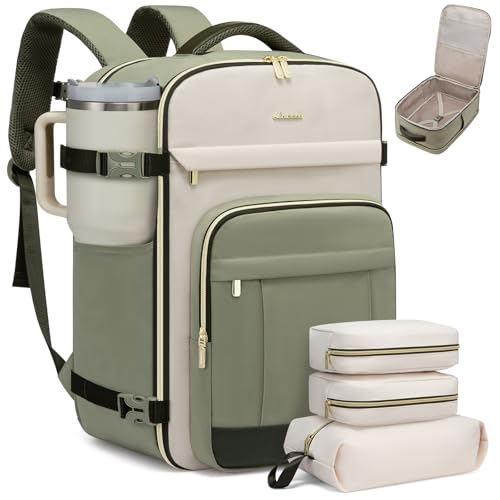
Organization inside a large 50-liter compartment requires structured dividers to keep clothes and supplies manageable. The LOVEVOOK 50L Travel Backpack includes three dedicated packing cubes and a specialized wet pocket to organize travel essentials. Packing cubes compress garments while preventing smaller accessories from drifting into hard-to-reach corners. Wet pockets keep damp towels or spill-prone toiletries safely isolated from clean dry shirts.
Isolating footwear from clean garments is another vital design feature in modern travel packs. The Gieury 50L backpack features an independent bottom shoe compartment designed to house shoes ranging from size 5 to size 12. This separate compartment prevents street grime from contaminating packed clothes and provides an ideal storage spot for gym gear. If you frequently travel with specialized gear or temperature-sensitive items, checking insulated backpack cooler designs demonstrates how thermal partitions and specialized linings protect vulnerable contents during extended outdoor transit.
Fabric Durability, Weather Resistance, and Hardware Stress
Packing 50 liters of travel gear generates substantial outward pressure against textile seams and zipper teeth. Budget fabrics with weak thread counts can experience seam slippage or zipper blowout under heavy loads. The Velaybor 50L pack utilizes high-density polyester with reinforced stress-point stitching to handle structural tension. In addition, its components adhere to the OEKO-TEX Standard 100 certification, confirming the fabric and hardware are tested against harmful substances.
Weather resistance protects sensitive electronics and folded clothing from unexpected rainstorms between airport terminals and taxi stands. The TANGCORLE and Gieury packs feature water-repellent exterior coatings that shed light precipitation and resist surface scratches. While water-repellent coatings deflect rain showers, they are not completely waterproof against full immersion, meaning travelers should avoid setting their packs in deep puddles on tarmac runways. Guiding zipper sliders smoothly along the track rather than yanking against caught seams ensures long-term hardware reliability.
Practical Pre-Flight Verification and Sizer Check Protocols
Before leaving for the airport, performing a quick dimensional verification check eliminates gate check anxiety. Load your 50-liter backpack with your planned travel gear, zip all compartments, and cinch down all external compression straps. Measure the pack from top handle to bottom base, side to side across the widest point, and front to back at the thickest section. Checking these dimensions against your specific airline baggage allowances prevents surprises at the boarding counter.
If your packed bag exceeds 22 inches in height or 9 inches in depth, adjust your packing arrangement immediately. Shift bulkier jackets out of the backpack to wear onto the aircraft, or redistribute heavy shoes into external tote bags. Soft-sided backpacks allow you to compress internal volume by removing just one or two dense items, bringing the overall profile back into airline compliance. When boarding, wearing the pack upright on both shoulders presents a streamlined appearance that draws less scrutiny from gate attendants.
Practical Takeaway for 50-Liter One-Bag Travel
Carrying a 50-liter backpack aboard commercial flights is entirely achievable when you select a soft-sided, compression-friendly travel pack. Expandable designs offer the ideal balance, allowing you to fly within strict domestic overhead limits and expand capacity once you arrive at your lodging. Avoiding rigid metal frames, monitoring international weight thresholds, and utilizing compression straps ensures your gear travels securely in the cabin with you.
Thoughtful packing turns a 50-liter travel backpack into an efficient one-bag travel system that saves money on checked baggage fees and eliminates baggage claim waiting times. By adhering to airline linear dimensional guidelines and utilizing ergonomic harness adjustments, travelers can navigate busy airports with comfort and peace of mind. Investing in a structured, durable pack makes high-capacity air travel smoother and far more reliable.







Write Your Review
No reviews yet. Be the first to share your experience!