


Navigating airline baggage requirements often creates friction at airport check-in counters, especially when deciding on luggage capacity. Many travelers ask whether is 50l backpack allowed in flight without being forced to gate-check their luggage before boarding. Standard domestic carry-on limits typically restrict bags to twenty-two inches in height, which sits right on the edge of what a fifty-liter pack occupies. Unlike rigid suitcases or heavy internal frame packs, soft-sided travel bags offer flexibility that can work in your favor if packed thoughtfully.
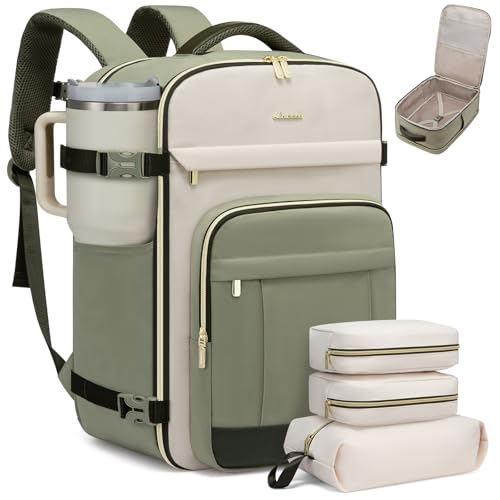
Understanding how airlines measure overhead bin dimensions versus personal item allowances prevents unexpected baggage fees. Whether a fifty-liter bag passes airport scrutiny depends on overall external linear dimensions, structural stiffness, and how tightly the main compartment is packed. Modern expandable travel packs, such as designs from TANGCORLE, LOVEVOOK, and Gieury, incorporate compression systems and lay-flat compartments to bridge the gap between cavernous packing volume and airline compliance. Planning your packing approach around strict carrier limits ensures you move smoothly through the boarding gate without stress.

Complete Guide to Flying with a 50L Backpack
Direct Answer: Can You Bring a 50L Backpack on an Airplane?
A fifty-liter backpack can be brought on an airplane, but whether it travels in the cabin or cargo hold depends on how it is packed. For standard carry-on travel, a fully stuffed fifty-liter pack generally exceeds dimensional limits enforced by major airlines. If the backpack features soft-sided construction without a rigid frame, you can often compress it to fit inside the overhead compartment. However, a pack of this volume will never qualify as an under-seat personal item on commercial carriers.
Airlines measure baggage capacity by exterior physical dimensions in inches rather than internal volume in liters. Most domestic carriers set their maximum carry-on threshold around twenty-two inches long, fourteen inches wide, and nine inches deep. When packed to maximum capacity, an uncompressed fifty-liter bag usually stretches past nine inches in depth. Travelers who keep their pack partially filled or use external compression straps can regularly pass boarding gate checks without incident.
Overhead Bin Dimensions Versus Personal Item Allowances
Commercial airlines distinguish sharply between standard overhead carry-on bags and personal items that sit beneath the seat. Overhead bins on standard mainline narrow-body aircraft comfortably accommodate items up to forty-five total linear inches. Bags designed between thirty-five and forty-five liters generally hit the sweet spot for these upper compartments. A fifty-liter bag represents the absolute maximum theoretical volume that could fit overhead, provided it lacks protruding metal stays.
Personal items face stricter dimensional limits, often capping out around eighteen inches in length and eight inches in depth. While some product marketing claims large packs can serve as personal items, placing a fifty-liter bag under an airplane seat is practically impossible. Cramming a bag of that scale into the footwell eliminates your legroom and violates aviation safety regulations regarding clear egress paths. Anyone carrying a fifty-liter backpack should plan exclusively on using the overhead bin or checking the bag.
The Volume Versus Linear Dimension Paradox
One confusing aspect of travel luggage is the gap between manufacturer volume ratings and real-world linear measurements. Two bags rated for fifty liters can feature drastically different exterior footprints based on pocket geometry and fabric stiffness. A wide, shallow pack might slip into an overhead sizer with ease, while a deep, barrel-shaped pack will bulge excessively. Outer pockets packed with bulky jackets or footwear quickly push the pack past the critical nine-inch depth mark.
Fabric construction also dictates how a bag behaves when placed in a physical sizing cage at the gate. Rigid travel cases or specialized outdoor packs, including some insulated backpack coolers, feature thick structural walls that cannot flex under pressure. In contrast, travel backpacks crafted from flexible polyester or nylon allow you to manipulate gear displacement. Compressing soft clothing downward toward the base keeps the bag narrow enough to conform to airline guidelines.
Airport Sizer Boxes and Soft-Sided Compression
Gate agents frequently rely on metal sizer boxes to determine whether a passenger’s bag requires a gate check. These metal frames possess zero flexibility, meaning a bag must slide in smoothly without excessive force or kicking. If your fifty-liter backpack has an internal aluminum frame or stiff plastic backboard, it cannot bend to fit a slightly undersized cage. Soft-sided travel bags excel in these scenarios because side compression straps pull the fabric taut and eliminate dead space.
Before arriving at the boarding gate, cinching every exterior compression strap reduces the total depth of the pack significantly. Moving bulky footwear or heavy electronics toward the center back panel prevents the front face from ballooning outward. If an agent asks you to test the bag in the sizing rack, a compressed pack slides in cleanly. Practicing this compression technique at home ensures your bag stays compliant even when packed for extended trips.
Domestic Versus International Carry-On Regulations
Carry-on regulations vary substantially depending on whether you fly on a domestic United States route or an international carrier. Major domestic airlines like Delta, United, and American offer relatively generous overhead bin limits and rarely weigh carry-on bags at the gate. In contrast, European, Asian, and budget carriers enforce strict linear maximums and impose aggressive weight limits. Flying with a fifty-liter pack on regional carriers often results in mandatory baggage fees if the unladen bag exceeds seven to ten kilograms.
Regional commuter jets present another obstacle for high-capacity backpacks. Smaller regional aircraft feature narrow overhead bins that cannot accommodate standard twenty-two-inch bags placed wheels-first or base-first. When flying on regional turboprops or small feeder jets, gate agents typically issue valet tags that require passengers to leave larger backpacks on the jet bridge. Travelers flying internationally or on regional connections must prepare for the possibility of gate-checking their fifty-liter luggage.
Expandable Travel Packs: Balancing Baseline Size and Maximum Capacity
Modern travel backpacks frequently incorporate expandable zippered gussets that alter the pack volume based on your immediate needs. The TANGCORLE Travel Carry on Backpack exemplifies this design, operating at thirty-six liters in its compact state and expanding to fifty liters when unzipped. In its thirty-six-liter configuration, measuring roughly 19.6 by 8.7 by 12.2 inches, the pack adheres comfortably to standard overhead dimensions. Once you arrive at your destination, unzipping the expansion gusset unlocks the extra depth needed for souvenirs or multi-day supplies.
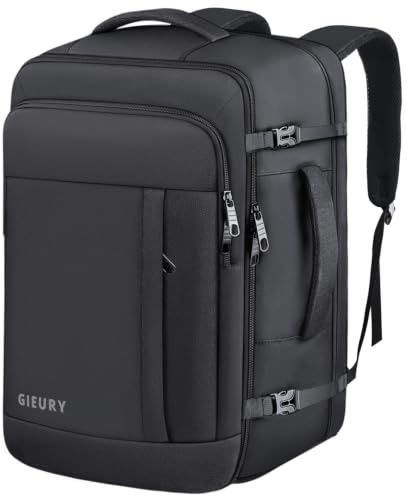
The Gieury 50L expandable backpack uses a similar convertible framework to help travelers bypass overhead sizing hurdles. Keeping the expansion zipper closed during flight boarding keeps the pack profile slim and prevents gate agents from scrutinizing its volume. Packing cubes assist this process by compressing clothing layers before they enter the bag cavity. Once onboard, a streamlined thirty-six-liter profile slides easily into older overhead bins without disrupting fellow passengers.
The LOVEVOOK 50L travel pack measures approximately 19 by 14.5 by 9.5 inches, offering a broad rectangular silhouette that maximizes volume without excessive height. Using included packing cubes allows travelers to compartmentalize garments and compress items flat against the back panel. Managing the depth dimension remains the single most important factor when carrying expandable designs through the gate. Keeping your load tight and contained ensures you reap the benefits of large capacity without facing unexpected baggage fees.
Weight Limits and Ergonomic Harness Adjustment
Carrying a fifty-liter backpack loaded with clothing, electronics, and travel accessories can easily push the total pack weight past twenty-five pounds. Even if an airline does not weigh your carry-on luggage, carrying that much mass through large terminals strains your shoulders and spine. A high-quality travel harness requires contoured, high-density foam shoulder straps and an adjustable sternum strap to distribute mass evenly. Without proper harness ergonomics, a heavy travel bag pulls backward and causes persistent neck and lumbar fatigue.
Unlike lightweight daypacks or simple budget trail backpacks, high-capacity travel packs benefit greatly from reinforced luggage trolley sleeves and breathable back panels. Sliding a heavy pack onto the telescoping handle of a rolling suitcase relieves physical strain during long terminal layovers. Furthermore, ventilated air-mesh back channels allow heat to dissipate, preventing uncomfortable perspiration during warm-weather travel. Ensuring your pack sits close to your center of gravity keeps your posture aligned and makes navigating crowded airports manageable.
Dedicated Laptop Sleeves and Airport Checkpoint Efficiency
Navigating airport security lines with a bulky backpack becomes significantly easier when the bag incorporates dedicated tech compartments. Travel backpacks from TANGCORLE and Gieury feature independent laptop sleeves capable of holding seventeen-inch devices with flat-lay openings. A 180-degree lay-flat zipper design allows the tech compartment to open fully like a book on the scanner belt. This functionality speeds up the screening process and eliminates the need to dig through packed clothing to retrieve your laptop.
Protecting delicate electronics in a fifty-liter pack requires adequate sleeve padding and intentional placement along the structural back panel. Placing heavy computers flush against the back frame provides structural rigidity while keeping the heaviest weight closest to your body. Travel bags that isolate the laptop compartment also shield delicate screens from compression pressure generated by overstuffed main packing cubes. Verifying that your device fits within the manufacturer dimensions ensures swift passage through security checkpoints.
Managing Specialized Pockets to Prevent Dimensional Bulging
Many fifty-liter travel bags feature dedicated external compartments, including bottom shoe tunnels, wet pockets, and organization grids. While these features keep dirty footwear and damp toiletries separated from clean clothing, they displace internal packing volume. The Gieury 50L backpack includes an integrated bottom shoe pocket designed to hold footwear up to men’s size twelve. Filling this shoe compartment pushes the bottom profile of the pack outward, potentially creating a bulge that exceeds sizer dimensions.
To keep your pack compliant with airline rules, pack shoes flat or position them along the base before filling secondary organizer pockets. The LOVEVOOK 50L pack incorporates specialized wet pockets that isolate toiletries and damp items from the rest of your travel wardrobe. Avoid cramming rigid cosmetic cases or bulky water bottles into exterior pockets right before boarding. Stowing external accessories inside the central cavity until after boarding maintains a sleek exterior profile that easily satisfies gate requirements.
When Airlines Require You to Check a 50L Backpack
Even experienced one-bag travelers occasionally encounter situations where checking a fifty-liter backpack becomes unavoidable. Full flights on regional commuter routes often run out of overhead bin capacity before the final boarding groups step on the plane. In these scenarios, gate agents mandate that passengers check larger soft bags regardless of whether they technically meet dimensional limits. Being prepared for a gate check prevents panic and protects fragile personal belongings.
Always pack high-value electronics, portable battery banks, medications, and travel documents in a small removable pouch inside your pack. If a gate agent issues a baggage claim tag, you can quickly remove your vital items and surrender the main pack without worry. Choosing a travel pack constructed from durable, water-repellent synthetic fabric shields your belongings if the bag is loaded into the cargo hold during rain. Hidden anti-theft zipper pockets also provide added security against tampering when luggage leaves your hands.
Essential Packing Strategies for Passing Gate Inspection
Successfully flying with a fifty-liter backpack requires a disciplined packing methodology that focuses on space efficiency. Utilizing compression cubes flattens bulky garments like sweaters and jeans, allowing them to nest together without creating outward pressure. Distributing dense items evenly across the base and middle sections prevents the bag from developing an awkward pear-shaped silhouette. Keeping the top third of the pack relatively light makes lifting the bag into upper bins fast and effortless.
Before heading to the airport, measure your packed bag using a flexible measuring tape to verify height, width, and depth. If the depth exceeds nine inches, remove non-essential items or re-tighten external cinch straps to flatten the profile. Wearing your bulkiest jacket and heaviest pair of shoes during transit frees up valuable space inside the backpack. Combining strategic clothing choices with smart compression ensures your fifty-liter travel bag stays within carrier regulations throughout your journey.
Maintenance and Fabric Care for High-Capacity Travel Packs
Maintaining the water-repellent coatings and zipper mechanisms of your travel pack ensures reliable performance across years of frequent flying. Abrasive terminal floors, rough conveyor belts, and overhead bin friction expose exterior fabrics to substantial wear. Spot-cleaning soiled spots with a damp cloth and mild soap protects internal polyurethane coatings from premature peeling or breakdown. Never place a high-capacity travel backpack into a washing machine, as mechanical agitation can warp foam shoulder straps and tear internal seam taping.
Inspecting zipper tracks regularly prevents sudden slider separation when your pack is cinched down under heavy loads. Debris and dust from transit floors can lodge inside zipper coils, causing friction and eventual teeth misalignment. Gently brushing the teeth with a soft bristle brush removes grit and keeps the sliders gliding smoothly across expanded gussets. Taking time to care for hardware and fabric preserves structural integrity so your pack remains ready for compliant air travel.







Write Your Review
No reviews yet. Be the first to share your experience!