


Commuters, college students, and daily transit riders constantly evaluate pack volume, trying to balance tech gear, lunch containers, and extra layers without feeling encumbered by oversized luggage. When evaluating pack capacity for work, classes, or flights, asking is a 23l backpack big is one of the most practical questions you can explore before investing in daily gear. A bag in this capacity bracket sits directly between minimalist daypacks and heavy luggage, delivering enough room for structured work tools while maintaining a slim profile on crowded trains or buses. Selecting the right volume prevents overstuffing your bag while keeping high-value electronics guarded against accidental drop impacts during rapid travel.
While heavy outdoor bags and bulky campus haulers dominate gear shelves, many daily users find that a streamlined 23-liter bag solves common commute frustrations by sliding neatly under airline seats and standing upright next to office desks. Whether you evaluate utility packs from Carhartt, technical organizers from Thule, or versatile options among budget hiking daypacks, capacity determines how efficiently weight distributes across your shoulders. Understanding how 23 liters translates to physical packing dimensions ensures you do not buy a pack that feels restrictive on busy workdays or clumsy during light travel.


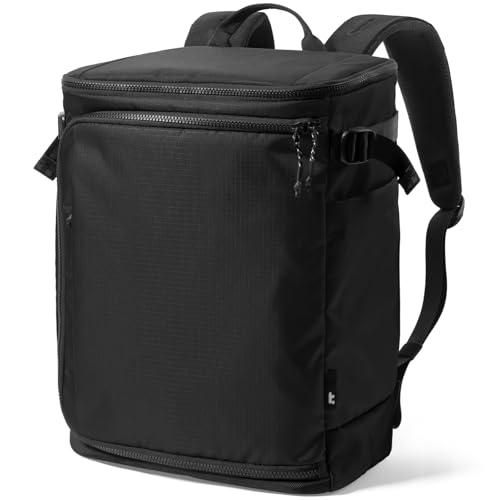


Everything You Need to Know About 23-Liter Backpack Sizing and Capacity
A 23-liter backpack is not considered a big bag in the broader luggage universe, but it represents the upper boundary of compact everyday carry. For most daily routines, 23 liters provides a balanced middle ground that easily accommodates modern electronics, daily work tools, and a spare layer without protruding awkwardly from your back. Whether a 23-liter pack feels spacious or restrictive depends heavily on how you pack, your physical frame, and whether your daily gear consists of flat digital devices or bulky physical items.
Defining the 23-Liter Volume on the Pack Spectrum
Backpack capacities generally span from compact 10-liter hydration slings to massive 70-liter expedition rucksacks. Within the daily carry and travel categories, packs between 15 and 20 liters qualify as compact daypacks, while bags measuring 28 to 35 liters serve as large campus or weekend travel bags. A 23-liter pack sits firmly in the mid-size bracket, designed specifically to bridge the gap between lightweight minimalism and heavy gear hauling.
Carrying a 23-liter pack gives you roughly 1,400 cubic inches of internal storage space. This volume is substantially larger than an ultra-slim laptop briefcase or an 18-liter commuter bag, giving you enough depth to stow a food container and an insulated bottle alongside your computer. At the same time, 23 liters remains noticeably more agile than a 30-liter bag, keeping your physical footprint tidy on busy trains and sidewalks.
Understanding this middle-tier status prevents unrealistic expectations during packing. You cannot treat a 23-liter bag like a cavernous duffel intended for a week of winter clothing. Instead, this capacity functions best as an organized daily workstation that retains structural discipline throughout continuous movement.
Physical Dimensions and Exterior Body Silhouette
External measurements for a typical 23-liter pack usually measure around 18 inches in height, 11 to 12 inches in width, and 7 to 9 inches in depth. These measurements allow the bag to align naturally with the contours of an adult torso without extending above the shoulders or dropping past the lower lumbar region. Because the base depth stays under ten inches, the bag maintains a close center of gravity that will not pull you backward.
Visual proportions vary depending on the wearer’s height and torso length. On individuals with shorter torsos, a 23-liter bag can look moderately full, resting comfortably from the neck down to the top of the hip bones. On taller individuals or broad-shouldered commuters, the same 23-liter pack often appears sleek, compact, and tailored.
The exterior silhouette also benefits from the moderate depth profile. Bags that exceed 30 liters often expand outward like a bulbous shell, which increases transit collisions in tight spaces. A 23-liter pack minimizes that outward protrusion, allowing you to turn comfortably in crowded subway aisles without bumping into fellow passengers.
What Actually Fits Inside a 23-Liter Backpack?
Packing capacity in a 23-liter bag easily covers a standard mobile office loadout for modern professionals and university students. You can comfortably pack a 15-inch or 16-inch laptop, a dedicated tablet, power cords, a mouse, and an external battery bank. Alongside your electronics, the main cavity holds a structured lunch container, a medium sweater or packable rain jacket, and an everyday notebook.
Interior layout influences exactly how that volume feels during daily use. Designs like the Thule EnRoute 23L use dedicated tech sleeves and organized front compartments, which segment items neatly but slightly restrict the depth available for bulky, irregular gear. Conversely, work-oriented models like the Carhartt Utility 23L Single-Compartment Backpack provide a cavernous central hold that accommodates bulky work gear or gym shoes with less internal friction.
Exterior storage options further expand the practical load of a 23-liter shell. Dual side water bottle pockets hold standard 20- to 24-ounce beverage containers without intruding on internal space. Small exterior zip pockets handle quick-access essentials like house keys, transit passes, sunglasses, and earbuds without forcing you to dig into the bottom of the main compartment.
Airline Compatibility and Personal Item Regulations
Travelers frequently ask about 23-liter bags because airline personal item dimensions are strictly enforced at boarding gates. Most major domestic carriers set personal item guidelines around 18 x 14 x 8 inches to ensure gear slides completely beneath the forward seat. Because a standard 23-liter backpack generally hovers around 18 inches tall and 8 inches deep, it routinely qualifies as an airline personal item when packed sensibly.
Overpacking can create dimensional challenges if the front panel bulges past the listed depth limit. Semi-rigid back panels and structured laptop compartments keep height and width static, but flexible exterior fabrics can balloon outward when packed to capacity. Keeping the central compartment slightly underfilled allows the pack to compress easily into metal gate sizers without resistance.
Regional air travel presents unique clearance hurdles due to floor-mounted entertainment boxes and narrow seat frames. On regional jets or budget European flights, under-seat footwells often have reduced vertical height. A soft-sided 23-liter daypack flexes to slide under these lower seat bars where rigid rolling luggage or structured 35-liter travel bags fail.
Public Transit Commuting and Everyday Office Practicality
Urban transit demands a pack that moves effortlessly through crowded turnstiles, crowded escalators, and packed rail cars. A 23-liter backpack offers exceptional balance for these environments, resting securely against your back without snagging on handrails or fellow commuters. When boarding a packed commuter bus, you can easily swing the bag by its top grab handle to rest between your feet without consuming excessive floor space.
Office functionality depends heavily on how the bag handles delicate electronic hardware. Premium commuter packs often feature elevated laptop sleeves that suspend your computer several inches above the pack base. This suspended false bottom guards laptop corners from jarring impacts whenever you set the bag down on hard office tile or concrete floors.
Base construction also determines how neat your workstation remains during the workday. Packs with flat, reinforced base panels tend to stand upright against desk legs instead of flopping forward onto dusty floors. This upright stability keeps zipper openings accessible throughout the day, transforming the backpack into an organized desk caddy for cords and writing tools.
Campus Demands: Balancing Textbooks, Binders, and Digital Tools
College and high school students face a continuous shift between digital devices and physical study materials. For students who rely primarily on laptops, tablets, and digital textbooks, a 23-liter bag delivers ample capacity for a full day of lectures. It cleanly houses a laptop, a tech organizer, a medium spiral notebook, a planner, and a lightweight hoodie for chilly lecture halls.
Limitations become apparent when students must transport multiple thick, physical textbooks alongside heavy three-ring binders. A standard 23-liter volume can handle one substantial hardcover textbook alongside a laptop, but adding two or three heavy volumes quickly exhausts the main cavity. When overloaded with dense paper, the zipper tracks experience elevated lateral stress that can lead to split coils over time.
Students carrying athletic gear for after-class workouts will also find the space constrained. Fitting athletic shoes and gym clothes alongside academic books inside 23 liters requires meticulous compression. Students with intense physical gear requirements often prefer expanding to a 28- or 30-liter bag to prevent excessive daily cramming.
Day Hiking and Outdoor Trail Versatility
Outdoor recreationists frequently consider 23 liters the gold standard volume for half-day and full-day hiking excursions. On moderate trails, this capacity easily holds three liters of water, trail snacks, a first-aid kit, a compact windbreaker, and navigation gear. Packs engineered for trails, such as lightweight options with trekking pole attachments, maintain excellent mobility on uneven ascents.
Unlike massive multi-day packs or rigid frame backpacks engineered to bear 40 pounds of backcountry survival equipment, a frameless or lightly structured 23-liter daypack emphasizes agile movement. The lightweight build prevents unnecessary unladen tare weight, conserving your energy over steep switchbacks. Ventilated back channels and moisture-wicking shoulder straps help manage perspiration during warm-weather ascents.
Trail limitations primarily involve cold-weather excursions or gear-heavy adventures. If your hike requires bulky fleece layers, snowshoes, heavy photography tripods, or extensive emergency bivouac gear, 23 liters will fill up rapidly. For straightforward temperate day hikes, however, this capacity offers all the security and hydration capacity you need without feeling encumbered.
Weekend Travel and One-Bag Packing Potential
Adopting a 23-liter backpack for multi-day travel requires disciplined minimalism and strategic packing cubes. Travelers who embrace ultralight travel can comfortably pack two days of warm-weather clothing, basic toiletries, and charging cables into a single 23-liter cavity. This setup eliminates baggage check lines, accelerates transit through terminals, and provides unmatched freedom during urban exploration.
Versatility increases significantly with hybrid expandable models. Certain designs, like the tomtoc expandable travel series, function as a compact 23-liter bag for daily commuting and zip open into a 28-liter gear hauler for flights. This dual-purpose geometry allows travelers to land at their destination, unpack their clothing at the hotel, and immediately carry the bag as a slim daypack.
Packing for colder climates or extended multi-week itineraries remains challenging in this capacity class. Heavy knit sweaters, thick denim, and backup footwear consume volume rapidly, leaving zero room for tech accessories. If your travel plans include transporting insulated gear or souvenirs, pairing your 23-liter pack with specialized cooler daypacks or dedicated rolling luggage provides far more breathing room.
Harness Ergonomics and Weight Distribution Factors
Carrying comfort in a 23-liter backpack depends on thoughtful harness engineering rather than sheer bulk. Because 23-liter packs rarely include heavy load-bearing hip belts, the shoulder straps carry the vast majority of the pack’s weight. Dual-density EVA foam and contoured S-curve strap shapes prevent the edges of the straps from digging into your collarbones during extended walks.
Adjustable sternum straps play a crucial role in stabilizing the pack across your chest. Fastening the chest clip pulls the shoulder straps inward, preventing slippage and distributing downward tension evenly across the pectoral muscles. This simple adjustment prevents trapezius muscle fatigue and keeps the pack stable when you jog to catch a departing train.
Proper weight distribution inside the bag protects your spine from unwanted strain. Dense items, such as your laptop, tablet, and heavy power banks, must sit flat against the back panel close to your natural center of gravity. Packing bulky, lightweight layers toward the outer panel prevents the bag from sagging backward and pulling uncomfortably on your upper back.
Pocket Architecture and Usable Internal Depth
A frequent surprise for new backpack buyers is how internal pocket layout impacts real-world storage. A 23-liter backpack filled with numerous zippered dividers, pen slots, and tech organizers can feel tighter than an open 20-liter bag. Each fabric divider, internal seam, and zippered pocket liner claims physical volume from the main packing cavity.
When selecting a pack, match the internal architecture to your specific packing habits. If you carry dozens of small accessories, memory cards, and office supplies, an intricately partitioned bag keeps everything sorted without requiring separate pouches. If your daily load consists of bulky items like food storage containers, bicycle helmets, or thick jackets, a single-compartment layout yields superior packing flexibility.
Side pocket construction also dictates functional storage limits. Stretchy mesh or pleated fabric gussets allow water bottle sleeves to expand outward rather than intruding into the main compartment. Rigid, non-stretch side pockets force large bottles to push inward, robbing internal space and making it difficult to zip the main compartment closed.
Choosing Between 23 Liters and Larger Pack Sizes
Deciding whether 23 liters is big enough comes down to auditing the items you carry every single day. If your standard daily routine requires carrying a laptop, basic chargers, lunch, a water bottle, and a windbreaker, a 23-liter backpack provides the ideal balance of capacity and agility. It prevents unnecessary bulk while ensuring you never have to leave core daily tools behind.
If your routine demands transporting athletic shoes, bulky winter gear, multiple physical textbooks, or camera rigs, stepping up to a 28- or 32-liter pack will prevent daily frustration. Assessing your daily gear volume against physical packing dimensions ensures your pack supports your routine with maximum comfort and efficiency.







Write Your Review
No reviews yet. Be the first to share your experience!