


Managing pack volume can make the difference between a nimble trek and an exhausting trail ordeal. Backpackers often debate whether is a 50 liter backpack enough to handle wilderness camping gear, layered clothing, and multi-day food rations without overflowing. In outdoor recreation, a fifty-liter internal volume represents a sweet spot that bridges minimalist weekend excursions and extended backcountry outings. Choosing the right capacity requires balancing your shelter bulk, cooking kits, and the structural support provided by rigid frame hiking packs against trail mileage.
When you pack dense equipment, harness geometry and weight distribution become just as important as total cubic volume. Modern fifty-liter bags frequently incorporate specialized compartments, compression webbing, and padded suspension belts to keep the center of gravity stable. While ultralight hikers can comfortably stretch this volume across four or five days, campers carrying traditional synthetic sleeping bags may find space tight. Understanding how gear volume interacts with seasonal demands helps you decide if a mid-size pack aligns with your hiking goals.

Pros
- Impressive 50-liter capacity paired with an empty weight under 2.4 pounds.
- Comes standard with a stowable waterproof rain cover in an exterior bottom pocket.
- Multiple compartments, including a separate shoe pocket and six external pockets, keep gear separated.
- External compression straps and attachment loops secure bulky gear like trekking poles and pads.
Cons
- Features a frameless design without rigid internal stays, limiting heavy load-bearing support on long hikes.
- Listed in a single Medium size without an adjustable torso length system.
- Heavy packing may cause strain on the shoulders due to the lack of rigid load-transfer suspension.
The Loowoko 50L Hiking Backpack is a high-capacity, lightweight gear hauler designed for weekend backpackers, casual campers, and adventure travelers seeking maximum packing volume without excessive pack weight. Although categorized under internal frame backpacks in some retail databases, the manufacturer explicitly details a frameless construction designed to keep the empty weight at approximately 2.1 to 2.4 pounds. This makes the pack an accessible, functional option for hikers carrying lighter, high-volume gear sets who do not require heavy aluminum stays or rigid suspension frames.
On the trail, the pack relies on its 50-liter capacity and physical dimensions of roughly 23.6 by 11.8 by 7.9 inches to accommodate several days of bulkier items, such as sleeping bags, camp clothes, and food supplies. For load management, the harness features widened and thickened S-type shoulder straps padded with dense sponge and lined with breathable mesh. The back panel incorporates high-elastic breathable padding intended to soften contact along the spine and encourage airflow, though hikers carrying dense loads should note that the absence of a rigid frame means pack structure depends heavily on thoughtful packing technique.
The backpack is built from tear-resistant polyester and nylon fabrics intended to withstand trail brush and luggage handling. Organizational features are a major highlight of the design. In addition to a cavernous main compartment, the pack includes a dedicated bottom shoe separator to isolate muddy hiking boots or camp shoes from dry gear, alongside six external pockets for quick trail-side access to snacks, maps, and compact gear. Exterior compression straps and multi-point attachment loops allow users to strap tents, sleeping pads, trekking poles, or ice axes securely to the outer shell.
Setting up and using the pack is straightforward thanks to its simple strap layout and quick-access storage zones. Weather protection is bolstered by an included waterproof rain cover stored in a dedicated bottom zippered pocket, ready to pull over the entire pack during sudden mountain showers. Cleaning and routine maintenance require only mild soap, lukewarm water, and thorough air drying before storing the pack flat in a dry environment between outings.
Realistic limitations must be kept in mind regarding weight distribution and sizing. Because the pack lacks internal metal stays and an advanced load-transfer hip belt, carrying loads above standard lightweight limits will place the burden squarely across the shoulders. Furthermore, the pack is listed in a standard Medium size without an adjustable torso ladder, meaning hikers with particularly short or long torso lengths may experience suboptimal strap placement.
Overall, the Loowoko 50L Hiking Backpack represents a practical, budget-friendly solution for beginner backpackers, weekend campers, scouts, and travelers who need large packing capacity paired with light empty pack weight. For hikers planning rigorous multi-day expeditions with heavy base weights, a rigid internal-frame pack remains preferable, but for light trail trips and versatile travel, this pack offers great organizational utility.
The Loowoko 50L backpack utilizes a frameless design that eliminates heavy internal aluminum stays or rigid perimeter wire frames. This architectural choice keeps the overall pack weight down to approximately 2.1 to 2.4 pounds, appealing directly to hikers seeking a lighter base weight for moderate trips.
To manage upper-body comfort without a rigid frame, the harness features widened and thickened S-curve shoulder straps equipped with thick sponge padding and breathable mesh. The back panel incorporates high-elastic breathable padding designed to cushion contact points, though hikers should remember that proper weight distribution relies primarily on how evenly gear is packed inside the main compartment.
With 50 liters of total volume, this pack provides substantial capacity for weekend camping gear, extra trail layers, and general travel necessities. Its generous dimensions of 23.6 x 11.8 x 7.9 inches offer plenty of room to pack bulky items inside the primary storage space.
Organization is enhanced by six exterior pockets and a separate lower shoe compartment designed to keep soiled footwear or dirty laundry away from clean clothes. Multiple exterior compression straps and attachment loops allow for the lash-on storage of trekking poles, ice axes, sleeping pads, or tents directly against the pack exterior.
While the polyester and nylon pack body offers tear resistance and baseline moisture repellency against damp ground, the pack includes a dedicated waterproof rain cover for wet-weather conditions.
The rain cover is conveniently stored in an integrated bottom pouch, allowing hikers to pull it over the full pack quickly when rain or dust threatens gear. For valuable electronics and sleeping gear in severe downpours, packing sensitive items inside dry sacks inside the bag remains a smart trail habit.


Pros
- Generous 50L storage volume with extensive pocket separation, including top, front, side, and waist pockets
- Comes complete with an integrated rain cover stored in an underside pocket, eliminating the need to buy one separately
- Internal wet-dry separation pocket keeps damp clothes isolated from the rest of your dry gear
- Built-in hydration system compatibility featuring an interior bladder hanging loop and an external tube exit port
- Reflective safety accents and a built-in sternum whistle add practical utility for emergency trail situations
Cons
- Manufacturer does not publish an exact numerical torso length range or empty pack weight specification
- Fabric is water-resistant rather than fully waterproof, requiring deployment of the rain cover during steady rainfall
- Lacks an adjustable torso ladder system to fine-tune fit for unusually short or tall hikers
The Maelstrom 50L Hiking Backpack is a high-capacity outdoor pack engineered for day hikers, weekend campers, and gear-heavy travelers seeking extensive organizational options at an approachable price point. With a stated 50-liter volume and exterior dimensions measuring 8.86 by 12.99 by 23.62 inches, this pack is designed to accommodate extra layers, shelter components, cooking equipment, and personal supplies without forcing you into an expensive technical expedition pack.
Trail-readiness is supported by a padded suspension harness that includes breathable shoulder straps, an adjustable sternum strap with an integrated emergency survival whistle, and dual zippered waist belt pockets. While listed under internal-frame backpacks, the pack relies primarily on a thick, ergonomic padded back panel with breathable channels rather than heavy structural metal stays. It handles best when heavier gear is packed centrally and close to your spine, allowing the chest and waist buckles to help stabilize the pack against your torso during active movement.
Material quality centers on a 210D ripstop nylon fabric that provides baseline water resistance alongside anti-scratch and tear-resistant properties. For inclement weather, Maelstrom includes a silver-reflective rain cover that stores neatly in a dedicated underside pocket. While the 210D nylon withstands brush scrapes and light trail mist, pulling out the rain cover is essential in sustained downpours, as zippers and standard seams are not fully waterproof.
Pocket organization is one of the defining strengths of this model. The main compartment features an isolated waterproof wet pocket designed specifically for damp apparel, swimsuits, or sweaty trail clothes. The exterior layout incorporates a top pocket, a quick-release buckle pouch, two zippered front pockets, two elastic mesh water bottle sleeves, and side trekking pole attachments equipped with fasteners to secure up to two sets of poles. Hydration is easily managed through an internal bladder hanger loop and a dedicated hose pass-through port, alongside a top headphone jack opening.
Potential buyers should consider that the pack lacks a micro-adjustable torso ladder system and does not list an exact torso measurement range. While the shoulder webbing, sternum slider, and waist belt offer standard adjustment, hikers with very short or unusually long torsos may not achieve the tailored load transfer of specialized technical packs. Additionally, because the manufacturer does not state an empty weight or a maximum load rating, keeping the overall carried load within moderate limits ensures the shoulder padding remains comfortable.
The Maelstrom 50L Backpack represents a versatile, feature-rich choice for beginner backpackers, weekend campers, and recreational hikers who place a premium on gear compartmentalization and value. Although long-distance thru-hikers carrying heavy loads may prefer an advanced custom-fitted suspension harness, this pack offers substantial storage, reliable everyday trail utility, and included weather protection for varied outdoor outings.
The Maelstrom backpack offers a listed 50-liter capacity spread across multiple specialized compartments to simplify trail organization. The expansive main zippered compartment accommodates bulky items such as clothing, sleeping gear, or trail food, while an integrated internal waterproof pocket ensures damp or soiled garments remain strictly separated from dry supplies.
Quick-access storage includes a top lid pocket, a front buckle pocket for stashing a light jacket, and two separate front zippered pockets for trail maps or personal items. Dual stretch mesh side pockets hold standard water bottles, while twin zippered hip-belt pockets provide convenient trailside access to lip balm, snacks, or small pocket tools without needing to take the backpack off.
External weather defense begins with 210D ripstop nylon fabric that resists light trail spray, light mist, and abrasive trail brush. The ripstop pattern reinforces the shell against spreading tears if caught on branches or sharp gear edges.
For heavier rain, the backpack features a fitted rain cover stored inside a dedicated zippered compartment at the base of the bag. The rain cover features a silver reflective logo for enhanced visibility in overcast or low-light conditions, providing full exterior coverage over the pack body and zipper seams during inclement weather.
Suspension on the Maelstrom 50L relies on adjustable padded shoulder straps paired with a thick, breathable foam back panel designed to facilitate airflow along your back. An ergonomic top haul ring handle assists in lifting and moving the loaded pack around camp or transit.
To help stabilize the pack while hiking, an adjustable sternum strap centers the shoulder straps across your chest and features a built-in safety whistle for signaling. The waist belt adjusts to wrap around your hips, providing added stability during steady trail ascents and descents.

Pros
- Generous 50-liter capacity with an intuitive 180-degree clamshell opening for straightforward packing.
- Smooth and reliable YKK zippers across key compartments ensure snag-free access to equipment.
- Multiple interior and exterior pockets eliminate clutter and keep smaller gear organized.
- Adjustable compression, sternum, and waist straps help secure the load closer to the body.
- Heavy-duty water-resistant shell fabric withstands light precipitation and abrasive outdoor contact.
Cons
- Heavier empty pack weight compared to specialized ultralight hiking backpacks due to thick fabric and multi-pocket hardware.
- Lacks an internal frame sheet or suspended mesh back panel for dedicated ergonomic ventilation on hot, steep hikes.
- Water-resistant fabric handles light moisture, but the pack lacks a fully waterproof seal or included rain cover for heavy downpours.
The Falko Tactical 50L Backpack is a heavy-duty outdoor gear hauler designed for hikers, campers, and active travelers who prioritize rugged utility and compartmentalized organization over ultralight minimalism. With its Wolf Grey styling and tactical aesthetic, this pack bridges the gap between a field equipment bag and an extended-capacity trail pack. It offers a practical solution for outdoor enthusiasts who need to transport tools, electronics, layers, and trail essentials in dedicated compartments rather than stuffing everything into a single top-loading cavity.
Capacity is a central advantage of this pack, providing 50 liters of volume within exterior dimensions of 11 x 14 x 21 inches. The main compartment features a full 180-degree clamshell opening, mirroring the convenient packing process of carry-on luggage. Based on the manufacturer specifications, this main hold accommodates multiple clothing changes, extra footwear, camp tools, and a laptop. For load control, the pack incorporates adjustable sternum and waist straps alongside side compression straps, helping to stabilize bulky gear closer to your center of gravity during approach hikes or campsite setup.
Material durability centers on a reinforced, water-resistant, and rip-proof fabric shell paired with genuine YKK zippers. Heavy-duty zippers are critical on high-capacity packs, and the inclusion of smooth-gliding YKK hardware helps prevent split tracks and snagging when the bag is packed full. The exterior shell fabric is designed to resist scuffs and abrasions from branches, rocks, and rough surfaces around camp. Multiple exterior pockets and internal organizers allow trail accessories, navigation items, and everyday gear to stay separated and immediately accessible without digging.
Managing and organizing gear is straightforward thanks to the perimeter zipper path and external compression webbing. Hikers can lay the pack flat to arrange bulky items first, securing them before using the exterior compression straps to draw in excess volume. Adjusting the sternum strap and waist belt helps keep the shoulder harness anchored across uneven terrain. For regular maintenance, the heavy-duty fabric can be wiped clean with a damp cloth and mild soap after dusty trail outings, and should be hung open to air-dry completely before long-term storage.
Potential buyers should recognize that tactical-style packs carry specific design tradeoffs on the trail. While the heavy fabric and multi-pocket layout offer rugged durability, they add noticeable empty pack weight compared to purpose-built ultralight trekking packs. Additionally, this pack does not list an internal frame suspension or a suspended mesh back panel, meaning it relies on strap adjustments rather than a rigid stay for load transfer. Hikers should also remember that while the fabric is water-resistant against brief moisture, it is not fully waterproof and does not include a dedicated rain cover for prolonged downpours.
The Falko Tactical 50L Backpack is an appealing choice for budget-conscious hikers, weekend campers, and vehicle-based adventurers who want a tough, modular gear carrier. If your outdoor routine involves car camping, day hikes with substantial gear, bushcraft tasks, or travel that transitions directly to the trail, its heavy-duty fabric, YKK zippers, and 180-degree clamshell layout deliver practical, organized utility.
The Falko Tactical Backpack features a 50-liter total volume structured for methodical gear management. Its main compartment unzips fully at 180 degrees, allowing you to pack clothing, shoes, camp cookware, and a laptop flat without rummaging from the top. Built-in internal organization and extra outer pockets keep smaller outdoor tools, batteries, and navigation supplies neatly divided.
External compression straps allow you to cinch down the 11 x 14 x 21-inch profile when carrying partial loads. This helps prevent gear from shifting internally while walking across trail inclines or traveling between transit stops.
For weight management, this backpack includes an adjustable sternum strap, waist strap, and lateral compression webbing. Fastening the sternum strap pulls the shoulder harness closer together across the chest, preventing shoulder straps from slipping during movement on trail inclines.
The adjustable waist strap assists with stabilizing the lower portion of the pack against your hips, reducing sway over uneven terrain. Because this pack uses a frameless tactical structure rather than a rigid internal frame or specialized torso-length sizing, careful packing of dense items near the center of the back is recommended for the best balance.
Crafted from rip-proof, heavy-duty fabric, the pack shell is engineered to handle abrasive environments such as rocky campsites, brushy trails, and vehicle cargo areas. The water-resistant finish helps shed light moisture, splashes, and minor trail precipitation, though sensitive electronics or down insulation should still be stored in protective dry sacks.
Hardware reliability is reinforced with authentic YKK zippers across the main entry and accessory pockets. The heavy stitching and smooth-gliding zipper teeth minimize snagging and zipper derailment when operating under heavy trail use.

Pros
- Tensioned AirSpeed backpanel promotes continuous ventilation while offering an adjustable torso fit
- LightWire perimeter frame effectively directs gear weight to the hips to improve carrying balance
- Included removable raincover eliminates the need to purchase an aftermarket weather cover separately
- Zippered lower compartment with a floating divider simplifies access to sleeping gear without unpacking the main compartment
Cons
- Streamlined design features fewer exterior organizational pockets than more complex backpacking packs
- A 50-liter volume requires disciplined packing if carrying bulky cold-weather gear or larger bear canisters
- Hydration reservoir is not included and must be purchased separately if using a bladder system
The Osprey Renn 50L is an internal-frame women's backpacking backpack tailored for hikers who want a dependable, well-ventilated load hauler without unnecessary complexity. Designed with a 50-liter capacity and weighing in at 3.5 pounds, this pack fits neatly into the gear lists of weekend backpackers, section hikers, and minimalist multi-day adventurers. Its clean profile and intuitive features make it particularly appealing to beginners seeking a straightforward setup, as well as experienced hikers looking to shave unnecessary hardware from their gear kit.
On the trail, weight management is driven by Osprey's LightWire frame and adjustable AirSpeed suspension. The perimeter frame structure channels pack weight down into the hipbelt, reducing shoulder fatigue and stabilizing gear across uneven terrain. Behind the harness, a tensioned mesh backpanel keeps the main pack body off the hiker's back, facilitating open air movement that helps mitigate perspiration during warm-weather ascents or demanding ridge traverses.
Organization centers around a classic top-loading main compartment complemented by a dedicated lower sleeping bag area. This lower zippered compartment features an internal floating divider, allowing users to partition their sleeping bag away from food and shelter or open the space into one large cavity. While the exterior avoids excessive clutter, the pack does include an integrated, removable raincover stashed inside its own base pocket, ensuring sudden downpours can be handled quickly without digging through main gear.
Dialing in the fit on the Renn 50 is simplified by its adjustable torso system. The backpanel harness can be adjusted along the frame to match individual back lengths, ensuring the shoulder harness and hipbelt align properly with the user's anatomy. Additionally, the pack incorporates attachment points compatible with the Osprey Daylite series, offering the option to dock an auxiliary daypack for summit pushes or quick side trips from basecamp. Routine maintenance is straightforward, requiring standard mild-soap spot cleaning and air drying before long-term storage.
Prospective buyers should evaluate capacity and pocket layout against their specific gear bulk. At 50 liters with dimensions of 27.6 by 14.6 by 14.6 inches, the pack demands thoughtful gear selection for multi-day trips involving bulky four-season sleep systems or rigid food canisters. It also offers a more streamlined pocket configuration than heavier expedition packs, meaning hikers who prefer numerous external organizational pouches may need to rely on internal stuff sacks.
For women backpackers searching for an uncomplicated, supportive, and ventilated internal-frame pack, the Osprey Renn 50L offers strong practical value. By combining essential load-transfer engineering, an adjustable mesh backpanel, and an included raincover into a 3.5-pound package, it delivers a comfortable and reliable carrying solution for weekend and section-hiking adventures.
The Osprey Renn 50 utilizes an internal LightWire frame coupled with an adjustable AirSpeed suspension system. The perimeter wire frame directs carried weight away from the upper shoulders and down toward the lumbar area and hipbelt, helping maintain a balanced center of gravity during trail movement.
A tensioned open-mesh backpanel keeps the pack body separated from the user's spine. This suspended construction encourages continuous airflow across the back, which helps manage body heat and reduce sweat accumulation on warm trail days or sustained climbs.
Torso adjustment is integrated directly into the harness interface. Hikers can slide and secure the harness along distinct adjustment positions to fit a variety of torso lengths, ensuring the shoulder harness and padded hipbelt sit properly relative to anatomical contact points.
With a 50-liter capacity, the Osprey Renn 50 provides a practical balance between internal storage volume and exterior pack weight. The top-loading main compartment allows users to pack core essentials, such as shelter components, cook sets, and clothing layers, centrally against the frame.
A dedicated lower zippered compartment accommodates a sleeping bag and includes an internal floating divider. This divider can be secured to separate the sleep system from higher-stowed equipment, or loosened to create one continuous vertical storage space depending on personal packing preferences.
For modular gear hauling, the pack features integrated attachment points compatible with Osprey Daylite daypacks. This system allows hikers to lash a compatible smaller pack directly to the exterior for basecamp excursions or summit day hikes without taking up valuable internal space.
The Osprey Renn 50 includes an integrated, removable raincover designed specifically to fit the pack's exterior volume. It stows neatly inside a dedicated zippered pocket near the bottom of the pack, keeping it out of the way until trail weather deteriorates.
When precipitation begins, the raincover deploys quickly over the entire pack exterior to shed moisture and help protect internal gear from wet conditions. Because the cover is tethered yet fully removable, it can be detached easily for cleaning, drying, or weight savings when dry forecasts permit.

Pros
- Generous 50L volume with multiple zippered compartments for organized packing
- Rugged water-resistant construction with double-stitched seams and heavy-duty hardware
- Exterior MOLLE webbing and bottom lash straps allow modular gear expansion
- Integrated side pockets fit two 500ml water bottles for quick trail hydration
- Includes a removable US flag patch with dedicated loop-panel attachment
Cons
- Side bottle holders are sized for 500ml bottles and will not fit wide-mouth 1-liter trail flasks
- Lacks an internal frame structure or load lifters for stabilizing extremely heavy loads
- Fabric is water-resistant rather than fully waterproof and does not include an integrated rain cover
The kookoomia 50L Tactical Backpack is a large-capacity rucksack engineered for day hikers, outdoor campers, emergency preparedness planners, and travelers needing organized utility. Sporting a tactical aesthetic with modular attachment options, this pack suits users who carry substantial amounts of gear and prefer rugged exterior features over the minimalist designs of standard daypacks.
With an overall capacity of 50 liters and dimensions of 21.6 x 12.9 x 12.6 inches, this backpack easily accommodates extra insulating layers, food rations, camp stoves, and utility gear. At a listed weight of 3.08 pounds, it keeps the empty base weight manageable while offering substantial volume. Carrying comfort relies on padded shoulder straps and a ventilated back panel designed to encourage airflow during warm-weather hikes. Side compression straps allow users to cinch the pack down when partially loaded, which helps prevent gear from shifting off-balance on uneven trails.
Construction quality centers on water-resistant materials assembled with heavy-duty double stitching and robust zippers. The reinforced top grab handle provides a solid anchor for lifting a loaded pack into vehicles or hanging it in camp. Along with rugged main fabrics, the exterior features extensive MOLLE webbing across the front and sides, bottom webbing for rolled gear, and a hook-and-loop field that comes with a gifted US flag patch.
Organizing trail essentials is straightforward thanks to multiple zippered compartments, a hidden security back pocket, and dual side bottle holders tailored for standard 500ml containers. Loading and retrieving gear is efficient because each compartment separates bulkier camp items from frequently needed trail supplies. Routine maintenance is simple, requiring only spot cleaning with mild soap and air drying to preserve the exterior water-resistant coating.
Buyers should keep realistic load limitations in mind before hitting technical backcountry trails. The pack does not feature an internal rigid frame or load-lifter straps, meaning users carrying heavy gear must pack strategically to manage shoulder strain. Furthermore, the side bottle pockets are limited to 500ml bottles, and while the exterior material resists light splashes and moisture, it is not fully waterproof. Hikers venturing into steady rain should use internal dry bags to protect sensitive electronics and sleep systems.
For outdoor enthusiasts seeking a durable, high-volume pack at a reasonable price, the kookoomia 50L Tactical Backpack offers excellent functional value. Its combination of modular MOLLE webbing, multiple organized storage zones, and rugged water-resistant construction makes it a dependable choice for day hikes, bushcraft excursions, and tactical gear transport.
The kookoomia tactical pack provides 50 liters of structured volume across multiple distinct compartments, supporting extended gear organization for multi-day camping trips, range outings, or equipment-heavy day excursions.
Its layout includes several zippered storage sections, an exterior MOLLE attachment matrix, bottom lash webbing, and a hidden rear pocket for low-profile valuables. External hydration storage is handled by two dedicated side pockets sized specifically for 500ml bottles, keeping basic water containers within straightforward reach.
Built from water-resistant exterior fabric, this tactical pack uses reinforced double stitching across high-stress points and heavy-duty zippers to withstand rough outdoor conditions and repeated trail use.
While the water-resistant treatment sheds light moisture and trail dust, the pack does not feature sealed seams or an included rain cover. Critical trail electronics and emergency gear should be packed inside separate waterproof bags during prolonged downpours.
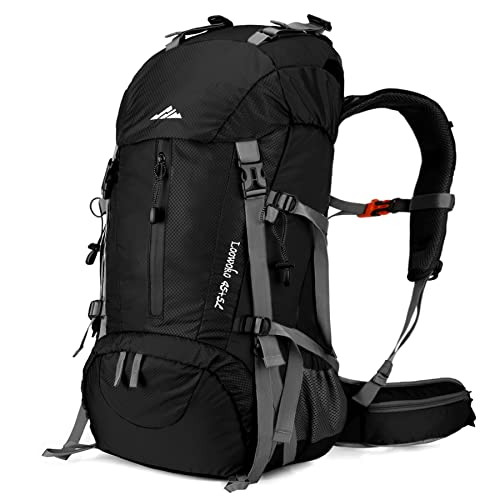
Pros
- Substantial 50-liter packing volume paired with a low baseline pack weight of around 2.1 to 2.4 pounds.
- Separate shoe compartment keeps dirty trail shoes or wet apparel isolated from main gear.
- Comes equipped with a fitted waterproof rain cover housed in a dedicated bottom pocket.
- Six external pockets and compression straps provide functional organization and exterior gear hauling.
- Cushioned S-shaped mesh shoulder straps and breathable back support promote airflow during warm hikes.
Cons
- Lacks an internal frame or rigid stays, meaning heavy cargo weight will rest primarily on the shoulders rather than transferring to the hips.
- Torso length is not adjustable, which may limit optimal fit for very tall or short torsos.
- Requires careful packing to prevent hard, angled gear from pressing through the soft back panel.
The Loowoko 50L Hiking Backpack is designed for day hikers, casual campers, weekend road trippers, and budget-minded adventurers who need high storage volume without the heavy bulk of a traditional framed pack. Built as a frameless rucksack, it strikes a balance between expansive capacity and lightweight portability. While Amazon classifies it broadly under internal frame backpacks, the manufacturer specifications confirm this pack contains no internal frame, making it a flexible, unstructured option ideal for light to moderate gear weights.
With a 50-liter volume and an empty weight between 2.1 and 2.4 pounds, this pack provides ample room for bulky items like lightweight sleeping bags, insulated jackets, and food supplies. The exterior dimensions measure approximately 23.62 by 11.81 by 2.8 inches, giving it a tall, streamlined profile. Gear management is straightforward thanks to a separate bottom shoe compartment that keeps muddy trail footwear away from clean gear, along with six external pockets that allow quick access to trail essentials. Exterior compression straps and dedicated lash points make it easy to secure bulky equipment such as trekking poles, ice axes, or compact tents.
The pack is constructed from tear-resistant, anti-scratch polyester and nylon fabrics designed to withstand regular trail abrasion. For carrying support, Loowoko uses thickened, S-shaped shoulder straps filled with sponge padding and lined with breathable mesh to help distribute upper-body pressure. The back panel features high-elastic breathable padding designed to cushion your spine while allowing air circulation. While the exterior fabric provides everyday dust and scratch resistance, weather protection is substantially elevated by the included waterproof rain cover, neatly stored in a dedicated zippered pouch at the bottom of the bag.
Packing the Loowoko 50L requires mindful distribution because it lacks rigid internal stays. Hikers will benefit from placing soft items against the back panel to maintain a smooth carrying surface, heavier items close to the spine, and footwear in the bottom compartment. The external compression straps can then be cinched down tightly to pull the load closer to the body and eliminate gear sway. Routine maintenance is simple: empty the pockets, spot clean the nylon and polyester shell with mild soap, air dry thoroughly, and store the pack flat or hung in a dry space.
A realistic limitation of this backpack is its lack of an internal frame sheet or metal stays. As load weight increases, the pack cannot transfer substantial cargo weight to the hips, meaning heavier loads will bear down directly on the shoulder harness. Additionally, the torso fit is fixed rather than micro-adjustable, meaning hikers with particularly short or long torso lengths may not achieve a tailored fit. For heavy multi-day expeditions carrying more than 30 pounds of gear, a rigid internal-frame pack remains the more supportive choice.
For day hikers, scouts, festival campers, and budget-conscious backpackers carrying moderate base loads, the Loowoko 50L offers practical value. It provides generous organizational pockets, dedicated shoe storage, an included rain cover, and low baseline weight at an accessible entry point. If you pack sensibly and keep your carried weight within moderate limits, this versatile pack serves as a reliable trail companion.
The Loowoko backpack provides a 50-liter main storage capacity, offering enough room for clothing layers, camp kitchen essentials, and lightweight sleeping gear. A distinct separate shoe separator at the base allows you to isolate dirty hiking boots, water shoes, or damp socks from your clean interior clothing.
Organization is further enhanced by six exterior pockets, giving you dedicated spaces to sort small items like headlamps, trail snacks, navigation tools, and sunscreen. Multiple compression straps and exterior tie-down loops make it easy to carry longer gear like trekking poles or sleeping pads without taking up precious internal volume.
Unlike traditional internal frame packs that use aluminum stays or composite sheets, the Loowoko 50L features a frameless build. This design choice dramatically lowers the empty pack weight to approximately 2.1 to 2.4 pounds, making the pack easy to maneuver, stow, or pack away when traveling.
Suspension relies on widened, thickened S-shaped shoulder straps lined with sponge padding and breathable mesh to soften pressure over the collarbones. A high-elastic breathable back panel provides cushioning against gear edges, though hikers should load softer gear along the back wall to maximize trail comfort.
The main shell of the Loowoko backpack is built from tear-resistant nylon and polyester fabric that resists everyday trail scratches, dust, and light moisture. However, standard fabric seams are not fully waterproof on their own during prolonged downpours.
To solve this, the pack includes a dedicated waterproof rain cover stored in a bottom zippered compartment. When skies turn dark, the rain cover quickly deploys over the exterior of the loaded pack, creating an effective barrier that protects your internal belongings from heavy rain and trail splash.
Evaluating 50-Liter Backpack Capacity for Wilderness and Travel
A fifty-liter pack sits directly at the crossroads of lightweight weekend trekking and streamlined multi-day expeditions. Deciding whether is a 50 liter backpack enough depends on the packed dimensions of your core camping gear, the climate you encounter, and your personal packing discipline. While some hikers discover that fifty liters accommodates everything needed for five days on the trail, others find the volume cramped on a simple overnight trip. Examining the physical space, load-carrying mechanics, and gear choices clarifies whether this popular pack size suits your wilderness plans.
Defining 50 Liters in Usable Volume
Backpack capacity measured in liters represents the total cubic volume of the pack body along with its primary storage pockets. In practical terms, fifty liters equates to approximately 3,050 cubic inches of interior storage space. This volume can easily swallow a compact two-person backpacking tent, a three-season sleeping bag, an inflatable sleeping pad, a compact canister stove, and several days of trail rations. However, internal dividers and exterior pocket layouts dictate how cleanly that cubic volume translates into usable storage for rigid gear.
Some manufacturers calculate total volume by counting every side sleeve, hip belt pocket, and top lid cavity alongside the central compartment. A bag with an open forty-liter main barrel and ten liters distributed across six outer pouches packs very differently from a cavernous single-cavity design. Unframed models, such as the lightweight Loowoko design weighing around 2.1 pounds, leave the entire main cavity flexible for odd-shaped loads. In contrast, backpacks with rigid internal frame stays maintain a fixed internal geometry that requires careful item arrangement to eliminate empty voids.
Trip Duration and Food Resupply Limits
Trip length serves as the primary benchmark when calculating whether a fifty-liter pack provides adequate space. For weekend trips spanning two to three days, fifty liters provides generous capacity for standard backpacking gear and comfortable trail clothing. You will rarely struggle to close your zippers on a forty-eight-hour outing unless your sleep system is extraordinarily bulky. The extra breathing room also allows you to carry supplementary camp comforts, extra water bladders, or fresh trail foods without overcrowding your shelter.
Pushing a fifty-liter pack into four- to five-day territory requires disciplined food management and compressible gear. Food takes up significant space because the average hiker consumes roughly one and a half to two pounds of food each day. Packing five days of nutrition requires nearly ten pounds of dense, calorie-rich provisions that consume substantial interior room. If your route passes through wilderness zones requiring a hard-sided bear canister, fitting that rigid cylinder inside alongside camp essentials requires careful vertical alignment.
Gear Compressibility: Down Versus Synthetic Insulation
The physical bulk of your sleeping bag and shelter influences pack fit far more than the total weight on a scale. High-loft down sleeping bags compress into compact stuff sacks roughly the size of a standard loaf of bread. In comparison, budget-friendly synthetic sleeping bags often maintain a stiff, bulky footprint that can consume nearly twenty liters of pack volume on their own. If your sleep system fills nearly half of your bag, fifty liters will quickly feel insufficient for anything beyond a warm overnight hike.
Investing in quality compression dry sacks allows you to squeeze fluffy insulation into rock-hard, space-saving cylinders. Using compression sacks on your base layers, insulated jackets, and sleeping quilt unlocks valuable vertical space along the bottom of your pack. Many packs, including the Osprey Renn, feature dedicated lower sleeping bag compartments with floating dividers that keep fluffy insulation organized without crushing other supplies. Organizing bulky soft goods efficiently ensures that fifty liters provides ample room for cooking kits and trail clothing.
Seasonal Demands: Summer Trails Versus Cold-Weather Layers
Seasonal weather conditions dramatically alter the packing volume required for a safe and comfortable trip. Summer backpacking trips on temperate trails demand minimal clothing, a lightweight warm-weather sleeping quilt, and a compact mesh shelter. In warm conditions, fifty liters frequently offers more than enough volume, allowing you to pack quickly without intense compression. You can easily slip in trail luxuries, extra hydration reservoirs, and sun protection without stressing seam stitching or over-tightening external webbing straps.
Shoulder seasons and cooler mountain environments introduce nighttime temperatures that require substantial wardrobe additions and thicker sleep insulation. Autumn outings necessitate fleece mid-layers, windproof outer shells, thermal sleepwear, and insulated gloves. You also need a sleeping pad with a higher thermal resistance rating, which often translates to thicker foam or heavier insulated air chambers. These transitional layers quickly fill the perimeter space inside a fifty-liter backpack, leaving very little room for bulky cold-weather parkas or mountaineering hardware. Planning for freezing temperatures often requires stepping up to a larger pack capacity.
Internal Frames Versus Frameless Harness Architecture
Harness engineering dictates how comfortably a fifty-liter load rides on your back throughout a demanding day of hiking. Carrying fifty liters of gear generally translates to a total trail pack weight between twenty-two and thirty-five pounds. At that weight bracket, an internal frame becomes essential for transferring load mass away from your shoulders and onto your hips. Internal frame designs use perimeter wire stays or aluminum rods to maintain pack rigidity under heavy vertical loads.
Backpacks with advanced suspension systems, such as tensioned mesh backpanels, promote steady airflow to manage heat and perspiration. The Osprey Renn utilizes an adjustable AirSpeed suspension backpanel that separates the pack body from the hiker, keeping weight close to the spine while reducing back sweat. In addition, an adjustable torso harness ensures that the shoulder strap anchors sit at the correct spinal level for your torso length. This mechanical stability prevents painful trapezius pinching and lumbar fatigue during long trail ascents.
Loading Configurations: Clamshell Openings Versus Top-Loaders
The entry style of your backpack influences how efficiently you can access and organize packed equipment throughout the day. Traditional backpacking packs employ top-loading collars secured with drawstrings and covered by floating top lids. Top-loaders offer exceptional weather resistance and vertical compressibility, allowing you to cinch down the load as you consume food rations. However, finding a compact piece of gear buried near the bottom of a top-loading cavity requires digging through your entire gear stack.
Tactical and travel-focused fifty-liter designs, like the Falko and Mardingtop models, utilize wide zippered openings that open flat like a suitcase. A 180-degree clamshell zipper provides immediate visibility and rapid access to every corner of the main packing compartment. This layout works exceptionally well for urban travel, multi-sport excursions, or basecamp camping where you unpack frequently. Front-zip access allows you to retrieve clothing or emergency tools without pulling out your sleeping bag or shelter in the dirt. Heavy-duty YKK zippers help ensure the seam holds steady when the pack is completely full.
External Attachment Points and Pocket Utility
Exterior pockets and mounting webbing effectively expand the functional storage capacity of a fifty-liter backpack. Tactical rucksacks frequently feature extensive MOLLE webbing loops across the front and side panels. This modular webbing allows users to securely attach extra accessory pouches, first aid kits, or tool sheaths to customize their carrying setup. Outdoor-focused models instead utilize stretch mesh front shove-it pockets that easily swallow wet rain jackets or muddy tent groundcloths.
Dedicated exterior storage keeps damp or dirty gear separated from dry clothing and sleeping insulation. Bags like the Maelstrom include a waterproof wet pocket inside the layout, preventing sweaty gym clothes or damp towels from soaking dry gear. At the same time, external tool loops and elastic fasteners hold trekking poles and ice axes firmly against the pack body. Deep side water bottle pockets with elastic retention keep large bottles secure, preventing them from slipping out when you bend over on rough terrain. Utilizing these external zones frees up crucial cubic inches inside the main barrel.
Airline Travel Feasibility and Overhead Bin Realities
Travelers frequently ask whether a fifty-liter backpack can serve double duty as an airline carry-on bag for flights. Standard domestic airline carry-on dimensional limits generally hover around twenty-two inches high, fourteen inches wide, and nine inches deep. Most fifty-liter backpacks measure between twenty-four and twenty-eight inches in height when fully loaded, exceeding standard overhead dimensions. Because of these limits, attempting to carry a fully stuffed fifty-liter hiking pack onto a commercial airplane risks a mandatory gate-check.
While a rigid framed fifty-liter pack rarely fits under an airplane seat as a personal item, careful packing can occasionally pass overhead screening. If you avoid overpacking the top extension collar and compress the side straps completely, soft-framed packs can sometimes squeeze into overhead compartments. Models with removable top lids or flexible frameless backpanels compress down much closer to legal linear luggage dimensions. However, international carriers and regional commuter aircraft enforce much stricter baggage limits that make a fifty-liter bag a distinct travel risk. Choosing a pack with heavy 600D polyester fabric helps protect buckles from rough conveyor belt handling.
Practical Packing Strategies to Maximize Internal Space
Mastering the geometry of backpack loading ensures you extract every bit of useful volume from a fifty-liter capacity. The heaviest items, such as your camp stove, dense food bag, and hydration reservoir, should sit close to your spine in the middle of the pack. Positioning dense mass against your back panel stabilizes your center of gravity and prevents the pack from pulling backward. Lighter items, including your sleeping bag and sleepwear, belong at the very bottom of the pack inside protective dry bags.
Filling dead space inside larger items prevents wasted volume throughout the interior compartment. For example, store your camp mug and spice kits inside your cooking pot, and tuck spare wool socks inside your camp shoes. Hikers planning long trail days often balance trail nutrition and fresh perishable items by combining dry food storage with versatile insulated trail packs for day excursions. Budget-conscious backpackers exploring budget trail pack selections can achieve outstanding packing efficiency by cinching down exterior compression straps once the main compartment is packed.
When a 50-Liter Backpack Is Not Enough
Recognizing the limitations of a fifty-liter volume prevents frustration and dangerous gear compromises in the backcountry. If you frequently hike with children or pets and must carry shared supplies, shelter systems, and extra food, fifty liters will quickly prove inadequate. Hauling bulky family-sized four-person tents, extra sleeping mats, and extensive cooking kits requires a load-hauling pack measuring sixty-five to seventy-five liters. Forcing oversized group gear into a mid-size pack leaves essential emergency clothing or foul-weather gear behind.
Extended wilderness expeditions spanning seven or more days without resupply also demand larger pack volumes. In remote terrain where you must carry heavy water caches, specialized mountaineering gear, or mandatory bear-proof food containers, extra volume is mandatory. A larger pack allows dense, rigid containers to sit comfortably inside the center of gravity without deforming the harness backpanel. Knowing your specific gear profile, group role, and route conditions ensures you choose a pack size that keeps your backcountry trips safe and enjoyable.







Write Your Review
No reviews yet. Be the first to share your experience!