


Unstable pack weight pulling against your shoulders can turn an enjoyable mountain outing into an exhausting physical struggle. When heavy layers, bulky hydration bottles, and dense gear shift unpredictably inside your pack cavity, your body constantly compensates with strained stabilizer muscles. Learning how to organize a hiking backpack properly helps anchor your physical center of gravity, stabilizes shifting cargo across steep inclines, and prevents severe lower back fatigue. Whether you carry an ultralight frameless sack or heavier rigid frame pack options for rugged terrain, establishing consistent packing habits protects both your joints and your equipment.
Proper gear distribution requires a deliberate zoning strategy rather than cramming items wherever empty space appears. Balancing dense trail essentials against your spine preserves natural posture while keeping critical emergency items, snacks, and extra layers readily accessible. Thoughtful internal zoning also shields sensitive equipment from sudden trail showers and reduces stress on delicate zipper coils. By matching your daily cargo volume to functional pack zones, you maintain complete trail stability from the trailhead to the summit.

Pros
- Folds quickly into an ultra-compact pouch for easy packing inside luggage or a larger expedition backpack
- Weighs only 0.8 pounds, significantly reducing pack burden for ultralight day trips and travel-based hiking
- Dedicated wet compartment keeps damp clothes, towels, or rain shells isolated from dry interior contents
- Includes thoughtful trail safety and travel security features like an integrated sternum whistle and interlocking zipper pull clips
Cons
- Frameless design lacks internal stays or rigid structure, making it unsuited for carrying dense or heavy loads
- Shoulder straps provide minimal padding and lack load lifters or a supportive load-bearing hip belt
- IPX4 rating protects against light splashes and drizzle, but cannot withstand prolonged downpours without separate waterproof protection
The MIYCOO 35L Ultralight Packable Backpack is a collapsible daypack designed primarily for travelers who hike, casual day hikers, and campers who need a secondary day bag. Operating as a frameless, lightweight carrier, it excels when stowed inside a larger multi-day backpack or carry-on suitcase until needed at your destination. With an unpacked size of 12.5 x 8.5 x 20.9 inches and a stowed footprint of just 4.5 x 3.9 x 7.8 inches, this pack addresses the needs of outdoor recreationists who want supplemental pack capacity without the bulk and weight of traditional internal-frame daypacks.
On the trail, the pack provides 35 liters of storage volume, which accommodates bulky yet lightweight items like fleece jackets, light windbreakers, hats, lunch containers, and trail snacks. Because the backpack weighs only 0.8 pounds, it adds almost no base weight to your outing. However, buyers should remember that it is a purely frameless packable bag. Without an internal frame sheet, aluminum stays, or a padded load-bearing hip belt, the pack relies entirely on the user's packing technique for back support. Keeping soft items against the back panel is essential to avoid uncomfortable pressure points from hard gear.
In terms of construction, the pack uses water-resistant fabric rated at IPX4, meaning it is built to resist splashes and light rain during day outings or workouts. The manufacturer specifies upgraded heavy-duty zippers and reinforced stitching across major stress points, which helps the seams withstand regular loading. For security in transit or at busy trailheads, the main compartment features zipper clips that can secure two pulls together. The shoulder strap also incorporates an integrated safety whistle, giving day hikers a convenient, built-in signaling device without requiring extra hardware.
Organization is practical and user-friendly, centered around three distinct compartments. A standout feature is the dedicated wet compartment, which provides a designated space to segregate damp rain gear, sweaty apparel, or muddy accessories from clean, dry layers. Packing and unpacking the bag is straightforward, and when your excursion is finished, the entire pack folds back into its own pocket. Maintenance is equally simple: the fabric can be wiped clean with a damp cloth and hung up to air-dry before being packed away for long-term storage.
Realistic limitations must be acknowledged before taking this pack into rough backcountry terrain. The IPX4 water-resistance rating does not mean the backpack is fully waterproof or submersible, so sensitive electronics and critical insulation still require dry bags or waterproof liners during steady rain. Additionally, the thin, packable shoulder straps lack the thick padding and load-lifter support required for comfortable heavy-load carrying. Attempting to haul dense camera equipment, multiple full water bladders, or heavy survival gear will likely lead to shoulder fatigue due to the absence of a rigid suspension system.
The MIYCOO 35L Packable Backpack is a practical, value-driven choice for budget-conscious hikers, vacationers, and commuters who need an emergency summit pack or a lightweight travel daypack. If your hiking style involves carrying lightweight layers, snacks, and modest gear volumes on established paths, this foldable daypack provides useful organization, splash defense, and minimal weight in a highly portable design.
The MIYCOO Daypack provides a 35-liter capacity, measured at 12.5 x 8.5 x 20.9 inches when fully opened. This interior volume is divided into three separate compartments, allowing hikers to organize food, insulation layers, and trail accessories systematically rather than dumping everything into one open cavern.
The inclusion of an internal wet compartment is especially useful for trail outings where you encounter damp weather or river crossings. Storing a damp jacket or wet towel in this separated pocket prevents moisture from transferring into the main storage area where dry clothes are kept. For best results on the trail, pack softer items against the rear panel to form a makeshift back cushion, keeping heavier items centered and close to your body.
This backpack is constructed with water-resistant fabric carrying an official IPX4 rating. According to product specifications, this level of protection shields pack contents against splashes of water, making the daypack suitable for humid morning hikes, outdoor workouts, and light drizzle.
While the fabric resists surface moisture, the pack is not completely submersible, and prolonged downpours can eventually compromise zippers or unsealed seams. For serious rain exposure or creek crossings, hikers should wrap sensitive items, like electronics or dry layers, in dedicated waterproof dry sacks. Upgraded heavy-duty zippers and reinforced stitching at major stress points help ensure the pack maintains its structural integrity during everyday trail and travel use.

Pros
- Weighs only 2.53 oz in size Medium, keeping your base weight lean
- Roll-up closure adjusts to fit different shoe heights and prevent extra bulk
- Packs down neatly into its own pocket for zero-hassle storage in your pack
- Keeps dirty, muddy, or wet trail runners completely isolated from clean gear inside your pack
Cons
- Open mesh design provides no weatherproofing against rain or muddy splashback
- Requires existing lash tabs, webbing, or compression straps on your backpack to hang securely
- Size Medium is limited in volume and may not accommodate bulky high-top winter or mountaineering boots
The HIKEMAN Mesh Shoe Storage Bag is a dedicated external backpack accessory designed to solve the common trail dilemma of where to store dirty camp shoes, wet water sandals, or extra trail runners. Rather than cramming muddy footwear into your main pack compartment next to clean clothing and sleeping gear, this pouch secures directly to the outside of your pack. It is an ideal addition for weekend backpackers, section hikers, and day hikers who want to protect their interior pack volume while keeping footwear readily accessible at camp.
Trail functionality centers on its minimal weight and adaptable footprint. Weighing in at 2.53 ounces for size Medium, this external pouch adds virtually no penalty to your carried base weight. The design features a roll-up closure system that lets you adjust the overall pouch size based on what you are packing. By rolling down the excess fabric, you can secure low-profile camp shoes or let it expand to fit standard trail footwear, minimizing excess sway and bulk against your backpack.
Construction relies on an airy mesh layout paired with an integrated fixed buckle. The mesh material promotes steady airflow, allowing damp shoes, sweaty camp socks, or wet river-crossing sandals to begin air drying as you hike. A built-in buckle provides the attachment interface, clipping directly onto external daisy chains, side compression straps, or lash points found on most daypacks and multi-day backpacks. When empty, the entire pouch packs into its own pocket, taking up virtually zero space in your pack lid or organizer pocket.
Setting up and using the pouch on trail requires minimal effort. Simply slide your footwear or bulky accessories into the pouch, roll down the top to compress the volume, and clip the buckle to an exterior strap or attachment loop on your backpack. Beyond footwear, the pouch works well as a supplementary stuff sack for bulky, lightweight items like rain pants, gloves, warm hats, or climbing accessories that you might need to grab without unbuckling your pack lid.
Realistic limitations relate primarily to weather exposure and attachment stability. Because the body is constructed with breathable mesh, it offers zero water resistance against rain or trail mud kicked up while hiking. Hikers venturing into wet weather will need to bear in mind that contents remain exposed to precipitation. Additionally, because it hangs from a single fixed buckle, users should secure it against a backpack compression strap to prevent excessive swinging on rugged or steep trails.
Overall, the HIKEMAN Mesh Shoe Storage Bag delivers solid practical value for budget-conscious hikers and weight-conscious backpackers alike. It provides a simple, clean method for segregating camp footwear from internal shelter systems without adding excess pack weight. For hikers seeking an easy way to expand external pack storage and keep dirty soles outside their main pack, this pouch is a highly practical accessory.
The HIKEMAN Mesh Shoe Storage Bag in size Medium weighs a modest 2.53 ounces, making it an easy addition for hikers aiming to keep their base weight low. Its lightweight build ensures you do not add unnecessary heft to the exterior of your backpack.
When not actively in use, the entire pouch packs directly into its own self-contained pocket. This compact folded design slips easily into pack brains, hip-belt pouches, or stretch mesh pockets between trips, ready for quick deployment at the trailhead.
This storage pouch utilizes a built-in fixed buckle engineered to attach quickly to external pack hardware. It can be clipped around haul loops, daisy chain webbing, trekking pole loops, or existing side compression straps on most hiking daypacks and multi-day packs.
To optimize trail stability, many hikers thread pack compression straps around the attached pouch to pull the load flush against the pack frame. This minimizes side-to-side swing and keeps your carried weight closer to your center of gravity during active movement.

Pros
- Weighs just 10.2 ounces, making it virtually unnoticeable when stowed in luggage or a larger pack
- Folds neatly into a compact 8.7 by 6.3 inch footprint for effortless storage between trips
- Features smooth-operating SBS zippers and recycled nylon construction
- Well-organized pocket layout with two front compartments and a removable zippered pouch
Cons
- Frameless, ultralight design provides no rigid back panel or internal load support for heavy gear
- Lacks a dedicated hydration reservoir sleeve, hose port, or padded hip belt
- Lightweight shoulder straps are unpadded and unsuitable for carrying dense or heavy loads
The WATERFLY 20L Small Lightweight Packable Backpack is an ultralight, frameless daypack engineered for casual day hikers, travelers, campers, and everyday outdoor enthusiasts. Designed to fold down into a compact self-contained pouch, this pack primarily serves as a portable secondary bag for side trails, travel excursions, amusement park visits, and short outings from basecamp where a heavy, structured pack is unnecessary.
Out on the trail, the 20-liter capacity accommodates lightweight hiking essentials such as windbreakers, compact rain shells, trail snacks, and small personal items. With unfolded dimensions measuring 16.9 by 11.4 by 5.5 inches and a total empty weight of just 10.2 ounces (approximately 0.6 pounds), the pack adds minimal weight to your carry. Because it is a packable ultralight bag, it features straightforward shoulder straps lined with polyester rather than an adjustable torso harness or structured hip belt, making it best suited for moderate, lightweight gear.
Construction details focus on low-bulk materials tailored for high portability. The outer shell is crafted from recycled nylon fabric, which keeps overall weight down while handling standard recreational trail use. Reliable SBS zippers secure each compartment, providing smooth opening and closing across the main pocket, two front utility pockets, and an included zipper-removable pocket that helps separate small essentials like keys, wallets, or pocket tools.
Packability is the defining functional strength of this daypack. The entire bag collapses down into a tidy 8.7 by 6.3-inch bundle, allowing hikers and travelers to store it easily in a suitcase, carry-on bag, or expedition backpack until needed at a destination. Routine maintenance is straightforward, as spot cleaning with mild soap and water followed by thorough air drying keeps the recycled nylon and zippers functioning well between trips.
Buyers should keep realistic expectations regarding load support and weather protection. As a frameless pack without rigid back-panel padding, sharp or bulky gear can poke through if packed haphazardly, and the bag offers no load-lifter straps or hydration bladder ports. Furthermore, while the recycled nylon material handles general daily demands, it is not listed as waterproof and does not include a rain cover, meaning critical electronics should be placed in sealed dry sacks during rainy weather.
For hikers, travelers, and commuters seeking an affordable, ultra-portable daypack that takes up minimal luggage space, the WATERFLY 20L packable backpack delivers excellent everyday functionality. It is a dependable choice for quick summit hikes, town strolls, and general travel excursions where low weight and compact packing take priority.
The WATERFLY daypack measures 16.9 by 11.4 by 5.5 inches when unfolded, offering a streamlined 20-liter profile that meets general airline personal-item size expectations for travel.
When collapsed, the bag packs down to 8.7 by 6.3 inches. Weighing just 10.2 ounces (0.595 pounds), it slips easily into luggage or a larger trekking pack without adding meaningful base weight or taking up valuable gear space.
Built using recycled nylon fabric, this daypack balances lightweight portability with everyday recreational use, complemented by smooth-running SBS zippers across all compartments.
Storage is divided across a 20-liter main compartment, two exterior front pockets for quick trail access, and a zipper-removable pocket designed for compact personal items, with polyester strap linings to help soften shoulder contact.
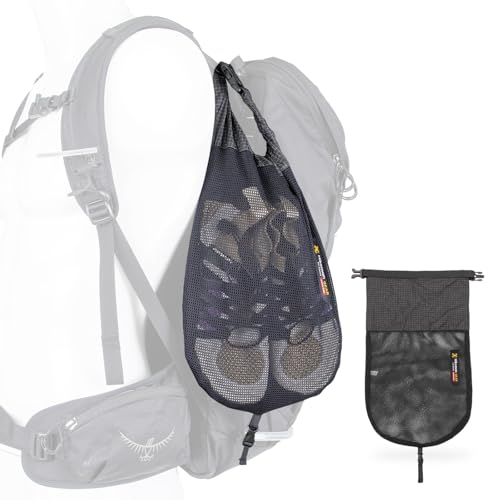
Pros
- Adds virtually no weight penalty at just 1.69 oz for the small model
- Self-stowing design packs cleanly into its own internal pocket when empty
- Roll-top expansion accommodates varying footwear profiles and small camp shoes
- Keeps dirty soles from contaminating dry clothing and sleep systems inside the main pack
Cons
- Open mesh design provides no water resistance or protection against blowing dust and rain
- Size Small is geared toward compact footwear and will not fit bulky mountaineering or oversized hiking boots
- Single-point buckle attachment can swing on technical terrain unless tucked under a backpack compression strap
The HIKEMAN Mesh Shoe Storage Bag is an external accessory pouch engineered to attach directly to hiking daypacks and multi-day backpacking packs. Designed specifically to haul footwear outside the main pack body, this organizer suits backpackers carrying camp sandals, day hikers transitioning from muddy trail runners, climbers packing approach shoes, and travelers needing quick-access external organization.
Weight and volume management are central to this pouch design. At a listed product weight of just 1.69 ounces in Size Small (2.53 ounces in Medium), it introduces almost zero base-weight penalty to your gear kit. The pouch also features a self-stowing pocket, allowing it to pack into its own compact pouch when empty so it takes up negligible room inside your pack until camp shoes or damp layers need to be isolated.
Construction centers around a durable mesh body paired with a roll-up top and a fixed hanging buckle. The adjustable roll-down top lets you cinch the pouch down around smaller footwear or expand it for slightly taller gear profiles, helping to minimize internal movement. The integrated buckle clips directly into external pack attachment points, including side compression straps, daisy chains, ice axe loops, or top haul handles.
On the trail, the breathable mesh fabric serves a distinct functional purpose by promoting air circulation. Rather than sealing wet river sandals or sweaty shoes inside an airtight compartment, the mesh allows moisture to evaporate during approach hikes or sunny trail days. Beyond footwear, the pouch functions well as a general stuff sack for quick-access items like rain jackets, warm beanies, work gloves, or climbing skins.
There are realistic limitations to keep in mind regarding weather and capacity. Because the pouch is constructed of mesh, it offers no rain protection or barrier against trail spray, meaning contents will get wet in sudden downpours. In addition, Size Small is tailored for lower-profile shoes, sandals, or minimalist trail runners; thick, high-top leather boots will likely exceed the small envelope and require the larger size option. A single top hanging buckle can also permit swinging if the pouch is not stabilized against the pack body using side compression webbing.
For hikers and backpackers seeking an affordable, ultralight method to keep soiled soles out of clean gear compartments, the HIKEMAN Mesh Shoe Storage Bag provides dependable, well-ventilated utility. It is an easy recommendation for anyone looking to organize camp footwear without taking up valuable internal pack capacity.
The primary advantage of the HIKEMAN Mesh Shoe Bag is external volume optimization. By lashing footwear to pack exterior anchor points, you preserve internal pack space for critical items like sleeping bags, dry clothing, food canisters, and hydration bladders.
The roll-up top design allows you to adjust the pouch volume based on what you carry. When packing flat camp sandals or minimalist trail shoes, the top rolls down tight to reduce bulk. For bulkier items like approach shoes or insulated gloves, the opening can be rolled less to accommodate the extra height.
Buyers should select sizing based on footwear bulk. Size Small (1.69 oz) suits low-cut trail runners, barefoot shoes, water sandals, and small gear items. Hikers carrying mid-cut boots, wide-sole sneakers, or larger shoe sizes should consider sizing up to ensure an easy fit without stressing the roll-top closure.
Because this pouch is designed to hold dirty trail footwear, regular cleaning helps maintain fabric integrity and breathability. The open mesh allows loose dirt and dry sand to shake free easily between uses.
For muddy build-up, hand-wash the bag in cool or lukewarm water using mild gear soap, then rinse thoroughly. Avoid high-heat machine drying, as excessive heat can degrade the synthetic mesh, webbing straps, and plastic buckle hardware. Hang the pouch in a shaded, well-ventilated area to air dry before stowing it away in its integrated pocket.

Pros
- Exceptionally lightweight at under 0.76 pounds and stows into its own compact internal pocket.
- Smart shoulder-strap pocket configuration keeps a large smartphone and trail snacks within arm's reach.
- Generous 10-pocket organization layout is unusually versatile for a compact 15-liter packable daypack.
- Sternum strap adjusts vertically and horizontally while including a built-in safety whistle.
Cons
- Frameless, ultralight construction offers no rigid back support or padded hip belt for carrying heavy loads.
- The 15-liter capacity is tailored strictly for essentials and will not accommodate bulkier cool-weather layers.
- Lacks a dedicated hydration reservoir sleeve and exterior hose routing port.
The Seektop 15L Small Hiking Backpack is a frameless, packable daypack built for day hikers, travelers, and minimalists who prioritize weight reduction and rapid accessibility. Weighing roughly 0.75 pounds, it serves as a lightweight day bag that easily folds into its own 7.48-by-7.87-inch zippered pocket, making it well suited for suitcase stowage or keeping as a backup summit pack on multi-day journeys.
With a listed volume of 15 liters and external dimensions measuring 5.11 by 11.02 by 17.32 inches, this daypack provides streamlined storage for warm-weather essentials such as a windbreaker, trail snacks, a small first-aid kit, and compact accessories. The carrying system utilizes breathable mesh shoulder straps paired with an adjustable chest belt that slides vertically and tightens around the circumference to help stabilize the load against your upper body. Because it lacks an internal frame, rigid stays, and a padded hip belt, load management relies on mindful packing to prevent firm objects from poking through the back panel.
In terms of materials and organization, the pack is crafted from high-density polyester waterproof fabric complemented by smooth SBS zippers and reinforced stitching across stress points. Storage is exceptionally detailed for a pack this size, delivering 10 distinct pockets. The front and main compartments house multiple interior organizers, while two exterior mesh side pockets hold compact water bottles. Notably, the shoulder straps incorporate trail-friendly storage: the left strap features a zippered pocket sized for smartphones up to 7 inches, while the right strap holds an elastic-cord stash pocket for snacks or small essentials. An anti-theft zippered compartment integrated into the back panel adds peace of mind in crowded transit hubs.
Everyday handling and packing are straightforward thanks to the self-stowing design. When not in trail use, the backpack inverts into its designated pocket, minimizing gear clutter in a closet or duffel. External webbing loops offer quick lash points for carabiners or lightweight attachments. For upkeep, the polyester fabric and mesh straps wipe clean with a damp cloth and mild soap, drying rapidly when hung in an open, shaded area.
While the packable design offers outstanding portability, it comes with practical limitations. The frameless build is not engineered for heavy gear or dense loads, and carrying pointed items can impact back comfort without careful internal arrangement. Furthermore, while the manufacturer notes waterproof fabric, packable zippers and non-taped seams mean it should not be treated as a fully submersible dry bag during persistent rainstorms. The 15-liter volume also restricts its use to warm-weather day trips or basic urban outings rather than cold-weather treks requiring bulky garments.
Overall, the Seektop 15L Daypack is an excellent value for hikers and travelers who want a reliable, ultra-compact pack for short excursions and spontaneous side trails. Its standout shoulder-strap phone pocket and multi-pocket layout make it a uniquely organized choice among packable daypacks.
The Seektop 15L backpack features a 10-pocket layout engineered to eliminate digging for small essentials on trail. The primary zippered compartment holds the bulk of your gear along with two internal drop pockets for flat items or travel documents. A secondary front zippered compartment and an exterior snap-closure pocket offer rapid access for items like keys, maps, or sun protection.
Two side mesh pockets accommodate standard-sized water bottles or compact drink containers. For security, a hidden zippered pocket is placed against the wearer's back panel, offering protected storage for passports or wallets during travel. On the front harness, the left shoulder strap features a zippered enclosure that fits mobile phones up to 7 inches, while the right strap includes a quick-draw elastic pocket for energy bars or small accessories.
Constructed from high-density polyester waterproof fabric, this daypack resists everyday trail scrapes while keeping total pack weight down to approximately 0.75 pounds. SBS zippers provide smooth opening and closing across compartments, supported by reinforced bar-tack stitching at the shoulder strap attachments to prevent seam failure under standard loads.
The entire backpack reverses and folds into an internal pocket measuring 7.48 by 7.87 inches. This compact footprint allows hikers and travelers to stow the bag easily inside airline carry-on luggage, a trunk organizer, or a larger multi-day expedition backpack as a lightweight summit bag. A built-in safety whistle on the sternum strap buckle provides added peace of mind in outdoor environments.
The Engineering of Trail Balance: A Complete Guide to Organizing Your Hiking Backpack
Packing a trail pack is fundamentally an exercise in physics and human biomechanics. Every ounce of gear loaded into your pack creates rotational leverage around your spine that your postural muscles must constantly counteract over thousands of footsteps. Arranging your equipment systematically minimizes this rotational leverage and allows your skeletal structure to bear the load efficiently. Mastering how to organize a hiking backpack transforms an unmanageable, shifting sack of loose items into a stable, responsive extension of your torso.
Experienced hikers divide internal pack volume into distinct functional tiers to control both weight distribution and access priority. Placing dense equipment in the wrong position pulls your upper body backward, causing severe neck stiffness, shoulder pinching, and lumbar fatigue. Conversely, stacking items with a deliberate density hierarchy keeps your posture upright across rocky ascents and technical descents. Following a structured packing framework ensures that emergency gear remains instantly reachable while heavy supplies remain locked securely against your back.
The Four-Zone Structural Packing Architecture
The standard architectural framework for packing any trail pack relies on four distinct zones: bottom, core, top, and perimeter. Each specific zone serves a dedicated biomechanical purpose based on item density, volume, and usage frequency. The bottom zone supports low-density bulk that remains untouched until making camp or finishing the day. The core zone, positioned directly against your spine between your shoulder blades and lumbar curve, secures your heaviest provisions.
Above the heavy core lies the top zone, which holds medium-density essentials and items requiring rapid trail access. Finally, the perimeter zone includes external pockets, lid compartments, and outer attachment points designed for hydration and trail tools. By classifying every piece of equipment into one of these four operational zones, you eliminate chaotic searching on the trail. This structured zoning approach prevents internal cargo shifts that threaten your footing on steep switchbacks.
Bottom Zone Dynamics: Creating a Cushion Base with Low-Density Bulk
The bottom section of your backpack should act as a shock-absorbing foundation for the entire load. This lower compartment is the ideal home for high-volume, low-weight items such as your sleeping bag, sleeping pad, or camp clothing layers. Stashing soft, fluffy equipment at the very bottom creates a stable shelf that absorbs impact with every downhill stride. Because you rarely need these sleep items during active trekking, keeping them at the base avoids unnecessary unpacking during brief trail stops.
Placing extremely heavy items at the base is a common error that severely degrades carrying comfort. When dense gear sits below your natural center of gravity, it exerts downward leverage that pulls the shoulder harness hard against your clavicles. This downward drag encourages your lower back to arch excessively, leading to rapid lumbar fatigue. Filling the bottom cavity with light bulk elevates the rest of the pack so dense supplies rest directly against your lumbar and thoracic support zones.
Core Zone Mechanics: Positioning Dense Mass Against the Spine
The core zone represents the most critical mechanical balance point inside your backpack. Dense items, including concentrated food rations, cook sets, liquid fuel bottles, and water reservoirs, belong squarely in this central region. You should position these heavy objects directly against the internal pack frame or back panel, between your shoulder blades and lower ribs. Aligning heavy items with your spinal column minimizes the moment arm of the load, preventing the pack from acting like a backwards pendulum.
Keeping heavy objects firmly in place requires careful spatial buffering with lighter mid-layer apparel. Surrounding a solid cook pot or food sack with soft fleece jackets, extra socks, or a camp towel prevents dense metal items from shifting while you walk. This buffering also prevents hard corners from poking uncomfortably through the back panel fabric into your shoulder blades. A securely wedged core prevents lateral weight transfer that can throw you off balance when stepping across slick river rocks or fallen logs.
Water management plays an enormous role in core zone stability because full hydration bladders represent substantial, fluid weight. If your pack features an internal hydration sleeve, sliding a full reservoir into that pocket naturally locks the water close to your anatomical center of gravity. As you drink water throughout the hike, the shifting liquid volume will not destabilize the pack as long as the bladder is held vertically against the frame. Balancing fluid mass against your food supplies preserves consistent posture across long trekking hours.
Top Zone Strategy: Staging Rapid-Access Layers and Urgent Supplies
The upper tier of the main compartment should hold medium-weight items that you might need at a moment notice. Packable weather protection, such as wind shells, waterproof jackets, and insulating mid-layers, belongs right below the main pack opening. Staging weather layers near the top allows you to pull on rain gear quickly when mountain skies darken without dumping out your sleeping kit. First aid kits, navigation devices, and lunch rations also function best when rested atop the heavier core gear.
Be careful not to overload this top tier with excessive dense weight that creates a top-heavy wobble. If you place heavy cans, cast iron tools, or full water bottles above your shoulder line, the pack will sway dramatically with every step. High-riding mass raises your natural center of gravity, which compromises ankle stability on uneven trail beds. Storing lighter, weather-critical items in the upper zone keeps your upper torso agile while protecting fragile gear from crushing forces below.
Perimeter and External Pouch Management for Trail Tools
The perimeter zone encompasses exterior side sleeves, front stretch pockets, and specialized add-on storage. Side elastic pockets work best for standard water bottles, tent poles, or compact trekking umbrella shafts where you can reach them without unbuckling the main harness. When internal pack volume is limited, modular attachments offer a practical way to free up valuable interior room. For example, using an external accessory like the lightweight HIKEMAN mesh shoe storage bag allows hikers to hang muddy trail footwear, wet river shoes, or camp sandals securely on the outside of the pack.
Securing dirty or moisture-laden gear externally keeps mud, grit, and trail moisture away from clean clothing packed inside the main cavity. However, external attachment points require strict discipline to prevent excessive swinging or snagging on trailside branches. Always lash exterior gear tight against the pack body using side compression webbing or dedicated buckled straps. Keeping perimeter cargo flush against the bag preserves a clean, aerodynamic silhouette through dense brush and rocky scrambles.
Moisture Protection and Compartmentalized Dry-Wet Separation
Wet weather presents a constant challenge to internal pack organization because soaked insulation can lead to severe hypothermia. Even backpacks constructed from water-repellent fabrics can admit moisture through unsealed needle holes or exposed zipper teeth during sustained downpours. Incorporating internal dry bags or silicone-coated stuff sacks isolates essential down clothing and dry base layers from environmental moisture. Certain versatile designs, such as the MIYCOO 35L packable backpack, include integrated wet compartments specifically tailored to separate damp rain jackets or sweaty towels from dry cargo.
Separating damp items from dry gear ensures that condensation does not migrate into your warm clothing while you trek. If your pack lacks a built-in wet pocket, dedicated lightweight dry sacks provide modular protection against unexpected weather changes. Color-coding these internal stuff sacks speeds up gear retrieval when setting up camp in failing evening light. Never assume water resistance is absolute; always safeguard sensitive electronic batteries, paper maps, and sleeping insulation in sealed waterproof barriers.
Harness Geometry: Translating Internal Balance into Ergonomic Suspension
Even the most meticulously packed gear load will feel heavy and cumbersome if your harness system is improperly calibrated. An organized interior functions as a rigid core that enables load-bearing straps to transfer mass directly onto your pelvic girdle. Before cinching down shoulder straps, loosen all harness webbing completely and position the padded hip belt directly over the iliac crest of your hip bones. Snugging the hip belt first ensures that the major muscle groups of your legs support up to eighty percent of the carried load.
Once the hip belt anchors the base, gently pull the shoulder strap adjustment tails downward until the padded harness contours smoothly over your clavicles. Avoid over-tightening these shoulder straps, which pulls weight off your hips and forces your delicate trapezius muscles to support the pack. If your backpack includes load-lifter straps at the collarbone, tension them to roughly a forty-five-degree angle to pull the top of the pack snug against your upper back. This forward tension prevents the pack from sagging away from your shoulder blades during active movement.
Finally, connect and adjust the sternum strap across the center of your chest without restricting lung expansion. Fastening the chest buckle stabilizes the shoulder straps, preventing them from slipping outward across your arms or chafing sensitive armpits. Many modern daypacks feature an emergency signal whistle molded directly into this sternum buckle, providing quick emergency signaling capability right at chest height. A properly aligned harness works in tandem with internal balance to distribute weight evenly across your entire musculoskeletal frame.
Adapting Organization for Compact Daypacks Versus High-Capacity Rigs
The rules of pack organization remain consistent whether you carry a cavernous multi-day pack or a minimalist daypack. Compact options like the Seektop 15L hiking daypack or the WATERFLY 20L packable backpack rely heavily on pocket distribution rather than broad internal cavern space. The Seektop design utilizes ten dedicated pockets, including specialized shoulder strap pouches for a mobile phone and high-energy trail snacks, allowing hikers to grab calories on the move. Storing frequent items directly on the harness eliminates the need to stop and remove your pack for minor trail adjustments.
In smaller daypacks, space efficiency becomes paramount because clothing layers and hydration reservoirs compete directly for limited cubic capacity. If you plan specialized outings requiring perishable trail snacks, inspecting specialized hiking packs with dedicated cooler storage can help you integrate thermal insulation without disrupting overall pack geometry. Similarly, hikers seeking economical day-hiking gear can explore reliable budget hiking packs that provide essential multi-compartment layouts without excessive weight. Matching your packing volume to the specific demands of your day trip keeps your pack light and nimble.
Common Packing Errors That Provoke Trail Fatigue and Seam Blowouts
One frequent mistake among hikers is failing to balance gear laterally, causing the pack to lean noticeably toward one side. Placing a heavy water bottle on one flank while leaving the opposite side pocket empty forces your spine into continuous lateral flexion. This uneven posture overworks unilateral back muscles, resulting in dull aches and premature muscular exhaustion. Distribute dense liquids, metal tools, and fuel bottles symmetrically across the left and right quadrants of your pack to maintain spinal alignment.
Another major mistake involves cramming rigid, oversized objects into tight spaces and forcing zipper sliders over bulging seams. Forcing standard or heavy-duty SBS zippers across strained pocket walls places extreme lateral shear stress on the zipper teeth and stitching threads. Over time, this mechanical strain leads to split coils, detached teeth, and blown out seam bindings mid-trail. Pack clothing around angular gear to soften hard corners and compress loose items naturally before pulling zipper sliders shut.
Hikers also frequently bury emergency gear beneath heavy layers in an effort to fill the pack cavity neatly. Storing your first aid kit, headlamp, blister treatment, or rain shell at the bottom of the bag creates severe delays during sudden downpours or medical emergencies. Organizing gear by sequence of use ensures that trail safety is never compromised for aesthetic packing order. Keep survival essentials within dedicated quick-access pockets where you can deploy them in seconds without unloading your entire kit.
Pre-Trail Verification Protocols and Dynamic Field Adjustments
Before stepping onto the trail, always conduct a brief stability verification test at the trailhead. Hoist your fully loaded pack, buckle the hip belt and sternum strap, and take several deliberate bounding steps while bouncing gently on your toes. The pack should move in unison with your torso rather than flopping backward or swaying wildly from side to side. If you feel dense mass pulling your neck backward or shifting violently inside the bag, open the main cavity and cinch internal compression straps tighter around the core zone.
Remember that pack organization is not a static state; it evolves dynamically as you hike and consume supplies throughout the day. Drinking water from your reservoir and consuming heavy trail rations progressively empties the core zone, which alters the balance point of your pack. Take brief moments during extended trail rests to pull down on external compression webbing and draw remaining gear closer to your back panel. Compressing empty dead space prevents remaining items from sloshing loosely inside the pack as fuel reserves diminish.
Developing consistent, disciplined packing routines transforms every outdoor excursion into a smoother, far more comfortable journey. When your gear rests securely in its dedicated zone, your body expends less energy fighting gravitational drag and more energy enjoying the surrounding wilderness. Practice loading your equipment at home until your hands naturally position dense mass against your spine and light cushioning at the base. With a properly balanced pack riding securely across your hips and shoulders, you can tackle miles of rugged terrain with complete stability and confidence.







Write Your Review
No reviews yet. Be the first to share your experience!