


Running out of interior compartment space during a packed morning commute or a weekend trail outing can quickly disrupt an otherwise organized day. Securing bulky gear, damp jackets, or high-use travel tools to external attachment points offers an efficient way to expand carrying utility without crowding your laptop sleeve or main cavity. Understanding how to use carabiner on backpack attachment points allows you to clip items securely while maintaining balanced weight distribution. Whether you carry a technical daypack or explore affordable hiking backpacks, external rigging transforms exterior webbing loops into versatile utility anchors.
Carabiners serve as rugged mechanical bridges between your bag and awkward gear that resists standard interior packing. Selecting the right hardware ensures that items like water bottles, keys, and transit footwear remain firmly anchored rather than swinging erratically against your body. Dialing in proper attachment techniques protects both your pack fabric and your posture during extended walking sessions. By focusing on smart weight placement and secure clip positioning, you can streamline your daily routine and enjoy quick exterior access to your most essential tools.

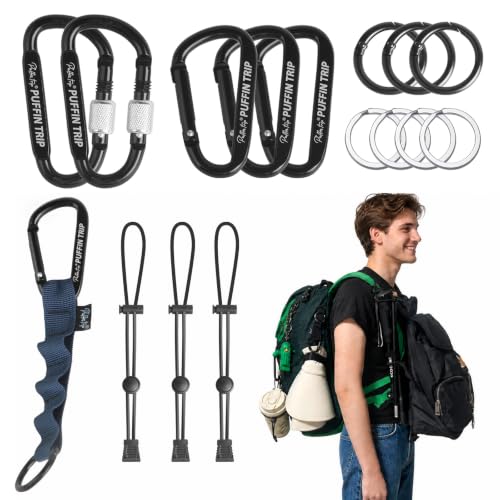


Mastering Backpack Carabiner Attachment Points, Gear Distribution, and Hardware Selection
Attaching exterior gear with clip hardware requires a deliberate balance between convenience, stability, and body mechanics. Snapping a clip onto any random loop can cause awkward gear bounce, uneven shoulder strain, or premature fabric abrasion. Learning how to use carabiner on backpack lash points correctly turns exterior pack space into an organized extension of your carry system. By identifying structural attachment points and matching them with suitable hardware, you keep your gear secure throughout long miles on pavement or dirt trails.
Identifying Structural Attachment Points on Modern Backpacks
Backpacks feature various external loops, but not every loop is engineered to support dynamic, swinging loads. Daisy chains, which consist of heavy webbing bar-tacked at regular intervals down the pack face, provide dedicated anchor points for accessory clips. These reinforced segments distribute pulling forces across the pack panel, making them ideal for bulky gear like sandals or camp mugs. Anchoring near the center or upper daisy chain loops prevents suspended items from dragging low or banging against your knees.
Tactical and modular packs often incorporate PALS or MOLLE webbing grids crafted from rugged nylon. These horizontal webbing bands allow precise placement of accessory clips, keeping attached tools held tight against the bag exterior. Threading a clip through consecutive webbing loops provides a rigid anchor that drastically minimizes dangling during active movement. This flush mounting style prevents loose items from snagging on transit turnstiles, vehicle doors, or thick trail branches.
Shoulder harness D-rings offer another convenient anchor location intended for lightweight, immediate-access items. Located on the front of your chest, these plastic or metal rings work best for sunglasses cases, transit cards, or hydration tube clips. In contrast, zipper pulls and thin elastic cords should never serve as primary load anchors because bouncing objects can derail zipper coils or rip delicate seams. Keeping front-mounted gear minimal preserves natural arm movement and maintains comfortable sternum strap alignment.
Matching Carabiner Materials and Gate Styles to Carry Demands
Selecting the proper clip hardware depends heavily on the weight and profile of the items you plan to suspend. Lightweight aluminum wiregate clips, such as the Sea to Summit Accessory Carabiner 6-Pack, provide an ideal mix of minimal tare weight and daily utility. Wiregate mechanisms resist freezing in cold weather and clear webbing loops without snagging. These compact aluminum clips excel at holding baseball caps, gloves, travel neck pillows, and empty water bottles.
When security and anti-loss retention take priority, woven paracord connectors deliver substantial utility for everyday carry setups. Options like the 3PCS Paracord Keychain Carabiner Backpack Buckles combine flexible braided cord with durable snap clips to form flexible tether points. The braided cord section absorbs walking vibration while allowing keys or tools to flex without binding the clip. This flexible link works especially well inside admin pockets or attached to exterior pen loops.
Carrying heavier outdoor tools or stainless steel camp cookware requires robust, fatigue-resistant hardware. Heavy-duty options like the sprookber 304 Stainless Steel Carabiner Spring deliver high tensile resistance and dependable corrosion protection against wet weather. For broader gear setups, multi-piece options such as the 16-in-1 Carabiner Set Gear Up Your Backpack supply varied gate profiles to match different webbing widths. Choosing the right metal composition prevents unexpected gate deformation when carrying dense gear over rough ground.
Optimizing Center of Gravity and Harness Ergonomics
External gear placement directly impacts how your pack distributes weight across your spine and hips. Every item hung from the exterior face of the bag creates a lever arm pulling backward against your shoulders. When heavy items dangle far from your back panel, they increase rotational torque, forcing your upper torso to lean forward to compensate. This postural adjustment frequently leads to neck stiffness, trapezius tightness, and premature lower back fatigue.
Maintaining carrying comfort requires positioning dense exterior gear as close to the back panel as possible. If you must clip dense objects like a filled metallic water flask, attach them to side webbing channels rather than the center back face. Placing dense gear along the side perimeter aligns the mass closer to your natural center of gravity. This lateral positioning keeps your pack stable and minimizes backward leverage during long walking commutes.
Distributing weight symmetrically across both sides of the backpack is equally vital for spinal alignment. Clipping a heavy item to one side while leaving the other side empty introduces lateral tilt that strains oblique muscles. Cinching your shoulder strap lower tensioners and fastening the sternum strap pulls the pack closer to your shoulder blades. For heavier payloads, engaging a supportive waist belt anchors the pack against your hips, preserving full torso mobility.
Practical Attachment Strategies for Everyday Commuting and Campus Life
Daily transit commuters face tight spaces where external accessories must remain tidy and snag-free. Using an accessory carabiner inside the front administrative pocket creates a reliable key tether that prevents frantic searching at your doorstep. By clipping keys to an internal fabric loop, you can quickly release them without opening the entire main storage compartment. This dedicated docking method prevents sharp metal key edges from scratching delicate laptop screens or tablet displays.
Securing commuter drinkware is another frequent application where external clips provide valuable peace of mind. While many modern packs feature stretch mesh side pockets, tall travel mugs can easily tilt and slip out when you bend forward to board a train. Clipping the mug handle to a nearby side compression strap creates a fail-safe backup that prevents accidental drops. The side pocket continues to support the vertical weight while the carabiner eliminates forward tip-out risk.
College students and hybrid workers frequently need quick exterior storage for bulky personal apparel during unpredictable weather. Clipping a baseball cap or rolled light jacket to a front webbing daisy chain frees up internal volume for textbooks and notebooks. Wet umbrellas can also hang safely outside the pack, keeping damp moisture away from sensitive charging cords and paperwork. When boarding crowded subway cars, tuck dangling items inside open pockets to prevent snagging on closing doors.
Rigging Strategies for Trail Hiking and Outdoor Recreation
Trail hiking presents dynamic conditions where exterior carabiner rigging solves unique gear management challenges. Outdoor recreation often involves managing specialized gear like cooler-equipped hiking packs alongside standard trail hydration and nutrition supplies. Clipping lightweight trekking essentials, such as a compact GPS tracker or broad-brimmed sun hat, to upper pack loops keeps them readily accessible without stopping. Quick access allows hikers to adapt seamlessly to changing trail weather without removing their pack harness.
Separating wet or muddy trail gear from clean interior clothing is another scenario where exterior clips prove indispensable. Soiled camp sandals, damp microfleece layers, or saturated rainfly covers can hang from bottom lash loops to air dry during sunny miles. Keeping damp gear outside the pack preserves internal dryness and prevents foul mildew odors from settling into pack lining fabrics. The natural airflow generated while walking accelerates fabric drying while keeping your sleeping gear protected.
Hikers venturing out with canine companions can use specialized exterior clips to keep waste and accessories neatly managed. Integrating gear from our guide on hiking essentials for dogs, items like the 3pcs Hands-free Dog Waste Bag Holder Clip attach cleanly to rear webbing loops. This dedicated ABS plastic clip holds filled bags securely away from your body and your main gear compartment. Taking a brief moment to check gate closure before entering rough terrain prevents unexpected gear loss miles from the trailhead.
Preventing Gear Sway, Rhythmic Bouncing, and Fabric Abrasion
One of the most persistent annoyances of using carabiners on backpacks is the rhythmic swaying motion that occurs with every stride. When a suspended object swings freely, it creates a pendulum effect that wastes energy and disrupts your walking cadence. Heavy water bottles swinging side-to-side produce lateral momentum that pulls unpredictably against your shoulder straps. Eliminating this uncontrolled pendulum motion is essential for maintaining smooth, comfortable walking efficiency.
Stabilizing suspended equipment requires pairing your carabiner with a secondary anchor point or retention strap. After clipping the top handle of an item to a daisy chain, pass an elastic shock cord or side compression strap around its lower body. This two-point contact system locks the item flat against the pack body, stopping lateral swinging while preserving quick-release convenience. The carabiner supports the downward vertical weight while the lower strap dampens horizontal motion.
Repetitive rubbing between metallic carabiners and pack fabric can gradually degrade delicate textiles over time. While heavy 500D or 1000D Cordura nylon withstands moderate hardware abrasion, ultralight 100D or 210D ripstop fabrics can suffer surface pilling and thread wear. Wrapping metal clip contact points with soft electrical tape or using paracord loops creates a gentle buffer that shields fabric coatings. Using fabric spacers also silences metallic clicking sounds between adjacent pieces of hardware during quiet nature walks.
Critical Limitations and Load-Bearing Safety Boundaries
Maintaining personal safety requires a clear understanding of the mechanical boundaries of non-rated accessory clips. Accessory carabiners sold for backpack utility, regardless of how sturdy they appear, are strictly non-load-bearing hardware never designed for human weight support. These clips must never be used for rock climbing, hammock suspension, technical rigging, or vehicle towing applications. Confusing recreational accessory hardware with certified life-safety equipment poses severe hazards in outdoor environments.
Dynamic forces generated during vigorous running or sudden drops multiply the perceived weight of suspended objects significantly. A heavy water bottle bouncing violently down a rough trail can generate momentary shock forces that easily exceed a small wiregate rating. Overstressed accessory gates can bend outward or deform spring pins, causing the clip to fail and release your gear unexpectedly. High-value electronics should also remain stowed within padded internal compartments rather than dangling from exterior clips where impacts or theft can occur.
Hardware Inspection, Cleaning, and Long-Term Maintenance
Regular maintenance ensures that your backpack hardware operates smoothly and resists premature wear or mechanical binding. Over time, trail dust, fine beach sand, and road grime accumulate inside spring gate hinges and wire pivot points. A gritty hinge mechanism can cause gates to stick open, compromising gear retention when you need it most. Inspecting your carabiner collection before each excursion ensures that every spring snaps shut firmly and reliably.
Cleaning outdoor hardware requires only simple household supplies and minimal effort to restore crisp gate action. Soaking gritty clips in warm, soapy water and agitating the gate several times dislodges trapped dirt particles from the pivot pin. After drying the hardware thoroughly, applying a drop of dry silicone lubricant keeps the spring mechanism operating smoothly. Checking your backpack webbing loops for loose bar-tack stitching ensures that your anchor points remain completely secure.
Taking a systematic approach to exterior gear rigging transforms how you carry equipment across campus, daily transit, and backcountry trails. Matching structural pack loops with appropriate clips keeps your essentials secure, accessible, and properly balanced without compromising your posture. Performing a quick shake test at home before leaving ensures that your setup is quiet, stable, and ready to perform wherever your travels lead.







Write Your Review
No reviews yet. Be the first to share your experience!