


Heading into the outdoors requires a solid balance between carrying adequate safety supplies and avoiding crushing pack weight. Knowing what to pack in a hiking bag ensures that every essential item earns its place without overwhelming your shoulders on steep ascents. Poorly planned gear choices often lead to fatigued leg muscles, sore collarbones, or missing protection when mountain weather shifts unexpectedly. Preparing a smart checklist transforms a chaotic scramble into an efficient, safe outing on any backcountry trail.
Selecting the right combination of shelter, hydration, navigation, and trail organization depends heavily on trip duration and terrain. Pairing a compact daypack with modular storage like dry sacks protects sensitive electronics and spare clothing from rain or stream crossings. For those shopping for a versatile carrier, reviewing budget day-hiking backpack options can help you balance volume capacity against overall tare weight. Understanding proper trail packing principles keeps your load balanced against your spine while keeping critical survival tools immediately accessible.

Pros
- Extremely light at 0.68 lbs and packs down into its own compact self-contained pouch
- Dual shoulder strap pockets keep a phone (up to 7 inches) and trail snacks within arm's reach
- Compatible with hydration bladders up to 2 liters with integrated tube routing
- Breathable mesh shoulder straps paired with an adjustable chest strap and built-in safety whistle
Cons
- Frameless ultralight design lacks a padded hip belt and rigid suspension for carrying heavier loads
- Fabric provides water splash resistance but is not fully waterproof and does not include a rain cover
- Hydration reservoir is not included and must be purchased separately
The AiryLeben 14L Small Hiking Backpack is an ultralight, frameless daypack engineered for hikers and travelers who prioritize compact portability. Weighing only 0.68 pounds, it functions primarily as a packable summit pack, secondary travel daypack, or short-distance trail bag. It is well suited for day hikers carrying the ten essentials, travelers seeking an extra bag for side excursions, and commuters needing a minimalist, low-profile carry system.
In practical trail scenarios, the 14-liter capacity provides enough volume for a light midlayer, compact rain jacket, snacks, and small accessories. The pack measures 5.2 by 9.65 by 15.9 inches when fully unfolded, keeping the profile narrow and close to the body. An internal sleeve accommodates hydration bladders up to 2 liters (sold separately), supported by an exit port on the shoulder strap for hands-free hose routing. Dual side pockets hold standard water bottles, while an exterior elastic cord secures an extra layer or a damp towel on the outside of the bag.
The build quality centers around a lightweight nylon fabric that provides resistance against common trail abrasions, branch snags, and light water splashes. Construction includes reinforced stitching at primary stress points and SBS zippers designed for smooth pull action. The shoulder harness uses breathable open mesh to improve airflow over the shoulders, and the adjustable chest strap includes an integrated survival whistle built into the buckle for trail signaling.
User handling and gear access stand out due to the harness pocket layout. Unlike many minimalist daypacks that require removing the pack for phone or snack access, this pack features a zippered pocket on the right shoulder strap fitting phones up to 7 inches, alongside a drawstring pouch on the left strap for food or a small bottle. For transit and storage, the entire daypack collapses into an integrated 6.3 by 6.7 inch pocket, fitting easily inside carry-on luggage or a larger backpacking pack.
Potential buyers should keep realistic performance boundaries in mind. The pack is completely frameless and lacks a structured back panel or load-bearing hip belt, meaning it is not designed to support heavy gear loads or distribute weight off the shoulders. Additionally, while the nylon resists light splashes, it is not seam-sealed or waterproof, so sensitive electronics or clothing should be protected with internal dry bags during steady rain.
For hikers, travelers, and theme-park visitors seeking an inexpensive, sub-pound packable daypack with smart front-access storage and hydration compatibility, the AiryLeben 14L delivers dependable utility and exceptional convenience for short outings.
The AiryLeben 14L pack integrates versatile hydration options rarely found on packable daypacks. The main compartment contains an internal divider specifically measured to support hydration bladders up to 2 liters in volume. A dedicated hose pass-through port on the shoulder strap allows clean routing of drinking tubes directly to the chest area. A hydration bladder is not included with the pack and must be acquired separately.
Beyond reservoir support, the pack provides multiple exterior access options. Dual side pockets accommodate slim water bottles, while the left shoulder strap features an elastic drawstring pocket suitable for quick-grab items or small soft flasks. The right shoulder strap includes a dedicated zippered sleeve that fits smartphones up to 7 inches. Exterior bungee cords on the front panel allow hikers to lash a fleece, windbreaker, or wet towel without opening the main compartment.
Portability is a defining feature of the AiryLeben 14L daypack, which weighs a minimal 0.68 pounds. When deployed, the pack spans 5.2 inches deep, 9.65 inches wide, and 15.9 inches tall, creating a small footprint that sits comfortably against the upper back. When not in use, the entire bag folds down into its own built-in internal storage pocket, reducing its dimensions to just 6.3 by 6.7 inches.
Because the pack features an ultralight frameless build, it does not rely on a fixed torso frame sheet. Fit adjustment is achieved through adjustable shoulder straps and an adjustable chest sternum strap to secure the bag across different body frames. The minimalist profile makes it an effortless addition to luggage for travelers who need a dedicated hiking daypack once they arrive at their destination.

Pros
- Six distinct volume sizes provide great modular organization for different gear categories
- Glued seams and PU coating offer practical defense against light rain and internal pack condensation
- Folds nearly flat and weighs minimal pack weight when stored inside your main pack
- Roll-top buckle system doubles as a convenient grab handle for quick extraction from deep compartments
Cons
- Not engineered for prolonged underwater submersion or heavy paddle immersion
- Largest 8L sack is too compact for bulky cold-weather sleeping bags or multi-person tents
- Lightweight polyester fabric requires care when packing items with sharp metal edges or corners
The Pimoys 6-Pack Ultralight Dry Sacks serve as a modular gear organization and moisture-protection system designed for day hikers, weekend backpackers, campers, and outdoor travelers. Rather than relying on a single bulky pack liner, this multi-pack provides dedicated storage across six incremental capacities: 1.5L, 2.5L, 3L, 3.5L, 5L, and 8L. This setup appeals directly to hikers who want to separate dry camp clothes, first aid essentials, power banks, and trail meals into clean, color-coded compartments within a larger hiking daypack or multi-day backpacking pack.
On the trail, managing internal gear volume is essential for pack stability and efficient transitions. The smaller 1.5L and 2.5L pouches are well proportioned for compact personal items, hygiene kits, headlamps, or emergency fire starters. Mid-range volumes like the 3L and 3.5L options work well for food rations, cook kits, or base layers, while the larger 5L and 8L sacks comfortably accommodate packable down jackets, thermal underwear, dry socks, or lightweight camp blankets. Because each sack features a distinct color, you can locate specific gear inside your backpack without dumping everything onto a damp forest floor.
In terms of construction, Pimoys utilizes a lightweight polyester fabric backed with an internal PU coating to block moisture in humid environments and light precipitation. The critical seam junctions are sealed with glue to minimize water intrusion along needle lines, while the top opening relies on a fold-and-roll design secured with a sturdy plastic snap buckle. While the product materials are designed to resist splashes, wet foliage, and backpack condensation, the manufacturer notes that these bags are not intended for long-term water submersion. Backpackers should treat them as protective weather shields inside a pack rather than submersible dive containers.
Using the sacks is straightforward and requires no complex setup. To establish a secure seal, roll the top collar tightly downward three or more times before fastening the snap buckle together. The buckled loop instantly creates a functional carry handle, making it easy to pull specific sacks out of deep pack bodies or hang them from tent hooks. When not in use, the flexible material rolls up tightly or folds completely flat, slipping into an external pocket or suitcase corner without contributing noticeable bulk or pack weight.
Hikers should keep practical limitations in mind before heading into severe weather. Because the fabric emphasizes low weight and flexibility, it lacks the heavy puncture resistance of thick marine-grade PVC, meaning tent stakes, trekking pole tips, or pocket knives should be packed with caution. Furthermore, the 8-liter maximum capacity will not swallow a plush winter sleeping bag or an entire cold-weather wardrobe. Users needing heavy-duty whitewater rafting protection or deep-water submersion performance will need specialized submersible cases for sensitive electronics.
For trail users seeking an affordable, ultralight organizational system, the Pimoys 6-Pack Dry Sacks offer outstanding utility. They simplify pack organization, reduce clutter inside your pack, and provide dependable defense against damp trail conditions, misty mornings, and backpack moisture.
The standout advantage of this 6-pack dry sack system is its granular size progression, giving hikers the exact volume needed for distinct gear categories without wasting pack space. Using dedicated sacks measuring 1.5L, 2.5L, 3L, 3.5L, 5L, and 8L eliminates the dead space often created by using oversized stuff sacks for small items.
The multicolor finish provides immediate visual cues when you open your backpack on the trail, allowing you to grab lunch, extra layers, or medical supplies without searching through loose items. Their slick outer polyester finish also minimizes friction, helping the sacks slide smoothly against each other when packing or unpacking a full hiking pack.
Protection against moisture is achieved through the combination of PU-coated polyester fabric, glue-sealed internal seams, and a tight roll-top closure mechanism. When rolled properly and buckled, the sacks resist rain spray, damp gear contact, and sudden trailside weather shifts that can penetrate standard backpack shells.
While highly capable against light rain, humid trail conditions, and accidental hydration bladder leaks inside your pack, these bags are not rated for complete or prolonged submersion. For critical electronics or documents exposed to deep water, pairing them inside a secondary pack liner or dedicated hard case is recommended.

Pros
- Packs down compactly with the included strapped compression sack, fitting smoothly into hiking packs or lashed externally
- Weighs under 3 pounds (listed at roughly 2.87 lbs), keeping carried weight manageable on warm-weather backpacking trips
- Hex-tech outer shell wipes clean easily and offers water protection against damp campsite conditions
- Convenient dual-sided snag-free zipper, headrest drawstring, and anti-slip velcro closure strap improve nighttime adjustability
Cons
- Limited to mild weather with a 50°F to 77°F rating, making it unsuitable for true cold-weather or alpine winter trips without auxiliary insulation
- Synthetic fill does not compress as small or as light as premium high-fill-power down bags
- At 29.5 to 31.5 inches wide, broader sleepers may find the interior cut restrictive compared to rectangular home bedding
The MalloMe 3-Season Sleeping Bag serves as a budget-friendly sleep system designed for warm-weather campers, summer backpackers, and scouts building an entry-level trail setup. Rated for temperatures between 50°F and 77°F, this single-person sleeping bag focuses on mild-weather use where heavy, freezing-rated insulation would add unnecessary bulk and weight to a hiking loadout. For hikers seeking an affordable sleeping accessory that packs into a backpack without consuming excessive budget, this model provides practical functionality for state park overnights, backyard campouts, and casual trail trips.
In terms of pack carry and dimensions, the sleeping bag weighs approximately 2.87 pounds (listed by the manufacturer as around 3 pounds) and measures 86.6 inches in length by roughly 29.5 to 31.5 inches in width. The generous length easily accommodates a 6-foot adult while also serving kids and teens comfortably. For transport, it includes a compression sack fitted with adjustable cinch straps, allowing backpackers to compress the packed volume and slip it into a lower sleeping-bag compartment or lash it externally beneath a hiking backpack.
The construction highlights sensible trail-ready materials for damp outdoor environments. It features a waterproof hex-tech protective outer shell, reinforced with double-layered S-shape stitching to prevent the interior fill from shifting or clumping during use. Inside, 3D synthetic fiber fill provides reliable thermal loft and insulation. Hardware includes snag-free double-sided zippers for smooth venting from either end, an integrated headrest with adjustable drawstrings for draft control, and an upper velcro securing strap that prevents the zipper from migrating open overnight.
Daily trail operation and packing are straightforward. At camp, unrolling the bag allows the 3D synthetic fiber to loft quickly, while the headrest drawstrings can be pulled tight to retain warmth around the neck and head in cool weather. When breaking camp, the sleeping bag rolls up and slides into the compression sack, where tightening the exterior compression straps reduces overall pack volume. Maintenance between trips is equally simple: surface dirt and mud wipe off the hex-tech shell with a damp cloth, and the bag is fully machine washable for deeper end-of-season laundering.
Buyers should keep realistic expectations regarding thermal limits and pack volume. With a temperature rating of 50°F to 77°F, this bag is strictly built for mild spring, summer, and early fall nights, meaning it should not be relied on for late-season alpine treks or sub-freezing conditions without auxiliary thermal liners. Furthermore, while the synthetic fill retains insulating properties in damp air, it does not compress down as tiny as high-fill-power down alternatives, requiring realistic space allocation in mid-sized hiking daypacks or overnight packs.
Based on product specifications and listed design features, the MalloMe Sleeping Bag represents a solid, cost-effective sleep gear solution for warm-weather backpackers, family campers, and casual weekend hikers. It delivers the right blend of protective shell fabric, dependable hardware, and included compression storage for anyone assembling a reliable warm-weather camp kit.
The MalloMe sleeping bag measures 86.6 inches in length by roughly 29.5 inches to 31.5 inches wide, offering adequate room for adults up to 6 feet tall, as well as youth and teens. At an official weight of roughly 2.87 pounds (around 3 pounds), it provides a manageable carry weight for weekend trail overnights.
The included compression sack features integrated compression straps designed to reduce packed bulk. This makes it easier to pack inside the base compartment of a multi-day backpacking pack or attach securely to external gear loops without requiring separate aftermarket dry bags or straps.
Built with a protective hex-tech waterproof outer shell and double-layered S-shape stitching, this sleeping bag resists light ground moisture and tent condensation. The interior uses 3D synthetic fiber fill to provide soft, distributed insulation across mild temperature ranges from 50°F to 77°F.
Routine care is hassle-free because surface grime can be wiped away with a damp cloth. For thorough cleaning after dusty or muddy trail use, the sleeping bag is fully machine washable, preserving long-term cleanliness and performance without specialized laundering requirements.
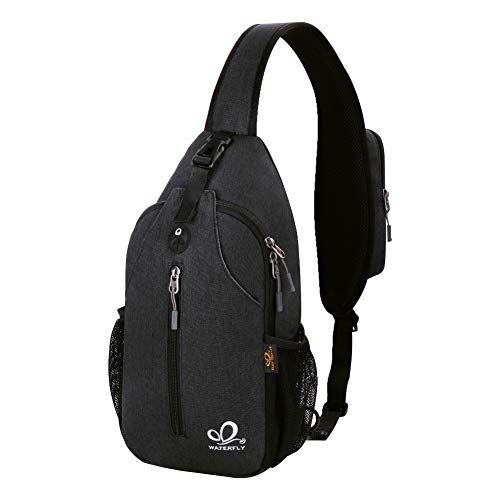
Pros
- Weighs only 0.6 pounds to keep bulk minimal on casual day hikes and walks
- Strap adjusts smoothly from 31 to 39.5 inches and clips to either side for versatile carry
- Dedicated shoulder pouch offers instant trail access to phones with screens under 7 inches
- Multiple organized compartments fit an iPad mini, power bank, keys, and small necessities
- Breathable strap and back-panel materials help prevent excessive heat buildup
Cons
- Side mesh pocket only fits slim bottles up to 2.4 inches in diameter, excluding standard 32-ounce trail bottles
- Compact capacity is strictly suited for essentials and cannot carry bulky layers or overnight gear
- Water-resistant fabric sheds light moisture but is not rated as fully waterproof in sustained downpours
The WATERFLY Crossbody Sling Backpack is a compact, single-strap chest daypack designed for quick trail walks, minimalist day hiking, active travel, and everyday carry. Weighing just 0.6 pounds with dimensions of 7 x 3.5 x 15 inches, this lightweight pack provides an accessible, low-profile alternative to traditional two-strap daypacks. It best suits casual walkers, travelers, and day hikers who want hands-free storage for personal items, small electronics, and light hydration without carrying excess pack weight.
For trail use, this sling pack focuses on streamlined convenience rather than heavy load hauling. The main and secondary storage compartments are proportioned to fit compact gear such as an iPad mini, trail snacks, keys, personal tissues, and a portable power bank. Its exterior 6-inch side mesh pocket holds a slim water bottle up to 2.4 inches in diameter, making it functional for short walks where a basic drink is needed. Because it is built for quick outings, it keeps everyday essentials organized without adding bulk to your stride.
The build quality incorporates water-resistant exterior fabric intended to shed light mist, incidental splashes, and brief drizzles encountered on the trail. Both the single shoulder strap and the back panel utilize breathable materials to help manage warmth during sunny excursions. Practical exterior features include a sturdy front buckle for the quick-drop pocket, smooth-gliding zippers, durable D-ring attachment hardware, and a discreet hidden earphone hole on the front face for easy audio cable routing.
Adjusting the sling pack to your preferred carrying style is straightforward thanks to its three-point lower hardware design. Hikers can clip the reversible shoulder strap into either the left or right D-ring, facilitating comfortable cross-body wear across either shoulder or over the chest. The strap itself adjusts from 31 inches to 39.5 inches in length to fit various torso sizes, and it features an integrated 3.5 x 1.5 x 7.5 inch phone pocket that keeps smartphones with screens up to 7 inches readily accessible while on the move.
Users should be aware of realistic limitations inherent to a compact sling design. The side bottle pocket is restricted to 2.4 inches in diameter, meaning standard wide-mouth hiking bottles or insulated flasks will not fit. Furthermore, the 15-inch height cannot accommodate standard laptops, bulky cold-weather jackets, or extensive safety gear, and the water-resistant fabric does not replace a fully sealed dry bag or heavy-duty rain cover during serious trail downpours.
For hikers, commuters, and travelers seeking an affordable, ultralight cross-body daypack to carry everyday essentials, a smartphone, and a compact water bottle, the WATERFLY Sling Bag represents strong practical value. Those planning full-day backcountry excursions or multi-day backpacking trips will still need a larger, dedicated internal-frame pack to handle extra gear and full-sized hydration reservoirs.
The WATERFLY Crossbody Sling Backpack provides an adjustable fit range with a shoulder strap that extends from 31 inches to 39.5 inches. This adjustment range allows users to customize how closely the bag rides against the chest or back across varying body sizes.
Versatility is enhanced by three separate D-rings positioned on the lower corners of the bag. Users can quickly unclip and switch the strap between the left and right sides to avoid shoulder fatigue on extended strolls. Additionally, the strap-mounted phone pocket measures 3.5 x 1.5 x 7.5 inches, comfortably holding phones with screens up to 7 inches right on the chest.
Internal and external organization on the WATERFLY Sling Bag is structured within its 7 x 3.5 x 15 inch frame. The front storage configuration includes a zippered pocket and a buckle-fastened drop pocket suitable for an iPad mini, power bank, tissues, makeup, or trail passes.
Inside the main compartment, several divided sleeves keep small items such as keys and cords from shifting. A discreet hidden earphone port on the front exterior allows corded headphones to connect directly to devices stored securely inside, keeping gear neatly contained while you walk.
Hydration on the WATERFLY Sling Daypack is managed via an exterior side mesh pocket measuring 6 inches in height. This pocket is engineered to hold bottles with a diameter of up to 2.4 inches, accommodating standard disposable water bottles or narrow reusable flasks.
The bag does not feature an internal hydration bladder sleeve or hose port, as it is intentionally built for minimalist outings. Hikers who prefer larger insulated flasks or hydration bladders will need to carry them separately, as the side mesh is optimized exclusively for slim beverage containers.

Pros
- Weighs only 0.85 pounds and folds down into a compact 7.4 by 8.4-inch footprint for effortless packing
- Five zippered compartments provide generous organization compared to typical single-cavity packable bags
- Features dedicated trekking-pole attachment loops and reflective accents for low-light trail safety
- Equipped with waterproof zippers, high-density waterproof nylon, and reinforced stress points for dependable trail use
Cons
- Frameless packable construction lacks a rigid internal stay or load-bearing hip belt for heavy trail loads
- A 20-liter capacity is strictly geared for day outings and will not accommodate overnight backpacking kits
- Lightweight foam padding is tuned for packability rather than long-distance heavy-load suspension
The Seektop Packable Waterproof Hiking Backpack is an ultralight 20-liter collapsible daypack designed for quick trail outings, travel excursions, and summit side-trips. Built for day hikers, travelers, and outdoor commuters, this pack folds flat to stash easily inside larger backpacking packs or airline carry-on luggage until needed. At an empty weight of just 0.85 pounds, it provides functional gear capacity without adding meaningful base weight to your luggage or primary wilderness gear load.
On the trail, the pack relies on an unfolded footprint of 18.5 inches tall, 10.6 inches wide, and 6.6 inches deep. Its 20-liter capacity provides ample room for essential day gear such as a rain shell, packed lunch, first-aid kit, and hydration supplies. While frameless by nature, the pack includes a removable and adjustable chest strap to keep the shoulder straps positioned correctly across the chest, preventing strap slippage during uphill climbs. External trekking-pole attachments let you secure your poles hands-free when scrambling across rocky paths.
Construction highlights include high-density waterproof nylon fabric paired with waterproof zippers to help keep trail gear, electronics, and clothing protected against passing rain showers. All main shoulder-strap connections and key stress points feature reinforced knot stitching to increase resilience against packing tension. Both the back panel and the contoured shoulder straps incorporate breathable soft padding designed to cushion contact points and promote air circulation against the back.
Organization is a distinct strength for a collapsible pack, providing five individual zippered compartments to keep gear segregated rather than clumped in a single open compartment. The exterior strap system offers expansion points for hanging gear, while integrated reflective detailing boosts visibility during dawn or dusk trailhead departures. When your outing wraps up, the entire daypack collapses down to a compact 7.4 by 8.4-inch profile that fits neatly into a travel organizer or storage bin.
Because this is a minimalist, packable daypack, it does not include an internal frame sheet, aluminum stays, or a load-bearing hip belt. It is built strictly for light trail setups rather than heavy, dense gear loads or technical winter backpacking kits. Furthermore, while the nylon fabric and zippers feature waterproof construction to repel rainfall, submerging the pack or hiking through sustained heavy downpours still warrants the use of an internal dry sack for high-value electronics and dry clothing.
For hikers, travelers, and campers seeking an affordable, compact daypack that packs down small without sacrificing pocket organization or trekking-pole storage, the Seektop 20L provides a practical and dependable solution. It hits the sweet spot for light day hikes, travel carry-on needs, and fast summit pushes where carrying a full-sized technical pack is unnecessary.
With a 20-liter total volume, the Seektop Daypack provides enough capacity for standard day-hiking essentials, including light insulating layers, lunch containers, sunscreen, and navigation accessories. It avoids the clutter of single-pocket packable bags by supplying five dedicated zippered compartments, making it easy to separate delicate electronics from dirty trail snacks or outer layers.
The external strap array functions as an open attachment system, accommodating trekking poles or small clip-on accessories. The bag complies with standard carry-on luggage sizing, enabling dual-purpose use as both an airport personal item and a functional trail daypack once you arrive at your destination.
The exterior shell utilizes high-density nylon waterproof fabric engineered to resist everyday trail abrasion and prevent moisture from soaking through to your interior gear. High-stress anchor points along the shoulder harness are reinforced with specialized knot stitching to enhance durability against repetitive pulling and stuffing.
Waterproof zippers are incorporated across key entry points to block water intrusion along the teeth during damp trail conditions. While this protective construction reliably repels splashing water and moderate rain showers, hikers carrying sensitive electronics or vital warmth layers should always pack moisture-sensitive items in secondary waterproof pouches during severe, prolonged downpours.
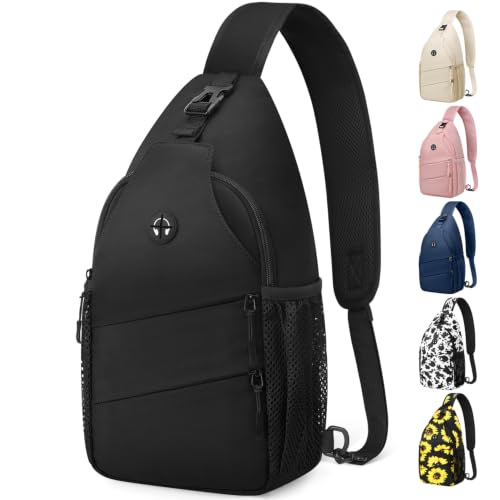
Pros
- Weighs just 0.53 pounds for effortless, low-profile carrying on short trails.
- Ambidextrous bottom D-rings make switching between left and right shoulder carry simple.
- Multi-pocket layout keeps keys, wallet, phone, and small trail gear separated and easy to find.
- Soft, breathable mesh back panel cushions contents and helps prevent friction against the body.
Cons
- Single-strap sling design is not built for heavy trail loads or technical all-day backcountry trips.
- Maximum 34-inch strap length may feel snug when worn over thick winter outerwear or by hikers with broader chest builds.
- Side mesh pocket is designed for compact items and does not accommodate standard 32-ounce wide-mouth hiking bottles.
The Pritent Crossbody Sling Bag is a compact, single-strap chest pack and lightweight daypack designed for day hikers, neighborhood walkers, commuters, and travelers who need rapid access to smaller personal items without hauling a bulky two-strap backpack. Measuring 3.5 by 7.5 by 15 inches and weighing approximately 0.53 pounds, it serves users who prioritize agility and low base weight on well-maintained trails, city park paths, and travel corridors.
On the trail, this bag functions as a minimalist gear carrier for brief outings where technical hydration bladders and bulky cold-weather layers are unnecessary. The main compartment features four internal open pockets suitable for a small tablet, trail snacks, and personal care items, while two front zippered pockets and an exterior buckle compartment keep small items like sunscreen, lip balm, and wallets within arm reach. An exterior side mesh pocket holds quick-grab items, though its compact dimensions mean full-size 32-ounce outdoor water bottles will not fit.
For suspension and carry comfort, the pack relies on an adjustable single shoulder strap that expands up to 34 inches. Bottom D-rings on both the left and right lower edges let you swap the clip attachment from side to side, which helps alleviate fatigue on longer walks. The back panel incorporates soft, breathable mesh designed to promote airflow between the bag and your shirt while shielding your skin from rigid items inside the compartment. A reflective accent strip along the shoulder strap adds visibility during dawn, dusk, or roadside walks.
The exterior shell utilizes fabric described by the manufacturer as thick, abrasion-resistant, tear-resistant, and waterproof. While this material helps shed trail dust and unexpected light drizzles, hikers should remember that the zippers and seams are not fully submersible dry-bag closures, so sensitive electronics should be stored inside an interior dry pouch during steady rain. Helpful utility details include a front cord port for wired headphones and an internal clip to anchor keys securely near the top of the pack.
Practical boundaries should be kept in mind before hitting the trail. This sling pack does not feature an internal frame, hip belt, load lifters, or a dedicated hydration reservoir sleeve. Overpacking the bag with dense or heavy items can cause the single shoulder strap to press uncomfortably against the neck or shoulder over extended mileage. Additionally, the 34-inch maximum strap length may limit positioning over thick winter parkas or across broader chests.
For casual day hikers, dog walkers, and travelers looking for an affordable, lightweight sling to secure a phone, wallet, snacks, and small personal gear, the Pritent Crossbody Bag offers dependable organization and easy ambidextrous wear. Hikers venturing into rugged backcountry routes or carrying substantial water and emergency supplies should look toward a larger, dual-strap daypack with structured suspension.
The Pritent Crossbody Bag features an adjustable single shoulder strap that expands up to 34 inches in total length. Built-in D-rings on both the lower-left and lower-right corners enable quick detachment and re-clipping, letting hikers switch carry sides to balance shoulder fatigue during walks.
Because the maximum strap extension is 34 inches, fit will vary based on body frame and clothing bulk. Hikers wearing thick winter layers or those with broader chests should verify that a 34-inch diagonal span provides sufficient clearance for comfortable cross-body carry.
This sling pack provides structured organization within a 3.5 by 7.5 by 15-inch profile. The main zippered compartment houses four open slip sleeves that organize small tablets, notebooks, or snacks, preventing items from shifting around in the bottom of the bag.
Quick-access external storage includes two front zippered pockets and an exterior buckle compartment for frequently used essentials like park passes, trail maps, and wallets. A built-in key clip keeps keys accessible, and a side mesh pocket secures smaller items or compact bottles.

Pros
- Reversible strap clips to left or right D-rings to balance shoulder strain during longer walks
- Multi-pocket layout with four internal slip sleeves prevents smaller items from shifting inside
- Soft, breathable mesh back panel provides a comfortable barrier between the pack contents and your skin
- Compact 3.5 x 7.5 x 15-inch profile offers lightweight convenience without the bulk of a full daypack
Cons
- Single-strap sling design is not built for heavy load hauling or technical multi-day backpacking
- Maximum strap extension of 34 inches may limit fit when worn over bulky winter jackets
- Side mesh pocket is sized for slender drink containers rather than wide 32-ounce trail bottles
The Pritent Crossbody Sling Bag is a compact, single-strap chest pack and daypack built for light day hikes, urban travel, and daily commuting. Measuring 3.5 x 7.5 x 15 inches, this medium-sized sling provides a hands-free way to carry personal necessities without carrying a full-sized two-strap backpack. It appeals directly to minimalists, day walkers, sightseers, and commuters who need swift access to electronics, trail snacks, keys, and identification while on the move.
On casual day hikes and nature walks, the bag balances compact volume with practical body ergonomics. Rather than relying on a heavy frame or load-bearing hip belt, the pack uses an ambidextrous shoulder strap that adjusts up to 34 inches in length. Dual bottom D-rings allow the strap buckle to clip to either the left or right side, helping reduce repetitive strain by letting you swap shoulders between trail miles. The rear panel is finished with soft, breathable mesh that acts as a buffer between packed items and your torso, facilitating airflow during warmer trail conditions.
Construction centers on thick, abrasion-resistant fabric that the manufacturer specifies as tear-resistant and waterproof for light precipitation and daily outdoor wear. Storage is split across several dedicated compartments, including two front zippered pockets and an exterior buckle pocket for items you need on demand. Inside the main compartment, four open sleeves accommodate tablets, power banks, and compact trail gear, complemented by an internal key clip. A dedicated side mesh sleeve holds slender bottles or small items, while reflective striping on the shoulder harness improves visibility in low-light environments.
Operating the pack is straightforward thanks to the quick-release snap buckle on the main strap. Adjusting the fit is simple whether wearing the sling across the chest for rapid access or across the back for an unobstructed stride. A built-in headphone pass-through port on the front panel keeps cords organized for hikers who listen to audio navigation or podcasts while walking. Maintenance requires minimal effort; spot-cleaning the fabric with mild soap and allowing it to air-dry keeps the water-resistant coating and mesh panel in dependable condition.
Because this pack is built around a single shoulder strap and compact 15-inch profile, it has defined capacity and weight limitations. It is not intended to haul bulky insulation layers, hydration bladders, or multi-pound camping kits, and loading it heavily can cause shoulder fatigue due to the absence of a hip belt. While the fabric is described as waterproof, zipper seams are not fully submersible, meaning sensitive electronics should be stored in dry pouches during heavy downpours. Additionally, the side mesh pocket fits standard slender beverage containers rather than oversized 32-ounce trail bottles.
For budget-conscious walkers, casual day hikers, and weekend travelers seeking an organized, lightweight cross-body pack, the Pritent Sling Bag offers solid practical utility. Its reversible carry strap, dedicated internal sleeves, and breathable back padding make it a dependable companion for trail strolls, dog walks, and travel transitions. If you need a compact organizer for daily essentials rather than an expedition pack, this versatile sling provides strong functionality at an accessible price point.
The Pritent Sling Bag features a multi-pocket interior and exterior layout designed to prevent gear clutter on trail walks and city commutes. Two zippered front pockets provide secure storage for wallets, permits, and smaller accessories, while a quick-release buckle pouch offers easy access to high-frequency items. Inside the primary compartment, four integrated open organizer sleeves keep tablets, battery packs, and compact essentials neatly separated from one another.
For exterior storage, a side mesh pocket accommodates small water bottles or compact trail snacks, while an integrated key clip ensures house and vehicle keys stay securely anchored. A headphone cable port on the front exterior allows corded listening while keeping your mobile device safely tucked inside the main compartment.
Configuring the Pritent Crossbody Bag is facilitated by an ambidextrous strap design that supports both right- and left-shoulder carry. Dual heavy-duty D-rings positioned on either side of the lower pack body allow you to switch the detachable strap clip quickly, distributing pressure evenly and reducing one-sided fatigue on longer walks.
The shoulder strap extends up to 34 inches, offering sufficient adjustment to accommodate various adult body types over t-shirts and light sweaters. The strap also features reflective safety elements to enhance your visual profile when crossing roadways or hiking near trailheads at dusk.
Core Trail Packing Systems and Gear Organization
Packing a trail bag correctly requires a systematic method rather than simply throwing gear into an open compartment. Deciding exactly what to pack in a hiking bag comes down to managing risk, sustaining personal energy, and protecting your body against harsh environmental shifts. A well-organized pack provides immediate access to emergency tools without forcing you to dig past bulky camp insulation or extra food. By breaking trail gear down into distinct functional categories, you ensure that every vital item remains protected, stable, and ready when trail conditions deteriorate.
The Fundamental Ten Essentials for Trail Safety
The outdoor community has long relied on the classic Ten Essentials framework to prevent minor trail mishaps from turning into dangerous survival situations. This packing baseline addresses navigation, hydration, nutrition, emergency shelter, firecraft, first aid, illumination, tools, sun protection, and extra insulation. Carrying these fundamental items is critical even on brief afternoon outings where terrain seems familiar. Sudden weather fronts, twisted ankles, or delayed trail partners can quickly extend a simple two-hour stroll past nightfall.
Modern adaptations of these essentials focus on functional systems rather than rigid, heavy individual tools. Lightweight multi-tools, compact LED headlamps with spare batteries, and broad-spectrum sunscreen form a dependable defensive core. An emergency space blanket or ultralight bivy sack adds virtually no tare weight to your load while providing critical heat retention if you become immobilized. Checking off each functional category before stepping onto the dirt creates a reliable safety foundation for any route.
Hydration Systems and Water Filtration Capacity
Water represents the densest and heaviest consumable resource carried inside any hiking bag. A general baseline recommendation is half a liter of water per hour of moderate hiking in temperate conditions, increasing significantly during hot weather or steep elevation gain. Many modern daypacks feature dedicated internal hydration sleeves capable of holding up to two-liter bladders, allowing hands-free sipping via routed shoulder hose ports. Dedicated bladders centralize fluid mass against your spine, stabilizing your overall center of gravity.
Carrying backup water purification methods is essential in case your primary water supply runs dry or leaks along the trail. Squeeze filters, chemical purification tablets, or hollow-fiber membrane straws allow you to replenish fluids from backcountry streams without risking waterborne pathogens. External side water bottle pockets should feature resilient elastic or cinch straps to keep rigid bottles from tumbling down hillsides when bending over to cross logs. Carrying a secondary collapsible bottle provides flexible storage volume when traveling between distant desert water sources.
For casual day treks where perishable snacks or chilled beverages are desired, specialized carriers such as insulated backpack coolers offer dedicated thermal lining to maintain safe food temperatures throughout warm afternoons. However, for technical mountain terrain, standard hydration reservoirs paired with inline filtration remain the most weight-efficient solution. Always inspect bladder bite valves and screw-top gaskets prior to departure to prevent catastrophic internal moisture leaks.
Trail Nutrition and Calorie Management
Hikers expend substantial calories navigating rocky inclines, necessitating dense, shelf-stable trail foods that require minimal preparation. When packing nutrition, prioritize items with high caloric density relative to their weight, such as nut butters, dehydrated fruit, jerky, and energy bars. Always pack enough sustenance for your planned excursion plus an extra day of emergency rations in case of route delays. Storing quick-energy snacks in exterior hip belt pockets or shoulder strap pouches allows you to refuel without breaking your hiking cadence.
Complex carbohydrates combined with healthy fats provide sustained energy release rather than sudden sugar spikes and subsequent crashes. Salty snacks are equally vital on warm days to replenish essential electrolytes lost through active perspiration, helping prevent painful muscle cramping. If your route involves open cooking, compact canister stoves and nesting titanium pots must be stored upright within the main pack volume. Always pack an odor-resistant sealable bag or bear canister when traveling through sensitive wildlife habitats to properly practice Leave No Trace ethics.
Layering Systems and Weather Protection
Mountain climates can shift from blistering sun to freezing rain within minutes, making a reliable three-part clothing system essential. The base layer should consist of synthetic polyester or merino wool to actively wick perspiration away from skin, avoiding moisture-trapping cotton fabrics completely. An insulating mid-layer, such as a breathable fleece pullover or lightweight synthetic puffer jacket, traps body warmth during summit breaks. Finally, a durable outer shell constructed with a waterproof membrane shields your core against relentless wind and downpours.
Packing extra socks inside a waterproof pouch is one of the most effective ways to prevent trail blisters caused by waterlogged footwear. Lightweight accessories like a thermal beanie, neck gaiter, and breathable sun gloves take up minimal internal pack volume while offering versatile temperature regulation. Stashing your rain shell near the very top of your main compartment ensures you can deploy weather protection rapidly before heavy rains soak your outer layers. Keeping wet garments isolated from clean clothing preserves warmth and comfort throughout multiday journeys.
Navigation Tools and Emergency Signaling
Relying solely on smartphone GPS applications can lead to serious backcountry navigation failures due to battery drain, freezing temperatures, or device drops. A waterproof topographic map paired with a reliable magnetic compass should always occupy a dedicated quick-access pocket. Hikers should know how to orient a map and shoot a basic field azimuth to navigate if digital screens fail. Portable power banks and charging cords protect smartphone navigation tools, but physical instruments remain your primary failsafe.
Signaling gear provides essential peace of mind when venturing off maintained trail networks or through rugged backcountry passes. Many modern pack sternum strap buckles incorporate built-in emergency whistles, providing high-decibel audible signaling that carries far farther than human shouting. Compact signaling mirrors and satellite communicator devices allow two-way emergency text messaging outside cellular coverage zones. Store communication devices in an accessible shoulder strap pouch where they remain easily reachable even if your pack is resting on rough ground.
First Aid Supplies and Personal Sanitation
A comprehensive backcountry first aid kit should be customized to the terrain, trip duration, and specific group medical needs. Key items include adhesive bandages, sterile gauze pads, antiseptic wipes, medical tape, tweezers for tick extraction, and blister prevention products like moleskin or athletic tape. Essential over-the-counter medications for pain relief, allergic reactions, and digestive discomfort should be stored in clearly labeled, waterproof containers. Knowing how to apply each medical item effectively is just as important as having it packed inside your bag.
Sanitation gear protects both your personal hygiene and fragile backcountry water resources from contamination. Pack a lightweight trowel, biodegradable soap, hand sanitizer, and sealed waste disposal bags to manage human waste at least two hundred feet away from lakes and streams. Pack-out bags are mandatory for used toilet paper, hygiene wipes, and snack wrappers to prevent litter accumulation along pristine wilderness trails. Stowing personal hygiene supplies in a distinct, color-coded pouch keeps them hygienic and fast to locate during rest stops.
Modular Storage and Moisture Defense with Dry Sacks
Unstructured backpacks can quickly turn into disorganized chaos where critical items sink to the bottom just when they are needed. Using lightweight roll-top dry sacks creates a modular internal packing structure that protects gear from torrential rain and accidental water immersion. Waterproof dry bags crafted with polyurethane coatings and taped seams seal moisture out when closed with multiple tight rolls. Assigning specific dry sack colors to sleep gear, medical items, and dry camp clothing eliminates frustrating search times in camp.
When selecting overnight gear like a compact synthetic sleeping bag rated for cooler temperatures, compression sacks allow you to shrink bulky insulation down to a fraction of its uncompressed volume. High-loft synthetic fills provide critical thermal insulation even in damp environments, making proper dry storage vital to backcountry safety. External packable daypacks made from water-resistant nylon shed light precipitation, but vulnerable electronics and down insulation always benefit from secondary dry sack protection. Segmenting gear also distributes pack volume neatly, preventing rigid items from poking uncomfortably into your back panel.
Pack Geometry and Weight Distribution Mechanics
How you arrange physical weight inside a hiking backpack dictates your walking posture, energy expenditure, and overall spinal comfort. The general packing rule places lightweight, bulky gear like sleeping bags and spare base layers at the very bottom of the pack cavity. Dense, heavy objects like full hydration bladders, camp stoves, and dense food rations should be positioned close to your spine, between shoulder blade height and mid-back. Placing heavy mass close to your natural center of gravity prevents the pack from pulling backward and straining trapezius muscles.
Medium-weight items, including extra clothing layers, water filtration equipment, and first aid kits, fit neatly into the forward and upper sections of the main pack volume. Frequently needed items such as trail snacks, rain jackets, maps, and sunglasses belong in exterior lid compartments or stretchy side pockets for rapid deployment. When carrying heavier loads over rugged mountain passes, transitioning to internal frame hiking backpacks provides structural aluminum or composite stays that transfer downward weight directly onto your iliac crest. Proper weight distribution stabilizes your balance across uneven boulders and slick scree fields.
Matching Pack Volume to Hike Duration and Terrain
Selecting the appropriate backpack capacity depends directly on whether your trip is an afternoon nature walk, a technical full-day summit hike, or an overnight excursion. Compact daypacks ranging from ten to twenty liters work exceptionally well for fast outings where you only need water, basic snacks, and an ultralight windbreaker. These streamlined packs feature minimal tare weight, flexible harness straps, and exterior shock cords to lash down wet apparel without adding bulk. For minimalist front-of-body carry on urban trails, compact cross-body slings provide nimble access to small essentials.
Full-day mountain hikes requiring substantial cold-weather insulation, technical traction gear, and extensive water supplies generally demand a twenty-five to thirty-five liter capacity. These intermediate packs feature structured back panels, padded hip belts, and multiple zippered compartments to support increased gear weight comfortably. Overnight backpacking adventures necessitate forty to sixty-five liter packs to house sleeping pads, compact tents, cooking stoves, and multiple days of food rations. Choosing a pack size that matches your load prevents both over-stuffing zipper seams and carrying unnecessary empty pack weight.
Pre-Trail Checklist Verification and Weight Auditing
Conducting a thorough pre-departure audit at home ensures you never discover a missing piece of safety equipment halfway up a mountain pass. Lay out all gear items on a flat surface grouped by function before loading them into your backpack. Check headlamp batteries, verify water filter flow rates, and confirm that all zipper tracks on packable bags glide smoothly without snagging. Weighing your loaded pack on a luggage scale helps identify unnecessary luxury items that could cause early fatigue on steep trail gradients.
Adjust your shoulder harness, sternum strap, and hip belt while wearing your loaded pack indoors to confirm balanced load transfer before stepping onto the trailhead. Cinch compression straps down firmly to eliminate internal gear shifting that can throw off your rhythm when walking. With an organized packing system, durable moisture defense, and a well-audited gear checklist, you can confidently explore remote wilderness trails knowing you are prepared for whatever nature presents.







Write Your Review
No reviews yet. Be the first to share your experience!