


For hut-to-hut hiking, the most suitable backpack is one that fits your torso, carries your expected overnight load comfortably, and has enough capacity without leaving you hauling unused space. The answer to what is best hut to hut hiking backpack depends on the route, what the huts provide, and whether you carry a sleeping bag, meals, or extra layers. A pack listed at 40 to 50 liters may suit some multi-day itineraries, but capacity alone doesn’t establish fit or suitability. Start with the route’s gear requirements and your packed load, then look at the pack’s support, access, organization, and weather protection.
Hut trips can reduce the need to carry a tent and some cooking equipment, but they don’t necessarily mean a small daypack will work. Differences in hut bedding, food availability, water access, and seasonal clothing can change what you need to carry. Check the details for each overnight stop before deciding, and consider how you’ll keep rain-sensitive items protected because a rain cover and water-resistant fabric aren’t the same as a fully waterproof pack. Our guide to features of a good hiking backpack offers useful background on support and organization.

Pros
- Impressive 50-liter capacity paired with an empty weight under 2.4 pounds.
- Comes standard with a stowable waterproof rain cover in an exterior bottom pocket.
- Multiple compartments, including a separate shoe pocket and six external pockets, keep gear separated.
- External compression straps and attachment loops secure bulky gear like trekking poles and pads.
Cons
- Features a frameless design without rigid internal stays, limiting heavy load-bearing support on long hikes.
- Listed in a single Medium size without an adjustable torso length system.
- Heavy packing may cause strain on the shoulders due to the lack of rigid load-transfer suspension.
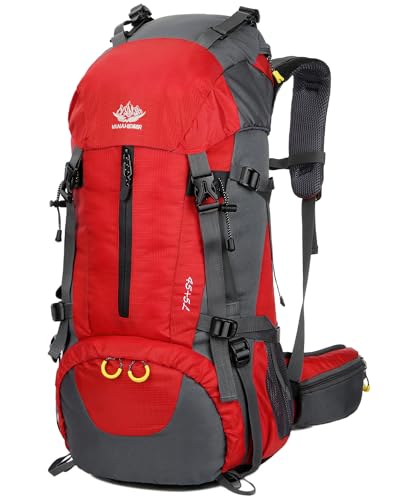
The Loowoko 50L Hiking Backpack is a high-capacity, lightweight gear hauler designed for weekend backpackers, casual campers, and adventure travelers seeking maximum packing volume without excessive pack weight. Although categorized under internal frame backpacks in some retail databases, the manufacturer explicitly details a frameless construction designed to keep the empty weight at approximately 2.1 to 2.4 pounds. This makes the pack an accessible, functional option for hikers carrying lighter, high-volume gear sets who do not require heavy aluminum stays or rigid suspension frames.
On the trail, the pack relies on its 50-liter capacity and physical dimensions of roughly 23.6 by 11.8 by 7.9 inches to accommodate several days of bulkier items, such as sleeping bags, camp clothes, and food supplies. For load management, the harness features widened and thickened S-type shoulder straps padded with dense sponge and lined with breathable mesh. The back panel incorporates high-elastic breathable padding intended to soften contact along the spine and encourage airflow, though hikers carrying dense loads should note that the absence of a rigid frame means pack structure depends heavily on thoughtful packing technique.
The backpack is built from tear-resistant polyester and nylon fabrics intended to withstand trail brush and luggage handling. Organizational features are a major highlight of the design. In addition to a cavernous main compartment, the pack includes a dedicated bottom shoe separator to isolate muddy hiking boots or camp shoes from dry gear, alongside six external pockets for quick trail-side access to snacks, maps, and compact gear. Exterior compression straps and multi-point attachment loops allow users to strap tents, sleeping pads, trekking poles, or ice axes securely to the outer shell.
Setting up and using the pack is straightforward thanks to its simple strap layout and quick-access storage zones. Weather protection is bolstered by an included waterproof rain cover stored in a dedicated bottom zippered pocket, ready to pull over the entire pack during sudden mountain showers. Cleaning and routine maintenance require only mild soap, lukewarm water, and thorough air drying before storing the pack flat in a dry environment between outings.
Realistic limitations must be kept in mind regarding weight distribution and sizing. Because the pack lacks internal metal stays and an advanced load-transfer hip belt, carrying loads above standard lightweight limits will place the burden squarely across the shoulders. Furthermore, the pack is listed in a standard Medium size without an adjustable torso ladder, meaning hikers with particularly short or long torso lengths may experience suboptimal strap placement.
Overall, the Loowoko 50L Hiking Backpack represents a practical, budget-friendly solution for beginner backpackers, weekend campers, scouts, and travelers who need large packing capacity paired with light empty pack weight. For hikers planning rigorous multi-day expeditions with heavy base weights, a rigid internal-frame pack remains preferable, but for light trail trips and versatile travel, this pack offers great organizational utility.
The Loowoko 50L backpack utilizes a frameless design that eliminates heavy internal aluminum stays or rigid perimeter wire frames. This architectural choice keeps the overall pack weight down to approximately 2.1 to 2.4 pounds, appealing directly to hikers seeking a lighter base weight for moderate trips.
To manage upper-body comfort without a rigid frame, the harness features widened and thickened S-curve shoulder straps equipped with thick sponge padding and breathable mesh. The back panel incorporates high-elastic breathable padding designed to cushion contact points, though hikers should remember that proper weight distribution relies primarily on how evenly gear is packed inside the main compartment.
With 50 liters of total volume, this pack provides substantial capacity for weekend camping gear, extra trail layers, and general travel necessities. Its generous dimensions of 23.6 x 11.8 x 7.9 inches offer plenty of room to pack bulky items inside the primary storage space.
Organization is enhanced by six exterior pockets and a separate lower shoe compartment designed to keep soiled footwear or dirty laundry away from clean clothes. Multiple exterior compression straps and attachment loops allow for the lash-on storage of trekking poles, ice axes, sleeping pads, or tents directly against the pack exterior.
While the polyester and nylon pack body offers tear resistance and baseline moisture repellency against damp ground, the pack includes a dedicated waterproof rain cover for wet-weather conditions.
The rain cover is conveniently stored in an integrated bottom pouch, allowing hikers to pull it over the full pack quickly when rain or dust threatens gear. For valuable electronics and sleeping gear in severe downpours, packing sensitive items inside dry sacks inside the bag remains a smart trail habit.
Pros
- High 50-liter capacity with distinct organizational compartments, including a dedicated sleeping bag zone
- Very manageable empty weight of 2.36 pounds for a pack of this volume
- Comes standard with a dedicated waterproof rain cover for wet-weather preparedness
- External hanging lash points offer versatile options for bulky gear attachment
Cons
- Does not feature a rigid internal frame, which can limit stability with heavy load carrying
- Manufacturer does not provide specific torso length or hip-belt sizing measurements
- Pack body fabric is water resistant rather than fully waterproof on its own
The WoneNice 50L Hiking Backpack is a versatile, high-capacity daypack and gear hauler designed for budget-conscious day hikers, weekend campers, and travelers. Designed around a 45+5 liter capacity framework, it offers substantial volume for gear-intensive outdoor pursuits, family outings, and campsite overnights where packing bulky equipment like extra layers, cooking kits, or blankets is necessary.
Weighing 2.36 pounds with exterior dimensions of 7.9 x 13.8 x 23.6 inches, the backpack maintains a low base weight for its volume class. Gear organization is straightforward thanks to a multi-compartment structure consisting of a spacious main storage area, two front zippered accessory pockets, dual mesh side water bottle pockets, and a dedicated lower sleeping bag compartment designed to keep your sleep system segregated from clean clothes and food.
The exterior shell is crafted from a blend of polyester and nylon fabric, offering scratch-resistant, tear-resistant, and water-resistant properties for trail use. Comfort features include thickened and widened S-type padded shoulder straps alongside a high-elastic, breathable back support panel that provides cushioning while encouraging airflow along the spine during warm-weather hikes.
Adjustability centers on an adjustable chest belt and waist belt that allow users to draw the pack in closer to the torso to reduce shifting on uneven terrain. For gear that exceeds internal capacity, the pack features an integrated hanging loop system for securing items like trekking poles or compact sleeping pads, and it includes a dedicated waterproof rain cover that deploys quickly over the entire pack exterior.
A practical limitation of this design is the absence of an internal frame sheet or metal stays, meaning that careful packing is essential to prevent heavy items from pushing into the back panel. In addition, because the manufacturer does not specify precise torso length ranges or waist circumference limits, fit refinement relies primarily on strap tension rather than adjustable harness sizing.
For hikers, campers, and casual trail travelers seeking an economical 50L gear pack with separate compartment organization, low base weight, and built-in rain protection, the WoneNice 50L pack offers dependable trail utility for moderate load demands.
The WoneNice backpack provides 50 liters of capacity, structured as a 45+5 configuration to accommodate both core gear and supplemental gear additions. The internal layout is divided into specialized zones to make packing and locating supplies efficient at the trailhead or campsite.
At the bottom of the bag, a dedicated sleeping bag compartment allows quick access to sleep gear without the need to unpack the main contents. The upper section provides a deep main compartment for larger items, supported by two zippered front pockets for trail accessories, navigation items, or snacks, while dual stretch mesh side pockets hold standard water bottles.
An exterior hanging loop system provides supplementary attachment points, allowing users to secure bulky camp essentials such as tents, bed rolls, or walking poles directly to the pack body.
Carrying comfort in the WoneNice 50L backpack is managed through padded, widened S-curve shoulder straps designed to sit naturally across the chest and shoulders. The padding helps reduce localized pressure when the pack is filled with daily essentials.
The rear of the pack features a high-elastic breathable back support panel designed to provide cushioning against packed contents while assisting with ventilation along the back during uphill segments.
Both the chest strap and waist belt are fully adjustable, giving hikers the ability to fine-tune strap tension to stabilize the load against the body across female and male users, although fixed torso sizing means fit will vary based on user frame size.
The primary pack body is constructed with water-resistant, wear-resistant polyester and nylon fabrics designed to withstand light moisture, trail brush, and abrasion during regular outdoor use.
Because water-resistant fabric can absorb water during steady precipitation, WoneNice includes a separate waterproof rain cover with the pack. This cover packs down compactly inside the pack and stretches over the entire exterior to protect zippers, pockets, and contents from heavy rain exposure on exposed trails.

Pros
- Generous 40L capacity at a low listed weight of just 2.18 pounds
- Included stowable rain cover offers immediate foul-weather defense
- Dedicated internal wet pocket keeps damp garments separated from dry trail gear
- Dual zippered hip-belt pockets provide convenient access to trail snacks and small items
- Built-in trekking pole loops and hydration hose routing support active day hiking
Cons
- Hydration reservoir is not included and must be purchased separately
- Manufacturer does not specify adjustable torso ranges, making custom spine fit limited
- Lacks heavy-duty load-transfer stays for carrying dense, expedition-weight loads
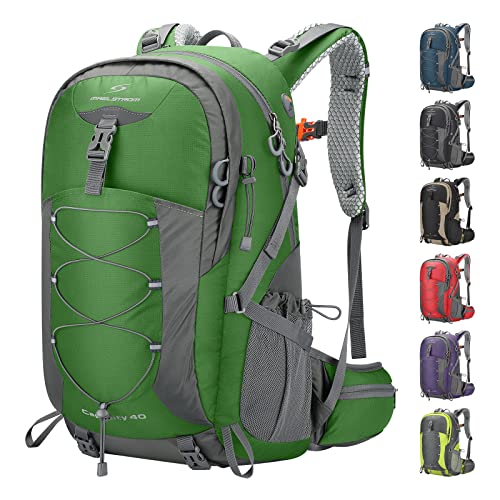
The Maelstrom 40L Hiking Backpack is a high-capacity, lightweight daypack designed for hikers, weekend campers, and adventure travelers who want ample gear space without carrying excess empty pack weight. At an accessible 2.18 pounds, this 40-liter pack bridges the gap between a standard single-day bag and an overnight pack, making it a viable option for full-day mountain excursions, gear-heavy family outings, or minimalist overnights.
For trail carrying comfort, the pack features an ergonomic, breathable padded back panel paired with contoured, ventilated shoulder straps. An adjustable chest buckle stabilizes the harness across the torso and integrates an emergency whistle for added trail readiness. Dual zippered waist pockets help stabilize the lower pack against your hips while keeping essential items within arm reach. Hikers should note that the pack does not provide adjustable torso-length sliding mechanisms, so overall suspension fit will depend on your individual torso proportions.
Exterior construction utilizes 210D rip-stop nylon fabric, offering water resistance and protection against light trail abrasions from overhanging branches or brush. When sustained rainfall rolls in, the pack includes a fitted rain cover stored inside a dedicated bottom pouch. This rain cover features a reflective logo to enhance low-light visibility while providing an extra barrier against moisture.
Organization is a distinct strength of the Maelstrom 40L, featuring a large main zippered compartment, three front zippered utility pockets, a top lid pocket, and two stretchy mesh side pockets for water bottles. An internal waterproof wet pocket lets you isolate damp rainwear, sweaty garments, or towels from the rest of your dry supplies. For hands-free drinking on the move, an internal fastener accommodates a hydration reservoir paired with a side hose port, though the bladder itself must be supplied separately.
In terms of limitations, the flexible lightweight build is engineered for moderate trail loads rather than dense, heavy backpacking gear. Carrying excessively dense gear without rigid aluminum stay support may cause the pack to sag against the lower lumbar area. Furthermore, the absence of specific torso sizing data means hikers with particularly tall or short torsos may need to experiment with strap tension to achieve balanced weight distribution.
Overall, the Maelstrom 40L Backpack is a practical, value-oriented solution for day hikers, campers, and travelers seeking dependable volume, structured pocket access, and foul-weather readiness. If you prioritize lightweight flexibility, included weather accessories, and versatile pocket dividers over rigid technical suspension systems, this pack serves as a capable companion across a wide range of outdoor adventures.
The Maelstrom 40L pack utilizes a multi-compartment structure to prevent trail gear from migrating to the bottom of the main chamber. It features a spacious main zipper compartment alongside three individual front zippered pockets that allow clear separation of trail maps, headlamps, first-aid kits, and electronics. The quick-access top pocket serves as a convenient stash location for items like sunglasses or keys.
Inside the primary chamber, a dedicated waterproof wet pocket separates damp swimsuits, rain jackets, or post-hike clothes from dry gear. Exterior storage is rounded out with dual side mesh pockets designed to hold standard water bottles, along with two zippered hip-belt pockets for snacks, multi-tools, or pocket knives. Side fastener cords and elastic loops securely anchor up to two trekking poles against the pack body when not in use.
Weather management relies on a two-part defense system starting with the 210D rip-stop water-resistant nylon shell. For steady rain and harsh conditions, an included rain cover deploys quickly from the dedicated bottom zipper pocket, providing supplemental coverage to shield pack zippers and seams from saturation.
Hydration integration includes a hook-and-loop hanging strap inside the main chamber to keep a reservoir upright, along with an upper pass-through hole for routing a drinking tube down the shoulder harness. Note that a hydration reservoir is not included with the pack, so hikers will need to pair it with their preferred compatible water bladder.

Pros
- Weighs under two pounds while delivering a generous 40-liter gear capacity.
- Comes equipped with a fitted rain cover featuring a reflective safety logo.
- Dual zippered hip-belt pockets keep trail snacks, lip balm, and small accessories easily accessible.
- Built-in exterior lashing points accommodate trekking poles, sleeping pads, or tripods.
- Internal hydration hanger and dedicated hose port simplify bladder integration.
Cons
- Lacks an adjustable torso ladder system, meaning fit is fixed along the back length.
- Frameless construction lacks rigid aluminum stays, making it unsuitable for extremely dense, heavy loads.
- Hydration reservoir is not included and must be sourced separately.
The Maelstrom 40L Hiking Backpack is a lightweight, high-capacity daypack designed for hikers, weekend campers, and adventure travelers who need substantial packing room without carrying a heavy pack structure. Weighing in at just 1.96 pounds empty, this pack provides a practical solution for full-day hikes requiring extra insulating layers, family outings where one hiker carries group gear, or travel trips where light luggage compliance is a priority.
With exterior dimensions of 8.6 by 13.4 by 22 inches, the pack delivers an advertised 40 liters of volume distributed across several functional storage zones. The carrying harness relies on ergonomic shoulder straps, a back support system, and dual side and bottom compression straps to cinch down shifting gear. While it features dual waist pockets on the hip belt and an integrated emergency whistle on the sternum buckle, the pack does not utilize a rigid internal frame or stay. Consequently, it performs best with light-to-moderate trail loads rather than dense, expedition-weight gear.
Construction centers on a nylon fabric specified as tear-resistant, scratch-resistant, and water-resistant. For direct foul-weather management, the pack features a dedicated zippered pocket on the bottom that houses an included rain cover. Deploying this external cover provides a dependable barrier against sudden trail downpours, while the reflective logo offers enhanced visibility in overcast or low-light conditions.
Gear management is organized around a multi-pocket architecture. The pack includes a large zippered main compartment, two front zippered organizer sections, two side bottle sleeves, dual exterior mesh slots, and two zippered pockets on the waist belt. For water management, the interior of the main compartment includes a Velcro strap to secure a reservoir liner, along with a top hose pass-through port. Exterior straps and buckles allow hikers to lash trekking poles, a compact sleeping pad, or a tripod directly to the exterior.
Hikers evaluating this backpack should keep a few practical design boundaries in mind. Because there is no internal metal frame or rigid frame sheet, carrying excessively heavy items can cause the pack to pull against the shoulders rather than transferring weight smoothly to the pelvis. Furthermore, the torso length is non-adjustable, so fit will depend strictly on individual body proportions. Bladder users must also note that a water reservoir is not included in the purchase.
For trail walkers and weekend adventurers seeking high volume at a modest weight, the Maelstrom 40L backpack represents a sensible, budget-friendly value. Its combination of an included rain cover, dedicated hydration routing, and multiple quick-access pockets makes it well suited for long day trips, casual camping weekends, and general outdoor travel.
The Maelstrom 40L pack utilizes a multi-compartment layout to keep clothing, food, and trail gear organized across its 40-liter interior. The primary zippered compartment handles bulkier supplies such as jackets, lunch containers, and camp accessories, while two front zippered pockets provide separate storage for maps, headlamps, and smaller items.
On-the-move access is supported by two zippered waist pockets positioned directly on the hip belt, allowing you to reach snacks, keys, or pocket tools without taking the pack off. Dual exterior side pockets and supplementary mesh slots accommodate water bottles and quick-stash gear, while lower and side compression straps hold trekking poles or bulky exterior pads firmly in place.
Hydration setup is integrated directly into the main compartment via an internal Velcro hanging strap and a dedicated upper hose routing hole. While the pack does not come with a reservoir, this configuration allows hikers to install standard hydration bladders and route the drinking tube over the shoulder strap for regular fluid access.
For wet-weather protection, the backpack relies on water-resistant nylon construction supported by an included rain cover stored in a base pocket. Unzipping the bottom compartment allows you to pull the fitted cover over the entire loaded pack during heavy rain, protecting seams and zippers from moisture exposure.

Pros
- Tensioned 3D-mesh AirSpeed suspension keeps the pack body off the back for continuous airflow
- Molded ladder torso adjustment provides quick harness customization across different torso sizes
- Comes equipped with a fitted rain cover for sudden rainstorms without needing separate accessories
- Heavy-duty #10 zipper on the panel-loading compartment offers wide, snag-free gear access
- Internal hydration sleeve and back-panel hose port readily support hands-free trail hydration
Cons
- Empty pack weight of 2.73 pounds is heavier than frameless, ultralight daypack alternatives
- Hydration reservoir is not included and must be purchased separately
- Fixed 24-liter volume is strictly suited for day hiking and may feel tight for cold-weather layer packing
The Osprey Sirrus 24L is a dedicated women's hiking daypack engineered for trail walkers, peak baggers, and outdoor travelers who value structured load support and back-panel ventilation over ultralight minimalism. Built with a 24-liter capacity and an internal injection-molded frame, this pack accommodates daily trail essentials such as rain shells, insulation layers, lunch, first-aid kits, and navigation tools. Designed with women-specific geometry, it serves day hikers looking for balanced load transfer and an ergonomic fit on moderate to challenging day treks.
On the trail, the AirSpeed suspension system defines the carrying performance by pairing an injection-molded frame with a 3D-tensioned mesh back panel. This suspended architecture holds the pack body away from your spine, creating an open air gap that promotes natural ventilation during steep climbs or warm-weather hikes. Fit customization is managed by a molded ladder torso adjustment system that works alongside a taller and wider frame geometry, allowing hikers to dial in shoulder harness placement according to their individual torso length.
Build construction and trail durability are centered around rugged hardware, most notably the oversized #10 zipper that controls the main compartment. The panel-loading design unzips widely, providing full visibility and easy access to items stored near the bottom without requiring you to unpack the entire bag. When bad weather rolls in, the included rain cover deploys quickly over the pack exterior, providing an essential shield against precipitation and trail mud so pack contents stay protected.
Setting up the Sirrus 24L is straightforward thanks to the ladder-style adjustment mechanism that locks the harness securely into place. Hydration setup is facilitated by an internal hydration sleeve paired with a dedicated hose exit port on the back panel, allowing you to route a drinking tube directly over either shoulder strap. With exterior dimensions of 21.7 x 13.4 x 9.4 inches and an empty weight of 2.73 pounds, the pack maintains a stable, upright footprint that handles easily in vehicle trunks, trailheads, and storage closets.
Hikers evaluating the Sirrus 24L should be mindful of a few realistic limitations inherent to its design. At 2.73 pounds, the pack carries more base weight than ultralight, frameless daypacks due to the built-in frame stays, tensioned mesh panel, and heavy-duty zippers. In addition, while the pack features dedicated routing for a water reservoir, the bladder itself is not included in the purchase. The 24-liter volume is also calibrated strictly for single-day outings, meaning cold-weather hikers carrying bulky winter parkas or extensive camera setups may find gear space limited.
For hikers who prioritize upper-body ventilation, dependable hardware, and fine-tuned torso sizing, the Osprey Sirrus 24L stands out as a highly capable day hiking pack. Its robust panel-loading zipper, integrated weather cover, and supportive women-specific suspension make it an excellent choice for summer ridge walks, national park day trips, and forest trail explorations where airflow and carrying stability are top priorities.
The Osprey Sirrus 24L relies on an AirSpeed suspension system featuring an injection-molded frame and a 3D-tensioned mesh back panel. This configuration creates an open space between the pack body and your back, allowing continuous airflow that helps manage heat during sustained climbs and warm-weather hikes.
A molded ladder adjustment mechanism is integrated into the taller and wider frame geometry, enabling straightforward vertical adjustments to the shoulder harness. This allows hikers to match the harness position directly to their torso length, ensuring balanced load stabilization and steady carrying comfort on uneven ground.
Hydration management is supported via an internal hydration sleeve located inside the main compartment, accompanied by an exit port on the back panel for routing the drinking hose onto the harness. The sleeve accommodates standard hydration reservoirs, although the bladder itself must be purchased separately.
Weather protection is anchored by an included rain cover that stows into a dedicated pocket when not in use. When unexpected rain or muddy trail conditions arise, the cover pulls securely over the exterior to shield the pack fabric and protect the contents of the 24-liter compartment.

Pros
- Extremely lightweight at under one pound (0.99 lb) for minimal physical carrying burden
- Convenient zippered waist pockets allow quick access to keys, trail snacks, or small essentials
- Breathable mesh contact surfaces promote airflow during high-exertion outdoor activities
- External elastic cord system provides practical lash space for light jackets or helmets
Cons
- Compact 20-liter volume is strictly built for day use and cannot accommodate overnight backpacking gear
- Water-resistant fabric handles light moisture but lacks seam sealing and does not include a dedicated rain cover for heavy downpours
- Frameless, ultralight build does not support heavy loads or offer rigid lumbar weight transfer
The Gloserin 20L Hiking Backpack is a streamlined, ultralight daypack tailored for day hikers, trail runners, cyclists, and casual travelers who prioritize low carry weight over rigid structure. Sized at 20 liters with an empty weight of just 0.99 pounds, this pack is designed to hold everyday trail basics without weighing down the wearer during high-output aerobic activities.
On the trail, the pack functions as a nimble companion for short-distance excursions. Measuring 17.7 inches tall by 10.5 inches wide and 7.8 inches deep, its proportions hug close to the back to minimize sway during running or scrambling. The harness system includes shoulder straps adjustable from 1.2 to 12 inches, an upper chest strap adjustable from 4.0 to 12.5 inches, and a lower strap setup to stabilize the pack against your torso. A key feature rarely found on packs of this size is the inclusion of two zippered waist belt pockets, allowing you to grab snacks, lip balm, or small trail gear without unbuckling the pack.
The build centers around a water-resistant nylon shell fabric paired with breathable mesh along the body contact points. This combination promotes airflow to help keep your back comfortable when temperatures climb. The nylon material is quick-drying and assembled with tight stitching to resist tearing under standard daypack loads. For exterior utility, elastic hanging straps on the back panel allow you to lash a bike helmet, light jacket, or pack towel externally, while an integrated reflective strip aids low-light visibility on dawn or dusk outings.
Operating and packing this daypack is straightforward thanks to its simple pocket layout and supple frameless construction. It packs flat easily, making it a viable secondary pack to stow inside larger luggage for travel or camping trips. Maintenance is equally simple: the quick-drying nylon can be wiped clean with a damp cloth after dusty hikes, and the breathable mesh dries rapidly when hung in a ventilated area between adventures.
Buyers should remain aware of the inherent limits of a sub-one-pound daypack. The frameless construction provides no rigid internal frame or heavy lumbar padding, meaning it is not engineered for carrying heavy loads comfortably. In addition, while the nylon shell is water-resistant against mist and light splashes, it is not fully waterproof, and no integrated rain cover is provided for prolonged rain exposure. The 20-liter capacity is also strictly suited for half-day or full-day excursions rather than multi-day backpacking.
For outdoor enthusiasts seeking an affordable, ultralight bag with accessible waist pockets and external attachment options, the Gloserin 20L Hiking Backpack offers excellent everyday trail functionality. It is well suited for day hikers, urban commuters, and casual adventurers who want to move quickly with minimal bulk.
The Gloserin 20L Daypack features an adjustable harness system configured to stabilize light loads across varied body types. The main shoulder straps offer buckle adjustment ranging from 1.2 to 12 inches, allowing wearers to position the pack comfortably on the upper back.
To prevent shoulder strap slippage during active movement like running or cycling, the pack incorporates an upper chest strap that adjusts from 4.0 to 12.5 inches, alongside lower strap adjustment. Dual zippered waist belt pockets sit forward on the hips to keep vital essentials close at hand while adding a secondary point of contact against the lower torso.
With a rated capacity of 20 liters, the main compartment offers ample room for light layers, food, hydration bottles, and daily gear within its 17.7 x 10.5 x 7.8 inch dimensions. The pack keeps bulk low by focusing on straightforward, functional storage space.
External organization includes dual zippered waist pockets for quick-access items, eliminating the need to take off the backpack on trail. On the outside back panel, elastic hanging cords provide convenient lash points for bulkier gear such as helmets or pack towels, while a reflective accent helps improve visibility in low-light environments.
How to choose a backpack for hut-to-hut hiking
A hut-to-hut pack needs to match the actual carrying demands of your itinerary, not a general label such as “overnight” or “backpacking.” Determine what the route requires you to bring, estimate the packed volume, and check whether the pack’s dimensions and adjustment range suit your body. A smaller load may make a compact pack practical, while cold-weather layers, personal bedding, or several days of food can call for more room. Prioritize a stable, comfortable fit with accessible storage, then weigh the tradeoff between extra capacity and carrying bulk.
Hut policies vary, so verify whether bedding, meals, and other essentials are supplied before packing. Product listings in the supplied information cover packs from 20 to 50 liters, but those figures don’t mean every pack in that range is suitable for every trip. The listed features also differ: some options describe rain covers, hydration sleeves, or attachment points, while the smaller pack listing focuses on short outings. Use those distinctions as prompts for further fit and route checks, not as proof that a particular pack will work for your itinerary.
- Confirm whether each hut provides bedding, meals, drinking water, and storage before estimating your carried gear.
- Lay out the clothing, food, water, and personal items required for the route before choosing pack volume.
- Check that the pack’s torso adjustment and waist belt can be set securely for your body.
- Consider access to frequently used items without needing to unpack the main compartment.
- Plan for rain protection, including how you will protect items inside the pack.
- Account for any required sleeping bag, liner, or other overnight equipment in your volume estimate.
Estimate capacity from the hut itinerary and packed gear
Capacity is useful only when it reflects what you will actually carry. A route with meals and bedding supplied can have different needs from one where hikers bring food, a sleeping bag, or a personal liner. Weather can also add insulating layers and rainwear, while a camera or other personal equipment takes up additional space. Make a packing list from the route’s requirements instead of choosing a volume based on the number of days alone.
Pack the list into a test layout at home, using the items you expect to take rather than estimating by eye. Include water and food in the calculation because dense items affect both space and total load. Leave room for items that need to be reached during the day, but avoid using extra capacity as a reason to bring unnecessary gear. A pack that is almost full before adding required water or weather layers may be too small for that particular itinerary.
The product descriptions show why capacity should be weighed alongside intended use. The listed 40-liter daypacks and 50-liter packs have different stated storage volumes and features, while a 24-liter model is a more compact option. Those descriptions don’t specify the full usable volume available after accounting for a person’s gear or how each pack will fit a particular load. Treat capacity as a starting point and verify the fit and packing arrangement with your own kit.
Fit the torso, shoulder straps, and hip belt before a trip
A pack’s capacity can’t compensate for a poor fit. Torso length, shoulder-strap position, and hip-belt placement affect how the load rests on your body, and listings may not provide enough sizing detail to confirm those dimensions. Adjustability is helpful only when the adjustment range works for the wearer. If a listing omits torso measurements or waist range, don’t assume that an “unisex” label settles the question.
Try the pack with a representative load and follow its maker’s adjustment instructions. The shoulder straps should sit comfortably, and the hip belt should stay positioned as intended without relying on excessive tightening. Walk, bend, and reach while wearing it to notice shifting, pressure, or restricted movement. A shop fitting can help if you’re unsure how to assess the adjustment, but no general fit description guarantees comfort on every body.
Some pack descriptions mention padded shoulder straps, adjustable chest straps, or torso adjustment, but these are not interchangeable details. A chest strap can help keep shoulder straps positioned, while a hip belt is relevant to how a loaded pack is supported. A product description that doesn’t state a torso range or belt dimensions leaves a practical unknown. Check the manufacturer’s current sizing information, and confirm that any adjustments can be made without compromising the pack’s intended setup.
Balance support, total load, and pack weight
Hut-to-hut routes still involve carrying the packed load for hours, sometimes over uneven ground and changing elevation. A pack’s frame or support structure can influence how it handles a load, but the supplied descriptions don’t provide comparable load limits or comfort-load figures for every option. One listing explicitly describes a pack without an internal frame. That information is relevant if you are considering a heavier load, but it isn’t enough by itself to determine whether the pack will feel stable or comfortable.
Pack weight is one part of the carried total, not the whole story. A lighter empty pack may leave more of your carrying allowance for food and clothing, yet an unsupported or poorly fitting setup may not suit your load. Conversely, a larger or more structured pack may include features you don’t need for a hut route. Compare the listed empty weights where available, then assess the fully packed weight and how it sits on your body.
Keep the load organized so dense items don’t swing or shift unnecessarily. Place items you need during the day where you can reach them, and secure the contents rather than leaving loose space that lets gear move around. External straps and attachment points can hold selected items when their intended use is clear, but they aren’t a reason to carry awkwardly dangling gear. Follow the manufacturer’s instructions for loading and attachment hardware, and don’t exceed any stated limits.
Choose access and organization for a multi-day route
Good organization reduces the need to unpack everything at a stop. A large main compartment is simple, while separate pockets or a sleeping-bag compartment can help divide gear by use. Extra pockets aren’t automatically better: their placement matters if you need to reach snacks, a map, or rainwear while walking. Review the actual layout and decide whether it matches the way you plan to pack.
Top access can make a pack straightforward but may require moving items to reach something buried below. Panel access can offer a wider opening if the listing specifies it, while separate compartments can divide equipment but may constrain how bulky items fit. The supplied descriptions include different pocket arrangements, but they don’t establish how accessible those pockets will be for every wearer. Check product images and manufacturer details for opening locations, and consider access while wearing the pack if you can inspect it in person.
Water bottles, hydration reservoirs, and frequently used small items need particular attention. Some descriptions state that a pack has a reservoir sleeve or hose opening; that doesn’t establish compatibility with every reservoir size or routing preference. Bottle pockets also vary in reach and security, details that shouldn’t be assumed when the listing is silent. Check the manufacturer information for supported arrangements and consider whether you can reach the water source safely without taking the pack off.
Use this practical checklist to assess storage and daily access before settling on a pack:
- Identify which items need quick access during walking and where each would be stored.
- Check whether the main opening suits the shape and bulk of your overnight gear.
- Verify a listed hydration sleeve and hose port if you plan to carry a reservoir.
- Look for stated attachment compatibility before relying on straps for poles or other gear.
- Separate wet clothing from dry layers only if the pack’s layout supports that arrangement.
- Keep essential items secure and avoid overloading pockets or external attachment points.
Interpret rain covers and water-resistant fabrics carefully
Rain protection matters on exposed routes, but the terms used in product descriptions need careful interpretation. A pack described as water-resistant may shed some moisture under certain conditions, while a supplied rain cover adds a separate layer of protection. The provided information doesn’t establish that any listed pack is fully waterproof or that a cover protects every opening in every storm. Check the manufacturer’s explanation and protect particularly sensitive items in a suitable inner bag when the route and weather call for it.
A rain cover can be useful when it is included and sized for the pack, but verify that it can be secured as intended. Wind, pack shape, and access to stored gear can affect how convenient a cover is on the trail. If a cover is not included, check whether the manufacturer lists a compatible accessory rather than assuming a generic cover will fit. A pack liner or dry bag can provide another layer for selected gear, but those accessories also need to suit the items being protected.
Do not leave wet gear pressed against dry clothing if the pack’s layout offers a way to separate them. Some descriptions mention a wet pocket, but that feature is not common to every option and may have limits that are not stated. After rain, follow the manufacturer’s care directions and allow the pack and cover to dry as recommended. Avoid storing damp equipment in a way that could damage fabric or hardware.
Match pack features to route conditions, not assumptions
Attachment points, compression straps, and reflective details can be useful, but their value depends on the trip. A trekking-pole attachment may help if the route calls for poles and the design is listed for that purpose. External attachment systems vary, and a product description that mentions poles or sleeping pads doesn’t prove compatibility with every item or configuration. Check placement, fastening instructions, and any maker restrictions before relying on an attachment.
Compression straps can help adjust a pack’s shape as the load changes, but they should be used according to the maker’s instructions. Loose straps can snag or interfere with movement, so manage them as directed rather than improvising modifications. Don’t cut, knot, or alter straps or hardware to force a fit. If a buckle or attachment appears damaged, stop relying on it for a loaded pack until you can identify an appropriate replacement or get guidance from the manufacturer.
Route conditions also affect what you carry and how quickly you need access. Cold weather can mean more layers, while wet conditions put greater emphasis on keeping insulation and spare clothing dry. A route with frequent stops can make well-separated storage convenient, whereas a simple layout may work well when the load is small. The right feature is the one that solves a real need on the itinerary without adding complexity or unneeded gear.
Check the pack with the exact load before departure
A home packing check can reveal capacity or access problems before they become inconvenient on a route. Use the actual clothing, food containers, water system, and overnight items you intend to bring. Adjust the pack as its manufacturer directs, then walk around with the load and check whether anything shifts, presses uncomfortably, or blocks access. This is a fit and packing check, not a substitute for following route guidance or the product’s safety instructions.
Check that closures work smoothly and that buckles, seams, and straps show no obvious damage before loading the pack. Make sure gear attached externally is secured in the manner intended by the manufacturer and does not obstruct movement. Verify that a rain cover or hydration system is arranged according to its own instructions. If a component is damaged or doesn’t match the pack, don’t improvise a repair for use with a loaded pack.
Carry the complete load for a short, ordinary walk in a safe setting to identify packing or fit issues. If shoulder pressure, belt slippage, or unstable movement persists after correct adjustment, reconsider the pack or seek fitting advice before committing to a demanding route. A pack that feels acceptable empty may behave differently when loaded. Repeat the check after making substantial changes to the contents or adjustment.
Use product descriptions as evidence, not a substitute for fit
The supplied listings illustrate different possible setups: larger stated capacities, a more compact option, and descriptions that mention features such as rain covers, hydration storage, or torso adjustment. These details can narrow a search, but they don’t provide complete evidence about comfort, route suitability, or compatibility with gear that isn’t specified. For instance, a listed rain cover does not establish waterproof construction, and a stated capacity does not confirm that the pack’s dimensions suit your body.
Some product descriptions use broad terms such as comfortable, ergonomic, or suitable for several activities. Treat those as manufacturer or seller language rather than individualized fit information. Give greater weight to verifiable details such as stated capacity, listed weight, adjustment features, and clearly described storage, while noting what remains unspecified. If a key measurement or compatibility detail is missing, consult the manufacturer before purchase rather than filling the gap with an assumption.
Hut-to-hut travel also involves gear beyond the backpack. Pack weight can help you understand one part of the load, and our guide to hiking backpack weight provides related context. Use that information alongside your route’s required equipment, your own packed contents, and the pack maker’s limits. A general rule of thumb cannot replace those specific checks.
For this trip, settle on a pack only after your route list fits, the loaded pack adjusts securely, and its stated features match the gear you plan to carry. If capacity, fit range, or accessory compatibility remains unclear, verify it with the manufacturer before setting out.




Write Your Review
No reviews yet. Be the first to share your experience!