


Planning an afternoon trek or an extended route through the backcountry requires dependable gear that keeps weight stable and bodies comfortable over long miles. Selecting the right setup often feels overwhelming because trail gear covers everything from structured packs and technical layers to specialized footwear accessories. Understanding how to choose the best hiking equipment starts with evaluating how each item works as part of an integrated carry system rather than looking at items in isolation. Hikers can build a balanced kit that prevents premature fatigue and supports safer outings by focusing on ergonomic fit, durable fabric blends, and realistic capacity needs.
Trail comfort frequently comes down to small details, such as supportive suspension straps or seamless socks that minimize friction inside stiff hiking boots. For shoppers searching for thoughtful trail gift ideas, choosing functional apparel with moisture-managing materials provides practical benefits that any outdoor enthusiast will appreciate. Reviewing specific design features like padded hip belts, reinforced stitching, and flexible fabric blends helps you invest in pieces that last across varied terrain. Taking time to assess your typical trail distance and climate ensures that every item in your pack earns its space.

Pros
- Soft 80% cotton base with spandex stretch delivers immediate out-of-the-box foot comfort
- Broad size profile accommodates standard women's shoe sizes from 6 through 12
- Delightful mountain trail design makes it a thoughtful gift for campers and day hikers
- Nylon fibers provide added tensile strength compared to pure cotton garments
Cons
- High cotton composition absorbs moisture and dries slower than technical merino wool or polyester
- Lacks dense underfoot cushioning or targeted arch compression for demanding multi-day backpacking trips
The Zmart Women's Hiking Socks are novelty outdoor crew socks tailored for day hikers, campers, and casual trail enthusiasts who enjoy showing off their passion for nature. Styled with a scenic mountain pathway and the playful hidden message 'Just A Girl Who Loves Hiking' stitched into the sole, these socks function primarily as comfortable lifestyle footwear and a trail-themed accessory rather than a technical alpine compression garment.
In terms of sizing, the socks are built to accommodate a broad spectrum of foot dimensions, fitting women's shoe sizes 6 through 12 and sock sizes 8 through 13. The integrated 5% spandex content allows the fabric to stretch easily over varying foot widths, while the ribbed crew cuff rests securely above standard trail runners or low-cut hiking boots without binding tightly against the lower leg.
Material composition centers on a blend of 80% cotton, 15% nylon, and 5% spandex. The high percentage of cotton gives the knit a very soft and natural hand feel, making them immediately comfortable for casual walks, relaxing around a campsite, or lounging at the cabin. The addition of 15% nylon improves structural longevity against footwear friction, and the seamless toe design helps eliminate irritating ridges that can cause abrasion against the toes.
From a usability and maintenance standpoint, these socks require zero complicated care routines. They hold their shape through regular gentle machine washing and tumble drying on low heat, making them easy to rotate through weekly trail walks and relaxed weekend outings. Their charming presentation also positions them as a practical, ready-to-wrap gift for holidays, birthdays, or outdoor club exchanges.
Buyers should keep in mind the performance characteristics inherent to cotton apparel. Because the blend is 80% cotton, the fabric holds moisture longer than pure synthetic polyester blends or high-end merino wool. Hikers tackling strenuous elevation gains, hot-weather sweat buildup, or multi-day backpacking trips in wet environments will generally prefer dedicated moisture-wicking wool socks to manage blister risks under heavy pack weights.
For casual day walks, easy park strolls, campsite relaxation, or thoughtful gift-giving to an outdoor-minded friend, the Zmart Hiking Socks offer exceptional charm and cozy comfort. They provide a delightful way to celebrate trail life at an accessible price point.
These socks feature a flexible medium sizing envelope designed to match women's shoe sizes 6 to 12, covering sock sizes 8 through 13. The knit utilizes 5% spandex to deliver multi-directional stretch, allowing the sock to contour across varying heel profiles and foot arches without excessive tension.
The crew-length height rises well above the ankle collar, making them suitable to pair with low-top hiking shoes, trail running sneakers, and standard casual ankle boots. The ribbed top band holds its position on the calf during steady walking without requiring frequent adjustment.
Fabricated from an 80% cotton, 15% nylon, and 5% spandex blend, these socks combine everyday softness with functional elasticity. The dominant cotton component provides a gentle, non-scratchy texture that is especially comfortable against sensitive skin during mild weather.
The 15% nylon weave reinforces the yarn structure, offering improved resistance against heel rub and toe wear compared to 100% cotton socks. For the longest garment life, washing in cold water with similar colors and line drying or tumble drying on low is recommended to preserve elasticity and graphic clarity.
Framework for Selecting Hiking Equipment and Backpack Systems
Selecting appropriate outdoor equipment requires matching physical requirements, terrain challenges, and anticipated weather conditions against specific product features. The primary rule when determining how to choose the best hiking gear is to prioritize anatomical fit and practical trail utility over cosmetic appeal or excessive technical features. An item that feels slightly loose or improperly balanced in a living room can generate painful pressure points after three hours of steady climbing. Starting with a clear inventory of route demands and personal body measurements prevents costly mismatches and keeps your focus on enjoying the natural landscape.
Identifying Trail Objectives and Route Conditions
Trail difficulty and environmental variables establish the foundational requirements for your equipment list. A quick three-mile morning outing along maintained park pathways demands vastly different gear than an exposed alpine traverse featuring loose scree and unpredictable storms. Mild day trips typically call for compact storage, reliable hydration, and lightweight trail layers that pack down easily into small compartments. Remote routes require room for emergency shelters, navigation tools, first-aid gear, and extra insulation against sudden temperature drops.
Local climate and seasonal weather shifts also change your carrying calculations. Hot, arid desert trails force hikers to prioritize substantial water carriage, sun protection, and breathable fabrics that dump heat quickly. Rainy environments or coastal ranges require robust external water protection, seam-sealed dry sacks, and quick-drying synthetic layers. Evaluating the remoteness of the trail helps you decide whether ultralight minimalist gear is safe or if redundant safety items are necessary.
Sizing and Torso Fit for Load Stability
Proper backpack fit depends almost entirely on torso length rather than total body height. A tall hiker can possess a relatively short torso paired with long legs, while a shorter individual might have an elongated back that demands a medium or large suspension harness. Torso measurement runs from the prominent C7 vertebra at the base of the neck down to the horizontal line connecting the tops of the iliac crests on the hip bones. Measuring this distance accurately allows you to select a pack frame that matches your spinal curvature and keeps balance centered over your pelvis.
Packs that are too short force the shoulder straps to pull upward and backward, lifting the hip belt off the pelvis and concentrating weight directly on the collarbones. A pack torso that is too long creates an awkward gap behind the upper shoulders, causing the pack body to pull away from your back and destabilize your gait. Many modern packs incorporate adjustable harness plates with hook-and-loop tracks or ladder-style rungs to fine-tune the harness position. Taking the time to dial in this measurement ensures your pack works with your natural movement rather than fighting your balance.
Hip Belts and Weight Transfer Dynamics
The hip belt functions as the primary weight-bearing foundation for any framed trail pack. On moderate to heavy loads, a supportive hip belt should carry approximately seventy to eighty percent of the overall pack weight, transferring downforce directly onto the skeletal structure of your hips and legs. The belt padding should wrap comfortably around the crest of the pelvic bone, resting half above and half below the top edge of the hip ridge. Tightening the forward webbing straps cinches the lumbar pad firmly against the lower back to eliminate shifting.
Insufficient hip padding or poorly contoured belt wings can result in painful bruising or slippage during steep ascents. Dual-adjust buckles allow users to tighten the top and bottom edges of the belt independently, accommodating different hip shapes and waist angles. Hikers carrying lighter base weights on short day trips can often manage with a minimalist webbing belt or a frameless design. As trail mileage increases, a structured, pre-curved hip belt becomes invaluable for warding off lower-back fatigue.
Shoulder Straps, Sternum Clips, and Load Lifters
Shoulder straps on a hiking backpack serve to stabilize the load against your upper torso rather than hauling the bulk of the weight. Straps should curve naturally over the shoulders without pinching the sides of the neck or cutting into sensitive armpit tissue. Proper padding prevents localized pressure while breathable mesh underlays promote airflow across the chest during strenuous ascents. When adjusted correctly, the harness hugs the upper chest and back smoothly, leaving minimal dead space without restricting arm swing.
Sternum straps connect the two shoulder harnesses across the chest, preventing the straps from sliding outward toward the shoulder joints under load. Most designs feature sliding rail adjustments or snap rungs that allow vertical movement to avoid restricting deep breathing. Load lifter straps, located near the top of the shoulder pads and anchored to the pack frame, pull the upper pack closer to your spine when tightened at roughly a forty-five-degree angle. Loosening these straps slightly on descents allows backward ventilation, while tightening them on climbs keeps your center of gravity firmly over your feet.
Matching Pack Volume to Gear Bulk
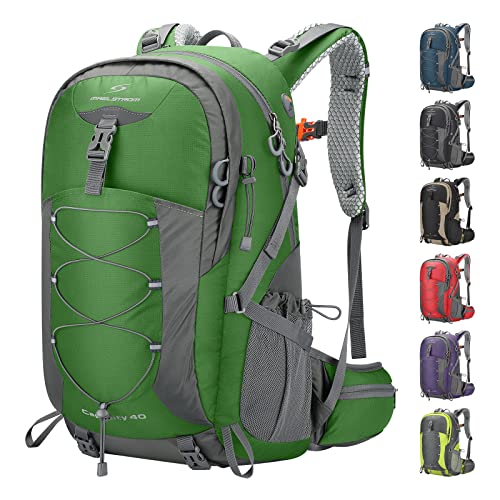
Selecting pack volume requires an honest evaluation of the physical bulk of your gear rather than a simple guess based on trip length. Day hikes typically require between fifteen and thirty liters of space to accommodate food, water, a wind shell, and basic safety essentials. Choosing a pack that is excessively large encourages carrying unnecessary items, which increases overall trail fatigue. An undersized daypack forces users to lash bulky items to external straps, creating awkward sway that disrupts natural balance.
Multi-day backpacking trips require greater capacity to house sleeping insulation, tents, cooking gear, and several days of food. Hikers who need versatile multi-day capacity often prefer backpacks with fifty to sixty-five liters of volume to handle varied trail gear without overstuffing seams. Using internal compression straps and roll-top closures helps compact shifting contents so the load remains motionless against your spine. Heavier items like food bags and water containers should sit close to the back panel, centered vertically between the shoulder blades and lumbar zone. External stretch pockets and top lid compartments provide convenient staging areas for rain gear, maps, and trail snacks.
Fabric Construction and Component Longevity
Backpack durability depends heavily on textile selection, weave density, and hardware quality. High-wear areas like the bottom panel and exterior tool attachments benefit from higher denier nylon or polyester weaves that resist abrasive rock contact and brush snags. Lighter fabrics on side panels and collars help keep the overall pack weight reasonable without sacrificing structural integrity. Reinforced box stitching at shoulder strap connection points and hip-belt anchors ensures the pack can handle repeated cycles of lifting and lowering.
Regular maintenance preserves the lifespan of technical fabrics and prevents zipper failures in remote locations. Dirt and fine trail grit can work their way into zipper coils and buckle mechanisms, accelerating abrasive wear over successive trips. Following guidelines for proper pack care and cleaning by hand-washing in lukewarm water with mild soap prevents fabric coatings from deteriorating. Storing your pack in a cool, dry area away from direct sunlight also prevents polyurethane waterproof backings from breaking down over time.
Essential Footwear and Trail Sock Synergy
Comfort on the trail is an interconnected system where foot health directly influences your posture and carrying efficiency. Sturdy hiking boots or trail runners cannot perform properly if paired with ill-fitting or abrasive socks that generate excessive friction. Specialty accessories like the Zmart Hiking Socks for Women illustrate how targeted textile blends support foot comfort. This sock design incorporates an eighty percent cotton blend for a soft touch against the skin, paired with fifteen percent nylon for endurance and five percent spandex for flexible stretch.
Proper sizing is vital for preventing blisters and bunching inside trail footwear. The Zmart socks offer broad sizing designed to fit women’s shoe sizes six through twelve and sock sizes eight through thirteen, ensuring a smooth, seamless fit across the heel and toe. Seamless toe construction eliminates irritating ridge friction that can cause hotspots during steep downhills when toes slide forward. The durable nylon reinforcement helps the heel and ball zones withstand continuous rubbing against boot linings during long walking sessions.
Visual appeal and personalized elements can also add enjoyment to outdoor preparation. The Zmart socks feature scenic trail graphics depicting winding paths, mountains, trees, and lakes, along with a playful message sewn into the sole. While decorative details do not change trail physics, high-comfort accessories make reliable trail gifts for hikers and campers who spend hours outdoors. Matching your sock thickness and elasticity to your footwear volume ensures your feet remain supported and blister-free across varied trail surfaces.
Managing Moisture and External Weather Protection
Water-resistant fabrics used in hiking packs can shed light drizzle, but they rarely protect contents during prolonged rainfall. Stitching holes, zipper teeth, and hydration tube ports allow moisture to penetrate internal compartments during steady storms. Using a dedicated external rain cover creates an immediate protective barrier over the pack shell, deflecting runoff away from critical seams. Many rain covers stow into their own compact pouch, allowing quick deployment when dark clouds roll over exposed ridgelines.
High-consequence gear like down sleeping bags, dry clothing, and navigation electronics requires internal protection in addition to an exterior cover. Lightweight silicone-coated dry bags or durable plastic pack liners provide reliable defense against water penetration if moisture bypasses the outer cover. Rolling the tops of dry bags tightly traps a protective layer of air while sealing out moisture from wet trail surfaces. Relying on layered waterproofing strategies prevents catastrophic gear soaking when unexpected downpours strike far from trailheads.
Hydration Systems and On-Trail Accessibility
Staying hydrated on the trail requires a carrying system that makes water accessible without demanding frequent stops. Internal hydration sleeves hold flexible water reservoirs securely against the back panel, keeping heavy liquid weight centered close to your spine. A dedicated exit port allows the drinking tube to route over either shoulder strap, held in place by elastic loops or sternum strap clips. This configuration allows steady, hands-free sipping that encourages regular fluid intake during strenuous elevation gains.
Side water bottle pockets offer a reliable alternative or supplement to internal bladder reservoirs. Durable stretch-mesh pockets on pack exteriors allow hikers to grab rigid bottles quickly, inspect remaining fluid levels at a glance, and refill from natural water sources easily. Using bottles eliminates the risk of an internal reservoir puncture soaking delicate gear inside the main compartment. Combining a hydration bladder for primary hydration with an exterior bottle for electrolyte mixing gives hikers flexibility across long, hot routes.
Frame Support Versus Pack Base Weight
Choosing between an internal frame pack and an ultralight frameless design involves balancing suspension support against empty pack weight. Internal frames use perimeter wire hoops or aluminum stays paired with rigid frame sheets to prevent the pack body from collapsing under load. This structural rigidity transfers carried weight cleanly to the hip belt, allowing comfortable portage of heavier gear, food, and water supplies. The tradeoff is added baseline weight from the metal stays and padded suspension components.
Frameless packs strip away structural hardware to minimize empty weight, appealing to ultralight hikers who maintain low base loads. These minimalist packs rely on careful internal packing, often using a folded closed-cell foam pad against the back panel to create artificial structure. While light on the scale, a frameless pack transfers downforce almost exclusively onto the shoulders when overloaded beyond its design limits. Hikers should verify their total gear weight before choosing a frameless design to avoid painful shoulder fatigue on demanding trails.
Pre-Trip Adjustments and Fit Verification
Dialing in backpack fit requires testing the suspension system under realistic conditions before departing for the trailhead. Loading the pack with ten to twenty pounds of household items mimics the weight and bulk of actual trail gear. Put the loaded pack on by loosening all adjustment straps first, then fastening and cinching the hip belt directly over your pelvic bone. Next, pull the shoulder strap adjustment tails downward and backward until the harness rests flush against your chest without lifting the hip belt.
Fasten the sternum strap across the mid-chest and tighten it just enough to prevent the shoulder pads from slipping outward without compressing your ribcage. Snug the load lifters at the top of the frame to pull the pack weight forward and eliminate backward leverage against your shoulders. Walking around your home, climbing stairs, and bending at the knees helps you identify loose webbing or pressure points that require micro-adjustments. Making these adjustments in a controlled environment ensures smooth, efficient travel once your boots hit the trail.
Evaluating your footwear, socks, and pack as a unified system protects your physical endurance across unpredictable terrain. High-quality accessories like flexible socks and secure pack attachments work together to prevent discomfort before it begins. Prioritizing correct anatomical sizing, balanced load distribution, and durable materials ensures your equipment supports your goals safely. Taking a measured approach to selecting trail gear equips you for enjoyable, memorable journeys across every ridge and valley.


Write Your Review
No reviews yet. Be the first to share your experience!