


For a framed hiking carrier, the right starting point depends on the child’s development and the carrier’s stated minimum, not age alone. The question of what age can a baby go in a hiking backpack has no single answer that applies to every child or carrier. One supplied carrier listing specifies use from 6 months, but that is a product-specific range, not a universal safety rule or a substitute for a clinician’s guidance. Check the current manual and ask your child’s pediatrician if you’re uncertain about readiness, especially if the child was born early or has health or developmental concerns.
A child carrier is different from a small backpack a child wears independently, and the two uses shouldn’t be confused. For example, one listed child daypack is intended for children ages 3 to 6, while a framed carrier listing gives a different age and weight range for carrying a child. The useful checks are the child’s ability to sit as required by the carrier, their size and weight, the restraint fit, and the carrier’s operating instructions. Our hiking backpack feature guide explains how pack construction and intended use shape a separate gear decision.

Pros
- Substantial 26-liter lower gear compartment eliminates the need for carrying a secondary daypack on family hikes
- Oversized suspended mesh back panel helps keep the wearer dry across warm-weather trail outings
- Child cockpit includes helpful comfort elements like stirrup-style foot pedals and an adjustable seat height
- Collapsible aluminum frame folds flat for simplified packing into car trunks or gear closets
Cons
- Manufacturer does not publish exact parent torso-length sizing ranges or empty pack weight
- Restraint system relies on a 3-point harness rather than a full 5-point shoulder configuration
- Overall dimensions of 20 x 14 x 29 inches create a tall profile in dense brush or low-clearance trails
The WIPHA Hiking Baby Carrier Backpack is an external-style framed child carrier built for parents introducing toddlers to trail walking, day hiking, and outdoor travel. Rated for children between 6 months and 4 years of age with a weight range of 16 to 40 pounds, this carrier targets active families who need a safe cockpit for their passenger while maintaining independent gear capacity. Instead of requiring a partner to haul an extra daypack, the carrier integrates a 26-liter luggage bin directly underneath the child seat, making it a functional self-contained system for standard day outings.
Trail comfort depends heavily on frame geometry and air circulation, and the WIPHA carrier uses an ultra-light aluminum frame with a suspended mesh back panel. By floating the pack body away from the wearer's spine with an oversized net panel, airflow moves freely between your back and the load to reduce sweat buildup in warm conditions. For load transfer, the wide padded waist belt takes downward pressure off the shoulders and helps distribute the combined weight of your child and supplies directly onto your hips. The hip belt also integrates storage pockets and side mesh bottle holders for fast trailside hydration access.
Passenger comfort and safety are central to the carrier design. Inside the cockpit, children sit in an ergonomic height-adjustable seat secured by a 3-point harness. The side-entry buckles feature a secure lock system that prevents accidental opening from inside or outside the carrier. For posture support, integrated foot pedals give toddlers a place to rest their feet rather than letting their legs dangle freely. When temperatures rise, the child backrest features a zippered fabric shell that opens to reveal internal mesh for multi-directional airflow, while cold winds can be blocked by zipping the exterior panel back up.
Daily handling and trail readiness are supported by several practical components. The carrier includes a detachable canopy that guards your little one against sun and light precipitation, which packs neatly into an integrated rear compartment when not in use. When it is time to load the car or store gear at home, the aluminum frame folds down flat in a laptop-style folding motion, significantly reducing the storage footprint compared to rigid static child carriers. Built from tear-resistant and waterproof materials, the exterior fabric handles routine contact with damp ground during rest breaks.
There are some realistic limitations to keep in mind before heading out. While the carrier supports children up to 40 pounds, WIPHA does not state an exact empty carrier weight or maximum combined cargo payload, meaning parents should remain cautious about overloading the 26-liter lower compartment. Additionally, the manufacturer does not specify an exact torso-length adjustment range in inches, so very petite or exceptionally tall wearers may experience varying degrees of hip-belt alignment. The cockpit also uses a 3-point safety harness rather than a 5-point over-the-shoulder harness, which requires careful adjustment to keep wriggling passengers upright.
For family day hikers, state park explorers, and camping parents who want an all-in-one child hauler, the WIPHA Baby Carrier Backpack provides strong practical value. Its large 26-liter storage capacity, suspended mesh parent ventilation, fold-flat frame design, and convertible child airflow system make it a capable trail companion for everyday outdoor family adventures.
The child cockpit on the WIPHA Carrier is engineered to fit developing toddlers from 6 months up to 4 years old, supporting weights from 16 to 40 pounds. The seat itself features height adjustability, allowing parents to raise or lower the sitting platform as their child grows so eye level remains comfortably above the carrier frame. Built-in foot pedals provide lower-body stability, preventing leg numbness during extended trail sessions.
Passenger security is managed via a 3-point safety harness complemented by protective side wings. To prevent unprompted releases, the entry buckles on both sides of the seat include a secondary lock mechanism that secures the buckle against toddler tampering. For changing weather conditions, the cockpit includes a removable sun and weather canopy along with a dual-layer backrest that transitions from wind-blocking fabric to breathable mesh with a single zipper pull.
Carrying a growing child requires proper weight distribution, and the WIPHA carrier uses an ultra-light aluminum frame designed to keep the load balanced over the hips. The parent-facing back panel replaces solid fabric with an oversized mesh net, providing consistent ventilation by creating a physical gap between the pack body and your back. Ergonomic shoulder straps and a wide, padded waist belt work together to stabilize dynamic child movements.
Storage capacity is a notable strength of this carrier, headlined by a large 26-liter zippered luggage compartment positioned beneath the child seat. This allows parents to pack rain shells, extra layers, first aid, diapers, and trail food in a single pack. Quick-access items are easily managed via zippered hip-belt pockets, while dual side mesh pockets on the waist belt provide immediate storage for water bottles.

Pros
- Height-adjustable suspension and padded load-bearing waist belt support parent comfort over extended trail walks
- Child cockpit provides practical passenger comfort with foot stirrups, padding, and a detachable sun canopy
- Thoughtful family organization featuring an insulated bottle sleeve, phone pocket, and included changing pad
- Durable ripstop polyester construction holds up well against trail abrasions and brush
Cons
- Measuring over 27 inches high, the carrier has a bulky profile that takes up significant trunk or closet space
- Specific manufacturer weight capacities for the child and adult load limits are not stated in the product specifications
- While the ripstop fabric is waterproof, a full-coverage rain shell is not detailed for heavy downpours
The Luvdbaby Hiking Baby Carrier Backpack is a dedicated outdoor child carrier designed for parents, caregivers, and outdoor families looking to share the trail with a baby or toddler. Engineered specifically for walking, nature walks, and day hikes, this carrier combines passenger security with standard backpack cargo storage. It eliminates the struggle of pushing strollers on rugged terrain by placing your child in a secure rear cockpit.
Carrying a moving passenger requires dependable suspension, and this pack incorporates a height-adjustable adult back system. The shoulder straps feature thick padding, paired with a load-bearing hip belt designed to channel weight toward your pelvis rather than straining your upper shoulders. For the child, the cockpit is built as a padded cocoon equipped with dedicated safety straps and foot stirrups that keep little legs resting comfortably during long outings.
Construction quality centers around a waterproof ripstop polyester body that resists light rain, trail moisture, and brush snags. The overall footprint measures 11.81 by 14.96 by 27.55 inches, presented in an orange and grey outdoor design. To address shifting weather, the pack includes a removable sun visor that easily mounts above the child seat to provide overhead shade from intense sun exposure.
Organization is geared toward the practical realities of trail parenting. Rather than tossing baby gear into a single cavernous void, this pack includes an insulated pocket to help maintain bottle temperatures, an easy-access compartment for a smartphone, and exterior mesh pockets for quick gear retrieval. It also comes with a foldable diaper changing pad, giving you a clean, dry surface to change your child whether resting at a trail bench or on the ground.
A realistic limitation is the overall physical bulk of the pack. At nearly 28 inches in height, it requires deliberate packing space in your vehicle and cannot be compressed flat like an ultralight daypack. Additionally, while the main ripstop material is waterproof, parents hiking in heavy rain should take extra precautions, as an all-encompassing foul-weather rain cover is not specified.
For families seeking an organized, supportive, and trail-focused child carrier pack, the Luvdbaby Hiking Baby Carrier delivers strong utility. Its combination of adjustable parent fit, child foot stirrups, sun protection, and baby-specific pockets makes it a capable gear choice for local nature preserves, state parks, and weekend trail outings.
Child security and posture are central to the Luvdbaby cockpit design. The seating area is constructed as a padded cocoon that helps protect the child while keeping them upright on the move. Built-in safety straps secure your passenger inside the frame to prevent leaning or accidental slipping during trail travel.
Integrated foot stirrups provide a resting platform for your toddler feet, preventing dangling legs that could cause restricted blood flow or discomfort on longer hikes. For overhead protection, the included sun canopy detaches or deploys quickly to shield sensitive skin from harsh direct sunlight.
Proper weight transfer is essential when carrying a toddler, and the Luvdbaby carrier uses a height-adjustable harness to match varying adult torso lengths. This adjustment allows multiple family members to share the carrying duties by easily repositioning the back harness height.
The adult carrying system includes heavily padded shoulder straps to cushion pressure across the collarbones. A broad, load-bearing hip belt stabilizes the pack against your hips, helping to anchor the pack securely against your body as you navigate changing grades.
Trail gear organization on this pack is tailored directly to parenting needs. It includes a specialized insulated pocket designed to keep baby bottles or drinks chilled or warm while you hike. Exterior mesh pockets hold quick-grab items such as snacks, wipes, or pacifiers without opening main compartments.
Parents also have access to a dedicated phone pocket for quick communication or photography on the move. The included foldable changing pad stows compactly inside the pack, providing a clean surface for diaper changes anywhere along the trail.

Pros
- Extremely lightweight at just 0.49 pounds, making it easy for toddlers and preschoolers to manage
- Tailored dimensions and adjustable shoulder harness engineered specifically for children under 4 feet tall
- Multiple compartments including dual mesh bottle holders and an exterior bungee for easy organization
- Reflective safety detailing on the front improves child visibility in low-light conditions
Cons
- Strictly fits items up to 10 inches in length, making it incompatible with standard school folders or binders
- Lacks a sternum strap, which may allow shoulder straps to slide outward on narrower toddler shoulders
- Fabric has a waterproof coating, but exposed zippers and seams are not rated for heavy rain or submersion
The Bseash 10L Small Hiking Backpack is a dedicated youth daypack designed specifically for children ages 3 to 6 who are under 4 feet (1.2 meters) tall. Geared toward family hikes, park visits, camping trips, and travel, it gives preschoolers their own functional pack scaled down to fit smaller upper bodies. Rather than forcing young hikers to struggle with an oversized school bag, this mini daypack keeps proportions compact and manageable for young adventurers.
In practical outdoor use, the 10-liter capacity provides ample room for light, child-carried trail items such as a compact fleece, snacks, a small toy, or simple trail essentials, with a maximum item accommodation length of 10 inches. At an ultralight weight of roughly 0.49 pounds (under 8 ounces), the pack adds almost no base weight to a child's back. Two exterior side mesh pockets provide dedicated spots for small drink containers, while the front elastic bungee cord offers external storage for stashing a hat or light windbreaker without opening the main compartment.
The pack is constructed from high-strength nylon treated with a waterproof coating, providing defense against rough trail contact, ground abrasion, and light moisture. While the fabric resists surface wetting, the backpack is not fully seam-sealed or waterproof against downpours. To support child comfort, the back panel incorporates a breathable sponge layer covered in mesh, paired with wide, padded shoulder straps designed to help relieve shoulder pressure during extended trail walks. Front-facing reflective strips provide an added safety touch by catching headlamp or flashlight beams in low light.
Adjusting the pack is straightforward using standard ladder-lock sliders on the shoulder straps, letting parents quickly adjust the fit whether the child is wearing a thin summer t-shirt or a bulkier winter jacket. The top-loading main compartment and front zippered pocket feature accessible zip pulls that are manageable for little hands. Maintenance is similarly simple, as the coated nylon surface allows parents to spot-clean dust and trail dirt with a damp cloth before hanging the pack to air-dry.
Buyers should keep several clear limitations in mind before ordering. Measuring 12.6 by 8.3 by 5.9 inches, this backpack is explicitly not built to serve as a standard school book bag, as full-size binders, textbooks, and letter-sized folders will not fit inside. Furthermore, the harness lacks an adjustable sternum strap, meaning active toddlers with narrower shoulders may experience straps slipping outward during active play. It also does not include a hip belt or internal frame, though these suspension features are unnecessary for the light loads intended for this age group.
For families seeking an affordable, purpose-built starter pack that allows young children to carry their own gear, the Bseash 10L Daypack is a practical option. It works well on short nature walks, state park paths, and family vacations where fostering trail responsibility is the main goal. So long as it is used within its intended size and capacity limits, it delivers dependable utility for young outdoor enthusiasts.
The Bseash 10L daypack is engineered strictly for children between the ages of 3 and 6 years old, with a recommended maximum height under 4 feet (1.2 meters). Its compact 12.6 x 8.3 x 5.9-inch profile is proportioned to sit properly on a toddler or preschooler torso without hanging too low or interfering with natural stride mechanics.
Because the main compartment is capped at accommodating items up to 10 inches in length, this pack cannot fit standard 8.5 x 11-inch paper, folders, or school books. Parents should verify their child's height and gear needs before purchasing, keeping in mind that the shoulder harness is sized for small child dimensions rather than older kids or adults.
Organization on the Bseash 10L pack is centered around a roomy zippered main compartment that easily accommodates extra clothes, snacks, or small personal items. A separate front zippered compartment provides quick access to smaller necessities like trail treasures, small toys, or tissues without having to open the main body.
For exterior storage, the pack includes dual side mesh pockets sized for small water bottles or juice boxes, keeping hydration within easy reach for parents or children. An integrated elastic bungee cord crisscrosses the front panel, offering tensioned external carry for a light rain shell, cap, or damp towel.
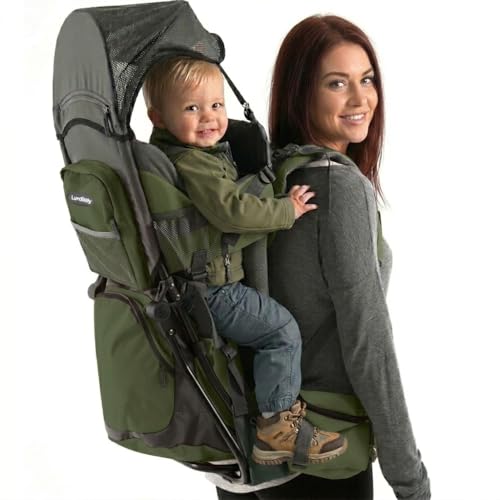
Pros
- Padded cockpit, adjustable harness straps, and stirrups keep your child seated securely
- Height-adjustable back panel makes it easier for parents of different heights to share carrying duties
- Thoughtful trail extras include a removable sun visor, insulated bottle pocket, and changing pad
- Durable waterproof Ripstop polyester exterior handles outdoor dirt and moisture
Cons
- Substantial upright dimensions (approx. 28.3 inches tall) make it bulky to transport in compact car trunks
- Exact maximum child weight capacity and gear volume in liters are not explicitly stated in the basic product specifications
- Structured child carrier design adds inherent base bulk compared to frameless fabric slings
The Luvdbaby Hiking Baby Carrier Backpack is a structured child carrier pack designed specifically for parents, guardians, and outdoor families who want to share trail adventures with their toddlers. Combining child seating with practical cargo storage, this pack suits recreational day hikers tackling local nature preserves, state park paths, or beginner mountain trails where wheeled strollers cannot travel.
Load management is critical when hauling both a toddler and trail supplies, and this carrier addresses that challenge through an adjustable suspension setup. The back panel features height adjustability to align with different adult torso lengths, which allows partners of varying heights to swap carrying duties. Heavily padded shoulder straps work alongside a dedicated load-bearing hip belt, helping transfer the combined weight of your child and gear away from the upper shoulders and down toward the pelvic structure.
Passenger comfort and safety remain central to the carrier design. The interior cockpit is padded like a protective cocoon, featuring adjustable safety straps to keep active toddlers secure over uneven terrain. Integrated foot stirrups give your child a stable resting point for their feet, which helps prevent legs from dangling unsupported on longer outings. A removable overhead sun visor easily attaches to the frame, shielding young skin from harsh midday sunlight and overhead branches.
Organization is tailored around family needs on the go. The carrier includes convenient mesh exterior pockets for quick-grab essentials, secure zippered stash pockets for adult phones or keys, and a dedicated insulated pocket to keep baby bottles or drinks at appropriate temperatures. Luvdbaby also includes a foldable diaper changing pad, creating a clean and dry surface when diaper changes become necessary at remote trailheads or picnic stops.
There are a few practical considerations to note before hitting the trail. With exterior dimensions of roughly 9.8 by 14.2 by 28.3 inches, this is a full-sized structured carrier that requires deliberate space in a vehicle trunk or gear closet. Furthermore, because specific maximum child weight ratings and overall cargo volume in liters are not published in the baseline specifications, parents should monitor their child's physical growth and overall comfort as the toddler approaches larger milestones.
For active families seeking a dedicated outdoor carrier without purchasing accessories separately, the Luvdbaby Hiking Baby Carrier delivers strong practical utility. Its combination of an adjustable adult harness, protective child cockpit, durable Ripstop polyester shell, and included changing supplies makes it a dependable companion for fresh-air day hikes.
The child seating compartment is built around a protective padded cocoon that cushions your little one against bumps and sudden movements on rugged trails. Integrated safety harness straps secure your child firmly in place, helping prevent unexpected shifting or leaning while walking.
Adjustable stirrups provide ergonomic foot support, allowing your child to rest their feet naturally rather than letting them hang unsupported. For bright weather conditions, the removable overhead canopy provides vital shade from direct sunlight, creating a cooler and more comfortable riding space.
Carrying a child requires proper weight distribution, and the Luvdbaby carrier utilizes an adjustable torso height mechanism to help center the load against your back. This adjustment makes the pack adaptable for both shorter and taller adult hikers sharing trail responsibilities.
Thickly padded shoulder straps prevent localized pressure along the collarbones, while the structured, load-bearing hip belt helps anchor the carrier against your hips. Engaging the waist belt ensures that the bulk of your passenger's weight is carried by your lower body rather than solely by your upper back and shoulders.
Designed to carry family trail essentials alongside your passenger, this pack features multiple mesh pockets, an easy-access phone pocket for quick communication, and a dedicated insulated bottle pocket to keep liquids chilled or warm.
The included foldable changing pad packs flat into the carrier, giving you a clean, moisture-resistant platform for trailside diaper stops. The primary exterior is constructed from waterproof Ripstop polyester, protecting your carried belongings from brush snags, dirt, and damp trailside ground.

Pros
- Integrated child comfort features including foot stirrups, padded cocoon, and removable sun visor
- Height-adjustable back system accommodates multiple adult wearers
- Thoughtful parenting-specific organization with an insulated bottle pocket and included fold-out changing pad
- Rugged waterproof ripstop polyester fabric handles brush, dirt, and light moisture
Cons
- Manufacturer specifications do not list exact pack weight or child weight capacity limits
- Substantial frame dimensions (27.56 inches tall) make vehicle packing and off-season storage relatively bulky
- Lacks specified gear compartment liter capacity for multi-hour gear planning
The Luvdbaby Hiking Baby Carrier Backpack is a specialized framed child carrier engineered for parents and caregivers who want to share trail excursions with infants and toddlers. Designed specifically for family day hiking, nature walks, and park exploration, this carrier combines child-transport safety components with outdoor pack ergonomics. It best suits active families looking for an all-in-one system that manages both the passenger and essential baby care supplies on the trail.
For adult carrying comfort and stability, the backpack incorporates a height-adjustable harness paired with heavily padded shoulder straps and a load-bearing hip belt. This configuration assists in transferring the child and pack weight toward the hips rather than straining the shoulders. The adjustable back height allows parents of differing torso sizes to swap carrying duties throughout the hike, while the load-bearing belt aids in stabilizing the pack against dynamic toddler movement.
The passenger cockpit is constructed as a padded cocoon secured with internal safety straps to keep toddlers seated in an upright, stable posture. Toddler foot stirrups are integrated along the sides, giving little legs a resting point during longer trail outings. An included removable sun visor can be deployed to provide overhead shade from intense sun or shelter from low-hanging trail branches. The main pack body is built using waterproof ripstop polyester, offering dependable resistance against trail abrasion and unexpected outdoor dampness.
Trail-side organization is tailored specifically to parent hikers. The pack features an insulated bottle pocket to maintain milk or formula temperature, exterior mesh pockets for quick-grab items, and accessible pockets positioned for smartphones. A foldable diaper changing pad is also included, providing a clean surface for diaper changes on picnic tables or dirt trails without needing to pack a separate ground mat. With dimensions of approximately 11.81 by 14.96 by 27.56 inches, the carrier provides structured support for the child seat while organizing trail essentials.
Prospective buyers should keep a few practical considerations in mind. The product specifications do not provide an explicit empty pack weight, child weight limit, or total interior liter capacity, making it important for parents to assess toddler fit and load balance carefully before setting out on extended routes. Furthermore, because of its structured 27.56-inch height, it occupies notable space in vehicle trunks and gear closets compared to standard daypacks.
Based on product specifications and built-in features, the Luvdbaby Hiking Baby Carrier Backpack is a practical, value-oriented choice for outdoor parents who want integrated child comfort and dedicated feeding organization. Hikers seeking stirrup support, sun coverage, padded harness adjustments, and a clean diaper-changing solution on nature outings will appreciate its family-focused utility.
The passenger compartment is engineered around a padded cocoon design that surrounds the child with soft, protective buffering. Integrated safety straps keep your toddler securely positioned in the seat, helping prevent accidental tipping or shifting while navigating uneven ground.
Fold-down foot stirrups give growing toddlers a comfortable platform to rest their feet, reducing leg dangle during extended walking sessions. A removable sun visor attaches over the cockpit, providing direct overhead shade against bright sunlight and stray branches on forested paths.
Unlike standard hiking daypacks, this carrier includes parent-specific storage solutions built into the pack exterior. An insulated bottle pocket helps maintain beverage temperatures, whether carrying a warm bottle of milk or chilled water on warmer outings.
Easy-access pockets allow you to reach your phone and keys without taking the pack off, while external mesh pockets hold wet wipes, snacks, or extra layers. The included foldable changing pad packs down flat, giving you a dedicated, clean changing surface wherever the trail takes you.
Age is only one part of carrier readiness
A baby can use a hiking backpack only when the specific carrier’s instructions allow it and the child meets its developmental and physical requirements. Age ranges in product descriptions are not interchangeable, and they don’t establish that every child of that age is ready. A listed carrier in the supplied product information gives an age range of 6 months to 4 years and a weight range of 16 to 40 pounds. Treat those figures as claims for that specific carrier, and verify them against its current manufacturer instructions before use.
| Reference point | What the supplied information says | How to use it |
|---|---|---|
| Age range for one framed child carrier | 6 months to 4 years | Product-specific listing; confirm the manual and child’s readiness. |
| Weight range for that listed carrier | 16 to 40 pounds | Check the exact carrier limits and count any relevant carried load as directed. |
| Separate child daypack | Ages 3 to 6 in its listing | This is a child-worn pack, not an age recommendation for carrying a baby. |
Before treating an age or weight range as applicable, check these distinctions.
- Find the minimum age and any developmental readiness requirements in the exact carrier manual.
- Check the child’s current weight against the carrier’s stated minimum and maximum.
- Confirm that the seat and restraints can be adjusted to the child, rather than relying on age alone.
- Separate child-carrier specifications from the age guidance for a child’s own daypack.
- Ask the pediatrician about readiness when a child has individual health or developmental concerns.
Why sitting ability and fit matter alongside age
A stated minimum age is a starting reference, not proof that a particular baby can safely ride in a framed carrier. Manufacturers may set requirements involving independent sitting, head control, or other developmental milestones, so consult the exact instructions rather than assuming those requirements from a product category. The supplied listing does not establish a universal milestone standard for every carrier. If the manual’s wording is unclear, contact the manufacturer and ask the child’s clinician before a trail outing.
Fit has to work for the child as well as the adult carrying the pack. A seat that is too large or too small, or restraints that cannot be adjusted as instructed, can make it difficult to position the child as the carrier was designed to hold them. A product description may mention an adjustable seat, harness, or footrests, but those features do not override the stated age, weight, or use limits. Read instructions for adjustment and confirm that buckles close and straps sit as directed before leaving.
How to read a carrier’s age and weight limits
Age and weight limits answer different questions. The age range describes the manufacturer’s stated intended window, while the weight range gives a separate physical boundary; a child must meet all applicable requirements, not merely one. Do not estimate readiness by comparing a child with another child, and don’t assume a similar-looking model shares the same limits. Model versions can differ, so match the manual and product label to the exact carrier.
Use a short verification sequence before relying on any listing.
- Match the model name and version on the carrier to its instruction manual.
- Read the listed minimum age, maximum age if given, and every stated weight limit.
- Check whether the manufacturer specifies developmental milestones in addition to age.
- Review the required harness, seat, footrest, and buckle setup in the supplied instructions.
- Contact the manufacturer if the listing and manual disagree or omit a necessary detail.
A product page can be useful for locating specifications, but it may be incomplete or outdated. The manual supplied with the exact model is the more appropriate source for its setup and restrictions, and questions about a child’s individual readiness belong with a pediatrician. The listing for one carrier in the supplied data identifies a 6-month minimum and a 16-to-40-pound range. Those details should not be transferred to other carriers, even when they are sold for similar hikes.
Framed carriers and child-worn backpacks serve different roles
A framed child carrier holds the child while an adult carries the frame; a child daypack is worn by the child to carry their own small items. These are different products with different fit and safety considerations. The supplied daypack listing describes a pack for ages 3 to 6, but that does not set the age at which a baby can ride in a framed hiking carrier. Check the intended use stated by the manufacturer before interpreting a product title or age label.
Confusing these categories can lead to a poor decision in either direction. A child’s ability to wear a small pack says nothing by itself about readiness to be secured in a carrier, and the age range for a carrier does not mean a child should carry a pack. For general context on the role a backpack plays on a hike, see our guide to backpack use on the trail. Keep that general gear discussion separate from child restraint requirements, which must come from the carrier maker.
Check the adult fit and child restraints before a short outing
Once the child meets the carrier’s stated requirements, the adult still needs to set up the pack according to its manual. Product information may describe adjustable shoulder straps, a padded waist belt, an adjustable seat, or a multi-point harness, but a feature list is not a fitting procedure. Use only the adjustments and attachment points the manufacturer specifies. If either the child’s restraint or the adult harness cannot be secured as instructed, do not proceed with that setup.
Before a hike, inspect the carrier and its hardware for visible damage, loose parts, or components that do not close or attach as intended. Follow the manufacturer’s guidance for checking straps, buckles, frames, and attachments; don’t modify hardware, substitute unapproved parts, or bypass a restraint. A correctly fastened buckle alone does not confirm that the carrier is suitable for the child. Confirm the child is positioned as the instructions show and that the adult can carry the setup with control in the planned conditions.
Plan around weather, route difficulty, and the child’s needs
Age readiness does not make every route or weather condition appropriate. A young child may have limited ability to communicate discomfort, and an adult carrying a child has to account for the added load and changing trail conditions. Choose a route within the adult’s ability and follow the carrier maker’s guidance for use. Avoid treating a product’s canopy or fabric description as a substitute for appropriate clothing, shade, hydration, or a plan to turn back.
Consider whether the carrier provides the support and access needed for the particular outing, using only features verified for the exact model. The supplied listings describe different features, including canopies, pockets, and adjustable components, but they do not establish that every feature appears on every carrier. A canopy does not guarantee protection in all conditions, and pocket capacity does not establish how much weight is appropriate. Keep the child’s comfort and the manufacturer’s limits ahead of convenience or trip distance.
When the listing leaves readiness unclear
Stop to resolve any conflict between the product page, manual, and label before use. Ask the manufacturer to clarify model-specific restrictions, and ask the pediatrician about the child’s developmental readiness when that is the concern. Do not fill missing information with a rule of thumb from another brand, a different model, or another family’s experience. A conservative decision is especially appropriate when the child is near a stated limit or cannot be positioned as described.
Recheck the instructions whenever the child grows or the carrier is adjusted, since fit can change over time. Follow the maker’s care and inspection guidance, and discontinue use if a restraint or structural part is damaged or does not function as instructed. Replacement straps, buckles, or accessories should be confirmed for the exact model rather than chosen by appearance. If safe operation is uncertain, do not carry the child until the manufacturer or another appropriate source has clarified the issue.
Use the carrier only when the child meets its exact instructions, age and weight limits, and fit requirements; if any of those points are uncertain, pause and verify them before the hike.


Write Your Review
No reviews yet. Be the first to share your experience!