


Usually, a hiking backpack can travel in the cabin if its packed dimensions and weight meet the airline’s current carry-on limits. For are hiking backpacks allowed as carry on, the practical answer is yes, but the backpack’s hiking label or advertised capacity does not establish that it qualifies. A soft pack may compress, while a frame, bulging pockets, or attached gear can make it too large for the airline’s measuring box. Rules can also vary by airline, route, aircraft, and ticket type.
Check the airline’s own rules for both the personal item and standard cabin bag, then measure the pack as you intend to board with it. Pay attention to exterior pockets, straps, handles, and anything clipped outside, since those can affect the total dimensions. A larger backpack may need to be checked, and a small pack may fit under the seat only if the airline’s personal-item allowance permits it. For related planning, this guide to checking a hiking backpack covers the other common airline option.

Pros
- Impressive 50-liter capacity paired with an empty weight under 2.4 pounds.
- Comes standard with a stowable waterproof rain cover in an exterior bottom pocket.
- Multiple compartments, including a separate shoe pocket and six external pockets, keep gear separated.
- External compression straps and attachment loops secure bulky gear like trekking poles and pads.
Cons
- Features a frameless design without rigid internal stays, limiting heavy load-bearing support on long hikes.
- Listed in a single Medium size without an adjustable torso length system.
- Heavy packing may cause strain on the shoulders due to the lack of rigid load-transfer suspension.
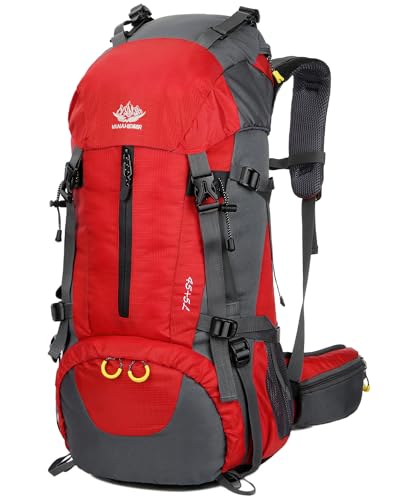
The Loowoko 50L Hiking Backpack is a high-capacity, lightweight gear hauler designed for weekend backpackers, casual campers, and adventure travelers seeking maximum packing volume without excessive pack weight. Although categorized under internal frame backpacks in some retail databases, the manufacturer explicitly details a frameless construction designed to keep the empty weight at approximately 2.1 to 2.4 pounds. This makes the pack an accessible, functional option for hikers carrying lighter, high-volume gear sets who do not require heavy aluminum stays or rigid suspension frames.
On the trail, the pack relies on its 50-liter capacity and physical dimensions of roughly 23.6 by 11.8 by 7.9 inches to accommodate several days of bulkier items, such as sleeping bags, camp clothes, and food supplies. For load management, the harness features widened and thickened S-type shoulder straps padded with dense sponge and lined with breathable mesh. The back panel incorporates high-elastic breathable padding intended to soften contact along the spine and encourage airflow, though hikers carrying dense loads should note that the absence of a rigid frame means pack structure depends heavily on thoughtful packing technique.
The backpack is built from tear-resistant polyester and nylon fabrics intended to withstand trail brush and luggage handling. Organizational features are a major highlight of the design. In addition to a cavernous main compartment, the pack includes a dedicated bottom shoe separator to isolate muddy hiking boots or camp shoes from dry gear, alongside six external pockets for quick trail-side access to snacks, maps, and compact gear. Exterior compression straps and multi-point attachment loops allow users to strap tents, sleeping pads, trekking poles, or ice axes securely to the outer shell.
Setting up and using the pack is straightforward thanks to its simple strap layout and quick-access storage zones. Weather protection is bolstered by an included waterproof rain cover stored in a dedicated bottom zippered pocket, ready to pull over the entire pack during sudden mountain showers. Cleaning and routine maintenance require only mild soap, lukewarm water, and thorough air drying before storing the pack flat in a dry environment between outings.
Realistic limitations must be kept in mind regarding weight distribution and sizing. Because the pack lacks internal metal stays and an advanced load-transfer hip belt, carrying loads above standard lightweight limits will place the burden squarely across the shoulders. Furthermore, the pack is listed in a standard Medium size without an adjustable torso ladder, meaning hikers with particularly short or long torso lengths may experience suboptimal strap placement.
Overall, the Loowoko 50L Hiking Backpack represents a practical, budget-friendly solution for beginner backpackers, weekend campers, scouts, and travelers who need large packing capacity paired with light empty pack weight. For hikers planning rigorous multi-day expeditions with heavy base weights, a rigid internal-frame pack remains preferable, but for light trail trips and versatile travel, this pack offers great organizational utility.
The Loowoko 50L backpack utilizes a frameless design that eliminates heavy internal aluminum stays or rigid perimeter wire frames. This architectural choice keeps the overall pack weight down to approximately 2.1 to 2.4 pounds, appealing directly to hikers seeking a lighter base weight for moderate trips.
To manage upper-body comfort without a rigid frame, the harness features widened and thickened S-curve shoulder straps equipped with thick sponge padding and breathable mesh. The back panel incorporates high-elastic breathable padding designed to cushion contact points, though hikers should remember that proper weight distribution relies primarily on how evenly gear is packed inside the main compartment.
With 50 liters of total volume, this pack provides substantial capacity for weekend camping gear, extra trail layers, and general travel necessities. Its generous dimensions of 23.6 x 11.8 x 7.9 inches offer plenty of room to pack bulky items inside the primary storage space.
Organization is enhanced by six exterior pockets and a separate lower shoe compartment designed to keep soiled footwear or dirty laundry away from clean clothes. Multiple exterior compression straps and attachment loops allow for the lash-on storage of trekking poles, ice axes, sleeping pads, or tents directly against the pack exterior.
While the polyester and nylon pack body offers tear resistance and baseline moisture repellency against damp ground, the pack includes a dedicated waterproof rain cover for wet-weather conditions.
The rain cover is conveniently stored in an integrated bottom pouch, allowing hikers to pull it over the full pack quickly when rain or dust threatens gear. For valuable electronics and sleeping gear in severe downpours, packing sensitive items inside dry sacks inside the bag remains a smart trail habit.

Pros
- Folds quickly into an ultra-compact pouch for easy packing inside luggage or a larger expedition backpack
- Weighs only 0.8 pounds, significantly reducing pack burden for ultralight day trips and travel-based hiking
- Dedicated wet compartment keeps damp clothes, towels, or rain shells isolated from dry interior contents
- Includes thoughtful trail safety and travel security features like an integrated sternum whistle and interlocking zipper pull clips
Cons
- Frameless design lacks internal stays or rigid structure, making it unsuited for carrying dense or heavy loads
- Shoulder straps provide minimal padding and lack load lifters or a supportive load-bearing hip belt
- IPX4 rating protects against light splashes and drizzle, but cannot withstand prolonged downpours without separate waterproof protection
The MIYCOO 35L Ultralight Packable Backpack is a collapsible daypack designed primarily for travelers who hike, casual day hikers, and campers who need a secondary day bag. Operating as a frameless, lightweight carrier, it excels when stowed inside a larger multi-day backpack or carry-on suitcase until needed at your destination. With an unpacked size of 12.5 x 8.5 x 20.9 inches and a stowed footprint of just 4.5 x 3.9 x 7.8 inches, this pack addresses the needs of outdoor recreationists who want supplemental pack capacity without the bulk and weight of traditional internal-frame daypacks.
On the trail, the pack provides 35 liters of storage volume, which accommodates bulky yet lightweight items like fleece jackets, light windbreakers, hats, lunch containers, and trail snacks. Because the backpack weighs only 0.8 pounds, it adds almost no base weight to your outing. However, buyers should remember that it is a purely frameless packable bag. Without an internal frame sheet, aluminum stays, or a padded load-bearing hip belt, the pack relies entirely on the user's packing technique for back support. Keeping soft items against the back panel is essential to avoid uncomfortable pressure points from hard gear.
In terms of construction, the pack uses water-resistant fabric rated at IPX4, meaning it is built to resist splashes and light rain during day outings or workouts. The manufacturer specifies upgraded heavy-duty zippers and reinforced stitching across major stress points, which helps the seams withstand regular loading. For security in transit or at busy trailheads, the main compartment features zipper clips that can secure two pulls together. The shoulder strap also incorporates an integrated safety whistle, giving day hikers a convenient, built-in signaling device without requiring extra hardware.
Organization is practical and user-friendly, centered around three distinct compartments. A standout feature is the dedicated wet compartment, which provides a designated space to segregate damp rain gear, sweaty apparel, or muddy accessories from clean, dry layers. Packing and unpacking the bag is straightforward, and when your excursion is finished, the entire pack folds back into its own pocket. Maintenance is equally simple: the fabric can be wiped clean with a damp cloth and hung up to air-dry before being packed away for long-term storage.
Realistic limitations must be acknowledged before taking this pack into rough backcountry terrain. The IPX4 water-resistance rating does not mean the backpack is fully waterproof or submersible, so sensitive electronics and critical insulation still require dry bags or waterproof liners during steady rain. Additionally, the thin, packable shoulder straps lack the thick padding and load-lifter support required for comfortable heavy-load carrying. Attempting to haul dense camera equipment, multiple full water bladders, or heavy survival gear will likely lead to shoulder fatigue due to the absence of a rigid suspension system.
The MIYCOO 35L Packable Backpack is a practical, value-driven choice for budget-conscious hikers, vacationers, and commuters who need an emergency summit pack or a lightweight travel daypack. If your hiking style involves carrying lightweight layers, snacks, and modest gear volumes on established paths, this foldable daypack provides useful organization, splash defense, and minimal weight in a highly portable design.
The MIYCOO Daypack provides a 35-liter capacity, measured at 12.5 x 8.5 x 20.9 inches when fully opened. This interior volume is divided into three separate compartments, allowing hikers to organize food, insulation layers, and trail accessories systematically rather than dumping everything into one open cavern.
The inclusion of an internal wet compartment is especially useful for trail outings where you encounter damp weather or river crossings. Storing a damp jacket or wet towel in this separated pocket prevents moisture from transferring into the main storage area where dry clothes are kept. For best results on the trail, pack softer items against the rear panel to form a makeshift back cushion, keeping heavier items centered and close to your body.
This backpack is constructed with water-resistant fabric carrying an official IPX4 rating. According to product specifications, this level of protection shields pack contents against splashes of water, making the daypack suitable for humid morning hikes, outdoor workouts, and light drizzle.
While the fabric resists surface moisture, the pack is not completely submersible, and prolonged downpours can eventually compromise zippers or unsealed seams. For serious rain exposure or creek crossings, hikers should wrap sensitive items, like electronics or dry layers, in dedicated waterproof dry sacks. Upgraded heavy-duty zippers and reinforced stitching at major stress points help ensure the pack maintains its structural integrity during everyday trail and travel use.

Pros
- Includes a dedicated rain cover stored in an underside pocket for rapid deployment during unexpected showers
- Extensive organizational layout featuring nine distinct storage areas, including an interior waterproof wet pouch
- Lightweight design at roughly 2.18 pounds helps minimize carrying fatigue on long trail days
- Integrated hydration sleeve hanger and hose port make adding an aftermarket reservoir straightforward
Cons
- Does not include a hydration bladder, requiring users to supply their own reservoir
- Torso length is fixed without micro-adjustable ladder adjustments for distinct back lengths
- A 40-liter profile may be bulkier than necessary for brief, gear-minimal day outings
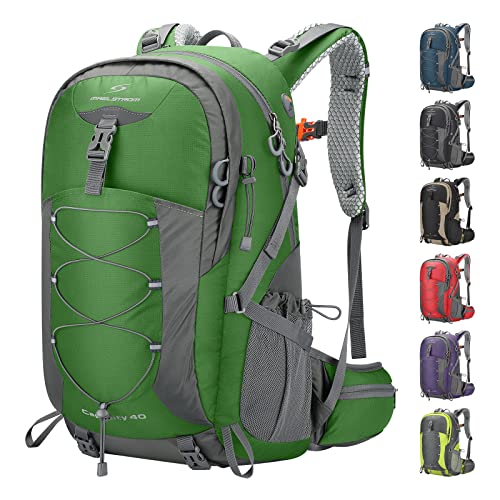
The Maelstrom 40L Hiking Backpack is a lightweight cargo hauler designed for extended day hikes, weekend camping trips, and travel itineraries where equipment volume matters. Weighing approximately 2.18 pounds with exterior dimensions of 8.86 by 12.99 by 23.62 inches, this pack provides substantial interior room while preventing excessive empty pack weight. It best suits hikers, scouts, campers, and travelers who need organized packing space for layers, food, and essentials without stepping up to a heavy, full-expedition frame pack.
On the trail, load management is handled through a system of padded shoulder straps, an adjustable sternum strap, and a padded hip belt. The hip belt transfers carried weight from the upper back to the hips, while dual integrated zippered belt pockets keep small trail necessities like lip balm, compasses, or energy bars immediately accessible. The sternum strap secures the shoulder straps across the chest to steady the pack during ascents, and its buckle integrates a built-in emergency whistle for safety signaling.
The pack body is built using 210D rip-stop nylon, offering resistance against trail scuffs, snags, and light moisture. Organization is well thought out, featuring a spacious zippered main compartment, one top zip pocket, two front accessory pockets, and two elastic mesh side pockets designed for standard water bottles. Inside the main cavity, a specialized waterproof pocket isolates damp clothing, rain shells, or sweaty base layers, preventing moisture transfer to dry electronics or food stores.
Hydration and external gear carry are built directly into the chassis. The interior contains a Velcro loop for hanging an aftermarket hydration reservoir, paired with a dedicated hose exit port on the upper-right shoulder area. On the exterior, elastic cord loops hold trekking poles securely when not in use. Additionally, an upper-left cord pass-through accommodates wired headphones, and reflective accents throughout the exterior enhance visibility in low-light conditions.
Prospective buyers should note a few operational limitations. While the 40L volume is spacious, the harness does not list a customizable torso-length adjustment ladder, meaning fit depends on personal torso proportions rather than mechanical adjustment. Furthermore, while the 210D nylon resists splashes, the pack body uses standard sewn zippers, making the deployable underside rain cover essential when rain sets in.
For day hikers, overnight car campers, and adventure travelers who want ample gear space, dependable pocket separation, and built-in weather protection, the Maelstrom 40L pack represents a practical, feature-packed gear carrier that handles demanding outdoor days with ease.
With 40 liters of total volume, the Maelstrom daypack provides generous room to pack thermal layers, trail meals, emergency shelters, and essential gear. The pocket layout allows systematic packing, preventing items from shifting to the bottom of the main cavity.
Organization includes a top zipper pocket for quick-access items, two front zippered compartments for maps and accessories, dual elastic side mesh pockets for water bottles, and two zippered hip-belt pockets for trail snacks. An internal waterproof wet compartment keeps damp clothes separated from dry essentials.
The main body of the pack uses 210D rip-stop nylon fabric that provides baseline water resistance against light mist and surface moisture. For moderate to heavy rainfall, the pack includes a fitted rain cover stored in a dedicated zippered pocket underneath the bottom panel.
The rain cover features an elasticized border for a snug wrap around the pack profile and includes a reflective silver logo to enhance visibility in fog or overcast conditions. Storing the cover in its underside pouch ensures it stays accessible without taking up main compartment volume.
Pros
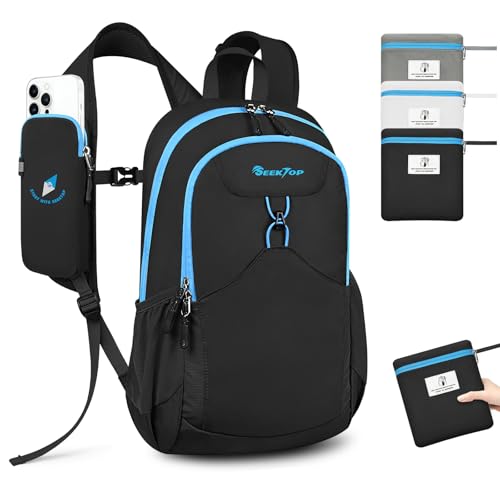
- Extremely lightweight at 11 ounces and folds down into a small 8.3 x 7.1-inch footprint for effortless packing inside luggage
- Convenient shoulder-strap pocket fits smartphones up to 7 inches for quick on-trail access without taking off the pack
- Front pocket features an internal wet-dry divider to keep damp items separated from dry clothing
- Side bottle sleeves accommodate water containers up to 3.5 inches in diameter
Cons
- Frameless, unpadded back structure lacks rigid load support for carrying heavy or dense trail gear
- Does not include a load-bearing padded hip belt or load lifters to transfer weight off the shoulders
- Water-resistant nylon resists light rain infiltration but is not seam-sealed or submersible in heavy downpours
The Seektop 15L Foldable Lightweight Hiking Backpack is an ultralight, packable daypack built for casual day hikers, travelers, commuters, and minimalist trail users who prioritize compact portability. Weighing approximately 11 ounces (0.69 pounds), this daypack provides a practical 15-liter cargo volume without the bulk, weight, or rigid hardware of a traditional internal-frame backpack. It serves as an accessible option for quick afternoon hikes, summit dashes from a basecamp, or day excursions during travel.
On short day hikes, the 15-liter capacity neatly accommodates essential layers, a packed lunch, and trail accessories within its 16.9 by 10.8 by 6.3-inch unfolded profile. The harness features ergonomic shoulder straps shaped to follow upper-body contours, distributing light loads across the shoulders and chest. Breathable mesh fabric on the shoulder straps and back panel allows air circulation, which helps manage heat buildup during warm-weather outings or active cycling trips.
Construction centers on high-density, water-resistant nylon fabric designed to resist scuffs, light trail abrasion, and damp conditions. Seektop reinforces high-stress attachment points with bartack stitching and tight seam joins to maintain structural integrity under regular use. Pocket arrangement is particularly practical for quick access, pairing a main compartment and secondary compartment with a front pocket featuring an internal wet-dry divider. Two side water bottle holders accept containers up to 3.5 inches in diameter, while the harness includes an integrated left-strap phone sleeve fitting screens up to 7 inches alongside a right-strap mesh stash pouch.
Storage and packing require minimal effort, as the backpack collapses into an integrated 8.3 by 7.1-inch pouch that slips cleanly into rolling luggage, travel duffels, or a larger backpacking rig. Maintaining the pack is equally straightforward, needing only a damp wipe down and thorough air drying between trail outings. Because it contains no rigid internal stays, the packable design packs flat or rolls without risking bent frame components.
While versatile for light trail outings, the frameless structure presents clear functional boundaries. The pack lacks a rigid frame sheet, load-lifter straps, and a load-bearing padded hip belt, meaning heavier trail gear will rest directly on your shoulders. Additionally, while the nylon fabric is water-resistant against light rain and moisture, it is not seam-sealed or submersible, so sensitive electronics still require dedicated dry bags during sustained downpours.
For hikers, travelers, and outdoor commuters seeking a secondary summit pack, travel daypack, or minimalist 15-liter gear hauler at a budget-friendly price point, the Seektop Foldable Backpack delivers dependable organization and convenient on-strap storage. Those carrying dense photography equipment, heavy winter gear, or planning multi-day backcountry treks should look instead toward structured internal-frame backpacks with dedicated load transfer.
Pocket arrangement on the Seektop 15L focuses on immediate trail access and clean separation of damp items. The front compartment features a built-in wet-dry divider, offering a designated space to separate damp rain shells, sweaty workout gear, or towels from dry interior contents stored in the main and secondary sections.
Quick-draw accessibility is enhanced by dedicated harness storage, including a secure left-strap pocket sized for smartphones up to 7 inches and an elastic right-strap mesh pocket for snacks or small essentials. Dual exterior side pockets expand to fit standard water bottles up to 3.5 inches in diameter, ensuring hydration remains within arm's reach throughout the hike.
With an empty weight of just 11 ounces (0.69 pounds), this packable daypack collapses down to compact dimensions of 8.3 by 7.1 inches. This compact folded profile makes it an efficient backup pack to keep inside a carry-on suitcase, travel duffel, or multi-day backpacking pack.
When unfolded, the pack expands to 16.9 by 10.8 by 6.3 inches, offering 15 liters of usable storage. This dual-purpose design allows travelers to leave heavy luggage at a hotel or campsite while carrying daily trail essentials on local hikes and urban excursions.

Pros
- Tough 600D polyester shell paired with reputable YKK hardware for long-lasting performance
- Airflow channels on the contoured back panel improve overall ventilation on warm hikes
- Versatile external attachment options including trekking pole loops and side compression straps
- Lightweight, streamlined footprint makes it easy to transition from trailheads to urban travel
Cons
- Compact 20-liter capacity is not designed for multi-day trips or bulky cold-weather gear
- Lacks a padded, load-bearing hip belt for carrying heavy loads over long distances
- Does not include a hydration reservoir or rain cover in the package
The MOUNTAINTOP 20L Hiking Backpack is a compact, streamlined daypack tailored for day hikers, outdoor travelers, and daily commuters who want a durable, no-fuss pack. Designed for lightweight trail outings, summit pushes, and quick afternoon walks, this pack delivers functional storage without excessive bulk or unnecessary weight.
In terms of trail functionality, the pack offers a 20-liter internal capacity that easily fits daily essentials such as an extra layer, trail food, a first-aid kit, and navigation tools. Internal sleeves and pockets keep your hydration bladder, electronics, and small items neatly organized so you do not have to dig through the main compartment. Measuring 6.3 x 11.4 x 18.9 inches, the pack maintains a slim profile that stays close to your body while scrambling over rocky sections or weaving through crowded travel terminals.
Durability is anchored by rugged 600D polyester fabric paired with reinforced stitching at high-stress areas. The inclusion of genuine YKK zippers ensures smooth operation and dependable closure, which is especially important when opening and closing main compartments repeatedly on dusty trails. The harness system features breathable mesh-padded shoulder straps and a contoured back panel with airflow channels to assist air circulation along your spine.
For gear handling, the pack is equipped with external trekking pole attachments, allowing you to quickly stow your poles when encountering flat terrain or scrambles. Side compression straps help cinch down partial loads for stability, and they can double as tie-down points for securing a light fleece or foam pad externally. An adjustable sternum strap helps stabilize the shoulder straps across your chest and features an integrated emergency whistle for trail signaling.
While this pack is well suited for quick outdoor trips, it has clear structural limitations. The 20-liter volume cannot accommodate bulky multi-day camping gear or heavy winter sleep systems, and it does not feature a padded, load-distributing hip belt. Hikers heading into sustained wet weather should also remember that a hydration reservoir and external rain cover are not included and must be sourced separately.
For casual day hikers, outdoor travelers, and budget-conscious adventurers looking for a sturdy, well-organized small pack with trusted YKK hardware, the MOUNTAINTOP 20L provides dependable quality and great practical value for everyday outings.
The 20-liter capacity of the MOUNTAINTOP daypack is calibrated for day trips where packing light is key. The main compartment provides ample space for a packable rain shell, mid-layer, lunch, and trail essentials, while the internal layout features dedicated spots to hold a hydration bladder, smartphone, wallet, and trail map.
External pockets provide quick-access storage for items you need on the move, such as snacks or small accessories. While the internal sleeve accommodates a water bladder, the bladder itself is sold separately, so you can pair the pack with your preferred hydration system.
Despite its compact profile, this daypack includes several external gear-hauling features usually found on larger packs. Dedicated trekking pole loops make it easy to lash your hiking poles securely when you need your hands free for scrambling or checking navigation.
Integrated side compression straps allow you to stabilize the pack contents to prevent shifting on uneven paths. These straps can also be used to lash lightweight external items like an extra layer, sit pad, or light foam mat to the exterior of the pack.
How to tell whether a hiking backpack can go in the cabin
A hiking backpack is generally eligible for cabin travel when it fits the airline’s allowed carry-on dimensions and weight, and when the ticket includes the relevant cabin-bag allowance. The pack’s stated capacity in liters is not enough to confirm eligibility: two bags with similar capacity can have different exterior shapes, and a lightly packed bag can become oversized when loaded. Treat airline rules as the controlling reference, not a general claim that a pack is suitable for travel.
Before packing, identify whether the bag will count as a personal item or a standard carry-on. Those categories often have different size limits and storage expectations, such as fitting beneath the seat or in an overhead compartment. A hiking pack with a tall profile, rigid support, or loose external equipment may not fit the smaller allowance even if its main compartment is not full. Confirm the rules for each flight segment, especially when different carriers operate the itinerary.
Use this checklist to establish the relevant airline and bag requirements before deciding what to carry aboard.
- Look up the operating airline’s current carry-on and personal-item size limits.
- Check whether your ticket includes a cabin bag or requires an additional allowance.
- Find any stated weight cap and confirm whether it applies to the whole bag.
- Check the rules for every carrier on a connecting itinerary, not only the first flight.
- Include external pockets, handles, straps, and attached equipment in your measurements.
- Confirm whether the airline expects the bag to fit beneath a seat or in an overhead bin.
Capacity and exterior measurements answer different questions
Capacity describes how much a bag can hold, usually expressed in liters, but airlines typically assess exterior dimensions and sometimes weight. A pack marketed for travel or cabin use is not automatically approved under every carrier’s rules. Likewise, a hiking pack that appears compact at home can expand once filled with clothing, food, or equipment. Compare the airline’s measurement method with the packed bag, rather than relying on the empty product profile.
Measure the bag in its travel-ready state, including the areas that protrude most. Soft fabric can sometimes be compressed, but do not assume staff will accept a bag that only fits after being forced into a sizer. Frame components or packed objects may keep the exterior from yielding. When a bag is close to the published limit, leaving room for compression and avoiding overstuffed pockets reduces uncertainty at the gate.
Personal item or overhead carry-on
A personal item is generally the smaller cabin bag, often expected to slide under the seat in front of you. A standard carry-on is intended for the overhead compartment and may have a larger allowance, subject to the airline’s rules and available space. A hiking backpack could fall into either category, but its actual dimensions, packed shape, and ticket terms determine which one is plausible. Do not treat the labels “daypack” or “travel backpack” as a substitute for checking those limits.
Think about the items that must remain accessible during the flight. A compact bag used as a personal item may keep essentials close, while a larger pack may be more practical in an overhead bin if permitted. However, a bag that cannot fit under the seat may not be accepted as the personal item even if it is soft-sided. Airline staff can require a cabin bag to be checked when it does not comply or when overhead space is unavailable.
Measure straps and attached hiking equipment
Loose shoulder straps, hip belts, trekking poles, sleeping pads, and other external items can add length or width and catch on nearby luggage. For a reliable check, secure dangling straps using the pack’s intended adjustment points and remove accessories that are not needed in the cabin. Avoid tying items on in a way that creates an awkward or unsafe load to carry through the airport. The dimensions that matter are those of the complete item presented for boarding.
Pack compression straps may help reduce a soft bag’s profile when used as designed, but they do not make an oversized bag compliant by themselves. Do not modify the backpack, remove structural parts, or force closures to achieve a measurement. If an attached item can be packed inside and the airline allows it, that can simplify measuring the exterior. Confirm that the packed arrangement still protects fragile items and keeps the bag manageable in crowded areas.
Check the ticket, route, and operating carrier
Carry-on allowances may depend on the fare, route, airline, and aircraft, so a rule remembered from another trip may not apply. Basic or restricted fares can differ from standard tickets, and regional aircraft may have limited cabin storage. If a connection includes a partner airline, check the carrier operating each segment and the instructions attached to that booking. When published policies seem inconsistent, contact the airline with the itinerary and bag dimensions before departure.
Look for the current policy on the airline’s official website or in its booking information. Pay attention to whether dimensions include wheels and handles, although a hiking pack may not have either, and whether weight is measured at check-in or boarding. Some carriers use a bag sizer, while others may assess dimensions visually or at the gate. This variability is why a generic airline rule cannot guarantee acceptance on a specific flight.
Pack for inspection and overhead handling
A tidy, compact load is easier to measure and handle than a bulging pack with items strapped to every exterior point. Keep essential travel documents, medication, and other items you may need during the flight accessible, while following applicable security screening rules for liquids and restricted articles. Put sharp or otherwise restricted hiking equipment in checked baggage when required by airport security or airline policy. A bag that meets the size rule still must comply with security and cabin-item restrictions.
Use these packing checks before heading to the airport.
- Pack the items you will actually carry, then measure the bag in that loaded condition.
- Secure loose straps and remove external gear that is not permitted or needed in flight.
- Keep restricted tools and sharp equipment out of cabin baggage when rules prohibit them.
- Place flight essentials where they can be reached without unpacking the entire bag.
- Leave enough flexibility to place the bag in the airline’s sizer without force.
- Review both cabin-bag and security rules, since size compliance does not settle every restriction.
What to do when the backpack is over the limit
If the loaded backpack exceeds the airline’s published limit, do not count on compressing it at the gate or persuading staff to make an exception. Reduce the load, move permitted items to another bag that also meets its allowance, or arrange to check the backpack. A checked bag may need protection for exposed buckles, straps, and attachment points; follow the carrier’s baggage instructions and consider a suitable cover if allowed. Review the checking policy and any baggage conditions before travel.
Some packs can be compressed for storage, but that feature does not guarantee cabin acceptance. For instance, product specifications describe the MIYCOO pack as foldable and list its unfolded dimensions; a traveler still needs to compare the fully packed bag against the specific airline’s current rule. A product description may help identify how a bag is built, but it cannot establish a universal airline allowance. The airline decides whether that particular bag can travel in the cabin.
How hiking-pack features affect cabin practicality
Features useful on a trail can complicate airport handling. External attachment points provide ways to carry gear, but protruding equipment may increase the bag’s dimensions or become caught during boarding. Multiple pockets make organization easier, yet overfilled pockets can widen the pack and make it harder to fit into a sizer. A rain cover can add a loose item, so stow it securely rather than leaving it hanging from the outside.
Support structure also matters to shape. A frameless bag may be more compressible than a pack with a rigid frame, but the supplied product information does not establish that every frameless design fits every airline. Shoulder padding, hip belts, and back panels can add bulk even when the bag is not full. Consider both the trail function and the airline dimensions instead of assuming that a lighter or smaller-capacity pack automatically qualifies.
Travelers considering a larger pack can also review this guide to backpack weight, which explains why the carried load matters for hiking preparation. Airline weight limits are a separate issue, so use the carrier’s stated maximum rather than applying trail-load advice to cabin baggage. A pack that feels manageable on a hike may still exceed an airline’s weight allowance when filled. Weigh the complete bag if the carrier publishes a limit.
Make a decision before arriving at the airport
Compare the loaded backpack with the exact allowance attached to the itinerary, then decide whether it belongs under the seat, overhead, or in checked baggage. Recheck the airline’s rules close to departure because policies and operational requirements can change. If the dimensions sit near the limit or multiple carriers are involved, ask the operating airline for clarification and keep the answer with your travel details. This approach is more dependable than relying on a general statement that hiking backpacks are carry-on friendly.
In short, bring a hiking backpack into the cabin only when its packed size, weight, contents, and ticket allowance meet the rules for your flight. Measure the whole bag and verify the operating carrier’s current policy before leaving for the airport.





Write Your Review
No reviews yet. Be the first to share your experience!