


A pack that brushes against rock, shrubs, or wet ground needs fabric suited to those conditions, not just a label that says “water-resistant.” For most hikers, nylon is a strong general-purpose starting point because it is commonly used where abrasion resistance matters; polyester may suit buyers prioritizing lower moisture absorption and resistance to UV exposure. The best material for a hiking backpack depends on how the pack will be loaded, used, and protected from rain.
Fiber type is only part of the answer: weave, denier, coatings, seams, and construction affect how a particular pack handles wear and moisture. Product listings in this category describe examples made with polyester and nylon, including water-resistant coatings and ripstop fabric, but those descriptions do not establish that every pack made from the same fiber performs alike. For context on how load affects a pack decision, see this hiking pack weight guide.
Pros
- High 50-liter capacity with distinct organizational compartments, including a dedicated sleeping bag zone
- Very manageable empty weight of 2.36 pounds for a pack of this volume
- Comes standard with a dedicated waterproof rain cover for wet-weather preparedness
- External hanging lash points offer versatile options for bulky gear attachment
Cons
- Does not feature a rigid internal frame, which can limit stability with heavy load carrying
- Manufacturer does not provide specific torso length or hip-belt sizing measurements
- Pack body fabric is water resistant rather than fully waterproof on its own
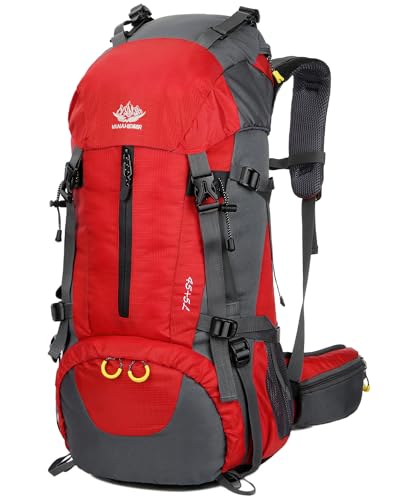
The WoneNice 50L Hiking Backpack is a versatile, high-capacity daypack and gear hauler designed for budget-conscious day hikers, weekend campers, and travelers. Designed around a 45+5 liter capacity framework, it offers substantial volume for gear-intensive outdoor pursuits, family outings, and campsite overnights where packing bulky equipment like extra layers, cooking kits, or blankets is necessary.
Weighing 2.36 pounds with exterior dimensions of 7.9 x 13.8 x 23.6 inches, the backpack maintains a low base weight for its volume class. Gear organization is straightforward thanks to a multi-compartment structure consisting of a spacious main storage area, two front zippered accessory pockets, dual mesh side water bottle pockets, and a dedicated lower sleeping bag compartment designed to keep your sleep system segregated from clean clothes and food.
The exterior shell is crafted from a blend of polyester and nylon fabric, offering scratch-resistant, tear-resistant, and water-resistant properties for trail use. Comfort features include thickened and widened S-type padded shoulder straps alongside a high-elastic, breathable back support panel that provides cushioning while encouraging airflow along the spine during warm-weather hikes.
Adjustability centers on an adjustable chest belt and waist belt that allow users to draw the pack in closer to the torso to reduce shifting on uneven terrain. For gear that exceeds internal capacity, the pack features an integrated hanging loop system for securing items like trekking poles or compact sleeping pads, and it includes a dedicated waterproof rain cover that deploys quickly over the entire pack exterior.
A practical limitation of this design is the absence of an internal frame sheet or metal stays, meaning that careful packing is essential to prevent heavy items from pushing into the back panel. In addition, because the manufacturer does not specify precise torso length ranges or waist circumference limits, fit refinement relies primarily on strap tension rather than adjustable harness sizing.
For hikers, campers, and casual trail travelers seeking an economical 50L gear pack with separate compartment organization, low base weight, and built-in rain protection, the WoneNice 50L pack offers dependable trail utility for moderate load demands.
The WoneNice backpack provides 50 liters of capacity, structured as a 45+5 configuration to accommodate both core gear and supplemental gear additions. The internal layout is divided into specialized zones to make packing and locating supplies efficient at the trailhead or campsite.
At the bottom of the bag, a dedicated sleeping bag compartment allows quick access to sleep gear without the need to unpack the main contents. The upper section provides a deep main compartment for larger items, supported by two zippered front pockets for trail accessories, navigation items, or snacks, while dual stretch mesh side pockets hold standard water bottles.
An exterior hanging loop system provides supplementary attachment points, allowing users to secure bulky camp essentials such as tents, bed rolls, or walking poles directly to the pack body.
Carrying comfort in the WoneNice 50L backpack is managed through padded, widened S-curve shoulder straps designed to sit naturally across the chest and shoulders. The padding helps reduce localized pressure when the pack is filled with daily essentials.
The rear of the pack features a high-elastic breathable back support panel designed to provide cushioning against packed contents while assisting with ventilation along the back during uphill segments.
Both the chest strap and waist belt are fully adjustable, giving hikers the ability to fine-tune strap tension to stabilize the load against the body across female and male users, although fixed torso sizing means fit will vary based on user frame size.
The primary pack body is constructed with water-resistant, wear-resistant polyester and nylon fabrics designed to withstand light moisture, trail brush, and abrasion during regular outdoor use.
Because water-resistant fabric can absorb water during steady precipitation, WoneNice includes a separate waterproof rain cover with the pack. This cover packs down compactly inside the pack and stretches over the entire exterior to protect zippers, pockets, and contents from heavy rain exposure on exposed trails.
Pros
- Quick-release tube unclicks cleanly while retaining liquid, letting you leave the hose routed in your pack during reservoir refills
- Wide threaded opening makes filling ice and cleaning with a standard brush simple and fast
- Mouthpiece includes a snap-tight dust cover to keep dirt, sand, and trail debris off your bite valve
- Double-sealed edge construction offers dependable burst resistance when packed tight among hiking gear
Cons
- Operating temperature limit of 20 to 50 degrees Celsius makes it unsuitable for boiling water or freezing winter hikes
- The raised screw-cap collar adds rigid bulk that can feel tight in very narrow pack hydration compartments
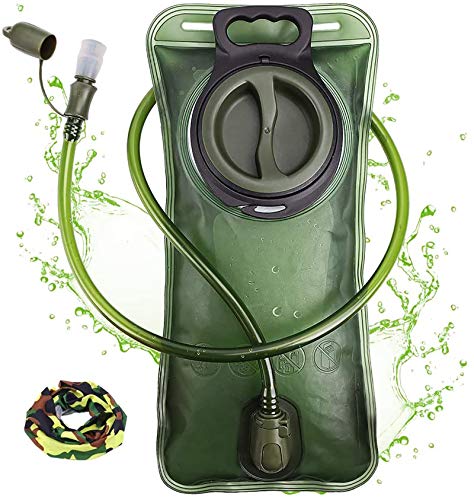
The CHERAINTI 2L Hydration Bladder is a dedicated replacement water reservoir designed for hikers, backpackers, cyclists, and trail runners seeking a dependable, budget-friendly fluid delivery system. Engineered to slide into hydration-ready daypacks and internal-frame hiking bags, this bladder holds two liters (approximately 67.6 fluid ounces) of water. That capacity offers a practical balance between fluid endurance and manageable trail carry weight, avoiding the excessive bulk and sloshing of oversized bladders on moderate outings.
Trail usability centers around thoughtful plumbing and sensible dimensions. Measuring 14.2 inches long by 6.8 inches wide, the bladder fits neatly into the rear hydration sleeves of standard outdoor daypacks. Its 40-inch flexible drink hose features an ample 0.4-inch diameter for consistent, effortless water flow. A soft bite valve allows simple bite-to-sip operation, complemented by an on-off switch to stop drips during transit and a tethered plastic cap that prevents dirt or grit from contaminating your drinking surface on dusty trails.
In terms of build quality, the reservoir utilizes BPA-free, taste-free materials reinforced with double side-welded seams. The manufacturer subjected the construction to pneumatic pressure testing, ensuring the seams resist the internal pressure spikes that occur when stuffing gear, jackets, and food into a fully packed backpack. At the base of the reservoir, a quick-release connector houses an automatic shut-off mechanism, which holds water securely inside even when the drinking hose is detached.
Refilling and routine maintenance are made user-friendly thanks to the oversized screw cap. The wide mouth allows hikers to pour water from standard filters, drop full ice cubes straight in, or reach inside with a cleaning brush to scrub the slick internal surface. Because the drink tube unclicks instantly with a single button press, you can leave the hose routed through your backpack shoulder straps and carry only the bladder body to a campground spigot or water filter station.
There are a few functional limitations to keep in mind before heading into extreme environments. The manufacturer lists an operational temperature range of 20 to 50 degrees Celsius (68 to 122 degrees Fahrenheit), which means this bladder is not built for sub-freezing snowshoe treks or hot water sterilization. Additionally, the rigid plastic collar of the screw cap adds more profile thickness than roll-top slider bladders, which may require deliberate packing inside ultra-slim running vests or tight hydration pockets.
For day hikers, weekend backpackers, and outdoor enthusiasts seeking an affordable, leak-resistant water reservoir with modern quick-disconnect convenience, the CHERAINTI 2L Hydration Bladder serves as a dependable upgrade or spare component that reliably covers essential trail hydration needs.
The CHERAINTI 2L Hydration Bladder measures 14.2 inches in length and 6.8 inches in width, fitting the standard hydration compartment dimensions found across most mid-sized daypacks, overnight packs, and tactical packs. The top handle area integrates cutouts that align with standard hydration hook loops found in hiking packs, keeping the bladder suspended upright to prevent sagging as water levels drop.
A generous 40-inch drinking hose provides sufficient length to route through top pack ports and down shoulder straps on both small daypacks and taller backpacking frames. The quick-disconnect coupling at the base allows the hose to stay secured in your pack harness while you remove the bladder for refilling, avoiding the hassle of rethreading the tube at every water stop.
Routine cleaning is straightforward thanks to the wide fill opening, which is large enough to admit a hand, sponge, or standard bottle brush. After rinsing with mild soapy water, ensure the reservoir is thoroughly air-dried with the cap removed before storing it to keep the interior fresh and prevent moisture buildup.
Keep in mind the listed temperature tolerance of 20 to 50 degrees Celsius when washing or filling. Avoid pouring boiling water directly into the bladder or using heat-based drying appliances, as excessive heat can deform the plastic fittings or compromise seam seals over time.

Pros
- Folds quickly into its own built-in 17 x 17 cm pouch for travel and storage
- Weighs only about 0.42 pounds, making it virtually unnoticeable when packed inside larger luggage
- Flap-free SBS metal zipper tracks reduce frustrating fabric catches
- Dual exterior mesh pockets provide accessible hydration bottle storage
- Versatile layout works well for short day hikes, travel excursions, and everyday errands
Cons
- Frameless design offers no rigid internal back support for heavy or uneven gear
- Lacks a sternum strap and padded hip belt to stabilize shifting loads on steep terrain
- Water-resistant coated nylon resists light moisture but is not fully waterproof in prolonged downpours
The G4Free 20L Lightweight Packable Backpack is an ultralight, frameless daypack designed for day hikers, campers, and travelers who need compact, grab-and-go gear storage. Folding down into its own integrated 17 x 17 cm storage pouch, this pack slips easily into a suitcase, duffel, or larger multi-day backpack. It functions as a convenient secondary daypack for side excursions from basecamp, easy national park trails, and casual travel adventures where hauling a heavy, rigid pack is unnecessary.
With an unfolded footprint measuring 16.5 x 11.8 x 6.3 inches, the daypack offers 20 liters of volume while weighing just under 0.42 pounds. The main compartment holds everyday trail necessities such as a lightweight fleece, a packable rain shell, maps, and trail snacks. Gear organization is distributed across three zippered compartments, including an inner zippered valuables pocket for safeguarding keys, identification, or small electronics. Outside, two elasticized mesh side pockets provide easy spots to carry water bottles without opening the main pack body.
The pack is constructed from a water-resistant coated nylon fabric designed to handle routine trail abrasion and light scrapes. G4Free equips the pack with SBS metal zippers that feature an updated track layout without an overlapping fabric flap, reducing the likelihood of zippers snagging on the pack material during quick gear grabs. Carrying comfort is managed by wide, S-shape breathable mesh shoulder straps that promote airflow across your shoulders and adjust smoothly with standard ladder-lock buckles.
Handling and maintaining the pack between outings requires minimal effort. When packing gear into a frameless pack, placing soft clothing against the back panel creates a smooth, comfortable surface against your body, while heavier objects remain centered. Routine cleaning requires only a damp cloth with mild soap followed by line drying away from extreme heat to preserve the fabric coating. When dry, the bag folds into its self-contained pouch for easy storage in a vehicle console, gear bin, or travel carry-on.
Because this daypack prioritizes minimal weight and packability, it carries realistic trail limitations. The pack has no internal frame, stay, foam back panel, or load-bearing hip belt, meaning all carried weight rests directly on your shoulders. Overloading the pack with heavy or hard-edged objects can cause pressure points against your back. Additionally, while the coated nylon fabric sheds light drizzle and morning mist, it does not feature sealed seams, so prolonged or heavy rain requires supplemental protection.
For day hikers, campers, and travelers seeking a low-cost, remarkably portable backup pack, the G4Free 20L packable daypack delivers practical everyday value. It is best suited for light trail payloads, summit dashes, and vacation excursions where packing space and weight are at a premium. Hikers carrying heavy camera gear or expecting torrential weather should opt for a structured, weather-sealed daypack, but for simple, lightweight portability, this foldable pack is a dependable choice.
The standout characteristic of the G4Free 20L daypack is its ability to compress into an integrated 17 x 17 cm pouch. Because the storage pouch is built directly into the pack design, you never have to worry about misplacing a separate stuff sack when packing up at the trailhead or in a hotel room.
Weighing only about 0.42 pounds, it adds almost no noticeable weight to your travel luggage or backpacking base kit. This makes it an ideal accessory to keep stashed in a trunk or inside a multi-day expedition pack, giving you an agile 20-liter setup whenever you want to leave your primary camp gear behind for an afternoon summit push.
The pack is built with a water-resistant coated nylon fabric paired with SBS metal zippers. The nylon fabric provides surface abrasion resistance against brush, branches, and everyday packing wear while remaining pliable enough to compress tightly into its pouch.
In terms of weather protection, the exterior coating repels light splashes, mist, and brief drizzles. However, the bag does not include taped seams or waterproof zippers. For severe weather or when carrying sensitive electronics, pairing the pack with an internal dry bag or pack liner is recommended to keep critical gear dry.

Pros
- Generous 40L capacity at a low listed weight of just 2.18 pounds
- Included stowable rain cover offers immediate foul-weather defense
- Dedicated internal wet pocket keeps damp garments separated from dry trail gear
- Dual zippered hip-belt pockets provide convenient access to trail snacks and small items
- Built-in trekking pole loops and hydration hose routing support active day hiking
Cons
- Hydration reservoir is not included and must be purchased separately
- Manufacturer does not specify adjustable torso ranges, making custom spine fit limited
- Lacks heavy-duty load-transfer stays for carrying dense, expedition-weight loads
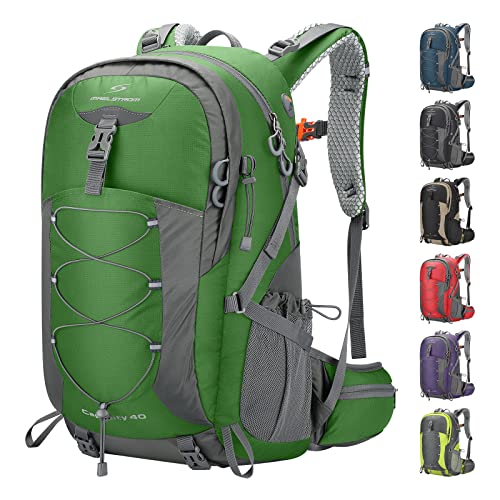
The Maelstrom 40L Hiking Backpack is a high-capacity, lightweight daypack designed for hikers, weekend campers, and adventure travelers who want ample gear space without carrying excess empty pack weight. At an accessible 2.18 pounds, this 40-liter pack bridges the gap between a standard single-day bag and an overnight pack, making it a viable option for full-day mountain excursions, gear-heavy family outings, or minimalist overnights.
For trail carrying comfort, the pack features an ergonomic, breathable padded back panel paired with contoured, ventilated shoulder straps. An adjustable chest buckle stabilizes the harness across the torso and integrates an emergency whistle for added trail readiness. Dual zippered waist pockets help stabilize the lower pack against your hips while keeping essential items within arm reach. Hikers should note that the pack does not provide adjustable torso-length sliding mechanisms, so overall suspension fit will depend on your individual torso proportions.
Exterior construction utilizes 210D rip-stop nylon fabric, offering water resistance and protection against light trail abrasions from overhanging branches or brush. When sustained rainfall rolls in, the pack includes a fitted rain cover stored inside a dedicated bottom pouch. This rain cover features a reflective logo to enhance low-light visibility while providing an extra barrier against moisture.
Organization is a distinct strength of the Maelstrom 40L, featuring a large main zippered compartment, three front zippered utility pockets, a top lid pocket, and two stretchy mesh side pockets for water bottles. An internal waterproof wet pocket lets you isolate damp rainwear, sweaty garments, or towels from the rest of your dry supplies. For hands-free drinking on the move, an internal fastener accommodates a hydration reservoir paired with a side hose port, though the bladder itself must be supplied separately.
In terms of limitations, the flexible lightweight build is engineered for moderate trail loads rather than dense, heavy backpacking gear. Carrying excessively dense gear without rigid aluminum stay support may cause the pack to sag against the lower lumbar area. Furthermore, the absence of specific torso sizing data means hikers with particularly tall or short torsos may need to experiment with strap tension to achieve balanced weight distribution.
Overall, the Maelstrom 40L Backpack is a practical, value-oriented solution for day hikers, campers, and travelers seeking dependable volume, structured pocket access, and foul-weather readiness. If you prioritize lightweight flexibility, included weather accessories, and versatile pocket dividers over rigid technical suspension systems, this pack serves as a capable companion across a wide range of outdoor adventures.
The Maelstrom 40L pack utilizes a multi-compartment structure to prevent trail gear from migrating to the bottom of the main chamber. It features a spacious main zipper compartment alongside three individual front zippered pockets that allow clear separation of trail maps, headlamps, first-aid kits, and electronics. The quick-access top pocket serves as a convenient stash location for items like sunglasses or keys.
Inside the primary chamber, a dedicated waterproof wet pocket separates damp swimsuits, rain jackets, or post-hike clothes from dry gear. Exterior storage is rounded out with dual side mesh pockets designed to hold standard water bottles, along with two zippered hip-belt pockets for snacks, multi-tools, or pocket knives. Side fastener cords and elastic loops securely anchor up to two trekking poles against the pack body when not in use.
Weather management relies on a two-part defense system starting with the 210D rip-stop water-resistant nylon shell. For steady rain and harsh conditions, an included rain cover deploys quickly from the dedicated bottom zipper pocket, providing supplemental coverage to shield pack zippers and seams from saturation.
Hydration integration includes a hook-and-loop hanging strap inside the main chamber to keep a reservoir upright, along with an upper pass-through hole for routing a drinking tube down the shoulder harness. Note that a hydration reservoir is not included with the pack, so hikers will need to pair it with their preferred compatible water bladder.
How hiking backpack fabrics differ in real trail conditions
Nylon is often a practical all-around choice for a hiking pack, while polyester can make sense when UV exposure and moisture absorption are priorities. Neither fiber alone guarantees a durable or weatherproof backpack. Compare the fabric construction and the pack’s stated features with the terrain, weather, load, and care the intended use involves.
A fiber name describes the base material, not the complete fabric. Denier, weave, reinforcement, coatings, seams, zippers, and construction all affect how the finished pack behaves. A nylon pack with a water-repellent coating, for example, is not automatically waterproof, and a polyester pack can vary considerably from one design to another.
Start with these points when reading a product description or comparing fabrics:
- Identify the stated fiber, such as nylon or polyester, rather than relying on a generic “outdoor fabric” label.
- Check whether the listing names a weave, ripstop construction, coating, or water-resistance treatment.
- Look for a stated denier when comparing fabric weight or thickness, but do not treat it as a complete durability score.
- Confirm whether rain protection comes from the pack fabric, a separate cover, or both.
- Consider where abrasion is likely, including the base, sides, and areas that contact rocks or gear.
- Check the care guidance before using cleaners or applying a water-repellent treatment.
Nylon: a versatile choice for abrasion-prone use
Nylon is widely used in backpacks because it can be made into fabrics suited to carrying and repeated contact. The actual result depends on the yarn, weave, fabric weight, and any reinforcement or coating. A listing that identifies nylon but gives no construction details leaves important comparisons unresolved.
Ripstop nylon uses a reinforced weave intended to limit the spread of a tear, but the word “ripstop” does not mean a fabric cannot be punctured or damaged. The size and spacing of reinforcement threads, base fabric, seams, and overall construction still matter. Treat ripstop as a useful construction detail rather than a promise of indestructibility.
Some nylon fabrics absorb more moisture than polyester, and damp fabric may take longer to dry depending on its thickness and finish. A coating or surface treatment can change how water interacts with the fabric, but treatments can wear over time. Pack contents still need protection appropriate to the forecast and the consequences of getting them wet.
Polyester: useful where sun exposure and moisture matter
Polyester is another common backpack fabric. Compared with nylon, polyester generally absorbs less water and resists UV degradation well, which may be relevant for packs exposed to sunlight or damp conditions. Those broad material tendencies do not predict the performance of every finished pack.
Check whether a polyester pack lists its fabric weight, weave, coating, and care requirements. A coated polyester fabric may resist light rain, but water can still enter through seams, openings, zippers, or worn areas. If a product description simply says “water-resistant,” do not interpret that as a stated waterproof rating.
Polyester can be a sensible option for day hikes and general outdoor use when its construction suits the load and the expected exposure. For frequent scraping against rock or carrying heavier equipment, examine the fabric and reinforcement details rather than selecting by fiber name alone. Padding, seams, attachment points, and pack design also influence whether a pack suits the trip.
Denier, weave, and ripstop describe different things
Denier is a measure related to the linear density of the yarn used in a fabric. A higher denier can indicate heavier yarn, but it does not by itself measure tear strength, abrasion life, or total pack durability. Fiber, weave, finishing, and construction need to be considered alongside that figure.
Weave describes how yarns cross one another, while ripstop refers to a reinforcement pattern intended to restrict tear propagation. These terms are not interchangeable. A pack can use a particular fiber in different weaves and weights, so a meaningful comparison needs more than a single specification.
Fabric weight is also a tradeoff. Heavier material may add weight to the pack, while an ultralight construction can involve different compromises in abrasion resistance or reinforcement. The available product information may not provide enough detail to quantify those tradeoffs, so avoid assuming a lightweight label means a pack is unsuitable or that a heavy fabric is automatically more robust.
Coatings and rain covers: understand the limits
Water resistance usually describes how a fabric or finish handles limited exposure, not complete protection in prolonged rain. A coating may help water bead or slow penetration, but the coating’s type, condition, and coverage matter. Seams and closures remain potential entry points even when the main fabric sheds water.
A separate rain cover adds another layer of protection when it is included and correctly fitted, but its presence should not be confused with a waterproof pack body. Covers can shift or leave parts exposed in wind, and a wet cover can require drying after a trip. For valuable or moisture-sensitive items, an internal pack liner or individual dry bags can provide another protective layer.
Product details illustrate why descriptions need careful reading. The WoneNice listing identifies polyester and nylon fabric and includes a rain cover, while the G4Free listing describes coated nylon and a foldable design. Those details describe the listed products; they do not establish a universal advantage for either fiber or construction.
Match fabric priorities to trail use
A short day hike with a modest load creates different demands from a multi-day trip with equipment attached outside the pack. Frequent contact with rough surfaces raises the importance of abrasion-prone areas and reinforcement. Extended wet weather makes closures, seams, and a separate liner more relevant than a broad claim about fabric alone.
Use this checklist to connect material details with the way the pack will be used:
- For exposed routes, check fabric and reinforcement in the areas most likely to rub against rock or brush.
- For rainy trips, identify the cover or liner plan and inspect how openings and seams are described.
- For sunny routes, consider polyester’s general UV resistance while checking the full pack construction.
- For longer carries, balance fabric robustness against pack weight and the amount of gear being carried.
- For external attachments, inspect the stated straps, loops, and reinforcement rather than assuming fabric alone is sufficient.
- For a compact spare pack, compare packability and material details with the intended load and trip conditions.
Capacity and fit remain separate from fabric choice. A durable-feeling fabric cannot compensate for a poor torso fit, uncomfortable shoulder straps, or a hip belt that does not suit the wearer. The guide to features of a good hiking backpack can help put materials alongside those broader fit and carrying considerations.
Care that helps preserve fabric and finishes
Follow the pack maker’s cleaning and storage directions because coatings and fabric treatments can respond differently to detergents, heat, and solvents. Remove loose dirt with the method permitted by those instructions, and let the pack dry fully before storing it. Avoid assuming that a household cleaner or improvised waterproofing product is safe for every fabric.
After a wet or dusty trip, inspect high-contact areas, seams, zippers, buckles, and attachment points for visible damage or accumulated grit. A small abrasion deserves attention before it becomes a larger tear, but repair materials and methods should be compatible with the pack’s fabric and maker’s guidance. Do not cut, alter, or modify load-bearing straps or hardware without suitable instructions.
Water-repellent finishes can diminish through wear and cleaning. If water no longer beads as it once did, first check the manufacturer’s care advice and any guidance about restoring the finish. A treatment marketed for one fabric should not be assumed suitable for another, and restoring surface repellency does not make seams or zippers waterproof.
Reading product listings without overreading claims
Look for specific, verifiable descriptions rather than relying on phrases such as “premium,” “heavy duty,” or “all weather.” A useful listing may identify fiber, denier, ripstop construction, coating, rain-cover inclusion, or stated limits on water exposure. If details are missing, treat that uncertainty as a reason to ask the seller or consult the manufacturer, not as evidence that the pack has a particular capability.
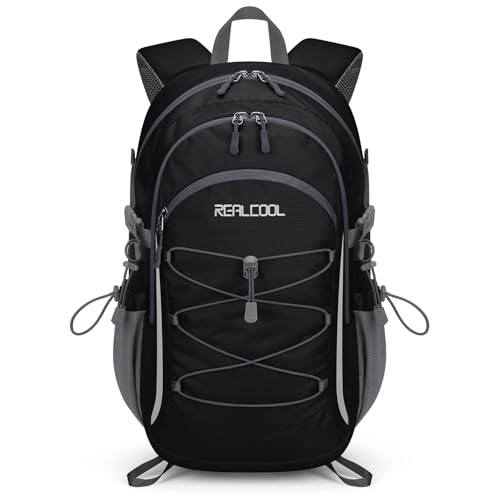
The RealCool description identifies 210D nylon, a water-repellent coating, and explicitly says the fabric is not designed for heavy rain or downpours. The Maelstrom description identifies ripstop 210D nylon and states that a rain cover is included. These product-specific descriptions show why construction and stated limitations can be more useful than choosing a fiber label in isolation.
Listings can also contain broad claims that are difficult to compare across brands. A stated material is useful, but it does not reveal every detail about thread, seam construction, coating durability, or repairability. When the information does not specify a measurement or test method, avoid converting promotional wording into a quantified performance conclusion.
Make a material decision with the whole pack in view
Start by identifying the main concern: abrasion, wet weather, sun exposure, low carried weight, or ease of care. Then compare fiber, weave, denier when provided, coatings, rain protection, seams, and the manufacturer’s stated limitations. Give the most weight to details connected to the conditions the pack will actually encounter.
Nylon is a reasonable general-purpose place to begin when a hiker wants a common pack fabric with options designed for abrasion resistance. Polyester can suit use where lower moisture absorption and UV resistance are useful considerations. Neither is the universal answer, and the fabric’s construction and the pack’s other components can change the practical choice.
Choose based on stated construction and trip conditions, then protect sensitive gear with an appropriate liner or dry bags when rain would cause a problem. If a listing omits important material or weather details, verify them with the manufacturer before treating the pack as suitable for demanding exposure.



Write Your Review
No reviews yet. Be the first to share your experience!