


Knee strain and uneven footing can turn an enjoyable mountain outing into an exhausting physical battle. When planning your gear setup for challenging terrain, asking do you need one or two hiking sticks is one of the most practical questions a trail walker can address. While a single traditional staff offers casual support and keeps one hand open for navigation, relying on a matching pair fundamentally alters how your body manages gravity and forward momentum.
Carrying a pair of poles distributes kinetic impact evenly across your upper torso and lower extremities, offering substantial relief during punishing downhill descents. Pairing dual poles with proper apparel like protective knee hiking pants can significantly lessen repetitive joint stress on long mountain descents. Before choosing between a solitary walking stick and a complete trekking pole set, understanding the biomechanical and structural differences will ensure your trail stability remains uncompromised.

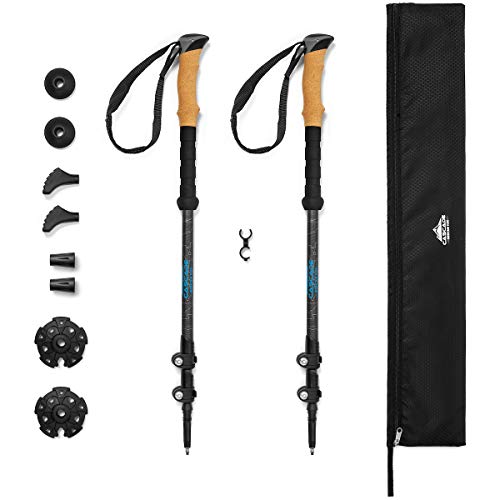
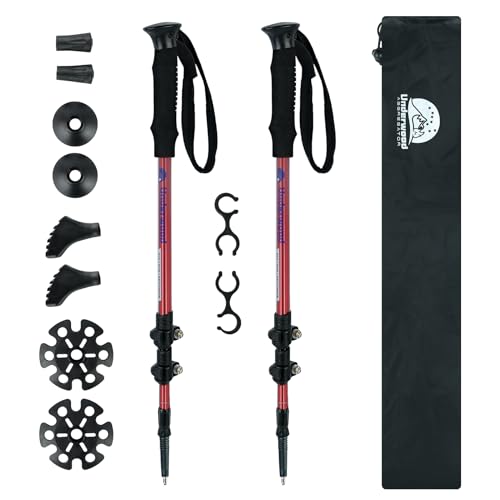
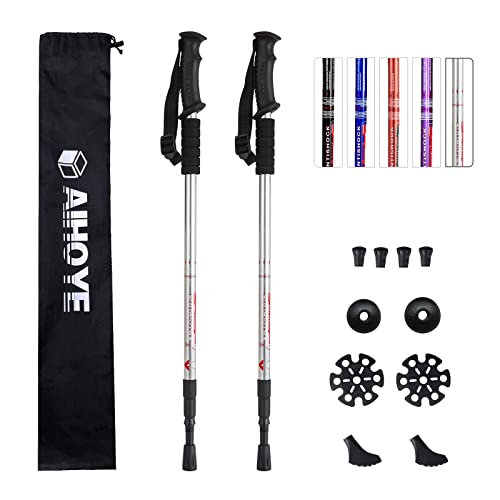


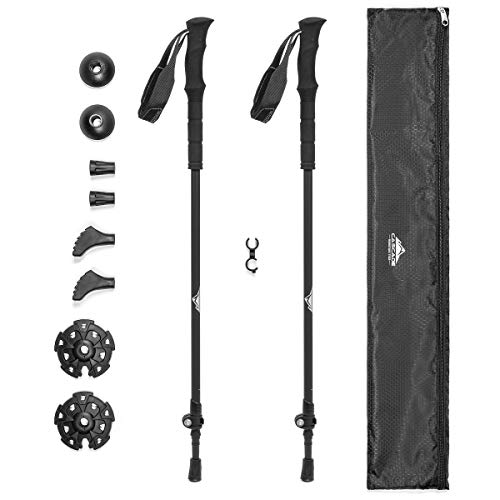
Understanding When to Carry One Hiking Stick Versus Two
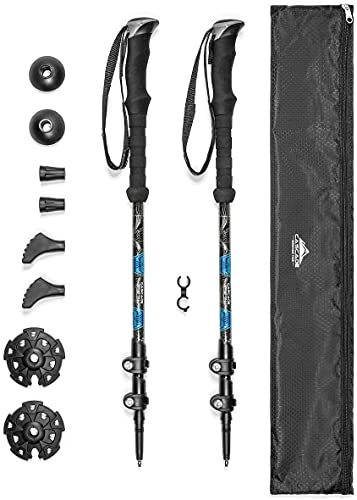
Deciding between a single hiking stick and a matching pair of trekking poles comes down to balancing biomechanical support against manual convenience. While casual rambles on level ground rarely demand full upper-body engagement, rugged mountain descents, heavy backpack loads, and technical creek crossings quickly reveal the functional superiority of dual poles. Evaluating your terrain, personal joint health, and trail objectives will help you determine the optimal configuration for your next trek.
The Biomechanical Difference Between Single and Dual Pole Setups
Human walking mechanics rely on a symmetrical kinetic chain where every heel strike sends shock waves upward through the ankle, knee, hip, and lumbar spine. When you hike with a single stick, you inevitably create an asymmetric gait because only one side of your body receives supplemental support. The unassisted side continues to absorb standard impact forces, which can lead to muscular imbalances and uneven spinal rotation over high mileage.
A pair of trekking poles establishes a four-point contact system that mirrors the natural bilateral rhythm of your arms and legs. By engaging both poles synchronously with opposing footsteps, downward kinetic forces disperse through the latissimus dorsi, pectorals, and shoulders rather than punishing the lower joints alone. This bilateral distribution prevents the body from tilting toward a favored side, maintaining neutral spinal posture even under heavy pack strain.
Dual poles also foster a consistent cadence that conserves cardiovascular energy on extended ascents and rolling terrain. Instead of leaning heavily onto an isolated support staff, your arms work in coordinated opposition, turning arm swings into forward propulsion. For hikers managing past injuries or joint vulnerabilities, this mechanical balance often makes the difference between sustained comfort and premature trail fatigue.
When a Single Hiking Stick Is Sufficient for Trail Walking
Despite the biomechanical benefits of dual poles, a solitary walking stick remains a functional tool for specific hiking scenarios. Casual walkers exploring groomed nature trails, flat woodland paths, or community greenways rarely encounter the steep gradients that demand bilateral braking. In these low-consequence environments, a single stick provides adequate balance support across muddy patches or root systems without cluttering your hands.
Carrying one hiking stick preserves essential manual dexterity by leaving your opposite hand completely free. Hikers who frequently consult handheld GPS units, manage leashing duties with canine companions, or capture landscape photography often find managing two poles cumbersome. Having a free hand allows for immediate reaction during minor slips, enabling you to grab trail railings or steady branches without dropping gear.
A single staff also serves traditional utility purposes around camp or during casual day excursions. Walkers can use a sturdy single pole to probe murky standing water, test muddy trail firmness, or push aside thorny overgrown brambles along narrow corridors. If your adventures consist primarily of gentle walks where speed, severe gradients, and heavy loads are absent, one stick offers convenience without unnecessary complexity.
Why Steep Descents and Heavy Backpacks Demand a Matching Pair
Descending steep mountain gradients places immense compressive stress on the patellofemoral joint, multiplying forces with each downward step. A single walking stick can only brace one side of the body, forcing the opposite leg to handle full braking force during drop-offs. With two trekking poles planted securely ahead of your descent, you create a bilateral braking framework that absorbs momentum before your heels touch down.
Backpackers carrying multi-day gear experience an elevated center of gravity that amplifies every stumble or slip on downhill switchbacks. Stabilizing a heavy pack requires symmetrical structural support, especially when wearing an internal frame hiking backpack that shifts weight during sudden shifts in body momentum. Dual poles prevent uncontrolled forward lunges by providing immediate leverage points on both sides of your stance.
Lengthening both poles by five to ten centimeters allows you to plant tips ahead without bending your waist or hunching forward. This upright posture keeps your pack weight centered over your pelvis and hips, avoiding lower back strain. The simultaneous downward support from both arms reduces the eccentric load on your quadriceps, protecting your knees from excessive wear on long mountain routes.
Ascent Mechanics and Rhythm: Propulsion on Incline Gradients
Climbing steep grades requires substantial energy from the glutes, hamstrings, and calves to propel your body mass upward. Dual trekking poles allow you to recruit the upper body, converting arm drives into vertical propulsion. By planting both tips behind or in line with your feet, you can push off the ground with your triceps and lats, sharing the workload across major muscle groups.
Shortening telescoping shafts by five to ten centimeters helps maintain an efficient ninety-degree elbow angle as the trail pitches upward. Alternatively, poles equipped with extended EVA foam grips allow you to choke down on the handle without adjusting mechanical locks. This quick hand adjustment keeps your shoulders relaxed and prevents arm fatigue during abrupt switchback transitions.
A single walking staff cannot provide this rhythmic climbing propulsion because it cannot generate balanced two-sided forward drive. Hikers using one stick often pull themselves upward unevenly, creating torso rotation that drains energy over hours of climbing. Dual poles transform hill climbs into a fluid, four-limbed motion that sustains pace and decreases localized leg burn.
Navigating Technical Terrain: River Fords, Scree, and Boulder Fields
Navigating loose scree, wet river cobbles, and uneven talus fields demands continuous multi-point ground contact to avoid catastrophic falls. Crossing swift backcountry rivers requires maintaining a stable tripod stance at all times, which is impossible with a single staff while moving a foot forward. With two poles, you can plant both tips securely into riverbed gravel before advancing a single boot, creating a reliable base of support.
Safety protocol during water crossings dictates removing your hands from the wrist straps completely before stepping into the current. If you slip and fall in fast-moving water, tethered wrist straps can trap your arms or pull poles beneath boulders, impeding your ability to swim or stand. Holding the bare grips allows you to instantly ditch the poles if you lose footing, ensuring personal safety remains paramount.
On shifting scree and talus slopes, bare tungsten carbide tips bite through loose topsoil and wedge into rock crevices to prevent skidding. If a rock rolls unexpectedly underfoot, having two distinct contact points provides an immediate backup anchor to arrest a slide. A single stick leaves you with only two points of contact whenever one foot is airborne, dramatically increasing the odds of an uncontrolled tumble.
Shelter Compatibility: Pitching Ultralight Trekking-Pole Tents
Modern ultralight backpacking often relies on trekking poles to serve double duty as the primary structural frame for shelters and tarps. By eliminating dedicated aluminum tent poles, backpackers can save significant pack weight without compromising structural strength. However, the vast majority of non-freestanding A-frame tents and two-person shelters require two rigid poles to pitch both the head and foot ends securely.
Carrying only one hiking stick restricts your shelter choices to single-pole pyramid tarps or forces you to find suitable tree branches in camp. Dedicated dual-pole tents require matching height adjustments, typically ranging between one hundred fifteen and one hundred twenty-five centimeters, to properly tension the ridgeline. Telescoping poles with reliable external cam locks provide the rigid vertical column necessary to resist overnight wind gusts and rain accumulation.
When pitching shelters, always verify that pole locks are firmly secured to prevent midnight collapses under guyline tension. Inverted pole grips or rubber protective caps prevent sharp carbide tips from puncturing delicate silicone-coated tent fabrics or vestibule peaks. Hikers who invest in a matching pair of poles gain shelter versatility that a solitary walking stick cannot match.
Shaft Materials and Durability: Aluminum Resilience Versus Carbon Fiber Weight
Choosing between shaft materials requires balancing weight savings against catastrophic failure risk across rugged mountain environments. Aircraft-grade 7075 aluminum offers outstanding impact tolerance and bending resilience. When wedged between boulders under sudden lateral force, aluminum tubing tends to bend rather than fracture, often allowing you to bend it gently back to complete your trek.
Carbon fiber poles prioritize ultralight swing weight and natural vibration absorption. Carbon composite shafts help buffer continuous high-frequency trail buzz, reducing wrist fatigue and elbow tendonitis over high-mileage backcountry days. However, carbon fiber is inherently brittle under lateral shear stress, meaning a severe slip between rocks can cause an instantaneous snap rather than a ductile bend.
For hikers carrying heavy multi-day backpacks through boulder fields, aluminum provides a forgiving margin of safety against rough impact. Ultralight thru-hikers and trail runners covering smooth singletrack often favor carbon fiber to minimize arm fatigue over long mileage days. Understanding these mechanical failure modes ensures you select the material that matches your trail terrain and risk tolerance.
Locking Systems and Trail Maintenance Under Full Bodyweight
A trekking pole is only as reliable as its locking mechanism when subjected to full downward bodyweight during a stumble. External lever and cam locks use an adjustable clamp that pinches the outer shaft sleeve tightly around the inner telescoping tube. If a lock slips mid-stride, you can quickly recalibrate holding tension by opening the lever and tightening the knurled thumb dial a quarter-turn.
Internal twist-lock systems expand an internal plastic wedge against the inner tube wall when twisted shut. While twist locks create a sleek profile without protruding hardware, they are vulnerable to trail silt, moisture, and sub-freezing temperatures that can cause the internal expander to jam or slip. Folding tri-fold designs use push-button detents connected by internal tension cords, offering rapid deployment but less dynamic length adjustability.
Routine post-hike maintenance prevents shaft seizure and oxidation, particularly in aluminum poles exposed to wet stream crossings or humid rainstorms. Disassemble telescoping sections completely after wet outings and wipe the interior shafts dry with a clean cloth. Never apply oil or grease lubricants to telescoping tubes, as petroleum residues destroy the friction needed for cam locks and expanders to hold downward weight.
Grip Ergonomics and Wrist Strap Technique for Single and Dual Use
Hand comfort and blister prevention depend heavily on grip composition and the biomechanics of your wrist strap technique. Natural cork grips mold to the shape of your palms over time while actively wicking away sweat in hot, humid weather. High-density EVA foam handles provide soft, non-slip cushioning that resists moisture absorption, making them ideal for varied weather and wet conditions.
Proper wrist strap utilization requires inserting your hand upward through the bottom of the loop before grasping the handle. This technique allows the strap webbing to rest smoothly across the back of your wrist and carpal bones, transferring downward load into your arm without requiring a tight hand squeeze. By relaxing your fingers on flat ground, you dramatically decrease forearm strain and prevent friction blisters on high-mileage hikes.
Hard plastic or non-porous rubber grips tend to trap moisture against skin, creating hot spots during extended uphill climbs. When using dual poles, secondary foam grip sleeves allow you to adjust hand height instantly on steep switchbacks without pausing to unlock clamps. Dialing in proper strap tension ensures you receive continuous skeletal support while keeping your hands relaxed and comfortable.
Practical Trail Logistics: Transport, Packability, and Travel Guidelines
Transporting hiking sticks requires considering pack attachment, folded dimensions, and strict airline travel regulations. Tri-fold folding poles that collapse down under fourteen inches slip effortlessly into luggage, daypacks, or running vests. Standard three-section telescoping poles collapse to roughly twenty-four to twenty-six inches, requiring exterior side pockets and compression straps for pack attachment.
Travelers must heed airport security protocols, as the Transportation Security Administration prohibits trekking poles with sharp metal tips in carry-on baggage. Attempting to bring hiking sticks through airport security checkpoints frequently results in mandatory confiscation or delayed flights. Always pack your poles securely inside checked luggage, using rubber tip protectors to prevent sharp carbide ends from tearing duffel bags.
On the trail, pair your pole setup with comfortable mobility gear such as breathable lightweight hiking pants to ensure unrestrained leg movement on rugged ascents. Having compact, easily stowed poles allows you to pack them away during technical scrambling sections where both hands must grasp solid rock. Efficient packability ensures your sticks enhance your hike without becoming cumbersome baggage when not in use.
Choosing the Ideal Configuration for Your Hiking Goals
The decision of whether you need one or two hiking sticks ultimately hinges on your specific trail goals, terrain difficulty, and physical needs. If your outings consist of gentle strolls on well-maintained trails where you prioritize taking photos or walking a pet, a single walking stick offers comfortable balance. It provides just enough stability to manage occasional uneven footing while keeping your pack weight and gear management minimal.
If your ambitions involve steep alpine ascents, rugged backcountry descents, multi-day backpacking, or pitching an ultralight shelter, a matching pair of trekking poles is indispensable. Dual poles deliver bilateral joint protection, fluid uphill propulsion, and unshakeable four-point balance across technical terrain. Equipping yourself with a reliable pair ensures your knees, hips, and spine remain supported throughout every challenging mile.



Write Your Review
No reviews yet. Be the first to share your experience!