


Heavy loads often turn a scenic climb into a hot, damp slog across your upper back. Trapped heat against your shirt creates persistent moisture, leading to uncomfortable chafing and unnecessary shoulder strain as the morning warms up. Adding a rigid hiking backpack ventilation frame or choosing a pack with integrated airflow suspension creates a continuous gap that keeps cool air moving across your spine. Whether you check recent hiking backpack deals to upgrade your main setup or retrofit an existing bag, proper back-panel clearance restores trail comfort.
Structured steel or aluminum spacers also improve how weight rests against your body. Instead of letting your daypack slump against your lower back, an external frame preserves a more natural posture and promotes balanced load distribution across your shoulders. Selecting a well-ventilated pack layout works especially well alongside a knee-friendly hiking backpack system, helping you maintain balance on steep descents without overheating.

Pros
- Extensive pocket organization, including a specialized interior waterproof pocket for wet or sweaty clothing
- Comes standard with a dedicated, stowable rain cover for quick weather protection during storms
- Built-in trekking pole fasteners and hydration hose routing keep key trail essentials accessible on the move
- Padded shoulder harness, back-panel cushioning, and dual zippered hip-belt pockets provide practical day-hiking utility
Cons
- Product specifications do not list an adjustable torso-length system, so fit depends entirely on strap adjustment
- Specific empty pack weight and rigid internal stay details are not provided in manufacturer specifications
- Hydration reservoir is not included and must be purchased separately
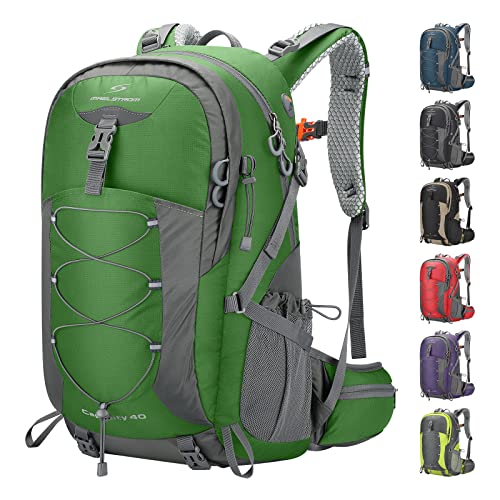
The Maelstrom 40L Hiking Backpack is an organizational daypack and light camping pack designed for day hikers, outdoor travelers, and campers who require ample packing volume without extreme bulk. Measuring roughly 23.6 by 13 by 8.9 inches, this 40-liter pack bridges the gap between a high-capacity daypack and a compact travel pack, making it a functional option for trail users who need to carry extra clothing layers, emergency supplies, or shared family gear.
On the trail, the pack relies on its 40-liter capacity divided across multiple dedicated compartments, helping users avoid the gear clutter common in single-cavity sacks. The main compartment includes a hook-and-loop strap designed to secure a hydration bladder upright, paired with an upper hose port for routing a drinking tube, though the reservoir itself is sold separately. For external stability, the pack integrates an adjustable chest buckle that centers shoulder-strap placement, an integrated emergency whistle, and dual side fastener loops capable of securing up to two sets of trekking poles.
The exterior is built from 210D rip-stop nylon fabric designed to resist tears, scrapes, and surface moisture during outdoor use. To handle heavier trail downpours, the pack includes a dedicated rain cover stored inside an underside pocket, finished with a silver reflective logo for enhanced visibility in overcast or twilight conditions. The harness incorporates padded, breathable mesh shoulder straps paired with back-panel sponge padding to assist with load cushioning and air circulation during warm-weather outings.
Organization is a clear focal point of this model, featuring three front zippered pockets, a top zippered pocket, two stretchy side mesh pockets for water bottles, and two zippered hip-belt pockets for quick access to small snacks or navigation items. Inside the main zipper compartment, a built-in waterproof wet pocket separates damp swimsuits, sweaty clothes, or dirty trail socks from clean, dry essentials. An ergonomic top ring handle and standard top headphone pass-through port provide additional utility when staging the pack at trailheads or using it for transit.
While the 40-liter volume provides generous packing space, buyers should note specific design limitations. The product specifications do not detail an adjustable torso ladder or exact frame stay composition, meaning fit is largely determined by strap tension rather than micro-tailored suspension. Additionally, while the 210D nylon resists everyday abrasions and light surface moisture, full rain defense requires deploying the included rain cover, and total pack weight when empty is not numerically stated by the manufacturer.
For hikers, campers, and travelers seeking an accessible, multi-pocket 40L pack with built-in rain protection and trekking-pole storage, the Maelstrom 40L represents a high-utility choice. It is best suited for day trips requiring bulky gear, family day hikes, and weekend cabin outings where organized access and hydration routing take priority over technical alpine suspension systems.
The Maelstrom 40L Hiking Backpack emphasizes pocket separation, offering multiple dedicated storage zones to keep gear accessible without unloading the entire bag. The layout consists of a roomy zippered main compartment, one top pocket, three front zippered utility pockets, two zippered hip-belt pockets, and two elastic mesh side pockets designed for water bottles or compact accessories.
A notable interior feature is the integrated waterproof wet pocket located inside the main compartment. This compartment allows hikers and travelers to isolate wet towels, damp clothing, or sweaty athletic gear away from dry layers, electronics, and food. Externally, side elastic loops and fasteners hold up to two sets of trekking poles securely against the pack body.
The exterior of this backpack is made from 210D rip-stop nylon fabric, a material selected for its resistance to tears, scratches, and light water contact. The rip-stop weave helps prevent small snags from spreading into larger tears when moving through light brush or rocky terrain.
For wet-weather hiking, the pack includes a fitted rain cover stored in a dedicated zippered pocket on the bottom exterior. The rain cover features a silver reflective logo to increase visibility in dim or rainy environments, providing a practical external barrier against persistent trail precipitation.
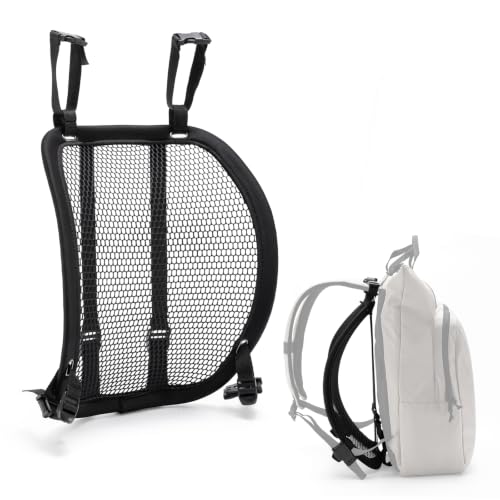
Pros
- Creates a functional ventilation gap to keep your back cooler and drier during warm-weather hikes
- Sturdy steel frame holds its shape reliably against the weight of a loaded backpack
- Adjustable arch allows users to customize the fit to their back profile
- Simple buckle system makes it quick to attach, remove, or transfer between different bags
Cons
- The 17.6 x 12.2 inch dimensions may not fit small hydration packs or extra-large backpacking bags
- Adds 2.64 inches of depth, shifting the center of gravity slightly outward from your spine
- Exact product weight is not specified by the manufacturer for ultralight gear planning
The SANHSEHOME Lightweight Ventilation Backpack Spacer is an external, attachable mesh frame accessory designed to upgrade standard, flat-backed backpacks. Many daypacks, school bags, and travel rucksacks sit flush against the spine, trapping heat and sweat during warm trail outings. This spacer is engineered specifically for day hikers, trail walkers, and commuters who want the cooling airflow of a suspended-mesh hiking pack without having to invest in a brand-new backpack.
In terms of trail functionality, the accessory works by inserting a physical separation between your torso and the back panel of your pack. Engineered with a large-mesh structure mounted over a rigid yet flexible steel frame, it creates a continuous air channel that lets body heat and moisture dissipate naturally. In addition to ventilation, the structured frame helps spread carried weight more evenly across the upper body rather than concentrating force directly onto the shoulder straps, promoting a more balanced carrying posture during extended walks.
The build quality centers on a reinforced steel skeleton combined with taut mesh webbing designed to maintain structural shape under load. While the steel keeps the pack body away from your shirt, it retains enough slight flex to move naturally with your torso as you step over trail obstacles or navigate inclines. The neutral black styling and clean perimeter hardware keep the setup low-profile against most standard nylon and polyester outdoor fabrics.
Setting up the spacer is straightforward thanks to an intuitive buckle mounting system. Users secure the attachment straps around the host pack, and the spacer remains seated without sliding around during movement. An important functional highlight is the adjustable curvature, which lets you alter the arch of the spacer to contour properly against your spine and adapt to different backpack shapes.
Prospective buyers should consider a few practical constraints before purchasing. With standard dimensions of 2.64 x 12.2 x 17.6 inches, the frame may be too long for compact youth packs or minimal running vests, while being too compact for oversized multi-day expedition packs. Additionally, because the frame creates a 2.64-inch standoff gap, it moves the backpack center of gravity slightly outward from your back, which may alter balance when carrying very heavy contents.
Overall, the SANHSEHOME Backpack Spacer is a practical, budget-conscious solution for hikers and daily travelers seeking relief from back sweat. If your favorite hiking daypack or everyday carry bag lacks built-in trampoline ventilation, this modular steel-and-mesh spacer offers an accessible way to enhance airflow and upper-body load distribution.
The SANHSEHOME Backpack Spacer functions by introducing a dedicated air gap between the wearer and the back panel of a backpack. Built around an open mesh weave, the surface holds the pack fabric away from your shirt, allowing ambient air to circulate across the spine and shoulder blades.
By preventing the flat back panel of an everyday daypack from pressing directly against your clothes, this spacer allows heat and perspiration to evaporate more freely. While it cannot eliminate sweating entirely during steep climbs or hot weather, it noticeably reduces the trapped moisture common with standard foam or unventilated daypack designs.
This ventilation accessory measures 2.64 inches deep, 12.2 inches wide, and 17.6 inches high. Because of these fixed dimensions, it is best suited for medium-sized hiking daypacks, commuter rucksacks, and bookbags that have back panel heights of at least 17 to 18 inches.
Attachment is handled through an integrated buckle and strap setup designed to anchor around standard backpack harness components. Additionally, the frame features an adjustable curvature mechanism, enabling hikers to bend and adapt the arch to fit their individual back anatomy and backpack silhouette.

Pros
- Delivers noticeable airflow between your back and pack without needing to replace your existing backpack
- Sturdy aluminum structure and high-tension mesh retain their arch under pack weight
- Horizontal strap deflection helps reduce forward shoulder pull and encourages upright trail posture
- Backed by a two-year manufacturer warranty against defects
Cons
- Adds roughly 2.5 inches of depth, moving the pack's center of gravity slightly further away from your back
- Standard size is designed for users 5'6" and taller, requiring smaller users or compact daypacks to use the separate S/M version
- Not suited for large internal-frame multi-day backpacks with integrated heavy hip belts
The VentaPak Lightweight Ventilation Backpack Spacer is an aftermarket external frame accessory designed to solve the common issue of sweaty back panels on everyday packs and hiking daypacks. Rather than requiring you to purchase an expensive new technical backpack with an integrated suspended-mesh back panel, this accessory attaches directly to your existing pack. It is best suited for warm-weather day hikers, trail commuters, bike packers, and travelers carrying small to mid-sized bags who want reliable ventilation on trails or city paths.
In practical day-hiking and commuting scenarios, the VentaPak creates a physical gap between the flat back panel of your bag and your shirt. Measuring roughly 12 inches wide, 16.5 inches high, and 2.5 inches deep, the curved frame keeps pack fabric off your spine, allowing ambient air to circulate freely. The manufacturer highlights that the frame also alters the angle at which your backpack shoulder straps sit, guiding them horizontally toward your shoulders rather than pulling straight downward, which can encourage better upright posture and discourage forward slouching under light to moderate loads.
The build quality centers around a reinforced aluminum structure combined with high-tension, breathable mesh fabric. This rigid frame ensures that the spacer does not collapse flat against your back when loaded with trail essentials like water bottles, layers, and trail food. The unit utilizes durable webbing straps and hardware designed to withstand repeated outdoor use, and VentaPak backs the product with a two-year manufacturer warranty for added long-term peace of mind.
Setting up the VentaPak involves securing its integrated webbing straps around your backpack's shoulder straps and lower anchor points. Once adjusted, it remains firmly in place, though it can be unbuckled and transferred to another daypack in just a couple of minutes. Maintenance is straightforward: because the accessory sits directly against your clothing and absorbs sweat instead of your pack panel, it can be quickly rinsed with mild soap and water and hung up to air-dry between weekend hikes.
While the VentaPak provides effective airflow, there are functional tradeoffs to consider. By introducing an approximately 2.5-inch gap, the spacer shifts your pack's center of gravity slightly backward, which is noticeable with dense, heavy items. Furthermore, this Standard size is specifically proportioned for people 5 feet 6 inches and taller; shorter hikers or users with minimalist daypacks will need the smaller version to prevent the frame from extending beyond the pack base. It is also not intended for heavy multi-day expedition backpacks that already rely on structured internal stays and load-bearing hip belts.
For day hikers, trail commuters, and outdoor enthusiasts who already own a favorite frameless pack and dread sweaty summer outings, the VentaPak offers a well-built, reliable cooling upgrade. It bridges the gap between basic flat-backed daypacks and dedicated trampoline-suspension hiking bags without the high replacement cost.
The Standard size VentaPak is recommended by the manufacturer for hikers and commuters who stand 5 feet 6 inches and taller. With external dimensions of approximately 12 inches in width, 16.5 inches in height, and 2.5 inches in depth, it is scaled to align with medium to large daypacks and commuter bags.
Hikers shorter than 5 feet 6 inches or those pairing the accessory with compact hydration daypacks should seek the Small/Medium version instead. Choosing the correct size ensures the frame rests comfortably against the upper and lower back without digging into the lumbar region or sitting awkwardly above the pack line.
The core function of the VentaPak spacer is active back panel separation. By holding your pack approximately 2.5 inches away from your back using an arched mesh suspension, it promotes continuous airflow across your shirt during uphill trail sections and warm commutes.
The high-tension mesh breathes easily while distributing contact pressure across a broader surface area of your back. This construction effectively prevents flat nylon backpack panels from trapping body heat and moisture against your clothing.
VentaPak covers the Lightweight Ventilation Backpack Spacer with a two-year manufacturer warranty. This coverage protects against defects in materials and craftsmanship, including issues with the reinforced aluminum structure, tension mesh, and strap hardware.
To maintain the frame over extended use, rinse trail dust and perspiration away with fresh water and allow the mesh to air dry thoroughly before storage.

Pros
- Expandable 50L to 70L roll-top capacity provides versatile volume adjustment for different trip lengths
- Integrated metal internal frame helps transfer weight to the supportive waist belt
- Comes with an included rain cover for added defense during wet trail conditions
- Lightweight overall build at roughly 3 to 3.3 pounds keeps base weight low
Cons
- Manufacturer does not publish explicit torso-length adjustment ranges for customized fitting
- Recommended maximum load limit is capped at 33 pounds, which may not suit heavy expedition packing
- Deep roll-top design means accessing items packed at the very bottom requires unrolling the entire main compartment
The Night Cat Internal Frame Hiking Backpack is an adaptable 50L to 70L load hauler built for beginner hikers, weekend backpackers, and campers seeking variable storage capacity. With its roll-top closure, the pack easily shifts between a compact 50-liter configuration for shorter overnight outings and an expanded 70-liter space capable of swallowing bulky sleeping pads, tents, and seasonal clothing. For hikers who balance day hikes with multi-day outings, having a pack that physically scales with gear bulk provides practical versatility without requiring multiple separate bags.
Trail usability centers around the internal support structure. Night Cat equips this pack with a sturdy metal internal frame designed to give the pack vertical rigidity and distribute weight across the torso. The manufacturer specifies a recommended maximum load of 33 pounds, making it suitable for standard weekend base weights and moderate food supplies. At an overall empty weight of approximately 3 to 3.3 pounds, the pack avoids the excessive heft common in many traditional internal-frame rucksacks, helping hikers keep their starting baseline light.
Carrying comfort relies on an ergonomic harness arrangement that includes padded shoulder straps, a supportive waist belt, and a breathable back panel. The waist belt works in tandem with the internal frame to help route weight onto the hips rather than leaving it entirely on the shoulders. While the back panel is constructed to promote airflow during warm trail climbs, hikers should remember that individual comfort remains closely tied to staying under the 33-pound load limit and maintaining balanced packing technique.
Weather management and trail maintenance are straightforward with this setup. The backpack is built using water-repellent material intended to resist light drizzle and mist, and it includes a dedicated rain cover stored for sudden downpours. Routine upkeep involves brushing away dried trail dust, hand-wiping the fabric with cool water, and air-drying the pack and rain cover completely before storing them uncompressed in a dry place.
Before buying, hikers should consider a few design boundaries. The product specifications do not provide micro-adjustable torso measurements or variable harness sizing, meaning buyers with particularly short or tall torso lengths may not achieve an exact anatomical fit. Additionally, accessing gear through a single large roll-top cavern requires deliberate packing using stuff sacks or packing cubes so that critical trail layers remain accessible without dumping out the entire contents.
For weekend backpackers, budget-conscious outdoor adventurers, and campers looking for an adaptable gear hauler that expands when needed, the Night Cat 50L-70L Backpack offers dependable utility. Staying within its 33-pound guideline and pairing it with organized stuff sacks delivers a functional trail experience at an approachable price point.
The roll-top closure is the defining feature of the Night Cat backpack, allowing the volume to expand from 50 liters up to 70 liters as needed. On short overnight trips with compact gear, the top can be rolled down tightly to compress dead space and keep the load stable against your back. When packing bulkier cold-weather gear, extra food supplies, or multi-day tent setups, unrolling the extension collar provides the full 70-liter capacity.
Because the roll-top creates one tall primary gear compartment, organizing gear into designated dry bags or internal packing cubes is highly recommended. Heavy essentials such as food bags and cook sets should ride close to the spine at mid-back height, while sleeping gear sits at the base to optimize overall balance.
Support is driven by a built-in metal internal-frame structure that prevents the pack body from barreling or sagging under trail weight. This rigid backing allows the padded shoulder straps and supportive waist belt to function as a cohesive harness system, directing a portion of the carried burden toward the hips.
Night Cat explicitly recommends a maximum carried load of 33 pounds. Keeping your shelter, sleep system, clothing, water, and food within this 33-pound window ensures the frame maintains structural integrity and prevents unnecessary strain on pack seams and straps.
The exterior fabric features a water-repellent coating designed to shed light moisture, damp trail mist, and minor splashes. While water-repellent materials offer a baseline barrier against the elements, they are not completely waterproof on their own.
To handle moderate to heavy rainfall, the pack includes a fitted rain cover. Deploying the rain cover over the pack exterior provides an extra protective layer against wet brush and sustained precipitation, helping to keep clothing, food, and sleeping bags dry inside.
Frequently Asked Questions
Does an external hiking backpack ventilation frame fit any daypack in 2026?
Most external frames fit a wide range of bags, but compatibility depends on backpack length and strap placement. Models like the VentaPak offer dedicated sizes for torsos over or under 5’6″, while spacer frames like the SANHSEHOME use adjustable curvature to match varied pack profiles. Always verify your pack dimensions before attaching an external frame so the unit sits secure without shifting.
Can a hiking backpack ventilation frame noticeably reduce sweat?
Yes, separating the pack body from your back allows continuous airflow that accelerates sweat evaporation. By keeping dense foam padding off your shirt, mesh spacers let rising heat escape during strenuous ascents. Combining this airflow gap with an affordable universal hiking backpack under 50 dollars provides an economical way to stay cooler on warm hikes.
How does adding a Hiking Backpack Ventilation Frame alter weight distribution?
An external frame shifts strap tension slightly outward and pulls horizontally across your shoulders rather than pressing straight down. This horizontal pull helps prevent your shoulders from rounding forward, promoting a more upright posture under light loads. However, keep heavier items close to your back inside the pack so your center of gravity remains stable.
What is the difference between an external spacer and an internal-frame pack?
An external spacer is a removable mesh accessory strapped onto a bag, while an internal frame is built directly into the backpack structure. Packs like the Night Cat 50L to 70L use internal metal frames to support loads up to 33 pounds. If you already carry a heavy-duty hiking backpack molle bag, an external spacer adds breathability without requiring a full pack replacement.
Does a ventilated back panel affect rain cover protection?
No, a ventilated frame does not diminish rain cover performance, but external spacers require enough cover clearance around the buckles. Daypacks like the Maelstrom 40L feature a built-in rain cover designed to wrap snugly over the pack exterior. When using an add-on spacer frame, ensure the rain cover elastic stretches completely around the frame edges to keep moisture out.


Write Your Review
No reviews yet. Be the first to share your experience!