


Understanding how big is 15l backpack requires looking at both volumetric capacity and physical footprint. Many outdoor enthusiasts and everyday commuters wonder if a compact fifteen-liter profile can support an entire afternoon on the trail or a lightweight urban trek without feeling cramped. A fifteen-liter chassis represents one of the most versatile compact sizes available, bridging the gap between minimalist waist packs and bulky daypacks. It offers enough internal room to carry essential hydration, a packable weather shell, and basic provisions while remaining virtually weightless against your back.
Finding the right balance between volume and comfort depends heavily on how a manufacturer constructs the bag compartments and harness. Streamlined models, such as the lightweight daypacks examined below, provide targeted storage solutions like hydration ports and helmet attachments without unnecessary bulk. Exploring budget-friendly trail backpacks reveals that even compact gear can deliver exceptional utility across varied outdoor settings. By evaluating exact physical dimensions, realistic packing limits, and daily ergonomic factors, you can determine whether a fifteen-liter pack matches your specific travel or trail goals.

Pros
- Extremely lightweight at approximately 1.06 pounds, minimizing fatigue on short, fast hikes
- Removable sternum and waist straps provide modular flexibility for trail or travel use
- Equipped with dedicated hydration bladder space and hose routing for on-the-move drinking
- Reliable hardware selection featuring smooth-gliding SBS zippers and tear-resistant fabric
- Integrated reflective accents enhance visibility during dawn, dusk, or night excursions
Cons
- 15-liter volume is strictly limited to essentials and cannot accommodate bulky cold-weather gear or overnight kits
- Hydration reservoir and bite valve are not included and must be purchased separately
- Water-resistant fabric will not withstand sustained, heavy downpours without an added rain cover
The SKYSPER 15L Small Hiking Backpack (Lantc 15) is an ultralight daypack tailored for day hikers, trail runners, cyclists, and travelers who require streamlined carrying capacity. Designed to balance minimal pack weight with practical trail functionality, this compact pack is aimed at outdoor enthusiasts who keep their carried gear light and prioritize quick mobility over expansive storage.
Measuring 5.91 x 9.84 x 17.32 inches and weighing approximately 1.06 pounds, the pack offers a 15-liter capacity optimized for trail essentials such as a packable windbreaker, trail snacks, compact first-aid kit, and personal accessories. It features dedicated internal storage space and tube routing for a hydration bladder, allowing hikers to maintain hydration during active outings without having to repeatedly unpack gear. The multi-slot back panel and breathable shoulder straps are constructed to facilitate airflow across your back, helping reduce heat accumulation during warm-weather trail efforts.
In terms of hardware and materials, the backpack uses tear-resistant and water-resistant fabric designed to withstand typical outdoor brush scuffs and light moisture. SKYSPER equips the pack with durable SBS zippers to deliver consistent performance across repeated open-and-close cycles. Reflective spots placed on the exterior enhance visibility for early-morning trailheads or twilight road crossings, adding an extra layer of awareness for multi-sport users who hike, run, or bike near traffic.
Adjustability is straightforward thanks to independent chest and waist straps that help stabilize the load against your torso. Both the sternum strap and waist belt are fully removable, allowing you to configure the bag as a technical trail daypack or strip down the webbing for streamlined use as an airline carry-on personal item. Packing and unpacking remain simple due to the multi-pocket layout, while cleaning requires only gentle hand washing and air drying to preserve the water-resistant coating and zipper performance.
Prospective buyers should recognize the inherent limits of a 15-liter frameless bag. It is not built for multi-day backpacking, heavy winter layers, or carrying significant weight, as it lacks a rigid internal frame or heavily padded suspension. Furthermore, while the exterior fabric resists light moisture and splashes, it is not waterproof; electronics and sensitive gear should be shielded with dry bags during steady rain, and the hydration bladder itself is not included.
Overall, the SKYSPER 15L Small Hiking Backpack represents a practical, high-value choice for day hikers, fitness walkers, and travelers seeking an agile daypack. If your trail outings center on short half-day hikes, fitness runs, or casual travel where pack weight and quick hydration access matter most, this pack delivers functional storage without weighing you down.
The SKYSPER 15L daypack includes a dedicated internal storage compartment designed to hold a hydration water bladder along with integrated routing for the drinking tube. This setup allows hikers to drink hands-free without stopping to unpack bottles or dismount the pack.
A hydration reservoir is not included with the backpack and must be purchased separately. Hikers should verify the physical dimensions of their chosen hydration bladder against the 17.32-inch pack height to ensure a clean internal fit before hitting the trail.
This daypack features adjustable shoulder straps paired with independent chest and waist straps designed to pull the pack close to the torso and reduce lateral shifting during active trail movements. The multi-slot breathable back panel works in tandem with the shoulder harness to distribute light loads evenly.
Both the chest strap and waist belt are completely removable. This modular design allows users to utilize full stabilization for trail running and steep scrambles, or remove the straps entirely for airport transit, city commuting, or low-profile everyday carry.
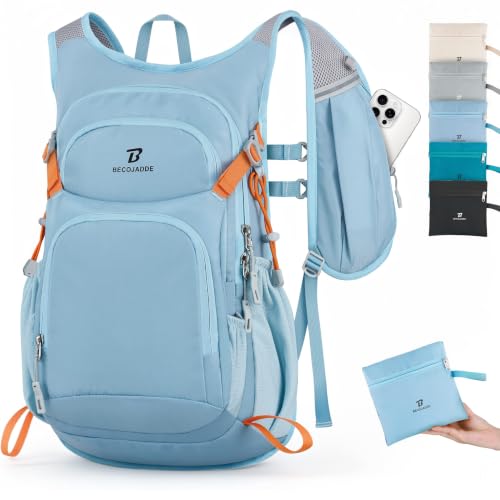
Pros
- Ultralight 0.8375-pound build with a foldable design that stores easily for travel.
- Versatile front kangaroo pocket accommodates a cycling helmet or quick-access clothing.
- Hydration-ready sleeve supports up to a 2L water reservoir (sold separately).
- Adjustable chest strap helps prevent shoulder strap slippage during active movement.
Cons
- The removable waist belt featured in product documentation is exclusive to the 20L version and absent on this 15L model.
- Water bladder is not included and must be purchased separately.
- Water-resistant fabric handles light moisture but lacks seam tape or an included rain cover for heavy downpours.
The BECOJADDE 15L Hiking Backpack is a packable, ultralight daypack tailored for short day hikes, travel, daily outdoor recreation, and bike-to-trail adventures. Weighing just 0.8375 pounds with outer dimensions of 5.5 by 10.6 by 16.9 inches, this pack targets minimalist day hikers, travelers seeking a secondary summit bag, and commuters who need functional storage without the bulk and rigidity of an internal frame system.
For trail use, the 15-liter interior volume provides ample room for essential gear, including a packable rain shell, snacks, personal essentials, and a first-aid kit. A dedicated internal sleeve accommodates up to a 2-liter hydration bladder (purchased separately), allowing hands-free drinking on the move. On the pack exterior, a kangaroo-style front pocket works as an integrated helmet carrier for bike-and-hike excursions or as an open stash spot for damp layers, while side pockets hold standard water bottles and loops secure trekking poles.
Construction consists of high-density polyester engineered with water-resistant, abrasion-resistant, and tear-resistant qualities to withstand trail brush and light weather. The carrying harness features breathable padded shoulder straps and cushioned back support designed to soften contact points across the upper body. An adjustable chest strap spans the sternum to stabilize the shoulder straps during hiking or biking, and reflective accents provide added visibility in low-light environments.
Setting up and packing the daypack is straightforward due to its frameless, flexible build. When not in active trail use, the entire bag compresses down into a compact footprint that stashes neatly inside carry-on luggage or a larger multi-day backpacking pack. Adjusting the fit is simple: tighten the shoulder harness to set the ride height and slide the chest strap to secure the shoulder straps across your chest. Cleaning requires only wiping down the polyester exterior with a damp cloth and hanging the pack to air dry.
A few realistic limitations should guide your purchasing decision. The manufacturer specifies that the removable waist belt is included only on the larger 20L model, meaning this 15L version relies entirely on its shoulder harness and chest strap for load management. Additionally, while the fabric repels light moisture, it is water-resistant rather than waterproof, lacking sealed seams and a rain cover for sustained wet-weather hiking. Bladder-dependent hikers must also supply their own reservoir.
Overall, the BECOJADDE 15L Daypack serves as an economical, highly portable solution for hikers, cyclists, and travelers looking for a featherweight pack for shorter trail loops. Its built-in helmet holder, hydration readiness, and packable footprint make it a practical companion for day outings where minimizing pack weight and maximizing mobility are top priorities.
The BECOJADDE 15L volume is structured to keep short-hike essentials organized without adding excess bulk. The main compartment holds a lightweight midlayer, small trail kit, and snacks, while internal organization pockets separate smaller items like keys, phones, and wallets. Exterior stretch side pockets are sized for standard water bottles to keep hydration within quick reach.
External attachment features expand the pack's usable capacity beyond the main compartment. The front kangaroo pocket secures bulkier items such as a cycling helmet or a rain jacket, freeing up internal volume for delicate items. Exterior trekking pole loops also keep your hands free on flat sections of trail without requiring poles to be stuffed inside the main compartment.
This daypack features a dedicated internal hydration sleeve capable of housing water bladders up to 2 liters in capacity. The reservoir is not included with the pack, giving hikers the flexibility to use their preferred bladder brand. Routing the hose out of the pack provides convenient, on-trail drinking without having to stop and unclip the harness.
The front exterior pocket is specifically cut to function as an external kangaroo holder, providing a secure cradle for cycling or climbing helmets. This design enables multi-sport utility, allowing users to transition easily from urban bicycle commuting to trail hiking while keeping the helmet fastened securely to the outside of the pack.
Understanding 15L Backpack Dimensions, Capacity, and Carry Performance
A fifteen-liter daypack occupies a distinct sweet spot in modern gear design, balancing lightweight portability with practical carrying volume. Knowing exactly how much gear fits inside this capacity helps travelers and hikers avoid overpacking or buying an uncomfortably small bag. Exploring physical dimensions, realistic packing loads, and key harness features ensures you select the right setup for your specific travel and trail needs.
Physical Dimensions and Cubic Volume Equivalents
A fifteen-liter backpack provides roughly 915 cubic inches of internal storage volume. In terms of external dimensions, this capacity usually translates to a height of 16 to 18 inches, a width of 9 to 11 inches, and a depth of 5 to 7 inches when packed. Because manufacturers calculate volume through fluid displacement rather than rigid exterior measurements, the physical footprint shifts depending on gear density. Flexible synthetic fabrics expand under load, allowing the depth to adjust while keeping the silhouette streamlined.
Visualizing 915 cubic inches becomes straightforward when comparing the volume to familiar household items. A typical grocery bag holds approximately twelve to fourteen liters, making a fifteen-liter daypack slightly roomier than an ordinary shopping tote. Picture three standard two-liter soda bottles placed upright side by side; a fifteen-liter cavity holds more than double that volume in a tall vertical channel. This vertical profile keeps the center of mass close to your back rather than pulling away from your spine.
Exterior depth is often the dimension that fluctuates most during daily use. An empty fifteen-liter pack rests nearly flat against a table, measuring less than two inches in depth when compressed. Loading a fleece sweater, lunch container, and full water reservoir pushes the front panels out to their maximum six- or seven-inch profile. Monitoring this expansion prevents accidental over-packing, especially when preparing to board budget airline flights with rigid baggage sizers.
Real-World Packing Capacity and Everyday Gear Loads
Determining what fits inside a fifteen-liter pack comes down to purposeful gear selection. The main cavity easily swallows a packable rain shell, a lightweight fleece midlayer, and a compact lunch container alongside essential personal items. Dedicated interior slip pockets and zippered stash sections keep small essentials like keys, a wallet, and snacks organized. Because total space remains focused on essentials, every packed item must serve a clear purpose during your journey.
Hydration setups directly affect how much dry storage remains available inside the bag. Bags built for the trail, such as the SKYSPER Small Hiking Backpack, incorporate dedicated internal space for a water bladder alongside a hydration tube port. Filling a two-liter reservoir claims approximately two liters of internal space, reducing dry storage to thirteen liters. Accounting for this volume displacement ensures you do not run out of room for critical safety layers or trail provisions.
Device compatibility requires careful checking because a compact fifteen-liter daypack is rarely engineered for full-sized office gear. Compact tablets, reading devices, and slim eleven-to-thirteen-inch laptops can slide into rear interior sleeves without issue. Standard fifteen-inch or sixteen-inch mobile workstations with thick protective cases almost always exceed the physical zipper opening and vertical height of a fifteen-liter pack. Commuters carrying larger hardware should verify specific pocket dimensions rather than expecting a compact daypack to serve as a mobile tech station.
Airline Personal Item Compliance and Transit Logistics
A significant practical benefit of a fifteen-liter daypack is its reliable compliance with airline personal item regulations. Major domestic carriers typically define a personal item as an accessory measuring no more than 18 by 14 by 8 inches that stows completely beneath the seat ahead. With average dimensions of approximately 17 by 10 by 6 inches, a moderately packed fifteen-liter daypack fits comfortably within these strict dimensional boundaries. Even strict international budget carriers with compact sizing frames accept this soft-sided profile without issue.
Sliding your bag beneath an airplane seat leaves ample foot space for passenger comfort during long flights. Large rolling carry-on luggage and bulky travel bags force travelers to compete for overhead bin space, but a compact daypack stays securely under your own control. If gate personnel require a sizer box test before boarding, the flexible construction easily conforms to the metal frame without resistance. Travelers seeking minimal transit hassle rely on this compact size to guarantee cabin boarding on regional flights.
In crowded transit terminals and train stations, the compact exterior profile provides exceptional maneuverability. Navigating crowded subway cars, buses, and train platforms is much simpler when your bag does not protrude excessively from your back. Unlike heavy multi-day luggage or large internal frame hiking backpacks built for backcountry trekking, a fifteen-liter chassis hugs your torso cleanly. This streamlined profile prevents accidental bumps against other commuters and reduces snag risks in tight spaces.
Trail Agility, Cycling Utility, and Specialty Storage
On day hikes, a fifteen-liter pack hits the ideal balance between carrying capacity and active agility. It holds a small first-aid kit, paper trail map, sunscreen, snacks, and extra water without weighing down your shoulders on steep inclines. The lightweight chassis reduces the muscle fatigue often caused by oversized daypacks that tempt hikers to carry unnecessary gear. Moving smoothly over rough trails becomes natural when your gear profile remains light, compact, and balanced against your torso.
Bicycle commuters and outdoor trail riders gain considerable versatility from specialized exterior storage systems. The BECOJADDE 15L Hiking Backpack Lightweight Travel includes an exterior front kangaroo pouch designed to securely hold a cycling helmet when you dismount. Stretch side mesh pockets hold standard water bottles, keeping the central compartment open for bicycle repair tools, spare tubes, and a mini pump. These purposeful exterior features multiply usable carrying capacity without altering the bag’s sleek aerodynamic silhouette.
Nighttime visibility and weather protection further enhance the everyday reliability of these compact packs. Reflective accents, featured on both the SKYSPER and BECOJADDE daypacks, catch vehicle headlights during early morning runs or evening commutes along dark city streets. Water-resistant outer fabrics protect sensitive electronics and dry clothing layers from unexpected rain showers and road spray. These functional details ensure the bag performs reliably whether you are climbing a damp mountain trail or cycling home after work.
Harness Ergonomics and Weight Distribution Principles
Even a compact fifteen-liter pack requires sound ergonomic engineering to prevent muscle fatigue during long hours of continuous wear. Padded shoulder straps lined with breathable air mesh cushion the collarbone area and reduce pressure on upper shoulder muscles. Back panels featuring multi-slot ventilation channels, like those on the SKYSPER daypack, encourage continuous airflow during warm weather. Preventing heat buildup between your back and the pack material significantly improves overall comfort during strenuous climbs.
Adjustable sternum straps and waist belts provide vital load stabilization during active movement. While a fifteen-liter load rarely exceeds ten to twelve pounds, an unsecured bag can shift and sway with every step or pedal stroke. Fastening an adjustable sternum strap pulls the shoulder straps inward, preventing edge chafing and maintaining steady pack balance across your chest. Removable waist straps add secondary hip stabilization on rough trail descents, yet they can be detached quickly for casual urban use.
Proper weight distribution inside the pack prevents unnecessary posture strain. Pack heavier dense items, such as full water bladders or food containers, against the interior back wall closest to your spine. Place lighter gear, such as windbreakers and small tech accessories, toward the exterior front and bottom sections. This packing geometry prevents the bag from pulling backward and downward, allowing your natural upright posture to remain balanced throughout your journey.
Material Durability, Weather Resistance, and Hardware Construction
The longevity of a compact daypack depends heavily on durable exterior fabrics and reinforced stitching. Tough high-density polyester and tear-resistant nylon fabrics protect the pack against rough trail brush, abrasive rock surfaces, and transit floor friction. While heavy expedition haulers rely on dense ballistic fabrics, smaller daypacks prioritize a strong strength-to-weight ratio that keeps unladen pack weight minimal. Reinforced bar-tack stitching at high-stress strap junctions prevents seam separation under regular packing stress.
Water-resistant exterior coatings provide an essential barrier against sudden environmental moisture. Synthetic fabrics treated with water-repellent finishes cause light rain and road mist to bead up and roll off the surface rather than soaking into internal contents. Reliable hardware, including smooth SBS zippers, ensures dependable operation without frustrating coil splits or track jams when pulling corners. However, water-resistant fabrics differ from fully submersible waterproof gear, meaning prolonged downpours still warrant protective dry bags for vulnerable electronics.
When planning day-long outdoor adventures in warm weather, hikers often combine compact daypacks with other specialized trail gear like insulated backpack coolers to keep refreshments chilled at base camp. Understanding the difference between standard daypack textiles and thick thermal insulation helps clarify equipment choices. Standard fifteen-liter daypack fabrics emphasize lightness, flexibility, and packability rather than bulky insulation foam. This distinction ensures the pack packs down compactly into luggage when traveling between destinations.
Sizing Benchmarks: Comparing 15L to Adjacent Capacities
Understanding where a fifteen-liter pack sits among broader pack categories clarifies whether it matches your intended activities. Ultralight hydration packs typically offer five to ten liters of storage, which accommodates little more than a fluid reservoir, keys, and a phone. Moving up to fifteen liters introduces substantial versatility by providing dedicated room for warm clothing layers, food containers, and outdoor tools. This extra room makes a fifteen-liter pack far more capable for full-day excursions without adding cumbersome bulk.
On the upper end of the spectrum, standard everyday carry and campus backpacks usually offer twenty to thirty liters of volume. These larger bags accommodate thick textbooks, multiple binders, gym footwear, and bulky sixteen-inch laptop sleeves. If your daily routine demands hauling heavy academic supplies or large electronic workstations, a fifteen-liter frame will quickly feel restrictive. However, if your daily carry focuses on minimalist tech, personal accessories, and light outerwear, the fifteen-liter format eliminates wasted volume and excessive pack weight.
Evaluating your personal carrying habits prevents the common frustration of buying the wrong pack size. Ask yourself whether your typical outings require carrying bulky emergency shelter gear or simple daily hydration and snacks. For day hikes lasting between two and six hours, a fifteen-liter chassis offers optimal capacity without encouraging you to pack useless items. Choosing the smallest bag that safely holds your required gear ensures you move faster, expend less energy, and enjoy greater agility.
Practical Care, Cleaning, and Packing Optimization
Maximizing the interior volume of a fifteen-liter pack requires organized packing techniques. Rolling clothing layers into tight bundles rather than folding them flat conserves vertical space and prevents dead air pockets. Placing small accessories into exterior mesh pockets or internal zipper compartments prevents loose gear from bunching up at the bottom of the main cavity. Utilizing exterior gear loops and kangaroo pockets for helmets or trekking poles frees up valuable interior volume for delicate items.
Proper maintenance keeps your daypack performing reliably across many seasons of heavy use. Never place technical synthetic daypacks into a home washing machine, as violent agitators can tear internal mesh pockets and degrade water-resistant polyurethane coatings. Instead, hand-wash the pack in a basin of lukewarm water using a mild non-detergent soap and a soft-bristled brush on soiled areas. Rinse thoroughly with clean water to remove all soap residue, which could otherwise attract trail dirt and degrade fabric fibers over time.
Drying the pack properly ensures foam padding and synthetic fibers retain their original shape and elasticity. Always hang the pack to air dry in a well-ventilated, shaded area away from direct sunlight and high-heat drying appliances. High heat from electric clothes dryers can melt delicate synthetic fibers, warp zipper coils, and crack internal foam cushions. Storing the pack completely dry in a cool closet prevents mildew formation and keeps the bag fresh for your next travel or trail adventure.







Write Your Review
No reviews yet. Be the first to share your experience!