


Navigating gear sizing often comes down to balancing compact portability with adequate storage capacity. Many commuters, students, and outdoor enthusiasts wonder exactly how big is 25 liter backpack when planning their daily routines or weekend adventures. In physical terms, twenty-five liters represents the traditional middle ground between minimalist daypacks and oversized travel haulers. Choosing this volume gives you enough space to handle modern work electronics, extra clothing layers, and gym essentials without feeling weighed down on crowded transit. If you are comparing versatile options across different price points, exploring our guide to affordable hiking daypack options can help you understand how budget-friendly builds balance utility and storage.
A pack in this size class typically measures around eighteen to twenty inches in height, making it compact enough for urban sidewalks while offering room for trail gear. Knowing how that internal volume translates into real packing capability prevents both over-stuffing and carrying excess bulk. High-density storage arrangements, dedicated sleeves, and exterior stretch compartments all influence how much usable room you actually experience. Throughout this guide, we break down real measurements, daily carry loadouts, and travel compliance so you know exactly what to expect from a twenty-five-liter pack.
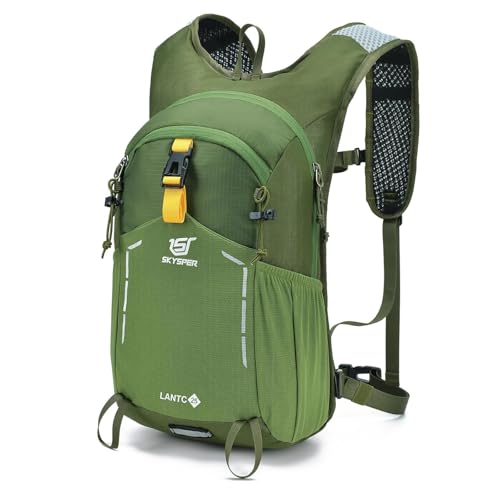
Pros
- Removable sternum and waist straps provide modular versatility between hiking and everyday travel
- Built-in hydration bladder storage space with hose routing makes staying hydrated straightforward
- Multi-slot breathable back panel assists with ventilation during warm trail outings
- Equipped with sturdy SBS zippers and tear-resistant exterior materials
- Reflective exterior accents improve visibility along roadsides and early dawn trailheads
Cons
- Hydration reservoir is not included and must be purchased separately
- Exact pack weight and precise torso-length adjustment ranges are not provided by the manufacturer
- Water-resistant fabric handles light moisture but lacks seam-sealing or a rain cover for heavy downpours
The SKYSPER Lantc 25L Hiking Backpack is a versatile, compact daypack designed for day hikers, active travelers, trail runners, and cyclists who need organized gear storage without excess bulk. Built around a functional 25-liter volume with listed exterior dimensions of 6.69 by 11.02 by 18.9 inches, this pack provides sufficient space for the ten essentials, lunch, an extra layer, and standard trail gear. Its balanced sizing also allows it to serve as a convenient carry-on personal bag for flights or road trips.
On the trail, load stability is handled by an adjustable harness system featuring both a chest strap and a waist strap. A key feature of this design is that both straps are fully removable, allowing hikers to strip down extraneous webbing when carrying lighter loads around town or navigating crowded transit. To help manage heat during sustained ascents, the pack incorporates a multi-slot breathable back panel paired with contoured shoulder straps engineered to spread the pack weight across your upper body.
In terms of durability, the daypack is constructed with water-resistant and tear-resistant fabric secured by SBS zippers. While the water-resistant coating sheds light drizzles and trail mist, it is not a fully waterproof barrier, meaning high-exposure rainstorms will still warrant dry bags or an aftermarket pack cover. Safety on shared pathways and roadway trailheads is supported by reflective exterior accents that catch vehicle headlamps during dawn or dusk hikes.
Hydration management is built into the main compartment layout, which includes dedicated storage space for a hydration bladder and an exit port for your drink tube. Hikers who prefer hands-free hydration can easily route standard bladders through the pack, though the reservoir itself must be sourced separately. Multiple interior and exterior compartments make it easy to separate delicate electronics, trail snacks, and bulky layers for quick retrieval at rest stops.
Potential buyers should keep a few practical limitations in mind before heading out. Because the pack utilizes a frameless design, it relies entirely on thoughtful packing and strap tensioning rather than a rigid internal frame, making it unsuitable for heavy backpacking loads or multi-day camping gear. Additionally, the manufacturer does not publish exact torso fit ranges or empty pack weight, so individuals with very tall or short torso measurements should check strap geometry carefully.
Overall, the SKYSPER 25L Daypack represents a dependable, budget-friendly option for hikers and outdoor enthusiasts who need modular, lightweight utility for day outings. If you need a reliable pack for standard day hikes, travel days, and fitness outings with hydration compatibility, this pack provides great everyday functionality.
The 25-liter capacity of this pack offers a practical sweet spot for single-day outdoor outings, allowing you to carry trail essentials, a light jacket, first aid, and packed meals without excessive bulk. Multiple compartments help keep smaller gear separated from the main cargo area, preventing small trail tools and keys from shifting to the bottom during your hike.
Measuring 6.69 by 11.02 by 18.9 inches, the exterior dimensions make it nimble on tight, overgrown trails while remaining compact enough to fit into airline overhead bins or underneath commuter seats. The compartment layout supports organized packing, ensuring your primary items remain accessible without having to unpack the entire bag.
This backpack includes a dedicated internal storage space for a hydration water bladder along with an exit channel for the drink tube, allowing you to sip water while moving. A hydration reservoir is not included with the pack, so you will need to supply your own compatible bladder.
Having an internal hydration compartment keeps heavy water weight centered close to your back, which supports balanced carrying over uneven terrain compared to carrying bulky loose bottles inside the main storage pocket.
Understanding 25-Liter Backpack Sizing, Dimensions, and Usable Capacity
Understanding backpack measurements requires looking beyond simple volume numbers to see how physical dimensions and compartment layouts function in daily use. A twenty-five-liter backpack holds approximately 1,525 cubic inches of interior space, creating a versatile silhouette that fits neatly between compact everyday packs and larger travel bags. This specific capacity represents one of the most popular sizing brackets across college campuses, corporate transit, and mountain day hikes. The sections below analyze physical measurements, real-world packing potential, transit compliance, and ergonomic considerations to show how a twenty-five-liter bag behaves across different environments.
Physical Dimensions and Linear Measurements
Standard twenty-five-liter daypacks generally measure between eighteen and twenty inches in height, eleven to thirteen inches in width, and seven to nine inches in depth. These measurements yield an overall linear footprint of roughly thirty-six to forty-two linear inches when fully expanded. The exact silhouette often varies depending on whether the bag uses a boxy rectangular structure or a tapered teardrop profile. Rectangular designs maximize interior corner space for books and electronic devices, while teardrop profiles keep weight centered close to your spine.
External depth tends to fluctuate more than height or width depending on how densely you pack the main cavity. An uncompressed twenty-five-liter pack might sit at five or six inches of depth, but filling the interior front pocket pushes that measurement past eight inches. Checking both uncompressed and packed exterior dimensions gives you a realistic idea of how the bag will sit against your back. This dimensional balance makes the twenty-five-liter category compact enough to avoid bumping into fellow passengers on crowded public transit.
Real-World Packing Capacity Across Daily Scenarios
A twenty-five-liter interior easily accommodates the gear required for a full workday or campus schedule. You can comfortably pack a standard fifteen-inch or sixteen-inch laptop inside a protective sleeve, along with an AC charging block, a tech organizer pouch, and a spiral notebook. A medium food storage container and a lightweight rain jacket or fleece layer fit neatly in the remaining cavity space. Exterior side pockets then handle water bottles or compact umbrellas without stealing cubic inches from the primary compartment.
Outdoor day hikers find this capacity ideal for variable weather conditions on three- to eight-hour trail excursions. The pack holds a two- or three-liter hydration reservoir, a compact first-aid kit, trail snacks, a headlamp, and an extra insulating layer. Dedicated hydration routing ports, such as those built into the SKYSPER Small Hiking Backpack, let you drink on the move while keeping the bladder upright. You maintain sufficient room for trekking essentials without carrying empty, sagging fabric down the trail.
Minimalist travelers can even stretch a twenty-five-liter pack into an overnight or weekend luggage piece. Packing cubes allow you to fit two shirts, one pair of trousers, fresh socks, and a compact dopp kit alongside your electronics. Choosing lightweight, wrinkle-resistant apparel helps prevent the bag from bulging past comfortable carrying limits. While it will not replace a full-sized carry-on for week-long vacations, it handles quick business trips and weekend getaways effectively.
Airline Travel and Personal Item Compliance
Air travelers frequently look at twenty-five-liter backpacks as potential under-seat personal items to bypass checked baggage fees. Most major domestic carriers define personal items with dimensions around eighteen by fourteen by eight inches, while overhead carry-on bags can reach twenty-two by fourteen by nine inches. A twenty-five-liter pack measuring nineteen inches tall can often squeeze into an under-seat sizer if the fabric is soft and not over-packed to maximum capacity. However, filling every pocket to bursting can cause the pack depth to exceed strict airline measuring bins.
Regional jets and budget airlines introduce additional challenges that travelers must keep in mind before heading to the gate. Narrow-body regional aircraft often feature smaller under-seat cavities or floor-mounted entertainment boxes that reduce footwell width. In these tighter cabins, a semi-flexible pack without rigid plastic stays compresses much easier under the seat in front of you. Keeping the exterior quick-access pockets lightly packed ensures the bag retains enough flex to slip beneath lower seat frames.
Using a twenty-five-liter pack as an overhead carry-on provides effortless clearance in virtually any commercial aircraft bin. It leaves plenty of room for other passengers while sliding smoothly into narrow regional overhead racks where twenty-two-inch roller bags get gate-checked. If you prefer keeping your hands free during airport navigation, a twenty-five-liter pack offers an agile travel footprint. You can move through security lines, airport dining areas, and boarding gates without wrestling oversized luggage.
Harness Ergonomics and Weight Distribution
Total carrying comfort depends heavily on how the backpack harness distributes weight across your shoulders, chest, and upper back. A loaded twenty-five-liter daypack typically weighs between ten and eighteen pounds depending on dense electronics and water volume. Dual-density foam shoulder straps with ergonomic S-curve shaping help disperse that downward pull across a broader surface area of your shoulders. Multi-slot breathable back panels and mesh channels allow air circulation, which reduces heat and moisture accumulation during warm commutes or uphill climbs.
Adjustable sternum straps and auxiliary waist belts play an essential role in stabilizing the pack during movement. Securing the chest strap pulls the shoulder straps inward, preventing them from slipping off your shoulders and easing tension on your trapezius muscles. While heavy expedition haulers require rigid internal frame hiking designs to shift forty pounds down to the hips, a twenty-five-liter bag benefits from lightweight, removable webbing straps that control bounce. Removing the waist belt provides a cleaner profile for office commutes, while engaging it stabilizes the pack during cycling or brisk hiking.
Proper strap tensioning keeps the pack centered between your shoulders rather than sagging backward away from your spine. Allowing a pack to sag shifts its center of gravity outward, creating torque that pulls backward against your collarbones and strains your lower back. Cinching the shoulder webbing brings the weight flush against your upper thoracic spine for balanced biomechanics. Checking your strap adjustments while wearing your normal commute or trail clothing ensures balanced support throughout the day.
Internal Organization vs. Open Cavity Storage
Backpack manufacturers balance usable volume through internal pocket layout and compartmentalization. Some twenty-five-liter bags feature an open bucket design with minimal dividers, maximizing raw storage space for bulky items like jackets and lunch bags. Other designs incorporate segmented admin grids, pen slots, fleece-lined phone sleeves, and padded laptop dividers. While extensive organization keeps cords and small accessories neatly separated, rigid interior pockets eat away at the flexible depth of the main compartment.
Choosing the right organizational style depends on how you categorize your everyday carry gear. If you carry dozens of small cables, keys, and technical accessories, a dedicated multi-pocket layout saves you from rummaging through the bottom of the bag. If your daily routine involves bulky gym shoes, food containers, or extra clothing layers, an open main cavity with exterior stash pockets offers greater packing freedom. Exterior side pockets with flexible elastic hold wide water bottles securely without encroaching on internal storage space.
Fabric Durability, Hardware, and Weather Resistance
A reliable twenty-five-liter pack relies on durable synthetic textiles that withstand abrasion from transit floors, rough rocks, and daily friction. Many lightweight daypacks utilize ripstop nylon or high-density polyester treated with water-resistant surface coatings. These fabrics shed light rain and brief drizzles, protecting paperwork and electronics from moisture intrusion during unexpected showers. Sturdy hardware, such as smooth-running SBS zippers and reinforced composite buckles, ensures the closure points hold up under repeated daily use.
Maintaining technical fabrics requires gentle care to protect internal water-resistant polyurethane laminates from peeling or degrading over time. You should avoid putting technical backpacks into washing machines or clothes dryers, as mechanical agitators and high heat can peel waterproof coatings. Spot cleaning with a soft damp cloth, lukewarm water, and mild non-detergent soap removes commute dirt while preserving fabric integrity. Allowing the pack to air dry completely away from direct sunlight maintains seam strength and zipper alignment for years of dependable use.
Capacity Comparisons: Choosing Between 20L, 25L, and 30L
Comparing nearby volume tiers helps clarify whether twenty-five liters represents the ideal capacity for your specific needs. A compact twenty-liter pack offers an ultra-sleek silhouette, but it quickly runs out of room once a laptop, charger, and single jacket are packed inside. Scaling up to a thirty-liter pack provides generous room for heavy textbooks, athletic footwear, and extra travel gear, but the bag can feel unnecessarily bulky during casual everyday use.
Twenty-five liters strikes a practical balance by offering sufficient reserve volume without developing an unwieldy profile. It accommodates your base daily necessities while retaining spare room for unexpected groceries, a rain shell, or a secondary tech device. For most hybrid workers, college students, and day hikers, this middle tier prevents both cramped packing and needless bulk. Evaluating how often you carry oversized gear will guide you toward the right capacity bracket.
Strategic Packing Methods to Maximize Usable Volume
Maximizing the interior capacity of a twenty-five-liter bag begins with strategic weight distribution and item placement. Dense, heavy objects like laptops, portable chargers, and water reservoirs should always sit closest to the back panel. Placing heavy mass against your spine prevents the pack from pulling backward and preserves your natural posture during long walks. Lighter items, such as jackets, gloves, and snacks, fit best around the perimeter and top of the main cavity.
Vertical packing methods work significantly better than stacking broad items on top of one another. Rolling extra clothing layers or using slim packing organizers allows you to access individual items without disrupting the entire bag. Utilizing external attachment points, such as side compression straps or reflective gear loops, secures overflow items without crowding the main zipper track. Packing deliberately ensures that your twenty-five-liter pack feels organized, comfortable, and ready for whatever your schedule demands.
Final Sizing Summary and Carry Recommendations
A twenty-five-liter backpack delivers a dependable balance of physical dimensions, everyday gear capacity, and ergonomic versatility. Measuring roughly nineteen inches tall by twelve inches wide, it maneuvers easily through tight public transit corridors, fits under many airline seats, and carries essentials for full-day trail hikes. By paying attention to compartment layouts, strap ergonomics, and thoughtful packing habits, you can take full advantage of this popular daypack size. Whether heading to the office, classroom, or trailhead, twenty-five liters offers the practical storage you need without unnecessary bulk.







Write Your Review
No reviews yet. Be the first to share your experience!