


Carrying the right volume can make the difference between an effortless trek and an agonizing slog laden with unnecessary bulk. Many outdoor enthusiasts and daily commuters frequently wonder how big is a 32 liter backpack when preparing for extended day trips, weekend getaways, or heavy tech loads. In practical terms, a 32-liter volume sits directly at the sweet spot between compact daypacks and multi-day expedition rucksacks. It provides enough interior space to hold multiple clothing layers, a hydration bladder, emergency gear, and trail provisions without overwhelming your natural center of gravity.
Structural engineering plays a massive role in how that volume actually behaves on your shoulders. Models built with integrated frame supports, like those seen in internal frame hiking backpacks, help distribute heavy cargo away from the cervical spine directly onto the hips. The physical profile also dictates whether a bag can fit smoothly into travel compartments or slide onto transit racks. Understanding these dimensional boundaries ensures you pack efficiently without exceeding personal carry comfort or overhead airline allowances.
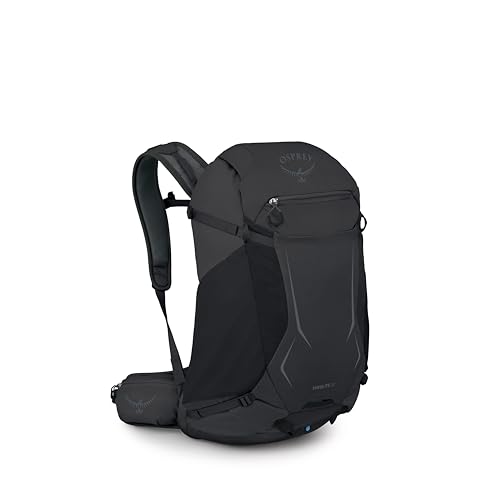
Pros
- Tensioned AirSpeed mesh backpanel and LightWire frame help keep pack weight off the shoulders while promoting airflow
- Adjustable torso system allows personalized harness positioning across diverse body builds
- Dedicated bottom compartment houses an included waterproof raincover made of 100% recycled polyester
- Features functional exterior storage including an open front shove-it sleeve and zippered hipbelt pockets
- Padded ErgoPull hipbelt and upper load lifters provide active load control rarely found on simpler daypacks
Cons
- Hydration reservoir is not included and must be purchased separately
- At 32 liters, the volume may feel unnecessarily large for brief, minimalist day hikes
- Curved frame design of the trampoline backpanel can make packing rigid or squared gear items slightly tricky
The Osprey Hikelite 32 is a technical, feature-loaded daypack engineered for hikers who need substantial gear capacity without jumping to a full multi-day backpack. Designed with a unisex fit and an adjustable torso harness, it caters directly to full-day hikers, winter trail walkers, and gear-heavy outdoor enthusiasts who carry extra insulating layers, food, safety equipment, or photography accessories across varied terrain.
On the trail, load stability is governed by Osprey's AirSpeed suspension system. A LightWire peripheral frame creates structural integrity that actively transfers carried weight from your neck and shoulders down toward the hips, while an open mesh trampoline backpanel maintains physical separation between your back and the main pack body. Load lifters on the padded harness and an adjustable sternum strap allow fine-tuning of pack balance on steep switchbacks, and the padded ErgoPull hipbelt keeps the pack securely anchored around your waist.
Organization is centered around a roomy 32-liter top-loading main compartment complemented by an external front shove-it pocket, a front zippered pocket for keys and small items, and two large stretch-mesh side pockets for water bottles or quickly needed gear. The hipbelt includes zippered storage pockets to keep trail snacks and compasses within arm's reach without forcing you to remove the pack. For inclement weather, a waterproof raincover crafted from 100% recycled polyester is stowed directly in a dedicated bottom pocket.
Setting up the pack is straightforward thanks to the torso adjustment system, which allows you to align the shoulder harness with your specific back length. Packing efficiency benefits from upper and lower side compression straps, which pull loose contents close to the frame to prevent weight shifting on descent. An internal hydration sleeve is built into the main compartment to support a water reservoir, though the bladder itself is sold separately.
Potential buyers should consider the pack's physical profile and capacity. At 22.8 x 12.6 x 12.6 inches and an empty weight of roughly 2.28 pounds (1.03 kg), this is a structured, framed daypack rather than an ultralight frameless rucksack. The curved frame that enables the suspended mesh backpanel also impinges slightly on the internal main pocket layout, making flat or boxy items harder to slide all the way to the bottom.
For hikers seeking an organized daypack that combines genuine frame support, adjustable torso sizing, and an integrated weather cover, the Osprey Hikelite 32 delivers a practical, well-balanced solution for long days on the trail.
The core structural advantage of the Osprey Hikelite 32 is its technical AirSpeed suspension. Rather than resting directly against your back with a flat foam pad, the pack employs a continuous LightWire peripheral frame that tensions a mesh trampoline backpanel. This creates a dedicated airspace behind your torso to encourage air movement during warm-weather hikes.
The LightWire frame serves an equally critical load-management role by anchoring the pack's structure and channeling the carried weight downward to the padded hipbelt. Supported by adjustable load lifters on the shoulder straps and a central sternum strap, the suspension system keeps the pack close to your center of gravity while minimizing sway on uneven trails.
The Osprey Hikelite 32 features an adjustable torso design built into a unisex harness framework. Rather than forcing you to conform to a fixed back length, the shoulder harness can be repositioned along the frame to match your individual torso measurement.
Load security is further refined by the padded ErgoPull hipbelt, which utilizes a forward-pull mechanical advantage to cinch smoothly around the hips. Combined with the sliding sternum strap, hikers can dial in a snug, stable fit across a broad variety of heights and torso proportions.
With 32 liters of storage capacity, the Hikelite 32 provides extensive packing volume for extended day hikes and variable-weather outings. The main compartment holds bulky gear such as rain shells, warmth layers, and meal kits, while the exterior front shove-it sleeve offers instant access to a damp jacket or map.
Hydration needs are addressed through an internal hydration reservoir sleeve, allowing easy routing of a drinking hose (reservoir sold separately). For bottle users, two deep stretch mesh side pockets securely hold standard trail bottles, supported by upper and lower side compression straps that keep external items held tightly in place.
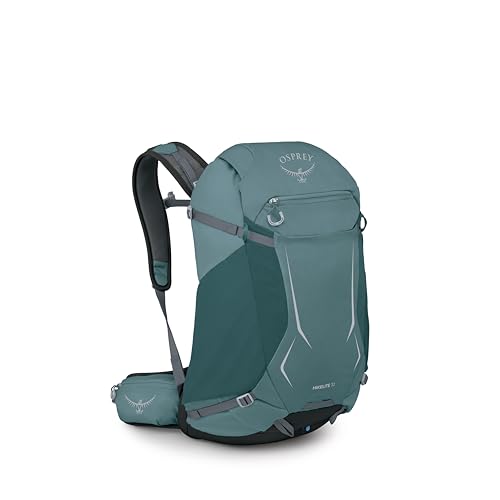
Pros
- Ventilated mesh trampoline backpanel paired with a supportive LightWire peripheral frame
- Includes an integrated waterproof raincover stowed in a dedicated bottom pocket
- Adjustable torso system and load lifters allow customized unisex fit and balance
- Plentiful storage options with zippered hipbelt pockets, stretch side pockets, and a front shove-it pouch
Cons
- Hydration reservoir is not included and must be purchased separately
- At 32 liters, the dimensions (22.8 x 12.6 x 12.6 in) may feel oversized for quick, minimalist outings
- Lacks specialized multi-day backpacking features like a separate sleeping bag compartment
The Osprey Hikelite 32L is a feature-rich hiking daypack designed for hikers who need substantial gear volume, reliable frame support, and open ventilation. With a 32-liter capacity and a listed weight of 2.28 pounds (1.03 kg), it caters well to day hikers carrying extra clothing layers, family trail supplies, photographic accessories, or cooler-weather necessities. The unisex design and adjustable torso provide flexibility for different body frames without needing gender-specific variants.
Load transfer and carrying comfort center around Osprey's AirSpeed suspension system. A tensioned mesh trampoline backpanel keeps the pack body off your back to promote ventilation on warm afternoons, while the LightWire peripheral frame anchors the structure. By directing weight toward the padded ErgoPull hipbelt, the suspension helps take pressure off your shoulders. Upper and lower side compression straps combine with harness load lifters to keep gear close to your center of gravity during steep climbs.
Gear organization across the Hikelite 32 is straightforward and practical for day-long outings. Inside, the spacious main compartment includes a dedicated hydration sleeve, though the reservoir itself is sold separately. Externally, a front shove-it pocket offers quick staging for an extra layer, while large stretch side pockets hold water bottles or taller essentials. The front zippered pocket secures smaller valuables, and dual zippered hipbelt pockets provide on-the-go access to trail food or small navigation tools.
Weather management is reinforced by an included waterproof raincover fabricated from 100% recycled polyester. Stashed away in its own zippered bottom compartment, the raincover deploys quickly when unexpected mountain storms roll in. Adjusting the pack for personal comfort is made simpler through the adjustable torso harness and sliding sternum strap, allowing users to fine-tune the shoulder strap anchor height to match their spine length before hitting the trail.
While the Hikelite 32 offers generous capacity and supportive suspension, it is strictly intended as a large daypack rather than an overnight backpacking rig. It lacks a separate lower sleeping bag compartment and external sleeping pad lashes, and minimalists may find its 32-liter shell bulkier than necessary for fast-and-light summer hikes. For day hikers, winter day trekkers, and gear-heavy trail explorers seeking dependable load balance, built-in weather protection, and breezy back ventilation, the Osprey Hikelite 32 stands out as a well-rounded investment.
The Osprey Hikelite 32 utilizes an AirSpeed suspension system built around a LightWire peripheral frame. This design suspends a tensioned mesh trampoline backpanel away from the main pack body, creating an open air space designed to encourage airflow between your back and the load.
The peripheral frame stabilizes the pack's perimeter and helps transfer carried weight directly down to the padded ErgoPull hipbelt. To prevent gear from sagging backward, harness load lifters and dual side compression straps pull the load forward toward your center of gravity.
Storage on the Hikelite 32 is divided between a roomy main compartment and several quick-access external pockets. An internal hydration reservoir sleeve provides dedicated space for an aftermarket bladder, though a hydration reservoir is not included with the pack and must be purchased separately.
For exterior storage, the pack features large stretch side pockets for water bottles, a front shove-it stash pocket for jackets or maps, a zippered top pocket for small items, and dual zippered hipbelt pockets for small essentials while walking.
The Osprey Hikelite 32 comes equipped with a dedicated waterproof raincover made from 100% recycled polyester. It stores conveniently inside an integrated zippered pocket at the base of the pack.
This included cover deploys rapidly over the pack exterior during rain showers, safeguarding your gear without occupying space inside the main compartment. Hikers packing sensitive electronics or paper maps should still consider internal dry bags during persistent downpours.
Understanding 32-Liter Backpack Volume, Dimensions, and Real-World Capacity
Determining pack size requires translating abstract volumetric numbers into practical spatial measurements. A 32-liter backpack volume represents approximately 1,953 cubic inches of gear space, which equals roughly 1.13 cubic feet. In everyday terms, this volume equals the carrying capacity of roughly two standard paper grocery bags filled to the brim. Backpack manufacturers measure this internal capacity by filling all closed compartments with uniform plastic pellets or packing cylinders until completely full. Because exterior frames, suspension geometry, and pocket dividers affect how that space is distributed, knowing the raw liter number is only the first step in understanding real-world gear capacity.
Exact Physical Dimensions and Cubic Volume Breakdown
External dimensions give a much clearer picture of how a 32-liter pack occupies space in the physical world. For example, technical hiking daypacks like the Osprey Hikelite 32L feature external measurements of approximately 22.8 inches in height, 12.6 inches in width, and 12.6 inches in depth. In metric terms, these dimensions equate to roughly 58 centimeters tall by 32 centimeters wide by 32 centimeters deep. These specific measurements highlight that 32-liter packs tend to be taller and deeper than standard university bookbags or compact laptop sleeves.
Unladen pack weight also plays an important role in how manageable that physical volume feels before adding gear. A well-engineered 32-liter technical pack typically weighs around 2.28 pounds or 1.03 kilograms when empty. This tare weight includes the structural wire frame, technical trampoline backpanel, integrated raincover, and padded harness hardware. Opting for ultralight, frameless nylon sacks may shed a few ounces of tare weight, but you sacrifice the structural rigidity needed to keep a 22-inch tall pack upright and stable.
The presence of an internal perimeter frame dramatically stabilizes these external measurements under load. Without a frame, a flexible pack tends to bulge outward like a stuffed cylinder, expanding its depth while losing vertical posture. A peripheral wire frame maintains an orderly rectangular profile that prevents bulky items from poking into your spine. This architectural rigidity ensures that the pack holds its specified 12.6-inch width and depth regardless of how tightly you pack soft goods inside.
What Actually Fits Inside a 32-Liter Pack?
Visualizing the gear capacity of a 32-liter pack helps clarify whether it suits your intended activities. On a comprehensive all-season day hike, a 32-liter pack comfortably accommodates a full three-liter hydration reservoir, a hardshell rain jacket, a heavy insulating fleece, and emergency medical kits. It also leaves ample room for trail food, a compact camp stove, a headlamp, spare merino socks, and navigation equipment. You can even stash bulkier items like a lightweight sitting pad or traction cleats without straining the primary zipper tracks.
When repurposed for minimalist weekend travel, this capacity easily holds two to three days of packed clothing when organized in standard compression cubes. You can fit two pairs of pants, three shirts, undergarments, a compact toiletry pouch, and a pair of flat spare shoes. External stretch compartments simultaneously hold a one-liter water bottle and travel umbrella, keeping the primary packing compartment dedicated strictly to apparel. This flexibility makes the volume exceptionally popular among travelers who refuse to check bags during quick regional escapes.
For academic or commuter duties, a 32-liter volume offers more than enough space for heavy workstation hardware and reference books. The central cavern easily swallows a thick 15-inch or 16-inch laptop housed in a padded protective sleeve, along with heavy binders, a power supply brick, and an insulated lunch container. Compact tech pouches fit alongside notebooks without forcing you to crush fragile electronic components under heavy paper loads. However, urban commuters should note that an empty 32-liter bag may feel somewhat cavernous for carrying just a tablet and a light windbreaker.
Capacity Comparisons: How 32 Liters Compares to Other Sizes
Comparing a 32-liter backpack to smaller everyday carry options reveals stark differences in utility and bulk. A standard 20-liter pack is designed primarily for minimalist outings, carrying little more than a windbreaker, a water bottle, lunch, and a tablet. Moving up to a 26-liter or 28-liter pack adds room for extra layers or textbooks, but cold-weather gear quickly maxes out the available space. A 32-liter pack gives you roughly thirty to fifty percent more breathing room than these compact models, allowing you to carry cold-weather bulky layers without playing packing puzzle games.
Looking in the other direction, dedicated travel rucksacks and multi-day trekking packs typically start around 40 to 50 liters. A 40-liter bag pushes the maximum boundary for airline overhead carry-on limits and often includes heavier suspension harnesses meant for forty-pound loads. A 32-liter model remains noticeably nimbler and significantly lighter, making it agile enough for technical summit scrambles where a 45-liter pack would feel cumbersome. It bridges the gap between quick daily utility and serious gear haulage better than almost any other volume category.
Specialized carrying requirements also impact how usable volume is perceived compared to standard storage bags. For instance, specialized backpack cooler models incorporate thick insulation foam along their walls, which drastically diminishes their internal packing space compared to an open-cavity 32-liter hiking pack. In a technical 32-liter daypack, almost the entire volumetric capacity remains open for flexible storage rather than being consumed by thermal insulation barriers. This open volume provides vastly greater versatility for shifting gear configurations.
Airline Travel Compliance: Overhead Bins Versus Under-Seat Space
Navigating airport baggage guidelines requires paying close attention to linear dimensions rather than relying solely on liter ratings. Most major domestic airlines specify personal item dimensions of approximately 18 x 14 x 8 inches to ensure gear slides beneath the seat ahead of you. Because a structured 32-liter technical pack typically stands between 21 and 23 inches tall, it will almost certainly exceed standard under-seat personal item limits. Attempting to wedge a rigid framed 22.8-inch pack under a regional jet seat can obstruct your legroom and violate flight safety regulations.
Standard domestic overhead bin limits, however, typically permit bags up to 22 x 14 x 9 inches or 45 total linear inches. A 32-liter pack that measures 22.8 x 12.6 x 12.6 inches pushes very close to standard overhead sizer allowances. If the pack is fully stuffed to its absolute 12.6-inch depth, it may exceed the shallow depth allowance of tight regional aircraft bins. You can usually bring the profile within standard overhead limits by utilizing upper and lower compression straps to cinch the pack flat.
Carriers with strict luggage enforcement often utilize metal sizer boxes at boarding gates to catch oversized carry-on luggage. If your 32-liter pack features a rigid internal LightWire frame, you cannot physically bend or compress the 22.8-inch vertical height to match a 20-inch personal item sizer. Travelers should plan to use a 32-liter bag as their primary overhead carry-on piece rather than expecting it to pass as a free secondary personal item. Pairing a structured 32-liter pack with a tiny personal sling ensures you breeze through boarding checks smoothly.
Internal Geometry Versus Exterior Pocket Displacement
How a backpack partitions its 32 liters dictates how functional that volume feels in daily application. Packs featuring a wide, bucket-style main compartment allow you to pack large, irregular objects like camping pots, climbing helmets, or camera cubes effortlessly. Conversely, packs with excessive internal divider walls and segmented admin pockets divide that volume into narrow slices. While organizational slots keep pens and cables tidy, they restrict your ability to pack single bulky garments or thick footwear.
Exterior pockets offer valuable bonus capacity by storing quick-access gear outside the primary cavity. Large stretch mesh side pockets securely grip wide 32-ounce insulated water bottles without encroaching on internal storage space. Front stretch shove-it pockets provide the perfect staging area for wet rain jackets, muddy trail gaiters, or sandals, keeping moisture isolated from dry apparel inside. Zippered hipbelt pockets add convenient storage for smartphones, energy bars, and lip balm right where you can reach them without unbuckling your harness.
Hydration bladder compatibility represents another important geometric factor that buyers must take into account. Inserting a full three-liter hydration reservoir into the dedicated internal sleeve displaces substantial volume right along the backpanel. This displacement curves the interior space outward, which can make it tricky to slide rigid laptop sleeves or square storage cubes flush against the pack frame. Balancing your liquid volume against dry gear volume prevents your pack from bulging awkwardly against your lower spine.
Suspension Ergonomics and Load Distribution for 30-Plus Liter Loads
Carrying thirty or more liters of gear can quickly cause neck strain and shoulder fatigue without proper suspension engineering. A full 32-liter pack easily weighs between fifteen and twenty-five pounds once you pack water, food, and electronics. High-end hiking designs solve this weight burden through technical suspension systems like the AirSpeed trampoline backpanel. This design suspends a tensioned mesh panel directly across a LightWire peripheral frame, creating an open air gap between your back and the loaded pack body.
Ventilated mesh suspension serves two vital biomechanical functions during strenuous movement. First, the open airflow corridor allows sweat and heat to dissipate naturally, preventing the soggy back syndrome typical of flat foam backings. Second, the peripheral wire frame transfers the bulk of the pack weight away from your sensitive shoulders and directly down onto the lumbar region. This mechanical load transfer allows your powerful pelvic bones and leg muscles to carry the load, significantly reducing upper body exhaustion over long miles.
Fine-tuning the harness components ensures that the pack moves in harmony with your body rather than swaying sideways. An adjustable torso design allows unisex packs to accommodate diverse spine lengths, ensuring the shoulder harness anchors smoothly across your shoulder blades. Load lifter straps positioned atop the shoulder harness should tilt at roughly a 45-degree angle to pull the pack weight close to your spine. Engaging an ergonomic hipbelt with ErgoPull webbing anchors the lower pack firmly over your iliac crest for stable trekking.
Weather Protection, Fabric Durability, and Maintenance
Safeguarding your contents from unpredictable downpours is essential when carrying sensitive electronics or warm clothing layers. Many technical 32-liter daypacks include a dedicated waterproof raincover stored conveniently in its own bottom zipper compartment. Made from 100% recycled polyester, an integrated raincover deploys in seconds over the entire pack exterior, shielding seam stitching and zipper coils from torrential moisture. This feature eliminates the need to purchase separate aftermarket rain covers or wrap internal gear in noisy garbage bags.
Routine cleaning and fabric maintenance keep technical nylon and polyester performing reliably across multiple seasons of hard use. Never toss a structured framed pack into a household washing machine, because mechanical agitators can bend the wire frame and strip delicate internal polyurethane coatings. Instead, spot clean dirty spots using lukewarm water, a soft bristle nylon brush, and mild non-detergent soap before air drying thoroughly in the shade. Applying a fresh durable water repellent spray to the exterior fabric restores water beading without damaging taped interior seams.
Hardware construction also separates long-lasting outdoor workhorses from cheap, short-lived alternatives. Rather than settling for flimsy unpadded budget hiking backpack designs that suffer from torn strap anchors, reputable packs feature heavy-gauge bar-tack stitching and durable acetal buckles. Strong side compression straps stabilize the internal load against wind buffeting, preventing zipper blowouts caused by excessive lateral seam pressure. Investing in durable construction ensures your 32-liter pack survives thousands of trail miles and airport luggage carousels intact.
Deciding If a 32-Liter Backpack Matches Your Carry Needs
Selecting the ideal pack capacity ultimately comes down to your personal gear footprint and environmental demands. A 32-liter backpack represents an optimal choice for ambitious day hikers tackling unpredictable alpine weather where extra insulating layers and emergency equipment are non-negotiable. It also serves as an outstanding one-bag travel companion for weekend travelers who appreciate hands-free mobility and wish to bypass checked baggage fees. Students carrying both workout apparel and heavy laptop hardware will find the expansive volume equally accommodating.
If your daily routine consists solely of carrying an ultralight laptop and a water bottle to a local coffee shop, a 32-liter pack might feel needlessly bulky and tall. In that scenario, stepping down to an 18-liter or 22-liter streamlined urban pack provides a cleaner silhouette and lighter profile. Conversely, if you plan to embark on multi-day backcountry camping trips requiring a sleeping bag, tent, and cooking kit, you will quickly outgrow 32 liters and require a 50-liter expedition pack. Balancing your specific volume requirements against your comfort priorities ensures you select the perfect pack for every journey.





Write Your Review
No reviews yet. Be the first to share your experience!