


Selecting the correct gear setup often comes down to clear external measurements rather than vague capacity labels. While volume in liters provides a general baseline for total internal volume, knowing how big is a backpack in inches is critical when you need to clear tight airline sizer bins, fit inside commuter train footwells, or protect a large workstation computer. Standard daily packs generally measure between 17 and 19 inches in height, with widths hovering around 11 to 13 inches and depths spanning 5 to 8 inches. When buyers overlook these physical exterior boundaries, even an expansive bag can fail gate checks or crowd out legroom during long commutes.
Exterior dimensions dictate how a bag interacts with your body and your transit environment. For example, taller bags engineered like supportive iron frame backpacks stabilize substantial weight along the spine, whereas compact commuter models keep a low profile to prevent bumping into passengers on crowded transit lines. Understanding height, width, and depth in inches also prevents the common error of buying a pack that matches your laptop screen size on paper but fails to fit the device’s protective sleeve. Reviewing precise exterior dimensions ensures your gear remains comfortable, functional, and fully compliant with daily carry demands.




A Complete Guide to Backpack Sizing and Physical Dimensions
Backpack sizing in inches determines how comfortably a bag rests on your spine, whether it clears airline gate sizers, and how reliably it protects sensitive technology. Most shoppers instinctively look at liter capacity, yet volumetric numbers rarely describe how wide, tall, or deep a bag sits against the body. A 25-liter bag with a tall, slim profile behaves very differently from an identically rated pack featuring a squat, deep build that projects outward from your shoulders.
Understanding linear dimensions in inches provides the exact physical boundaries required for everyday commuting, academic life, and air travel. When you evaluate external dimensions, you can accurately gauge device compatibility, under-seat flight compliance, and weight distribution. By breaking down typical sizing across pack classes, buyers can select a silhouette tailored to their daily gear load without risking bulk or strain.
External Dimensions Across Everyday, School, and Travel Categories
Everyday carry packs designed for compact urban commutes typically measure 16 to 18 inches in height, 10 to 12 inches in width, and 5 to 7 inches in depth. These profiles generally hold between 15 and 20 liters of internal capacity, offering sufficient room for a tablet, a light jacket, and daily accessories. The slim depth keeps the bag close to your natural center of gravity, preventing accidental collisions with other commuters in crowded transit cars.
School and professional work packs generally scale up to 18 to 20 inches in height, 12 to 14 inches in width, and 6 to 8 inches in depth. This bracket houses between 22 and 30 liters of volume, which easily accommodates standard multi-subject binders, tech chargers, and dedicated laptop sleeves. Models such as the YAMTION School Backpack fit squarely within this operational tier, offering the vertical height necessary to slide tall academic textbooks into place without stressing corner seams.
Weekend and dedicated travel backpacks maximize dimensional allowances, measuring 20 to 22 inches in height, 13 to 15 inches in width, and 8 to 9 inches in depth. Offering 35 to 45 liters of volume, these bags push the upper limits of overhead compartment rules for domestic flights. While they provide expansive packing space for clothing and travel necessities, their increased depth requires careful packing to avoid exceeding carry-on sizer boxes.
Minimalist drawstring sacks and ultra-lightweight daypacks offer a completely flat profile when empty, measuring approximately 14 to 18 inches tall and 12 to 15 inches wide. Options such as the ARKSKSXY skateboard drawstring bag provide flexible storage for gym shoes, water bottles, or casual essentials. Because these bags lack structured depth panels, their final exterior thickness expands entirely based on the items packed inside.
How Linear Inches Relate to Internal Liter Capacity
Translating external inches into internal liter capacity requires a basic understanding of geometric volume versus usable pack space. In pure mathematics, multiplying height, width, and depth in inches yields total cubic inches, which converts to liters when divided by approximately 61.02. For instance, a boxy pack measuring 18 inches high, 12 inches wide, and 7 inches deep equals 1,512 cubic inches, resulting in roughly 24.8 liters of theoretical volume.
Theoretical geometric volume rarely matches real-world usable storage because backpacks feature rounded seams, tapered corners, and internal seams. Padded back panels, heavy exterior fabrics, and internal organizational dividers consume a noticeable amount of space. A heavily padded laptop compartment can easily displace two or three liters of usable volume compared to an unstructured open cavern of identical external dimensions.
For those researching outdoor gear options, exploring a budget outdoor daypack guide reveals how outdoor bags prioritize streamlined vertical shapes over multi-compartment depth. Urban commuter bags tend to sacrifice main compartment depth to deliver dedicated organizer grids, pen slots, and tech dividers. Consequently, two bags measuring identical linear inches can offer drastically different packing experiences depending on their pocket layouts.
Laptop Screen Dimensions Versus Physical Sleeve Measurements
One of the most frequent consumer errors stems from confusing diagonal screen sizes with the physical rectangular footprint of a computer. When a manufacturer labels a bag for a 15.6-inch or 17.3-inch laptop, that number refers strictly to the diagonal screen measurement from corner to corner. The actual device possesses specific length, width, and thickness dimensions that require an internal sleeve with sufficient physical clearance.
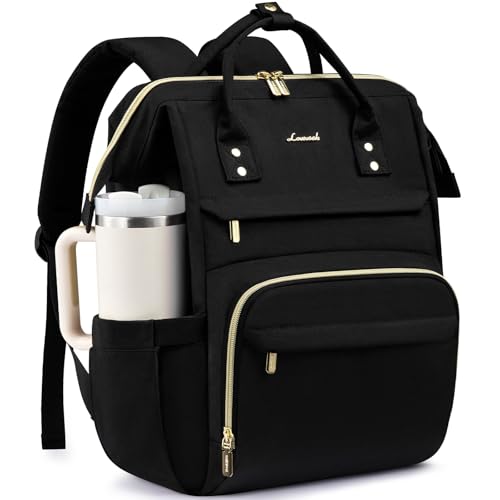
A modern 15.6-inch laptop generally measures around 14 to 14.5 inches in width and 9.5 to 10 inches in depth. Packs like the LOVEVOOK Laptop Backpack designed for 15.6-inch devices provide dedicated sleeves tailored to these proportions while leaving room for slim covers. If you carry an older gaming chassis or a rugged workstation, the added chassis thickness can cause standard sleeves to fit tightly or strain the zipper track.
Larger machines demand backpacks with substantial vertical clearance, typically requiring 18 to 19 inches of total bag height. Options engineered for 17.3-inch hardware, such as the high-capacity LOVEVOOK models or the YAMTION student pack, incorporate sleeves measuring at least 16 inches deep by 11.5 inches wide. Tech packs like the XQCK LED Backpack also balance interior sleeve tolerances with external electronics, proving that structural rigidity must accommodate the machine without bowing the back panel.
High-quality tech sleeves also incorporate suspended false bottoms to protect delicate electronic edges from harsh floor impacts. A false bottom suspends the computer sleeve one to two inches above the bottom seam of the pack. When checking exterior backpack height in inches, ensure the overall bag provides enough vertical clearance to house both the elevated protective sleeve and your computer without forcing top zippers shut.
Airline Personal Item and Carry-On Dimensional Thresholds
Air travel enforces rigid dimensional boundaries where an inch of overpacking can trigger unexpected gate-check fees. Major domestic airlines generally set personal item limits around 18 inches long, 14 inches wide, and 8 inches deep to ensure bags fit beneath the forward passenger seat. Budget carriers often enforce stricter parameters, restricting personal items to 17 by 13 by 8 inches or even 16 by 12 by 6 inches on regional commuter flights.
Standard overhead carry-on allowances across most major airlines cap at 22 inches in height, 14 inches in width, and 9 inches in depth. When added together, these dimensions total 45 linear inches, which represents the standard domestic threshold. If you choose an unstructured 40-liter travel pack, overfilling the exterior pockets can easily cause the depth dimension to swell past 9 inches, preventing the pack from sliding into rigid airport sizing boxes.
Under-seat space is also constrained by structural floor supports and internal aircraft electronics boxes that intrude into footwells. While a 19-inch pack might fit flat beneath a standard mainline seat, regional jets with smaller fuselages offer significantly less vertical clearance. Selecting a pack that stays within 17 to 18 inches in height ensures you can comfortably stow your bag without sacrificing essential footroom during extended flights.
Exterior accessories and specialty gear compartments also alter how a bag performs during airline sizer checks. Reviewing specialized designs like insulated backpack cooler designs demonstrates how dense insulation panels add rigid bulk to external measurements. Similarly, commuter packs featuring protruding tumbler pockets must be measured with bottles removed to verify that side girth complies with tight airline metal frames.
Torso Sizing and Ergonomic Fit Based on Pack Height
Backpack height in inches directly dictates how the harness system aligns with your skeletal structure. Many buyers mistakenly judge pack fit based on their overall height, but torso length measured from the prominent C7 vertebra down to the iliac crest is the critical metric. A person who is six feet tall with long legs may actually have a short 17-inch torso, meaning a tall 21-inch travel pack will sit awkwardly below their lower back.
When a backpack is too tall for your torso, the lower lumbar pad sags below the hips, causing backward leverage that strains the trapezius muscles. Conversely, a pack that is too short positions shoulder straps too close to the collarbone, forcing excessive weight directly onto the neck. An ideal fit keeps the base of the bag resting gently above the hips, distributing the load across the entire back panel.
Adjustable harness hardware helps fine-tune how high or low the pack sits on your body. Utilizing durable hardware, such as aYrap buckles on 1-inch or 2-inch webbing straps, ensures sternum straps and shoulder adjusters maintain constant tension under heavy loads. Maintaining secure strap tension keeps the bag pinned firmly against your spine, which minimizes backward sway and preserves natural posture during brisk walking commutes.
Base Depth, Balance, and Upright Stability
The depth measurement across the bottom panel plays a major role in whether a backpack stands upright on office floors or constantly tips over. A bag with a structured flat bottom measuring at least 6 to 7 inches deep provides a stable foundation for vertical resting. Tapered teardrop bags that narrow toward the base lack sufficient surface contact, forcing commuters to lean them against desk legs or lay them flat on dusty transit floors.
Internal weight distribution also interacts directly with exterior base depth to dictate pack stability. Placing heavy textbooks, laptops, or water reservoirs directly against the back panel keeps the center of gravity aligned over the flat base. Stashing dense tech accessories into protruding front pockets pulls the balance forward, causing even a wide-bottom pack to topple forward onto its front panel.
External features such as side water bottle holders also influence total pack width and balance. For instance, the giant tumbler holder pocket on LOVEVOOK commuter bags allows users to transport large vacuum-insulated bottles securely. However, carrying a full 32-ounce container on only one side adds roughly 3 inches of external width and creates lateral weight imbalance, which can be mitigated by packing a matching item on the opposite side.
Measuring Your Pack Accurately Before You Buy
Measuring a backpack accurately requires checking exterior seams while the bag is packed with realistic daily contents. An empty backpack lying flat on a table produces artificially compact dimensions because flexible side gussets collapse inward. Fill the interior cavity with a light jacket or packing cubes to expand the structural seams to their true operational boundaries before taking measurements with a flexible tape.
Measure the height along the back panel from the bottom seam to the top seam, excluding top grab handles or hanging loops unless airline rules specify total exterior protrusion. Width should be captured across the widest point of the back panel, typically across the lower lumbar section. Finally, measure depth from the rear back cushion to the outermost forward seam, making sure to include front organizer pockets when filled.
Linear dimensions provide the final verification check for carry-on luggage and personal item sizing. Sum the height, width, and depth measurements together to confirm your bag clears the designated threshold for your chosen mode of transit. Taking five minutes to verify these physical measurements prevents costly airport gate fees and ensures your everyday carry setup fits comfortably into your daily lifestyle.
Selecting the right backpack dimensions ultimately balances physical body ergonomics with the practical demands of your daily commute or travels. By focusing on verified exterior measurements in inches rather than abstract volume numbers, you can ensure dependable laptop protection, reliable airline compliance, and lasting carrying comfort. Checking height, width, and depth against your specific gear list guarantees a smooth, hassle-free carrying experience.







Write Your Review
No reviews yet. Be the first to share your experience!