


Shoulder fatigue during extended daily commutes or outdoor walking often stems from improper harness adjustment rather than the total weight of your gear. When shoulder straps sit too loose or lack sufficient adjustment length, a loaded pack sags away from the spine and places unnecessary strain across the upper neck and trapezius muscles. Understanding how long are backpack straps helps commuters, students, and outdoor recreationists configure a balanced setup that stabilizes heavy cargo against the body.
Most standard adult packs feature shoulder straps combining a contoured padded section with an adjustable nylon webbing tail, providing generous latitude for diverse torso shapes. Reviewing capable budget-friendly hiking pack options illustrates how dependable strap dimensions keep a bag stable without requiring complicated hardware. For heavier loads, such as those found on heavy-duty frame packs, maintaining the right strap length is essential to transfer pack weight safely and prevent persistent carrying discomfort.
Pros
- Sturdy 600D high-density nylon build with a 44-pound maximum load rating
- Wide adjustment range from 18.1 to 33.1 inches accommodates various adult torso sizes
- Built-in adjustable sternum strap keeps shoulder pads positioned and stable
- Snap-clip design makes swapping between compatible bags fast and tool-free
Cons
- Requires existing attachment loops or D-rings on the pack to connect
- Lacks load-lifter straps or hip-belt integration found on dedicated multi-day packs
- ABS plastic hardware is not intended for technical climbing or industrial safety applications
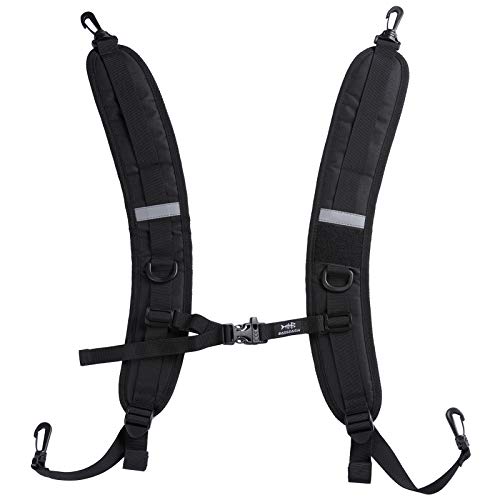
The Bassdash Replacement Backpack Straps serve as a dedicated aftermarket harness solution for dry bags, daypacks, gear sacks, and outdoor bags equipped with anchor points. This accessory is tailored for hikers, paddlers, campers, and travelers who need to replace damaged shoulder straps or convert a hand-carry duffel or roll-top dry bag into a hands-free backpack. It provides a straightforward way to revive older gear without sewing or buying a completely new pack.
In terms of load support, the straps are rated by the manufacturer for a maximum weight capacity of up to 44 pounds (20 kg). The strap length adjusts between 18.1 inches (46 cm) and 33.1 inches (84 cm), offering sufficient range for most adult users to find a suitable ride height. The integrated sternum strap can be adjusted across the chest, helping to keep the padded sections centered on your shoulders and preventing outward slippage when walking over uneven terrain.
The build quality centers on 600D high-density nylon fabric paired with high-strength ABS plastic swivel clips. The 600D material provides solid resistance to scuffs and abrasion on the trail, while the synthetic clips avoid rust and corrosion when exposed to river spray, damp grass, or wet gear. Padding along the main shoulder contact zones buffers the weight of your pack, providing significantly more carrying comfort than raw nylon webbing.
Installation and daily operation are very simple. The snap clips hook directly onto top and bottom webbing loops or D-rings already present on your bag. Once clipped in, pulling the lower webbing ends through the ladder-lock buckles tightens the harness, while sliding the chest clip allows quick fine-tuning of the sternum strap. Maintaining the harness involves basic spot cleaning with mild soap and water, followed by air drying before long-term storage.
A realistic limitation of this strap set is its dependency on pre-existing bag loops. If your pack does not have dedicated attachment points at both the top and bottom corners, these straps cannot be connected without DIY modifications. Additionally, because this setup lacks load lifters, an internal frame, and a load-bearing hip belt, it is not a direct substitute for a technical multi-day backpacking suspension system when moving heavy wilderness loads.
For day hikers, water sports enthusiasts, and budget-conscious backpackers looking to extend the utility of an existing dry bag or replace failing factory straps, the Bassdash Replacement Straps offer dependable functionality at minimal weight. Checking your pack for compatible attachment loops and keeping total pack weight within the 44-pound rating will ensure a practical, comfortable carry on your next outing.
The Bassdash Replacement Shoulder Straps feature an adjustable strap length ranging from 18.1 inches (46 cm) to 33.1 inches (84 cm), configured to suit adult users across varying torso lengths. The integrated sternum strap slides and cinches across the chest, allowing hikers to pull the shoulder straps inward for a balanced carry.
Because these straps rely on external attachment points, the overall torso fit also depends on the spacing between the loops on your host pack or dry bag. Measuring your bag anchor spacing against your torso length prior to purchase ensures optimal placement on your shoulders.
Constructed from 600D high-density nylon, this replacement harness is built to resist abrasion, fraying, and general outdoor wear under loads up to 44 pounds (20 kg). The fabric is matched with heavy-duty webbing and ABS plastic hardware designed for dependable field use.
The ABS plastic clips provide high tensile strength while eliminating metal corrosion risks, making them well suited for use around water, humid climates, and rain-soaked trails. Routine inspection of the snap gates and stitching before loading heavy gear ensures continued reliability.

Pros
- Integrated sternum strap adjusts up to 17 inches to stabilize equipment and prevent shoulder slippage
- Breathable cellular mesh padding promotes upper-body airflow during warm-weather outings
- Swiveling clips attach quickly to standard D-rings or webbing lash points without specialized tools
- Weighs only about 0.33 pounds, keeping overall pack weight low
Cons
- Requires pre-existing D-rings or webbing anchor loops on your bag to connect the clips
- Lacks the heavy-load support and load-lifter geometry needed for large multi-day backpacking packs
- Fixed strap contour may feel broad on very narrow shoulder profiles
The Pitozer Padded Backpack Shoulder Strap Replacement is a modular harness designed for day hikers, outdoor travelers, and DIY gear owners who need to repair broken straps or upgrade unpadded webbing on their gear. Weighing approximately 0.33 pounds, this strap set provides a lightweight, functional solution for retrofitting daypacks, gear haulers, beach chairs, float tubes, or specialized cases that already have external attachment hardware or anchor points.
Built with cellular mesh padding, these straps are structured to allow airflow through the interior cushioning, which helps manage heat and moisture along contact areas during warm-weather hikes. The widened, ergonomic contour aims to distribute gear weight across the chest and shoulders rather than letting narrow webbing dig into sensitive pressure points. An integrated sternum strap with up to 17 inches (43 cm) of adjustability bridges the chest, helping to prevent the straps from sliding off your shoulders and reducing side-to-side pack movement on uneven trails.
For hardware functionality, the upper and lower attachment ends feature 360-degree swiveling clips that turn freely, preventing the straps from twisting during everyday handling. Each strap also includes an auxiliary D-ring mounted over a nylon loop, offering a convenient attachment point for small trail necessities like clip-on pouches, sunglasses, or a whistle. Beneath the main padding, reflective tape provides passive visibility when illuminated by a headlamp, flashlight, or vehicle headlights in low-light trailhead conditions.
Installation is straightforward for any pack or accessory equipped with compatible D-rings or looped webbing, requiring users to snap the clips into place at the top and bottom corners. Tension adjusters on the lower webbing allow quick adjustments to balance the pack height, while the chest strap can be slid and tightened to match your chest width. When it comes to care, the synthetic mesh and nylon webbing can be hand-washed with mild soap, rinsed clean, and air-dried away from intense heat sources.
While practical for utility carry and light recreational use, this replacement strap system is not designed to replace heavy internal-frame backpacking harnesses carrying serious wilderness loads. It also requires that your bag or item already possesses attachment loops or rings, meaning packs with fully sewn-in, unclipped shoulder straps would require physical modification to use these replacements. Hikers carrying dense loads over long distances should recognize that this lightweight padding is best suited for modest day-hiking setups and utility gear.
For daypack users, commuters, and outdoor recreationists seeking an accessible, ventilated replacement harness to revitalize worn gear, the Pitozer Shoulder Straps offer dependable utility. The inclusion of swiveling clips, an adjustable chest strap, and reflective accents makes this set a solid value for refreshing or customizing lighter bags.
The Pitozer Replacement Straps feature a one-size ergonomic curved outline designed to fit a wide range of adult and teen daypack users. The lower webbing ends allow straightforward length adjustment to fine-tune how high or low the pack sits against your back.
The built-in sternum strap can be adjusted up to 17 inches (43 cm) across the chest to accommodate different torso widths and layered trail clothing. Because this harness relies on the fixed distance between the anchor points on your specific pack, overall fit and strap spacing will depend on your bag's original design.
These replacement straps are built to attach directly to gear equipped with external anchor hardware, such as plastic or metal D-rings and stitched webbing loops. Compatible items include daypacks, beach chairs, float tubes, backpack sprayers, and soft instrument cases.
Bags that lack pre-existing top and bottom lash points will not accept these snap-style clips without sewing or installing additional attachment hardware. Always confirm that your bag has secure attachment points before purchasing replacement clip-on straps.

Pros
- 360-degree universal swivel clips enable quick, tool-free installation on bags with compatible anchor points
- Built-in 17-inch adjustable sternum strap improves load balance and prevents straps from sliding off your shoulders
- Lightweight 0.33-pound construction with breathable mesh padding delivers comfortable shoulder cushioning without excess bulk
- Reflective strips and an accessory D-ring add functional safety and convenience for everyday trail and commuter use
Cons
- Requires pre-existing D-rings or webbing loops on your gear and will not attach to packs with sewn-in shoulder harnesses
- Swivel clip hardware is designed for daypacks, duffels, and utility gear rather than heavy expedition-weight backpacking loads
- One-size design with fixed strap curve may not provide a tailored fit for every torso width or body profile
The Hanmir Backpack Straps Replacement is an aftermarket clip-on harness system designed to replace worn-out straps or convert single-strap utility bags into dual-shoulder backpacks. Weighing approximately 0.33 pounds, this one-size strap set suits day hikers, commuters, travelers, and campers who want to restore functional carry to daypacks, duffels, or specialized gear cases without purchasing an entirely new bag.
For trail walking and active travel, carrying stability depends on how well straps stay in place. These replacement straps feature an ergonomic curved contour that follows the slope of the shoulders, spreading the load across the upper chest and back rather than pinching against the neck. An integrated sternum strap with up to 17 inches of adjustment pulls the shoulder straps inward, stopping annoying side-to-side sway and preventing straps from slipping off your shoulders when navigating uneven paths. Breathable mesh padding allows air to circulate, helping reduce trapped heat and sweat during warmer hikes.
Hardware and external details focus on utility and low-light awareness. The straps connect via heavy-duty 360-degree swivel clips that snap directly onto existing D-rings or anchor loops, preventing the webbing from twisting as you shoulder your bag. Front-facing reflective strips provide passive visibility for early morning starts or walks along roadway trailheads in low light. A built-in utility D-ring on the front gives you a quick-clip attachment point for small essentials such as keys, a whistle, or a mini flashlight.
Installing the Hanmir straps is straightforward and requires no tools or sewing, provided your bag has top and bottom anchor points. Users simply snap the swivel hooks into the upper and lower rings and adjust the lower webbing tail to position the bag comfortably against the back. Routine care is equally simple, as the synthetic black mesh and webbing can be hand-washed with mild soap, rinsed, and line-dried before long-term storage or packing into a repair kit.
There are clear compatibility limits to keep in mind before choosing this replacement harness. Because attachment relies entirely on swivel snap hooks, this system is only compatible with packs, cases, or duffels equipped with external D-rings or webbing loops. It cannot replace the shoulder straps on structured internal-frame backpacking packs where the harness is sewn directly into the back panel. Furthermore, while the padding and chest strap handle moderate loads well, the clip hardware is not rated for heavy multi-day expedition packing.
For budget-conscious outdoor enthusiasts and commuters who need a quick, dependable way to upgrade or salvage compatible gear, the Hanmir Replacement Backpack Straps deliver practical value. Confirming that your bag has the required anchor points ensures you get an easy-to-install, stable harness with integrated chest support for everyday adventures.
Harness stability on the Hanmir replacement straps is anchored by an integrated chest strap that adjusts up to 17 inches across the sternum. This strap locks the harness across your core, preventing the shoulder pads from slipping outward during active movement, scrambling, or brisk walking.
The shoulder straps feature an ergonomic curved design lined with ventilated mesh padding. This contoured shape matches the natural curve of the upper body to help spread gear weight evenly across the back and chest, while the breathable mesh promotes air circulation to limit heat buildup along contact zones.
Compatibility for the Hanmir replacement harness requires your pack or gear bag to feature pre-existing D-rings, eyelets, or webbing anchor loops at the top and bottom corners. The straps utilize 360-degree universal swivel clips that snap onto these points in seconds without tools or stitching.
This universal hook design makes the harness suitable for daypacks, duffel bags, agricultural sprayers, beach chairs, golf bags, and musical instrument cases. However, these straps are not compatible with hiking backpacks featuring integrated or sewn-in shoulder harnesses that lack clip-in hardware.
Pros
- Wide 8-inch to 22-inch length adjustment fits a broad range of chest sizes and shoulder strap spacings.
- Durable 1-inch webbing paired with a responsive quick-release buckle for simple on-trail operation.
- Dual D-rings offer external clip-on capability for small, lightweight trail items.
- Weighs only about 0.07 pounds, keeping pack weight additions minimal.
Cons
- Attachment style requires threading around existing shoulder straps, which may slide vertically on smooth straps lacking vertical webbing loops.
- D-rings are plastic and intended only for lightweight items, not heavy or critical load-bearing attachments.
- Does not include elastic shock absorption, offering a static rather than flexible stretch fit across the chest.
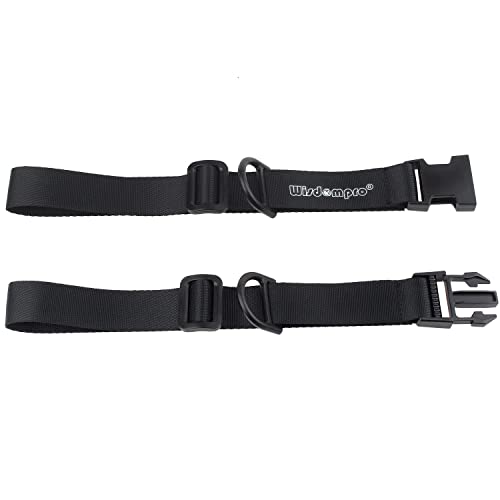
The Wisdompro Backpack Chest Strap is a dedicated aftermarket sternum strap designed to add chest stabilization to daypacks, hydration packs, and hiking backpacks that either lack a factory strap or have a broken buckle. For day hikers, weekend backpackers, and travelers, shoulder straps can often slide outward toward the shoulders during prolonged movement. This accessory specifically targets that issue by bridging the two shoulder straps across the chest to keep the pack centered and secure while walking.
When hiking on uneven trails or carrying moderate loads, shoulder-strap migration can cause constant readjustment and upper-body fatigue. According to product specifications, this chest strap offers an adjustable length spanning from 8 inches to 22 inches, providing sufficient span for a variety of adult and youth pack configurations. Weighing roughly 0.07 pounds, it adds practically unnoticeable weight to your gear setup while freeing up your hands by keeping the shoulder harness anchored in place.
The strap construction utilizes 1-inch wide heavy-duty webbing designed to withstand the typical tension and abrasion of outdoor use. It features a central quick-release buckle that allows for easy snapping and release, even when wearing lightweight trail gloves. Additionally, the strap integrates two D-rings along the front, which serve as handy anchor points for small trail essentials such as sunglasses, a whistle, or lightweight keys.
Installation involves wrapping the outer strap ends around your backpack's shoulder straps and securing them through the slide adjusters. Once threaded, hikers can customize the overall width between 8 and 22 inches to achieve a snug fit that keeps the straps from drifting off the shoulders. Maintenance is straightforward, as the non-absorbent webbing can be spot-cleaned with mild soap and water and air-dried alongside your pack after muddy or sweaty hikes.
Potential buyers should consider a few design limitations before purchasing. Because the strap wraps around existing shoulder harnesses without dedicated locking slider clips, it can slide vertically up or down if your pack straps lack horizontal attachment daisy chains or vertical webbing anchors. Furthermore, the webbing is rigid without elastic stretch, which means it will not flex naturally during deep breathing on steep climbs. The built-in D-rings are strictly intended for lightweight accessories and are not load-bearing.
Based on its specifications, the Wisdompro Chest Strap is a sensible, budget-conscious solution for hikers looking to replace a damaged sternum strap or improve the fit of an older daypack. If your hiking backpack has slick straps without anchoring loops, you may need to position it carefully, but for standard daypacks and school-to-trail bags, it delivers dependable stabilization for minimal cost and weight.
The Wisdompro sternum strap features an adjustable working length from 8 inches to 22 inches, measured between the two connection points. This wide adjustment window allows it to accommodate narrow-shouldered youth packs as well as broad-chested adult daypacks.
To ensure proper fit, measure the horizontal distance across your chest between your pack's shoulder straps while wearing your typical trail layers. As long as the strap separation falls within the 8-inch to 22-inch span, the strap can be cinched down or extended to maintain strap positioning.
This sternum strap is built around 1-inch wide webbing, making it compatible with most standard daypacks, hydration packs, travel bags, and light hiking backpacks. It uses a wrap-around attachment system that loops directly over or around shoulder harnesses.
Compatibility is highest on shoulder straps that feature vertical daisy chains, accessory loops, or ribbed webbing where the strap ends can be anchored to prevent vertical slipping. On completely slick or heavily padded contoured straps without anchor loops, the strap may require occasional vertical realignment during extended movement.
Backpack Strap Dimensions, Adjustment Mechanics, and Harness Fit
Determining the correct strap measurement requires looking at both the padded portion of the harness and the total adjustable webbing length. Standard adult backpack shoulder straps generally offer a total usable length ranging from 18 to 36 inches, combining fixed foam padding with flexible pull webbing. Knowing how these components function together ensures you can adjust, repair, or replace your harness for balanced weight distribution on any excursion.
Standard Dimensions for Shoulder Straps and Adjustment Ranges
Adult backpack shoulder straps are built with two distinct sections that determine overall length. The upper padded section typically measures between 15 and 20 inches in length and roughly 2.5 to 3.5 inches in width. This cushioned section is engineered to rest over the clavicle and wrap around the front of the shoulders to disperse downward pressure.
Beneath the padded foam rests a length of high-density nylon or polypropylene webbing, commonly measuring between 12 and 20 inches. This webbing feeds through a ladderlock buckle anchored to the bottom corner of the pack. When fully extended, the combined span of the padded section and webbing tail typically provides an adjustable range between 18 and 34 inches.
Dedicated replacement straps follow these standard industry measurements closely. For instance, the Bassdash Backpack Straps Replacement Adjustable provides an adjustable length ranging from 18.1 inches (46 cm) to 33.1 inches (84 cm). That generous margin allows the harness to fit slim frames comfortably while expanding sufficiently to accommodate bulky winter coats or taller torso profiles.
Measuring Sternum Strap Length and Chest Placement
A sternum strap connects the two shoulder straps horizontally across the chest to prevent them from slipping outward off the shoulders. Standard backpack sternum straps generally feature an adjustable span between 8 and 22 inches to accommodate broad chests as well as slender profiles. Maintaining the proper length on this horizontal connection prevents the shoulder harness from pinching into the neck or flaring wide under load.
Standalone chest strap designs reflect these standard dimensions to ensure broad gear compatibility. The Wisdompro Backpack Chest Strap utilizes durable 1-inch webbing that adjusts from 8 inches to 22 inches, providing compatibility with most adult chest sizes. Many replacement harnesses, including the Hanmir Backpack Straps Replacement and Pitozer Backpack Straps Paded Shoulder Strap, integrate chest straps with adjustment spans reaching up to 17 inches (43 cm).
Proper vertical positioning of the chest strap is just as important as horizontal length. The strap should sit roughly one inch below the collarbones, resting flat across the sternum without placing pressure on the throat. Fastening the strap too tightly pulls the shoulder pads inward and can restrict breathing, while leaving it too loose allows the shoulder straps to shift and cause friction during movement.
How Torso Measurement Dictates Effective Strap Fit
Your physical torso length plays a direct role in determining how much strap length you will actually use. Torso length is measured along the spine from the C7 vertebra, the prominent bony bump at the base of your neck, down to the iliac crest at the top of your hip bones. Standard adult torso lengths generally fall between 15 and 22 inches, regardless of overall standing height.
When a backpack matches your torso length, the padded section of the strap wraps smoothly over the top of the shoulders without leaving gaps. The lower ladderlock buckle then rests several inches below the armpit, leaving ample webbing tail available for micro-adjustments. This positioning ensures that tightening the straps pulls the pack forward against your center of gravity rather than compressing your neck.
If a pack is too short for your torso, the shoulder strap anchor points will sit well below your shoulder blades. You will have to extend the webbing to its maximum limit, which can cause the pack to pull backward and create acute tension on the upper shoulders. Conversely, a pack that is too long will cause the buckles to bottom out, leaving excess slack and making the bag unstable during transit.
Step-by-Step Harness Tensioning and Calibration Process
Calibrating your backpack straps correctly requires a specific adjustment sequence to avoid uneven weight distribution. Begin by loading the pack with your typical daily items, as adjusting an empty bag gives an inaccurate impression of harness fit. Loosen both shoulder strap webbing tails, the sternum strap, and any waist belt before hoisting the bag onto your shoulders.
If your pack includes a waist belt, buckle and tighten that first so the padded wings cup the top of your hip bones. Next, reach down to the lower shoulder strap webbing tails and pull them backward and downward in a smooth, continuous motion. Tighten the webbing until the pack hugs your upper back securely, ensuring the padded sections sit flush against your chest and shoulders without lifting the hip belt off your pelvis.
Once the shoulder straps are anchored, buckle the sternum strap across your mid-chest. Cinch the webbing just enough to draw the shoulder pads slightly inward away from the shoulder joints, ensuring your arms can swing freely without rubbing. Finally, check that both shoulder strap webbing tails are adjusted evenly by comparing the remaining strap lengths on either side.
Warning Signs That Your Straps Are Too Short or Too Long
Recognizing fit issues early protects your back from chronic strain during long daily commutes or trail outings. If your shoulder straps are too short, the ladderlock buckle will sit directly inside the armpit, leading to painful chafing and restricted arm motion. You may also find that the padding ends above the collarbone, forcing thin, unpadded webbing to carry direct load against your rib cage.
Straps that are excessively long present a different set of ergonomic challenges. When straps cannot be tightened enough, the ladderlock buckle bottoms out against the lower seam of the padded section, preventing further tensioning. This leaves the pack sagging below the lumbar curve, which forces your shoulders forward to counterbalance the weight and strains the lower back muscles.
Unequal strap length is another common issue that causes subtle musculoskeletal fatigue. When one strap is tightened even an inch shorter than the other, the pack tilts diagonally across the spine, placing asymmetrical pressure on one shoulder. Regularly checking that the loose webbing ends match in length helps maintain an even, upright posture.
Replacement Straps and Hardware Compatibility Considerations
Factory backpack straps can wear out over years of heavy daily use, prompting gear owners to seek compatible replacement options. Modern replacement harness kits often feature universal clip systems that snap directly onto pre-existing D-rings, nylon loops, or daisy-chain webbing. This modularity makes them useful not only for commuter bags, but also for duffels, dry bags, beach chairs, and instrument cases.
Hardware quality is a primary factor to examine when evaluating replacement straps. The Bassdash Backpack Straps Replacement Adjustable uses 600D high-density nylon paired with high-strength ABS plastic clips, supporting working loads up to 44 pounds (20 kg). Meanwhile, designs like the Pitozer Backpack Straps Paded Shoulder Strap and Hanmir Backpack Straps Replacement feature 360-degree swivel clips that prevent the webbing from twisting when donning or removing the pack.
Clip-on harnesses also provide an easy way to restore hands-free carrying to heavy specialized containers. For example, retrofitting replacement padded straps onto insulated cooler backpacks or dry bags provides extra cushioning that eases shoulder strain when carrying food, ice, and beverages. Adding functional replacement straps with built-in utility D-rings also gives you convenient clip points for keys, small pouches, or transit passes.
Load Dynamics and Ergonomic Weight Transfer
Strap length directly controls how weight shifts across your body while you walk. When shoulder straps are drawn up snugly, the backpack’s center of gravity remains close to your spine, minimizing leverage and rotational pull on your torso. If straps are allowed to slacken, the pack leans away from the back panel, creating a heavy lever arm that pulls your shoulders backward and compromises balance.
Cushioning design plays an equally important role in weight transfer. Ergonomically curved straps, often designed in an S-curve or J-curve profile, contour around the pectoral muscles rather than pressing straight down over the chest. Products like the Pitozer and Hanmir replacement straps incorporate ventilated cellular mesh padding, which provides cushioning while promoting airflow to reduce heat buildup during active commutes.
Weight distribution inside the bag also dictates how strap tension feels. Packing dense items, like laptops or heavy textbooks, against the back panel ensures the shoulder straps pull evenly across the collarbones. Placing heavy gear near the outer panel causes the bag to pull outward, requiring extra strap tension that can dig into the shoulders and restrict circulation.
Preserving Webbing Integrity and Hardware Maintenance
Backpack straps endure significant friction each time you adjust tension or swing a heavy bag onto your shoulders. The woven nylon or polypropylene webbing relies on subtle surface texture to grip the internal teeth of plastic ladderlock buckles. Over time, dirt, grit, and repeated friction can wear down these teeth or fray the webbing edges, leading to gradual slippage under load.
Maintaining your straps involves basic cleaning and regular hardware inspection. Hand-wash synthetic webbing using lukewarm water and a gentle, non-detergent soap to remove abrasive road dust and salt from perspiration. Avoid putting technical backpacks into washing machines or clothes dryers, as mechanical agitators can crush internal EVA foam padding and high heat can warp synthetic buckles.
Inspect the stress points where the shoulder straps attach to the main pack body at regular intervals. Look for loose bar-tack stitching or stretching along the seam lines where the webbing anchors into the fabric. Replacing worn straps or reinforcing stressed anchor points early prevents sudden harness failure while commuting or navigating busy transit terminals.
Achieving a balanced carry ultimately comes down to matching strap dimensions to your body shape and daily cargo demands. Taking a few moments to measure your torso, confirm your adjustment range, and calibrate your sternum strap ensures your backpack provides stable, comfortable support wherever your daily schedule takes you.







Write Your Review
No reviews yet. Be the first to share your experience!