


Packing for a brief getaway often creates unexpected frustration right at the bedroom doorway. Shoving multiple changes of clothes, toiletries, extra shoes, and mobile electronics into an everyday bookbag quickly leads to bulging seams and jammed zipper tracks. Knowing exactly how many liters for a weekend backpack you need ensures that your gear stays organized, your garments remain wrinkle-free, and your load remains manageable across crowded transit hubs. Travel needs vary dramatically based on the season, destination, and transit method, making volumetric sizing a fundamental consideration before departure.
Choosing the correct capacity prevents the dual headaches of overstuffing a tiny commuter bag or hauling an unwieldy expedition pack for a simple two-day excursion. While minimalists can often squeeze essentials into compact bags, travelers carrying bulky seasonal layers or secondary footwear benefit from spacious weekender configurations. If your itinerary includes outdoor excursions between city tours, exploring budget-friendly hiking backpacks can help you balance trail readiness with travel value. Finding the ideal volume ultimately allows you to move freely without paying unnecessary baggage fees or suffering from sore shoulder muscles.

How to Determine the Right Liter Capacity for Weekend Travel
A standard weekend trip lasting two to three days generally requires between thirty and fifty liters of packing space. The exact volume you require depends on your personal packing discipline, the climate of your destination, and whether you need to transport specialized hardware such as large laptops. Understanding volume tiers simplifies packing and prevents the physical strain of carrying unnecessary bulk through train terminals or airport gates.
Evaluating Capacity Tiers: 30L, 40L, and 50L Packs
A thirty-liter backpack serves as the baseline for ultralight weekend travelers moving through warm climates. This capacity accommodates two changes of lightweight summer clothing, a small toiletry pouch, basic charging cables, and a compact tablet or slim laptop. Packs in the thirty-liter range maintain a slim silhouette that easily slips under airline seats or into crowded overhead bins on regional commuter trains. However, this capacity leaves virtually zero margin for extra shoes, thick cold-weather sweaters, or souvenir purchases along the route.
The forty-liter volume represents the most versatile middle ground for general weekend travel. This size category comfortably swallows three full outfits, an extra pair of casual footwear, a dedicated dopp kit, and full-size tech gear without ballooning the exterior profile. Many international and domestic carriers design their overhead sizer boxes specifically around forty-liter dimensional limits. If you travel across varying weather conditions or prefer packing fresh workout attire alongside casual evening clothing, a forty-liter bag handles the volume without structural compromise.
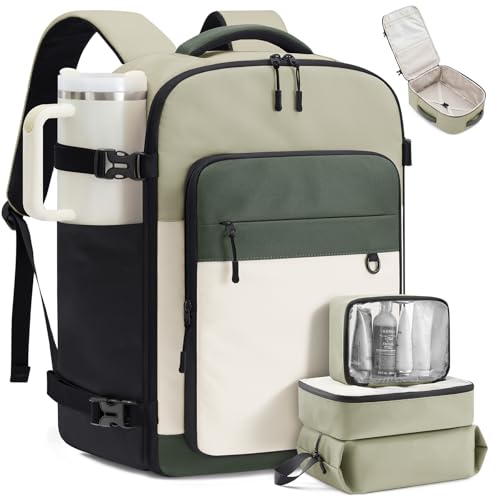
Fifty-liter backpacks deliver maximum storage capability for travelers who refuse to compromise on outfit selection or gear redundancy. High-capacity options like the LOVEVOOK Large Travel Backpack For Women and the LOVEVOOK 50L Travel Backpack for Women Men provide the cavernous space needed for four-day holiday weekends. This upper bracket allows you to pack dense jackets, business attire, multiple tech accessories, and full cosmetic kits effortlessly. While fifty-liter models demand careful attention to airline dimensions, they provide ample space that eliminates the need for checked rolling luggage.
Climate, Fabric Bulk, and Seasonal Clothing Demands
Seasonal weather dictates packing volume far more than trip duration alone. A midsummer weekend trip requires lightweight linen shirts, shorts, thin socks, and packable sandals that compress into negligible volume. Under warm conditions, a compact thirty-liter pack easily carries four days worth of garments because the compressed textiles displace very little interior air. You can roll technical synthetic fabrics tightly, maximizing the density of your primary packing cavity.
Winter excursions demand substantially higher cubic volume due to thick yarn gauges and insulation lofts. Heavy wool sweaters, thermal baselayers, insulated denim, and spare winter boots consume enormous amounts of space even before adding outerwear. A traveler heading to a cold-weather city will easily overflow a thirty-five-liter pack with a single spare outfit and a pair of boots. Choosing a fifty-liter travel bag provides the dimensional depth required to house thick cold-weather garments without straining external zippers.
Transitional seasons introduce unpredictable temperature swings that complicate pack capacity planning. Spring and autumn weekends often require layered outfits, such as light fleece jackets, rain shells, and interchangeable base layers. Balancing these shifting requirements means opting for an adaptable pack volume between forty and fifty liters. Having surplus internal room allows you to shed or pack outer layers quickly as weather conditions evolve throughout transit.
Airline Compliance: Overhead Bins Versus Under-Seat Personal Items
Airlines enforce strict rules regarding linear dimensions that directly affect practical liter choices. Domestic overhead bin allotments generally accept bags measuring up to twenty-two inches long, fourteen inches wide, and nine inches deep. Most forty-liter travel bags match these parameters cleanly when packed reasonably flat. Fifty-liter backpacks often approach or push the maximum allowable envelope for overhead bins, requiring travelers to utilize exterior compression straps to avoid gate-check mandates.
Personal item dimensions are considerably tighter, with budget carriers frequently capping sizes around eighteen inches high, fourteen inches wide, and eight inches deep. A thirty-liter backpack with a soft frame can compress under standard airplane passenger seats if it is not packed to bursting. In contrast, fully loaded fifty-liter travel bags rarely squeeze beneath modern airline seats due to their extended vertical height and packed depth. Packing a large fifty-liter model requires accepting that it will primarily travel in the overhead compartment rather than at your feet.
Airport gate agents scrutinize bag bulk based on visual fullness rather than printed liter ratings. A structured bag with bulging exterior pockets draws immediate attention at boarding gates, prompting sizing tests in metal gate boxes. Keeping your pack depth controlled through structured internal distribution helps maintain a compliant silhouette. Knowing your airline carry-on limits beforehand prevents unexpected fees and last-minute gate checks.
Clamshell Suitcase Openings Versus Traditional Top Loading
Loading style drastically alters how efficiently a traveler can utilize available liter volume. Traditional top-loading backpacks force gear into a deep vertical tunnel, burying items at the bottom beneath layers of packed clothing. Retrieving an extra pair of socks or a charging brick from a top-loader requires unpacking the entire contents of the bag onto a hotel bed. This configuration works well on outdoor trails but proves cumbersome inside airport terminals or compact hotel rooms.
Full clamshell openings unzip flat like traditional rolling suitcases, providing instantaneous visibility across the entire internal chamber. Both LOVEVOOK weekender models incorporate flat-lay clamshell access, allowing users to pack garments smoothly without deep creasing or awkward corner dead zones. This layout accelerates security line repacking and allows rapid retrieval of specific outfit components. Travelers moving between hotels or short-stay rentals benefit immensely from the speed and visual organization that clamshell zippers provide.
Divided internal compartments enhance clamshell functionality by separating dirty laundry from pristine garments. Many dedicated travel packs feature integrated mesh zip dividers and waterproof wet pockets for damp swimsuits or gym clothing. Segregating moisture and soiled fabrics inside the bag protects delicate tech hardware and dry layers from contamination. This internal containment maximizes usable space by eliminating the need for bulky supplemental plastic bags.
Modular Packing Systems and Organization Cubes
Organizing a high-capacity weekend backpack without structural organizers leads to shifting weight and jumbled clothing. Modular packing cubes resolve this issue by compressing loose garments into rectangular blocks that mirror pack dimensions. The LOVEVOOK Large Travel Backpack includes three dedicated packing cubes that fit precisely within its fifty-liter main compartment. Utilizing custom cubes ensures that volume is filled methodically from edge to edge without leaving empty corners or irregular gaps.
Packing cubes also streamline airport security procedures by keeping personal apparel concealed during bag inspections. If security personnel need to examine a bag bottom, cubes allow inspectors to lift compartments without scattering loose garments across inspection tables. Furthermore, compression cubes gently expel trapped ambient air from folded fabrics, effectively expanding perceived packing capacity by fifteen to twenty percent. This compression makes a spacious fifty-liter compartment behave like an organized mobile wardrobe.
Color-coded or purpose-built cubes allow you to separate tops, bottoms, undergarments, and tech cables into intuitive groups. Upon arriving at your weekend destination, you can simply transfer the cubes directly into hotel dresser drawers in seconds. This modular convenience keeps your living quarters tidy and reduces packing time when preparing for the journey home. Proper cube integration transforms a chaotic duffel-style interior into an orderly storage system.
Tech Compartments and Large Laptop Accommodation
Modern weekend travel frequently blends leisure activities with remote work responsibilities. Carrying bulky workstation laptops alongside casual weekend clothing requires specialized protective engineering within the pack chassis. Many standard daypacks top out at fifteen-inch laptop sleeves, leaving owners of seventeen-inch or eighteen-inch desktop replacement computers stranded without transport options. The LOVEVOOK Large Travel Backpack specifically incorporates a protective rear tech compartment designed to fit laptops measuring up to eighteen inches.
A properly designed tech compartment must isolate sensitive electronics from the crush forces generated by heavily packed clothing. Padded perimeter walls absorb lateral impacts during transit, while a dedicated false bottom keeps computer corners elevated above hard floor surfaces. Storing heavy electronic hardware directly against the rear back panel also stabilizes the pack center of gravity close to your spine. This placement reduces backward rotational pull and prevents shoulder strap chafing during extended walking transfers.
Quick-access external zippers allow travelers to extract workstations at airport screening points without exposing private garments to security crowds. Secondary padded sleeves within the tech zone provide secure housing for flat tablets, e-readers, and sensitive paperwork. Tech storage integration ensures that mobile professionals can handle unexpected business deadlines during weekend trips without hauling a separate briefcase.
Harness Ergonomics and Weight Distribution for 35L to 50L Packs
Carrying a fully loaded forty to fifty-liter pack generates substantial downward force across your shoulders and spine. A bag packed with clothing, secondary footwear, toiletries, and heavy mobile electronics routinely reaches fifteen to twenty-five pounds of total weight. Without properly contoured shoulder straps, that weight pinches the trapezius muscles and causes cervical spine discomfort within twenty minutes of walking. Wide, dense EVA foam shoulder straps spread downward pressure evenly across the clavicle, preventing painful pressure hot spots.
Sternum straps provide critical lateral stabilization by drawing the shoulder straps inward across the chest bone. This inward tension prevents harness slippage and stops the bag from swinging sideways as you navigate crowded train stations or steep steps. While high-capacity travel packs distribute loads across wide straps, those seeking rigid structural backing for backcountry trekking might compare them to internal frame pack designs that route heavy loads onto waist belts. For urban weekend transit, however, flexible travel harnesses offer greater agility in tight airplane aisles.
Rear back panel construction determines how well heat and moisture dissipate during warm walking commutes. Padded air-mesh channels create an open vertical path that allows ambient air to circulate between your shirt and the pack body. Furthermore, integrated luggage trolley pass-through sleeves allow you to slide your weekender pack directly over the telescoping handle of a rolling suitcase. This feature lets you rest your back completely during long layovers or extended terminal walks.
Fabric Durability, Weather Resistance, and Hardware Maintenance
Transit friction exposes weekend backpacks to rough baggage belts, damp bus floors, and sudden precipitation. Water-resistant synthetic textiles, such as tightly woven high-denier polyester or coated nylon, provide critical protection against rain exposure. The LOVEVOOK 50L Travel Backpack uses water-resistant external fabric to shield sensitive electronics and clothing during wet transit. While these coatings resist heavy splashes, travelers pairing urban journeys with outdoor picnics often inspect specialized insulated backpack coolers to protect cold beverages and food separately.
Hardware durability represents the true backbone of high-capacity weekend packs. Straining fifty liters of packed garments exerts continuous lateral stress against zipper tracks, especially along curved perimeter corners. Robust heavy-gauge coil zippers withstand high expansion pressure without derailing or suffering teeth separation under load. Metal zipper pulls and reinforced bar-tack stitching at high-stress shoulder connection points prevent catastrophic failures while you are traveling far from home.
Maintaining technical fabrics requires gentle spot-cleaning using lukewarm water, mild non-detergent soap, and soft-bristled cloths. Machine washing travel backpacks degrades internal polyurethane moisture barriers and weakens structural seams over time. You should also periodically clear dust and grit from exterior zipper coils using a small soft brush to prevent slider sticking. Proper hardware care preserves zipper glide and ensures that fabric coatings retain their weather-repellent qualities for years of travel.
Packing Efficiency: Maximizing Capacity Without Overstuffing
Mastering volume distribution allows you to pack a weekend bag safely without blowing out external seams. Begin by positioning dense, heavy items like footwear, bulky toiletries, and charging bricks at the bottom and against the back panel. Stashing dense items close to your body maintains a natural center of gravity and prevents the pack from sagging away from your shoulders. Softer garments and folded apparel should fill the upper cavities and front panels to cushion the internal framework.
Rolling clothing tightly instead of stacking flat folds reduces interior dead space and minimizes fabric wrinkles. Filling interior shoes with clean rolled socks or small electronics accessories captures hollow volume that would otherwise be wasted. Utilizing built-in exterior side pockets for water bottles preserves valuable internal capacity for garments and tech. Keeping small essentials in exterior quick-access pockets avoids unzipping the main chamber repeatedly during transit.
Evaluating how many liters for a weekend backpack you require ultimately centers on personal packing discipline and trip conditions. For minimalist warm-weather city breaks, a nimble thirty to thirty-five liter bag delivers exceptional speed and under-seat convenience. For multi-day getaways, winter excursions, or tech-heavy bleisure trips, a feature-rich fifty-liter pack like the LOVEVOOK designs provides the packing space and organization required for effortless travel.







Write Your Review
No reviews yet. Be the first to share your experience!