


Carrying heavy gear across rugged terrain quickly exposes every flaw in pack organization. When heavy equipment rests too far from your spine or shifts during steep ascents, shoulder strain and lower back fatigue build up within miles. Learning how to pack 50l backpack configurations properly transforms a bulky, awkward load into a stable extension of your body. Modern multi-day haulers rely on structured load transfer, making weight distribution just as critical as the suspension frame itself. Hikers exploring frame-supported hiking packs know that even the most robust suspension fails if dense gear pulls backward.
A balanced 50-liter load requires a deliberate strategy that places lightweight sleeping gear at the bottom, dense essentials against your back, and trail necessities within immediate reach. Rushing your packing process often leads to crushed delicate gear, bulging sidewalls, and constant trailside rummaging during unexpected rain showers. By organizing items into distinct weight zones and utilizing dedicated exterior compartments, you protect your body from unnecessary torque and keep trail navigation smooth. Applying these principles ensures that your pack remains secure, stable, and ready for long miles on diverse terrain.

Pros
- Substantial 50-liter gear volume paired with an impressively low 2.5-pound empty pack weight.
- Dedicated shoe and dirty-laundry compartment keeps trail footwear separated from clean apparel.
- Comes equipped with a fitted rain cover stored in its own dedicated bottom pocket.
- Practical pocket layout with dual hip-belt pockets, twin water bottle sleeves, and exterior lash straps.
Cons
- One-size harness lacks an adjustable torso ladder system for fine-tuned individual sizing.
- Hydration reservoir is not included and must be purchased separately.
- Lacks a rigid internal metal frame, making balanced packing essential for heavier gear loads.
The G4Free 50L Hiking Backpack is a high-capacity, lightweight daypack and travel pack tailored for hikers, weekend campers, and outdoor travelers who need substantial packing room without excessive empty bag weight. Built with a listed 50-liter capacity and dimensions of 14.2 x 9.4 x 23.6 inches, this backpack delivers generous volume while keeping its baseline weight at an easy-to-manage 2.5 pounds. It is particularly well-suited for budget-minded adventurers, road-trippers, and weekend trail users looking for straightforward organization.
Organization is one of the standout aspects of this pack. Inside, a deep main pocket accommodates larger gear, accompanied by an internal hydration sleeve to hold a water bladder (bladder not included). A large front zipper pocket allows for quick-access items, while a dedicated lower zipper compartment is specifically designed to separate trail shoes or soiled clothing from your clean supplies. On the outside, two side stretch pockets easily hold standard water bottles, and dual zippered hip-belt pockets keep compact personal items accessible without having to take the pack off your back.
The harness and carrying system are designed around daily hiking comfort. A breathable mesh back panel allows heat and perspiration to dissipate during warm uphill ascents, while the thick padded shoulder straps help cushion the upper body against load pressure. The pack is constructed from waterproof nylon fabric paired with SBS pull-string zippers for smooth, snag-resistant operation. When heavier weather moves in, the integrated rain cover can be pulled directly from its bottom storage pocket to shield your equipment from sudden rainstorms.
Adjusting the pack is straightforward thanks to standard webbing adjustments across the shoulder straps, sternum strap, and hip belt. Because this model comes in a single size rather than having an adjustable torso ladder, getting a comfortable fit relies on balancing your interior gear and cinching down the exterior compression points. Multiple attachment loops and exterior straps make it simple to strap down bulky accessories like trekking poles, a compact tent, or a sleeping pad directly to the exterior, keeping the interior open for clothing and food.
Buyers should keep a few realistic limitations in mind before heading out. The pack does not feature an internal aluminum frame or rigid perimeter stay, meaning load transfer depends entirely on how well the pack is packed and how the waist belt is cinched. Carrying extremely heavy, dense gear loads may lead to shoulder fatigue over long distances. Additionally, while the nylon exterior and included rain cover offer valuable moisture resistance, seams are not described as fully taped, so sensitive electronics should still be stored in waterproof bags during severe, prolonged downpours.
For day hikers needing space for cold-weather layers, weekend campers on a budget, and travelers looking for a versatile carryall, the G4Free 50L Hiking Backpack provides reliable utility and great organizational value. Its combination of a separate shoe compartment, included rain protection, lightweight build, and hydration readiness makes it a dependable companion for recreational trail outings.
The G4Free 50L backpack is configured to help hikers keep gear systematically divided. The primary compartment provides deep vertical storage for bulkier gear, food sacks, and clothing layers. To prevent trail mud and odors from reaching clean gear, a designated bottom zippered pocket isolates shoes, sandals, or damp clothes completely from the rest of the pack interior.
For exterior storage, the pack provides two open side pockets suitable for water bottles or an umbrella, alongside a large front zippered pouch for guidebooks, maps, or lightweight rain shells. Two integrated hip-belt pockets provide quick storage for small essentials, while external attachment straps let you lash trekking poles, a tent, or a sleeping pad directly to the exterior body.
Weather preparedness is built directly into this backpack. Constructed from waterproof nylon fabric, the shell provides initial resistance against light mist and surface moisture. The pull-string SBS zippers allow smooth handling even when fingers are cold or damp from the elements.
For moderate to heavy rain, the backpack includes a fitted rain cover stored inside an easily accessible bottom pocket. Deploying the rain cover encloses the exterior body of the pack to protect exposed gear, sleeping bags, and tools from trail splash and downpours. Sensitive items like electronics and down sleeping bags should still be placed in secondary dry sacks for maximum security.
Staying hydrated on the trail is facilitated by an internal hydration bladder sleeve situated inside the main compartment. This dedicated pocket keeps a hydration reservoir upright against the back panel to maintain a steady center of gravity while hiking.
Please note that a hydration bladder is not included with the pack and must be purchased separately. Hikers who prefer traditional water bottles can also utilize the two stretchy side pockets, which provide quick, independent water storage for day hikes and travel days alike.

Pros
- Bottom expansion zipper extends vertical pack height from 21.5 inches to 25.5 inches for extra gear volume
- Breathable mesh back panel and shoulder strap padding cushion contact points without excessive bulk
- Side compression buckles quickly stabilize uneven or shifting contents inside the main compartment
- Exterior straps allow hikers to lash light camp gear to the outside of the pack
- Multi-compartment layout makes separating trail layers, small gear, and daily essentials simple
Cons
- Frameless design offers minimal structural weight transfer for heavy or dense gear loads
- Waist strap functions for load stabilization rather than padded hip-load bearing
- An integrated waterproof rain cover is not included and must be purchased separately for wet weather
The SEMSTY 40L/50L Expandable Hiking Backpack is a frameless, high-capacity daypack engineered for recreational day hikers, casual campers, and travelers who need flexible packing volume. Rather than relying on a static frame, this pack features an expandable bottom zipper that increases overall vertical height from 21.5 inches to 25.5 inches, expanding internal storage from 40 liters to roughly 50 liters. This design directly benefits hikers who occasionally need extra room for cold-weather layers or bulky camp equipment without carrying a permanently oversized bag.
On standard day hikes and short camping trips, gear bulk can vary substantially depending on seasonal weather shifts and trail conditions. The unexpanded 14 x 8 x 21.5 inch profile provides plenty of space for outerwear, snacks, hydration bladders, and trail accessories, while unzipping the lower section accommodates loftier items like a packable sleeping bag or extra camp clothing. Load stabilization is managed through side compression buckles that cinch excess fabric inward, helping keep packed gear balanced and close to your center of gravity.
Construction features include reinforced stitching and strengthened zippers intended to withstand regular trail, commuting, and transit use. The back panel incorporates soft foam padding lined with a breathable mesh cover, matching the mesh-cushioned shoulder straps that soften contact across the shoulders and upper chest. While the pack provides an adjustable chest strap and a webbing waist strap to keep the harness centered, hikers should recognize that this frameless setup carries weight primarily across the shoulders rather than shifting heavy loads down onto the pelvic girdle.
Handling the backpack on the trail is practical thanks to its multi-compartment design and dedicated external lashing straps. Hikers can lash lightweight foam sleeping pads, rolled jackets, or trekking gear to the exterior straps, preserving interior compartment space for electronics or sensitive layers. Keeping the pack clean requires simple spot wiping with a damp cloth and mild soap followed by line drying, and keeping the lower expansion zipper free from trail dirt ensures consistent operation over time.
A realistic evaluation reveals clear boundaries for this pack's ideal load range. Because it does not feature internal aluminum stays or a rigid frame sheet, packing heavy, dense equipment can cause the body of the bag to sag and pull backward on the shoulders. Furthermore, the minimalist waist belt is intended strictly for sway reduction rather than structured load carriage, and the fabric construction is not rated as fully waterproof, making dry sacks or an aftermarket rain cover necessary in steady rain.
For budget-focused day hikers, cabin campers, and travelers who want variable gear capacity in a single lightweight design, the SEMSTY Expandable Daypack delivers straightforward functionality. Supported by a 1-year manufacturer replacement policy for quality concerns, it stands out as an adaptable pack for moderate loads, warm-weather trail outings, and everyday outdoor recreation.
The core feature of this SEMSTY hiking pack is the perimeter expansion zipper located near the base. In its standard compressed setup, the bag measures 14 x 8 x 21.5 inches, yielding a 40-liter capacity suitable for full-day hikes, family outings, or general travel carry-on needs. Opening the bottom zipper extends the height to 25.5 inches, unlocking up to 50 liters of total carrying space.
This extra volume provides immediate utility when packing bulky clothing layers, compact sleeping systems, or camp supplies that normally would not fit inside a standard daypack. When the expanded space is not needed, side compression buckles cinch down the fabric to prevent items from shifting or pulling backward away from the spine.
The suspension system uses a soft, foam-padded back panel finished with breathable mesh fabric designed to cushion the spine and promote continuous air circulation during physical activity. The shoulder straps match this construction, utilizing mesh cushioning to soften pressure along the collarbones and shoulders.
Fit adjustments are handled through an adjustable chest strap and an adjustable webbing waist strap, helping keep the pack from swinging laterally on switchbacks or steep ascents. Because there is no rigid internal frame, the pack performs best when loaded with lightweight to moderate gear that does not require full structural weight transfer to the hips.

Pros
- Lightweight construction at just 2.36 pounds for a 50-liter gear hauler.
- Dedicated bottom compartment provides separate storage for a sleeping bag or bulky gear.
- Comes standard with an external waterproof rain cover for extra storm protection.
- Multiple zipper pockets and mesh side holders simplify trail-side gear organization.
Cons
- Lacks a rigid internal metal frame, making it less suitable for exceptionally heavy gear loads.
- Does not feature a specific torso-length adjustment track for fine-tuned harness sizing.
- No manufacturer-specified internal hydration reservoir sleeve or routing port.
The WoneNice 50L (45+5) Hiking Backpack is an entry-level, high-volume outdoor pack designed for extended day hikes, weekend camping trips, and travel. Operating in the 50-liter volume class while maintaining an empty weight of only 2.36 pounds, this pack provides substantial cargo space without imposing the heavy base tare of traditional framed expedition rucksacks. It serves as a practical option for budget-minded day hikers carrying bulkier extra layers, scout campers, and travelers who need compartmentalized storage for gear-heavy itineraries.
Measuring 7.9 x 13.8 x 23.6 inches, the backpack utilizes a practical layout to keep equipment organized on the trail. The interior storage includes a large primary compartment, two zippered front pockets for smaller trail items, dual side mesh pockets for water bottles, and a specialized lower sleeping bag compartment. For load management, the pack uses an adjustable chest belt alongside an adjustable waist belt. While the high-elastic breathable back support and widened S-type shoulder straps cushion upper-body contact points, the pack relies on an unstayed suspension, making sensible weight distribution essential when packing dense items.
The exterior shell is manufactured from a blended polyester and nylon fabric engineered to resist moisture, abrasive brush contact, and accidental tears. An integrated hanging system provides external points to lash lightweight accessories or gear that does not fit into the main compartments. For wet trail conditions, the package includes an independent waterproof rain cover. While the backpack fabric itself is water-resistant, deploying the rain cover over the pack exterior is necessary during sustained rain to keep moisture away from the zippers and seams.
Adjusting the pack is straightforward thanks to sliding buckles on both the sternum strap and the waist belt. Hikers can pull the shoulder-strap tensioners and waist webbing to draw the pack closer to the spine, though the harness lacks micro-adjustable torso length settings. When packing, placing the sleeping bag or soft textiles in the bottom compartment helps create a stable base, while keeping denser camp gear positioned close to the back panel prevents outward sagging. Routine care involves clearing trail dirt with a damp cloth and mild detergent, followed by complete air drying before storing the pack flat.
Prospective buyers should take note of several functional boundaries before taking this pack into remote backcountry. Because the design uses an elastic back support rather than a rigid internal frame or perimeter wire, it is best kept within moderate gear weights to avoid placing excessive strain on the shoulder padding. Furthermore, the product specifications do not detail an internal hydration sleeve or drinking tube exit port, meaning users will primarily rely on standard bottles stowed in the exterior mesh pockets.
For day hikers, festival campers, and weekend adventurers looking for high storage capacity and organized compartments without an expensive price point, the WoneNice 50L Backpack offers practical utility. Its combination of a 2.36-pound starting weight, bundled waterproof rain cover, and separate gear compartments makes it a dependable choice for moderate trail excursions and casual outdoor recreation.
The WoneNice backpack provides a 50-liter total capacity configured as 45 liters in the main body with 5 liters of supplemental storage. This expansive volume accommodates bulky items such as blankets, camp stoves, and spare clothing layers that smaller daypacks cannot fit.
Organization is divided across several distinct sections: a spacious main hold, two zippered front pockets for maps and snacks, two mesh side pockets for water containers, and a dedicated lower compartment tailored for a sleeping bag. An external hanging system allows users to clip or lash supplemental items to the pack exterior when internal volume is full.
Carrying support on the WoneNice 50L pack is anchored by widened, thickened S-type padded shoulder straps paired with a high-elastic, breathable back panel designed to facilitate ventilation along the spine.
Stabilization is handled by an adjustable chest strap and an adjustable waist belt, allowing wearers to tension the harness to their frame. Because the pack does not feature an adjustable torso ladder or internal metal frame stays, proper loading and strap tensioning are key to keeping the pack balanced against the upper body.

Pros
- Adjustable AirSpeed backpanel accommodates multiple torso lengths with ventilated mesh spacing
- LightWire frame effectively shifts gear weight onto the hipbelt for stable carrying
- Included removable raincover eliminates the need to purchase external weather protection separately
- Dedicated zippered sleeping bag compartment with floating divider simplifies base loading
- Daylite pack compatibility offers practical expansion options for day hikes away from camp
Cons
- 50L volume requires disciplined packing and may feel tight for cold-weather trips or bulky bear canisters
- Streamlined exterior omits front stretch mesh stash pockets found on some technical packs
- Harness adjustment system offers torso length shifting but does not feature swappable hipbelts or shoulder straps
The Osprey Rook 50L is a dedicated men's internal-frame backpacking pack engineered for overnight trips, weekend trail outings, and streamlined multi-day treks. Built around an uncluttered design ethos, this pack caters to hikers who want dependable load support and active back ventilation without unnecessary weight or overly complex strapping systems. Its 50-liter capacity offers sufficient internal volume for a standard three-season tent, sleeping gear, food storage, and spare layers, making it an appealing option for beginners assembling their first backpacking kit as well as seasoned hikers refining a minimalist base weight.
Load distribution relies on an adjustable AirSpeed suspension system anchored by a perimeter LightWire frame. The tensioned mesh backpanel creates open physical separation between the wearer's back and the pack body to promote airflow across warm hiking days. Mechanically, the LightWire frame structure directs the carried weight off the shoulder straps and channels it downward toward the hipbelt, aiding stability on uneven terrain. The suspension also allows the harness position to adjust across a variety of torso lengths, helping hikers fine-tune pack balance to fit their specific spine dimensions before stepping onto the trail.
In terms of construction and physical dimensions, the Rook 50 measures 29.5 inches high, 14.6 inches wide, and 13.8 inches deep with an overall empty weight of 3.6 pounds. Gear organization is kept intuitive through a top-loading main body paired with a dedicated lower zippered sleeping bag compartment. A floating divider separates the lower compartment from the upper pack cavity, allowing hikers to segregate wet gear or sleep systems from clothing, or loosen the divider to combine the interior into one continuous packing space. For additional versatility, the exterior is built to be Daylite compatible, allowing an optional Osprey Daylite pack to attach securely for short summit bids or day hikes away from camp.
Inclement weather protection is integrated directly into the design through an included, removable raincover stored within its own dedicated external pocket. When sudden squalls or steady rain hit, the cover deploys quickly around the main pack body to shield gear from surface moisture, and it can be detached completely to air out and dry after reaching camp. Adjusting the pack for fit requires only simple sliding adjustments along the backpanel harness points and cinch straps at the waist and shoulders. Routine maintenance involves spot cleaning with mild soap and lukewarm water, followed by hanging the pack in a shaded, well-ventilated space to preserve the tension of the mesh backpanel.
While the streamlined layout keeps overall pack weight low, the Rook 50 carries a few practical trail limitations. The 50-liter volume requires disciplined packing and compact gear choices, which may prove challenging for cold-weather adventures requiring bulky winter sleeping bags or multi-day excursions requiring full-sized hard-sided bear canisters. Furthermore, this pack focuses on essential storage rather than extensive external organization, omitting large front stretch mesh pockets or dual side-access panel zippers commonly found on heavier expedition-style packs. Hikers must pack deliberately since most mid-trail access requires going through the top collar or bottom compartment.
Overall, the Osprey Rook 50 delivers a well-balanced combination of ventilated carrying comfort, proven frame support, and essential weather protection at a very competitive baseline weight. Hikers who prefer a straightforward, durable pack with an adjustable harness and built-in rain cover will find it a capable companion across a wide variety of weekend backpacking routes and lightweight multi-day trips.
The adjustable AirSpeed suspension pairs a tensioned mesh backpanel with a LightWire perimeter frame to optimize both cooling and load distribution. The mesh panel maintains physical separation between the hiker and the pack body, which encourages continuous air circulation across the back during strenuous trail ascents. Meanwhile, the LightWire frame channels the pack's carried weight directly onto the padded hipbelt to relieve localized strain on the shoulders and upper back. Because the harness platform can be adjusted across a range of torso lengths, hikers can accurately match the pack's backpanel geometry to their personal torso measurements for better on-trail balance.
A 50-liter total capacity and an organized dual-compartment layout make the Rook 50 well suited for disciplined overnight and weekend trail packing. The lower zippered sleeping bag compartment features a floating divider, enabling hikers to isolate their sleep system or dirty laundry while keeping the upper compartment reserved for shelter, food, and clothing layers. If continuous packing space is required for taller equipment, the divider can be adjusted or pushed aside. Furthermore, built-in Daylite compatibility gives backpackers the flexibility to piggyback an optional secondary Daylite daypack to the exterior, expanding total gear capacity or providing a lightweight pack for side scrambles.

Pros
- Generous 50-liter volume with dedicated pockets for quick trail organization, including dual zippered hip-belt pockets.
- Includes a fitted rain cover with a reflective logo that stores neatly in its own bottom compartment.
- Dual trekking-pole fasteners and an internal hydration bladder sleeve with dedicated hose routing.
- Internal waterproof wet pocket safely separates damp clothing from clean, dry gear.
- Durable 210D rip-stop nylon construction provides reliable trail durability at an accessible price point.
Cons
- Specific torso-length ranges and hip-belt waist dimensions are not listed by the manufacturer.
- Hydration reservoir is not included and must be purchased separately.
- Internal frame materials and empty pack base weight are not detailed in the official specifications.
The Maelstrom 50L Hiking Backpack is an internal-frame pack built for day hikers carrying bulky gear, weekend campers, and travelers who prioritize extensive compartment organization. Measuring 9.06 by 13.39 by 24.41 inches, this 50-liter pack provides generous interior room without requiring a heavy expedition rig. Its design serves budget-conscious trail users, scout hikers, and outdoor enthusiasts who want versatile gear separation and exterior attachment options.
Carrying support relies on a padded back panel featuring breathable materials paired with sponge-cushioned shoulder straps. To assist with load management on the move, an adjustable sternum strap centers the shoulder harness across your chest and integrates an emergency whistle for safety. Dual zippered pockets on the waist belt provide immediate access to compact essentials such as snacks, pocket knives, or lip balm without requiring you to take off the pack.
The pack body is crafted from 210D rip-stop nylon, giving it water-resistant, tear-resistant, and anti-scratch qualities against low-hanging branches and brush. For heavy rain, Maelstrom includes a stowaway rain cover with a reflective logo housed in a dedicated bottom pocket. Additionally, an internal waterproof wet pocket sits inside the main compartment, offering a designated zone to isolate damp rain shells, sweaty shirts, or swim apparel from dry items.
Hydration and gear rigging are well-integrated into the exterior and interior layout. Inside the main compartment, a hook-and-loop fastener secures a hydration bladder, which routes through a dedicated hose exit port at the top of the pack. The exterior is fitted with dual elastic fasteners to secure two trekking poles, side mesh pockets for water bottles, and compression webbing to cinch down partial loads. A top-mounted headphone pass-through also accommodates corded audio or communication devices.
Prospective buyers should take note of a few specification limitations before ordering. While the pack is categorized as an internal-frame model, Maelstrom does not publish the exact stay materials, frame design, or empty pack base weight. Additionally, specific torso-length ranges and maximum hip-belt measurements are omitted, meaning hikers with particularly short or tall builds should confirm fit carefully when packing heavy trail loads.
For day hikers needing extra room for cold-weather layers, family camping trips, or general outdoor travel, the Maelstrom 50L Backpack offers solid utility. Its blend of 210D rip-stop fabric, included rain cover, dedicated trekking-pole attachments, and multiple zippered compartments makes it a practical, value-driven choice for non-technical trail outings.
With a 50-liter capacity and dimensions of 9.06 x 13.39 x 24.41 inches, the Maelstrom backpack accommodates a wide range of bulky outdoor gear, extra clothing, and trail necessities. The layout avoids single-compartment clutter by providing multiple dedicated storage areas.
Organization includes a roomy zippered main compartment, a top stash pocket, a front buckle pocket, two front zippered compartments, two mesh side pockets, and two zippered waist-belt pockets. A distinct interior waterproof wet pocket allows you to separate damp garments or muddy accessories from clean dry goods.
The exterior shell is made from 210D rip-stop nylon fabric, which provides baseline water resistance against light trail mist, surface dew, and minor moisture exposure.
For sustained downpours, the backpack includes a dedicated rain cover stored in a bottom pocket, featuring a silver reflective logo for enhanced visibility in low-light storm conditions. Inside, the dedicated waterproof compartment provides an extra barrier for damp or wet gear.
The Maelstrom 50L pack is fully hydration-compatible, featuring an internal hook-and-loop strap designed to suspend a water bladder inside the main compartment, along with a top-side hose routing port. Note that a hydration reservoir is not included with the pack.
For external equipment carry, the sides are equipped with elastic loops and fasteners capable of securing two trekking poles. Dual side mesh pockets hold water bottles or loose items, while side compression straps help stabilize shifting gear loads.

Pros
- Lightweight 2.47-pound empty weight helps prevent unnecessary base weight buildup
- Comes equipped with a dedicated waterproof rain cover for fast weather protection
- Separate sleeping bag compartment makes organizing large bedtime gear much easier
- Multiple exterior lash straps offer convenient anchoring points for bulky camp gear
Cons
- Comes in one standard size without an adjustable torso suspension system for custom fitting
- Lacks detailed specifications for an internal rigid frame, limiting suitability for heavy cargo loads
- Does not include a hydration bladder or list specific hydration port routing details
The Esup 50L Hiking Backpack is a high-capacity, lightweight gear hauler tailored for weekend campers, casual backpackers, and travelers needing trail-ready storage. With a rated capacity of 45 liters plus a 5-liter expansion capability, this pack is designed to accommodate multi-day clothing, compact sleeping kits, and campsite essentials. It caters primarily to budget-conscious hikers and beginners who want a functional, multi-compartment pack without paying premium prices for technical alpine gear.
Weighing approximately 2.47 pounds and measuring 25 by 14 by 10 inches, the pack remains relatively light for its 50L capacity. The suspension relies on widened, thickened S-shaped shoulder straps layered with sponge padding and breathable mesh. Behind the harness, the back panel integrates high-elastic breathable back support intended to promote airflow and cushion the spine. Adjustable webbing straps positioned around the exterior help cinch down looser gear to keep the volume stable while walking.
The main body is constructed from a tear-resistant polyester and nylon fabric blend designed to handle trailside brush, campsite dirt, and routine travel wear. To manage wet weather, Esup includes a fitted waterproof rain cover that deploys quickly over the pack body. This exterior cover provides a practical barrier against sudden mountain showers and morning dew, preventing moisture from seeping directly through the seams and zippers into your dry layers.
Organization is divided across several dedicated zones to streamline packing. In addition to the primary top-loading compartment, the backpack features two front zippered pockets for fast-access items like headlamps or trail snacks, alongside dual mesh side pockets for water bottles. A separate bottom compartment is designed specifically to hold a sleeping bag, keeping it isolated from dirty camp shoes or cooking gear. Exterior tie-down straps run along the pack to secure bulky sleeping mats, hammocks, or lightweight tent poles externally.
Because this backpack comes in a single standard size, it does not offer an adjustable torso ladder or custom-sized hip belt. Hikers with very long or unusually short torsos may find that the shoulder straps do not align at the ideal angle. Furthermore, without a listed rigid internal frame, the pack is best suited for light to moderate cargo weights rather than dense, heavy expedition loads that demand structured hip-load transfer.
For casual overnight outings, state park camping, and recreational trail travel, the Esup 50L Backpack offers dependable storage and useful organization at an accessible entry point. Hikers planning high-mileage, technical backcountry treks with heavy loads will likely prefer a specialized internal-frame pack, but this model delivers solid practical utility for relaxed weekend adventures.
The Esup pack provides 50 liters of total carrying space, split between a 45-liter primary compartment and a 5-liter extension collar. This volume provides ample room for two to four days of basic camping equipment, including camp cookware, layered clothing, and food storage.
Pocket distribution includes a dedicated bottom sleeping bag compartment, two front zippered accessory pockets, and two flexible side mesh pouches suited for standard water bottles. Adjustable external webbing straps provide modular anchor points to lash tents, closed-cell foam pads, or hammocks to the outside of the pack.
Carrying comfort is supported by widened, thickened S-type shoulder straps padded with open sponge foam and covered in breathable mesh. These straps are designed to distribute pressure across the upper shoulders while hiking along gentle to moderate trails.
The back panel incorporates high-elastic breathable support to maintain a degree of ventilation between the pack body and your back. Because the backpack is built in a single standard size without an adjustable torso track, users should ensure their torso length aligns comfortably with standard pack dimensions before planning extended trips.
The pack body is manufactured from a woven blend of polyester and nylon designed to resist abrasive scraping against branches and rocks. While the fabric resists surface dampness, it is not inherently submersible or seam-sealed.
To provide reliable moisture protection during downpours, the pack comes with an included waterproof rain cover. Stashing this cover in an exterior pocket allows hikers to shield their pack quickly when trail conditions turn wet.
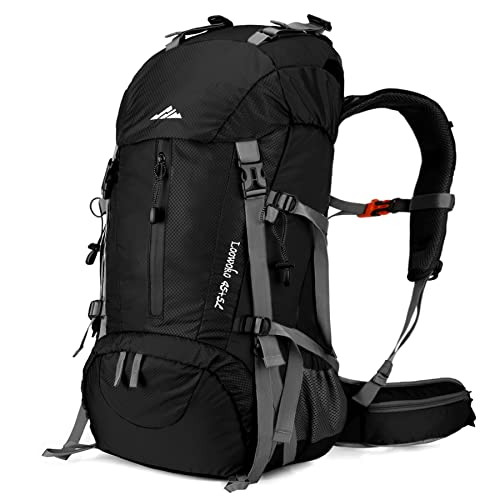
Pros
- Substantial 50-liter packing volume paired with a low baseline pack weight of around 2.1 to 2.4 pounds.
- Separate shoe compartment keeps dirty trail shoes or wet apparel isolated from main gear.
- Comes equipped with a fitted waterproof rain cover housed in a dedicated bottom pocket.
- Six external pockets and compression straps provide functional organization and exterior gear hauling.
- Cushioned S-shaped mesh shoulder straps and breathable back support promote airflow during warm hikes.
Cons
- Lacks an internal frame or rigid stays, meaning heavy cargo weight will rest primarily on the shoulders rather than transferring to the hips.
- Torso length is not adjustable, which may limit optimal fit for very tall or short torsos.
- Requires careful packing to prevent hard, angled gear from pressing through the soft back panel.
The Loowoko 50L Hiking Backpack is designed for day hikers, casual campers, weekend road trippers, and budget-minded adventurers who need high storage volume without the heavy bulk of a traditional framed pack. Built as a frameless rucksack, it strikes a balance between expansive capacity and lightweight portability. While Amazon classifies it broadly under internal frame backpacks, the manufacturer specifications confirm this pack contains no internal frame, making it a flexible, unstructured option ideal for light to moderate gear weights.
With a 50-liter volume and an empty weight between 2.1 and 2.4 pounds, this pack provides ample room for bulky items like lightweight sleeping bags, insulated jackets, and food supplies. The exterior dimensions measure approximately 23.62 by 11.81 by 2.8 inches, giving it a tall, streamlined profile. Gear management is straightforward thanks to a separate bottom shoe compartment that keeps muddy trail footwear away from clean gear, along with six external pockets that allow quick access to trail essentials. Exterior compression straps and dedicated lash points make it easy to secure bulky equipment such as trekking poles, ice axes, or compact tents.
The pack is constructed from tear-resistant, anti-scratch polyester and nylon fabrics designed to withstand regular trail abrasion. For carrying support, Loowoko uses thickened, S-shaped shoulder straps filled with sponge padding and lined with breathable mesh to help distribute upper-body pressure. The back panel features high-elastic breathable padding designed to cushion your spine while allowing air circulation. While the exterior fabric provides everyday dust and scratch resistance, weather protection is substantially elevated by the included waterproof rain cover, neatly stored in a dedicated zippered pouch at the bottom of the bag.
Packing the Loowoko 50L requires mindful distribution because it lacks rigid internal stays. Hikers will benefit from placing soft items against the back panel to maintain a smooth carrying surface, heavier items close to the spine, and footwear in the bottom compartment. The external compression straps can then be cinched down tightly to pull the load closer to the body and eliminate gear sway. Routine maintenance is simple: empty the pockets, spot clean the nylon and polyester shell with mild soap, air dry thoroughly, and store the pack flat or hung in a dry space.
A realistic limitation of this backpack is its lack of an internal frame sheet or metal stays. As load weight increases, the pack cannot transfer substantial cargo weight to the hips, meaning heavier loads will bear down directly on the shoulder harness. Additionally, the torso fit is fixed rather than micro-adjustable, meaning hikers with particularly short or long torso lengths may not achieve a tailored fit. For heavy multi-day expeditions carrying more than 30 pounds of gear, a rigid internal-frame pack remains the more supportive choice.
For day hikers, scouts, festival campers, and budget-conscious backpackers carrying moderate base loads, the Loowoko 50L offers practical value. It provides generous organizational pockets, dedicated shoe storage, an included rain cover, and low baseline weight at an accessible entry point. If you pack sensibly and keep your carried weight within moderate limits, this versatile pack serves as a reliable trail companion.
The Loowoko backpack provides a 50-liter main storage capacity, offering enough room for clothing layers, camp kitchen essentials, and lightweight sleeping gear. A distinct separate shoe separator at the base allows you to isolate dirty hiking boots, water shoes, or damp socks from your clean interior clothing.
Organization is further enhanced by six exterior pockets, giving you dedicated spaces to sort small items like headlamps, trail snacks, navigation tools, and sunscreen. Multiple compression straps and exterior tie-down loops make it easy to carry longer gear like trekking poles or sleeping pads without taking up precious internal volume.
Unlike traditional internal frame packs that use aluminum stays or composite sheets, the Loowoko 50L features a frameless build. This design choice dramatically lowers the empty pack weight to approximately 2.1 to 2.4 pounds, making the pack easy to maneuver, stow, or pack away when traveling.
Suspension relies on widened, thickened S-shaped shoulder straps lined with sponge padding and breathable mesh to soften pressure over the collarbones. A high-elastic breathable back panel provides cushioning against gear edges, though hikers should load softer gear along the back wall to maximize trail comfort.
The main shell of the Loowoko backpack is built from tear-resistant nylon and polyester fabric that resists everyday trail scratches, dust, and light moisture. However, standard fabric seams are not fully waterproof on their own during prolonged downpours.
To solve this, the pack includes a dedicated waterproof rain cover stored in a bottom zippered compartment. When skies turn dark, the rain cover quickly deploys over the exterior of the loaded pack, creating an effective barrier that protects your internal belongings from heavy rain and trail splash.
The Mechanics of Packing a 50-Liter Backpack for Multi-Day Comfort
Packing a 50-liter backpack requires a clear understanding of balance, accessibility, and volume management. A 50-liter pack hits the sweet spot for weekend treks and multi-day trail adventures, offering enough space for shelter, food, and clothing without encouraging excess bulk. Efficient packing keeps the load centered against your back, preventing uncomfortable shifts that drain your energy on steep climbs. Organizing your gear systematically ensures that essential tools remain accessible while your body stays supported throughout the hike.
The Four-Zone Weight Distribution System
Trail comfort depends heavily on how you arrange gear relative to your body center of gravity. Organizing a pack into bottom, core, top, and exterior zones creates a predictable balance that moves naturally with your torso. When items sit in the wrong location, your back muscles work overtime to counter backward pull or awkward lateral swaying. Dividing your gear into these distinct zones before loading the main compartment establishes a repeatable routine for every expedition.
The bottom zone handles light, high-loft items that provide a cushioned base for the entire pack. Placing bulky sleep systems and nighttime insulation here keeps low-density gear at the base where it cannot crush delicate tools. This lower tier also creates a shock-absorbing buffer between rigid gear and the ground when setting your pack down. Most 50-liter packs dedicate a specific lower access point to make loading this first zone simple.
The core zone sits directly above the sleeping bag compartment and rests flat against your spine. Heavy items such as cooking stoves, cookware, dense food rations, and full hydration reservoirs belong in this critical space. Positioning high-density mass close to your natural center of gravity keeps the pack from pulling backward against your shoulders. Surrounding these dense items with softer camp clothing prevents hard corners from poking through the back panel.
The top zone and exterior pockets store medium-weight gear and items needed quickly while moving. Trail layers like packable rain jackets, compact fleece tops, water purification filters, and navigation tools belong near the top opening. Exterior stash compartments and hipbelt pockets hold high-frequency essentials like snacks, lip balm, and trail maps. Keeping small necessities on the outside prevents unnecessary unpacking during brief trail stops.
Managing the Base Zone for Cushioning and Foundation
A stable foundation prevents your pack from sagging awkwardly or pulling away from your lumbar spine. Modern designs, such as the Osprey Rook 50L with its floating divider, allow hikers to isolate their sleeping bag from the upper main cavity. Packs like the WoneNice and Esup 50L models feature dedicated lower zipper access for quick retrieval at camp. Stuffing your sleeping bag directly into this compartment without an oversized compression sack often allows the insulation to fill dead corners completely.
Gaps around your sleeping bag should be filled with secondary sleepwear, extra socks, or an ultralight camp pillow. Filling every corner creates a solid, uniform cylinder that supports the dense cargo stacked above it. An under-filled bottom compartment causes the upper heavy gear to slump, creating uncomfortable lumbar pressure points. Taking a few moments to compress the base evenly establishes stable geometry for the rest of your load.
Dedicated bottom dividers also help isolate wet or soiled gear from clean sleep systems. Backpacks like the G4Free 50L daypack and Loowoko hiking pack incorporate specialized separator pockets specifically designed for camp footwear or muddy clothes. Placing camp shoes or sandals at the very bottom keeps trail dirt isolated from your primary clothing layers. This separation preserves camp hygiene while maintaining structural support across the bottom panel.
Centering Dense Mass Against the Spine to Eliminate Backward Torque
Carrying dense mass far from your back creates severe leverage that forces your upper body to lean forward unnaturally. Heavy items like food bags, multi-fuel stoves, and fuel canisters must stay pinned between your shoulder blades and your lumbar line. Positioning this dense cluster near your thoracic spine aligns the load directly above your hips. This alignment allows the hipbelt to carry the bulk of the weight while shoulder straps merely stabilize the load.
Hydration reservoirs require careful staging before you pack surrounding gear into the main compartment. Designs like the Maelstrom and G4Free backpacks feature dedicated hydration sleeves equipped with suspension clips and hose routing ports. Filling and seating your water bladder against the internal frame sheet before loading food bags prevents difficult fitting issues later. Water represents some of the densest weight in your pack, making central placement against the back panel vital.
Buffer dense items on their outer edges using spare clothing layers, camp towels, or tent rainflies. Placing softer items between heavy cooking kits and the pack front panel stops the bag from bowing outward like a barrel. A flat, compact pack silhouette keeps your center of mass tight to your body during technical scrambles or creek crossings. Tight internal packing also keeps rigid cooking pots from shifting or rattling noisily while walking.
Weight discipline becomes even more critical when packing specialized gear for backcountry trips. Hikers who transport chilled items alongside trail supplies in specialized backpack cooler systems know that concentrated weight demands precise alignment against the back panel. Unevenly distributed coolers or heavy cans quickly pull the harness askew and fatigue stabilizer muscles. Maintaining symmetrical weight distribution preserves trail endurance over long multi-day stages.
Organizing Upper Cavity Layers and Trailside Essentials
The upper cavity of a 50-liter pack should house medium-weight supplies that you might need before making camp. Packing items in the reverse order of their anticipated use prevents frantic rummaging during unexpected weather changes. Your tent body or tarp setup should sit near the upper section of the core zone for fast access in sudden downpours. Staging your shelter near the top ensures you can pitch camp quickly without exposing dry clothing to driving rain.
Mid-layers such as a packable fleece, a windbreaker, and your primary rain shell belong directly under the main pack closure. Weather conditions shift rapidly in mountain passes, making fast layer adjustments essential for regulating body temperature. Having an insulated jacket right at hand during lunch breaks prevents sudden chills as your sweat cools. Stowing a compact first-aid kit and water purification tools in top lid pockets guarantees immediate access during emergencies.
Exterior storage pockets provide organized staging areas for loose accessories and sanitation kits. Models such as the Maelstrom and WoneNice backpacks feature multiple zipped front pockets and waist belt compartments for quick-draw items. Keeping sunscreen, insect repellent, a pocket knife, and energy gels on the exterior keeps your main compartment sealed and secure. Securing smaller tools in dedicated organizer pockets prevents them from migrating into unreachable corners of the pack.
External Attachment Discipline and Weight Sway Control
Carrying gear on the outside of your pack should always be a deliberate choice rather than an afterthought. Hanging bulky items loosely from daisy chains creates pendulum sway that unbalances your stride and snag on trailside branches. Integrated compression straps on the sides of your pack cinch internal volume down, pulling gear tight against the internal frame. Buckling compression straps tightly transforms loose cargo into a solid, responsive unit that moves naturally with your hips.
Closed-cell foam sleeping pads, tent poles, and trekking poles fit securely against side pockets and dedicated attachment loops. The Loowoko and Esup packs provide external tie-down points engineered specifically for securing trekking sticks or compact bedrolls. Fasten long items vertically along the pack sidewalls, anchoring them beneath both upper and lower compression webbing. Balancing exterior items equally between left and right sides prevents lateral torque on your spine.
Some modular packs offer built-in volume adaptability to handle varying gear bulk over the course of a trip. The SEMSTY expandable hiking backpack features a bottom expansion zipper that transitions the bag between forty and fifty liters of capacity. Expanding this section gives you temporary overflow room for extra rations during early trip stages without altering the suspension frame. Collapsing expandable sections as food supplies decrease keeps the remaining load tightly consolidated.
Dialing in Harness Ergonomics and Dynamic Load Transfer
Proper packing only succeeds when your harness system transfers weight onto your skeletal structure correctly. Begin by loosening all shoulder straps, load lifters, and waist webbing before lifting a fully loaded pack onto your back. Fasten the padded hipbelt first, positioning the center of the belt directly over your iliac crest bones. Cinching the hipbelt securely ensures that approximately eighty percent of the pack weight rests on your hips rather than your shoulders.
Once the hipbelt is locked, snug the shoulder straps gently to pull the pack against your upper back without bearing downward weight. Tighten the load-lifter straps at the top of the shoulder harness to roughly a 45-degree angle, pulling the pack pack-bag forward over your center of gravity. Suspended back systems, such as the Osprey AirSpeed tensioned mesh panel, keep cool air circulating between your body and the pack bag. Breathable mesh designs on Esup and WoneNice straps also help vent sweat during strenuous climbs.
Fasten the sternum strap across your mid-chest to keep the shoulder straps from drifting outward or chafing your armpits. Modern chest straps, like the whistle-equipped buckle found on the Maelstrom daypack, provide both emergency utility and subtle harness stability. The sternum strap should feel snug across your sternum without restricting deep breathing during steep elevation gains. Fine-tuning these tension points while walking helps eliminate localized pressure points and shoulder muscle fatigue.
Weather Protection Protocols and Wet-Weather Packing
Wet gear ruins backcountry comfort and can lead to dangerous hypothermia in cold mountain environments. Most trail packs, including the G4Free, Osprey Rook, Maelstrom, Esup, and Loowoko models, come equipped with integrated waterproof rain covers. These covers typically stow inside a dedicated bottom zipper pocket for deployment at the first sign of rain. Elastic hems allow the rain cover to wrap tightly over the entire pack body, shielding seams and zippers from moisture.
Relying solely on an external rain cover leaves gear vulnerable if high winds whip the fabric loose. Internal redundancy is essential, requiring critical items like sleeping bags and thermal base layers to sit inside waterproof dry sacks. Lining the entire main cavity with a lightweight trash compactor bag creates an impenetrable moisture barrier inside your pack. The Maelstrom pack also incorporates a waterproof wet pocket inside the main bag to keep damp clothes separated from dry essentials.
Choosing durable synthetic fabrics provides reliable resistance against trail abrasion and light rain showers. Hikers comparing gear options alongside entry-level trail backpacks appreciate ripstop nylon and polyester blends that hold up under rugged backcountry use. Water-resistant polyurethane coatings protect against short squalls, but seam tape and external covers complete the defense. Keeping your rain cover accessible at the bottom of the bag guarantees rapid deployment when dark storm clouds roll in.
Routine Hardware Care and Trail Packing Habits
Preserving the lifespan of your 50-liter backpack requires gentle handling of zippers and compression hardware. Forcing zipper sliders over overstuffed compartments stresses the teeth and can lead to catastrophic zipper coil separation. Always compress the pack fabric with your hands before pulling zipper pull-cords, especially on high-tension curves. Keeping zipper tracks free of trail dust and grit prevents premature friction wear on sliders and protective fabric flaps.
Cleaning technical outdoor packs requires gentle care to protect internal polyurethane waterproof backings from flaking. Never toss a structured backpack into a residential washing machine, as mechanical agitators tear stitching and crush foam padding. Instead, spot clean muddy panels using lukewarm water, a soft bristle brush, and mild, non-detergent technical soap. Hang the pack upside down in a shaded, well-ventilated area to air dry completely before storing it away.
Conducting a quick balance check before leaving the trailhead confirms that your pack is stable and road-ready. Stand upright and rock slightly from heel to toe to ensure the load feels centered over your hips without swaying. Listen for clattering cookware or shifting gear, tightening internal compression straps to silence loose equipment. Mastering this methodical packing process guarantees that your 50-liter pack carries comfortably across every mile of your multi-day journey.






Write Your Review
No reviews yet. Be the first to share your experience!