


Stepping onto a steep approach trail with an unstable load forces the core and shoulders to constantly fight awkward leverage. Learning how to pack a climbing backpack is less about stuffing compartments full and more about managing your center of gravity across technical terrain. A poorly balanced climbing pack pulls backward on loose talus, while a properly packed mountaineering bag feels integrated with your torso movement. Climbers heading into crags or alpine routes must align dense hardware against the spine while keeping emergency layers accessible. When using high-capacity rucksacks, pairing proper weight distribution with supportive frame backpack designs helps stabilize shifting equipment during long ascents.
Modern gear options like the 70L Large Camping Hiking Backpack and the Unineovo Hiking Backpack with Rain Cover offer expansive capacity for ropes, protection hardware, and bivouac layers. Effective packing demands deliberate zonal organization, placing bulky camp items low, heavy climbing hardware tight against the back panel, and navigational essentials in quick-access lid pockets. Understanding how fabric durability, compression webbing, and strap ergonomics interact prevents premature zipper wear and back fatigue. Mastering these packing fundamentals keeps technical hardware secure, protects fragile gear, and preserves physical energy for the actual climb.

Pros
- High volume-to-weight ratio delivering 70 liters of storage at just 2.42 pounds.
- Abrasion-resistant oxford fabric provides reliable defense against scrapes on the trail.
- Padded S-type shoulder straps and breathable back support improve general carrying comfort.
- Dedicated exterior pockets allow quick separation of water bottles and trail necessities.
Cons
- Lacks a rigid internal frame or load-lifter straps for stabilizing dense, heavy loads.
- Does not include micro-adjustable torso length sizing for dialed body fitting.
- Water-resistant oxford material requires a separate pack liner or rain cover during sustained downpours.
The Generic 70L Camping Hiking Backpack is a high-volume, soft-structured trekking rucksack designed for budget-conscious campers, weekend travelers, and casual outdoor enthusiasts. With a stated 70-liter capacity and an empty weight of just 2.42 pounds (1.1 kg), this pack prioritizes maximum storage space over complex, heavy mechanical suspension systems. It is best suited for individuals packing bulky, lightweight gear like sleeping bags, extra clothing, and camp essentials for general outdoor travel or campsite approaches.
In practical trail scenarios, managing a 70-liter pack requires mindful weight distribution. The pack measures approximately 27.56 inches tall, 13 inches wide, and 9.45 inches deep, giving you ample vertical room for gear organization. Because the rucksack does not feature rigid metal internal frame stays, loading heavy, dense items close to your back is critical. The high-elastic breathable back panel and widened S-type shoulder straps with sponge padding work well to buffer contact points, though hikers should maintain reasonable carried weights to avoid strain on unassisted shoulders.
Material construction relies on tough oxford fabric paired with water-resistant coatings. This exterior delivers solid scratch resistance against brush, branches, and rough surfaces around the campsite. While the manufacturer identifies the build as water-resistant, it does not feature sealed seams or a built-in roll-top waterproof closure. It will shrug off light moisture or mist, but storing sensitive electronics or down insulation inside dedicated dry sacks remains essential during heavier rain.
Pack handling is straightforward thanks to its clean pocket layout. The pack includes one expansive zippered main compartment for the bulk of your sleeping and camp items, an exterior zippered front pocket for headlamps and maps, and two side pockets tailored for water bottles or trail snacks. The shoulder harness adjusts smoothly with standard webbing, and the hand-wash-only specification makes it easy to clean off dust and mud in a utility tub after your trip.
Prospective buyers should be mindful of its structural limitations. The pack does not publish specific torso-length ranges, nor does it include load lifters or an internal aluminum frame. This makes it less suited for technical mountaineering or carrying 40-plus pounds of dense gear over rugged backcountry terrain. In addition, there is no specified hydration bladder port, so hikers will rely primarily on standard bottles placed in the exterior side compartments.
Overall, this 70L hiking rucksack offers practical utility for entry-level campers, car campers, road trippers, and gear haulers who want substantial volume on a modest budget. As long as you respect its frameless, lightweight design by packing lighter, high-volume equipment, it serves as an accessible gear-hauling solution for outdoor adventures.
A full 70-liter volume provides sufficient interior space for high-bulk camping setups, clothing systems, and travel gear without requiring exterior strapping. The dimensions of roughly 27.56 x 13 x 9.45 inches accommodate larger sleep pads, tents, and camp clothing easily.
The compartment design keeps trail packing simple. You get a central top-access main zippered space, one quick-access front zipped pocket for smaller personal items, and two dedicated side pockets designed to keep water bottles or compact trail tools within easy reach.
Carrying comfort relies on widened S-shaped shoulder straps lined with sponge padding and breathable mesh to cushion the upper body. The design distributes surface contact across the shoulders to help ease the pressure of lightweight to moderate loads.
The back panel features high-elastic breathable padding to encourage airflow during warm hikes. However, because this backpack does not include adjustable torso sizing mechanisms or structural frame stays, users should ensure the pack length matches their general build and keep carried weight balanced.
Constructed from durable oxford fabric, the shell offers practical scratch and tear resistance against rough brush, campsite dirt, and travel baggage handling. The water-resistant finish provides initial defense against light trail moisture.
To maintain fabric integrity and protective exterior coatings, clean this pack by hand washing with mild soap and cold water. Avoid machine washing or heat drying, and allow the rucksack to air dry fully before storing it in a dry space between trips.
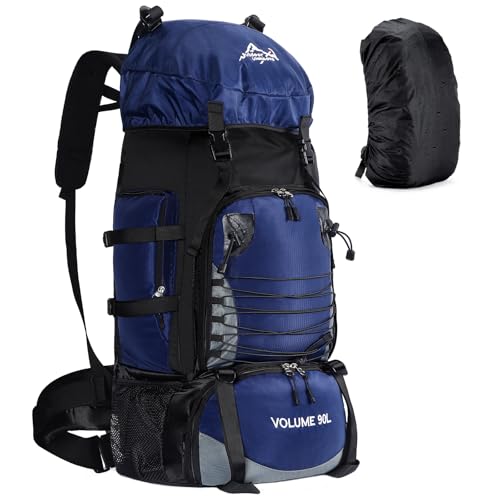
Pros
- Massive 90-liter gear volume accommodates oversized camping equipment without adding heavy base pack weight.
- Separate bottom compartment allows dirty footwear or camp shoes to be isolated from clean clothing.
- Included rain cover delivers prompt exterior weather protection during sudden trail downpours.
- Eight exterior compression and tie-down straps allow easy lashing of bulky outdoor gear.
- Three-way harness adjustment system helps stabilize high-volume loads across the torso.
Cons
- Frameless design lacks rigid internal stays to efficiently transfer heavy loads directly to the hips.
- Carrying close to the 45-pound manufacturer maximum can cause shoulder fatigue without a rigid suspension system.
- Does not include a dedicated internal hydration reservoir sleeve or designated hose routing port.
The Unineovo 90L Hiking Backpack is a high-capacity, lightweight frameless pack engineered for campers, travelers, and outdoor enthusiasts who prioritize maximum pack volume at minimal empty weight. Clocking in at around 2.4 to 2.6 pounds, it provides an enormous 90-liter interior capacity without the structural heft of traditional multi-day expedition packs. This design best suits budget-conscious backpackers, weekend campers, and road-trippers who need to transport high-bulk, moderate-weight supplies like sleeping bags, camp clothing, and group gear.
On trail and around the campsite, load management relies entirely on user packing technique due to the absence of an internal frame. While the manufacturer rates the maximum load-bearing limit at 45 pounds, carrying dense weight without internal aluminum stays means structural support comes from how gear is arranged inside the pack. Placing soft layers against the back panel and heavier items centered close to your spine yields the most stable carry. The harness system incorporates padded shoulder straps, an adjustable waist belt, and an up-and-down sliding sternum strap that helps keep the pack from swaying during active movement.
Organization is a significant strength of this pack, featuring eight functional compartments that simplify gear sorting. The primary storage consists of a top-loading drawstring main compartment, complemented by a top lid pocket for fast-grab items like headlamps and snacks. A distinct bottom compartment accommodates camp shoes or damp gear, keeping them isolated from dry clothing. In addition to standard front zip storage, the exterior includes two mesh side bottle pockets and two zippered side pouches, supported by eight adjustable tie-down straps capable of securing tents, sleeping mats, or trekking poles externally.
In terms of build and weather management, the backpack uses a rip-resistant polyester shell with reinforced stitching applied to the primary load-bearing strap interfaces. While the fabric itself offers general water resistance against brief moisture, the pack includes a fitted rain cover stored ready for deployment. Slipping the rain cover over the pack provides comprehensive defense against sustained downpours, trail splashback, and fine dust, protecting the non-sealed zippers and seam lines from water penetration.
Prospective buyers must recognize the operational limitations inherent to an ultralight 90L frameless design. Without a rigid framesheet or perimeter stays, high-density loads pushing toward the 45-pound ceiling will inevitably pull backward and place greater leverage on the shoulders rather than transferring weight smoothly down onto the hip belt. Furthermore, trail hikers who prefer built-in hydration bladders will need to rely on the external side bottle pockets, as no specific internal reservoir hanger or port is specified.
For outdoor enthusiasts seeking expansive gear capacity on a strict budget, the Unineovo 90L Backpack offers strong utility for lighter, bulkier gear loads. It works exceptionally well for car camping setups, scouting trips, basecamp transport, and travel touring where generous packing space is mandatory but heavy, technical mountain loads are not part of the itinerary.
With a volume rating of 90 liters and dimensions measuring approximately 29.5 by 13.4 by 9 inches, the Unineovo backpack provides tremendous interior space for multi-day trips and bulky camping gear. The main compartment uses a wide drawstring opening that accommodates puffy jackets, rolled sleeping bags, and camp cookware without requiring extreme compression.
Eight separate compartments streamline camp organization so you do not have to dig through 90 liters of gear to locate small essentials. A separate bottom zipper pocket allows you to keep dirty camp boots or water shoes isolated from clean camp apparel, while dual side water bottle holders and dual zippered side pockets provide fast access to hydration and smaller electronics on the move.
The Unineovo 90L Backpack utilizes a completely frameless structure, eliminating internal metal stays or hard plastic framesheets to achieve an exceptionally low base weight of around 2.6 pounds. While this keeps the pack agile when empty, users should note that the pack depends on thoughtful gear packing to maintain rigidity along the back panel.
The suspension features three key adjustment points, including contoured shoulder straps, a padded waist belt, and a vertically adjustable sternum strap designed to evenly distribute upper-body pressure. To carry comfortably near the manufacturer-rated 45-pound limit, hikers should pack denser items close to the spine and leverage the eight external compression straps to cinch the load tight against the torso.
The pack is constructed from a wear-resistant polyester fabric that provides natural resistance to abrasions and light surface moisture. However, because multi-compartment packs feature multiple exposed zipper tracks and stitched seams, relying solely on pack fabric in wet environments is not recommended.
To solve weather challenges on the trail, the backpack comes equipped with a dedicated external rain cover. Deploying the rain cover encloses the exterior pack shell, protecting your packed clothing, sleep systems, and trail gear from prolonged rainfall, blowing grit, and muddy campsite terrain.
Step-by-Step Strategy for Packing a Technical Climbing Backpack
Packing for an alpine climb or technical crag approach requires a fundamentally different philosophy than packing for standard trail hiking. Every piece of equipment alters your balance, agility, and stamina when scrambling across loose scree or climbing steep terrain. Understanding how to organize your rucksack transforms an unwieldy load into an integrated extension of your body. Systematically arranging equipment according to density and urgency of access keeps you safe, balanced, and efficient in mountain environments.
The Fundamental Physics of Center of Gravity on Steep Terrain
Standard trail hiking wisdom often suggests placing heavy gear high in your pack to promote an upright stride on level ground. On steep ascents and technical scrambles, however, that elevated mass creates an awkward backward lever. A top-heavy bag pulls you off balance during high steps and swings laterally during exposed traverses. For climbers, the ideal center of gravity sits close to the spine, level with the mid-back and upper lumbar area.
Securing heavy mass flush against the back panel prevents rotational torque on your core muscles. When your pack aligns with your body’s natural rotational axis, sudden shifts on loose rock will not compromise your footing. This compact weight distribution allows leg muscles to power your ascent without constant muscular resistance from your back. Balancing gear evenly between the left and right sides is equally vital, as an uneven load causes early fatigue across your shoulders.
Zone One: Packing the Bottom Compartment for Foundation and Bulk
The bottom zone of your pack acts as the physical foundation for the rest of your climbing gear. This space should hold high-volume, lightweight items that remain untouched until you establish camp or finish your route. A sleeping bag, bivouac sack, down jacket, or lightweight tent fabric fit naturally in this lower area. These soft goods compress into the pack’s lower corners, establishing a firm base that keeps the rucksack standing upright when set down.
Loading the base with compressible soft items also creates an impact cushion against sharp rocks and frozen ground. Packs with dedicated lower storage, such as the bottom shoe pocket on the Unineovo Hiking Backpack with Rain Cover, let you separate approach footwear, crampons, or wet layers from dry sleeping gear. Always keep down sleeping gear inside a separate waterproof stuff sack to guard against ground moisture. Never place heavy metal hardware at the bottom, as weight resting below the lumbar region drags the harness backward.
Zone Two: Securing Heavy Climbing Hardware Against the Spine
The core zone of your backpack, located between the shoulder blades and directly against the back panel, must house your densest gear. This area is reserved for traditional climbing protection, carabiners, quickdraws, technical cams, passive nuts, and heavy food supplies. Concentrating this dense mass against the back panel positions the load close to your natural center of mass. Keeping heavy equipment close to your spine minimizes leverage against your shoulder harness and neck muscles.
Rigid hardware and metal lobes can cause painful pressure points if packed carelessly against the back padding. Wrapping cam bundles and carabiners inside a fleece pullover, climbing harness, or mid-layer jacket protects your back and keeps sharp edges from abrading the interior fabric. A hydration bladder also belongs in this core zone, resting in an interior sleeve flush against the back wall. Placing liquid weight directly against your spine prevents water from sloshing and upsetting your balance on steep trails.
Zone Three: Packing the Mid-Outer and Upper Torso Volume
Once heavy gear is stabilized against the spine, the remaining mid-outer cavity should be filled with medium-weight supplies. This zone accommodates camp stoves, nesting cook sets, insulated mid-layers, first-aid kits, and extra clothing. These softer items buffer your climbing hardware, keeping dense equipment securely wedged against the back panel so nothing shifts forward. Filling empty spaces between rigid pots with clothing prevents dead air pockets that cause load shifting on uneven terrain.
Maintaining lateral symmetry throughout this middle layer is essential for steady walking. Distribute weight evenly between the left and right halves of the pack cavity to avoid an unbalanced lean that strains your trapezius muscles. Store foul-weather layers, such as a waterproof shell jacket and storm pants, near the very top of this section. Quick-changing alpine conditions require rapid access to protective rain gear without unpacking your entire hardware rack onto wet rock.
Zone Four: The Top Cavity and Floating Lid for Rapid Trail Access
The floating lid pocket, often called the pack brain, functions as your quick-access command center on the trail. This compartment should hold navigation tools, topographic maps, a headlamp, lip balm, energy snacks, sunscreen, and a pocket knife. Having rapid access to these essentials prevents unnecessary delays at trail forks or cramped belay ledges. Keeping high-use tools in the top pocket means you rarely need to uncinch the main drawstring during approach transit.
While the top lid offers convenience, overloading it with heavy items can compromise your agility. An overfilled lid pocket raises the pack’s center of gravity and swings sideways during dynamic movements. A bulky top pocket can also bump against the back of your climbing helmet when looking up at climbing lines. Keep lid contents light and flat so you retain full cervical spine mobility while wearing a technical helmet.
External Attachment Protocols: Ropes, Helmets, and Technical Tools
Minimizing exterior gear attachments is best practice on technical approaches, as loose items can catch on brush or swing unpredictably. However, bulky gear like climbing ropes often requires exterior transport. A climbing rope coiled in a butterfly coil sits securely across the top opening directly beneath the lid. Securing the rope with top compression straps anchors its weight firmly against the rucksack’s upper frame, keeping it stable while walking.
Mountaineering axes and trekking poles should be mounted securely in dedicated tool loops, with pick blades turned inward and shafts cinched flat against the pack face. Always cover sharp picks and spikes with protective caps to avoid tearing fabric or injuring climbing partners. For helmets, use an exterior elastic helmet holder anchored to daisy chain webbing rather than dangling the helmet by its chinstrap. Securing the helmet firmly prevents impact damage to protective foam from contact with rocky walls.
Managing Frameless and Ultralight Rucksack Architecture
Ultralight climbing packs and high-capacity frameless rucksacks, such as the 90L Unineovo design weighing just 2.6 pounds, strip out internal metal stays to reduce empty tare weight. While this design minimizes baseline pack weight, a frameless pack lacks rigid structure to transfer loads to the hip belt automatically. Without deliberate packing, a frameless pack sags into an uncomfortable barrel shape that pulls directly on your shoulders.
You can create structural stability in a frameless pack by building an internal frame with your gear. Rolling a foam sleeping pad into a hollow cylinder inside the main body provides rigid structural walls that resist collapse. Alternatively, sliding a dense sit pad flat against the pack’s interior back panel creates a supportive barrier that cushions your lumbar spine. Pay attention to load limits, as ultralight frameless packs carry an upper threshold, such as the 45-pound limit noted for the Unineovo model, beyond which seam stitching can suffer excessive tension.
Harness Calibration and Weight Transfer Sequence
Even a flawlessly packed climbing bag will feel cumbersome if your harness suspension is improperly adjusted. Before hoisting a loaded pack, loosen all shoulder straps, waist belts, sternum straps, and load-lifters. Lift the pack onto one knee, slide your arms through the shoulder loops, and settle the rucksack onto your back. Stand straight and fasten the padded hip belt directly over your iliac crest, tightening the buckle until the padded wings carry the bulk of the load.
The hip belt should bear roughly seventy to eighty percent of the pack’s weight, letting your lower body drive your movement. Pull the main shoulder straps backward and downward until they conform to your shoulders without lifting the hip belt off your pelvis. Connect the sternum strap across your mid-chest, about an inch below your collarbones, to keep the shoulder straps from slipping. Finally, snug the load-lifters to draw the upper pack closer to your back, eliminating backward sag and stabilizing the pack against your torso.
Weather Protection, Seam Care, and Fabric Longevity
Alpine weather changes quickly, making moisture management critical for clothing and sleeping insulation. Many high-capacity packs, like the 70L Large Camping Hiking Backpack made from oxford fabric, provide water-resistant properties that repel light snow and mist. Prolonged rainfall, however, will eventually penetrate standard needle seams and zippers unless additional barriers are deployed. Deploying an exterior rain cover, like the one included with the Unineovo pack, provides vital surface defense against heavy downpours.
For sensitive gear like sleeping bags and electronics, packing them inside silicone dry bags within the pack cavity offers dependable insurance against moisture. Routine maintenance after dusty crag visits also preserves your pack’s coatings and hardware. Spot-clean exterior fabrics with a damp cloth and mild soap, avoiding washing machines that can strip polyurethane water-resistant backings. Use an old soft-bristle brush to clear dirt from zipper coils, preventing zipper teeth from derailing under heavy loads.
Practical Load Verification and Trail Balance Checks
Before heading up the trail, perform a quick balance check to verify your packing job. Stand with your feet shoulder-width apart, jump lightly in place, and pivot your torso side to side. A well-packed climbing backpack moves in sync with your body without rattling, shifting, or creating delayed momentum that tugs at your core. If you hear metal gear clattering or feel heavy equipment sliding, take a moment to wedge soft clothing into the gaps to lock everything in place.
If you are exploring cost-effective equipment options for extended trips, our guide to budget trail backpacks provides useful context on managing volume, tare weight, and harness support without overspending. Methodical gear organization remains the most critical factor in trail comfort, regardless of your pack model. Mastering these packing fundamentals keeps your hardware protected, stabilizes your stride on exposed terrain, and leaves your energy focused on the climb ahead.







Write Your Review
No reviews yet. Be the first to share your experience!