


Traversing rocky ascents or steep switchbacks often requires scrambling with both hands, leaving trekking sticks dangling awkwardly if your gear lacks proper attachment points. Learning how to put hiking poles on backpack frames prevents bent shafts, snagged trail brush, and uneven load distribution that strains your shoulders during long excursions. When poles remain loose or improperly secured to exterior loops, the constant swinging disrupts your natural center of gravity and increases physical fatigue. Equipping your pack with purpose-built elastic bungee straps or utilizing dedicated tool attachment loops keeps sharp carbide tips safely stowed while preserving rapid access whenever steep descents demand joint support.
Modern trail packs feature various exterior mounting systems, ranging from traditional ice axe webbing loops to modular daisy chains and aftermarket cord fasteners. If you carry a heavy load in a rigid frame trail backpack, keeping dense aluminum or carbon fiber poles pinned flush against the side panel ensures the pack stays balanced against your spine. Understanding how to route adjustable elastic cords around pole baskets and handles eliminates rattles and protects surrounding gear from friction damage. With the right hardware and technique, securing your walking sticks takes only seconds and keeps your hands free for scrambling across rugged terrain.

Pros
- Ultralight listed package weight of roughly 0.022 pounds keeps pack weight down.
- Four-piece bundle provides versatile placement options across one or two backpacks.
- Sliding buckle mechanism adjusts quickly to secure poles of different diameters.
- Inexpensive upgrade for daypacks and hiking bags lacking factory pole attachment hardware.
Cons
- Requires existing webbing, daisy chains, or anchor points on your backpack to secure the cord.
- Elastic cord can lose tension over time if exposed to repeated heavy snagging or over-stretching.
- Not engineered or rated for technical climbing protection, heavy axes, or high-load carrying.
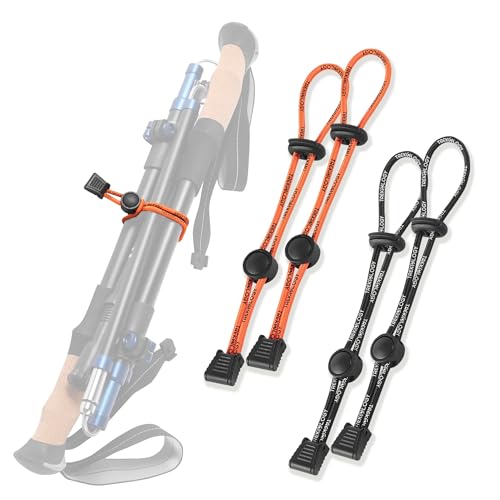
The Marsrut 4-Piece Trekking Pole Holder set is an aftermarket external attachment accessory designed for hikers, backpackers, and travelers who need a secure way to stow trekking poles or walking sticks on their packs. Many daypacks and minimalist backpacking bags omit dedicated pole attachment bungees to reduce production costs or maintain clean exterior profiles. This four-piece kit bridges that gap by providing standalone, adjustable elastic cord ties that attach to existing exterior anchor points.
On the trail, managing trekking poles during scrambles, stream crossings, or flat access walks requires a dependable hands-free storage method. These holders measure 20.3 cm (8 inches) in length and feature a slide-lock plastic buckle. When anchored through an exterior loop or compression strap on your pack, the elastic cord wraps around the pole shaft, allowing the buckle to slide forward and clamp the shaft tightly against the pack body. At an ultra-low total weight of approximately 0.022 pounds, this accessory adds no noticeable load to your setup.
The build centers around resilient elastic cord paired with molded plastic locking buckles. The cord provides enough elasticity to hold poles firmly without slippage, while the plastic friction hardware bites into the cord to prevent unwanted loosening during motion. While this hardware is engineered for light-duty tensioning rather than heavy load-bearing support, it offers dependable day-to-day security for standard aluminum or carbon fiber trekking poles, canes, and lightweight accessories like compact umbrellas.
Setup is straightforward and tool-free. To attach a pole, you thread the cord loop through a backpack daisy chain, shoulder harness loop, or side compression strap, insert the pole shaft into the open loop, and cinch the buckle down. Cleaning and maintaining these straps is simple: they can be rinsed with clear water to remove trail dust or grit from the buckle mechanism and air-dried before storage. Having four straps in the package means you can equip two attachment points on two separate packs or keep spares in a repair kit.
Prospective buyers should note realistic limitations regarding compatibility and load capacity. These holders do not create attachment loops out of thin air; your backpack must already feature some form of external webbing, loop, or strap to anchor the cord. Furthermore, these elastic cords are intended strictly for secondary retention of walking poles and umbrellas, not for technical mountaineering ice tools, heavy tools, or safety-critical climbing hardware.
For day hikers, section backpackers, and outdoor enthusiasts seeking an affordable, lightweight method to add pole-carrying functionality to an existing backpack, the Marsrut 4-Piece Trekking Pole Holder set offers practical value and effortless utility.
The Marsrut trekking pole straps are designed specifically to interface with backpacks that feature external attachment hardware such as daisy chains, ice-axe loops, trekking pole tip retainers, or side compression straps. At an 8-inch (20.3 cm) overall length, the cord provides ample reach to loop around common trekking pole diameters, walking stick shafts, and compact accessories.
Because these straps function as an upper or mid-shaft stabilizer, they work best when paired with a lower loop or side bottle pocket to cradle the pole tips. Confirming that your daypack or multi-day backpack has accessible webbing loops or strap anchor points will ensure smooth installation and optimal stability on the trail.
The holders combine resilient elastic shock cord with durable molded plastic slide buckles. The plastic components are designed to resist outdoor exposure and maintain friction against the cord during normal trail vibration, preventing poles from shifting while you walk.
To maintain peak function, keep the plastic sliding mechanisms clean of mud, sand, and fine trail dirt. Rinsing them periodically in lukewarm water and allowing the elastic to dry away from direct high heat or prolonged UV exposure will help maintain cord elasticity and long-term grip strength.

Pros
- Generous 8-pack bundle lets you outfit multiple hiking daypacks or keep spares in your gear bin
- Glove-friendly buckle mechanism allows quick one-handed securing and release of trekking poles
- Elastic bungee cord maintains steady tension around gear shafts to minimize annoying trail wobble
- Tool-free lashing setup mounts effortlessly to standard pack straps, daisy chains, or webbing loops
Cons
- Fixed 7.68-inch length limits use on larger tools or thick bundle diameters
- Requires existing webbing, loops, or daisy chains on your backpack to anchor properly
- Elastic cord and PP plastic buckles can show wear or lose elasticity after prolonged outdoor exposure
The Xinjoduz 8-Pack Hiking Stick Holders are external gear-attachment accessories designed for hikers, backpackers, and campers who need to lash poles or slender gear directly to their packs. Many daypacks and overnight packs lack dedicated pole loops or feature worn-out attachment points, making these elastic fasteners an accessible upgrade for managing loose trail gear.
When navigating rough scrambles or sections where hands need to be free, hiking poles can become cumbersome if not secured properly. These 7.68-inch bungee fasteners anchor poles against your pack body, shoulder straps, or hip belt webbing, helping to eliminate annoying swaying and snagging against branches. The design also works well for stabilizing compact camera tripods or walking canes, keeping your hands unburdened without having to dig inside your main backpack compartment.
Each strap combines a durable rubber elastic cord with a solid polypropylene (PP) buckle. The elastic core provides continuous clamping tension around gear shafts of varying diameters, preventing items from slipping down while hiking. Meanwhile, the lightweight PP buckle holds the loop firmly without adding noticeable weight to your overall gear setup, offering dependable retention across diverse trail environments.
Installing these fasteners requires no tools or sewing, making them easy to loop through daisy chains, compression strap webbing, or shoulder harness attachment points. The buckle and cord-lock system supports quick adjustment and one-handed operation, which is particularly helpful when wearing gloves in chilly morning conditions. Maintenance is minimal, requiring only a quick rinse with clean water to remove mud, trail grit, or sand.
While practical for standard trekking poles, these holders measure 7.68 inches in total length, meaning they cannot wrap around bulky gear like rolled sleeping pads, oversized tent poles, or wide camp axes. Furthermore, they depend on your backpack having suitable attachment points such as webbing straps, MOLLE loops, or lash tabs. Because plastic hardware and elastic rubber degrade over extended sun and moisture exposure, hikers should periodically check the cord tension before heading out on multi-day routes.
For day hikers, weekend backpackers, and outdoor photographers needing a simple gear-retention solution, the Xinjoduz 8-pack delivers strong utility. With four color options and eight separate fasteners, it is a smart addition to any gear closet for organizing external backpack gear.
Mounting Requirements: These fasteners require existing anchor points on your backpack, such as daisy chains, compression straps, shoulder-harness webbing, or side loops. They do not attach to flat, featureless fabric panels without an anchor loop.
Gear Sizing: At 7.68 inches in length, these bungee cords are optimized for standard trekking poles, walking sticks, collapsible canes, and slim camera tripods. They are not intended for large shelter bundles, bear canisters, or wide foam pads.
Cord Construction: Built with a rubber elastic core that stretches to accommodate varying shaft thicknesses while maintaining continuous clamping pressure.
Buckle Hardware: Features solid polypropylene (PP) plastic clips engineered for one-handed release and glove-friendly operation in cool outdoor weather.
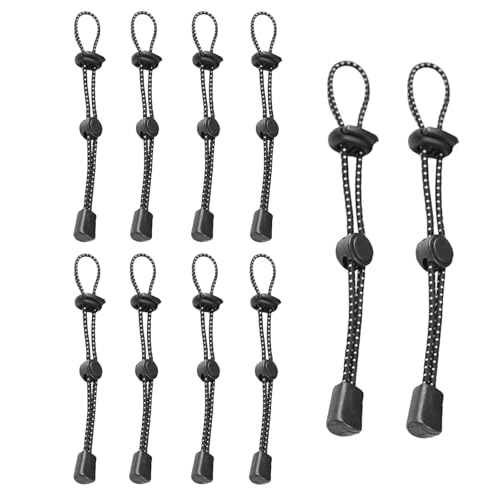
Pros
- Generous 10-pack quantity allows multiple attachment points across several hiking packs or shared family gear
- Extends up to 15 inches to accommodate varied pole diameters, sun hats, and lightweight trail essentials
- Integrated reflective strip enhances visibility around the campsite or along roads in dim lighting
- Dual buckle mechanism holds tension securely without complex knot tying
Cons
- Elastic cord tension may degrade over time with heavy sun exposure and repeated full-stretch use
- Requires existing backpack webbing loops, daisy chains, or anchor points to function effectively
- Not suitable for heavy or load-bearing gear such as climbing hardware
The CHIVOLONA Backpack Hiking Stick Holders are dedicated external gear retainers designed for day hikers, section hikers, and backpackers who need a fast, reliable method to lash trekking poles and loose outdoor items to the outside of their packs. Arriving as a 10-pack, these elastic lanyards solve the common issue of trekking poles sliding loose or bouncing during steep scrambles when your hands need to be free. Their universal loop design also makes them practical for hanging sun hats, securing light water bottles, or keeping trail accessories anchored to exterior daisy chains.
In practical trail use, these retainers function through tension-based elastic rubber cordage that relaxes at 8.3 inches and extends to a maximum length of 15 inches. This stretch range offers enough clearance to wrap around standard aluminum or carbon-fiber trekking pole shafts, including folded Z-poles or telescoping sections. By threading the cord through existing backpack lash tabs, ice-axe loops, or side compression straps, hikers can quickly lock gear against the pack frame, stabilizing the load and preventing noisy, off-balance shifts while walking.
Build quality is centered on high-elasticity rubber bands wrapped with a protective sheath featuring embedded reflective striping. Each unit includes two plastic locking buckles that grip the cord, allowing users to slide and lock the fastener into place under tension. The reflective accents serve a dual safety role by making your backpack visible to headlamps in dark camps or near trailheads at dawn, while also making dropped or detached cords easier to spot on the forest floor.
Setting up the CHIVOLONA holders is straightforward and completely tool-free. Hikers can pass the bungee through any standard webbing loop or attachment point on their pack, insert the gear, and cinch the dual buckles down to eliminate slack. Maintenance is equally simple, requiring only an occasional rinse with clean water to clear trail dust or grit from the cord and buckle springs. Weighing just 0.01875 pounds, individual lanyards add negligible weight to your trail setup and store flat inside any hip-belt pocket or pack brain.
Realistic limitations should be kept in mind before relying on these retainers on technical terrain. These cords are non-load-bearing accessories designed strictly for lightweight gear retention, meaning they cannot support heavy tools or be used for safety-critical tasks. In addition, their effectiveness depends entirely on your backpack having suitable exterior anchor points, and like all elastic rubber components, prolonged exposure to severe ultraviolet rays can eventually cause the cord to lose its initial snap.
For hikers and backpackers seeking an affordable, customizable external lashing solution, the CHIVOLONA 10-Pack offers outstanding practical value. It provides enough spare retainers to outfit multiple packs or replace worn loops across several seasons, making it a handy organizational upgrade for keeping trekking poles and trail accessories right where you need them.
The CHIVOLONA Hiking Stick Holders serve as secondary external attachment points for packs that lack dedicated pole carry systems. By anchoring through existing loops, webbing, or lash tabs, they give hikers an easy way to lash trekking poles securely against the side or front panel of a daypack or backpacking pack.
Beyond hiking sticks, the stretch capacity from 8.3 inches up to 15 inches allows these cords to hold items like wide-brim sun hats, light rolled layers, or small gear items that hikers want to access quickly without unzipping main compartments.
Each holder features a resting length of 8.3 inches (with specified product dimensions listed at 0.4 by 0.4 by 7.5 inches) and an expanded stretch capacity up to 15 inches. This length accommodates single pole shafts, paired poles, and broad accessory brims.
The entire setup weighs approximately 0.01875 pounds and comes in a 10-piece package. The hardware includes two adjustable plastic locking buckles per lanyard combined with a black elastic rubber band and high-visibility reflective striping.
A Complete Guide to Securing Hiking Poles on Any Backpack
Securing trekking poles to a backpack requires creating two firm contact points that eliminate sway, protect delicate fabric, and keep the sharp metal tips pointing downward. Whether your pack features factory tool loops or requires aftermarket elastic cord clips, the objective remains the same: locking the shafts tight against the pack body so they cannot shift during vigorous movement. Understanding the mechanics of tensioning, proper basket placement, and hardware orientation allows you to transition smoothly from hiking with poles to climbing hands-free.
Understanding Exterior Backpack Attachment Points and Hardware
Most technical daypacks and expedition packs arrive equipped with specialized exterior rigging designed specifically for long-handled tools. Lower gear loops, traditionally sewn into the bottom seams of the pack, consist of dense nylon webbing engineered to capture the pointed ends of ice axes or hiking poles. These lower loops work in tandem with upper elastic shock cords, hook-and-loop fasteners, or side compression straps situated near the pack collar. When you place a pole through the bottom loop, twisting the loop before pulling the shaft upward locks the basket in place, preventing the tip from slipping out.
If your daypack lacks dedicated trekking pole loops, modern modular attachment accessories provide an effective alternative. External daisy chains, laser-cut webbing channels, and shoulder harness anchor points can host aftermarket elastic cord holders with sliding cord locks. These lanyards wrap around pack webbing or frame stays, giving you custom tie-down locations exactly where you need them. Selecting the right attachment points ensures the poles sit close to your center of gravity rather than flopping outward and snagging overhead tree branches.
Attaching Poles Using Built-In Lower Gear Loops and Upper Bungees
The traditional loop-and-bungee method provides a time-tested way to mount poles on the rear face of your backpack. Begin by collapsing your telescoping poles to their shortest setting or folding your Z-style poles into their compact configuration, tightening all lever locks firmly. Slide the carbide tip downward through the lower webbing loop on the bottom corner of your pack until the basket rests against the webbing. Once the tip clears the loop, rotate the pole shaft 180 degrees upward toward the top of the pack, which twists the bottom webbing and creates a natural shelf that supports the basket.
After securing the bottom, press the upper shaft against the pack body and locate the upper elastic retainer cord. Wrap the shock cord around the pole shaft just beneath the handle or wrist strap, then loop the cord over the plastic hook or cinch the cord lock tight. Test the installation by gently shaking the pole handle to ensure there is no lateral play or vertical slip. This two-point locking arrangement keeps the poles centered on the rear panel, preventing them from poking your legs or swinging loose as you navigate uneven trail steps.
Side Compression Strap and Water Bottle Pocket Method
When your backpack does not have rear attachment loops, utilizing the side compression straps and exterior side pockets offers a sturdy alternative. Collapse your hiking poles completely, making sure the twist locks or speed-lock levers are fully clamped down to prevent accidental extension. Slide the bottom tips of both poles into the mesh or fabric water bottle pocket on either side of the backpack. If you also carry hydration supplies or use a specialized hiking cooler pack for day trips, reserving one side pocket for equipment storage keeps your load balanced.
Once the tips sit safely inside the pocket bottom, route the upper side compression straps around the pole shafts. Tighten the side webbing buckles until the straps press the poles firmly against the side panel of the pack. If your backpack features both an upper and lower compression strap, thread the poles beneath both straps for maximum stability. This side-mounted position keeps the poles tucked close to your torso, which minimizes lateral movement and prevents protruding hardware from catching on dense brush or narrow rock passages.
Installing Aftermarket Elastic Cord Holders and Buckle Fasteners
For backpacks completely devoid of compression straps or gear loops, modular elastic cord fasteners bridge the gap effortlessly. Products like the Marsrut 4pcs Climbing Stick Holder utilize an eight-inch tough elastic rope paired with a solid plastic buckle that wraps around existing pack straps. To install these holders, loop the elastic lanyard around a shoulder strap daisy chain, side webbing loop, or frame attachment point and pass the buckle through the loop to cinch it down. You can then place your collapsed pole against the pack, wrap the remaining elastic cord around the shaft, and slide the tension buckle inward to secure the tool.
Similarly, kits like the CHIVOLONA Backpack Hiking Stick Holders,Elastic provide ten multi-purpose cord lanyards featuring dual locking buckles and integrated reflective safety strips. These cords expand from an unladen length of over eight inches up to fifteen inches, accommodating thick pole grips, camera tripods, or rolled accessories. The high-elasticity rubber core maintains constant clamping pressure over rough terrain, while the reflective weave increases your visibility during dawn, dusk, or night excursions. Using multiple cords along a single pack edge guarantees that even heavy three-section aluminum poles remain anchored without shifting.
Quick-Adjust Fasteners for Cold-Weather and Glove-Friendly Operation
Operating tiny plastic hardware on cold mountain ridges can become frustrating when your fingers are numb or covered in thick winter gloves. The Xinjoduz 8 Pack Backpack Hiking Stick Holders solves this problem through an ergonomic snap mechanism and a solid polypropylene buckle designed for one-handed adjustment. You can lock or release the elastic cord with a simple push-pull motion, eliminating the need to take off heavy mittens when stowing poles before a technical scramble. Keeping gear firmly pinned in place reduces swinging and supports balanced weight distribution across varying mountain terrain.
Distributing these eight individual fasteners across multiple bags allows you to configure personalized mounting setups on daypacks, waist packs, or technical mountaineering rigs without constantly swapping gear between bags. Crafted from durable rubber elastic ropes and crack-resistant buckles, these fasteners maintain consistent tension regardless of freezing temperatures. When you encounter sudden trail transitions that require shifting between active pole use and hands-free rock scrambling, rapid one-hand fasteners save precious minutes and keep your movement fluid.
Telescoping Versus Folding Poles: Preparation and Orientation
Proper pole preparation before mounting prevents equipment damage and ensures a tight hold against your pack body. Three-section telescoping poles should have each section fully collapsed into the primary shaft before mounting, tightening all friction collars or lever locks so the sections cannot slide out under trail vibration. If you use folding Z-poles, break down the corded sections, fold them parallel into a compact bundle, and wrap the integrated hook-and-loop strap around the shafts to prevent rattling.
Orientation matters just as much as preparation when choosing how to mount your walking tools. Always position the sharp carbide tips pointing downward toward the ground or tucked securely inside protective rubber tip covers. Mounting poles with tips pointing upward creates an accidental puncture hazard for yourself when ducking under low branches and poses an injury risk to fellow hikers walking closely behind you. Ensure the wrist straps and foam grips face upward toward the pack lid, where they can be cinched down without interfering with your arm swing.
Weight Distribution and Load Balance Across the Suspension Harness
Mounting dense pieces of gear to the outside of a backpack directly alters the center of gravity of your load. While a single pair of trekking sticks might only weigh between sixteen and twenty-four ounces, hanging them far off the back of the pack can exert unwanted leverage against your shoulder harness. Whenever possible, secure poles vertically along the pack sides rather than horizontally across the base or loosely off the rear panel. Keeping the mass tight against your vertical torso axis prevents the pack from pulling backward away from your shoulder blades.
If you carry other specialized equipment, such as photography gear or outdoor dog hiking gear on long wilderness trails, balancing side loads becomes critical for avoiding hip fatigue. Placing poles on one side of your pack requires counterbalancing the opposite pocket with equal weight, such as a full water bottle or packed layers. A well-balanced pack allows the hip belt and lumbar pad to carry the bulk of your gear weight efficiently, preventing muscular strain along your trapezius and lower back muscles during steep ascents.
Preventing Trail Hazards: Carbide Tip Safety and Snag Prevention
Carbide tips are engineered to bite into slick granite and ice, but those same aggressive tips can easily shred lightweight ripstop nylon pack fabrics. When stowing poles on your pack, install protective rubber walking caps or plastic tip protectors over the metal points to prevent accidental fabric punctures. If rubber tips are unavailable, orient the poles so the tips remain shielded inside a reinforced water bottle pocket or resting clear of the pack body seams.
Snag prevention is equally essential when navigating overgrown singletrack or thick brush. Loose straps, protruding baskets, and floppy pole handles act like hooks that catch on branches, suddenly pulling you off balance. Always cinch down loose strap tails and tuck wrist straps tightly beneath the upper elastic cord fasteners. If your poles feature wide winter powder baskets, consider swapping them for smaller low-profile trekking baskets before strapping the poles to your pack, significantly reducing the exterior profile of your gear.
Troubleshooting Loose Poles, Strap Slippage, and Gear Abrasion
Vibration from walking over rocky trails can cause standard elastic cords or compression straps to loosen gradually over time. If you notice your poles rattling or sliding downward, the primary cause is often insufficient friction between the slick aluminum shaft and the smooth nylon strap. Adding an extra wrap of elastic cord around the pole shaft before cinching the buckle creates additional surface grip that halts downward slipping. Alternatively, positioning the upper cord directly beneath the flared lower section of the ergonomic handle creates a physical stop that prevents the pole from dropping.
Repeated friction between hard pole shafts and coated pack fabrics can also cause localized abrasion over many miles. To prevent wearing through durable pack materials, inspect high-contact areas where the pole touches the pack body during regular rest stops. If you detect abrasion points, reposition the pole slightly toward an exterior compression strap or wrap a small cloth band around the shaft contact point. Routine inspection and proactive strap adjustments maintain the integrity of your backpack fabrics and protect your walking tools from unnecessary cosmetic wear.
Selecting and Maintaining Attachment Accessories for Long-Term Reliability
Choosing the right attachment hardware depends on your pack type, trekking terrain, and the frequency with which you mount your poles. Lightweight daypacks benefit most from modular bungee fasteners like the Marsrut four-piece system, which adds negligible tare weight while providing secure locking capabilities. For hikers who regularly venture out in variable light or dense fog, high-visibility cord systems like the CHIVOLONA reflective holders provide an added layer of safety while holding extra items like sun hats or lightweight rain shells.
Maintaining your attachment cords requires simple care to ensure the elastic rubber does not degrade prematurely. Avoid exposing rubber elastic lanyards to prolonged direct heat or harsh chemical cleaners, as high temperatures can dry out the synthetic core and reduce rebound elasticity. Periodically rinse out trail dust, grit, and mud from the plastic adjustment buckles using lukewarm water to keep the spring-loaded mechanisms operating smoothly. Inspect the shock cords for fraying or loose stitching before embarking on lengthy backcountry trips, replacing worn cords promptly so your gear remains safe and reliable on every mountain journey.
Practical Pre-Trail Verification Checklist
Before stepping onto the trailhead, performing a quick tactile verification ensures your poles will remain secure throughout the day. Lift your loaded backpack by the haul handle and give it a firm vertical shake to confirm the pole shafts do not slip or clatter against the pack frame. Reach behind your shoulder to verify that the pole grips do not press against the back of your head or impede full neck rotation. Taking sixty seconds to verify attachment tension in the parking area guarantees uninterrupted trail rhythm once your hike begins.






Write Your Review
No reviews yet. Be the first to share your experience!