


Hiking with an unbalanced pack turns a scenic backcountry outing into an exhausting battle against sore collarbones and lower back strain. Understanding how to set up backpack for hiking allows you to align the bag with your natural anatomy, preventing awkward load shifts over uneven terrain. When weight rests properly against your torso, every ascent feels lighter and your endurance improves dramatically across long trail miles. Exploring options like a specialized hiking backpack cooler selection highlights how purposeful gear placement and tailored suspension keep supplies secure without compromising carrying comfort.
Most trail discomfort stems from simple adjustments made in the wrong sequence rather than inadequate equipment. Modern outdoor packs, ranging from ultralight packable daypacks to structured multi-pocket carriers, provide built-in webbing, compression cords, and sternum straps engineered to stabilize your load. Learning how each strap influences your center of gravity ensures your pack works with your body rather than fighting your balance. Taking a few deliberate minutes to organize and calibrate your harness before stepping onto the dirt transforms your entire hiking experience.

Pros
- Extremely light at 0.68 lbs and packs down into its own compact self-contained pouch
- Dual shoulder strap pockets keep a phone (up to 7 inches) and trail snacks within arm's reach
- Compatible with hydration bladders up to 2 liters with integrated tube routing
- Breathable mesh shoulder straps paired with an adjustable chest strap and built-in safety whistle
Cons
- Frameless ultralight design lacks a padded hip belt and rigid suspension for carrying heavier loads
- Fabric provides water splash resistance but is not fully waterproof and does not include a rain cover
- Hydration reservoir is not included and must be purchased separately
The AiryLeben 14L Small Hiking Backpack is an ultralight, frameless daypack engineered for hikers and travelers who prioritize compact portability. Weighing only 0.68 pounds, it functions primarily as a packable summit pack, secondary travel daypack, or short-distance trail bag. It is well suited for day hikers carrying the ten essentials, travelers seeking an extra bag for side excursions, and commuters needing a minimalist, low-profile carry system.
In practical trail scenarios, the 14-liter capacity provides enough volume for a light midlayer, compact rain jacket, snacks, and small accessories. The pack measures 5.2 by 9.65 by 15.9 inches when fully unfolded, keeping the profile narrow and close to the body. An internal sleeve accommodates hydration bladders up to 2 liters (sold separately), supported by an exit port on the shoulder strap for hands-free hose routing. Dual side pockets hold standard water bottles, while an exterior elastic cord secures an extra layer or a damp towel on the outside of the bag.
The build quality centers around a lightweight nylon fabric that provides resistance against common trail abrasions, branch snags, and light water splashes. Construction includes reinforced stitching at primary stress points and SBS zippers designed for smooth pull action. The shoulder harness uses breathable open mesh to improve airflow over the shoulders, and the adjustable chest strap includes an integrated survival whistle built into the buckle for trail signaling.
User handling and gear access stand out due to the harness pocket layout. Unlike many minimalist daypacks that require removing the pack for phone or snack access, this pack features a zippered pocket on the right shoulder strap fitting phones up to 7 inches, alongside a drawstring pouch on the left strap for food or a small bottle. For transit and storage, the entire daypack collapses into an integrated 6.3 by 6.7 inch pocket, fitting easily inside carry-on luggage or a larger backpacking pack.
Potential buyers should keep realistic performance boundaries in mind. The pack is completely frameless and lacks a structured back panel or load-bearing hip belt, meaning it is not designed to support heavy gear loads or distribute weight off the shoulders. Additionally, while the nylon resists light splashes, it is not seam-sealed or waterproof, so sensitive electronics or clothing should be protected with internal dry bags during steady rain.
For hikers, travelers, and theme-park visitors seeking an inexpensive, sub-pound packable daypack with smart front-access storage and hydration compatibility, the AiryLeben 14L delivers dependable utility and exceptional convenience for short outings.
The AiryLeben 14L pack integrates versatile hydration options rarely found on packable daypacks. The main compartment contains an internal divider specifically measured to support hydration bladders up to 2 liters in volume. A dedicated hose pass-through port on the shoulder strap allows clean routing of drinking tubes directly to the chest area. A hydration bladder is not included with the pack and must be acquired separately.
Beyond reservoir support, the pack provides multiple exterior access options. Dual side pockets accommodate slim water bottles, while the left shoulder strap features an elastic drawstring pocket suitable for quick-grab items or small soft flasks. The right shoulder strap includes a dedicated zippered sleeve that fits smartphones up to 7 inches. Exterior bungee cords on the front panel allow hikers to lash a fleece, windbreaker, or wet towel without opening the main compartment.
Portability is a defining feature of the AiryLeben 14L daypack, which weighs a minimal 0.68 pounds. When deployed, the pack spans 5.2 inches deep, 9.65 inches wide, and 15.9 inches tall, creating a small footprint that sits comfortably against the upper back. When not in use, the entire bag folds down into its own built-in internal storage pocket, reducing its dimensions to just 6.3 by 6.7 inches.
Because the pack features an ultralight frameless build, it does not rely on a fixed torso frame sheet. Fit adjustment is achieved through adjustable shoulder straps and an adjustable chest sternum strap to secure the bag across different body frames. The minimalist profile makes it an effortless addition to luggage for travelers who need a dedicated hiking daypack once they arrive at their destination.
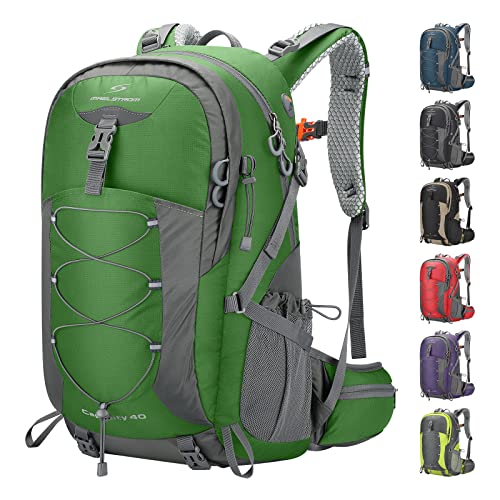
Pros
- Expansive 40-liter storage volume with dedicated wet-dry separation inside the main compartment
- Comes with an integrated rain cover stowed in a dedicated underside pocket
- Dual zippered hip-belt pockets provide quick access to trail snacks and small gear
- Lightweight 210D ripstop nylon exterior resists brush scratches and light moisture
Cons
- Hydration reservoir is not included and must be purchased separately
- Fixed torso sizing does not offer custom vertical frame adjustment for very tall or short hikers
- A 40-liter profile may feel bulkier than needed for quick, minimalist day walks
The Maelstrom 40L Hiking Backpack is a high-capacity daypack designed for hikers, weekend campers, and outdoor travelers who need generous gear volume without excessive pack weight. Positioned in the internal frame daypack category, it offers 40 liters of structured storage to bridge the gap between compact daypacks and larger multi-day packs. It best suits day hikers packing for unpredictable mountain weather, campers carrying shared family gear, and travelers seeking an airline-friendly bag that transitions easily to the trail.
On the trail, the backpack utilizes a breathable, padded back panel paired with sponge-cushioned mesh shoulder straps to support cargo weight comfortably. Measuring approximately 23.6 inches tall by 13 inches wide and 8.9 inches deep, the pack maintains a balanced vertical silhouette that helps keep weight centered. An adjustable chest buckle works to stabilize the shoulder straps across the chest and includes an integrated emergency whistle, while the padded hip belt features dual zippered pockets to keep smaller items accessible while walking.
Construction quality centers around water-resistant 210D ripstop nylon fabric designed to withstand scuffs, brush abrasions, and damp weather. To handle steady rain, the pack includes a fitted rain cover stored in a dedicated zippered compartment beneath the bag, featuring a silver reflective logo for enhanced visibility in overcast conditions. Inside the main zipper compartment, a built-in waterproof wet pocket isolates damp shells or wet apparel from the rest of your dry gear.
Packing and trail hydration are straightforward thanks to a practical layout. The main compartment features a hook-and-loop hanger to hold a hydration reservoir upright, accompanied by an upper hose exit port that directs drinking tubes to your shoulder. External storage is well appointed with three front zipper pockets, a top zippered pocket, two stretch mesh side pockets for water bottles, and dual trekking-pole fasteners that hold walking sticks securely against the side compression webbing.
While the pack delivers impressive organization, it has a few practical limitations. The hydration bladder is not included, requiring hikers to supply their own reservoir and bite valve. In addition, the fixed suspension lacks adjustable torso sizing, meaning hikers with particularly short or long torso lengths cannot modify the distance between the shoulder harness and hip belt. While the 210D nylon and included rain cover manage precipitation well, the primary zipper seams are water-resistant rather than fully submersible.
For hikers, campers, and travel enthusiasts looking for an organized, budget-friendly 40-liter pack, the Maelstrom daypack represents a very capable option. Its combination of an included rain cover, dedicated wet-gear separation, trekking-pole lashes, and multiple exterior access points delivers dependable everyday trail utility. As long as your intended load stays within typical day-hiking limits and you supply your own hydration reservoir, this pack offers great practical value.
The Maelstrom 40L backpack excels in pocket organization, featuring a spacious primary compartment complemented by three front zippered utility pockets and an upper top stash pocket. Inside the main section, a specialized waterproof wet pocket allows you to separate damp layers, rain jackets, or wet swim gear from clean clothes and food supplies.
For on-the-move trail access, the pack provides two zippered hip-belt pockets ideal for quick-grab items such as trail bars, pocket knives, or lip balm. Dual exterior mesh side pockets securely hold standard beverage bottles, while side compression straps help cinch down partial loads to keep internal contents steady.
Hydration compatibility is built directly into the interior, featuring a dedicated hook-and-loop strap to hold a hydration bladder vertically inside the main compartment alongside an upper hose exit port. Note that a hydration reservoir is not included with the backpack and must be purchased separately.
External attachment features include dual side elastic fasteners and loops designed to lash two trekking poles securely to the pack exterior when traversing smooth terrain. Safety enhancements include reflective exterior accents for improved low-light visibility and a functional survival whistle integrated directly into the sternum strap buckle.

Pros
- Extremely lightweight at 10.76 ounces, folding easily into luggage for travel and destination day hikes
- Shoulder strap zipper pocket securely holds smartphones up to 7 inches for fast trail navigation without removing the pack
- Chest strap stabilizes shoulder straps and incorporates an integrated emergency safety whistle
- Concealed rear anti-theft pocket provides discreet storage for keys, wallet, or travel documents
Cons
- Side mesh pockets only fit slender bottles up to 2.4 inches in diameter, excluding standard 32-ounce wide-mouth bottles
- Frameless design lacks a supportive hip belt, limiting comfort under dense or heavy loads
- Compact 10-liter capacity cannot accommodate bulky cold-weather layers or extensive backcountry gear
The FIORETTO 10L Hiking Backpack is a packable, minimalist daypack tailored for quick trail outings, travel excursions, and casual everyday carry. Measuring 15.8 inches high, 9 inches long, and 4.3 inches wide, this mini daypack is designed for hikers, commuters, and travelers seeking an unobtrusive pack for essentials rather than expedition gear. With its low 10.76-ounce weight, it folds down flat or rolls easily into larger luggage, making it well suited for vacationers who want a dedicated trail daypack upon reaching their destination.
On short hikes and established paths, the 10-liter capacity provides enough volume for a lightweight windbreaker, trail snacks, personal identification, and compact gear. Because this is a frameless, ultralight pack without a load-bearing hip belt, carried weight rests directly on the breathable mesh shoulder straps. Load management relies on an adjustable sternum strap that secures the harness across the chest to prevent strap slippage during brisk walking, cycling, or casual trail outings.
The pack is constructed with rugged fabric designed to resist surface tears and trail abrasion, reinforced with sturdy stitching along high-stress points and smooth-gliding zippers. Visibility is supported by exterior reflective accents positioned for lower-light conditions around dusk or dawn. For trail safety, the adjustable sternum strap buckle integrates a built-in emergency whistle, adding practical utility for solo day hikers or casual explorers on public pathways.
Gear organization is notably comprehensive for a 10-liter silhouette, featuring three separate zippered main compartments and a hidden anti-theft rear pocket for a wallet or transit cards. A standout functional detail is the shoulder-strap storage setup, which includes a zippered pocket accommodating smartphones up to 7 inches alongside a stretchy cord pouch for lip balm or keys, reducing the need to remove the pack on trail. For hydration, two exterior mesh pockets accommodate bottles up to 2.4 inches in diameter, and cleanup between trips is straightforward due to machine-washable fabric.
Realistic limitations center on overall capacity, hydration compatibility, and load structure. The 10-liter interior will not fit bulky cold-weather clothing, sleeping gear, or extensive foul-weather emergency equipment. Furthermore, the exterior side pockets are restricted to slim 2.4-inch diameter drink containers, which will not hold standard wide-mouth trail bottles. With no rigid frame stays or padded waist belt, packing dense, heavy objects can lead to shoulder strap pressure over long distances.
For day hikers, city travelers, and minimalist walkers who prioritize lightweight portability and immediate access to personal items, the FIORETTO 10L pack delivers dependable functional value. If you need a summit pack, a secondary travel daypack for light trails, or a compact bag that keeps your smartphone accessible directly on your chest, this model serves as an efficient, budget-conscious choice.
The FIORETTO packable daypack provides 10 liters of organized volume divided across three distinct zippered compartments. The exterior layout includes dual mesh side pockets configured to hold bottles up to 2.4 inches in diameter, making them suitable for standard slender beverage bottles or compact umbrellas.
For sensitive personal items, a hidden rear anti-theft compartment sits against the wearer's back to deter opportunistic access in crowded environments. The shoulder straps feature a dedicated zippered pocket that fits smartphones with screens up to 7 inches, accompanied by an elastic cord pouch for swift access to trail snacks, keys, or cards without unbuckling the pack.
This 10-liter pack utilizes an ultralight, frameless build with breathable mesh shoulder straps engineered to promote airflow and minimize sweat accumulation during active use. The pack does not feature an internal frame sheet, stay system, or padded hip belt, making it suited specifically for light trail loads and minimalist day gear.
An adjustable sternum strap crosses the chest to stabilize the shoulder harness during brisk walking, biking, or trail movement. Built into the chest strap buckle is an emergency signal whistle, offering an accessible signaling tool directly on the front harness.
Constructed from lightweight, rugged fabric, the FIORETTO pack is engineered to resist everyday abrasion and minor trail snags. Reinforced stitching lines critical seam junctures to handle repeated packing and unpacking cycles.
Exterior reflective strips are integrated into the exterior to increase low-light visibility on roadsides and dim trailheads. For easy maintenance after dusty or muddy excursions, the entire backpack is constructed with machine-washable materials, allowing straightforward home cleaning and air drying.

Pros
- Folds quickly into an ultra-compact pouch for easy packing inside luggage or a larger expedition backpack
- Weighs only 0.8 pounds, significantly reducing pack burden for ultralight day trips and travel-based hiking
- Dedicated wet compartment keeps damp clothes, towels, or rain shells isolated from dry interior contents
- Includes thoughtful trail safety and travel security features like an integrated sternum whistle and interlocking zipper pull clips
Cons
- Frameless design lacks internal stays or rigid structure, making it unsuited for carrying dense or heavy loads
- Shoulder straps provide minimal padding and lack load lifters or a supportive load-bearing hip belt
- IPX4 rating protects against light splashes and drizzle, but cannot withstand prolonged downpours without separate waterproof protection
The MIYCOO 35L Ultralight Packable Backpack is a collapsible daypack designed primarily for travelers who hike, casual day hikers, and campers who need a secondary day bag. Operating as a frameless, lightweight carrier, it excels when stowed inside a larger multi-day backpack or carry-on suitcase until needed at your destination. With an unpacked size of 12.5 x 8.5 x 20.9 inches and a stowed footprint of just 4.5 x 3.9 x 7.8 inches, this pack addresses the needs of outdoor recreationists who want supplemental pack capacity without the bulk and weight of traditional internal-frame daypacks.
On the trail, the pack provides 35 liters of storage volume, which accommodates bulky yet lightweight items like fleece jackets, light windbreakers, hats, lunch containers, and trail snacks. Because the backpack weighs only 0.8 pounds, it adds almost no base weight to your outing. However, buyers should remember that it is a purely frameless packable bag. Without an internal frame sheet, aluminum stays, or a padded load-bearing hip belt, the pack relies entirely on the user's packing technique for back support. Keeping soft items against the back panel is essential to avoid uncomfortable pressure points from hard gear.
In terms of construction, the pack uses water-resistant fabric rated at IPX4, meaning it is built to resist splashes and light rain during day outings or workouts. The manufacturer specifies upgraded heavy-duty zippers and reinforced stitching across major stress points, which helps the seams withstand regular loading. For security in transit or at busy trailheads, the main compartment features zipper clips that can secure two pulls together. The shoulder strap also incorporates an integrated safety whistle, giving day hikers a convenient, built-in signaling device without requiring extra hardware.
Organization is practical and user-friendly, centered around three distinct compartments. A standout feature is the dedicated wet compartment, which provides a designated space to segregate damp rain gear, sweaty apparel, or muddy accessories from clean, dry layers. Packing and unpacking the bag is straightforward, and when your excursion is finished, the entire pack folds back into its own pocket. Maintenance is equally simple: the fabric can be wiped clean with a damp cloth and hung up to air-dry before being packed away for long-term storage.
Realistic limitations must be acknowledged before taking this pack into rough backcountry terrain. The IPX4 water-resistance rating does not mean the backpack is fully waterproof or submersible, so sensitive electronics and critical insulation still require dry bags or waterproof liners during steady rain. Additionally, the thin, packable shoulder straps lack the thick padding and load-lifter support required for comfortable heavy-load carrying. Attempting to haul dense camera equipment, multiple full water bladders, or heavy survival gear will likely lead to shoulder fatigue due to the absence of a rigid suspension system.
The MIYCOO 35L Packable Backpack is a practical, value-driven choice for budget-conscious hikers, vacationers, and commuters who need an emergency summit pack or a lightweight travel daypack. If your hiking style involves carrying lightweight layers, snacks, and modest gear volumes on established paths, this foldable daypack provides useful organization, splash defense, and minimal weight in a highly portable design.
The MIYCOO Daypack provides a 35-liter capacity, measured at 12.5 x 8.5 x 20.9 inches when fully opened. This interior volume is divided into three separate compartments, allowing hikers to organize food, insulation layers, and trail accessories systematically rather than dumping everything into one open cavern.
The inclusion of an internal wet compartment is especially useful for trail outings where you encounter damp weather or river crossings. Storing a damp jacket or wet towel in this separated pocket prevents moisture from transferring into the main storage area where dry clothes are kept. For best results on the trail, pack softer items against the rear panel to form a makeshift back cushion, keeping heavier items centered and close to your body.
This backpack is constructed with water-resistant fabric carrying an official IPX4 rating. According to product specifications, this level of protection shields pack contents against splashes of water, making the daypack suitable for humid morning hikes, outdoor workouts, and light drizzle.
While the fabric resists surface moisture, the pack is not completely submersible, and prolonged downpours can eventually compromise zippers or unsealed seams. For serious rain exposure or creek crossings, hikers should wrap sensitive items, like electronics or dry layers, in dedicated waterproof dry sacks. Upgraded heavy-duty zippers and reinforced stitching at major stress points help ensure the pack maintains its structural integrity during everyday trail and travel use.

Pros
- All-in-one starter bundle eliminates the need to source core hiking and camping gear piecemeal
- Multiple compartment layout and reinforced stitching support organized tactical storage
- Included rain cover provides essential exterior weather protection during unexpected downpours
- Dual sleeping pad options allow campers to adapt to different ground conditions
Cons
- Total listed bundle weight of 8.5 pounds is noticeably heavier than specialized ultralight backpacking gear
- Manufacturer does not specify internal pack capacity in liters or exact torso fit ranges
- Tactical suspension design lacks the technical internal frame and load lifters found on dedicated expedition packs
The SKTHAXER Premium Hiking Camping Backpack Set is a tactical-style outdoor gear bundle designed for beginner campers, outdoor recreationalists, and casual hikers seeking an all-in-one package. Rather than purchasing individual pieces of trail gear separately, this kit combines a large tactical backpack with key camp essentials, including an inflatable air mattress, a foam sleeping pad, collapsible trekking poles, a high-powered LED headlamp, a portable monocular, a water bottle, and an exterior rain cover. It serves as an accessible entry point for outdoor enthusiasts who prioritize bundled convenience and broad utility over high-end specialized trekking gear.
With a total listed package weight of 8.5 pounds and listed dimensions of 76.77 by 27.5 by 3.94 inches, this setup bundles considerable trail utility into a unified system. The tactical backpack itself is designated as a large-size pack with adjustable straps and multiple partitioned compartments to organize gear. Because exact internal volume in liters and torso-length adjustments are not listed by the manufacturer, hikers should approach it as a multi-compartment tactical pack suitable for campsite approaches, general travel, and short outings rather than a fine-tuned technical expedition suspension.
Tactical gear emphasizes rugged practicality, and the SKTHAXER backpack features reinforced stitching along stress points paired with durable black fabric. The exterior includes dedicated compartments that allow separation of small tools from bulkier sleep items. The bundle provides versatile bedding options by supplying both an inflatable air mattress and a foam sleeping pad, giving campers options depending on ground firmness and cold weather. For sudden precipitation, the included rain cover fits over the pack exterior to provide water protection that untreated tactical pack fabric cannot deliver alone.
Managing gear inside the pack is straightforward due to the compartmentalized layout, which allows quick access to items like the LED headlamp, monocular, and water bottle. Setting up camp is efficient because the trekking poles collapse down for streamlined pack attachment during travel, and the sleeping pads roll or fold into manageable profiles. Routine maintenance requires wiping down the pack fabric with a damp cloth, allowing the rain cover and sleeping pads to air-dry completely before storage, and keeping the electronic components protected in a dry section between outings.
Buyers should take into account that at 8.5 pounds for the full bundle, this kit is significantly heavier than modern ultralight backpacking gear. The product specifications do not detail an internal frame, load lifters, a padded weight-bearing hip belt, or specific torso measurements, which restricts its utility for strenuous multi-day backcountry trails where precision load transfer is essential. In addition, while the rain cover shields against outer precipitation, the backpack itself is not listed as seam-sealed or waterproof, so sensitive electronics should be stored in secondary dry bags during severe weather.
For budget-conscious beginners, emergency preppers, casual campers, and weekend hikers who want a comprehensive starter collection without buying gear piecemeal, the SKTHAXER Hiking Camping Backpack Set offers notable all-around value. While advanced thru-hikers and technical alpine climbers will require dedicated ultralight frames, this bundle provides a ready-to-use outdoor foundation for casual trail exploration and vehicle-supported camping.
The SKTHAXER bundle stands out primarily for its extensive assortment of camp and trail gear packaged directly with the large tactical backpack. For sleeping comfort, the kit incorporates an inflatable air mattress along with a secondary foam sleeping pad, offering flexible options to handle diverse ground surfaces and cooler campsite temperatures.
Trail exploration is supported by collapsible trekking poles that pack down when not needed, an LED headlamp for hands-free illumination in camp, and a portable monocular for observing terrain from a distance. Baseline hydration is addressed by the included water bottle, and weather management is enhanced by a fitted rain cover designed to protect the backpack during rain showers.
The SKTHAXER tactical backpack is built with reinforced stitching along high-stress seams and utilizes black fabric designed for rugged outdoor use. Multiple zippered compartments help distribute the tension of heavy contents across separate closures, minimizing excessive strain on any single zipper track.
The dedicated rain cover adds an essential defensive barrier against trail moisture, dirt, and light rain, which helps preserve the pack exterior over time. To ensure long-term usability, users should ensure the sleeping pad, rain cover, and pack fabric are fully dried before long-term storage to prevent mildew buildup.

Pros
- Packs down to 8.3 x 7.1 inches and weighs only 11 ounces, making it an excellent secondary pack for luggage or larger backpacking bags.
- Dedicated shoulder-strap pocket fits smartphones up to 7 inches for fast photo access and navigation without removing the pack.
- Front wet/dry divider helps separate damp items from dry clothing inside the main storage areas.
- High-density water-resistant nylon fabric and reinforced bartack stitching offer dependable build quality for a lightweight packable bag.
Cons
- Frameless 15-liter construction lacks an internal frame or load-bearing hip belt, making it unsuitable for heavier gear.
- Water-resistant nylon resists light moisture and splashes but does not replace a fully waterproof dry bag or rain cover in continuous downpours.
- Compact capacity limits gear options to short half-day outings, warm-weather day trips, or minimal travel carry.
The Seektop 15L Foldable Lightweight Hiking Backpack is a frameless, packable daypack tailored for day hikers, travelers, and outdoor minimalists who prioritize low carry weight and easy stowage. Weighing only 11 ounces (0.69 pounds), this pack is engineered to serve as a grab-and-go day bag that can live inside your suitcase, car trunk, or multi-day backpacking gear until needed at the trailhead.
For trail use, the 15-liter capacity and unfolded dimensions of 16.9 x 10.8 x 6.3 inches accommodate the core essentials needed on short day hikes, including a light fleece or windbreaker, nutrition, compact navigation tools, and personal items. Dual side pockets accept water bottles up to 3.5 inches in diameter, ensuring steady hydration access without requiring internal reservoir routing. Because it is a frameless, minimalist design without an internal suspension stay or padded hip belt, load management relies directly on how evenly you pack your gear.
The build quality centers on high-density nylon fabric designed to resist tears, abrasion, and light rain infiltration. Seektop incorporates bartack stitching across high-stress connection points alongside precise panel seams to guard against fabric failure during active use. The back panel and contoured ergonomic shoulder straps utilize breathable mesh fabric, which provides basic cushioning and helps channel airflow across your back and upper chest during warm afternoons.
Packing and gear access are straightforward thanks to a practical multi-compartment layout. In addition to the primary and secondary compartments, the front pocket includes a wet/dry divider, allowing you to isolate sweaty shirts, swim gear, or damp bandanas from dry electronics and paperwork. A standout trail feature is the harness storage: the left shoulder strap features a pocket accommodating smartphones up to 7 inches, while the right strap has an open mesh sleeve for energy bars, lip balm, or small accessories.
Hikers should keep in mind the inherent limitations of this design. The 15-liter volume cannot accommodate bulkier cold-weather gear, heavy winter layers, or extensive backcountry safety kits. Additionally, while the nylon shell is water-resistant, it does not feature sealed seams or an included waterproof pack cover, meaning sensitive electronics should still be protected with internal dry bags during sustained downpours.
Overall, the Seektop 15L Foldable Backpack is a practical, budget-conscious choice for day hikers, sightseers, and travelers who need an ultralight secondary pack. If your outings involve warm weather, short nature loops, or light-load travel days where quick phone accessibility and compact packability are primary concerns, this daypack serves those needs reliably.
The Seektop daypack provides 15 liters of dedicated storage space designed to keep smaller trail gear neatly separated and easily reachable. The storage configuration includes a spacious main compartment for apparel, a secondary zippered compartment for flat items or guidebooks, and a front pocket equipped with a wet/dry divider for isolating damp items.
Trail-side access is enhanced by dual side bottle sleeves capable of holding containers up to 3.5 inches in diameter. On-body access is further improved by integrated harness pockets, including a left shoulder-strap sleeve that holds phones up to 7 inches and an adjacent right mesh pouch for immediate access to quick snacks or small gear.
Weighing only 11 ounces (0.69 pounds), this daypack is constructed from high-density water-resistant nylon that compresses down to 8.3 x 7.1 inches when folded. This small packed profile makes it convenient to tuck into carry-on luggage, duffel bags, or the lid of a larger multi-day backpacking pack.
Durability is reinforced through fine panel stitching and bartack reinforcements at major load-bearing stress points. The breathable mesh fabric on both the back panel and the ergonomic shoulder straps helps promote air circulation while keeping overall pack weight to a minimum.

Pros
- Extremely lightweight at approximately 0.75 pounds and folds into an ultra-compact pouch for travel
- Integrated sternum strap with safety whistle helps keep shoulder straps aligned while moving
- Generous pocket organization includes three zippered compartments, dual side bottle pockets, and a hidden security pocket
- Smooth SBS zippers and reinforced stitching support dependable everyday gear access
Cons
- Frameless, unpadded design offers no rigid back structure for carrying dense or heavy loads
- Lacks a load-bearing hip belt and dedicated hydration reservoir bladder port
- Compact 15-liter capacity is strictly built for short outings and minimal gear, not extended trips
The SKYSPER 15L Foldable Hiking Backpack is an ultralight, frameless daypack engineered for hikers and travelers who prioritize compact packing and minimal carry weight. Sized at 15 liters, it serves as a lightweight day bag for short nature trails, state park explorations, and town sightseeing. Because it is completely collapsible, it also functions as an ideal secondary pack to stow inside larger luggage or a vehicle trunk until you reach the trailhead.
In practical trail scenarios, the pack provides enough space for essential day gear such as a light windbreaker, trail snacks, personal first aid, and small accessories. Measuring approximately 16.9 by 10.8 by 4.7 inches when unfolded, the pack maintains a streamlined profile that hugs close to your back. The inclusion of an adjustable chest strap is a notable benefit for a packable bag of this class, as it prevents the shoulder straps from slipping outward and adds trail security with an integrated emergency whistle.
Construction centers around a durable polyester fabric designed to resist tears and light trail abrasions. SKYSPER utilizes SBS zippers across the zippered compartments to deliver smooth, snag-resistant operation during frequent opening and closing. Reinforced stitching on the top grab handle and stress points enhances structural reliability when grabbing the pack from car seats or hanging it up at rest stops.
Organization is surprisingly comprehensive for a packable daypack. The main compartment features a wide opening for easy access to bulkier layers, complemented by three additional zippered pockets for sorting sunglasses, keys, and trail passes. A discreet back pocket offers close-to-body security for wallets or identification, while two 7.5-inch tall side mesh pockets provide quick exterior access for standard water bottles or compact folding umbrellas.
Because this is an ultralight, packable bag weighing only about 0.75 pounds, there are realistic structural limits to keep in mind. The backpack does not include a rigid frame sheet, internal stays, or a load-bearing hip belt, meaning heavy or sharp gear can press against your back if packed without care. Additionally, the manufacturer does not list a dedicated hydration bladder sleeve or hose routing port, making it better paired with traditional handheld or side-pocket water bottles.
For day hikers, vacationers, and casual outdoor enthusiasts seeking a dependable, pocket-rich daypack that takes up almost no space in a suitcase, the SKYSPER 15L offers great practical utility. Its combination of low weight, organized storage, and an upgraded sternum strap makes it a reliable companion for quick trail excursions and low-bulk travel.
The standout feature of the SKYSPER 15L daypack is its ability to fold into a self-contained pouch measuring just 7.9 by 6.7 inches. This compact folded profile lets you slip the bag into a carry-on, duffel, or glove compartment, making it immediately available whenever you need a lightweight day hiking solution.
Despite its folding build, the pack avoids the clutter issues typical of single-cavity bags. With a large main compartment, three individual zippered pockets, and an exterior hidden back pocket, you can segregate sensitive personal items from general trail snacks and layers. Dual 7.5-inch side mesh sleeves keep hydration bottles secure and easily reachable on the go.
Designed for lightweight comfort, the pack relies on straightforward adjustable shoulder straps combined with an upgraded sternum strap. The sternum strap allows hikers to dial in upper-body stability, keeping the pack centered across the chest during brisk strolls or moderate incline trails.
Because the back panel is unpadded and frameless, packing technique matters for comfort. Placing softer layers like jackets or fleece against the back wall creates a natural cushion, ensuring an easy carry throughout your day hike or travel outing.
Mastering Hiking Backpack Setup: Geometry, Harness Tuning, and Trail Balance
Dialing in how to set up backpack for hiking involves balancing two connected elements: internal weight distribution and ergonomic harness adjustment. When these factors work together, the pack moves as a natural extension of your spine rather than a deadweight pendulum pulling you backward. Taking the time to dial in these mechanical details prevents fatigue, muscle cramping, and balance loss on steep switchbacks.
Understanding Center of Gravity and Internal Weight Distribution
The bottom section of your hiking bag should always house lightweight, bulky items that provide a stable foundation without dragging down your lower back. Items like an ultralight packable jacket, extra fleece layers, or a compact sleeping pad fit naturally into this lower cavity. Placing heavy gear at the very bottom creates leverage that pulls directly on your shoulders, forcing you to lean forward uncomfortably to stay upright. A soft, buoyant base also cushions the bottom of the pack against sudden impacts when you set your bag down on rocky ground.
Dense, heavy gear belongs directly in the middle of the pack, nestled as close to your back panel as possible. Water reservoirs, dense food containers, cook sets, and heavy emergency kits should align with your spine between your shoulder blades and mid-back. Keeping heavy items close to your anatomical center of gravity stops the pack from pulling you off balance when negotiating rocky ascents or crossing streams. If you push dense weight toward the outer surface of the pack, the rotational leverage will tug on your shoulders with every forward stride.
The upper portion of the main compartment should hold medium-weight gear and items that require quick access during sudden weather changes. Stashing an extra windbreaker, rain shell, and trail snacks near the top zipper lets you grab essential layers without unpacking your entire bag. Keeping this area moderately packed preserves clean head clearance, preventing the top of the pack from bumping the back of your neck or helmet on steep climbs. Packing overly dense items in the top lid creates top-heavy instability, causing the pack to sway sideways whenever you step over trail obstacles.
Exterior pockets and side pouches require symmetric packing to preserve side-to-side balance. Stowing a heavy metal water bottle on one flank while leaving the opposite side pocket empty forces your core muscles to compensate continuously for the lateral tilt. Modern pack designs often integrate zippered shoulder strap pockets and stretch mesh sleeves that let you distribute small essentials like phones, sunblock, and nutrition evenly across your chest. Balancing your perimeter load keeps your hips level and prevents unilateral back fatigue over extended mileage.
Step-by-Step Harness Fitting and Strap Tensioning Sequence
Before putting on your loaded hiking pack, you must loosen every single adjustment webbing strap completely. Loosening the shoulder straps, sternum strap, hip belt, and load lifters resets the harness geometry so it can conform to your body in the correct mechanical order. Putting on a pack with previously tightened straps forces you to adjust parts out of sequence, which frequently leads to awkward strap angles and uneven pressure. Load the pack with your realistic trail gear weight before fitting, because an empty bag sits entirely differently against your back.
Hoisting the pack onto your back begins with fastening and tightening the waist belt or hip support. For structured packs equipped with padded hip wings, seat the middle of the belt directly over your iliac crest, which is the prominent top ridge of your hip bones. Snug the buckle firmly so that the majority of the pack mass transfers directly through your skeletal structure into your legs rather than hanging from your neck. On frameless or packable daypacks featuring simple webbing waist straps, position the strap across your lower waist to anchor the pack against lateral bounce during brisk walking.
Once the hip belt anchors the lower pack, gently pull downward and backward on the main shoulder strap adjustment tails. The padded straps should wrap smoothly over the contours of your shoulders, making uniform contact across your chest without pinching your collarbones or neck muscles. Avoid over-tightening these straps, as cinching them down too hard pulls the hip belt upward and transfers the pack load right back onto your shoulders. You should still be able to slip a finger under the very top of each shoulder pad, confirming that your hips carry the primary load.
The sternum strap serves to pull the shoulder straps inward, freeing your arms to swing naturally while keeping the pads from slipping outward off your shoulders. Slide the sternum strap rail up or down until the cross-buckle sits approximately one inch below your collarbones across the flat center of your chest. Fasten the buckle and tighten the webbing just enough to draw the shoulder straps comfortably inward without restricting your breathing or deforming the shoulder pads. Many modern chest straps incorporate an integrated safety whistle into the buckle, providing an easily accessible signaling device without adding extraneous clutter.
On mid-to-large capacity packs, load lifter straps connect the top of the shoulder harness directly to the upper frame of the pack body. Pulling these straps snug draws the top of the pack closer to your upper back, stabilizing the load and preventing backward sway. Ideally, load lifters should angle back toward the pack body at roughly a 45-degree angle when viewed from the side. Over-tensioning load lifters can pull the shoulder straps off your chest and create excessive pressure against your collarbones, so cinch them only until the pack feels securely integrated with your upper torso.
Hydration System Routing and Fluid Weight Management
Water represents one of the heaviest individual components in any hiking loadout, weighing over two pounds per liter. When using an internal hydration bladder, slip the reservoir into the dedicated internal sleeve located flush against the back panel before packing any other gear. Anchoring this dense liquid mass right along your spinal column keeps your center of gravity tight against your core. Packs designed with dedicated hydration hangers or velcro loops prevent the bladder from slumping into a bulky mass at the bottom of the compartment as fluid depletes.
Thread the hydration delivery hose through the dedicated pack exit port and guide it along either the left or right shoulder strap. Secure the tube using the built-in elastic loops or webbing retainers so the bite valve rests within easy reach near your sternum strap. A loose hydration tube bouncing against your ribs creates persistent trail irritation and risks snagging on protruding tree branches or trailside brush. Keeping the hose secured and close to your mouth encourages regular, frequent sips, which maintains proper hydration without forcing you to stop and remove your bag.
If you prefer rigid water bottles over a bladder system, positioning and pocket security become critical setup factors. Deep side mesh pockets with reinforced elastic collars keep bottles seated upright while preventing them from toppling out when you bend forward to scramble over rocks. Stashing equal bottle volumes on both sides of the pack prevents uneven lateral drag that strains your oblique muscles and spinal alignment. If you carry a larger vacuum-insulated bottle or wide container, pair it with comparable gear weight in the opposite side sleeve to preserve symmetrical balance.
Managing Pack Volume with Compression Straps and External Attachments
Side and front compression straps are vital mechanical components that condense unused internal volume and eliminate empty air pockets. When a pack is not filled to its maximum capacity, loose contents shift around inside, creating sudden balance disruptions with every stride. Pulling compression straps snug pulls the entire gear load inward toward your back panel, creating a compact, rigid unit that tracks smoothly with your natural body movements. Reviewing different designs, including an internal frame hiking backpack options breakdown, demonstrates how external compression and frame geometry collaborate to keep shifting loads thoroughly immobilized.
Exterior lash points, elastic shock cords, and specialized tool loops allow you to store trekking poles securely when traversing smooth dirt roads or scrambling with both hands. Pass the tips of your collapsed poles through the bottom gear loops and secure the shafts firmly using the upper elastic cord locks or side compression straps. Ensure that the pole handles face upward and the baskets cannot snag on passing brush or low-hanging branches. Securing exterior gear tightly eliminates irritating clicking sounds and prevents loose pendulums from disturbing your rhythm.
Hanging heavy mugs, metal gear, or bulky boots from exterior carabiners is a common packing mistake that severely degrades pack stability. Items dangling on the outside of your pack sway with every step, creating erratic kinetic momentum that forces your stabilizing muscles to work overtime. Loosely attached gear also easily catches on dense foliage, which can damage the pack fabric or cause you to lose your footing on narrow switchbacks. Whenever possible, tuck all essential gear inside the main compartments, reserving exterior loops strictly for lightweight tools or damp items that need ventilation.
Dialing in Packable Daypacks Versus Structured Mid-Capacity Packs
Ultralight collapsible packs ranging from 10 to 15 liters present distinct setup challenges because they lack rigid internal frames and dense back panel padding. Without a supportive frame sheet, hard or irregularly shaped items like cook pots or fuel canisters can poke uncomfortably through the thin nylon fabric into your spine. To create a comfortable faux frame, fold a soft fleece pullover or sit pad flat against the interior back wall before loading your heavier supplies. Comparing these minimal designs with popular budget-friendly hiking daypacks highlights how strategic internal packing compensates for the absence of molded foam ridges and rigid stays.
Mid-sized packs offering 35 to 40 liters of storage space feature thicker back padding, contoured harness systems, and specialized organizational dividers. These larger models often incorporate separate wet and dry compartments, allowing you to isolate sweaty base layers or muddy rain gear without contaminating clean trail clothing. The increased depth of a 40-liter pack means that front-to-back weight management becomes even more vital to prevent rearward leverage. Utilizing the internal horizontal dividers and dedicated top lids keeps your supplies sorted while maintaining a streamlined silhouette that stays close to your spine.
Comprehensive outdoor bundles that combine tactical daypacks with integrated sleeping pads, trekking poles, and lighting tools require coordinated initial organization. Securing included foam mats or inflatable sleeping pads beneath bottom external compression loops preserves valuable internal storage space for food and hydration. When attaching sleeping gear to the exterior base, ensure the straps are pulled completely tight so the cylinder does not wobble against your lower glutes while walking. Balancing attached gear with internal supplies ensures that multi-piece kits carry comfortably across full-day outdoor excursions.
On-Trail Troubleshooting: Correcting Shoulder Bite, Sag, and Sway
Sharp aching in your trapezius muscles or collarbones almost always indicates that your shoulder straps are supporting too much of the pack mass. To resolve this issue, stop on the trail, loosen your shoulder harness slightly, and re-tighten your hip belt over your pelvic bones. Allowing your skeletal frame to absorb the majority of the pack load immediately relieves pinched neck nerves and shoulder soreness. If your daypack lacks a padded hip belt, adjusting the sternum strap higher or lower can alter the strap contact angle and alleviate persistent pressure points.
Feeling as though your pack is actively dragging you backward suggests that your load center of gravity is positioned too far away from your spine. You can correct this by opening the main compartment and redistributing heavy items like water containers and dense food supplies flush against the back panel. Tightening the side compression straps also pulls the entire load forward, reducing the rotational leverage that strains your lumbar spine. On packs equipped with upper load lifters, cinching the straps slightly pulls the top of the bag closer to your shoulder blades to neutralize backward tilt.
Excessive side-to-side sway while hiking wastes considerable energy and can compromise your footing on uneven, rocky trails. Check your exterior water bottle sleeves and perimeter pockets first to ensure that neither side carries significantly more fluid or gear weight than the other. Next, cinch the sternum strap across your mid-chest to lock the shoulder pads in place and prevent them from sliding outward on your collarbones. Cinching down both side compression straps tightly eliminates loose internal space that allows gear to slide back and forth with your stride.
Experienced hikers adapt their pack harness settings dynamically depending on the slope of the terrain. When tackling steep uphill climbs, leaning slightly forward is natural, so loosening the load lifters slightly allows your torso to flex comfortably while keeping your hips mobile. Conversely, during steep downhill descents, tightening both the load lifters and shoulder straps draws the pack mass firmly against your back, preventing the bag from bouncing forward over your shoulders. Making micro-adjustments to your straps throughout the day accommodates changing body mechanics and keeps you balanced across varying trail grades.
Weatherproofing Setup and Trail Maintenance Checks
Many hiking daypacks include an integrated waterproof rain cover stowed inside a dedicated zippered compartment at the bottom of the bag. When sudden storms roll in, pull the elasticized cover out and stretch it completely over the loaded pack, ensuring all exterior zippers and side pockets are sealed. The elastic rim should wrap firmly around the harness perimeter to prevent wind gusts from tearing the protective cover away. Stowing damp gear beneath a rain cover keeps sudden downpours from penetrating standard stitching needle holes or zipper teeth during prolonged trail exposure.
Maintaining the water resistance and structural integrity of your hiking pack requires gentle, sensible post-hike care. Never clean technical nylon or polyester daypacks in a domestic washing machine, as violent agitators and harsh laundry detergents strip protective polyurethane inner coatings and degrade seam tape. Instead, use a soft bristle brush with lukewarm water and a mild non-detergent soap to spot-clean trail mud, sweat residues, and dirt from exterior panels. Always allow the pack to air dry completely in a shaded, well-ventilated space away from direct heat sources before folding or stowing it away.
Regularly inspecting stress points, buckles, and zipper tracks prevents catastrophic gear failures while you are far out in the backcountry. Clear fine dirt, pine needles, and trail sand from zipper coils using an old toothbrush, as gritty debris causes sliders to separate and jam under tension. Inspect bar-tack stitching where the shoulder straps attach to the main pack body to verify there is no frayed threading or fabric pulling. Checking plastic sternum clips and hip buckles for stress fractures before leaving home ensures your suspension system remains completely reliable across every wilderness mile.
Pre-Hike Checklist and Final Balance Verification
Before setting off down the trail, perform a quick balance check right at the trailhead to verify your pack adjustments. Stand upright with your feet shoulder-width apart, jump lightly in place, and twist your upper torso gently from side to side. The pack should feel locked securely to your body, moving synchronously with your spine without lagging, thumping against your lower back, or sliding across your shoulders. If you detect any shifting weight or rattling hardware, tighten the compression cords and adjust your sternum strap before logging your first mile.
Taking a deliberate, systematic approach to how to set up backpack for hiking transforms your comfort, endurance, and trail safety. Proper weight distribution, a methodical strap-tightening sequence, and balanced external gear storage ensure that even extended day hikes remain energetic and enjoyable. When your gear rests naturally against your center of gravity, you can focus fully on the scenery and the physical satisfaction of the trail ahead. Keep your load organized, listen to early ergonomic warning signs, and let your suspension do the work it was designed to handle.







Write Your Review
No reviews yet. Be the first to share your experience!