


Sudden rainstorms and humid outdoor environments can quickly threaten electronic devices, spare garments, and essential trail provisions. Navigating wet trailheads or city commutes requires answering %what are the best waterproof backpacks% with a clear assessment of textile barriers and pack construction. Modern daypacks utilize dense nylon weaves, polyurethane backing, and dedicated rain covers to prevent moisture from reaching vulnerable contents. Travelers and day hikers frequently encounter the challenge of keeping gear dry without adding unnecessary structural bulk to their daily load.
Finding an ideal solution involves balancing packable convenience against robust weatherproofing features like seam shielding and coated zippers. Reviewing functional storage layouts helps clarify which pack suits specific travel routines, much like assessing options among budget hiking daypacks for recreational outings. Balanced weight distribution and breathable harness mesh ensure that carrying water-resistant gear does not lead to unnecessary fatigue or excessive back sweat. Taking time to inspect fabric denier and closure types ensures your gear stays protected across diverse outdoor settings.

Pros
- Generous 40L capacity at a low listed weight of just 2.18 pounds
- Included stowable rain cover offers immediate foul-weather defense
- Dedicated internal wet pocket keeps damp garments separated from dry trail gear
- Dual zippered hip-belt pockets provide convenient access to trail snacks and small items
- Built-in trekking pole loops and hydration hose routing support active day hiking
Cons
- Hydration reservoir is not included and must be purchased separately
- Manufacturer does not specify adjustable torso ranges, making custom spine fit limited
- Lacks heavy-duty load-transfer stays for carrying dense, expedition-weight loads
The Maelstrom 40L Hiking Backpack is a high-capacity, lightweight daypack designed for hikers, weekend campers, and adventure travelers who want ample gear space without carrying excess empty pack weight. At an accessible 2.18 pounds, this 40-liter pack bridges the gap between a standard single-day bag and an overnight pack, making it a viable option for full-day mountain excursions, gear-heavy family outings, or minimalist overnights.
For trail carrying comfort, the pack features an ergonomic, breathable padded back panel paired with contoured, ventilated shoulder straps. An adjustable chest buckle stabilizes the harness across the torso and integrates an emergency whistle for added trail readiness. Dual zippered waist pockets help stabilize the lower pack against your hips while keeping essential items within arm reach. Hikers should note that the pack does not provide adjustable torso-length sliding mechanisms, so overall suspension fit will depend on your individual torso proportions.
Exterior construction utilizes 210D rip-stop nylon fabric, offering water resistance and protection against light trail abrasions from overhanging branches or brush. When sustained rainfall rolls in, the pack includes a fitted rain cover stored inside a dedicated bottom pouch. This rain cover features a reflective logo to enhance low-light visibility while providing an extra barrier against moisture.
Organization is a distinct strength of the Maelstrom 40L, featuring a large main zippered compartment, three front zippered utility pockets, a top lid pocket, and two stretchy mesh side pockets for water bottles. An internal waterproof wet pocket lets you isolate damp rainwear, sweaty garments, or towels from the rest of your dry supplies. For hands-free drinking on the move, an internal fastener accommodates a hydration reservoir paired with a side hose port, though the bladder itself must be supplied separately.
In terms of limitations, the flexible lightweight build is engineered for moderate trail loads rather than dense, heavy backpacking gear. Carrying excessively dense gear without rigid aluminum stay support may cause the pack to sag against the lower lumbar area. Furthermore, the absence of specific torso sizing data means hikers with particularly tall or short torsos may need to experiment with strap tension to achieve balanced weight distribution.
Overall, the Maelstrom 40L Backpack is a practical, value-oriented solution for day hikers, campers, and travelers seeking dependable volume, structured pocket access, and foul-weather readiness. If you prioritize lightweight flexibility, included weather accessories, and versatile pocket dividers over rigid technical suspension systems, this pack serves as a capable companion across a wide range of outdoor adventures.
The Maelstrom 40L pack utilizes a multi-compartment structure to prevent trail gear from migrating to the bottom of the main chamber. It features a spacious main zipper compartment alongside three individual front zippered pockets that allow clear separation of trail maps, headlamps, first-aid kits, and electronics. The quick-access top pocket serves as a convenient stash location for items like sunglasses or keys.
Inside the primary chamber, a dedicated waterproof wet pocket separates damp swimsuits, rain jackets, or post-hike clothes from dry gear. Exterior storage is rounded out with dual side mesh pockets designed to hold standard water bottles, along with two zippered hip-belt pockets for snacks, multi-tools, or pocket knives. Side fastener cords and elastic loops securely anchor up to two trekking poles against the pack body when not in use.
Weather management relies on a two-part defense system starting with the 210D rip-stop water-resistant nylon shell. For steady rain and harsh conditions, an included rain cover deploys quickly from the dedicated bottom zipper pocket, providing supplemental coverage to shield pack zippers and seams from saturation.
Hydration integration includes a hook-and-loop hanging strap inside the main chamber to keep a reservoir upright, along with an upper pass-through hole for routing a drinking tube down the shoulder harness. Note that a hydration reservoir is not included with the pack, so hikers will need to pair it with their preferred compatible water bladder.

Pros
- Weighs only 0.85 pounds and folds down into a compact 7.4 by 8.4-inch footprint for effortless packing
- Five zippered compartments provide generous organization compared to typical single-cavity packable bags
- Features dedicated trekking-pole attachment loops and reflective accents for low-light trail safety
- Equipped with waterproof zippers, high-density waterproof nylon, and reinforced stress points for dependable trail use
Cons
- Frameless packable construction lacks a rigid internal stay or load-bearing hip belt for heavy trail loads
- A 20-liter capacity is strictly geared for day outings and will not accommodate overnight backpacking kits
- Lightweight foam padding is tuned for packability rather than long-distance heavy-load suspension
The Seektop Packable Waterproof Hiking Backpack is an ultralight 20-liter collapsible daypack designed for quick trail outings, travel excursions, and summit side-trips. Built for day hikers, travelers, and outdoor commuters, this pack folds flat to stash easily inside larger backpacking packs or airline carry-on luggage until needed. At an empty weight of just 0.85 pounds, it provides functional gear capacity without adding meaningful base weight to your luggage or primary wilderness gear load.
On the trail, the pack relies on an unfolded footprint of 18.5 inches tall, 10.6 inches wide, and 6.6 inches deep. Its 20-liter capacity provides ample room for essential day gear such as a rain shell, packed lunch, first-aid kit, and hydration supplies. While frameless by nature, the pack includes a removable and adjustable chest strap to keep the shoulder straps positioned correctly across the chest, preventing strap slippage during uphill climbs. External trekking-pole attachments let you secure your poles hands-free when scrambling across rocky paths.
Construction highlights include high-density waterproof nylon fabric paired with waterproof zippers to help keep trail gear, electronics, and clothing protected against passing rain showers. All main shoulder-strap connections and key stress points feature reinforced knot stitching to increase resilience against packing tension. Both the back panel and the contoured shoulder straps incorporate breathable soft padding designed to cushion contact points and promote air circulation against the back.
Organization is a distinct strength for a collapsible pack, providing five individual zippered compartments to keep gear segregated rather than clumped in a single open compartment. The exterior strap system offers expansion points for hanging gear, while integrated reflective detailing boosts visibility during dawn or dusk trailhead departures. When your outing wraps up, the entire daypack collapses down to a compact 7.4 by 8.4-inch profile that fits neatly into a travel organizer or storage bin.
Because this is a minimalist, packable daypack, it does not include an internal frame sheet, aluminum stays, or a load-bearing hip belt. It is built strictly for light trail setups rather than heavy, dense gear loads or technical winter backpacking kits. Furthermore, while the nylon fabric and zippers feature waterproof construction to repel rainfall, submerging the pack or hiking through sustained heavy downpours still warrants the use of an internal dry sack for high-value electronics and dry clothing.
For hikers, travelers, and campers seeking an affordable, compact daypack that packs down small without sacrificing pocket organization or trekking-pole storage, the Seektop 20L provides a practical and dependable solution. It hits the sweet spot for light day hikes, travel carry-on needs, and fast summit pushes where carrying a full-sized technical pack is unnecessary.
With a 20-liter total volume, the Seektop Daypack provides enough capacity for standard day-hiking essentials, including light insulating layers, lunch containers, sunscreen, and navigation accessories. It avoids the clutter of single-pocket packable bags by supplying five dedicated zippered compartments, making it easy to separate delicate electronics from dirty trail snacks or outer layers.
The external strap array functions as an open attachment system, accommodating trekking poles or small clip-on accessories. The bag complies with standard carry-on luggage sizing, enabling dual-purpose use as both an airport personal item and a functional trail daypack once you arrive at your destination.
The exterior shell utilizes high-density nylon waterproof fabric engineered to resist everyday trail abrasion and prevent moisture from soaking through to your interior gear. High-stress anchor points along the shoulder harness are reinforced with specialized knot stitching to enhance durability against repetitive pulling and stuffing.
Waterproof zippers are incorporated across key entry points to block water intrusion along the teeth during damp trail conditions. While this protective construction reliably repels splashing water and moderate rain showers, hikers carrying sensitive electronics or vital warmth layers should always pack moisture-sensitive items in secondary waterproof pouches during severe, prolonged downpours.
Pros
- Extremely lightweight at approximately 2.3 ounces, adding almost no bulk to your main pack or luggage.
- Folds down into a compact package measuring just 8.6 x 3.1 x 1.06 inches for effortless portability.
- 20-liter capacity easily holds trail layers, a compact umbrella, and daily personal items.
- Breathable mesh shoulder straps help promote airflow during warm-weather walks or cycling rides.
Cons
- Lacks an internal frame, hip belt, or sternum strap, making it unsuitable for carrying heavy loads.
- Water-repellent coating protects against dampness but is not seam-sealed or waterproof in heavy downpours.
- Minimalist shoulder straps do not feature thick foam padding for extended heavy-duty trekking.
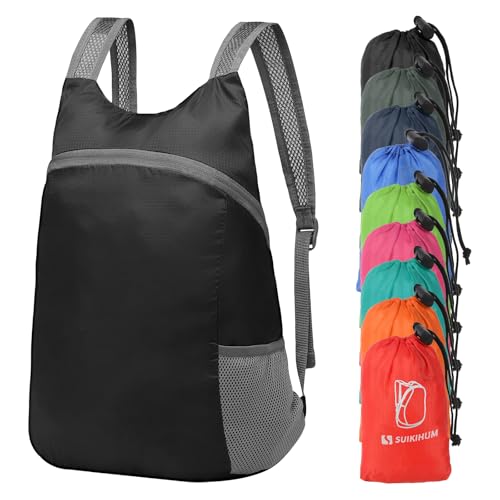
The SUIKIHUM Ultra Lightweight Hiking Daypack is an ultralight, frameless packable backpack engineered for minimalist day hikers, travelers, and outdoor recreationists. Designed to serve as a convenient secondary bag, it excels when stowed inside a larger multi-day backpacking pack or travel suitcase and deployed for quick side trails, campsite errands, or urban exploring. If your priority is finding a functional pack that virtually disappears in your luggage when not in use, this bag aligns directly with those needs.
On the trail, the pack provides a stated 20-liter volume within an unfolded footprint of 11.79 inches long, 4.32 inches wide, and 16.11 inches high. This interior space easily accommodates casual day essentials such as a light windbreaker, trail snacks, a small umbrella, and basic personal items. Weighing approximately 2.3 ounces, the daypack introduces negligible base weight to your setup. However, because it is an entirely frameless pack without structural stays, optimal carrying comfort relies on careful packing of soft items against the back panel to prevent hard objects from poking through.
The daypack is constructed from lightweight polyester fabric that features a water-repellent surface coating alongside scratch-resistant and wear-resistant properties. The shoulder straps utilize a breathable mesh design paired with adjustable ladder-lock buckles, allowing users to alter strap tension on the go while encouraging airflow over the shoulders in warm or humid conditions. The zippered opening provides straightforward top access, making it simple to pack and retrieve items quickly at trailside rest stops.
Packing and managing the daypack between outings is exceptionally straightforward. It folds down into a pocket-sized package measuring just 8.6 x 3.1 x 1.06 inches, allowing it to slide into a jacket pocket, a glove compartment, or an internal compartment of a primary trekking backpack. Maintenance is equally simple, as the synthetic polyester material can be wiped clean with a damp cloth and quickly air-dried before folding back into its compact storage state.
Buyers should remain mindful of the realistic load and weather limitations inherent to an ultralight packable design. With no padded hip belt, sternum strap, or rigid back suspension, carrying dense, heavy gear can lead to shoulder strain over long miles. Furthermore, while the exterior fabric has a water-repellent treatment to shed light drizzle, it is not a seam-taped waterproof dry bag, so sensitive electronics and critical trail gear should always be secured inside waterproof bags during sustained rain.
For casual day hikers, minimalist travelers, and budget-focused outdoor enthusiasts, the SUIKIHUM 20L Packable Daypack offers practical utility at a fraction of the weight of traditional backpacks. It stands as a reliable, highly compact solution for short nature walks, travel excursions, and emergency extra storage whenever a full-featured technical backpack is unnecessary.
Portability is the core attribute of the SUIKIHUM 20L Daypack, folding down to a compact 8.6 x 3.1 x 1.06 inches when compressed. This small form factor allows thru-hikers and backpackers to carry it inside a primary multi-day pack as a dedicated summit pack or side-excursion bag without taking up valuable volume.
Weighing only 2.3 ounces, it adds virtually no noticeable weight to your carry-on luggage, vehicle glove box, or day-hiking kit. When unfolded to its full 11.79 x 4.32 x 16.11 inch dimensions, it quickly expands into a spacious 20-liter carrier ready for daily excursions, market runs, or quick trail outings.
The exterior of the SUIKIHUM Daypack is made from a woven polyester fabric selected for tear resistance and everyday trail durability. The surface is treated with a water-repellent finish designed to resist light splashes, damp trail conditions, and brief moisture exposure during outdoor activities.
Users should note that water-repellent fabric does not mean the backpack is entirely waterproof. Because the zippers and stitching are not seam-sealed, rainwater can penetrate during steady or heavy storms, making internal dry sacks advisable for electronics, spare clothing, or paper maps.
Evaluating Weather Resistance and Backpack Performance
Determining what constitutes the best weather-ready backpack requires understanding how outdoor fabrics, zipper hardware, and specialized coatings interact under adverse conditions. While many packs advertise moisture protection, actual defense against precipitation varies significantly across lightweight folding shells and fully equipped trail bags. Selecting an appropriate pack means aligning storage volume, suspension comfort, and moisture defenses with the specific environmental challenges you expect to encounter.
Distinguishing Between Water-Resistant Fabrics and Full Waterproof Protection
Outdoor textile performance depends heavily on the base material and chemical treatments applied to its surface. Water-resistant fabrics, such as the 210D ripstop nylon found on the Maelstrom 40L Hiking Backpack, rely on dense thread weaves and surface finishes to shed light drizzle. Similarly, polyester fabrics treated with a water-repellent coating, like the shell used by the SUIKIHUM Ultra Lightweight Hiking-Daypack,Foldable, cause light water droplets to bead up and roll away rather than saturating the weave. These barrier treatments provide dependable protection during brief showers but cannot stop persistent downpours from penetrating thread seams over prolonged exposure.
True waterproof capability requires an impenetrable textile barrier combined with specialized sealed construction methods. High-density nylon fabrics engineered for weather defense create a tighter physical barrier against wind and rain than standard recreational weaves. However, needle holes created during structural stitching represent natural points of moisture ingress unless protected by taped seams or supplemental covers. Understanding these technical distinctions ensures you choose realistic moisture protection without assuming every water-repellent bag is submersible or impervious to sustained torrential storms.
Zipper Construction and Seam Vulnerabilities in Wet Environments
Backpack closure systems often represent the primary path for rainwater to reach internal gear and electronics. Standard coiled zippers feature small spaces between individual teeth where driven rain can easily seep into main storage cavities. To combat this issue, the Seektop Packable Waterproof Hiking Backpack incorporates specialized waterproof zippers designed to seal the teeth track against moisture ingress. These coated zipper tracks prevent surface water from penetrating the compartment boundaries during sudden downpours or heavy trail spray.
Seams and stress joints also require careful evaluation because needle perforations allow capillary action to draw water inside the pack. Reinforced knot stitching at major stress points ensures lasting durability under heavy loads, but unsealed seams remain vulnerable during steady rainfall. Packs lacking welded seams or waterproof zipper coatings benefit greatly from protective fabric storm flaps positioned over the track. When evaluating closure reliability, inspect whether zipper teeth are exposed directly to overhead rainfall or sheltered beneath coated protective barriers.
The Role of Integrated Rain Covers and Dedicated Wet Pockets
Supplemental rain covers provide a practical secondary defense that bypasses the limitations of standard water-resistant fabrics. The Maelstrom 40L Hiking Backpack includes an integrated rain cover stowed neatly in a dedicated bottom pocket, ready for rapid deployment when conditions deteriorate. Deploying an exterior cover shields vulnerable fabric panels, seams, and exposed zipper coils from direct impact by relentless downpours. The high-visibility silver reflective logo printed on the cover enhances trail visibility while keeping stored contents dry.
Managing damp gear internally is just as critical as repelling external precipitation during active outdoor pursuits. Certain trail packs feature dedicated internal waterproof wet pockets designed to separate damp swimsuits, sweaty apparel, or soiled towels from dry electronic devices. Isolating soaked garments inside an impermeable interior boundary prevents moisture from migrating through main compartment contents. This dual approach of an exterior rain cover and an isolated wet compartment creates comprehensive moisture management across varied outings.
Capacity Selection: Balancing 20-Liter Daypacks Against 40-Liter Excursion Packs
Choosing the correct interior volume depends on your trip duration, gear bulk, and carrying priorities. A 20-liter capacity, featured in packable options from Seektop and SUIKIHUM, provides ample space for daytime essentials like spare layers, hydration bottles, and personal items. These compact footprints excel during quick summit hikes, urban sightseeing, and daily bike commutes where excessive volume causes unnecessary bulk. In contrast, specialized outings requiring thermal food storage might benefit from checking hiking daypacks with cooler compartments alongside standard lightweight shells.
A 40-liter capacity platform, such as the Maelstrom daypack, provides the generous storage needed for multi-season day hikes, camping excursions, or weekend travel. Expanded volume allows you to pack rain shells, warm insulated layers, camp provisions, and specialized safety gear without straining internal zippers. Multiple organization pockets, including top pockets and waist belt compartments, keep small tools accessible without opening the main dry compartment in active rain. Selecting the right volume ensures you avoid over-packing small seams or carrying excessive fabric on minimalist daytime trips.
Packable Ultra-Lightweight Designs Versus Structured Trail Harnesses
Packable daypacks emphasize minimal weight and space savings, allowing travelers to fold the entire bag into a compact pouch. For instance, the SUIKIHUM Ultra Lightweight Hiking-Daypack,Foldable weighs only 2.3 ounces and collapses into an 8.6-inch by 3.1-inch storage sleeve. Similarly, the Seektop Packable Waterproof Hiking Backpack folds down into a neat 7.4-inch by 8.4-inch footprint for effortless storage inside luggage or glove boxes. These lightweight models allow you to carry reliable weather-resistant capacity anywhere without adding noticeable baseline weight to your luggage.
While packable daypacks offer unmatched portability, they intentionally lack the rigid frame structures and dense suspension padding of traditional hiking packs. Those planning arduous backcountry expeditions carrying heavy loads often examine rigid frame hiking backpacks to achieve superior lumbar load transfer. In contrast, unstructured packable bags rely on soft foam or breathable mesh shoulder straps to provide localized comfort for moderate cargo. Deciding between a packable daypack and a structured hauler comes down to prioritizing luggage packability versus heavy-load spinal support.
Harness Ergonomics, Sternum Straps, and Load Stability
Carrying comfort over extended distances requires thoughtful harness engineering and balanced strap adjustments. Ergonomically contoured shoulder straps lined with sponge padding cushion the clavicle and disperse downward pressure across the upper back. Adjustable chest straps play an essential stabilizing role by pulling shoulder straps inward across the sternum, which prevents them from slipping during dynamic movement. Furthermore, the chest buckle on the Maelstrom 40L pack includes an integrated survival whistle for fast emergency signaling on remote trails.
Proper weight distribution keeps dense items centered close to your back to reduce muscular fatigue and spinal strain. When packing for wet conditions, stow heavy supplies like hydration bladders and dense gear against the rear interior wall. Cinching down external compression straps pulls the cargo mass inward, eliminating uncomfortable pack sway when negotiating uneven terrain. Taking time to adjust shoulder webbing and chest straps ensures your pack stays secure and comfortable throughout hours of walking.
Back Panel Ventilation and Perspiration Management in Humid Climates
Hiking or commuting in warm, rainy climates often creates significant heat buildup between your back and the pack panel. Water-resistant synthetic fabrics naturally restrict airflow, which can lead to excessive perspiration if back panels lack adequate ventilation channels. Designs featuring breathable, padded mesh panels create a comfortable buffer that allows air circulation across your spine during physical exertion. This ventilation helps regulate body temperature, keeping your clothing drier and significantly more comfortable during strenuous uphill treks.
Shoulder strap construction also influences moisture evaporation and thermal comfort across your chest and shoulders. The SUIKIHUM daypack uses breathable mesh shoulder straps designed to promote cooling air exchange in warm, humid weather. Soft padding on the Seektop back panel balances physical cushioning with breathable materials to minimize sweat accumulation during summer outings. Choosing a harness system with open air-mesh prevents localized dampness, ensuring you remain comfortable even when atmospheric humidity remains high.
External Gear Attachment and Hydration Routing Considerations
External attachment systems expand your carrying capacity by securing bulky tools without opening weather-sealed compartments. Dedicated trekking stick fasteners and side elastic cords allow hikers to lash walking poles securely to the pack exterior when traversing technical ground. The Seektop daypack features an open strap system and external suspension loops to accommodate modular gear expansions and outdoor tools. External attachment points keep muddy or damp gear outside your dry storage space, preserving clean interior organization.
Hydration compatibility is another critical consideration for maintaining stamina without exposing internal gear to rainfall. The Maelstrom daypack provides an internal velcro loop to suspend a water reservoir liner, paired with a dedicated upper exit port for drinking tubes. Routing a hydration tube externally lets you drink continuously while keeping your water bladder securely stored away from other contents. Elastic mesh side pockets provide secondary storage for quick-access water bottles, folding umbrellas, or compact trail snacks during rapid transitions.
Cleaning Technical Fabrics and Preserving Water-Repellent Coatings
Maintaining the water resistance of outdoor daypacks requires gentle cleaning procedures that protect sensitive fabric finishes. Machine washing with harsh detergents can strip away protective water-repellent coatings and cause internal polyurethane laminations to flake or peel. Instead, spot clean exterior mud and trail dust using a soft bristle brush, lukewarm water, and mild technical soap. Taking a gentle approach preserves the integrity of nylon weaves and prevents premature breakdown of factory weatherproofing treatments.
Drying procedures must also avoid intense heat sources that can warp synthetic fibers or compromise bonded zipper tapes. Never place coated daypacks in a tumble dryer or directly against hot radiators, as excessive heat breaks down synthetic glues and foams. Hang the pack upside down in a shaded, well-ventilated area with all compartments unzipped to allow thorough moisture evaporation. Regular care and gentle maintenance ensure your weather-resistant pack continues repelling rain across multiple seasons of outdoor recreation.
Matching Weather-Resistant Packs to Daily Commutes and Trail Outings
Selecting the most suitable pack requires matching specific design attributes to your personal travel routine and environmental conditions. If your priority is keeping a lightweight backup bag inside luggage for spontaneous city tours or day hikes, an ultra-lightweight packable model excels. Conversely, longer wilderness day trips through unpredictable mountain weather demand the higher capacity, trekking pole loops, and deployable rain cover of a 40-liter hiking pack. Reflective exterior accents provide vital passive safety by enhancing visibility during nighttime walks along roadway shoulders or poorly lit trails.
Airline travelers should verify external dimensions to ensure their chosen pack complies with overhead carry-on or personal item dimensional standards. Both 20-liter folding designs from Seektop and SUIKIHUM easily meet carry-on guidelines when unfolded, while the 40-liter Maelstrom design fits within standard airline sizing constraints. Evaluating these dimensional factors alongside fabric durability, zipper protection, and harness comfort ensures your investment delivers dependable performance wherever your travels lead.
Answering what makes an exceptional weather-resistant backpack ultimately centers on matching fabric water repellency, closure engineering, and storage layout to your specific travel demands. Whether choosing an ultra-packable 20-liter daypack for spontaneous outings or a feature-packed 40-liter trail pack with an integrated rain cover, verifying closure quality and seam protection ensures lasting gear defense. Inspecting these practical details before heading into unpredictable weather helps ensure that your gear remains safe, organized, and dry throughout your journeys.







Write Your Review
No reviews yet. Be the first to share your experience!