


Stepping through a crowded airport terminal or boarding a regional train often reveals how quickly an improper bag creates physical fatigue. A pack with inadequate strap cushioning pulls directly on the neck muscles, while a bulky shell that exceeds airline sizer boxes risks forced gate-checking fees at the boarding door. Navigating these transit challenges begins with identifying what backpack to take travelling based on trip length, packing habits, and airline dimensional boundaries. Travelers who understand the balance between structured volume and unladen tare weight can move through transit hubs smoothly without sacrificing crucial packing space.
Choosing the right travel bag also requires looking beyond basic aesthetics to inspect practical hardware, seam stitching, and harness ergonomics. While outdoor trail bags highlighted in our budget outdoor daypack guide prioritize hydration and technical trail mobility, dedicated travel packs emphasize flat clamshell access, hideaway harnesses, and trolley pass-through sleeves. Investing time in evaluating these specifications ensures your gear remains organized and protected throughout multi-destination itineraries.



How to Select the Ideal Backpack for Your Travel Itinerary
Selecting the right travel pack requires matching your packing volume to the specific demands of your transit schedule and airline limits. Different trips demand vastly different load configurations, ranging from ultra-compact under-seat daypacks to full-capacity carry-on bags designed to replace rolling suitcases. Understanding pack construction, harness ergonomics, and dimensional tolerances prevents costly baggage fees and unnecessary physical strain during transit. Taking the time to evaluate these functional elements ensures seamless mobility across airports, train stations, and destination streets.
Core Travel Bag Categories and Capacity Tiers
Travel backpacks generally fall into distinct capacity brackets designed for specific travel styles and trip durations. Compact daypacks ranging from 15 to 25 liters, such as the Mancio Vintage Laptop Backpack, serve short overnight business visits or daily excursions where carrying only a laptop, charging cables, and a single change of clothes is necessary. These smaller profiles keep your silhouette streamlined in crowded subways and fit effortlessly beneath airplane seats. However, their internal volume quickly becomes restrictive if you need multiple outfits, bulky winter layers, or dedicated footwear.
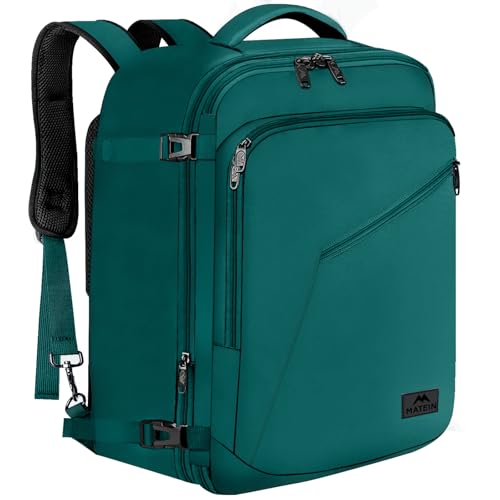
High-capacity travel packs spanning 35 to 45 liters cater directly to one-bag travelers aiming to avoid checked luggage fees on extended journeys. Models like the MATEIN Cute Backpack for Women and the MATEIN Weekender Backpack maximize overhead compartment allowances with expandable main cavities that hold extensive packing cubes. An unzipped 45-liter expansion compartment provides sufficient depth for clothing, toiletry kits, and camera gear without exceeding standard airline carry-on boundaries. The primary trade-off with these expansive packs is weight management, as heavy packing places considerable pressure on your shoulders during long walking transfers.
Airline Sizer Compliance and Dimensional Geometry
Navigating airline baggage restrictions requires paying close attention to external bag dimensions rather than relying solely on stated liter volume. Domestic and international carriers enforce strict personal item limitations, often capping bag footprints around 18 inches in height, 14 inches in width, and 8 inches in depth. Standard overhead carry-on bins generally accommodate packs measuring up to 22 by 14 by 9 inches, which corresponds directly to the 19 by 13 by 8-inch profile of the MATEIN expandable luggage bags. When packs are packed to absolute capacity, soft exterior panels can bulge outward and exceed rigid airport sizer boxes.
External compression straps play a vital role in keeping your travel bag compliant with stringent airline gate checks. Utilizing the four side compression straps found on expandable travel packs pulls the internal load inward toward your back, reducing exterior depth by several inches. This compressed profile prevents bulging seams and relieves continuous stress on the primary zipper tracks during transit. Verifying that your bag remains within airline dimensions before reaching the departure gate eliminates last-minute gate-check fees and protects fragile electronics from rough cargo handling.
Clamshell Suitcase Openings Versus Top-Loading Daypacks
The loading configuration of a backpack fundamentally dictates how smoothly you can pack and access belongings during a trip. Traditional top-loading backpacks require users to unpack from the top down, burying essential clothing items under layers of tech accessories and daily supplies. In contrast, travel-specific packs featuring a 180-degree clamshell opening lay completely flat on a bed or luggage rack just like a traditional suitcase. This flat opening allows you to stack modular packing cubes neatly and access specific outfits without turning the rest of your luggage inside out.
While clamshell designs excel for multi-day packing, panel-loading daypacks offer distinct advantages for active daily transit. Multi-pocket commuter packs, including the Mancio vintage Oxford design, feature separate exterior zippered compartments that provide immediate access to passports, boarding passes, and charging cords. Dedicated front pockets allow travelers to retrieve transit essentials at airport security checkpoints in seconds without exposing their main clothing compartment. Selecting between these access styles depends on whether the pack will function primarily as your main luggage carrier or as a versatile destination daypack.
Harness Ergonomics and Weight Distribution Mechanics
Carrying a fully packed travel bag across sprawling international terminals can quickly strain shoulder muscles and collarbones if the harness system lacks ergonomic refinement. Padded shoulder straps contoured with high-density foam help distribute dense tech and clothing weight evenly across your upper torso. An adjustable sternum strap spanning the chest prevents the shoulder straps from sliding outward toward your arms while stabilizing the pack against walking sway. Backpacks equipped with breathable air-mesh ventilated back panels also promote heat dissipation, reducing perspiration build-up during warm walking commutes.
Convertible carry options add tremendous flexibility when navigating crowded public transportation or checking bags at transit counters. Hideaway shoulder straps that stow neatly into a zippered back panel allow bags like the MATEIN travel series to transition effortlessly into a duffle or briefcase carry style. For travelers exploring rugged outdoor terrain alongside urban transit, reviewing our internal frame pack guide illustrates how structural stays and load transfer elements stabilize heavy trail loads compared to soft-sided travel harnesses. Proper strap tensioning ensures the heaviest packing cubes sit flat against your spine, maintaining balanced posture on long walks.
Fabric Construction, Denier Ratings, and Weather Resistance
The exterior textile of a travel pack dictates how well your gear withstands rough baggage carousels, overhead friction, and sudden rain showers. Lightweight polyester and tear-resistant Oxford fabrics offer exceptional tensile strength against abrasive tarmac and tight luggage racks without adding unnecessary empty tare weight. Water-resistant coatings applied to these synthetic weaves cause light precipitation to bead on the exterior surface instead of soaking through to sensitive electronics. However, basic water-resistant fabric does not mean complete submersible waterproofing, making protective rain covers advisable during sustained downpours.
Preserving the protective finish of synthetic travel fabrics requires sensible cleaning habits and periodic care. Machine washing travel bags or exposing them to high-heat tumble dryers can crack internal polyurethane linings and degrade water-repellent surface finishes. Wiping exterior dirt away with a damp cloth and mild non-detergent soap maintains the structural integrity of the fabric fibers and seam stitching. Allowing the pack to air dry completely away from direct heat sources ensures that zipper lamination and protective coatings remain intact across years of travel.
Tech Compartment Architecture and Hardware Durability
Modern travel demands secure, cushioned housing for laptops, tablets, and sensitive digital accessories. Padded laptop compartments, such as the 15.6-inch padded sleeves integrated into multi-compartment business packs, shield delicate screens from compression damage caused by surrounding items. Dedicated tech sleeves keep laptops upright and isolated against the back panel, balancing device weight while speeding up security screening line removals. Checking that your laptop fits within the padded sleeve without forcing the zipper prevents corner impact damage when setting the bag down on hard airport tile.
Hardware reliability often represents the difference between a seamless journey and a ruined travel schedule. Heavy-gauge lockable zipper heads, featured on travel-focused models, allow travelers to secure primary compartments with luggage padlocks when navigating crowded train platforms. Built-in USB charging ports, such as the external grommet found on the Mancio laptop pack, provide accessible device power while moving through transit hubs when paired with an internal personal power bank. Keeping zipper tracks free of sand, lint, and loose fabric threads prevents coil derailment when the pack is filled to capacity.
Luggage Integration and Multi-Modal Transit Features
Navigating multi-modal transit systems becomes significantly easier when your travel backpack integrates seamlessly with secondary rolling luggage. A rear luggage strap, or trolley pass-through sleeve, allows you to slide your travel pack securely over the extended handle of a wheeled suitcase. This configuration transfers the entire carrying load onto the rolling luggage wheels, giving your shoulders and back a welcome rest during long airport layovers. It also keeps your personal bag balanced and secure while maneuvering through crowded escalators and terminal corridors.
Reinforced grab handles on both the top and side of the bag provide essential leverage when retrieving packed bags from overhead bins or tight vehicle trunks. Padded side handles allow the bag to be carried horizontally in crowded bus aisles where shoulder-mounted packs frequently bump into seated passengers. When stepping onto regional puddle-jumpers with extremely narrow aisles, tucking shoulder straps into their rear panel eliminates loose webbing snags. These versatile handling options ensure smooth transitions across trains, commuter buses, taxis, and airplane cabins.
Packable Daypacks for Destination Excursions
One-bag travel often presents a dilemma once you arrive at your destination and check into your hotel or hostel room. Carrying a full 45-liter travel bag on casual museum visits, market walks, or day hikes is cumbersome and unnecessary. Bringing along an ultralight secondary option, such as the Foldable Traveling Backpack measuring 19.3 by 11.4 by 3.9 inches, solves this mobility issue completely. These packable bags fold down to a pocket-sized bundle inside your main luggage, deploying instantly when you only need a water bottle, light jacket, and guidebook for daytime exploration.
While lightweight foldable packs provide outstanding portability for city walking, travelers pursuing outdoor adventures or wilderness day trips often require specialized storage capabilities. Reading our insulated backpack cooler guide highlights how thermal insulation and specialized compartment sealing benefit travelers transporting chilled food and drinks on warm excursions. Ultralight packable daypacks lack heavy padding and rigid frames, making them best suited for light cargo rather than heavy camera kits or hydration reservoirs. Using a two-bag system ensures you have substantial luggage capacity for transit days and effortless mobility during day excursions.
Practical Selection Takeaways for Your Next Journey
Choosing the perfect travel pack ultimately comes down to aligning capacity, harness comfort, and luggage regulations with your personal travel habits. Weekend getaways and minimalist carry-on journeys thrive with an expandable 40 to 45-liter clamshell bag that eliminates baggage counter stops and protects clothing with internal compression straps. Digital nomads and urban business travelers may find greater daily utility in a 20-liter multi-compartment laptop pack with structured organization and convenient device charging features. Evaluating your transit frequency and destination needs before purchasing guarantees that your chosen backpack supports your travels reliably for years to come.







Write Your Review
No reviews yet. Be the first to share your experience!