


Carrying a daily load of heavy textbooks, mobile tech, and personal gear quickly exposes how critical proper ergonomic support is for your spine. When shopping for everyday carry bags, campus daypacks, or travel haulers, many shoppers get confused when a product listing displays a single universal sizing label. Understanding what does one size mean in backpacks is essential for preventing neck strain, trapezius pressure, and poor weight balance during long commutes. Many versatile options, including affordable hiking daypack options, rely on this universal framework to serve a broad range of body profiles without requiring complex frame adjustments.
Unlike technical alpine packs that require precise torso matching, most casual daypacks and urban commute bags use standardized dimensions. The term indicates that the pack features a static back panel length combined with adjustable webbing straps to accommodate diverse wearers. Examining how suspension components interact with your natural body mechanics makes it much easier to select a bag that stays comfortable all day. Taking a closer look at the actual structural measurements behind the label helps ensure your gear remains secure without dragging down your posture.



Unpacking Backpack Sizing: What One Size Really Means for Wearers
Backpack sizing labels often lead to confusion because people assume that a single designation means the bag will fit every human body equally well. In reality, a universal size designation simply indicates that the physical frame sheet, back padding, and shoulder harness connection points are built to a fixed, non-adjustable length. Rather than offering interchangeable backplates or sliding yoke tracks, the manufacturer engineers the pack around an average torso length. Understanding this structural baseline helps you determine whether a given pack can comfortably support your gear during daily transit.
The Mechanics of One Size: Torso Length Versus Strap Adjustability
Torso length represents the vertical distance between the base of your neck and the top of your hip bones, which forms the true foundation of backpack ergonomics. When a backpack is marked as one size, the distance between the top anchor of the shoulder straps and the base of the bag is permanent. The brand designs this distance to match the median adult torso range, which typically spans between 17 and 20 inches. Wearers outside this statistical window may experience subtle shifts in where the pack rests against their lumbar spine.
Adjustability in a universal pack comes entirely from the nylon webbing, sliding buckles, and sternum straps rather than the back panel itself. Tightening or loosening the lower strap tails changes the circumference around your shoulders and chest, allowing the bag to accommodate various clothing layers and body widths. However, pulling these straps tighter does not change the vertical length of the back panel. If the pack is inherently too long or too short for your spine, adjusting the webbing will only alter strap tension rather than spinal alignment.
This design approach works exceptionally well for everyday carry, university campuses, and light commuting where total load weight remains modest. Because most daily essentials weigh under fifteen pounds, a fixed back panel provides adequate stability without the added weight and complexity of an adjustable suspension ladder. Manufacturers can keep unladen pack tare weight low while delivering dependable structural durability. Recognizing this mechanical trade-off ensures that you set realistic carrying expectations for any single-size pack.
Measuring Your Torso to Verify Static Harness Fit
Finding out whether a standard universal backpack will suit your frame begins with measuring your actual torso length with a flexible tailor tape. Tilt your head forward to locate the prominent bony bump at the base of your neck, known as the C7 vertebra. Next, slide your hands down along your ribcage until you locate the top curve of your pelvic bones, resting your thumbs along this horizontal line. The vertical distance between that top neck vertebra and the horizontal plane of your hip line represents your torso length.
Overall body height can be deceptive because two people of the same height can possess vastly different proportions between their legs and torso. A person who stands six feet tall might have a relatively short 17-inch torso and long legs, while a shorter person could have a long spine. If your measurement falls comfortably between 17 and 20 inches, nearly every standard universal backpack will rest naturally along your back. If your torso measures under 16 inches or over 21 inches, fixed panels may sit awkwardly against your shoulders or lower back.
Verifying this measurement before choosing a bag saves you from enduring chronic carrying fatigue and sore pressure points. When the torso length matches the static panel height, the contoured shoulder pads curve naturally over your clavicles without pinching your neck muscles. The bottom edge of the bag stays seated in your lumbar curve rather than slapping against your buttocks while walking. Taking five minutes to measure your spine provides clear guidance before you commit to a single-size bag.
Why Everyday Commuter and Lifestyle Bags Use Universal Sizing
Everyday carry items, student bookbags, and innovative lifestyle products prioritize simplicity, reduced bulk, and rapid accessibility. Bags designed for multi-functional roles, such as the Quikflip 2-in-1 reversible backpack hoodie, emphasize versatility and rapid transformation over complex alpine load-bearing architecture. Novelty and sport backpacks, like the Nicest Mean Teacher Ever sport backpack, rely on standard dimensions so that any adult or teen can wear them casually. In these usage scenarios, extensive internal frames would add unnecessary bulk and undermine the primary appeal of the bag.
Commuting to an office, walking across a college campus, or running weekend errands rarely involves carrying expedition-level gear. A typical daily load consists of a laptop, charging accessories, notebooks, a water bottle, and a light jacket. These items do not generate the extreme downward vector force that demands custom load-lifter angles or micro-adjustable hip belts. Universal sizing streamlines the manufacturing process, making bags lighter, more flexible, and easier to pack flat inside luggage.
Additionally, fixed harness construction eliminates points of mechanical failure, such as hook-and-loop ladder tracks, sliding plastic snaps, or complex tension buckles. The simplified shoulder strap seam is often reinforced with robust bar-tack stitching directly into the upper perimeter of the pack. This direct union creates exceptional tear resistance and maintains a clean, professional aesthetic suitable for modern transit. For general urban routines, universal proportions deliver an ideal balance between convenience and practical support.
Technical Pack Construction Versus Static Everyday Harnesses
When you transition from casual town bags to rugged trail haulers, the mechanical requirements of load management shift dramatically. Outdoor enthusiasts who carry dense, heavy equipment over rocky inclines often rely on internal frame backpack systems that utilize sized hip belts and rigid stays. These technical outdoor rigs transfer roughly eighty percent of total pack weight directly onto the pelvic girdle to protect the delicate shoulder joints. To accomplish this mechanical transfer safely, the frame length must align precisely with the wearer torso height.
In contrast, standard single-size backpacks carry the overwhelming majority of their weight across the upper body and shoulder harness. While some universal models feature a basic webbing waist belt, these straps exist primarily to prevent lateral swaying rather than to bear downward weight. If a static pack is too short, cinching a waist belt simply pulls the shoulder straps down, digging into the trapezius muscles. If the pack is too tall, the bottom base extends far below the belt line, causing the bag to bounce against the lower hips.
Understanding this distinction helps buyers choose the correct equipment category for their specific plans. A fixed-harness bag is built for rapid transitions, tight subway cars, and quick access through panel-loading zippers. Technical multi-size packs excel during multi-hour treks where you must haul thirty or forty pounds across rough terrain without resting. Keeping the intended carrying duration and total load weight in mind prevents you from expecting trail-level weight transfer from an urban daypack.
High-Capacity Gear Haulers and the Demands of Heavy Packing
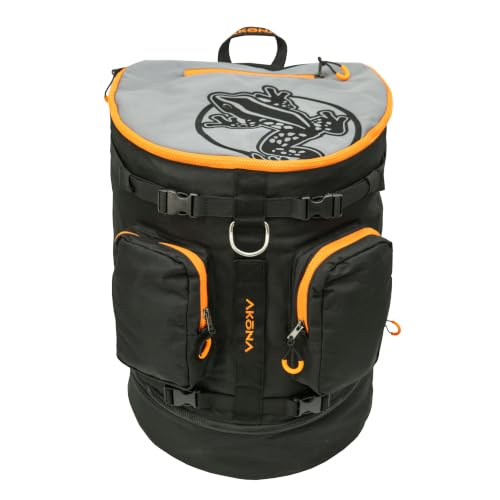
Not all universal packs are small daypacks; several high-volume specialty haulers also adopt a single-size format. Equipment haulers like the AKONA Globetrotter DX dive backpack offer fifty-eight liters of cavernous storage to hold bulky watersports equipment, regulators, and wetsuits. Similarly, users transporting hefty beverage cargo often turn to specialized backpack cooler models that utilize thick insulation walls inside a fixed external shell. When high volume combines with a static back panel, careful weight organization becomes vital.
Carrying fifty or more liters of equipment in a pack with a fixed torso length requires intentional packing discipline to maintain balance. Heavy, dense objects should always be positioned close to the back panel and centered between the shoulder blades. Placing heavy gear at the far outer perimeter of a deep bag creates extreme rotational leverage, pulling the shoulder harness backward and straining your neck. With universal gear haulers, compression straps play an essential role by pulling loose cargo tightly toward your center of gravity.
Large single-size bags also demand sturdy exterior textiles and reinforced stitching to withstand the stress of bulky loads. High-denier polyester and coated ripstop fabrics prevent seam slippage when oversized equipment is packed into tight corners. High-gauge zippers, such as standard heavy coil sliders, resist splitting when gear stretches the outer seams. By packing dense gear properly and engaging all side compression straps, wearers can comfortably carry substantial volume in a universal hauler.
Warning Signs That a Single-Size Pack Does Not Match Your Frame
When wearing a backpack for extended periods, your body provides clear feedback if the fixed panel dimensions clash with your anatomy. One of the most common warning signs is a prominent air gap between the top curve of your shoulders and the padded harness. If the straps lift into the air and only make contact near your armpits, the back panel is too tall for your spine. This misalignment causes the load to swing loosely, creating unnecessary strain on your upper back muscles.
Conversely, if a backpack is substantially too short for your torso, the shoulder straps will wrap tightly over your trapezius muscles at a sharp downward angle. This puts excessive downward compression on your neck and collarbones, often leading to numbness or tingling in the arms during long walks. You may also notice the lower edge of the back panel digging uncomfortably into your mid-spine rather than cushioning your lower lumbar region. Over-tightening the webbing straps only worsens this pressure by compressing the padding flat.
Another symptom of a poor fit is constant backward tipping that forces you to lean unnaturally forward at the waist while walking. This postural compensation indicates that the center of gravity has shifted below your natural balance point. When a pack fits your back correctly, you should be able to stand upright with your shoulders relaxed and your head held high. Noticing these ergonomic signs early allows you to re-evaluate your load distribution or explore different pack dimensions before soreness sets in.
Harness Adjustment Protocols to Balance Weight on a Fixed Panel
Getting the best possible fit from a single-size backpack requires a deliberate sequence when tightening your harness straps. Begin by loosening all strap adjusters completely, including the lower shoulder webbing, sternum sliders, and any stabilization straps. Place your standard daily gear inside the pack so that the padding compresses under realistic weight conditions. Swing the bag onto both shoulders and stand tall with your posture aligned and your feet shoulder-width apart.
Pull downward and backward on the main shoulder strap tails until the pack pulls snugly against your upper back. The contoured foam should rest flat against your chest and shoulders without pinching your neck or flaring outward under your arms. Avoid cinching the straps so tightly that your shoulders get pulled backward or your breathing feels restricted. The goal is to bring the back panel into complete, even contact with your upper and mid-back without lifting the pack off your spine.
Next, fasten the sternum strap across your chest, adjusting its vertical height so it sits roughly one inch below your collarbones. Cinch the chest strap just enough to pull the shoulder straps inward toward the center of your chest, relieving outward pressure on your arm joints. If the pack includes a lightweight waist strap, clip it around your hips to prevent the pack from swaying during fast walking or cycling. Following this systematic adjustment routine ensures optimal comfort from your fixed-harness bag.
Distinguishing Liter Capacity from Physical Torso Dimensions
New backpack buyers frequently confuse internal volume, measured in liters, with the structural sizing of the harness. A twenty-liter daypack and a forty-liter travel bag can both feature an identical one-size harness built for an 18-inch torso. Liter capacity indicates the total internal storage volume inside the main compartment and accessory pockets. Torso sizing, on the other hand, defines the physical geometry of the suspension system against your spine.
A compact twenty-liter pack offers plenty of room for daily tech, lunch containers, and small essentials without extending past your lower back. Larger thirty- to forty-liter bags gain their capacity by increasing depth, width, and vertical height, expanding outward away from the body. If you overload a deep pack, the external leverage increases significantly even though the torso height remains static. Keeping your daily volume matched to your actual gear requirements prevents unnecessary bulk and helps maintain balanced posture.
Understanding volume versus frame size is equally important when evaluating airline luggage limits and personal item regulations. A universal pack designed within standard eighteen-by-fourteen-by-eight-inch boundaries will slide smoothly under most airline seats when moderately packed. However, overstuffing external pockets can cause the bag to bulge beyond regional sizer boxes, regardless of its static back panel length. Balancing internal volume against physical exterior dimensions keeps your transit smooth and trouble-free.
Base Structure, Padding Materials, and Load Stabilization
The materials built into a universal backpack back panel play a decisive role in how comfortable the bag feels across different body types. Quality commuter bags utilize closed-cell EVA foam or dual-density padding that conforms to your shoulders without collapsing under moderate weight. Breathable air-mesh linings and molded center channels promote passive airflow, reducing the build-up of heat and perspiration during warm-weather transit. Without these ergonomic materials, a static panel can feel rigid and unforgiving against your shoulder blades.
Base geometry also influences how weight behaves when the bag is fully packed and carried throughout the day. A structured, flat bottom helps keep heavier electronics and textbooks seated vertically against the back wall rather than tilting forward. When you set the pack down on an office desk or train floor, a reinforced base helps the bag remain upright without toppling over. High-denier polyester and coated fabrics provide abrasion defense, ensuring the bottom panel resists ground moisture and daily surface friction.
Internal organization pockets and dedicated tech sleeves further stabilize the load within a universal shell. Suspended laptop compartments keep sensitive computers elevated above the base, guarding against floor impacts when setting the pack down. Elastic pen loops, zippered mesh compartments, and key tethers keep dense accessories anchored so they cannot shift while you walk. When internal components remain stable, a universal harness delivers consistent, dependable comfort across every mile of your journey.
Evaluating what a universal sizing designation means allows you to shop with confidence, matching pack features to your everyday lifestyle and physical proportions. By verifying your torso measurement, adjusting webbing systematically, and packing heavier gear close to the spine, a single-size bag can serve as a dependable, highly versatile daily companion. Focusing on quality construction, smart internal organization, and supportive padding ensures that your everyday carry remains balanced, comfortable, and ready for transit.






Write Your Review
No reviews yet. Be the first to share your experience!