


Setting up camp often involves establishing a stationary base, but exploring nearby ridges, alpine lakes, or backcountry trailheads requires a separate carrying solution. Hauling a bulky multi-day rig on a short side excursion wastes energy and restricts movement on technical switchbacks. Understanding what is a day pack for camping designs helps outdoor enthusiasts separate their primary shelter and sleep systems from the mobile supplies needed for daytime adventures. A dedicated daypack keeps hydration, trail snacks, and emergency gear secure while maintaining a low profile against your spine.
Modern options range from ultra-packable nylon sacks that stow inside larger expedition luggage to structured bags with dedicated compartments for hydration bladders and trekking poles. Evaluating unladen tare weight, volume capacity in liters, and harness ergonomics prevents unnecessary shoulder strain during steep ascents. Reviewing our budget hiking backpack guide provides additional perspective on finding durable gear without overspending before your next outdoor trip. Understanding these functional differences ensures your daytime carry remains light, organized, and properly balanced on every trail.

Pros
- Exceptionally lightweight at under a pound, making it effortless to pack into suitcases as a summit or day trip bag.
- Functional exterior storage with two bottle mesh pockets, dual trekking-pole attachments, and reflective safety markings.
- Reinforced double-layer bottom and bar-tack stitching add useful durability compared to standard budget packable bags.
- Integrated chest buckle whistle provides a built-in safety tool for remote day hikes.
Cons
- Frameless build has no internal stays or padded hip belt, making it unsuitable for carrying heavy, dense gear.
- Water-resistant fabric handles light drizzles but will allow moisture intrusion during steady or heavy rainfall.
- Direct back contact with the unventilated nylon body can lead to noticeable warmth on humid trail days.
The BAGPARKK 35L Foldable Hiking Backpack is an ultralight, frameless daypack engineered for hikers, campers, and travelers who require generous storage without carrying the weight of a traditional structured pack. Tipping the scales at roughly 0.88 pounds, this pack excels as a secondary daypack folded into luggage, a summit pack stashed inside a multi-day expedition backpack, or a lightweight solution for casual afternoon outings in regional and state parks.
In terms of trail functionality, the pack utilizes a frameless 35-liter main compartment that accommodates mid-layer fleeces, rain gear, lunch supplies, and first-aid kits. Because the pack lacks an internal frame, load lifters, and a load-bearing hip belt, proper gear distribution relies heavily on how you pack. Soft items placed along the interior back panel help cushion the spine from rigid objects, while external side mesh pockets provide convenient locations to stash water bottles without needing to access the main zip.
Construction highlights include tear- and water-resistant nylon fabric augmented with bar-tack reinforcements at major stress points. The bottom features a double-layer panel designed to withstand regular contact with rocks and picnic benches, while two-way metal zippers grant smooth access to the primary cavity. The shoulder straps utilize breathable mesh fabric paired with sponge padding to cushion the shoulders, supported by an adjustable sternum strap that stabilizes the harness while hiking.
Operation and storage are straightforward. When not in use, the entire backpack folds into an integrated 7 x 6 x 2 inch pouch that occupies minimal volume in a carry-on or gear closet. On the trail, side elastic cords provide a secure attachment method for up to two trekking poles, and the sternum strap buckle doubles as an emergency whistle, adding practical utility for solo hikers navigating unfamiliar paths.
Hikers should keep realistic trail limits in mind. Without a rigid back panel, suspension system, or padded waist belt, the pack will transfer the entire load directly to the shoulders, making it uncomfortable if loaded beyond lightweight daytime gear. Furthermore, while the nylon fabric offers water resistance against light spray and passing drizzles, the seams and zippers are not waterproof, meaning sensitive electronics and emergency layers should be secured in separate dry bags during wet weather.
For budget-focused day hikers, commuters, and globe-trotting travelers who want a high-capacity, low-weight daypack that stows away to the size of a paperback, the BAGPARKK 35L provides a highly functional, utilitarian carry solution.
The BAGPARKK 35L is designed as a universal unisex daypack tailored for quick trail readiness. The harness consists of wide, sponge-padded mesh shoulder straps that adjust via standard lower webbing sliders, allowing both men and women to customize the strap length to match their torso and upper body clothing layers.
Trail stabilization is managed by a sliding sternum strap that prevents the harness from slipping off the shoulders during rapid ascents. The chest buckle is molded with an integrated emergency survival whistle, offering audible safety signaling without needing extra clipped-on accessories. Dual elastic loops on the pack exterior hold two trekking poles securely, keeping your hands free on flat trail approaches or steep scrambling sections.
With an extra-large 35-liter interior volume, the BAGPARKK backpack provides ample space for daytime essentials, extra dry layers, trail food, and small gear organizers. An internal zippered pocket provides a secure location for smaller items like wallets, keys, and passports, preventing them from sinking to the bottom of the main cavity.
When your hike or trip concludes, the pack collapses into a self-contained 7 x 6 x 2 inch bundle that weighs less than a pound (approx. 0.88 lbs). This small profile allows travelers to pack it flat inside checked luggage or carry-on rollers, serving as an effective daypack at destination trailheads without incurring airline baggage weight penalties.

Pros
- Folds quickly into an integrated 4.5 x 3.9 x 7.8 inch pocket for effortless transport
- Integrated wet-and-dry compartment helps isolate damp gear from clean supplies
- Built-in shoulder-strap survival whistle and anti-theft zipper clips offer practical safety features
- Generous 35L storage volume across three distinct zipper compartments
Cons
- Frameless construction lacks rigid stays, load lifters, and a padded load-transferring hip belt
- IPX4 splash-resistant rating is not designed for prolonged torrential rain or submersion
- Best reserved for lighter loads since minimalist shoulder straps do not distribute heavy equipment weight
The MIYCOO Ultralight Packable Backpack is a 35L collapsible daypack designed for day hikes, travel excursions, and secondary gear hauling. Unfolding to 12.5 x 8.5 x 20.9 inches, this pack directly serves travelers who need a trail-ready bag inside their luggage, day hikers who prefer minimal base weight, and campers who need a lightweight summit pack once their primary camp is established.
On the trail, the 35-liter volume offers ample room for extra clothing layers, lunch, trail navigation, and light outdoor essentials spread across three separate compartments. Because this is a frameless, packable daypack, load management relies entirely on how you pack your gear and the fit of the shoulder straps. Without an internal frame or load-lifter adjustment, it performs best when carrying moderate, low-bulk loads on well-maintained paths, walking trails, and day outings rather than heavy backpacking payloads.
Construction centers around an IPX4-rated fabric designed to resist water splashes and light rain during sudden weather shifts or outdoor workouts. To support routine trail handling, the daypack features upgraded heavy-duty zippers and reinforcement across primary stress points. Practical safety elements are integrated into the exterior hardware, including a survival whistle molded directly into the shoulder strap buckle and anti-theft clips that link zipper pulls together to avoid accidental opening on busy transit routes.
Packing and everyday maintenance are straightforward thanks to the dedicated wet compartment, which isolates damp swimsuits, rain jackets, or muddy gear from dry interior layers. When the outing is complete, the entire backpack packs into its own internal pocket, shrinking to a compact 4.5 x 3.9 x 7.8 inches. This minimal footprint makes it easy to keep stowed in a carry-on suitcase, glove compartment, or larger expedition pack until needed.
Realistic limitations must be kept in mind regarding weight carry and severe weather. The frameless design means that packing dense, heavy equipment will place pressure directly on the unpadded or lightly padded shoulder straps, as there is no rigid frame sheet or structured hip belt to transfer weight to the hips. Furthermore, while the IPX4 fabric provides splash protection against light drizzle, it is not seam-sealed or submersible, meaning sensitive electronics and spare dry layers should still be protected inside dry bags during steady downpours.
For day hikers, budget-conscious travelers, and campers wanting an ultra-portable daypack that takes up almost no space when packed away, the MIYCOO 35L Daypack offers practical organization and dependable utility. Matching its use to moderate loads and mild-to-moderate trail conditions ensures you get the most value out of its packable design.
The MIYCOO daypack is engineered primarily for rapid deployment and compact storage. When fully collapsed, the backpack folds directly into its integrated inner pocket, resulting in a packed dimension of 4.5 x 3.9 x 7.8 inches that easily stows in luggage, duffel bags, or vehicle compartments.
Once unfolded, the pack expands to 12.5 x 8.5 x 20.9 inches, providing an instant 35-liter cargo volume. This makes it an effective auxiliary daypack for travelers who want to leave their main luggage at a hotel or basecamp while heading out for day hikes, sightseeing, or trail exploration.
Fabric durability and moisture management on the MIYCOO daypack are anchored by an IPX4 splash-resistance rating. This rating indicates protection against splashing water from any direction, making the pack suitable for light rain showers, damp trails, or sweaty workout sessions.
To support repeated trail use, the backpack features reinforced stitching at key stress points and heavy-duty upgraded zippers. However, because it is rated IPX4 rather than fully waterproof, hikers should use internal waterproof stuff sacks or pack liners to protect critical gear during severe rainstorms.
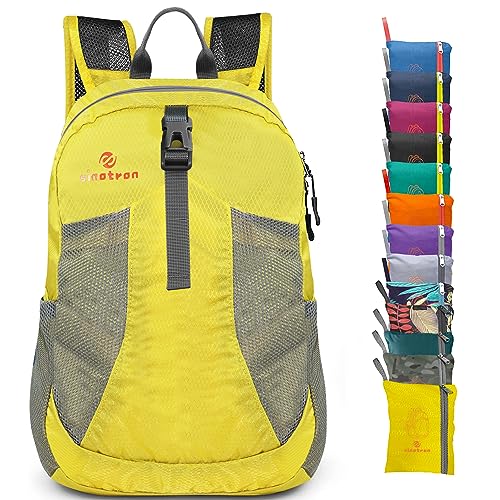
Pros
- Collapsible design packs into a pocket-sized 7.5 x 5.5 inch profile weighing only 0.7 pounds.
- Generous 22-liter volume accommodates daily trail essentials, snacks, and up to a 14-inch laptop.
- Dual side water bottle sleeves and a front mesh stash pocket provide quick external gear access.
- Water-resistant nylon construction paired with smooth metal zippers offers solid everyday utility.
Cons
- Frameless design lacks a rigid back panel, padded hip belt, or load lifters for supporting heavy trail gear.
- Water-resistant nylon fabric is not fully waterproof and will not safeguard electronics during persistent downpours.
- Manufacturer specifies that this pack is not suitable for children under 12 years old.
The Sinotron 22L Packable Hiking Daypack is a frameless, ultra-compressible day pack built primarily for day hikers, travelers, campers, and casual outdoor enthusiasts who require minimal carried weight. Tipping the scales at roughly 0.7 pounds, this foldable pack serves as a lightweight companion for short nature walks, summit scrambles from a basecamp, or travel excursions where stashing a full-sized hiking pack into luggage is impractical. Note that the manufacturer specifies this product is not intended for users under 12 years old.
With a stated 22-liter capacity and physical dimensions measuring approximately 6.3 x 8.3 x 13 inches, the pack offers enough room to store basic trail necessities such as light jackets, snacks, compact binoculars, or up to a 14-inch laptop. It lacks an internal or external frame, padded hip belt, or load lifters, meaning that the pack relies entirely on its adjustable mesh shoulder straps for carrying comfort. As a result, it performs best with lighter payloads, as heavy or dense items will press directly against the wearer's back without structural suspension to distribute the weight.
Construction centers on a water-resistant nylon fabric paired with solid metal zippers engineered for smooth opening and closure. On the exterior, the daypack features two dedicated side pockets suitable for standard water bottles or compact umbrellas, alongside an expansive front net compartment intended for quick-grab items like rain jackets or trail maps. Internally, smaller built-in organizational pockets help prevent small loose gear, such as car keys and multitools, from sinking to the bottom of the main compartment.
Packing and deployment are straightforward thanks to the pack's ability to compress down to a compact 7.5 x 5.5 inch folded profile, which occupies roughly the footprint of a paperback book. Hikers can readily slip the folded pouch into a primary multi-day backpacking pack or travel duffel until arriving at camp. Cleaning simply involves spot-cleaning the nylon shell with cool water, mild soap, and allowing it to air dry thoroughly before compressing it back into its storage configuration.
While practical for lightweight jaunts, buyers should keep realistic expectations regarding weather resistance and load capacity. The fabric is described as water-resistant nylon rather than fully seam-sealed or waterproof, meaning water may penetrate through zippers or seams during heavy rainstorms, requiring a dry bag or separate liner for sensitive electronics. Additionally, the absence of sternum straps, back-panel air channels, or waist support limits stability during vigorous scrambles or heavy gear hauls.
For budget-minded hikers, vacationers, and weekend campers seeking a straightforward, featherweight daypack that stows away virtually unnoticed, the Sinotron 22L offers dependable utility. Those intending to carry substantial water weight, camera setups, or multi-day backpacking gear will want a structured internal-frame pack, but for casual trail strolls and day outings, this foldable option provides functional convenience at minimal weight.
The Sinotron daypack provides a 22-liter storage volume, presenting a well-rounded configuration for everyday trail gear and quick day trips. The main compartment offers ample room for daily clothing layers, packed lunches, and personal electronics up to a 14-inch screen size.
For external organization, two side sleeves accommodate standard water bottles or travel umbrellas, while a large outer net pouch provides rapid access to light jackets or trail maps. Inside, dedicated smaller pockets keep keys, wallets, and pocket tools organized and prevent them from shifting around during movement.
Weighing just 0.7 pounds, this frameless daypack collapses into a self-contained footprint measuring 7.5 x 5.5 inches. This compact size allows travelers and backpackers to tuck the pack into luggage, glove boxes, or multi-day hiking packs without sacrificing substantial packing space.
When reaching a trailhead or basecamp, the pack quickly unfolds into a fully usable 22-liter daypack, making it an effective choice for side hikes and summit outings where a heavy expedition pack is unnecessary.

Pros
- Smart shoulder-strap phone pocket fits devices up to 7 inches for fast trail access without removing the pack
- Ultralight packable profile folds down neatly, making it an ideal summit pack or travel secondary daypack
- Flexible four-way stretch spandex front pouch easily holds a quick-drying camp towel or lightweight wind shell
- Security-focused hidden back pocket keeps wallets, passports, or keys shielded against the wearer's back
Cons
- Frameless, ultralight construction lacks back-panel padding and is not suited for dense, heavy loads
- 15-liter compact volume requires disciplined packing and will not accommodate bulky cold-weather gear
- Does not include an integrated hydration bladder sleeve, hose port, or waterproof rain cover
The UtiaMiaoGonGo 15L Small Hiking Backpack is a lightweight, packable daypack designed for quick trail outings, travel excursions, and everyday outdoor activities. With an unfilled weight of roughly 13.4 ounces (0.9 pounds), it offers an agile carrying solution for day hikers, summit pushers, and travelers who need a minimalist pack that stores flat inside larger luggage. Rather than functioning as a heavy-duty backpacking rig, this daypack is tailored specifically for hikers carrying the essentials: light layers, water, snacks, and personal electronics.
On trail, gear organization is handled across two distinct zippered main compartments, allowing you to separate clothing layers from trail tools and provisions. The exterior includes a four-way stretch spandex front pocket that expands to secure a lightweight rain jacket or pack towel. In addition, two elastic side mesh pockets accommodate standard drink containers or compact umbrellas, while a concealed zippered pocket placed against the back panel provides secure storage for cash, cards, and keys away from external access.
A standout design choice on this daypack is the functional shoulder strap layout. One strap incorporates a dedicated zippered compartment sized to hold smartphones up to 7 inches, eliminating the need to take off your pack to check navigation or snap a quick photo. The opposite strap features a drawstring cinch pouch for energy chews, lip balm, or small trail items. The shoulder harness is stabilized across the chest by an adjustable sternum strap, which includes an integrated survival whistle on the buckle for emergency signaling.
Construction centers on ripstop nylon designed to resist trail scrapes and branch snags during everyday hiking. The pack utilizes SBS zippers with corded pulls for smooth closure around curves, accompanied by reinforced stitching at major stress points. When your trip concludes, the entire backpack compresses down from its unfolded size of 17.3 x 10.6 x 5.5 inches into a compact 8.3 x 7.5 x 6.3-inch folded bundle, fitting easily into checked bags, glove compartments, or backpacking basecamp bins.
Because this is a frameless, packable daypack, it presents realistic limitations regarding carry support and weather exposure. Without internal stays, a rigid frame sheet, or a padded hip belt, carrying sharp or heavy objects will transfer directly to the back panel and shoulders. Careful packing of soft layers against the back is advisable. Furthermore, while the ripstop nylon provides initial exterior resistance, the bag does not include sealed seams or a rain cover, so waterproof stuff sacks should be used for sensitive electronics during downpours.
For day hikers, vacationers, and urban trail walkers seeking a budget-friendly, highly portable daypack with practical phone accessibility, the UtiaMiaoGonGo 15L Daypack delivers reliable organization in an ultralight footprint. It serves best as a grab-and-go day bag or auxiliary travel companion where minimal weight and compact storage matter most.
The UtiaMiaoGonGo 15L daypack emphasizes quick-access trail storage without requiring you to set down the pack. Its harness is equipped with a zippered pocket that holds smartphones up to 7 inches, alongside a secondary drawstring cinch pouch intended for keys, snacks, or cards.
Main gear capacity is split between two zippered central compartments for streamlined packing. On the front exterior, an expandable four-way stretch spandex pocket securely stashes wet towels or windbreakers, while dual mesh side pockets hold trail beverage containers and a hidden lumbar-facing pocket protects valuable personal items.
When fully deployed, the UtiaMiaoGonGo pack provides a 15-liter capacity measuring 17.3 inches tall, 10.6 inches wide, and 5.5 inches deep. This volume offers enough space for warm-weather day hikes, day excursions around national park visitor centers, or trail-to-town transit.
For storage and transit, the daypack collapses into an integrated pouch format measuring 8.3 x 7.5 x 6.3 inches. Weighing just 13.4 ounces, it packs neatly into suitcases or larger expedition backpacks to serve as a summit bag or an auxiliary carry-on that avoids baggage overage fees.
Understanding Daypacks for Basecamp Excursions and Trail Adventures
A daypack for camping is a compact, lightweight backpack designed to carry essential supplies during single-day outings while leaving heavy expedition gear at camp. Unlike multi-day trekking backpacks that span fifty to eighty liters, a camp daypack typically offers between fifteen and thirty-five liters of volume. This focused capacity provides sufficient room for water reservoirs, trail snacks, foul-weather layers, and first-aid supplies without encumbering your stride. Whether venturing out from a drive-in campsite or taking an afternoon detour from an established wilderness pitch, this versatile pack serves as your mobile utility station.
The Functional Role of a Camp Daypack
Backpacking deep into the wilderness requires transporting heavy sleeping bags, tents, cookware, and multi-day food rations. Carrying that entire load on a quick afternoon scramble up a nearby ridge creates unnecessary physical fatigue. A dedicated daypack allows you to leave heavy basecamp gear secured at your campsite while exploring surrounding trails with minimal burden. This separation of gear drastically improves agility, balance, and overall trail safety on steep ascents.
Camp daypacks prioritize nimble ergonomics and rapid accessibility over massive load-bearing capacity. Designers strip away heavy external frames, oversized lumbar pads, and complex suspension hardware to minimize unladen weight. Instead, these packs emphasize flexible panels, breathable shoulder straps, and intuitive exterior pocket grids. This minimalist silhouette prevents the pack from catching on overhanging branches or narrow canyon walls during technical movement.
Beyond trail hiking, campers regularly utilize daypacks for practical basecamp maintenance tasks. Gathering dry tinder, hauling water filtration gear down to a riverbank, or carrying cooking ingredients between group sites becomes much easier with a compact carrier. In vehicle-supported camping, a reliable daypack functions as an organized gear bag in the trunk before transforming into a summit bag. Choosing the right design depends largely on how you plan to balance camp utility with trail performance.
Capacity Tiers and Volume Considerations
Volume capacity dictates how much equipment a daypack can hold and how the bag rests against your torso. Compact daypacks around fifteen liters, such as the UtiaMiaoGonGo 15L Small Hiking Backpack for Men, provide a streamlined profile tailored for fast-and-light outings. These smaller bags comfortably hold a light windbreaker, two liters of water, nutrition bars, and a compact first-aid kit. Minimalist packs shine during hot summer scrambles where bulky insulation is unnecessary.
Mid-range capacities spanning twenty to twenty-five liters represent the most versatile choice for variable weather. The sinotron 22L Lightweight Packable Hiking Backpack exemplifies this bracket by accommodating extra fleece pullovers, hard-shell rain jackets, and mid-sized electronics. A bag in this capacity category handles unpredictable shoulder seasons where shifting cloud cover demands extra layering options. The internal space stays contained enough to prevent lighter loads from shifting during rapid walking.
High-capacity daypacks measuring thirty to thirty-five liters are ideal for full-day wilderness treks or hikers carrying shared group supplies. Options like the BAGPARKK 35L Ultra Lightweight Foldable Packable and the MIYCOO Ultralight Packable Backpack supply generous volume for emergency shelters, cooking stoves, and cold-weather clothing. These larger capacities also support hikers who need to carry extra water across arid terrain or pack bulky camera equipment. Selecting an appropriate volume tier ensures you carry everything needed without wrestling with excess dead space.
Packable Frameless Bags Versus Rigid Stays
Packable daypacks have gained significant popularity among outdoor enthusiasts who want a secondary carrier that packs down small. Engineered from thin, tear-resistant nylon fabrics, these collapsible models fold into integrated zipper pouches no larger than a standard paperback book. The BAGPARKK model weighs under a pound and compresses into a compact seven-by-six-inch footprint for effortless storage. This small packed profile allows backpackers to slip the pouch inside a primary travel duffel or multi-day backpack without taking up valuable space.
Frameless collapsible designs rely on careful packing rather than rigid aluminum stays to provide structural comfort against the spine. Placing soft apparel, such as a folded rain jacket or fleece, along the back panel creates a soft barrier that shields your back from hard objects. Conversely, dropping rigid gear like cook pots or water bottles against the unpadded back wall will cause uncomfortable rubbing. Learning to use soft items as an internal cushion is essential when carrying unstructured ultralight bags.
Traditional daypacks built with molded back panels or internal frame packs deliver superior stability when handling substantial equipment weights. Rigid frames transfer pack mass directly toward the hips, making them ideal for carrying heavy water reservoirs, climbing gear, or dense optics over challenging terrain. Frameless packable models, however, excel in versatility, unladen weight savings, and quick camp deployment. Your typical trail load should dictate whether a rigid frame or a collapsible unstructured design makes the most sense.
Harness Architecture and Load Stabilization
The harness system on a daypack determines how weight distributes across your upper body over several hours of walking. Lightweight trail daypacks frequently utilize contoured shoulder straps equipped with open-cell foam padding and breathable air-mesh linings. This porous mesh construction encourages airflow along the chest and collarbones, mitigating perspiration buildup during sustained climbs. Adequate strap ventilation reduces skin chafing and keeps apparel dry during strenuous summit attempts.
Sternum straps play an indispensable role in stabilizing the pack against your torso on technical terrain. Fastening the sternum strap pulls the shoulder straps inward, preventing them from sliding off your shoulders when navigating boulders or ducking under blowdowns. Several models, including the BAGPARKK and MIYCOO packs, integrate emergency safety whistles directly into the sternum buckle mechanism. Having an audible emergency signal positioned right at your sternum ensures rapid access in dangerous situations.
Unlike expedition backpacks that rely on heavily padded waist belts to carry seventy percent of the load, small daypacks often feature lightweight webbing belts or forego them completely. On packs carrying under twelve pounds, wide padded hip belts add unnecessary bulk and restrict natural hip articulation. A properly adjusted chest buckle combined with ergonomic shoulder straps keeps modest daypack loads securely anchored to your center of gravity. Ensuring the harness matches your torso length prevents neck strain and trapezius fatigue on steep switchbacks.
Material Durability and Weather Protection
Daypacks encounter rough treatment on the trail from abrasive rock faces, prickly vegetation, and damp resting surfaces. Manufacturers address these hazards by using high-strength nylon fabrics treated with reinforced weaves to resist tears and scuffs. The BAGPARKK backpack features a double-layered bottom panel and bar-tack stitching at high-stress attachment points to ensure long-term durability. These construction details help prevent premature bottom wear when setting the pack down on coarse granite gravel.
Weather resistance is another critical consideration when trekking through unpredictable backcountry environments. High-performance water-resistant fabrics and coated nylon shells protect gear against sudden mountain showers and light snowfall. The MIYCOO packable daypack carries an IPX4 splash-resistance rating to keep interior gear dry during damp workouts and passing storms. For heavy torrential downpours, packing dry layers into lightweight silicone dry bags inside your daypack guarantees full waterproof protection.
Hardware quality directly dictates whether a daypack will survive repeated seasons of rigorous outdoor use. Solid two-way metal zippers and reinforced SBS tracks, such as those found on the UtiaMiaoGonGo pack, prevent zipper tooth separation under heavy tension. The MIYCOO pack even incorporates anti-theft zipper clips that join zipper pulls together, preventing accidental openings while moving through dense thickets. Checking seam reinforcement and zipper smoothness ensures your gear remains secure miles away from camp.
Pocket Layout and Gear Organization on Trail
A well-planned pocket layout eliminates the frustration of unpacking your entire bag just to retrieve a small accessory. Logical gear compartmentalization allows hikers to separate wet gear from sensitive electronics and keep nutrition within reach. The MIYCOO backpack features an internal wet compartment engineered to keep soaked rain jackets or damp swimsuits separated from dry clothing. This functional partition ensures that morning dew or river crossings do not dampen your extra dry layers.
Exterior storage features dramatically increase efficiency by providing instant access to hydration and navigation tools. Deep side mesh pockets accommodate standard water bottles or umbrellas, keeping drinks readily available during quick trail breaks. The UtiaMiaoGonGo 15L backpack elevates accessibility by incorporating an integrated zippered pocket on the shoulder strap that accommodates large phones up to seven inches, along with a drawstring snack sleeve. These forward-facing pockets allow hikers to access navigation apps or grab quick snacks without unbuckling the pack.
External attachment points expand a daypack beyond its nominal liter rating while preserving valuable interior space. Elastic trekking pole attachments and side compression cords allow hikers to secure hiking poles safely when crossing level terrain. If you plan daytime excursions that include carrying chilled perishables to a scenic overlook, reviewing specialized backpack cooler options helps ensure food stays fresh. Front expandable spandex pockets also provide a stretchy stash spot for damp towels or discarded windbreakers without crowding internal compartments.
Packing Geometry and Load Balance Principles
Proper weight distribution inside a daypack prevents muscle fatigue and keeps your balance centered on uneven footing. Dense items, including full hydration bladders and heavy food supplies, should always sit low and close to your back panel. Placing heavy objects away from your spine creates unwanted rearward torque that pulls uncomfortably on your collarbones. Placing soft, compressible clothing around dense items keeps the load from shifting as you walk.
Mid-weight gear like water filtration pumps, compact first-aid kits, and headlamps belong in the mid-to-upper interior sections of the pack. Lightweight items such as knit beanies, rain ponchos, and sun hats should occupy the top cavity and exterior stretch pockets for rapid deployment. Essential emergency supplies, including fire starters, whistles, and pocket knives, should always be stored in dedicated security pockets. Keeping emergency tools in consistent locations ensures you can locate them immediately without panicking.
Overstuffing an ultralight daypack places unnecessary strain on zipper tracks and fabric seams. Cramming excessive gear into an unstructured nylon bag can also create rounded bulges that poke into your lower back during uphill hiking. Leaving a modest margin of slack inside the pack allows the bag to drape flatly and naturally against your spinal curvature. A balanced, orderly daypack moves seamlessly with your torso, saving energy across miles of backcountry exploration.
Cleaning and Technical Fabric Maintenance
Routine maintenance protects technical nylon fabrics and ensures your daypack delivers multi-year service on the trail. After dusty hikes, spot-clean dirty exterior panels using a soft cloth, lukewarm water, and mild technical soap. Avoid placing nylon daypacks in home washing machines because mechanical agitators can tear seams and strip protective water-repellent coatings. Hand washing is the safest way to remove sweat salts and ground-in dirt without damaging delicate materials.
Proper drying practices are equally vital for maintaining the structural integrity of synthetic pack fabrics. Never place nylon or polyester backpacks inside a tumble dryer, as extreme heat can melt internal polyurethane backings and warp foam shoulder straps. Instead, open all compartment zippers fully and hang the pack upside down in a shaded, well-ventilated area until completely dry. Storing a completely dry pack prevents mildew growth and eliminates unpleasant odors before your next excursion.
Zipper maintenance ensures smooth sliding action and prevents teeth from jamming in sandy backcountry environments. Periodically brushing fine dust and trail sand out of zipper coils prevents abrasive friction from wearing down slider metal. If zipper tracks begin sticking, applying a light coat of specialized silicone zipper lubricant restores smooth operation across curved seams. These simple care steps preserve the functionality of your daypack, keeping it trail-ready for future camping trips.
Selecting the Right Camp Daypack for Your Adventures
Choosing the ideal daypack requires balancing your typical excursion distance, weather expectations, and packing style. Day hikers who prefer short, fast outings in warm weather will appreciate the compact efficiency of a fifteen-liter pack with convenient shoulder strap pockets. Conversely, outdoor enthusiasts who venture into unpredictable mountain weather or carry gear for family members will benefit from the expansive volume of a thirty-five-liter bag. Identifying your non-negotiable trail supplies beforehand ensures you select a pack that supports your adventures without adding unnecessary bulk.
Pack weight and storage convenience should also factor into your decision, particularly if you need to stow the daypack inside a primary backpack. Ultralight packable daypacks weighing less than one pound provide exceptional convenience for camp staging without penalizing your baseline pack weight. Evaluating practical details such as reinforced stitching, integrated emergency whistles, and durable weather-resistant fabrics guarantees reliable performance in diverse environments. A well-chosen daypack keeps your trail essentials organized, comfortable, and protected, allowing you to fully enjoy every wilderness adventure.







Write Your Review
No reviews yet. Be the first to share your experience!