


Navigating crowded airport concourses, urban transit platforms, or remote trailhead parking lots often highlights the drawbacks of carrying heavy, rigid luggage. Travelers and daily commuters frequently need an auxiliary carrying solution that takes up negligible space inside a larger suitcase until duty calls. Understanding what is a packable backpack design principles reveals how these collapsible bags solve storage hurdles through specialized pack-in-pocket construction. Unlike standard commuter bags, packable models discard internal frames and thick foam backings to deliver maximum compression. They allow sightseers, weekend hikers, and grocery shoppers to venture out with essential gear while keeping their main luggage secure at the hotel.
Choosing an ultralight collapsible daypack requires balancing compact convenience against structural durability across unpredictable environments. While standard budget hiking daypacks provide rigid foam back panels and heavy organizational dividers, packable alternatives utilize resilient ripstop textiles and streamlined storage layouts. Modern designs weigh less than a pound while providing between 15 and 35 liters of practical loading capacity. Examining fabric treatments, zipper hardware, and strap breathability ensures your chosen daypack handles spontaneous outings without premature wear or seam failure.

Pros
- Folds quickly into its own 6.3 x 7.1-inch zippered pocket, making it easy to stash inside luggage or a larger backpack.
- Strap-mounted pockets allow hikers to access a phone and trail food without unbuckling or taking off the pack.
- Exceptionally lightweight at 0.75 lbs, reducing carry fatigue on short-to-moderate trail outings.
- Water-repellent Taslan nylon offers dependable durability and moisture defense in light precipitation.
Cons
- Frameless, packable construction provides no rigid back panel or internal stays to cushion sharp gear.
- Lacks a padded hip belt, restricting comfort to lighter, everyday gear loads rather than heavy trekking kits.
- Fabric is water-repellent against light moisture but not waterproof for sustained downpours, and no rain cover is included.
The G4Free 20L Packable Hiking Backpack is a compact, ultralight daypack engineered specifically for day hikers, travelers, campers, and outdoor commuters who need functional storage without excess bulk. Designed around an unstructured, foldable architecture, this pack serves as a convenient secondary daypack for vacations, a summit pack staged out of a larger multi-day backpack, or a lightweight primary pack for straightforward trail loops.
With an unfolded footprint of 11.4 by 5.1 by 18.5 inches and a total volume of 20 liters, the pack provides sufficient capacity for day-hiking necessities such as snacks, water, a first-aid kit, and spare layers. Weighing just 0.75 lbs, it places virtually no load penalty on the hiker before gear is added. Load management is handled by adjustable, breathable mesh shoulder straps and an adjustable chest strap that moves vertically up or down to align across the sternum, helping keep the shoulder straps properly positioned during continuous motion.
The pack is constructed from water-repellent Taslan nylon, a lightweight woven fabric selected to withstand routine trail friction and resist moisture during light rain showers. In addition to the main zippered compartment, the layout features a dedicated front zippered pocket, two exterior side pockets suitable for water containers, an inner slip pocket, and an inner zippered security pocket. An external elastic bungee cord on the front panel adds lash capacity for a windbreaker or packable layer, reducing the need to dig into the main compartment mid-hike.
Trail accessibility is elevated by the strap design, which integrates a zippered phone pocket on the left shoulder strap and a stretch elastic pocket on the right for food bars, lip balm, or navigation aids. Packing and packing down are straightforward: the entire daypack turns inward and zips into its internal storage pocket, reducing its dimensions to a travel-friendly 6.3 by 7.1 inches. Cleaning the Taslan nylon fabric is simple, requiring only a damp cloth wipe-down and air drying before repacking.
Because this backpack is engineered for compact compressibility, it has clear functional limitations. The pack is completely frameless and lacks foam back-panel padding, meaning awkwardly shaped or heavy items must be positioned carefully to avoid poking the wearer's back. It does not include a load-bearing hip belt, so total load weight should remain moderate. Furthermore, while the Taslan nylon sheds light surface water, it is not seam-sealed or waterproof, so hikers facing heavy downpours should protect sensitive electronics with dedicated waterproof dry sacks.
For hikers, travelers, and casual outdoor enthusiasts who prioritize minimal carried weight, self-contained packability, and quick-access strap pockets, the G4Free 20L Packable Daypack delivers outstanding everyday practicality. It serves best as a light-duty trail companion for fair-weather day hikes, day excursions away from base camp, and general travel use where keeping gear organized and lightweight is the top priority.
The G4Free 20L Packable Hiking Backpack is structured around a multi-compartment design that maximizes quick access for day hikers. The main zippered compartment handles bulky items such as an extra midlayer or lunch, supported internally by a flat slip pocket and a zippered security pocket that keeps wallets, keys, or passes safely separated from general contents.
On the exterior, the daypack features a front zippered pocket for flat items, alongside two open side pockets built for water bottles or compact trail umbrellas. A prominent feature is the shoulder-strap storage, which places a zippered phone holder on the left strap and an elastic pocket on the right strap. This allows hikers to check maps, capture photos, or grab snacks without pausing to take off the backpack.
For overflow outerwear, the front-panel elastic bungee cord holds compressible jackets or wet layers securely against the pack face. This thoughtful external layout ensures that high-frequency trail items remain directly within arm's reach throughout the hike.
At an empty weight of just 0.75 lbs, this daypack is built specifically for minimal base weight and simple transit. When not on the trail, the backpack reverses into its own interior zippered pocket, condensing from its full 18.5-inch height down to a neat 6.3 by 7.1-inch pouch.
This compressed footprint fits easily into standard carry-on luggage, vehicle glove compartments, or the bottom of an expedition-sized backpacking pack. Travelers can leave their primary luggage at a hotel or campground and deploy this 20-liter bag for day excursions, trail outings, or side summits without having to carry redundant, heavy luggage.

Pros
- Featherlight 2.3-ounce weight makes it effortless to pack as a backup daypack for travel or multi-day backpacking trips.
- Collapses into a tiny 8.6 x 3.1 x 1.06-inch profile for easy stowing in pockets, dry bags, or luggage compartments.
- Water-repellent polyester fabric helps resist minor outdoor moisture, scratches, and everyday trail abrasion.
- Adjustable breathable mesh shoulder straps help reduce heat buildup across the shoulders during warm-weather outings.
Cons
- Frameless, unpadded design lacks a structured back panel, hip belt, or sternum strap for carrying heavy trail loads.
- Water-repellent fabric coating resists light drizzle but is not waterproof during sustained, heavy downpours.
- Minimalist compartment design offers limited internal organization for separating complex trail gear.
The SUIKIHUM Ultra Lightweight Packable Daypack is a 20-liter foldable backpack engineered for travelers, casual day hikers, and cyclists who need a secondary carry option that occupies virtually zero luggage space. Weighing just 2.3 ounces, this frameless bag appeals to minimalist packers, budget-minded explorers, and day trippers looking to leave their heavy multi-day packs at camp or in hotel rooms while setting out on quick excursions.
In terms of trail functionality, the pack unfolds to 11.79 inches long, 4.32 inches wide, and 16.11 inches high, supplying a listed 20L volume suited for lightweight daytime gear. This internal capacity readily accommodates a change of clothes, a compact umbrella, a water cup, and smaller scattered trail essentials. The shoulder straps are built with breathable mesh and include adjustable buckles to let you dial in upper-body positioning, though the minimalist layout relies entirely on your shoulders without a sternum strap or load-transferring hip belt.
Constructed from scratch-resistant and wear-resistant polyester fabric, the pack body is engineered to withstand routine abrasion encountered on casual trails and commuting routes. The exterior fabric features a water-repellent surface coating that helps shed light moisture, drizzle, and surface splashes. Breathable mesh on the shoulder straps helps mitigate heat buildup against the shoulders, while a zippered opening provides secure closure for the main compartment.
Stowing and deploying the backpack is straightforward, as it compresses down into an integrated pocket or small inner pouch measuring 8.6 by 3.1 by 1.06 inches. Its pliable polyester shell allows it to be tucked into larger luggage pockets, glove compartments, or backpacking lids without fuss. Keeping the bag clean requires simple spot wiping and air drying, making post-trip maintenance hassle-free before refolding it for your next adventure.
Because this pack is built around extreme packability and minimal weight, it naturally foregoes the structure of dedicated technical hiking packs. The frameless build lacks rigid back support, dense shoulder strap padding, load lifters, and a waist belt, meaning it is not suited for dense, heavy loads or sharp, angular gear that might press against your back. Furthermore, while the fabric has a water-repellent coating, it is not waterproof, so critical electronics and sensitive items should be protected inside independent dry bags during steady rainfall.
For hikers and travelers who want an ultra-packable, featherlight 20-liter bag for short trail walks, city tours, or campsite errands, the SUIKIHUM Foldable Daypack provides solid utility at a microscopic pack weight. As long as your expectations match its ultralight, non-load-bearing design, it delivers dependable convenience whenever you need an extra bag on short notice.
The SUIKIHUM daypack provides a 20-liter internal capacity that gives day hikers and travelers room for light layers, snacks, a water cup, and an umbrella. Unfolded, the backpack measures 11.79 inches long, 4.32 inches wide, and 16.11 inches high, offering ample space for daily essentials without excess bulk.
When compressed for travel, the bag collapses down to 8.6 by 3.1 by 1.06 inches. This slim profile allows it to slide into luggage pockets, glove boxes, or larger multi-day packs until you reach your destination.
Built from wear-resistant and scratch-resistant polyester fabric, the exterior of the SUIKIHUM daypack is designed to handle common trail contact and casual travel wear. The breathable mesh shoulder straps allow air circulation across the shoulders to help reduce dampness in warm or humid climates.
The outer surface is treated with a water-repellent coating to help manage light rain and surface splashes. However, this water-repellent finish is not fully waterproof and does not feature sealed seams, so valuable items should be stored inside protective liners during prolonged or heavy wet-weather exposure.
Pros
- Folds neatly into an integrated pocket for compact storage inside suitcases or multi-day backpacking packs
- Spacious 30-liter volume split across three zippered sections and dual water bottle mesh pockets
- Bar-tack stitching across 14-plus stress points enhances structural integrity without adding pack weight
- Flap-free SBS zipper tracks reduce fabric catching and ensure smooth everyday operation
Cons
- Lacks an internal frame, rigid back sheet, or padded hip belt for supporting heavy trail gear loads
- Coated polyamide fabric repels light moisture but is not fully waterproof in prolonged downpours
- Does not include an integrated hydration bladder sleeve, hose port, or sternum strap
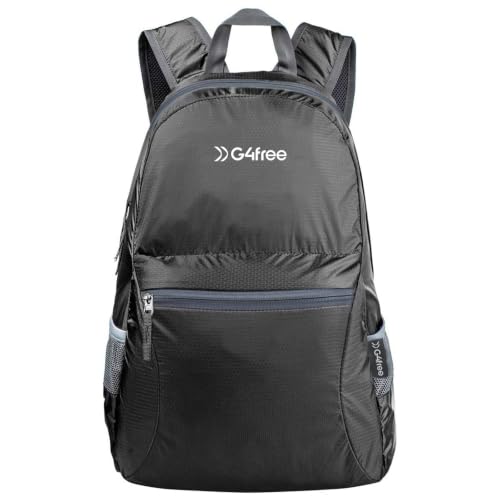
The G4Free 30L Packable Daypack is an ultra-lightweight, frameless travel and hiking backpack designed for quick excursions, summit pushes, and minimalist day outings. It folds directly into its own built-in interior pouch to roughly sandwich dimensions, making it an appealing secondary bag for travelers who want to leave heavy luggage at a basecamp or hotel and venture onto local trails with essential gear.
In terms of volume and organization, the pack offers 30 liters of structured space with overall dimensions measuring 18.8 inches high, 13 inches wide, and 7.5 inches deep. The storage layout is split into three main zippered compartments. The primary section easily accommodates lightweight clothing, an extra insulation layer, and bulkier trail necessities, while the outer front pocket holds fast-access items like maps, snacks, or keys. An interior zippered pocket protects personal valuables such as identification and cards, and two wide side mesh pockets hold standard drink containers or compact umbrellas.
Material construction relies on a water-resistant coated polyamide fabric designed to balance minimal weight against abrasion and tear resistance. To withstand the repeated pulling and shifting of regular trail outings, G4Free reinforces more than 14 stress points with heavy-duty bar-tack stitching. The pack also uses updated SBS zippers built without protective fabric flaps, which noticeably reduces the risk of the zipper teeth biting into the lightweight shell fabric during quick access.
Handling and packing the daypack is straightforward due to its collapsible structure. Unfolding the pack takes seconds, and the wide S-shaped shoulder straps feature breathable mesh to assist air circulation across your shoulders during warm outings. The straps adjust easily via standard friction ladders and lock firmly under light to moderate gear loads. Cleaning requires little more than wiping down the coated fabric with a damp cloth and allowing it to air dry before repacking it into its storage pouch.
Because this is a minimalist, packable model, it naturally presents carrying limitations when compared to structured daypacks. Without an internal frame, supportive back panel, load lifters, or a padded hip belt, carrying dense or heavy loads can cause the pack to sag against your back and place all carried weight directly on your shoulders. Additionally, while the coated polyamide shell sheds light rain and trail splatter, it lacks sealed seams or an included rain cover for heavy precipitation, and it does not feature a dedicated hydration reservoir port.
For hikers, travelers, and campers needing an inexpensive, ultra-compact daypack that stows away cleanly until needed, the G4Free 30L Packable Daypack delivers practical everyday functionality. It is best suited for carrying extra jackets, lunches, and water on casual day hikes, sightseeing trips, and airline travel where bulk and weight must be kept to an absolute minimum.
The G4Free 30L Daypack stands out primarily for its collapsibility, folding inward to fit inside its own internal zippered pocket. When packed away, the entire unit shrinks to roughly the size of a sandwich, allowing it to slide into luggage, carry-on bags, or the lid of an expedition backpacking pack without consuming noticeable space.
When unfolded, the 30-liter capacity provides ample room for day hikes that require multiple clothing layers, basic emergency gear, and packed meals. The three-compartment configuration separates clean garments from trail accessories, while the external side mesh pouches keep hydration accessible without opening the main compartment.
The pack is manufactured from a lightweight polyamide fabric treated with a water-resistant coating to shed mist, morning dew, and light drizzle. While this coating shields contents from incidental dampness, it is not engineered for submersion or sustained heavy rain, meaning sensitive electronics should remain in secondary dry bags.
Durability is reinforced through more than 14 bar-tack stitched seams positioned at high-strain junctions, including the shoulder strap connections. The hardware consists of smooth-gliding SBS zippers engineered without overlapping fabric flaps, minimizing snagging issues commonly found on ultra-lightweight nylon and polyamide bags.

Pros
- Weighs less than half a pound and packs into a compact sandwich-sized pocket for effortless transport
- Dual exterior side pockets accommodate standard water bottles, travel umbrellas, or quick-grab gear
- Smooth-gliding SBS zippers and reinforced stress seams offer solid dependability for a packable daypack
- Water-resistant nylon construction protects against light morning mist, trail dust, and mild splashes
Cons
- Frameless ultralight design lacks back-panel padding, load lifters, and a hip belt for supporting heavier trail gear
- Water-resistant fabric is not fully waterproof and requires internal dry bags or an external cover in steady rain
- Unpadded shoulder straps can cause pressure points if loaded with dense or heavy cargo
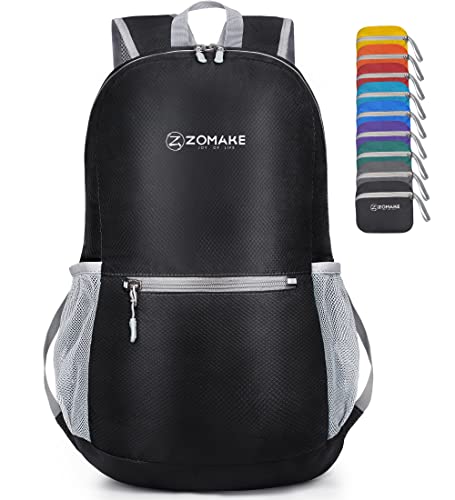
The ZOMAKE 20L Ultra Lightweight Hiking Backpack is a frameless, packable daypack engineered for day hikers, travelers, and campers who need functional gear storage without carrying excess base weight. Weighing roughly 0.49 pounds, this small pack fills the role of an auxiliary bag that stows out of the way until called into action. It works well for casual walks, day trips from a base camp, or as a secondary pack stashed in travel luggage for local outings.
With 20 liters of supported storage space, the pack accommodates basic day hiking gear including lightweight wind shells, trail maps, sun protection, and lunch supplies. Organization is divided between a main compartment with an internal partition, an exterior front zippered pouch for small electronics, and two open side sleeves tailored for water bottles or compact umbrellas. The layout keeps smaller items accessible on trail without requiring users to dig through the entire main bag.
Constructed from lightweight nylon, the pack shell offers both water-resistant and tear-resistant qualities for casual outdoor use. To reinforce high-wear areas, the manufacturer incorporates double-layered stitching along critical seams to help resist strain when the bag is filled. Hardware includes dual-direction SBS metal and resin zippers designed to slide smoothly without catching, as well as reflective safety strips on the front and sides to improve visibility during low-light trail conditions.
Packing and deploying the ZOMAKE 20L is straightforward, folding into a self-contained 6.7 by 6.7 by 1.97-inch pocket when not in use. When opened to its 17.71 by 5.5 by 10.6-inch profile, the shoulder straps adjust to fit various body shapes. Because it is completely unstructured, cleaning is simple, requiring just a quick wipe with a damp cloth before air drying and repacking into its compact travel square.
Hikers should keep in mind that this backpack is intentionally designed for ultralight convenience rather than heavy load hauling. Without an internal frame, rigid back panel, chest strap, or padded hip belt, carrying dense or sharp items can lead to discomfort against the back and strain on the shoulders. Additionally, while the nylon shell repels light drizzle and trail mist, it is not completely waterproof and will let moisture through during sustained or heavy rainfall.
For hikers, commuters, and travelers seeking an inexpensive, compact auxiliary pack, the ZOMAKE 20L provides solid utility and portability. It serves best as a lightweight companion for short trail routes, vacation day trips, and summit pushes where heavy suspension systems are unnecessary.
The ZOMAKE daypack provides a listed 20-liter volume while folding down into an ultra-compact 6.7 x 6.7 x 1.97-inch pouch. When expanded, its dimensions reach approximately 17.71 x 5.5 x 10.6 inches, giving day hikers adequate space for an extra fleece, snacks, trail guides, and hydration bottles.
Because the pack weighs just 0.485 pounds and compresses down to sandwich size, it fits inside larger multi-day backpacking packs, duffels, or glove compartments. Hikers can leave it packed away until reaching basecamp, then deploy it for quick side hikes and day exploration without carrying unnecessary base weight.
Built using tear-resistant and water-resistant nylon, the ZOMAKE 20L daypack is designed to handle common trail brush, light abrasions, and casual daily handling. Double-layered seam reinforcement at key connection points helps maintain structural integrity under standard packing stress.
The backpack relies on two-way SBS metal and resin zippers engineered for smooth pull operation. While the exterior nylon repels light spray and brief drizzles, it does not provide sealed seams, so valuable electronics or clothing should be protected inside waterproof pouches during wet weather.
Pros
- Compresses down to 4.5 x 3.9 x 7.8 inches inside its own pocket for easy storage
- Extremely lightweight at 0.8 pounds, making it an easy addition to luggage or larger packs
- Features a dedicated wet compartment to keep damp and dry items separated
- Built-in safety whistle on the strap adds trail-readiness for emergencies
Cons
- Frameless, ultralight design lacks a rigid back panel or padded hip belt for heavy loads
- IPX4 rating protects against light rain and splashes but is not fully waterproof in prolonged downpours
- Thin packable fabric provides minimal structure or protection against sharp, bulky gear
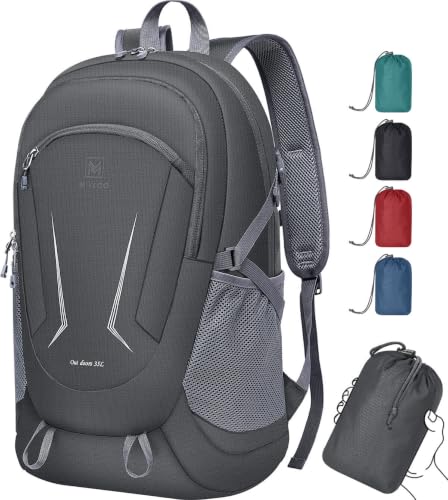
The MIYCOO 35L Ultralight Packable Backpack is a collapsible daypack designed primarily for day hikers, travelers, and campers who need functional gear storage without carrying extra base bulk. Weighing just 0.8 pounds, it serves effectively as a secondary daypack that can stow inside a larger multi-day pack or travel suitcase until needed at the trailhead or destination. It suits budget-minded day hikers, vacationers, and lightweight enthusiasts who prioritize high packability over heavy load-bearing support.
With an unfolded profile measuring 12.5 x 8.5 x 20.9 inches and a listed capacity of 35 liters, this daypack provides generous volume for lightweight layers, trail food, and daily essentials. Because it is an ultralight, frameless packable bag, it does not feature an internal frame, rigid back-panel suspension, or a padded weight-distributing hip belt. Carried weight rests on the shoulder straps, which means packing soft items along the back panel is essential for maintaining trail comfort during moderate outings.
The pack construction utilizes water-resistant fabric with an IPX4 rating, which is designed to withstand light rain and water splashes encountered on the trail. The manufacturer incorporates reinforced major stress points and upgraded zippers with interlocking anti-theft clips to secure compartments against accidental opening. For organization, the bag provides three primary compartments, highlighted by a dedicated wet pocket that isolates damp towels, wet shells, or sweaty clothing from the rest of your dry gear. An integrated survival whistle is molded directly into the strap buckle for emergency signaling.
Packing and storing the daypack is straightforward, as the entire bag folds into its own internal pocket to a compact size of 4.5 x 3.9 x 7.8 inches. When deployed, hikers can organize trail items across the three compartments, keeping quick-grab gear accessible and heavier items centered. To clean the pack, spot cleaning with a damp cloth and mild soap followed by thorough air drying is recommended to maintain fabric integrity and zipper functionality before refolding it for long-term storage.
Buyers should be aware of clear physical limitations inherent to collapsible daypacks. The IPX4 rating offers splash protection and light-weather resistance, but it is not completely waterproof and will not safeguard electronics during sustained heavy downpours or immersion. Furthermore, the absence of structural frame stays or ergonomic suspension means carrying dense, heavy gear like climbing hardware or large amounts of water can cause strap strain and discomfort over long trail miles.
For casual day hikes, side trips from a base camp, or carry-on travel where packing space is at a premium, the MIYCOO 35L Packable Daypack offers practical, lightweight utility. Hikers looking for an inexpensive, secondary summit pack or an everyday excursion bag will appreciate its low weight and wet-gear separation, provided their gear list stays within reasonable lightweight limits.
The MIYCOO daypack delivers a stated 35-liter capacity distributed across three separate zippered compartments. This layout allows hikers to segregate trail snacks, emergency supplies, and spare layers rather than dumping everything into a single main cavity.
A standout organizational feature is the built-in wet compartment, which creates a physical barrier to separate damp jackets, sweaty clothing, or wet swimwear from sensitive dry items. The anti-theft zipper clips allow pulls to be fastened together, reducing the likelihood of zippers sliding open under motion.
At an unloaded weight of 0.8 pounds, this pack is designed to fold away into an integrated inner pocket measuring 4.5 x 3.9 x 7.8 inches. This compact folded profile makes it easy to slip into travel luggage, a car glove box, or the bottom of an expedition pack for summit bids.
The exterior material holds an IPX4 splash-resistance rating, helping shield contents from light drizzle, road spray, or damp ground. Upgraded zippers and reinforced stitching at major stress points help support everyday light-duty trail and travel demands.

Pros
- Remarkably low pack weight of 1.15 ounces makes it effortless to stash in a pocket or primary pack.
- Diamond ripstop nylon construction with bartack stitching supports substantial carrying loads up to 66 pounds.
- Integrated pouch design means the storage bag cannot be misplaced while on the trail or traveling.
- Durable YKK zipper provides smooth, dependable closure for main compartment contents.
Cons
- Lacks internal framing, foam back panel padding, and ventilation channels for hot-weather back cooling.
- No sternum strap, hip belt, or external water bottle pockets for dedicated trail load-management.
- Ultra-thin 0.05mm fabric offers minimal interior cushioning against bulky or sharp-cornered objects.
The Nanobag Daypack 16L is a frameless, ultralight packable backpack engineered for minimalist day trips, travel side adventures, and emergency gear hauling. Weighing just 1.15 ounces (0.066 pounds), it targets backpackers who need a summit bag stashed inside a multi-day pack, travelers requiring a secondary day bag, and casual day hikers who want a practically weightless carry option for essentials.
Offering 16 liters of internal storage within a 6 x 14 x 18-inch footprint, this daypack accommodates compact layers, snacks, and small personal gear. The shoulder straps measure 27 inches in length and feature a wide design that spreads contact area over your shoulders. Because this is a minimalist packable sack, it does not include an adjustable torso frame, sternum strap, load lifters, or padded hip belt, meaning all gear weight rests entirely on the shoulder straps.
Constructed from ultra-thin 0.05mm diamond ripstop nylon, the pack relies on reinforced bartack stitching at critical stress points to handle loads rated up to 66 pounds. A durable YKK zipper secures the main compartment against accidental spills. For weather protection, the exterior fabric features a PFC-free water-repellent finish that manages light rain and morning mist, though it is not a fully sealed waterproof dry bag.
Stashing the Nanobag requires no structured folding routine; the soft fabric easily stuffs directly into its attached internal pouch within seconds. When compressed, it fits into a jacket pocket, glove compartment, or carry-on corner without taking up measurable space. Cleaning involves gentle hand washing with mild soap and air drying to maintain the integrity of the ripstop fabric and water-repellent surface.
Potential buyers should recognize that this ultralight pack provides zero structural padding or back ventilation. Carrying hard, sharp, or heavy items can poke through the thin 0.05mm fabric against your back, requiring deliberate interior packing with soft clothing near the back panel. Additionally, the bag omits exterior water bottle sleeves and hydration bladder ports, requiring all water containers and gear to sit inside the single main zippered compartment.
For hikers and travelers seeking maximum portability without base weight penalties, the Nanobag 16L provides an exceptionally compact solution. If you need a secondary daypack for quick excursions away from basecamp or an everyday travel tote that slips into your pocket, this featherweight pack delivers practical convenience at a manageable size.
The Nanobag Daypack is constructed from 0.05mm diamond ripstop nylon fabric designed to balance minimal weight with high tensile performance. The diamond weave structure helps prevent small punctures from spreading across the surface.
Reinforced bartack stitching is placed at key structural stress points where the 27-inch shoulder straps meet the pack body. According to manufacturer specifications, this build enables the pack to support loads up to 66 pounds, while an authentic YKK zipper provides consistent track closure without snagging.
The standout feature of this 16-liter daypack is its ability to pack away in seconds directly into its attached interior pouch. Users do not need to follow complicated folding patterns; simply stuffing the soft nylon body into the pouch compresses it to palm size.
At 1.15 ounces, the stowed pouch takes up virtually zero pack space inside a multi-day trekking pack, luggage pocket, or glove compartment. This makes it an ideal supplementary bag when you want to leave your primary backpack at camp and carry only lunch and rain gear on short trail spurs.
Understanding Packable Backpacks: Mechanics, Materials, and Carry Dynamics
A packable backpack is a specialized ultralight daypack engineered to fold, roll, or compress into its own integrated pocket or compact storage pouch. When folded down, these bags occupy roughly the volume of a sandwich, making them effortless to stash inside luggage, glove compartments, or work totes. Once unpacked, they expand into fully functional carriers capable of hauling clothing layers, water bottles, snacks, and daily essentials. Examining their specialized materials, functional layouts, and structural boundaries helps determine whether an ultralight collapsible daypack suits your upcoming travels.
Core Engineering and Self-Stowing Mechanics
The defining feature of any packable daypack is its ability to fold into itself without requiring a separate carrying case that could easily be misplaced. Most models feature an interior zippered pocket that serves double duty as the exterior storage pouch when turned inside out. Users invert this pocket, stuff the main body fabric inside, and zip it shut to create a neat bundle. Brands like G4Free and BAGSMART utilize this self-contained pouch design, shrinking 15-liter to 30-liter carriers into bundles measuring roughly six by seven inches. This compact form factor allows travelers to bypass baggage bulk until secondary storage is required.
Achieving this level of compression requires eliminating rigid internal frames, dense molded foam backings, and heavy plastic stays. Standard daypacks rely on structured backboards to distribute weight and maintain their vertical shape on flat surfaces. Packable bags replace these rigid components with flexible textile architecture that relies on internal packing tension to create shape. While this design choice removes structured back support, it dramatically reduces tare weight and enables frictionless packing inside primary luggage. The result is an adaptable carry solution that remains virtually unnoticeable until deployed for day excursions.
Textile Engineering: Nylon, Polyester, and Water Repellency
Ultralight packable packs rely on high-tensile technical fabrics to withstand daily friction despite having minimal material thickness. Manufacturers commonly turn to diamond ripstop nylon, Taslan nylon, or high-density polyester weaves that incorporate cross-hatch reinforcement grids. This cross-hatch pattern halts minor surface snags from propagating into large tears across the main cavity. For instance, the Nanobag daypack uses an ultra-thin 0.05-millimeter diamond ripstop fabric that remains light while sustaining substantial tension. Similarly, Taslan nylon used in G4Free models provides a sturdy exterior shell that resists scrapes from trailside branches.
Weather resistance represents another critical material benchmark for packable travel gear. Because these daypacks lack thick multi-layer construction, manufacturers apply durable water repellent coatings or internal polyurethane laminations to shed moisture. Models like the MIYCOO daypack feature water-repellent fabrics that carry splash ratings suited for light drizzles or wet gym gear. SUIKIHUM and ZOMAKE models similarly treat their synthetic weaves to protect clothes and personal documents from sudden afternoon showers. While water-repellent treatments handle brief trail precipitation, unsealed needle seams mean these packs should not be submerged in water.
Capacity Brackets: Matching Liters to Your Travel Profile
Selecting the ideal packable daypack begins with evaluating storage volume across distinct carrying tiers. The compact 15-liter to 18-liter category, represented by bags like the BAGSMART 15L and Nanobag 16L, targets minimalist outings, theme park excursions, and quick museum visits. These smaller packs hold a packable rain jacket, compact umbrella, sunglasses, and personal tech accessories without generating excess bulk. Their slim silhouette hugs close to the wearer back, making them exceptionally nimble through crowded transit stations and narrow tourist thoroughfares.
The 20-liter tier serves as the versatile sweet spot for most day hikers and weekend travelers. Options such as the G4Free 20L, ZOMAKE 20L, and SUIKIHUM 20L offer ample room for an extra mid-layer, trail lunch, two water bottles, and emergency gear. A 20-liter volume provides sufficient vertical depth to accommodate standard tablets, travel guidebooks, and compact camera cases. This bracket easily accommodates full-day itineraries without tempting the user to overpack beyond what unstructured shoulder straps can comfortably support.
For travelers needing maximum versatility, the 30-liter to 35-liter range delivers expansive storage space. Models like the G4Free 30L and MIYCOO 35L provide enough volume to handle multiple clothing layers, athletic shoes, beach towels, or spontaneous market purchases. These larger variants often serve as primary personal items on budget airlines or functional weekend grocery carriers. However, buyers should remember that packing a 35-liter unstructured bag to maximum capacity puts significant tension on shoulder straps, making thoughtful weight distribution essential.
Tare Weight and Stowed Footprint
One of the most compelling advantages of packable backpacks is their vanishingly small tare weight. Traditional daypacks typically weigh between two and four pounds before a single item is placed inside. In contrast, packable options often register under half a pound, with ultralight designs like the Nanobag daypack weighing as little as 1.15 ounces. The SUIKIHUM foldable pack weighs around 2.3 ounces, while 20-liter options from ZOMAKE and BAGSMART weigh roughly 0.5 pounds. This featherweight construction ensures that carrying an extra bag never strains strict baggage weight allowances.
The folded footprint of these bags is equally impressive when planning luggage organization. When packed into their built-in pouches, most collapsible daypacks measure between six and eight inches in length and less than two inches in thickness. This compact sandwich size allows them to slip into suitcase mesh lid organizers, exterior laptop briefcase pockets, or glove compartments. Having such an unobtrusive backup bag means you are always prepared for unexpected baggage overflow or spontaneous excursions without sacrificing valuable packing cubes.
Harness Ergonomics and Carrying Comfort Without Frames
Because packable daypacks lack internal suspension frames, their carrying comfort depends entirely on shoulder strap geometry and material composition. Most manufacturers utilize wide, contoured S-shape straps crafted from breathable open-cell mesh. These mesh straps promote continuous airflow across the chest and shoulders, reducing moisture buildup during humid summer walks. The wider footprint helps distribute weight over a broader surface area, preventing thin webbing from digging uncomfortably into collarbones under moderate loads.
Carrying dynamics differ fundamentally between ultralight collapsible designs and heavy-duty load carriers. While rugged structured frame packs utilize rigid stays and padded lumbar belts to transfer heavy trail loads onto the hips, packable backpacks rely entirely on the wearer shoulders. Consequently, packable bags excel under light to moderate loads, generally capped between ten and fifteen pounds. To enhance stability under these lighter weights, models like the G4Free 20L include adjustable sternum straps and shoulder strap phone pockets, which stabilize the pack against your chest during active movement.
Storage Layout: Balancing Volume and Organization
Designing internal storage for a packable backpack requires careful compromise between pocket convenience and packing bulk. Traditional office packs incorporate padded laptop sleeves, pen organizers, and multiple tablet sleeves, but these rigid dividers prevent tight folding. Packable backpacks prioritize a large, open main cavity paired with a few strategic exterior quick-access compartments. A typical layout includes a roomy central compartment, a front zippered pocket for keys and transit passes, and an interior security pocket that doubles as the pack-in pouch.
Exterior storage features significantly enhance practical usability during outdoor and urban excursions. Deep side mesh pockets, featured on models from ZOMAKE and G4Free, securely hold standard water bottles, compact umbrellas, or trail maps. In addition, front elastic bungee cords provide an external lashing point for wet rain shells or fleece jackets, freeing up internal volume for dry clothing. Specialized variants like the MIYCOO daypack even include wet compartments to separate damp gym clothes or swimsuits from sensitive dry gear.
Hardware Reliability: Zippers, Sliders, and Reinforcements
Hardware failure represents the most common issue on poorly constructed lightweight bags, making zipper quality a paramount consideration. Reputable packable packs utilize branded SBS or YKK two-way metal sliders designed to glide smoothly along nylon coil tracks. Models like the G4Free 30L feature updated track designs without zipper flaps that could accidentally snag in the teeth under tension. Smooth, two-way zippers allow quick entry from either side of the bag, making it simple to pull out a jacket without opening the entire compartment.
Structural stitching at key load points determines whether an ultralight bag survives extended travel. High-quality packable backpacks implement heavy-duty bar-tack stitching at shoulder strap junctions, haul loops, and pocket corners. The G4Free 30L, for example, reinforces over 14 distinct stress points to prevent seam separation under load. Furthermore, anti-theft zipper clips on MIYCOO packs and reflective safety accents on ZOMAKE bags provide extra peace of mind during transit or evening walks.
Practical Travel and Outdoor Scenarios
Packable backpacks shine across diverse travel and daily carry situations where bulky luggage proves impractical. Air travelers frequently pack a collapsible daypack inside their carry-on to serve as an approved personal item for under-seat storage on regional flights. Once arriving at a hotel, they deploy the packable bag for day excursions, leaving heavy rolling luggage behind. Cruise ship passengers find them invaluable for shore excursions, where carrying towels, sunscreen, and souvenirs requires temporary, lightweight storage.
Outdoor enthusiasts regularly use collapsible packs as summit bags during multi-day backpacking trips. Hikers leave their primary expedition packs at base camp and use an ultralight daypack for rapid scrambles to nearby peaks. While specialized outdoor bags like insulated backpack coolers excel at preserving chilled food during picnics, packable daypacks prioritize pure weight reduction and compact portability. They also serve wonderfully as spare gym bags, bicycle commuter packs, or reusable shopping totes for impromptu market stops.
Packing Geometry and Weight Distribution
Because collapsible backpacks lack molded foam back panels, improper packing can create irritating pressure points against your spine. Loading hard, angular objects like metal water flasks or power banks against the rear wall leads to uncomfortable poking while walking. The ideal packing technique places flat, soft items such as a folded fleece or rain shell directly against the interior back panel. This creates a makeshift cushioned barrier that mimics the comfort of a conventional padded backboard.
Balancing internal weight also preserves shoulder strap comfort and prevents excessive pack sway. Heavier dense items, such as full water bottles and dense food pouches, should sit centrally and close to your spine rather than pulling outward. Distributing dense weight along the center line prevents the thin unstructured fabric from sagging backward and dragging against your lumbar area. Cinching the sternum strap pulls the load inward, ensuring the bag moves naturally with your torso during active movement.
Cleaning, Care, and Fabric Preservation
Maintaining the water-repellent performance and seam integrity of an ultralight daypack requires gentle cleaning methods. Placing synthetic packable bags into a washing machine can cause severe friction from agitator blades, potentially peeling internal polyurethane backings. Instead, clean soiled fabrics by wiping the exterior with a damp cloth or soft sponge using lukewarm water. For stubborn mud or trail grime, use a mild non-detergent soap rather than harsh chemical bleaches that strip durable water repellent finishes.
Drying procedures must always avoid high-temperature exposure to preserve synthetic yarn tensile strength. Never place a packable nylon or polyester daypack into a mechanical tumble dryer, as heat can melt delicate stitching and distort zipper coils. Hang the bag upside down in a well-ventilated, shaded space until all internal and exterior pockets dry completely. Storing the bag while still damp can foster mildew growth and weaken internal waterproof laminates over time.
Selecting the Right Packable Daypack for Your Needs
Determining which packable daypack suits your lifestyle depends on balancing capacity, weight tolerance, and planned activities. Minimalist travelers who prioritize tiny footprints above all else will appreciate the featherlight, pocket-sized profile of options like the Nanobag or SUIKIHUM models. Day hikers and versatile travelers will gain more utility from 20-liter options like G4Free and ZOMAKE, which offer sternum straps, water bottle retention, and organized zip compartments. Those needing surplus room for wet clothing or bulky souvenirs will benefit most from 30-liter to 35-liter expandable variants like MIYCOO.
A well-chosen packable backpack serves as one of the most practical additions to any modern travel setup. By delivering reliable secondary carrying capacity without adding luggage weight, these collapsible bags free you to explore destinations unencumbered. Matching your typical load requirements to appropriate fabric strengths and strap designs ensures dependable comfort on every journey.







Write Your Review
No reviews yet. Be the first to share your experience!