


Heavy binders, physical textbooks, athletic clothing, and delicate laptops quickly overwhelm poorly proportioned school bags during a busy academic week. Determining what size backpack for high school offers the right balance between internal storage capacity and everyday carrying comfort requires evaluating both internal liter volume and structural design. High school students often carry between twenty and thirty-five liters of gear, which can strain developing spines if the bag distributes mass unevenly. Selecting an appropriate volume prevents zipper blowouts, torn seam webbing, and damaged electronic corners when rushing across campus between bells.
While outdoor enthusiasts exploring trails may turn to a budget trail pack guide for simple day trips, high school gear demands structured internal pockets and fortified laptop protection. Choosing a pack that is too compact forces students to crush their homework binders, while an excessively oversized frame encourages overpacking that leads to chronic neck and lower back fatigue. The right bag pairs targeted sleeve dimensions with rugged fabric construction to handle crowded lockers, hallway collisions, and inclement weather walks.

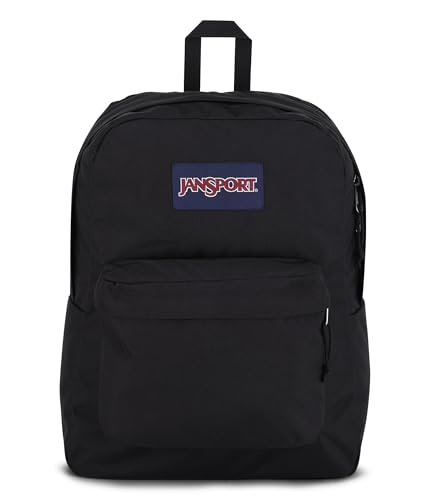
Pros
- Weighs only around 0.71 pounds, making it exceptionally easy to carry or pack inside larger luggage.
- Tough 600-denier fabric construction handles routine friction, dirt, and daily trail wear.
- Front organizer pocket keeps essential personal accessories easily accessible.
- Padded shoulder straps deliver reliable comfort for light everyday loads.
Cons
- Lacks dedicated technical trail features such as a hip belt, sternum strap, and load-lifter adjustment.
- Does not include an internal frame, hydration reservoir sleeve, or external bottle pockets in the listed specs.
- Not engineered for heavy cargo, technical terrain, or multi-day backpacking treks.
The JanSport SuperBreak One is a classic, minimalist daypack designed for casual day walks, local park strolls, daily commutes, and light travel. Built for users who value simplicity over complex gear loops, this pack strips away technical hardware to focus on core functionality. At a featherweight listed weight of roughly 0.71 pounds, it serves beginner hikers, families, and everyday travelers who need an affordable, reliable way to carry basic essentials without the bulk of a full-scale hiking rig.
For casual outdoor use, this backpack keeps load management straightforward. It features a single wide-opening main compartment that accommodates an extra fleece, a rain shell, snacks, and personal items. Because the pack operates without an internal frame, stay, or rigid back panel, it relies on soft structure and careful packing to maintain its shape against your back. Padded shoulder straps with a 15-inch drop provide cushioning across the shoulders, making it comfortable for light loads on flat to gently rolling trails.
Construction quality centers on JanSport's 600-denier fabric, which offers solid abrasion resistance against rough picnic tables, dirt paths, and daily friction. The manufacturer specifies water-repellant fabric paired with a coated interior, delivering baseline resistance against light drizzles and surface dampness. Sturdy zippers control both the main compartment and the front pocket, ensuring smooth access without premature snagging during routine use.
Organization and handling are built around quick daily efficiency. The front utility pocket includes an integrated organizer, giving you dedicated slots to secure small gear such as keys, lip balm, sunglasses, or pocket knives rather than letting them settle to the bottom of the bag. A durable web haul handle at the top allows you to hang the pack on tree branches at a rest stop or grab it swiftly from the trunk of a vehicle.
There are clear limitations to keep in mind before taking this pack on demanding excursions. The SuperBreak One lacks a padded hip belt, sternum strap, load lifters, and ventilated back channels, meaning it cannot transfer weight to your hips or keep your back cool on strenuous uphill climbs. Additionally, the specifications do not list hydration reservoir ports or side water bottle pockets, requiring you to store drinks inside the main compartment alongside your other gear.
For casual day hikers, neighborhood walkers, students, and budget-conscious travelers seeking a straightforward daypack, the JanSport SuperBreak One delivers dependable utility at an accessible price. While serious backcountry trekkers will require a dedicated technical harness and hydration routing, this pack remains a tried-and-true option for relaxed frontcountry adventures and daily carry.
The JanSport SuperBreak One utilizes a dense 600-denier polyester fabric known for handling everyday wear and tear. This heavy-duty weave resists abrasion from rough surfaces, ground contact, and brush along established walking paths.
A coated interior complements the water-repellant outer face, providing basic protection against brief rain showers and surface moisture. Heavy-duty coil zippers and reinforced stitching around stress points help ensure the bag holds up to regular zip-and-pack cycles without split seams.
Weighing only about 0.71 pounds, this pack is an outstanding secondary daypack for travelers. Its frameless, unstructured body allows it to lay flat or roll up easily inside larger luggage or a multi-day backpacking pack until you reach your destination.
On mild day hikes, it comfortably holds lightweight essentials such as a map, windbreaker, packed lunch, and sunscreen. The front organizer pocket keeps smaller tools and identification separated from your bulkier layers, streamlining trailside rest stops.


Pros
- Featherlight 1-pound construction eliminates unnecessary base weight on short walks and town-to-trail outings
- Organized dual-compartment layout with a 15-inch laptop sleeve and an organizer pocket keeps gear sorted
- Contoured S-curve shoulder straps and a padded back panel deliver straightforward daily carrying comfort
- Integrated exterior side pocket keeps hydration bottles upright and readily accessible
- Long-term reliability backed by a manufacturer lifetime warranty against hardware and fabric breaks
Cons
- Lacks dedicated hiking suspension components such as a hip belt, sternum strap, or internal frame
- Does not include an internal hydration bladder port or hose routing exit
- Requires hand washing for cleaning and offers no listed waterproof rating or included rain cover
The JanSport Big Student Backpack is an everyday crossover daypack measuring 13 x 17.5 x 10 inches and weighing just 1 pound unloaded. Built with dual main compartments and an integrated 15-inch laptop sleeve, this pack is designed for students, commuters, travelers, and casual day hikers who want a single dependable bag that transitions seamlessly between urban environments and local park trails.
For trail use, this pack functions primarily on smooth, well-established front-country pathways where heavy backpacking gear is unnecessary. The 1-pound build keeps your carried base weight exceptionally low. However, because this design does not include a rigid frame, hip belt, or sternum strap, the entire carried weight sits directly on your shoulders. It is best reserved for carrying lighter day loads such as a light fleece, packable windbreaker, trail snacks, and personal items.
JanSport constructs the pack with durable fabric, sturdy zippers, and a top web haul handle for easy lifting at the trailhead or transit stops. The ergonomic S-curve shoulder straps conform naturally across the chest and shoulders, while a padded back panel provides a soft barrier between your back and rigid contents stored inside. Storage is organized across two distinct full-height compartments, letting you separate trail clothing from paperwork or electronics.
Fitting and daily setup are simple, relying on standard strap sliders to adjust the shoulder strap length for different body builds. The exterior side pocket accommodates a standard water bottle for straightforward hydration stops on the move, while the front utility compartment includes an organizer for small essentials like keys, trail permits, or a compact flashlight. Because this pack is made without water-sealed seams, keeping gear dry during heavy downpours requires an aftermarket rain cover or internal dry bags.
Realistic limitations center on its non-technical design. The Big Student lacks hydration reservoir routing, load-lifter straps, trekking-pole lash points, and hip support, making it unsuitable for rugged backcountry routes or heavy gear loads. Exceeding moderate carrying weights can lead to shoulder strain without a hip belt to transfer mass to the pelvis.
For casual hikers, students, and travelers seeking an affordable, straightforward daypack backed by a lifetime repair-or-replace warranty, the JanSport Big Student delivers practical volume and solid everyday utility. Hikers preparing for technical ascents, multi-day routes, or heavy trail gear should instead consider purpose-built internal-frame hiking packs with integrated load-bearing suspension.
The JanSport Big Student Backpack utilizes a dual-chamber configuration across its 13 x 17.5 x 10-inch exterior profile. The rear main compartment houses a dedicated 15-inch laptop sleeve, keeping rigid electronics or flat documents positioned close to the back panel for balanced packing.
The secondary main compartment offers open-volume capacity for bulky items such as an extra jacket, lunch container, or small first-aid kit. On the front exterior, an organized utility pocket prevents small personal gear from sinking to the bottom of the bag, while the side pocket holds a standard water bottle within easy reach.
On recreational trails, the Big Student pack performs best when loaded with lightweight, casual gear. Because it is frameless and lacks both a sternum strap and a padded hip belt, load stabilization depends entirely on how you pack the interior chambers and adjust the S-curve shoulder straps.
Hydration management is managed via the exterior side bottle sleeve, as there is no integrated hydration bladder port or hose pass-through. Maintenance is simple with hand-wash care instructions, and the pack is protected against manufacturing defects by JanSport's lifetime warranty.
How to Determine the Right Backpack Size for High School
Choosing the correct backpack capacity for high school requires balancing daily academic storage needs against ergonomic carrying comfort and physical locker dimensions. Understanding how liter volume, laptop sleeve engineering, and internal pocket layouts interact helps students carry essential textbooks and tech gear without experiencing chronic back fatigue or damaged equipment.
The Liter Volume Spectrum: Breaking Down Academic Capacity
High school students carry an evolving mix of physical books and digital technology, making backpack capacity an essential consideration before the school year begins. Bag volume is universally measured in liters, reflecting the total interior capacity across every zippered compartment and accessory pocket. For typical high school demands, the most practical capacity falls between twenty and thirty-five liters, depending on course load and extracurricular activities. Choosing a pack under twenty liters often leads to cramped supplies and strained seams, while bags over thirty-five liters can quickly become unwieldy in crowded hallways.
A compact pack in the twenty to twenty-four liter range suits students attending digital-first schools where physical textbooks are rarely required. This volume easily holds a standard laptop sleeve, a couple of spiral notebooks, basic stationery, and a light jacket without adding unnecessary exterior bulk. Introducing a standard two-inch binder into a twenty-liter bag, however, instantly consumes the majority of the central compartment. Students required to carry multiple heavy binders will quickly outgrow this smaller tier and face daily packing frustrations.
The standard benchmark for most high schoolers sits between twenty-eight and thirty-four liters, offering the ideal balance between internal storage and daily mobility. This medium-large capacity accommodates a laptop, two heavy textbooks, multiple folders, a scientific calculator, and a packed lunch with room to spare. Furthermore, high-capacity bags reaching thirty-five to forty liters cater to student-athletes or band members who must haul athletic clothing, instruments, and academic supplies simultaneously. Choosing the right volume ensures that daily essentials fit securely without forcing seams to burst under pressure.
Physical Dimensions and Locker Clearance: Height, Width, and Depth
Liter capacity indicates total volume, but exterior dimensions dictate whether a backpack fits comfortably into daily school routines. A standard high school locker measures approximately twelve inches wide, meaning wide-frame packs will get jammed or scuffed when pushed inside. Most functional student backpacks measure between seventeen and nineteen inches tall, twelve to fourteen inches wide, and seven to nine inches deep. Checking these physical measurements ensures the pack slides into narrow lockers and rests neatly beneath classroom desks without blocking foot traffic.
Depth is the specific dimension that changes most dramatically once a student fills their backpack with heavy books and supplies. An unstructured bag with a nominal depth of seven inches can expand past ten inches when loaded to full capacity. This outward expansion shifts the pack center of gravity backward, pulling on the shoulders and encouraging poor spinal posture. Backpacks equipped with adjustable side compression straps allow students to cinch excess bulk inward, keeping the load centered and secure during long campus walks.
Height compatibility also correlates directly with torso length, which varies considerably between freshman and senior students. A pack measuring over nineteen inches tall may rest uncomfortably against the tailbone of a shorter student, causing friction and lumbar strain during walking commutes. Conversely, taller students carrying overly short bags will experience concentrated strap pressure over the collarbone. Verifying that the base of the bag rests near the natural waistline prevents unnecessary lower back stress and supports natural walking balance.
Laptop Compartment Engineering and Device Protection
Modern academic schedules rely heavily on portable computers, making dedicated device protection a crucial part of backpack selection. Padded laptop compartments are typically sized to fit standard screen dimensions, ranging from thirteen-inch school Chromebooks up to seventeen-inch workstation computers. When reviewing backpack specifications, students should confirm whether the compartment is an integrated sleeve within the main section or a separate rear zippered chamber. Independent zippered compartments provide quicker access at study desks and keep expensive electronics isolated from leaking water bottles or lunch containers.
Internal sleeve dimensions must accommodate not only the bare computer chassis but also any protective bumper case required by the school. A sleeve rated strictly for a fifteen-point-six-inch screen may struggle to fit a laptop housed in a thick, drop-resistant rubber shell. In contrast, heavy-duty packs featuring dedicated seventeen-inch compartments provide extra clearance for larger devices, computer science gear, or gaming laptops. Checking exact compartment width and depth helps avoid tight seam tension that could crack screen glass under lateral pressure.
Base impact protection represents another critical detail that directly impacts hardware longevity. Well-designed tech compartments feature a suspended false bottom that holds the device sleeve an inch or two above the bottom of the bag. Without this elevated design, dropping an overloaded pack onto a concrete floor or gym bleacher transfers kinetic shock directly into the laptop corners. Selecting a bag with dense base padding or suspended sleeve architecture shields fragile electronics from accidental drops throughout the school year.
Compartment Architecture: Single Cavity Versus Multi-Pocket Organization
How a backpack organizes its internal space impacts daily efficiency just as much as its total liter volume. Traditional minimalist backpacks rely on a single open main compartment paired with one small exterior utility pocket. This layout offers deep, uninterrupted packing space, making it easy to slide bulky items like athletic gear, lunchboxes, or oversized binders inside. The primary drawback of a single cavern is internal disorganization, as charging cords, pens, and loose personal accessories easily get lost at the bottom.
Multi-compartment designs address this problem by dividing storage across two or three separate zippered chambers alongside specialized internal organizer panels. Front utility pockets with dedicated slots keep student ID cards, pencils, scientific calculators, and keys organized and instantly accessible between class periods. This compartmentalization prevents delicate items from getting crushed beneath heavy science or history textbooks during rapid transitions. Students who prefer structured daily organization find these separated compartments especially helpful for maintaining orderly school supplies.
However, extensive organizer grids can occasionally reduce usable depth in the main packing chamber if internal divider fabrics are sewn tightly. When multiple compartments compete for the same exterior footprint, loading a thick three-ring binder can compress adjacent pockets, making exterior zippers difficult to pull. Evaluating what items are carried on a typical day helps determine whether an open packing cavity or a structured multi-pocket system provides the most practical setup.
Harness Ergonomics and Weight Distribution Across the Spine
High schoolers frequently haul twenty to thirty pounds of school supplies, making ergonomic harness design a vital health consideration. Medical guidelines generally recommend that a loaded pack should not exceed ten to fifteen percent of a student’s total body weight. When daily loads approach this threshold, contoured shoulder straps with dense foam padding become essential for distributing weight evenly across the shoulders. Ergonomic S-curve shoulder straps follow the natural contours of the torso, reducing pressure points around the neck and collarbone.
Back panel engineering also influences carrying stability and comfort during warm walking commutes. Padded back panels featuring multi-panel ventilated air mesh allow airflow along the spine, mitigating heat buildup during long walks to school. While student backpacks do not feature the rigid frames evaluated in an internal frame backpack systems comparison, applying similar weight distribution principles by placing heavy textbooks directly against the back panel prevents excessive backward leverage. Keeping dense mass close to the spine promotes upright posture and reduces shoulder fatigue.
Grab handles also experience substantial wear, as students repeatedly lift heavily loaded bags out of car seats, lockers, and bus footwells. Simple unreinforced nylon loops can pull against seams or tear away under the strain of heavy textbooks over time. Padded top haul handles or handles reinforced with integrated steel cables provide reliable durability and comfortable carrying during quick transitions. Reinforced stitching at critical load points ensures the backpack remains sturdy across multiple semesters of rigorous daily use.
Fabric Denier, Weather Resistance, and Hardware Reliability
The exterior material of a school backpack must withstand abrasive locker walls, rough classroom floors, and changing weather conditions. Fabric strength is measured in denier, which indicates the linear mass density of the yarn fibers used in construction. Standard academic bags frequently utilize six hundred denier polyester, a durable material that balances abrasion resistance with a lightweight unladen pack weight. High-density polyester and durable nylon linings provide structural reinforcement, helping the bag maintain its shape when packed with heavy supplies.
Water resistance is equally important for safeguarding notebooks, class projects, and expensive electronic tablets during rainy walks to bus stops. Most durable school backpacks feature water-repellent surface finishes that encourage light rain to bead and run off the exterior fabric. Water can still seep through standard coil zippers or unsealed needle stitching during heavy downpours, however. Students who walk extended distances in wet weather should look for bags with fabric storm flaps over zipper tracks to provide extra moisture protection.
Zipper hardware reliability remains one of the primary factors determining how long an academic backpack will last. Heavy-duty metal zippers with sturdy pull tabs resist track separation far better than lightweight plastic alternatives. Overpacking bulky binders creates lateral stress that can derail zippers if the teeth are fragile. Caring for zippers involves clearing dust, easing fabric snags gently, and hand-washing the pack with mild technical soap rather than harsh machine detergents that degrade internal water-resistant coatings.
Matching Daily Schedules and Signs of an Improper Fit
Selecting the best backpack size ultimately comes down to matching capacity with a student’s specific academic routine and daily habits. Digital-first students who take notes on tablets and access textbooks online thrive with a compact twenty to twenty-four liter pack. This streamlined profile slips easily into narrow lockers, minimizes unnecessary tare weight, and keeps daily essentials organized without bulk. A single main compartment paired with a dedicated laptop sleeve provides ample room for this streamlined daily schedule.
Students carrying multiple physical textbooks, lab manuals, and two-inch binders require a twenty-eight to thirty-four liter bag to avoid bursting seams. Student-athletes and musicians often need thirty-five to forty liters to fit athletic apparel, track shoes, or band supplies alongside core academic folders. If a backpack hangs more than four inches below the waistline or pulls the shoulders backward, the pack is either too large or poorly adjusted. A properly proportioned pack should rest securely against the mid-back without slipping downward.
Another clear warning sign of an undersized pack is strained zipper stitching and distorted exterior side pockets. When the central cavity is overstuffed, elastic water bottle pockets lose flexibility, causing bottles to pop out whenever the student leans forward. If a standard insulated bottle cannot fit comfortably alongside packed binders, the bag lacks sufficient internal volume for that daily workload. Choosing a well-fitted backpack with adequate liter capacity, dependable fabric, and ergonomic straps ensures reliable comfort and gear protection all school year.







Write Your Review
No reviews yet. Be the first to share your experience!