


Transitioning into middle school brings a dramatic shift in daily academic gear, moving from lightweight elementary folders to heavy three-ring binders, reading novels, physical education uniforms, and personal tech devices. Deciding on what size backpack for middle school requires balancing necessary storage volume with developing spinal ergonomics. A bag that is too small forces students to carry overflow books in their arms, while an oversized bag tempts them to overpack and invites unnecessary neck or shoulder strain.
Evaluating proper pack capacity in liters and measuring physical bag dimensions helps families select gear that fits both school lockers and growing bodies. Lightweight everyday bags work well for lighter schedules, while multi-compartment packs provide dedicated sleeves for digital devices and bulky binders. Finding the right balance ensures reliable daily utility, much like selecting practical gear among budget-friendly daypack choices for everyday use. Proper sizing keeps students organized and comfortable throughout long campus hallways and bus rides.
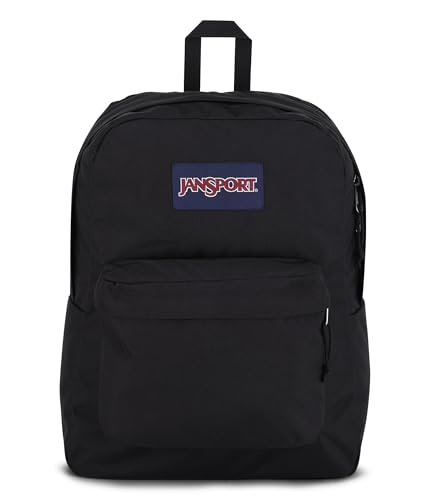
Pros
- Weighs only around 0.71 pounds, making it exceptionally easy to carry or pack inside larger luggage.
- Tough 600-denier fabric construction handles routine friction, dirt, and daily trail wear.
- Front organizer pocket keeps essential personal accessories easily accessible.
- Padded shoulder straps deliver reliable comfort for light everyday loads.
Cons
- Lacks dedicated technical trail features such as a hip belt, sternum strap, and load-lifter adjustment.
- Does not include an internal frame, hydration reservoir sleeve, or external bottle pockets in the listed specs.
- Not engineered for heavy cargo, technical terrain, or multi-day backpacking treks.
The JanSport SuperBreak One is a classic, minimalist daypack designed for casual day walks, local park strolls, daily commutes, and light travel. Built for users who value simplicity over complex gear loops, this pack strips away technical hardware to focus on core functionality. At a featherweight listed weight of roughly 0.71 pounds, it serves beginner hikers, families, and everyday travelers who need an affordable, reliable way to carry basic essentials without the bulk of a full-scale hiking rig.
For casual outdoor use, this backpack keeps load management straightforward. It features a single wide-opening main compartment that accommodates an extra fleece, a rain shell, snacks, and personal items. Because the pack operates without an internal frame, stay, or rigid back panel, it relies on soft structure and careful packing to maintain its shape against your back. Padded shoulder straps with a 15-inch drop provide cushioning across the shoulders, making it comfortable for light loads on flat to gently rolling trails.
Construction quality centers on JanSport's 600-denier fabric, which offers solid abrasion resistance against rough picnic tables, dirt paths, and daily friction. The manufacturer specifies water-repellant fabric paired with a coated interior, delivering baseline resistance against light drizzles and surface dampness. Sturdy zippers control both the main compartment and the front pocket, ensuring smooth access without premature snagging during routine use.
Organization and handling are built around quick daily efficiency. The front utility pocket includes an integrated organizer, giving you dedicated slots to secure small gear such as keys, lip balm, sunglasses, or pocket knives rather than letting them settle to the bottom of the bag. A durable web haul handle at the top allows you to hang the pack on tree branches at a rest stop or grab it swiftly from the trunk of a vehicle.
There are clear limitations to keep in mind before taking this pack on demanding excursions. The SuperBreak One lacks a padded hip belt, sternum strap, load lifters, and ventilated back channels, meaning it cannot transfer weight to your hips or keep your back cool on strenuous uphill climbs. Additionally, the specifications do not list hydration reservoir ports or side water bottle pockets, requiring you to store drinks inside the main compartment alongside your other gear.
For casual day hikers, neighborhood walkers, students, and budget-conscious travelers seeking a straightforward daypack, the JanSport SuperBreak One delivers dependable utility at an accessible price. While serious backcountry trekkers will require a dedicated technical harness and hydration routing, this pack remains a tried-and-true option for relaxed frontcountry adventures and daily carry.
The JanSport SuperBreak One utilizes a dense 600-denier polyester fabric known for handling everyday wear and tear. This heavy-duty weave resists abrasion from rough surfaces, ground contact, and brush along established walking paths.
A coated interior complements the water-repellant outer face, providing basic protection against brief rain showers and surface moisture. Heavy-duty coil zippers and reinforced stitching around stress points help ensure the bag holds up to regular zip-and-pack cycles without split seams.
Weighing only about 0.71 pounds, this pack is an outstanding secondary daypack for travelers. Its frameless, unstructured body allows it to lay flat or roll up easily inside larger luggage or a multi-day backpacking pack until you reach your destination.
On mild day hikes, it comfortably holds lightweight essentials such as a map, windbreaker, packed lunch, and sunscreen. The front organizer pocket keeps smaller tools and identification separated from your bulkier layers, streamlining trailside rest stops.

Pros
- Featherlight 1-pound construction eliminates unnecessary base weight on short walks and town-to-trail outings
- Organized dual-compartment layout with a 15-inch laptop sleeve and an organizer pocket keeps gear sorted
- Contoured S-curve shoulder straps and a padded back panel deliver straightforward daily carrying comfort
- Integrated exterior side pocket keeps hydration bottles upright and readily accessible
- Long-term reliability backed by a manufacturer lifetime warranty against hardware and fabric breaks
Cons
- Lacks dedicated hiking suspension components such as a hip belt, sternum strap, or internal frame
- Does not include an internal hydration bladder port or hose routing exit
- Requires hand washing for cleaning and offers no listed waterproof rating or included rain cover
The JanSport Big Student Backpack is an everyday crossover daypack measuring 13 x 17.5 x 10 inches and weighing just 1 pound unloaded. Built with dual main compartments and an integrated 15-inch laptop sleeve, this pack is designed for students, commuters, travelers, and casual day hikers who want a single dependable bag that transitions seamlessly between urban environments and local park trails.
For trail use, this pack functions primarily on smooth, well-established front-country pathways where heavy backpacking gear is unnecessary. The 1-pound build keeps your carried base weight exceptionally low. However, because this design does not include a rigid frame, hip belt, or sternum strap, the entire carried weight sits directly on your shoulders. It is best reserved for carrying lighter day loads such as a light fleece, packable windbreaker, trail snacks, and personal items.
JanSport constructs the pack with durable fabric, sturdy zippers, and a top web haul handle for easy lifting at the trailhead or transit stops. The ergonomic S-curve shoulder straps conform naturally across the chest and shoulders, while a padded back panel provides a soft barrier between your back and rigid contents stored inside. Storage is organized across two distinct full-height compartments, letting you separate trail clothing from paperwork or electronics.
Fitting and daily setup are simple, relying on standard strap sliders to adjust the shoulder strap length for different body builds. The exterior side pocket accommodates a standard water bottle for straightforward hydration stops on the move, while the front utility compartment includes an organizer for small essentials like keys, trail permits, or a compact flashlight. Because this pack is made without water-sealed seams, keeping gear dry during heavy downpours requires an aftermarket rain cover or internal dry bags.
Realistic limitations center on its non-technical design. The Big Student lacks hydration reservoir routing, load-lifter straps, trekking-pole lash points, and hip support, making it unsuitable for rugged backcountry routes or heavy gear loads. Exceeding moderate carrying weights can lead to shoulder strain without a hip belt to transfer mass to the pelvis.
For casual hikers, students, and travelers seeking an affordable, straightforward daypack backed by a lifetime repair-or-replace warranty, the JanSport Big Student delivers practical volume and solid everyday utility. Hikers preparing for technical ascents, multi-day routes, or heavy trail gear should instead consider purpose-built internal-frame hiking packs with integrated load-bearing suspension.
The JanSport Big Student Backpack utilizes a dual-chamber configuration across its 13 x 17.5 x 10-inch exterior profile. The rear main compartment houses a dedicated 15-inch laptop sleeve, keeping rigid electronics or flat documents positioned close to the back panel for balanced packing.
The secondary main compartment offers open-volume capacity for bulky items such as an extra jacket, lunch container, or small first-aid kit. On the front exterior, an organized utility pocket prevents small personal gear from sinking to the bottom of the bag, while the side pocket holds a standard water bottle within easy reach.
On recreational trails, the Big Student pack performs best when loaded with lightweight, casual gear. Because it is frameless and lacks both a sternum strap and a padded hip belt, load stabilization depends entirely on how you pack the interior chambers and adjust the S-curve shoulder straps.
Hydration management is managed via the exterior side bottle sleeve, as there is no integrated hydration bladder port or hose pass-through. Maintenance is simple with hand-wash care instructions, and the pack is protected against manufacturing defects by JanSport's lifetime warranty.
Understanding Capacity, Dimensions, and Ergonomics for Middle School Backpacks
Selecting the correct backpack volume for a middle school student hinges on understanding daily class schedules, digital device requirements, and body proportions. Most sixth through eighth-grade students thrive with a pack capacity between 25 and 34 liters. This volume bracket accommodates standard binders, several notebooks, a packed lunch, and a digital device without forcing seams to stretch. Determining the right fit prevents chronic slouching while keeping essential coursework organized throughout the school year.
Recommended Liter Capacity: The 25-Liter to 34-Liter Balance
Pack capacity measured in liters dictates how much physical gear a student can comfortably store. Bags in the 20 to 25-liter range, such as the JanSport SuperBreak One, provide a compact profile suitable for lighter schedules. Schools relying heavily on digital tablets rarely require students to transport multiple hardbound textbooks. For these classrooms, a 25-liter pack easily holds a binder, planner, and lightweight jacket.
High-capacity bags measuring between 30 and 34 liters, including the JanSport Big Student design used on the JanSport Laptop Backpack, become necessary for heavier workloads. Middle schoolers frequently manage six or seven distinct classes requiring dedicated folders and textbooks. A 34-liter internal volume provides ample space for multiple two-inch binders alongside physical education attire. This extra capacity eliminates hand-carrying loose books between class periods.
Exceeding 35 liters introduces distinct functional risks for younger adolescents. Extra internal volume often encourages storing unnecessary clutter, which rapidly increases overall pack tare weight. Oversized bags also protrude backward, altering natural posture and pulling on shoulder muscles. Sticking within the 25 to 34-liter range maintains the ideal balance between carrying capability and structural control.
Physical Dimensions and Locker Clearance Constraints
External pack measurements matter just as much as stated volume when evaluating daily school usability. Standard middle school hallway lockers typically feature narrow door openings measuring roughly 12 inches wide, with interior depths between 11 and 15 inches. Backpacks with rigid external framing can catch on locker frames during passing periods. Choosing a pack with flexible exterior fabric allows students to slide gear onto narrow shelves.
Packed depth represents another critical dimensional factor that influences storage and mobility. A backpack measuring 8 to 10 inches deep when fully loaded sits flush against classroom chair backs and locker walls. Bulging packs that exceed 10 inches deep create tripping hazards in crowded classrooms and school bus aisles. Keeping loaded depth restrained ensures the pack fits smoothly inside standard locker cubbies.
A flat, stable base also aids locker storage and desk-side upright stability. Bags engineered with structured rectangular bases tend to stand upright on flat surfaces, preventing the pack from tumbling onto dirty floors. This upright profile helps students access top-zip compartments quickly between classes without unpacking their entire bag. Managing exterior dimensions ensures effortless navigation through compact school facilities.
Torso Length and Ergonomic Harness Sizing
Middle school encompasses a period of rapid physical growth, making harness geometry vital for comfort. Sizing a backpack accurately requires assessing torso length rather than standing height alone. The torso is measured along the spine from the C7 vertebra down to the top edge of the hip bones. A properly sized student pack should rest comfortably across the mid-back without extending past the lower lumbar curve.
Contoured shoulder straps offer superior weight distribution compared to simple straight straps. Ergonomic S-curve shoulder straps, such as those on the JanSport Laptop Backpack, follow the natural contours of an adolescent’s chest and shoulders. This curved profile distributes heavy downward pressure across the upper back rather than pinching trapezius nerves. Contoured straps prevent the harness from sliding off narrow shoulders during brisk walking commutes.
Dense foam padding within the straps shields the collarbones from excessive friction. Designs like the JanSport SuperBreak One feature 15-inch drop padded shoulder straps designed to cushion high-impact contact points during daily transit. Padded back panels complement these straps by creating a smooth barrier against hard binder edges. This protective cushioning prevents rigid textbook corners from jabbing into ribs or vertebrae.
Suspension mechanics differ considerably between rugged outdoor packs and everyday school gear. While heavy expedition loads rely on rigid frame backpack designs to transfer severe weight onto the pelvic girdle, student packs must achieve load stabilization through dual-density foam straps and proper tensioning against the upper back. Adjusting shoulder strap sliders so the pack rides high against the shoulder blades prevents backward sagging and reduces fatigue.
Compartment Organization: Single Cavity Versus Dual Compartment Layouts
Compartment configuration dictates how efficiently a student navigates changing class periods. A single main compartment design, exemplified by the JanSport SuperBreak One, provides an open space that accommodates bulky items with ease. Students who prefer rapid packing can quickly drop binders and gym gear directly into the center. A front utility pocket equipped with an organizer keeps small items like pens and student IDs separate.
Single cavities carry trade-offs that require thoughtful packing habits. Without interior divider walls, heavy hardcover books can shift freely and potentially crush soft items like lunches or loose paper assignments. Students utilizing single-compartment bags generally benefit from using sturdy folders to keep worksheets neat. For students with minimal daily gear, the lightweight simplicity of a single compartment remains highly practical.
Dual-compartment architectures split the load into two dedicated zippered sections, offering superior organizational structure. The JanSport Laptop Backpack utilizes two spacious compartments to isolate heavy binders from digital devices and lighter notebooks. Placing the densest textbooks inside the rear compartment keeps substantial weight pinned securely against the back panel. The secondary forward compartment remains free for pencil pouches and personal items.
Exterior utility pockets round out daily organizational needs by providing instant access to transit passes and keys. Built-in organizer sleeves prevent stationery from sinking to the dark bottom of the bag. Dedicated side pockets provide convenient storage for reusable water bottles, preventing leaks from soaking paper assignments. Choosing the right layout depends on whether a student prefers minimalist simplicity or structured organization.
Device Protection and Laptop Sleeve Requirements
Digital learning tools have become standard issue across middle school curricula. Most school districts issue standard 11 to 14-inch Chromebooks, while some programs accommodate student-owned laptops up to 15 inches. Protecting these fragile glass screens from heavy textbooks requires interior padding. A dedicated sleeve provides a barrier that prevents metal binder rings from scratching electronic chassis during daily handling.
Padded laptop sleeves, such as the 15-inch compartment integrated into the JanSport Laptop Backpack, hold digital hardware securely in an upright position. Elevating the computer against the back panel keeps the device close to the user’s natural center of gravity. This positioning shields the laptop from exterior impacts in crowded hallways. A snug sleeve pocket also prevents devices from sliding loosely inside compartments.
Drop protection requires careful consideration when evaluating packs without built-in sleeves. Simple single-cavity bags lack elevated device pockets, meaning unpadded computers rest flush against the bottom seam. When students set packs down abruptly on classroom floors, an unpadded laptop base absorbs blunt impacts directly. Adding a standalone padded protective sleeve resolves this vulnerability and protects delicate screens inside open bags.
Weight Distribution and Spinal Health Guidelines
Pediatric health specialists recommend that loaded backpack weight should not exceed 10 to 15 percent of a student’s total body weight. A middle schooler weighing 100 pounds should safely carry between 10 and 15 pounds of total school gear. Carrying loads beyond this threshold forces students to lean forward at the hips, creating neck tension and spinal fatigue.
Packing technique plays a vital role in balancing internal mass and stabilizing the load. The heaviest items, including hardbound textbooks and digital devices, should always be placed vertically against the interior back panel. Medium-weight supplies like spiral notebooks fit best in the center of the pack. Lightest items, such as physical education shirts, should occupy the front pockets.
Carrying habits also dictate physical comfort during the school day. Slinging a heavy backpack over a single shoulder creates an unbalanced load that forces the spine to curve unnaturally. Utilizing both shoulder straps keeps weight distributed evenly across both shoulders and aligns posture properly. Tightening the strap tension keeps the bag secure against the upper torso, eliminating painful bouncing.
Material Durability, Fabric Denier, and Weather Resistance
Middle school backpacks experience rigorous physical wear from concrete sidewalks, bus floors, and lockers. Fabric durability is measured by denier, which indicates fiber thickness and density. JanSport constructs models like the SuperBreak One using 600 denier fabric. This dense weave provides high resistance against abrasion, snagging, and surface friction, ensuring the exterior shell remains intact through multi-year school use.
Weather resistance protects valuable schoolwork and electronics from unexpected rain showers at bus stops. Durable fabrics often feature surface water-repellent finishes alongside coated interior linings that shed light moisture. While water-repellent fabrics handle light precipitation effectively, standard backpack seams and zipper coils are not submersible. Reminding students to close all zipper tracks tightly during stormy weather prevents moisture ingress.
Hardware durability ensures the pack remains operational under heavy textbook loads. Zippers represent a frequent point of mechanical stress when students pack bags to maximum capacity. JanSport incorporates sturdy zipper tracks and web haul handles designed to withstand frequent pulling and daily lifting. Reliable zipper construction prevents accidental seam splits while running between classes or boarding transit buses.
Routine Maintenance and Fabric Care for School Backpacks
Proper cleaning protocols keep backpacks fresh while protecting interior weather-resistant coatings. Manufacturer care guidelines for multi-compartment packs, including the JanSport Laptop Backpack, explicitly recommend gentle hand washing rather than machine washing. Submerging bags in aggressive washing machines can peel interior coatings and weaken strap foam. Following manufacturer care instructions preserves fabric coatings and extends the usable lifespan of the pack.
High-heat tumble drying poses severe risks to synthetic backpack materials and structural foam padding. Dryer heat can warp contoured foam within shoulder straps and melt delicate zipper pull coatings. Always hang freshly cleaned backpacks to air dry in a well-ventilated indoor space. Allowing the bag to dry completely before repacking prevents mildew growth inside enclosed compartments.
Spot cleaning serves as the most effective method for managing routine stains and dirt. Using a soft sponge, lukewarm water, and a mild non-detergent soap lifts grime without degrading water-repellent fabric finishes. Wiping interior compartments with a damp cloth keeps crumbs and pencil shavings from accumulating. Regular gentle cleaning maintains a tidy school bag without compromising structural fabric integrity.
Practical Sizing Takeaways for Middle School Students
Selecting the ideal backpack comes down to aligning daily coursework requirements with physical body dimensions. Students carrying minimal paperwork and lightweight digital devices can comfortably rely on a streamlined 25-liter single-compartment model. Those managing multiple thick binders, sports uniforms, and laptops will appreciate the structured support of a 34-liter dual-compartment design. Matching internal capacity directly to daily loads ensures lasting comfort.
Conducting a quick fit check before the school year begins guarantees optimal carrying comfort. Verify that the bottom edge of the loaded pack rests roughly two inches above the hips and never sags below the waistline. Ensure the shoulder straps cinch smoothly and hold the back panel firmly against the shoulder blades. Choosing the right size establishes healthy carrying habits for middle schoolers.







Write Your Review
No reviews yet. Be the first to share your experience!