


Commuters, travelers, and day hikers often struggle to balance compact dimensions with practical storage capacity. Selecting the right profile prevents unnecessary bulk while ensuring essential daily gear, charging cords, and light layers stay protected. When evaluating options, understanding what size is a small backpack comes down to balancing external measurements in inches against total volume in liters. Exploring a budget hiking backpack guide can help clarify how entry-level packs balance dimensions, pocket layouts, and daily utility. Knowing these volumetric boundaries helps you choose a pack that shields delicate gear without sagging below your lumbar spine during walking commutes.
Most manufacturers classify compact carry options within a specific range between 15 and 25 liters, which typically measures under 18 inches in overall height. This compact footprint fits comfortably against the upper torso, avoids crowding crowded subway seats, and regularly passes strict airline personal item requirements. A well-designed compact bag like the SAMURAI TACTICAL Wakizashi Tactical Backpack delivers focused organization through structured compartments without adding excess tare weight to your daily transit. Choosing a pack in this category ensures that your everyday carry remains agile, comfortable, and well-organized across varied environments.
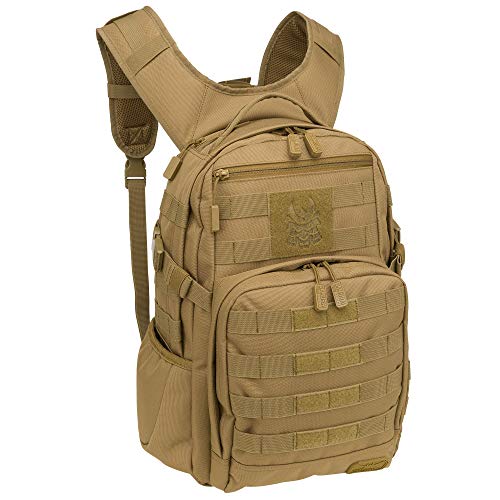
Complete Sizing Guide for Small Backpacks: Liters, Dimensions, and Everyday Functionality
Understanding backpack sizing requires looking past marketing labels and examining measurable dimensions alongside usable storage volume. Pack manufacturers often categorize bags into broad labels like mini, compact, everyday carry, or mid-size without adhering to a single universal standard. In practical everyday usage, a small backpack size typically ranges from 15 to 25 liters of total interior volume. This capacity bracket offers sufficient space for core everyday essentials while maintaining a slender exterior profile that stays close to the body.
Defining the Small Backpack: The 15 to 25 Liter Benchmark
Volumetric capacity in backpacks is universally measured in liters, which accounts for the total combined interior space of all compartments. A bag falling beneath 15 liters is generally classified as an ultra-compact sling, hydration pack, or micro-daypack meant strictly for minimalist outings. Bags between 15 and 20 liters represent the leanest definition of a true small daily backpack, accommodating a lightweight jacket, a lunch container, and small digital devices. Once a bag expands toward 22 to 25 liters, it bridges the gap into full-featured everyday carry, offering greater pocket depth without becoming cumbersome.
The 20 to 24-liter tier is widely considered the sweet spot for users who need a compact bag that can still handle multi-faceted daily tasks. Bags in this specific capacity zone allow users to transition smoothly from an office environment to an outdoor trail or transit commute. For example, a 24-liter pack provides approximately 1,475 cubic inches of interior volume, which delivers dependable utility without adding unnecessary bulk. Maintaining this volume profile prevents the backpack from projecting too far outward from the shoulders, which helps preserve your natural center of gravity.
Translating Liters into Physical Dimensions and Inches
Liters explain how much gear a pack can hold, but physical exterior dimensions determine whether the bag actually fits your body and your daily environment. A standard small backpack typically measures between 16 and 18 inches in height, 10 to 12 inches in width, and 5 to 7 inches in depth. When you multiply these dimensions together, you obtain the exterior cubic volume, which closely aligns with stated internal capacity. For example, a pack measuring 17.1 inches tall, 11.1 inches wide, and 6.1 inches deep provides a classic compact footprint that sits comfortably on most adult torsos.
The exterior depth is the measurement that most commonly causes sizing problems when a bag is packed to maximum capacity. A backpack with a slim 6-inch depth easily slips through crowded doorways, narrow subway aisles, and busy bus corridors without bumping into fellow passengers. However, when flexible fabrics stretch under heavy loads, a pack can expand outward by several inches and alter its balance. Keeping your packed depth within 6 to 8 inches ensures that the pack remains compact, stable, and agile throughout demanding transit conditions.
Airline Personal Item Standards and Under-Seat Clearance
Air travel regulations make accurate backpack sizing critical for avoiding unexpected baggage fees and gate-check delays. Most domestic and international airlines distinguish sharply between standard overhead carry-on bags and under-seat personal items. While overhead carry-on bags typically measure up to 22 x 14 x 9 inches, personal items generally must stay within 18 x 14 x 8 inches to slide beneath the seat ahead. A small 15 to 24-liter backpack measuring under 18 inches in height qualifies comfortably as a personal item on the vast majority of commercial flights.
Under-seat clearance can vary significantly depending on the aircraft model, your specific seating row, and the presence of floor-mounted electronics boxes. Choosing a compact bag with an exterior depth of around 6 inches gives you valuable buffer space beneath low-clearance seats. Travelers seeking alternative gear configurations can review specialized backpack cooler designs to observe how structured compartments influence overall dimensional bulk during transit. Keeping exterior dimensions tight ensures that you retain adequate legroom while keeping your essential travel documents and electronics immediately accessible.
Torso Sizing, Harness Geometry, and Carrying Ergonomics
A small backpack is only comfortable if its back panel length corresponds properly to your natural spinal anatomy. Torso length is measured from the prominent C7 vertebra at the base of your neck down to the top of your iliac crest along your hip line. Small backpacks typically feature back panel lengths between 15 and 18 inches, which aligns well with small to medium adult torso lengths. If a pack is too tall for your torso, the bottom edge will dig into your lower back or pull the shoulder straps backward.
Harness geometry plays an equally vital role in preventing upper body fatigue during extended walking periods. Quality compact packs incorporate ergonomically contoured shoulder straps that curve around the chest rather than cutting directly across the collarbones. Integrated sternum straps stabilize the harness across the chest, preventing the shoulder straps from slipping outward during rapid movement. Additionally, ventilated mesh padding along the back area promotes airflow, mitigating heat accumulation and sweat buildup during warm summer commutes or intense trail climbs.
Compartment Architecture: Open Packing Space Versus Multi-Pocket Grids
Backpack interiors generally follow one of two design philosophies: a cavernous open main compartment or a segmented multi-pocket organizer layout. An open compartment maximizes usable bulk volume, allowing you to stow bulky objects like packable rain jackets, gym shoes, or food containers without restriction. However, loose items can easily shift around and sink to the bottom of the bag, making quick retrieval frustrating in crowded settings. A dedicated admin panel provides specific slots for pens, charging banks, keys, and cables, keeping small gear immobilized and organized.
The primary challenge with extensive internal organization is that individual pocket fabrics and zipper dividers consume internal depth. When multiple front pockets are packed full, they can displace volume from the main cavity, making it difficult to fit rigid items. A well-engineered 24-liter pack balances these priorities by combining a spacious primary compartment with dedicated secondary storage pockets. Side compression straps allow users to cinch down excess fabric when the bag is partially empty, keeping the load compact and preventing internal shifting.
Tactical and Outdoor Functionality in Compact Builds
Tactical and outdoor-inspired designs bring specialized utility to the compact backpack category through modular attachment points and rugged hardware. Many tactical daypacks incorporate external MOLLE webbing systems across the front and sides, enabling users to attach auxiliary pouches, carabiners, or emergency tools. These attachment points give you the flexibility to expand carrying capacity temporarily without purchasing a larger standalone pack. For heavy wilderness treks requiring rigid load transfer systems, comparing compact daypacks against internal frame backpack considerations clarifies the functional limits of frameless tactical bags.
Hydration integration is another valuable feature found in versatile small packs designed for both trail and urban use. Built-in hydration bladder pockets feature routing ports that allow water hoses to exit directly onto the shoulder strap for hands-free drinking on the move. When you are not using a hydration reservoir, that dedicated internal sleeve doubles as a secure compartment for notebooks, flat folders, or small electronics. Heavy-duty utility cord pulls on external zippers ensure smooth operation even when wearing gloves or navigating cold weather conditions.
Laptop Sizing and Device Protection in Compact Profiles
Carrying electronics in a compact backpack requires careful attention to internal sleeve dimensions and protective padding thickness. While larger 30-liter commuter bags frequently swallow 16-inch or 17-inch mobile workstations, small backpacks usually accommodate devices up to 13 or 15 inches. If a compact pack does not have a dedicated padded laptop compartment, rigid electronic corners can press uncomfortably against your back. Checking exact sleeve dimensions prevents forced fits that strain zipper seams and expose expensive hardware to exterior impacts.
Drop protection relies heavily on whether the device sleeve includes a suspended false bottom or rests flush against the base of the pack. A suspended sleeve terminates at least one inch above the bottom panel, ensuring your laptop never strikes the floor directly when the bag is set down. In packs with simple flat-bottom sleeves, users should consider pairing their laptop with a slim protective neoprene case. However, adding an external case increases total device thickness, which may crowd out other essentials inside a slim 6-inch compartment.
Fabric Density, Hardware Stresses, and Weather Protection
Small backpacks undergo significant daily abrasion from transit floors, rough concrete, and frequent handling by top carry handles. Manufacturers utilize high-density synthetic fabrics like heavy-gauge polyester or woven nylon to provide dependable tear and scuff resistance. High-density polyester constructions offer exceptional dimensional stability and resist stretching when wet, maintaining the structured silhouette of the pack under load. Dense weaves also provide inherent splash resistance against brief drizzles, although uncoated fabrics will eventually absorb moisture during prolonged rainfall.
Hardware durability is critical because compact packs often experience concentrated stress along zipper tracks and buckle anchor points. Heavy-duty zippers with thick teeth resist lateral splitting when internal compartments are packed tightly with dense gear. Reinforced bar-tack stitching at high-stress junctions, such as top carry handles and shoulder strap attachment points, prevents premature seam separation. Selecting durable composite buckles and rugged nylon webbing ensures that compression straps and harness adjusters remain functional through thousands of adjustment cycles.
Weight Distribution and Load Balancing in Small Packs
Carrying dense gear in a small backpack requires smart packing geometry to prevent muscle fatigue and postural strain. Dense, heavy objects like textbooks, full hydration bladders, or laptops should always be positioned closest to your spine and centered vertically. Placing heavy items far away from your back creates rotational leverage that pulls the shoulder harness backward and arches your lumbar spine. Keeping the center of mass tight against your body allows the harness to distribute weight evenly across your trapezius and upper back muscles.
Lightweight and compressible items like windbreakers, gloves, or extra clothing should fill the outer compartments and the bottom of the main cavity. This packing structure forms a protective cushion beneath heavier items while preventing loose objects from rattling during transit. Adjusting both shoulder straps to equal lengths ensures that the pack sits level across your shoulders rather than tilting toward one side. Engaging the sternum strap pulls the shoulder straps inward, freeing your arms for natural swinging motion during brisk walking commutes.
Practical Care, Fabric Longevity, and Cleaning Guidelines
Maintaining a small backpack properly preserves its structural integrity, fabric coatings, and zipper performance over years of daily service. You should never wash a technical backpack in a domestic washing machine because agitator blades can tear straps and delaminate internal water-resistant coatings. High-heat dryer cycles are equally destructive, as excess heat can warp synthetic foams and melt polyurethane moisture barriers. Instead, clean soiled areas by spot-treating the exterior fabric with lukewarm water, a mild non-detergent soap, and a soft nylon brush.
Zipper tracks require routine inspection to remove accumulated grit, sand, and pocket lint that can grind down slider teeth over time. Periodically brushing zipper teeth with a clean, dry toothbrush prevents binding and keeps closures operating smoothly under load. After cleaning, always hang the backpack to air-dry completely in a well-ventilated, shaded space away from direct sunlight and heat sources. Storing the pack in a cool, dry environment with all zippers closed helps the bag maintain its intended structural shape for your next adventure.
Evaluating both volume capacity and external dimensions allows you to choose a small backpack that matches your daily routine without causing physical strain. Staying within the 15 to 25-liter range ensures that your bag remains compliant with airline under-seat standards while holding your essential tools. Pairing durable high-density fabrics with ergonomic shoulder straps and smart compartment layouts results in a reliable daily carry solution. Taking time to balance your packed load and maintain the materials ensures your compact pack provides dependable service for years to come.







Write Your Review
No reviews yet. Be the first to share your experience!