


Carrying an incorrectly sized pack transforms a scenic backcountry journey into an exhausting physical struggle. Determining what size rucksack for hiking requires balancing physical gear volume against trail distance, expected weather conditions, and personal physical capacity. Hikers frequently struggle between hauling excess bulk and running out of space for essential layers, hydration reservoirs, and trail sustenance. Evaluating practical options like budget hiking packs helps clarify how entry-level capacities perform across varied day adventures. Selecting the right volume ensures that essential items stay accessible while keeping the total load centered securely against your spine.
Pack volume benchmarks typically span from ultralight twenty-liter daypacks up to massive one-hundred-liter expedition haulers. Balancing storage needs with dimensional limits mirrors the spatial challenges explored in our carry-on backpack volume guide, where every cubic inch dictates carrying efficiency. An oversized rucksack often encourages packing unnecessary gear, while an undersized pack strains structural seams and forces awkward exterior strapping. Understanding how trail duration and packing density interact allows hikers to choose a silhouette that supports long-term trail posture without excessive fatigue.

Pros
- Weighs only 0.75 lbs and stows into an integrated pocket for seamless packing inside luggage or larger trekking bags
- Dedicated shoulder-strap pockets provide rapid access to a smartphone and trail snacks while walking
- Taslan nylon construction provides dependable defense against trail scuffs and light moisture
- Vertically adjustable sternum strap allows users to dial in upper-body positioning without slipping
Cons
- Frameless packable build lacks rigid internal support or a padded hip belt for carrying heavy loads
- Water-repellent fabric handles light rain but is not fully waterproof or seam-sealed for heavy downpours
- Does not include an integrated hydration reservoir sleeve or dedicated water-bladder hose routing
The G4Free 20L Packable Hiking Backpack is a frameless, ultralight daypack designed specifically for hikers, travelers, and outdoor enthusiasts who prioritize minimal carry weight and space-saving packability. Operating as a secondary trail pack or a stand-alone daypack for short outings, it serves day hikers, campers heading away from a basecamp, and travelers needing an excursion pack that stows flat in luggage. Its balanced 20-liter volume provides enough capacity for daily trail essentials without adding bulk.
On the trail, the pack relies on an ultralight footprint, measuring 11.4 by 5.1 by 18.5 inches while weighing only 0.75 pounds. Because it is a frameless design without a rigid back panel or heavy suspension system, the load stays close to the body. Breathable mesh shoulder straps help promote airflow against the chest and shoulders, while an adjustable chest strap slides up or down to keep the harness centered across your torso. The capacity is well suited for carrying an extra fleece, trail snacks, a compact first-aid kit, and personal accessories on half-day or full-day outings.
Build quality centers on water-repellent Taslan nylon, a lightweight woven material chosen to withstand everyday trail abrasion, branches, and light moisture. The pocket organization is particularly thoughtful for an ultralight packable model. On the harness, a zippered pocket on the left shoulder strap secures a smartphone, while an elastic sleeve on the right holds nutrition bars or small trail tools. Additional storage consists of a front zippered compartment, two side pockets for water bottles, an interior zippered pocket, an internal slip pocket, and a front elastic bungee system for external jacket storage.
Operating and packing the daypack is straightforward. When not in use, the entire bag folds into its own 6.3 by 7.1-inch inner zippered pocket, making it effortless to stow in a glove box, carry-on suitcase, or multi-day backpacking pack. Unfolding takes only seconds, after which gear can be packed directly into the zippered main compartment. For maintenance, the nylon fabric is easy to wipe clean with a damp cloth, and the bag should be air-dried thoroughly before being compressed back into its integrated storage pouch.
Prospective buyers should keep realistic design limitations in mind. As an ultralight, packable backpack, it lacks rigid frame stays, load-lifter straps, and a padded hip belt, meaning it is not intended for heavy multi-day gear or dense, sharp equipment that could poke through the back panel. Furthermore, while the Taslan nylon fabric sheds light drizzles and trail spray, it lacks taped seams and a dedicated rain cover, so it should not be relied upon to keep contents dry in severe weather. The pack also does not advertise a dedicated hydration bladder hanger or hose port.
For day hikers, campers, and travelers seeking an inexpensive, functional, and exceptionally lightweight daypack, the G4Free 20L Packable Backpack is an easy recommendation. It provides practical trail access via its unique shoulder-strap pockets and versatile exterior bungee system while remaining compact enough to pack along on any journey.
The G4Free 20L Packable Backpack offers an intuitive storage configuration that rivals many full-sized daypacks despite its collapsible nature. The primary storage consists of a spacious zippered main compartment that easily accommodates insulating layers, trail lunch, and bulkier gear. Inside this space, one zippered security pocket holds keys or a wallet, while an additional slip pocket helps keep flatter items separated from the main interior cavity.
External organization focuses on immediate trail utility. The front panel features a zippered accessory compartment for maps, headlamps, or sun protection, supplemented by two elastic side pockets sized for water bottles. A front bungee cord setup provides fast external stowage for a rain shell or damp layer. Uniquely, the shoulder harness includes a zippered phone sleeve on the left strap and an elastic pocket on the right, allowing quick access to electronics and snacks without having to take the pack off.
Constructed from water-repellent Taslan nylon, this backpack provides a practical balance between tear resistance and minimal carry weight. The fabric offers reliable defense against light precipitation, trail dust, and light abrasions while keeping the complete empty pack weight at just 0.75 pounds. This lightweight exterior allows the pack to fold down into a compact 6.3 by 7.1-inch bundle using its built-in inner pocket.
Portability makes this daypack an ideal backup option for multi-day backpackers who want a summit pack for side trips from basecamp, as well as vacationers who want a secondary bag for day excursions. Maintenance is simple, requiring only spot cleaning with mild soap and cold water. It should always be completely dried before being zipped into its compact storage pouch to preserve the fabric and zipper integrity over time.

Pros
- Massive expandable storage volume shifting easily between 70L and 100L for bulky gear
- Low empty weight of 3.31 pounds keeps the pack easy to maneuver and haul
- Tough 600D Oxford fabric with reinforced stitching and sturdy zippers
- MOLLE webbing provides convenient external attachment points for trail accessories
Cons
- Lacks an internal frame or aluminum stays, which limits structured load transfer under heavy loads
- Fabric is water-resistant rather than fully waterproof, requiring a separate rain cover in persistent downpours
- Does not offer specific torso-length adjustment tracks for micro-tuned backpacking fit
The Vaupan Expandable Hiking Backpack is a high-capacity, tactical-style outdoor rucksack designed for campers, travelers, and outdoor enthusiasts who need to transport bulky gear without taking on excessive empty pack weight. With an adaptable storage capacity shifting from 70 liters up to 100 liters, this pack caters to budget-focused users, family campers, and hunters carrying items like sleeping bags, mats, and spare clothing.
Regarding capacity and load handling, the backpack measures 40 by 30 by 75 centimeters in standard 70-liter mode, expanding to 40 by 30 by 90 centimeters (approximately 11.8 by 15.7 by 35.4 inches) when fully deployed to 100 liters. It weighs just 3.31 pounds (1.5 kg), which is remarkably low for a pack of this volume. Comfort features include widened, thickened S-type mesh shoulder straps padded with sponge and a high-elastic breathable back panel. However, because it lacks a rigid internal frame or structured load-lifter system, packing strategy plays a crucial role in maintaining stability on the move.
Build quality centers on durable 600D Oxford fabric combined with water-resistant backing, supported by reinforced stitching and robust zippers. For organization, the pack includes an expansive top-loading main compartment equipped with an elastic expansion drawstring, an interior laptop compartment, a front zippered organizer pocket, and two side pockets tailored for water bottles or compact umbrellas. The exterior is fitted with a MOLLE webbing system, allowing hikers to attach trekking poles, tents, and additional pouch accessories directly to the outside.
Using and fitting the Vaupan rucksack is straightforward, relying on standard strap adjustments rather than complicated harness sizing. When loading a frameless high-capacity pack like this, place softer bulk items at the bottom, dense gear against your back, and use the exterior MOLLE straps to balance long items. Maintenance requires minimal effort: wipe down the Oxford exterior with a damp cloth, spot clean trail grime, and allow the fabric to air dry completely before storage.
There are realistic limitations to keep in mind before heading out. While the product data references waterproof and water-resistant materials, the fabric is primarily water-resistant, meaning it can shed light moisture but will require a waterproof rain cover or dry bags during sustained rain. Furthermore, carrying maximum capacity without an internal frame or structured hip-belt load transfer means heavy, dense loads may pull away from the shoulders over long trail miles.
The Vaupan 70L-100L Backpack is a practical, value-driven choice for weekend campers, scout trips, road travel, and basecamp storage where maximum volume and modular external carry take priority. Hikers carrying lightweight, high-volume gear will appreciate the low pack weight and expandable layout, provided they pack intentionally to compensate for the frameless build.
The core advantage of the Vaupan tactical rucksack is its expandable storage design, which shifts from a standard 70-liter pack to a 100-liter hauler using an integrated drawstring expansion system. In standard mode, the pack stands 75 centimeters tall, expanding to 90 centimeters when maximum storage is required.
This flexible volume accommodates bulky camp items including sleeping bags, camp mats, hammocks, extra footwear, and outer layers. An internal laptop sleeve, front zipper compartment, and dual side bottle pockets round out the organization, giving users flexible options for packing gear of varying sizes.
The rucksack is crafted from 600D Oxford fabric designed to provide dependable resistance to abrasions, scuffs, and trail wear. The fabric features a water-resistant treatment that helps repel mist and light rain encounters.
Because the pack features standard zippers and stitched seams without complete submersible sealing, users should not treat it as fully waterproof in severe weather. For hiking in heavy rain, pairing the rucksack with an external pack rain cover or packing sensitive gear in waterproof dry bags is strongly advised.


Pros
- Generous 80L volume provides ample space for large gear, clothing, and camp essentials
- Exterior Molle webbing allows easy customization with modular pouches and external tool carry
- Thick sponge padding on the widened mesh shoulder straps enhances carrying comfort
- Internal laptop compartment adds practical everyday versatility for travel and transit
Cons
- Lacks documented internal frame stays or an adjustable torso suspension system for heavy trail loads
- No structured, load-bearing padded hip belt is specified to transfer weight away from the shoulders
- Water-resistant Oxford fabric is not fully submersible and does not include a dedicated rain cover
The Triforde 80L Tactical Hiking Backpack is a high-capacity, military-inspired rucksack tailored for campers, travelers, and general outdoor gear haulers seeking maximum packing volume. Sized at 14.17 x 9.84 x 27.56 inches, this pack provides substantial space for bulky recreation essentials like sleeping bags, extra layers, and lightweight tents without requiring a complex technical mountaineering chassis. It offers a practical solution for car campers, scout trips, gear staging, and budget-conscious weekenders who prioritize modularity and storage room.
In practical use, load handling relies on widened, thickened shoulder straps equipped with sponge padding and breathable mesh. This setup cushions the shoulders and pairs with a high-elastic back panel engineered to promote ventilation. Because product specifications do not list an internal frame structure or a rigid, load-bearing hip belt, this rucksack is best suited for voluminous, moderate-weight cargo rather than dense, expedition-grade trail loads that demand total hip weight transfer.
The build centers around durable Oxford cloth and high-density water-resistant fabric designed to withstand scuffs, scratches, and light weather exposure. Top loading is managed by a high-strength drawstring cord closure beneath the top flap, giving flexibility when packing bulky items. On the exterior, integrated Molle webbing allows users to clip on canteen holders, trekking poles, or auxiliary pouches to expand organization on the go.
Organization inside the pack is straightforward and accessible. The main compartment includes a dedicated laptop sleeve, which adds multi-use capability for travelers and commuters moving between town and trailheads. A front exterior zippered pocket keeps navigation tools, flashlights, or small essentials within easy reach, while two side pockets accommodate water bottles or quick-access trail supplies.
Prospective buyers should be mindful of realistic trail limitations. While the fabric resists water penetration from light rain, the top drawstring closure and stitched seams are not waterproof, meaning sensitive electronics and down sleeping bags should be secured inside separate waterproof dry bags. Furthermore, the absence of micro-adjustable torso sizing means fit depends primarily on standard shoulder-strap tensioning rather than custom suspension adjustments.
Overall, the Triforde 80L Rucksack represents a cost-effective, high-volume utility pack for outdoor travel, camping, and tactical sports. It delivers solid value for those who need modular Molle adaptability and wide-open packing volume for gear transportation where heavy-duty backcountry internal frames are not required.
With an 80-liter total capacity, the Triforde Tactical Rucksack handles bulky camping loads that overwhelm standard daypacks. The open top-loading barrel design accommodates oversized items like camp quilts, camp pillows, and spare boots through a wide drawstring collar.
Internal and external pocketing keeps smaller accessories separated from the cavernous main bay. A protective interior sleeve holds a laptop or tablet, while the exterior front zippered compartment provides rapid access to headlamps, camp cutlery, or trail maps. Two exterior side pockets offer dedicated storage for slender water bottles, stakes, or auxiliary tools.
The exterior shell is built from high-density Oxford cloth selected for abrasion resistance, tear protection, and everyday durability around campsite brush and luggage racks. The fabric coating provides water resistance against light showers, mist, and damp ground contact.
Because the main compartment relies on a drawstring closure rather than a sealed roll-top or waterproof zipper, water can seep through during sustained, heavy downpours. Hikers and travelers heading into wet environments should pair this rucksack with an aftermarket rain cover or line the interior with sealed dry bags for critical items.

Pros
- High 70-liter packing volume paired with an impressively low empty pack weight of roughly 2.86 pounds
- External MOLLE webbing provides versatile modular expansion for pouches, carabiners, and extra gear
- Tough 600D Oxford fabric offers reliable resistance against brush scratches, trail abrasions, and light moisture
- Multiple dedicated compartments, including an internal laptop sleeve and front pocket, streamline organization
Cons
- Lacks an internal frame or rigid stay system, limiting weight transfer when carrying dense, heavy loads
- Water-resistant fabric handles light moisture but does not offer full waterproofing or include a dedicated rain cover
- Does not include advanced technical harness adjustments such as an adjustable torso-length ladder or load lifters
The Ziliyy 70L Hiking Backpack is a tactical-style rucksack designed for outdoor enthusiasts, casual campers, and travelers who require substantial carrying volume without paying for premium mountaineering gear. Featuring a green camouflage aesthetic and a high-capacity 70-liter layout, this pack bridges the gap between a traditional camping bag and a multi-day tactical assault pack. It is best suited for budget-conscious hikers, weekend campers, and road-trip travelers who prioritize external attachment capability and ample gear space over specialized technical suspension systems.
Real-world trail utility centers around its generous 70-liter capacity combined with a lightweight empty weight of approximately 2.86 pounds (1.3 kg). With dimensions listed at 13.4 by 6.7 by 28.75 inches, the pack offers plenty of vertical space to accommodate bulky sleeping bags, camp clothing, and campsite essentials. To cushion the load, the harness features widened mesh shoulder straps lined with thickened sponge padding to promote ventilation and reduce pressure across the shoulders. Because product specifications do not list an internal frame or rigid stays, users carrying dense loads should pack methodically to ensure the weight remains stable against the back.
The rucksack is constructed from 600D Oxford fabric, which offers water-resistant, scratch-resistant, and tear-resistant qualities for rugged outdoor environments. An integrated MOLLE system across the exterior provides tactical utility, allowing you to anchor modular pouches, multi-tools, or carabiner-clipped equipment directly to the pack body. While the fabric resists light moisture and abrasive trail brush, it is not fully waterproof and does not include a sealed rain cover. Hikers heading into sustained wet weather should pair the pack with internal dry sacks or a waterproof pack liner to protect critical clothing and electronics.
Packing and organization are straightforward thanks to a top-loading main compartment equipped with a drawstring closure. For compartmentalized storage, the pack includes an interior laptop compartment, a zipped front pocket for quick-access trail items, and two side pockets suitable for water bottles or compact accessories. Adjusting the pack is quick through standard webbing straps, and the 600D Oxford exterior makes post-trip maintenance simple, requiring only a damp cloth to wipe down dust, dirt, or camp debris before drying and flat storage.
Important limitations stem from the absence of dedicated technical suspension components. Without a specified internal frame, adjustable torso ladder, or rigid load-transfer hip belt, carrying extremely heavy or unbalanced payloads over long trail miles may place substantial strain directly on the shoulders. Furthermore, the listed dimensions suggest a tall, streamlined profile that requires thoughtful gear distribution so the pack does not pull backward.
For outdoor enthusiasts seeking an affordable, high-capacity rucksack with tactical versatility, the Ziliyy 70L backpack presents a practical gear-hauling solution. It performs well for vehicle-supported camping, casual trail walks, travel, and general outdoor recreation where modular MOLLE attachments and spacious packing matter most. Backpackers planning rigorous, multi-day wilderness treks with heavy loads may prefer an internal-frame pack with dedicated torso sizing, but for everyday gear transport on a budget, this model offers clear utility.
With an expansive 70-liter volume, the Ziliyy tactical pack accommodates bulky gear loads such as lightweight sleeping bags, camp cookware, and extra apparel layers. Access to the primary compartment is managed through a wide top-loading drawstring closure, making it simple to pack and retrieve large items quickly.
Organization is handled via four dedicated storage zones outside the primary chamber: a protective internal laptop compartment, one front zippered pocket for trail snacks or small electronics, and two exterior side pockets for water containers. The exterior MOLLE webbing expands this layout by letting users attach compatible modular pouches for customizable gear separation.
The pack is constructed from 600D Oxford fabric, which provides dependable resistance against trail scrapes, rough ground contact, and general fabric tears. This heavy-duty weave gives the rucksack structure while keeping the overall dry weight down to roughly 2.86 pounds.
While the Oxford material is treated to be water-resistant against light mist and splashes, it does not provide seam-sealed waterproof protection during sustained rainfall. Hikers venturing out in damp environments should use interior dry bags or an external rain cover to safeguard moisture-sensitive gear like sleeping insulation and electronic devices.

Pros
- Substantial 45L capacity provides plenty of room for bulky gear, layers, and camping equipment
- Modular MOLLE exterior allows easy attachment of extra pouches, carabiners, and trail tools
- Built with water-resistant 900 Oxford nylon and reinforced double-stitched seams
- Dedicated side bottle pocket accommodates standard 750ml hydration bottles
- Compression strap system secures partial loads to prevent gear shifting on the trail
Cons
- Lacks an internal rigid frame or structured load-lifter system, limiting heavy-load support on steep, long-distance treks
- Water-resistant fabric does not include a dedicated rain cover or waterproof seam sealing for sustained downpours
- Fixed torso sizing may not provide an optimal ergonomic fit for all body types
The LHI Military Tactical Backpack is a large-format 45-liter rucksack designed for day hikers, weekend campers, bushcrafters, and budget-conscious outdoor enthusiasts who favor rugged utility over minimalist designs. Measuring 12 by 20 by 12 inches and weighing approximately 2.76 pounds, this pack bridges the gap between an extended daypack and a gear-heavy weekend bag. With its tactical aesthetic and modular design, it serves users who need flexible storage for trails, basecamp setups, bug-out kits, and everyday travel.
On trail excursions, the 45-liter capacity offers generous space for bulkier layers, cook sets, food, and camp gear. Carrying stability is managed through side and front compression straps that help draw excess volume close to the spine when the pack is not completely full. Shoulder straps and the back panel feature ventilated mesh padding to encourage airflow and reduce heat buildup against the back during warmer hikes. For hydration, an exterior side bottle holder securely carries a standard 750ml water bottle, giving hikers quick access without opening the main compartment.
Construction is centered around 900 Oxford nylon fabric, providing a tough, water-resistant exterior designed to withstand abrasive contact with brush, rocks, and dirt. Critical stress points feature double stitching, while the heavy-duty zippers are fitted with utility-style cord pulls that remain easy to manipulate even with gloved hands. The exterior is extensively lined with a MOLLE webbing system, allowing hikers to attach modular pouches, multi-tools, trekking pole straps, or accessory carabiners to customize their external loadout.
Packing and organizing gear is straightforward thanks to a multi-compartment interior layout. Instead of a single top-loading cavity, the backpack utilizes multiple zippered compartments accompanied by internal zip pockets and mesh dividers. This configuration allows hikers to keep smaller gear, first-aid items, and electronics isolated from bulky clothing or food sacks. Adjusting the pack relies primarily on standard shoulder-strap sliders and tensioning the external compression system, making daily setup quick and hassle-free.
While the pack offers substantial volume and modular utility, prospective buyers should understand its structural limitations. Without a rigid internal frame or dedicated load-lifter straps, carrying exceptionally heavy backpacking loads over rugged multi-day routes may concentrate weight on the shoulders rather than transferring it efficiently to the hips. Additionally, although the 900 Oxford fabric is water-resistant against light mist and splashes, the pack does not include a dedicated waterproof rain cover or sealed seams to protect contents during sustained downpours.
For hikers, campers, and outdoor generalists seeking an affordable, high-capacity rucksack with customizable exterior attachment points, the LHI 45L Tactical Backpack represents a practical choice. It provides solid volume control, convenient bottle access, and multi-pocket organization at an accessible price point, making it well-suited for moderate trail outings, car camping, and vehicle gear storage.
The LHI Tactical Backpack provides a manufacturer-listed volume of 45 liters within dimensions of 12 by 20 by 12 inches. This spacious profile accommodates substantial gear arrays, including spare clothing, trail food, cook systems, and basic camp gear.
Organization is facilitated by multiple zippered compartments equipped with internal mesh and zippered divider pockets. This compartmentalized layout keeps small trail tools, navigation gear, and personal effects separated from bulkier main-chamber contents.
Exterior gear management is supported by a comprehensive MOLLE attachment system across the front and sides, alongside an integrated side pocket sized specifically to hold a 750ml water bottle for convenient trail hydration.
Built from 900 Oxford nylon fabric, the pack body offers exterior water resistance against light spray, damp ground, and brief drizzles. The tightly woven fabric structure helps resist abrasion from trailside vegetation and rough ground.
High-stress seams benefit from reinforced double-stitching to withstand everyday tension and gear packing. The heavy-duty zippers are paired with utility-style cord pulls to facilitate smooth opening and closing during outdoor use.
While the fabric resists light moisture, the pack does not feature taped seams or an included waterproof rain cover. Hikers heading into heavy or persistent rain should utilize internal dry bags or an external pack cover to protect moisture-sensitive gear.
Pros
- Substantial 50-liter packing volume paired with a low baseline pack weight of around 2.1 to 2.4 pounds.
- Separate shoe compartment keeps dirty trail shoes or wet apparel isolated from main gear.
- Comes equipped with a fitted waterproof rain cover housed in a dedicated bottom pocket.
- Six external pockets and compression straps provide functional organization and exterior gear hauling.
- Cushioned S-shaped mesh shoulder straps and breathable back support promote airflow during warm hikes.
Cons
- Lacks an internal frame or rigid stays, meaning heavy cargo weight will rest primarily on the shoulders rather than transferring to the hips.
- Torso length is not adjustable, which may limit optimal fit for very tall or short torsos.
- Requires careful packing to prevent hard, angled gear from pressing through the soft back panel.
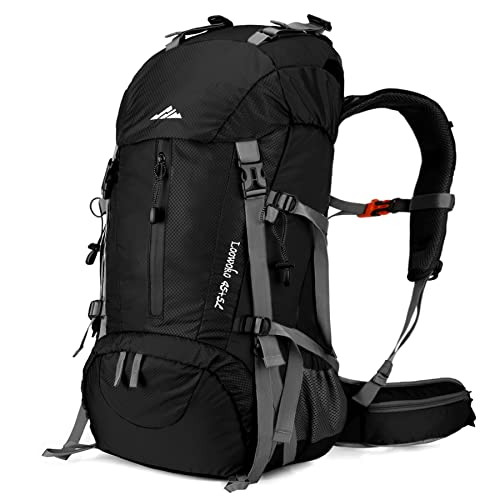
The Loowoko 50L Hiking Backpack is designed for day hikers, casual campers, weekend road trippers, and budget-minded adventurers who need high storage volume without the heavy bulk of a traditional framed pack. Built as a frameless rucksack, it strikes a balance between expansive capacity and lightweight portability. While Amazon classifies it broadly under internal frame backpacks, the manufacturer specifications confirm this pack contains no internal frame, making it a flexible, unstructured option ideal for light to moderate gear weights.
With a 50-liter volume and an empty weight between 2.1 and 2.4 pounds, this pack provides ample room for bulky items like lightweight sleeping bags, insulated jackets, and food supplies. The exterior dimensions measure approximately 23.62 by 11.81 by 2.8 inches, giving it a tall, streamlined profile. Gear management is straightforward thanks to a separate bottom shoe compartment that keeps muddy trail footwear away from clean gear, along with six external pockets that allow quick access to trail essentials. Exterior compression straps and dedicated lash points make it easy to secure bulky equipment such as trekking poles, ice axes, or compact tents.
The pack is constructed from tear-resistant, anti-scratch polyester and nylon fabrics designed to withstand regular trail abrasion. For carrying support, Loowoko uses thickened, S-shaped shoulder straps filled with sponge padding and lined with breathable mesh to help distribute upper-body pressure. The back panel features high-elastic breathable padding designed to cushion your spine while allowing air circulation. While the exterior fabric provides everyday dust and scratch resistance, weather protection is substantially elevated by the included waterproof rain cover, neatly stored in a dedicated zippered pouch at the bottom of the bag.
Packing the Loowoko 50L requires mindful distribution because it lacks rigid internal stays. Hikers will benefit from placing soft items against the back panel to maintain a smooth carrying surface, heavier items close to the spine, and footwear in the bottom compartment. The external compression straps can then be cinched down tightly to pull the load closer to the body and eliminate gear sway. Routine maintenance is simple: empty the pockets, spot clean the nylon and polyester shell with mild soap, air dry thoroughly, and store the pack flat or hung in a dry space.
A realistic limitation of this backpack is its lack of an internal frame sheet or metal stays. As load weight increases, the pack cannot transfer substantial cargo weight to the hips, meaning heavier loads will bear down directly on the shoulder harness. Additionally, the torso fit is fixed rather than micro-adjustable, meaning hikers with particularly short or long torso lengths may not achieve a tailored fit. For heavy multi-day expeditions carrying more than 30 pounds of gear, a rigid internal-frame pack remains the more supportive choice.
For day hikers, scouts, festival campers, and budget-conscious backpackers carrying moderate base loads, the Loowoko 50L offers practical value. It provides generous organizational pockets, dedicated shoe storage, an included rain cover, and low baseline weight at an accessible entry point. If you pack sensibly and keep your carried weight within moderate limits, this versatile pack serves as a reliable trail companion.
The Loowoko backpack provides a 50-liter main storage capacity, offering enough room for clothing layers, camp kitchen essentials, and lightweight sleeping gear. A distinct separate shoe separator at the base allows you to isolate dirty hiking boots, water shoes, or damp socks from your clean interior clothing.
Organization is further enhanced by six exterior pockets, giving you dedicated spaces to sort small items like headlamps, trail snacks, navigation tools, and sunscreen. Multiple compression straps and exterior tie-down loops make it easy to carry longer gear like trekking poles or sleeping pads without taking up precious internal volume.
Unlike traditional internal frame packs that use aluminum stays or composite sheets, the Loowoko 50L features a frameless build. This design choice dramatically lowers the empty pack weight to approximately 2.1 to 2.4 pounds, making the pack easy to maneuver, stow, or pack away when traveling.
Suspension relies on widened, thickened S-shaped shoulder straps lined with sponge padding and breathable mesh to soften pressure over the collarbones. A high-elastic breathable back panel provides cushioning against gear edges, though hikers should load softer gear along the back wall to maximize trail comfort.
The main shell of the Loowoko backpack is built from tear-resistant nylon and polyester fabric that resists everyday trail scratches, dust, and light moisture. However, standard fabric seams are not fully waterproof on their own during prolonged downpours.
To solve this, the pack includes a dedicated waterproof rain cover stored in a bottom zippered compartment. When skies turn dark, the rain cover quickly deploys over the exterior of the loaded pack, creating an effective barrier that protects your internal belongings from heavy rain and trail splash.
Matching Pack Volume to Trail Duration and Gear Requirements
Selecting the correct rucksack capacity hinges primarily on your journey length, expected climate, and personal gear bulk. While beginner hikers often assume a larger pack is safer, excess storage space almost always invites unnecessary weight that strains muscles and joints. Matching your gear inventory to specific liter ranges prevents both painful overloading and mid-trail equipment shortages. Evaluating each capacity category against real-world trail demands provides clear guidelines for every outdoor adventure.
Day Hikes and Short Outings: When 15 to 30 Liters Suffice
Day hikes ranging from brief nature walks to strenuous summit climbs require minimal gear, making a compact fifteen to thirty-liter pack ideal. In this category, your primary cargo includes hydration bladders, high-energy snacks, a compact first aid kit, and an emergency rain shell. Compact models like the G4Free 20L lightweight packable hiking backpack illustrate how ultralight Taslan nylon designs weighing under one pound can effortlessly organize daily essentials without burdening your shoulders. These smaller packs keep your center of gravity tight against your back, which prevents sway when navigating rocky terrain or steep ascents.
Expanding into the twenty-five to thirty-liter range accommodates shoulder-season outings where unpredictable weather demands warmer fleece layers and heavier gloves. A versatile daypack such as The North Face Recon everyday laptop backpack provides thirty liters of structured volume alongside an articulated FlexVent suspension system. This volume tier offers dedicated external stash pockets and dual bottle holders, allowing quick hydration access without opening the main compartment. Commuters and casual trail walkers often appreciate this crossover size because it transitions seamlessly from campus paths to rugged woodland trails.
Choosing a daypack that is too small forces hikers to strap bulky jackets or extra water bottles to the outside of the bag. Exterior gear attachment often causes items to snag on brush, swing erratically, or become damaged during transit. For day outings requiring insulated food storage or specialized gear, pairing a streamlined pack with specialized options like trail cooler backpacks provides dedicated thermal compartments for refreshing provisions. Keeping all gear enclosed within a fifteen to thirty-liter pack preserves balance and shields vulnerable items from abrasive branches.
Weekend Trips and Overnight Treks: The 35 to 50 Liter Threshold
Overnight camping trips and short weekend excursions introduce sleep systems, shelter components, and cooking stoves that quickly outgrow standard daypacks. A pack volume between thirty-five and fifty liters represents the sweet spot for modern weekend backpackers utilizing compact sleeping bags and lightweight tents. The LHI military tactical backpack demonstrates how a forty-five-liter platform with multiple zippered compartments accommodates organized gear arrays for two or three days in the field. This capacity allows careful separation of camp clothing, emergency tools, and cook sets without creating excessive bulk.
Stepping up to fifty liters provides essential breathing room for shoulder-season overnights when bulkier synthetic insulation is required. The Loowoko 50L hiking backpack offers an expansive main chamber combined with an integrated rain cover and dedicated lower gear dividers for footwear or sleeping gear. Weighing roughly 2.1 pounds, this frameless design minimizes tare weight while granting enough interior volume for a three-day backcountry journey. Having fifty liters of space ensures that your tent fabric, stakes, and sleeping pad fit securely without warping pack zippers.
Managing bulk inside a thirty-five to fifty-liter pack requires strict gear discipline and compression sacks for sleeping bags and apparel. Packing dense cooking gear and food rations near the spine maintains vertical balance, while lighter sleep gear settles naturally at the bottom base. If you carry traditional, non-ultralight sleeping bags or bulky four-season tents, a fifty-liter pack may feel tight. In such cases, evaluating gear dimensions beforehand ensures that your shelter system fits comfortably without stressing fabric seams.
Multi-Day Expeditions: Why Extended Treks Demand 60 to 100 Liters
Extended backcountry expeditions lasting from four to seven days demand substantial pack volumes ranging from sixty to one hundred liters. Journeys into remote wilderness areas require self-sufficiency, meaning you must carry multiple days of food rations, comprehensive water filtration, extra fuel canisters, and cold-weather apparel. The Ziliyy 70L hiking backpack highlights how sixty-denier fabrics and an expansive drawstring main cavity provide the space necessary for sustained alpine or forest travel. Packs in this volume range must handle twenty to forty pounds of total weight without compromising structural integrity.
For deep wilderness trips, winter expeditions, or tactical missions requiring extensive field equipment, seventy to eighty liters becomes necessary. The Triforde 80L military backpack utilizes high-density Oxford cloth and external webbing attachment points to stabilize massive camping inventories. Carrying an eighty-liter pack allows you to store four-season sleeping bags, heavy-duty tarps, and bulky winter layers entirely within the weather-resistant main chamber. Keeping cold-weather gear inside the bag prevents freezing rain, sleet, or morning frost from dampening life-saving thermal layers.
When expeditions push beyond five days or require carrying group gear for families, maximum-capacity haulers provide indispensable volume. The Vaupan hiking backpack features an expandable system that adjusts from seventy liters up to an immense one hundred liters. This massive storage capacity readily swallows bulky hammocks, spare footwear, large cooksets, and emergency communication equipment. However, hikers using packs above seventy liters must remain vigilant against overpacking, as carrying excessive non-essential supplies quickly leads to trail exhaustion and joint strain.
Torso Sizing and Harness Geometry Versus Raw Liter Volume
Liter capacity indicates how much gear a rucksack can hold, but torso length dictates how comfortably the pack carries that load. A common mistake among outdoor enthusiasts is selecting a rucksack based purely on total height or body weight rather than spinal dimensions. Torso length is measured from the prominent seventh cervical vertebra at the base of the neck down to the iliac crest at the top of the hip bones. If a seventy-liter pack does not match your specific torso measurement, the shoulder straps will either pinch your collarbones or gap awkwardly away from your upper back.
Proper harness geometry transfers up to eighty percent of total pack weight directly onto the pelvic girdle rather than the sensitive trapezius muscles. High-volume tactical rucksacks like the Ziliyy 70L and Triforde 80L feature widened S-type shoulder straps and cushioned back padding designed to ease burden across long distances. When the harness fits properly, the padded hip belt wraps securely around the iliac crest, anchoring the load to your body’s strongest skeletal support. Without this precise mechanical alignment, even a modest thirty-pound load can induce severe neck spasms and lower back soreness.
Adjustable sternum straps and upper load-lifter straps play a crucial supporting role in stabilizing tall, high-capacity rucksacks. Cinching the sternum strap across the mid-chest pulls the shoulder straps inward, preventing painful armpit chafing and strap slippage during arm swings. Meanwhile, load-lifter straps running from the pack frame to the upper shoulder harness should ideally maintain a forty-five-degree angle to pull pack mass close to your center of gravity. Checking harness fit with a loaded pack before embarking on a multiday trail prevents debilitating ergonomic discomfort.
Framing and Suspension: Frameless Packs Versus Structured Support
Rucksack architecture divides into frameless designs and structured internal or external frame platforms, each serving distinct capacity requirements. Frameless rucksacks, such as the lightweight Loowoko 50L pack or packable twenty-liter daypacks, rely entirely on careful packing and back foam pads to maintain structural shape. These packs shine on day hikes and fast-and-light overnight adventures where total pack weight remains under twenty pounds. Stripping away internal metal stays significantly lowers the unladen tare weight of the pack, allowing nimble movement across technical trail obstacles.
Once total carrying weight exceeds twenty-five or thirty pounds, frameless packs begin to barrel outward and collapse downward against the lower lumbar spine. Incorporating rigid internal stays or perimeter frames transfers heavy loads efficiently down to the hip belt, preserving natural spinal curvature. Hikers planning extended wilderness journeys often review internal frame hiking backpacks to understand how rigid structural supports stabilize shifting cargo across uneven ascents. Structured internal frames prevent dense cooking gear and heavy water bladders from jabbing directly into your back during active movement.
Suspension systems also govern back panel ventilation and moisture management during warm-weather ascents. Packs utilizing contoured foam ridges or suspended trampoline mesh create physical air channels that allow perspiration to evaporate quickly. In contrast, flat, unstructured back panels trap heat against technical hiking apparel, creating persistent dampness and friction chafing. Balancing the minimal weight of frameless designs against the superior load transfer and airflow of framed suspensions ensures enduring trail comfort across your chosen mileage.
Fabric Density, Denier Ratings, and Weather Protection
The durability and empty weight of your hiking rucksack depend heavily on the denier rating and weave of its primary textile. Denier measures the individual thread weight of the yarn, with higher numbers indicating thicker, more abrasion-resistant fabrics. Ultralight daypacks frequently utilize lightweight Taslan nylon to minimize trail weight while shedding light precipitation. Conversely, heavy-duty tactical rucksacks like the LHI 45L use dense 900D Oxford nylon to withstand harsh contact with granite boulders, coarse gravel, and dense thorn thickets.
While high-denier Oxford and ripstop fabrics offer remarkable resistance to tearing and punctures, water resistance varies across fabric coatings. Most hiking rucksacks employ water-repellent surface finishes and internal polyurethane coatings that repel light showers and splashback. However, sustained mountain downpours can eventually saturate stitching seams and seep through zipper coils. The Loowoko 50L rucksack resolves this issue by integrating a dedicated waterproof rain cover stored in a quick-access bottom pocket, shielding contents during unexpected deluges.
Maintaining weather-resistant coatings requires gentle fabric care to prevent delamination of internal polyurethane waterproof linings. Washing technical hiking rucksacks in standard household washing machines or exposing them to high-heat dryers ruins structural foam and peels protective coatings. Spot-cleaning soiled exterior fabric using a soft nylon bristle brush, lukewarm water, and non-detergent technical soap preserves the textile barrier. Allowing the pack to air dry fully in shaded, well-ventilated areas guarantees multi-season durability without compromising moisture defenses.
Packing Geometry and Center of Gravity for Trail Stability
Selecting the appropriate rucksack size only succeeds when cargo is packed logically to maintain personal balance on the trail. The fundamental rule of packing geometry requires placing dense, heavy items close to your spine and roughly level with your shoulder blades. Heavy gear positioned too far back or low in the pack acts as a lever, pulling your shoulders backward and straining abdominal muscles. Conversely, placing heavy items too high creates a top-heavy pendulum effect that threatens footing on narrow ridgelines or slick river crossings.
Distributing trail gear into three distinct vertical zones optimizes stability and keeps critical items immediately accessible throughout the day. The bottom zone of your rucksack should house lightweight, bulky items like sleeping bags and thermal sleep clothing that remain unpacked until camp setup. The middle zone, pressed flush against the back panel, should contain heavy stoves, fuel, dense food bags, and hydration reservoirs. The upper zone accommodates lighter camp layers, rain jackets, and emergency first aid supplies that might be needed immediately during sudden weather shifts.
External pockets, stretch mesh pouches, and tactical MOLLE webbing systems expand your organization without disrupting internal weight distribution. Multi-compartment packs like the Triforde 80L and Vaupan 100L rucksacks feature dedicated side pouches and front compartments for trekking poles, headlamps, and water bottles. Keeping hydration sources balanced evenly across both exterior sides prevents lateral torso tilt and unequal shoulder strain. Securing loose exterior straps with compression buckles keeps internal cargo locked firmly in place, eliminating noisy and destabilizing load shifts while walking.
Avoiding Common Capacity Pitfalls and Overpacking Hazards
One of the most frequent mistakes made by hikers is purchasing a massive rucksack under the assumption that empty space does no harm. Human psychology dictates that hikers tend to fill whatever volume is available, packing redundant camp tools, excessive clothing, and heavy luxury items. An overfilled eighty or one-hundred-liter pack quickly surpasses thirty-five or forty pounds, dramatically increasing the risk of knee ligament sprains and plantar fasciitis. Selecting the smallest volume that safely holds your essential gear enforces disciplined packing habits that preserve your body on long ascents.
Conversely, squeezing multiday gear into an undersized thirty-liter pack introduces severe functional compromises and structural hazards. Overstuffing a rucksack stresses heavy-duty zippers, warps back panel contours, and forces essential emergency equipment into exterior mesh pockets where it can be lost. When a pack is crammed to maximum bursting capacity, the shoulder harness cannot contour naturally around your clavicles, leading to pinched nerves and numbness. Giving your gear just enough breathing room protects fabric seams while ensuring that packing and unpacking at camp remains simple and efficient.
Seasonal weather variations also demand flexibility when deciding whether your current rucksack volume remains sufficient for the trail ahead. A compact forty-liter pack that performs flawlessly during warm summer weekends may prove dangerously inadequate when autumn brings sub-freezing night temperatures. Cold weather requires thicker four-season sleeping pads, extra insulation layers, and bulkier shelters that easily double gear volume. Assessing seasonal insulation bulk before setting out prevents hikers from making dangerous compromises on vital survival equipment.
Selecting the Right Pack Silhouette for Your Specific Trail Demands
Finalizing your rucksack choice requires matching specific feature sets and silhouettes to your personal recreation style. Fast-paced day hikers and trail runners thrive with compact fifteen to twenty-liter packs made from featherweight materials that vanish on the back. Casual weekenders and campground hikers benefit from thirty-five to fifty-liter multi-pocket designs that provide dedicated shoe compartments, rain covers, and accessible hydration ports. Wilderness expeditioners, winter mountaineers, and tactical trekkers require seventy to one-hundred-liter heavy-duty platforms engineered with reinforced Oxford fabric and load-bearing waist belts.
Before committing to a specific liter size, assemble your complete trail inventory on the floor to assess its true packed volume and weight. Storing sleeping bags in compression dry sacks and selecting compact nesting cooksets can reduce your overall volume requirements by ten to fifteen liters. If your essential gear easily fits within forty liters, upgrading to a sixty-liter hauler simply adds unnecessary pack weight and encourages superfluous cargo. Aligning pack volume with realistic trail needs ensures that every mile remains invigorating, comfortable, and physically sustainable.







Write Your Review
No reviews yet. Be the first to share your experience!